
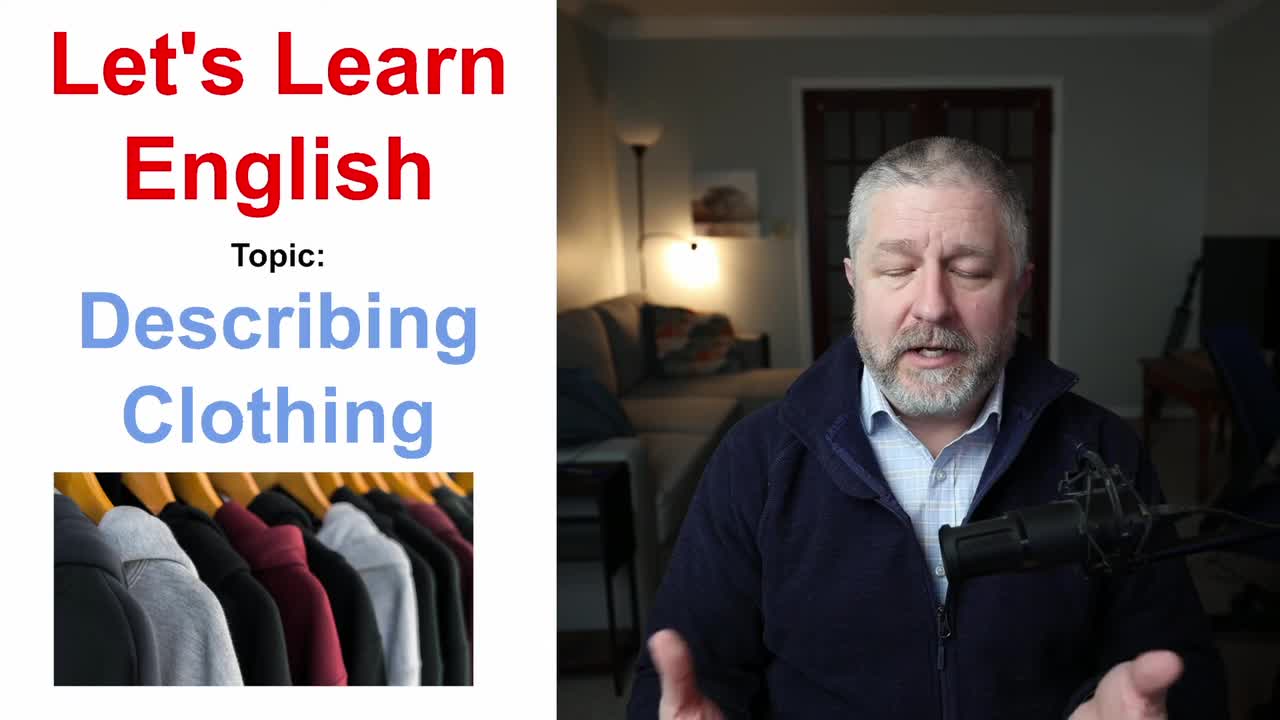
[A Comprehensive Guide to Describing Clothing in English]-[Let's Learn English! Topic: Describing Clothing 👔👖👕 (Lesson Only)]
📋 Summary
A Comprehensive Guide to Describing Clothing
In the English language, the ability to describe what people are wearing is a fundamental skill. Clothing is often categorized by its style, purpose, and fit. Below is a breakdown of the key vocabulary used to describe various types of attire, as discussed in the lesson.
Style and Formality
- Casual: This is defined as a "relaxed clothing style that is comfortable and not very formal." Common examples in North America include a "hoodie," "jeans," and "running shoes" (also known as sneakers or tennis shoes).
- Formal: In contrast, formal clothing is "neat, traditional and worn for important events." For men, this typically involves a "suit" or a tie; for women, it may include a "skirt and a jacket" or a dress.
- Vintage: This refers to "clothing from an earlier time period and often valued for its age and style." These items are usually found in "second hand clothing stores."
- Flashy: Clothing that is "very bright, shiny, or designed to attract attention." It is often made of fabric that "reflects light really well," such as light silk.
- Sporty: Originally intended for "sports or active movement," these items are often "comfortable and practical." In modern North American culture, this style has transcended athletics to become a part of everyday casual wear.
- Stylish: A term for clothing that "looks fashionable, attractive, and well put together." Being "well put together" implies that the wearer has thoughtfully coordinated their outfit.
- Trendy vs. Fashionable: While "fashionable" refers to clothing that "follows the current styles that many people like," "trendy" implies being "very fashionable right now" following the newest, sometimes "out there" styles.
- Classic: A style that "stays popular for a long time and does not easily go out of fashion," such as the timeless combination of a "white T-shirt and a pair of jeans."
- Elegant: Clothing that looks "graceful, refined, and very tasteful," often associated with formal roles, such as members of royalty.
- Chic: A "simple but very stylish and fashionable look," which often incorporates accessories like a "nice watch" or "sunglasses" to elevate the simplicity.
Patterns and Design
- Matching: When clothes "go well together, having the same color, pattern, or style," such as a "charcoal colored shirt and charcoal colored pants."
- Plaid: A fabric featuring "multicolored horizontal and vertical lines forming squares or rectangles."
- Colorful: Clothing that has "many bright or different colors," such as a Hawaiian shirt.
- Plain: The opposite of colorful; clothing with "no decorations, patterns, or extra design." This is also used in the term "plain clothes" to describe police officers not in uniform.
- Patterned: Fabric that has "repeated designs or shapes on it."
- Striped: Fabric that has "long narrow lines of color across it."
Fit and Function
- Waterproof vs. Breathable: A "waterproof" jacket prevents water from passing through, while a "breathable" fabric allows "air to pass through so the body stays cooler and drier." Both are essential for outdoor comfort.
- Tight vs. Loose: "Tight" clothing "fits very closely to the body," often highlighting muscle tone (sometimes described informally as "jacked"). Conversely, "loose" clothing "hangs away from the body and is not tight."
- Baggy vs. Oversized: "Baggy" refers to "very large clothing worn intentionally in a loose way." Similarly, "oversized" refers to garments "intentionally made larger than the person's normal size."
- Fitted: Clothing "made to follow the shape of the body closely," often achieved through tailoring.
- Comfortable (Comfy): Clothing that "feels good to wear and allows for easy movement," typically worn at home.
- Weight Categories: "Lightweight" clothing is "easy to wear without feeling heavy," whereas "heavy" clothing is "thick or weighty," often used for warmth during the winter.
- Durable: Clothing that is "strong and able to last a long time without damage," commonly referred to as "work pants" worn by those in physical labor professions.
Deep Learning with ListenLeap
✓
Listen Sentence by Sentence
✓
AI Q&A
✓
Word Favorites



🎯Key Sentences
1
I should make a point here of saying this lesson is mostly based on the I see during my day.
2
I usually teach the lessons from my perspective, from what I know.
3
I can kind of dress in the middle.
4
It's something from an earlier time.
5
It's something from many many years ago that you can't necessarily find or buy right now.
📝Key Phrases
1
well put together
2
dress formally
3
second hand
4
attract attention
5
active movement
📖 Transcript
Well hello and welcome to this English lesson about describing clothing.
As you go through your day, you'll see people wearing all different kinds of clothing, and in this lesson I'll teach you the words we use to describe those clothes.
Now I should make a point here of saying this lesson is mostly based on the I see during my day.
So it's a very North American lesson.
It might be somewhat northern European as well, but I am aware that around the world people wear a variety of clothes and they're all awesome, but I usually teach the lessons from my perspective, from what I know.
So in this lesson I'll talk about things like suits, when people look at chic when they're wearing casual clothes and those types of things.
ListenLeap Brings You Into Real Context Learning
🎨
Interesting Content
🌍
Real Materials
📱
Listen Anytime