Do you want to learn English?
Well, in this video you're going to learn English with the comprehensible input method.
All you need to do is just watch, listen and you will learn new vocabulary.
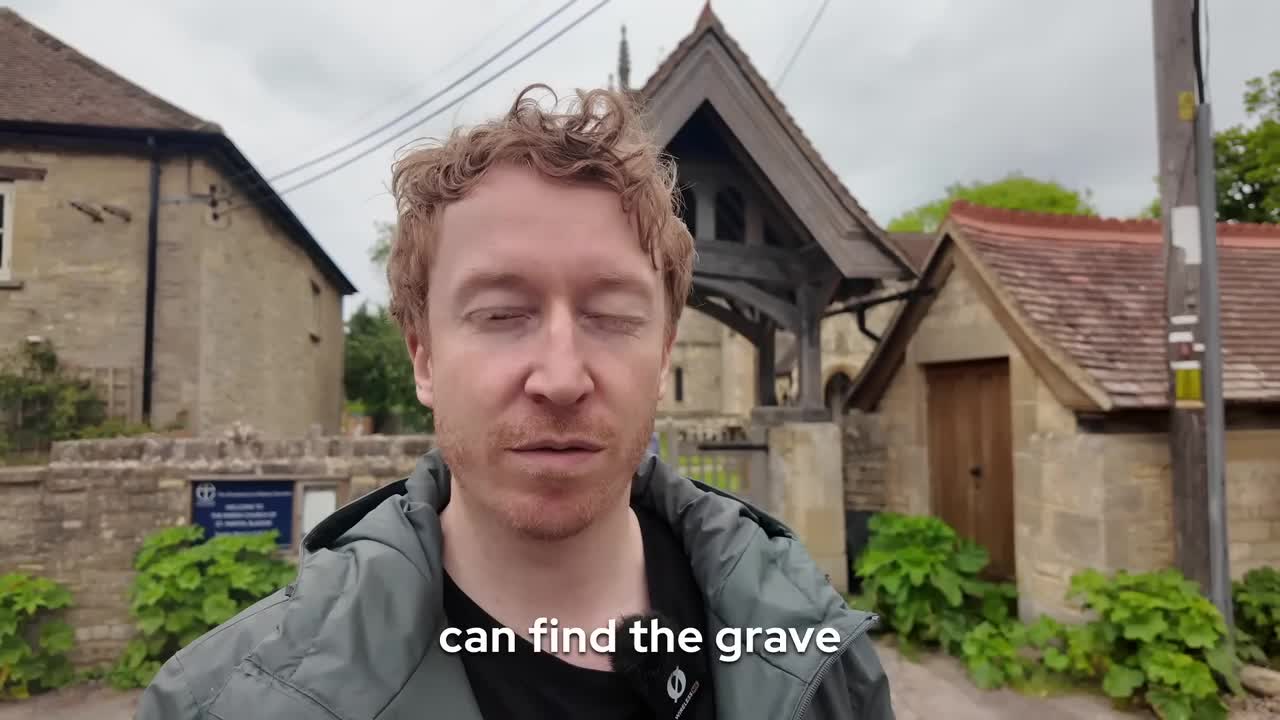
I'm going to the small town of Woodstock today, but first of all I've come to this small village called Bledim.
Why have I come here?
Because this is where you can find the grave of the famous Winston Churchill.
Winston Churchill is famous around the world.
So let's go and take a look inside.
Okay guys, so I have found the grave of Sir Winston Churchill.
It's this one just down here.
Churchill is buried here in a family grave with lots of other people in his family, including his wife.
They are all buried here.
He was born in 1874 and he passed away in 1965.
Churchill is seen as a hero amongst most British people.
During World War II, the Nazis had invaded most of Europe.
They had invaded France and they had invaded lots of different countries.
At the time America were out of the war, they were not getting involved.
So at the time it was just Britain against the Nazis and no other country really was getting involved.
So for a time, the situation looked very desperate because it seemed like the Nazis were going to invade Britain and lots of politicians in the UK, in Britain, at the time, wanted to surrender to Hitler and the Nazis and they wanted to negotiate with him and allow Hitler to invade basically, and negotiate.
However, Winston Churchill took power and Churchill took a different stance against Hitler and it was basically that Churchill said we are not going to negotiate with Hitler, we are going to fight.
And many people believe that Churchill saved Britain on that day.
They believed that without Churchill Britain would have been invaded.
The Battle of Britain took place and Britain won the Battle of Britain and they secured the English channel from the Nazis.
And that's why to this day Churchill is seen as a hero in Britain now.
He is seen as such a hero that we put him on the money, so this is an image of Winston Churchill.
This is a five pound note and you can see, I think about 10 years ago they started putting Churchill on the money, so this is an image of Churchill.
Of course, on the other side we have Queen Elizabeth on the other side, but yes,
Churchill is here on the £5 note in England now.
Of course Churchill is not loved by everybody.
Some people dislike him for actions he took in India and, I think, the Bengali famine that he may have played a role in.
But generally speaking in England he is seen as a hero.
And so yeah, this is the first time I've come to see his gravestone.
So here it is.
Okay, now that we have seen Churchill's grave, and now that I've been into the church, let's go into the town of Woodstock.
It's about a five minute drive from here.
So it's not far.
I'll head into the town of Woodstock.
You can hear the bell going because I think the time must be it's two o'clock.
You can see.
So the bell rings because it's two o'clock.
Anyway, I'm going to head into the town of Woodstock now and take a look around.
Let's go.
So over here we have an antique shop.
You can see it says antique, antiques at heritage, and there are lots of old antiques in here.
If you're interested in that kind of thing.
Here is a modern art shop with lots of modern art.
It's a certain style of art in there and here we have the woodstock butchers.
The butchers is where you can go to buy meat if you need it, in the butchers just here.
Now over here we have a pub.
This is actually a pub called the King's Arms, but it looks like right now it's absolutely covered in scaffolding from top to bottom.
This pub right now is covered in scaffolding from top to bottom, all over, but I'm sure that usually it looks like a very nice pub but covered in scaffolding.
Today,
Take a look at this sign here.
So this is the King's Arms Pub and there are some food offers right here.
Let's take a look.
So you can get two courses for £1850 or you can get three courses for £2350.
I think this is only from monday to friday, between 12 and 3 pm and between 5 and 6 30 pm.
Down here we have fish and fizz fridays.
If you're wondering what fizz is, it will be.
It looks like fish and chips plus a glass of prosecco.
So we have the fish and then the glass of prosecco here.
When it says fish and fizz, it's talking about this, it's talking about this glass of prosecco down here.
Fizz right, because it's fizzy, prosecco is fizzy.
And finally, at the bottom It says burger and a bev.
So what is a bev?
Well, it's short for beverage.
Okay, it means beverage.
If you don't know what beverage means, beverage means drink.
So it's burger and a drink or, in this case, burger and a bev.
You get a juicy beef burger, chips and slaw.
What is slaw coleslaw?
It's talking about coleslaw with a choice of london pride asashi, cornish orchard cider.
So these are all types of drink.
Okay, london pride is a well-known beer that you can buy.
Okay, so these are called stocks and these are in the center of the town, Woodstock.
So what are stocks used for?
Well, in the past they would put people in these, people who had done a crime or done something bad.
They would end up in the stocks.
We can see there are five holes down here.
Enough for two people to be trapped in the stocks.
Maybe a hand through here, maybe an ankle through there, and they would be in the town centre and all the townspeople would come and throw rotten tomatoes and rotten fruit at them, kind of to humiliate them.
It was a way of dealing with crime, basically.
And if you're wondering, why are there five holes here?
To be honest, I don't know.
Usually stocks have two holes or three holes for your two arms and then your your head, your neck, to go through.
So why there are five little holes, i honestly have no idea.
But yeah, these are the town stocks.
So yeah, behind me you can see Blenheim Palace.
This is where Winston Churchill actually grew up.
Unfortunately, tickets are about 35 pounds just to go in.
So sorry guys, there's no way, there's no way I'm gonna pay 35 quid.
I'm not gonna pay 35 quid to go inside, not today.
If anybody wants to send me 35 pounds, maybe then I'll go inside and show you around, but not today.
So we're at the church now, but inside apparently today is art week.
So you can see it says Oxfordshire Art Week, So we're going to go inside and take a look at the church, but also some art Hello.
Is it free to come in?
Okay.
Thank you.
Cheers.
So there's different kinds of art in here.
Framed pictures.
See it says here large framed print, and over here it says help yourself.
Help yourself to a bookmark.
So that means these bookmarks are free, you can take them right, you can help yourself.
So it means thank you, I can take this because it's free.
And a bookmark goes into your book to keep the place, right?
To keep the page that you're on before.
So yeah, help yourself to a bookmark.
Okay, I will thank you.
Here we have some matchboxes.
These are called matchboxes.
They are filled with matches.
A small matchbox is £3.
A medium matchbox is £8.
And a large matchbox is £6-12.
So yeah, they've got some interesting designs on them, and here are some little little match boxes.
These are only three pounds, Thank you.
So I'm just walking down a nice narrow alley here, just a kind of secluded alley.
This alley is quite secluded because there's really nobody here.
It's empty.
It's kind of a bit of a secluded alley, but that's cool, because there's nobody around.
You can see we've got some nice-looking houses here as well, In a similar way to Goring.
From last week's video.
Woodstock is a very peaceful place.
There's only about 3500 people living here, and so there's not too much hustle and bustle, not too much traffic or anything like that.
Although it was quite difficult to park today.
Unfortunately, Woodstock is a nice place.
So lots of people want to come and visit and spend time here.
So trying to find a parking spot today. was a bit of an uphill battle, you know.
Trying to find somewhere to park my car today.
Well, it was a bit of an uphill battle today.
It was a bit of an uphill battle to try and find like a place to park.
But eventually I found a nice parking spot And here we are.
You can see that on this road, the speed limit is only 20 miles an hour.
So that's really slow.
You have to drive really slowly down these roads, only 20 miles an hour, very slow.
And on the right here you can see, we have a row of dustbins.
So we have a row of them one two three, a row of dustbins here, and the restaurant here will leave their rubbish in the bins here to be picked up, the the bin men.
The bin men will come and they will pick up the rubbish from inside these bins, this row of bins here.
It looks like in here.
Well, it says here, grit slash salt and basically grit is the stuff that is used when the roads are icy.
Right, they will grit the roads too to make the roads less slippery.
Right, they'll put grit on there to make them less slippery.
So i guess this is where they keep all the grit around here.
I guess you see the the stone here.
This is called cotswold stone okay, cotswold stone, and that is kind of what this area is famous for.
Woodstock is right on the edge of an area called the cotswolds, and the Cotswolds are well known for having really nice little villages, but they're also well known for this type of stone.
It's called the Cotswold stone and all of the houses in the Cotswold have this type of stone.
So here we have a nice residential area and all those houses.
They are made of the cotswold stone and yeah, quite a nice little residential area.
This sign says private residence parking only.
So you are only allowed to park here if you are a resident of one of these houses.
If you live in one of these houses, only people who live here can park here, only residents can park here.
For some reason this place is called Cockpit Close.
I wonder why it's called Cockpit Close.
In case you don't know, a cockpit is where a pilot, a plane sits.
It's the little room where the plane pilot sits.
So I wonder why this place is called Cockpit Close.
Maybe everybody who lives here is a pilot.
That's just a wild guess from me.
Maybe everybody who lives on the street is actually a pilot because it's called Cockpit Close.
So maybe that's why.