
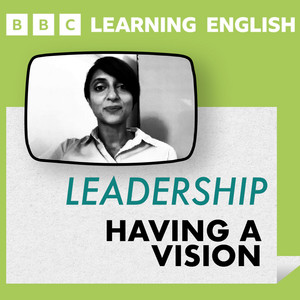
[The Essence of Leadership: Vision, Values, and Mentorship]-[Leadership: Having a vision]
📋 Summary
The Pillars of Effective Leadership: Insights from Rosie Guinday
Leadership is often perceived as a position of authority or a title, but in the professional sphere, it is fundamentally about the alignment of purpose and action. Pippa from BBC Learning English explores these dynamics through the experiences of Rosie Guinday, the founder of the social enterprise Miss Macaroon. Guinday’s journey from a £500 startup to a successful mentor offers profound lessons on what it truly means to lead.
Defining Leadership: Vision and Execution
According to Guinday, leadership is "the ability to set a vision and really live the actions that you need to to be able to implement your plan." This definition shifts the focus from mere management to the embodiment of goals. A leader does not simply issue commands; they create a roadmap and demonstrate the commitment required to follow it. The core of this process is the necessity to "live and breathe your values and your vision." By doing so, leaders create an authentic environment that naturally attracts the right talent—individuals who are genuinely aligned with the organization's mission.
The Paradox of Growth: The Power of Seeking Help
One of the most counterintuitive findings in Guinday’s career is the role of vulnerability in leadership. She notes, "one of the most surprising things I've learned about leadership is definitely that you grow the more you ask for help." This highlights that effective leadership is not a solo endeavor. Leaders who acknowledge their limitations and seek support from mentors or team members foster an environment of continuous improvement. Mentorship, which involves providing "advice and career support," is not just a benefit for the mentee; it is a vital tool for the leader to refine their own perspective and organizational capacity.
Integrity in Action: Walking the Walk
Central to Guinday's philosophy is the idiom "walk the walk." This concept emphasizes that a leader’s actions must be consistent with their stated beliefs. Guinday explicitly warns against the hypocrisy of leadership where one might "direct and then actually take actions that go against those directions and instructions." In essence, if a leader expects their team to uphold certain standards or pursue a specific vision, they must demonstrate those behaviors themselves. "Talking the talk" is insufficient; the credibility of a leader is built entirely upon the observable consistency between their words and their deeds.
The Recruitment Challenge: Investing in Human Capital
Guinday identifies the most significant hurdle for any leader as the process of "recruiting and developing the people that really believe in your vision." Finding individuals who possess both the "skills and experience" necessary to execute a plan is difficult, but finding those who share the same core values is even harder. She expresses a strong desire to "spend more time supporting and developing people," emphasizing that leadership is, at its heart, a people-centric role. The ultimate success of a vision depends on the leader's ability to nurture a team that is as committed to the mission as the leader themselves.
Conclusion
Rosie Guinday’s insights serve as a blueprint for modern professional growth. By prioritizing authenticity, embracing the humility of asking for help, and ensuring that every strategic action reflects the company's core values, leaders can build sustainable and impactful organizations. Leadership is not a static state but a continuous practice of aligning one's internal vision with external reality.
Deep Learning with ListenLeap


