Take away Chinese, where you can take some Chinese away and experience progress day by day.
Take away Chinese. We will promise you a difference.
Niho, huang, shou ting, sui, xin han Yu.
Welcome to Take Away Chinese.
I'm Paulo Lin. Joining me today is Tada!
Tada is here! Tada!
Welcome! Thank you very much.
Can I make that my Chinese name?
does Tada have no no no I'm gonna give you a proper Chinese name a bit later but that is just showcasing I'm excited to do the show we talked about it before but I'm kind of liking it so I was just wondering if there's like a Chinese character for Ta and another one for Da that could be put together there are those characters they're just not proper name well name candidates what was I learned it someone asked me what my Chinese name was or what my name sounds like in Chinese and it's Steve, so I think it comes out as Shitipu, something like that.
Yeah I like to I like to da better.
Well you know the thing is people say Chinese people are not expressive enough we do not say I love you as much or our parents.
Well I think it's the previous generation our generation it's getting more and more expressive and that is precisely my point, I think that phenomenon is changing, because previously it was precisely because we had this really, we have this really long history, a lot of different festivals, a lot of, lot, and lot of historic stories that are blended into not only our daily lives, but also our language.
We have a lot of four character Chinese idioms that has this whole really long background story behind it, yet we only use four characters to represent.
So it's kinda like, um, I see enough.
We've known enough, we want to be subtle and calm and kind of, you know, that kind of quality for a nationality.
I mean, I wonder if that's just a global thing now because.
I think when you compare my parents' generation to their parents' generation, I'm a lot more expressive than them, I think.
I think it's how you're raised, what types of things you discuss amongst your family members because I think that's true in Canadian culture.
In fact, I think that's probably still quite true in Canadian culture where people are still learning how to express their emotions comfortably.
Question though, you know we talk a lot about how big China is and how diverse it is in terms of its food and even its language, its expressions, its people, of course.
But does that apply here as well?
Can you say that maybe the Southern part of the country is more comfortable expressing their feelings than Northerners are?
Is there any personality difference there, do you think?
There are definitely different stereotypes when it comes to different provinces and people from the Southern part of the country and the Northern part of the country.
but I'm already using stereotype because each individual is definitely different and like you said, you're definitely right when it comes to more people are being more and more expressive each different generation.
And that is actually reflected on how we celebrate our holidays because when I was little of course, we celebrate the holidays in the sense that the material was not that abundant.
in London. So you kind of need the holiday to be the special occasion to buy new clothes, to have delicious but a little bit expensive food and also extravagant snacks.
Yet for my generation, when I grow older and also my, I'm pretty sure for my kids generation, it's not going to be like that.
The festivals, especially the traditional ones, they became or they're becoming a occasion for people to be emotionally more expressive, to be happy, openly happy, happy together and through different activities, through carefully designed modern activities as well as traditional activities to express their happiness and to live the life.
I guess then it's true is that The holiday will never lose its importance, but the knowledge of why or how the holiday is special may be redefined.
Or evolving. Or evolve.
Yeah. Um, and that's just natural, isn't it?
That happens everywhere.
I think. And I think you've been here long enough to have witnessed several holidays already but this is still your first lantern festival isn't it correct it is yeah when i visited the last time or the first time i should say um the holiday had already concluded the decorations were still up everywhere but the holiday was over at that time yeah so this is going to be your first very first lantern festival or yuen xiaozhi yes we're going to discuss that a little bit later So for our dear listeners, if you're interested in Chinese culture and you wanna get a grip on the Chinese language then this is the show
for you. Stick with us for 30 minutes and you'll soon see the rewards.
And for more fun Chinese learning, follow our Facebook page LearnChinese to watch many fun videos and live streams.
But now, let's provide you with some free Chinese for takeaway.
The first word we have to take away would be Yuan Xiaojie.
That is the lantern festival.
So the lantern festival is celebrated on the 15th day of the first lunar month and it is generally believed that the lantern festival marks the end of the Chinese New Year celebrations.
But it's way more than just that.
It's not just the closing of the holiday season, it's also a celebration of itself, so Yuan, Xiao Yuan cares the meaning of round, and also start.
This character actually is start, and Xiao is the knight, but together it's actually talking about the first full moon knight on the traditional Chinese calendar.
Okay, so that's and that's probably connected to the design of the lanterns too.
Yes. If we see a lot of lantern, and there are a lot of activities related to lantern festival, to lantern, to riddle guessing, eating the sweet rice bowl, the kind of dumplings with the filling in it.
So a lot of traditions and activities related to that.
You said riddles? Yes, riddle is also important.
I think riddle guessing is a part of the Yuan Sean Festival.
Some people or some places would also include this tradition or activity in their mid -autumn festival, but we'll talk about it during the mid -autumn festival season.
I see. Now, everything else you mentioned, I knew it was an important part of this holiday, but I didn't know riddles or riddle -guessing was included.
Riddle -guessing is included because, again, China has a really long history.
And for those, we used to call them book readers, not we in Chinese we say Du Shu Jian.
So Du is read, Shu is book, Jin is person or people.
So literally they're book reading people, but they're actually scholars and those with a knowledge, see, they're humble even in naming themselves.
And for them, entertainment activity needs to be knowledgeable as well.
So riddles are involved and the riddles are always come coming in the form of for example remember we talked about Dui Lian during spring festival period of time, Dui Lian the couplets, the two lines, which also rhyme and they can also be verses from poems.
They use that rhyming almost like verses from poems as the riddle and then you can you know take a guess what's the answer?
Oh, if you don't have one right now, that's okay.
But I'm, I would love to hear a fun, uh, Spring Festival riddle from you sometime.
Yes. And in the future we might do that.
When your Chinese level is up, okay, is high enough to guess the answer I think that'll be very interesting.
I will talk to you in 2045.
I'll be more ambitious.
Let's give it, I don't know, one or two years.
2044. All right, so those are the relatively more sophisticated ones, but let's share some words related to the Lantern Festival on top of Yuanxiao.
Sure. They're usually pretty brightly colored, right?
Yes, if you're talking about the lanterns themselves.
So lantern, we've talked about lantern, that's dongluo, dong being the light or the lamp.
And loong is a cage.
Remember I told you about caging the light inside the lantern, that will be the donglong.
Donglong. Yes, donglong.
And sometimes we'll also call it hua dong.
Hua dong. Yes, hua is colorful or it can also be variety of but that character can also mean flower.
Ahh okay. So you see a lot of those lanterns are in different very beautiful and some even majestic design if you travel or if you tour Beijing during the lantern festival period, in a lot of different streets, in a lot of different communities, and especially in many, many of the parks, you get to see those huge, huge lanterns in different shape designed in variety of shapes or inspired by different types of flowers.
Sometimes I see Lotus or Lily or Rose, different huge ones.
Very beautiful. I I'm assuming that other cities around the country are the same but Beijing is really pretty during the spring festival time because of all the decorations that are hanging in the streets and all the lanterns.
It's really quite beautiful.
Now if you want to describe a very beautiful lantern what are some words you want to use to describe it?
Well like I said usually they're pretty brightly colored when they're lit up.
Yes, I think brightly -colored is a good way to describe these lanterns in English because they're firstly very bright and also they're very colorful.
So the Chinese word for it is 你程.
你程! Yes, 你 carries the meaning of fresh.
So the color is not just with a shade of gray, it's very bright and very fresh.
And yé is also talking about the level of colorfulness.
So xianyén. Can we use xianyén to describe other things like delicious looking vegetables for example?
Can you use the word bright or brightly colored in that context?
Actually, no. I think that is a really good question because I didn't realize until you asked me when I of xianyuan, I think about the kind of color that are close to red or pink or orange.
I don't think about really bright green.
I don't really think about blue, but blue can be included.
But if it's exclusively green, since you're talking about vegetables, xianyuan does not do the job.
So it's not everything that's brightly colored.
No, but you can definitely say clothes.
Okay. xianyuan, or flower, Huāduo, can be xian yan.
So like I said, it's the kind of red, or pink, or orange, those kinds of colors, xian yan.
If you wanna describe a very fresh fruit, actually you can say xin xian, because you're thinking about fresh along the line.
So xin is new, xian is fresh.
So xin xian, xin xian xu tai, so xu tai is vegetable.
oh. Xian xian. Xian xian.
New and fresh. New and fresh.
And also, when it comes to xian yian, except for talking about flowers, I always associate xian yian with the relatively artificial kind of brightness.
Not the pretty natural kind of brightness.
Like the light that comes from a lantern.
Okay, got you. And another one I like to use is, delicate.
Mm -hmm. Yeah because of the paper that's used in the making of the lantern.
Yes and also if you go to the right places you can find the lanterns that are really really delicately made and they're probably made by hand and you cannot even find the line when they are stick together so it's kind of like their natural being.
The intricate details.
Exactly. So that in Chinese would be Jinyu.
Jinyu is the meaning of intricate and also very detailed and Zhi is extreme.
So it's extremely detailed and well made and delicate.
The lanterns are the perfect example of that because if you look closely at the lantern design, and you see this a lot with temples, I think, I I guess we could use this word to talk about, oh no, because it's delicate, isn't it?
When we use the word jinchu.
So we wouldn't talk about a temple like that.
I was just thinking, when we look at a temple, we can see the intricate designs and you know what I mean?
Yes, but you're right.
It's talking about relatively small things.
Or at least the things should have a small form.
If it's magnificent, maybe jinchu is not the word because when I was thinking about it, I'm thinking about, for example, yuring or— Yes, it can be really, really delicate.
It can be so, so carefully made that you feel like, who have that tiny hand that can paint on it?
That kind of feeling.
Yeah. That is more Zingzhi towards— Well, to be fair, we wouldn't use delicate to talk about a temple.
Either. I was thinking more about the intricate details.
Yes, yes. So that's Zingzhi.
here. lanterns were also very just invite.
In general. Um, or lights can be bright in general.
And if we're thinking about that, you can even use the word Ming liang.
Ming liang. Yes, both Ming and lian carry the meaning of bright.
And, um, it can be used to talk about, well, not only lanterns, it can also be used to talk about, for example, rooms.
You enter a room, you think it's very bright.
Ming liang. How about a smile?
No, it has to be bright.
Literally bright. Yes, yes.
Like close your eyes a little bit, bright.
Yes, yes, that's Min Lian.
And if we talk about different colors of the lantern, we can also talk about Wu Yan Liao Si.
Wu Yan Liao Si. Wu.
Wu. Yan. Yan. Liao.
Liao. Si. Wu Yan Liao Si.
Perfect. Perfect, wu means five, liu six, yan sì, color.
Five or six different colors?
Oh okay. It's easy to remember but it actually means very colorful.
More than five or six types of colors.
Oh so even if something only has two or three colors or - No no no no no, it has to be more than five or six.
Oh more than five or six.
Maybe four or five words but it's colorful.
I see. Everything that's colorful can be— you can use this expression for that?
Almost. It's a little bit— As long as it has more than five or six different colors.
Yes, yes. OK. Like a painting.
Like a painting, but you do not call a painting just colorful.
I don't think the painter would listen to that.
Well, if you don't know much about art like me, then you can— Ooh, that's quite colorful!
Well, you know how to use the words or, you know, the meaning of the words.
How to use it is your own matter.
Ok. So that's lantern.
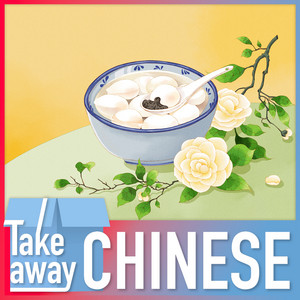
And another thing that we have to talk about would be the sweet rice ball.
Sweet rice ball, I've learned this one.
It's tangyuan? Tangyuan or Yuan.
Xiao, actually Yuan Xiao can also be the name of it.
remember Yuan Xiaojie it's almost like the sweet rice ball festival but it's not it's not it's always like the lottery when you bite into a sweet rice ball because the tangyuan they look delicious all of them do but then the filling is different so sometimes you get this kind of sugary honey maybe i don't know cinnamon flavor depending on what's Which is amazing.
So depending on what's inside.
I think it's only this year or last year, I started to really, really fell in love with tongue.
I don't know what happened to me.
They're good. They're good.
They're really good.
And I don't know how many calories are in one, but I don't think they're good for your waistline.
Oh, no, but it's impossible to eat just one.
Who can eat just one of those?
They're so small. Their problem.
Well, my problem is that I started to order them even when it's not Yuan Xiaojie.
Oh yes. You're celebrating anyway.
Yes, it's really really delicious.
And the only thing is that I think whoever is purchasing Tang Yuan, they should have this line written or printed on the package of it that is Xiao Xin Tang.
Xiao Xin Tang. It means cautious is hot.
Oh, I see Because if you bite it or if you just have an entire tangyuan in your mouth and then you bite it, the filling is actually quite hot.
It can be. It can be very hot.
Yeah. And in different parts of the country, as usual, there are different fillings, like you said.
Sesame paste is a good one.
Oh sesame, I love sesame ones.
It's a good one. Really good, the sugary sesame.
My mouth is watering.
I can not continue this show.
I need to order a bowl of tangyuan.
And of course, you wanna say, very sweet, Yes, and there are salty ones, I don't fancy.
I've never tried the salty ones.
I've never tried the salty ones.
I don't like the salty ones.
I didn't even know they existed.
I don't need to try them to know I don't like them, but there are people enjoying the salty ones.
And the salty one would be is your mouth.
So is the sweet ones, sweet on your mouth.
would be the salty ones.
So, kao is your mouth.
So is that for every description of a flavor?
So if sweet is tien, you say tiankao.
If something is salty, what was the word for salty again?
Sun kao. So do you use kao attached to each flavor description?
You actually can. But there is a situation related to that.
The reason we say tiang kou, xiang kou is because there are salty ones.
There are sweet ones.
So instead of using it to describe the taste of the dish, you're basically categorizing.
So this belongs to the sweet category.
Or maybe for example, when it comes to dō huà, It's the very soft almost jelly like kind of tofu.
You have the tofu. The tofu itself is kind of tasteless yet you can decorate it or with different topping or different sauce, it can be in different flavor.
So if you're saying, I want the sweet type.
It's kind of already suggesting there is a salty type.
I understand. So you're categorizing it.
But what about if I just want to express this is sweet, this is salty?
Then you can just say, so it's a little bit different.
And even if the dish itself maybe does not have a salty or sweet different version.
You can also say, for example, when you're having, for example, cold dishes, you can say, I enjoy the sweet ones.
Then in that occasion you can say because you're classifying.
you're classified. So that's the idea.
Got it. And of course we talked already about the riddles and riddle in Chinese is Mi Yu.
Mi Yu. Mi is riddle, Yu is language or sayings, so it's like a riddle saying, a saying which is a riddle.
So that's Mi Yu. But specifically for this lantern festival for Yuan Xiaozi, what people used to do, remember the scholars, the Duxu Ren, the book readers they would go appreciate the lanterns and those really delicate lanterns they can be in different shapes and form, very very beautiful, and they can have a little tail hanging down the lanterns.
What's the tail about?
On that tail there might be a piece of paper with that two verses, which is the riddle.
And what you need to do is walk alongside and in the riddle area or riddle lantern area and you see each and every riddle and you find the one that you know the answer.
You think you know the answer, and you pick it up or pick it down actually from the lantern.
You take it to the lantern riddle owner and say is this the answer?
If you've got the answer, you get a price.
So there's many pieces of paper hanging down?
Yes. Then you just take one?
Yes. Mmm, that's really fun.
So that That sounds like a fun activity for the family.
So are there areas around cities where...
Oh, many. Where you just go and do that?
Yes, you can definitely do that.
That sounds like...
You can get a prize.
That sounds like something you would enjoy.
Are you good at it?
It depends. I'm not really good at the really hard ones, but I can get some answers.
That's really fun. It's really fun.
And because these riddles are closely associated or connected with the lanterns, instead of calling them just Mi Yu Riddle Sayings we call them Dung Mi, Lantern Riddle.
Ah ha. Dung Mi. Dung Mi.
Yes. Lantern Riddles.
Yes. And since you're guessing, instead of really know the answer, the guess character in Chinese is Cai.
Cai. Cai. Yes. So this activity, simple, it is called Cai Dung Mi.
Cai Dung Mi. Yes. Yes, of course, we've talked about dōngmi, side dōngmi and in Chinese by the way we call the riddle mī mian, the surface of the riddle.
The surface of the riddle?
Yes, and we call the answer mī dī.
Oh, oh, so the words, the words.
The riddle itself? The riddle itself.
The riddle itself is mī mian, so the surface of it?
Mī mien. Uh -huh, and the answer is mī dī.
Mī dī. The bottom of it.
Oh, okay, I understand.
Yes, I think it's a cute play of words.
I really want to know some of these riddles.
Okay, I actually did a little bit of research and because the riddles I remember are really closely related to Chinese characters.
So you have the describing of a saying and then you have to guess a Chinese character, Okay.
which makes it a bit difficult to explain on an audio show.
Translate and also to translate it to English, yeah okay.
That is why I find one that is a little bit childish.
dish but can still be quite cute.
That is the kind of riddle that you can guess.
The riddle in Chinese is It means you have five in your right hands, you have five in your left hands, if you take away 10, you still have 10 left.
Fingers. Really close, gloves.
No okay. Because if you take away the gloves, you still have your fingers.
Yes. That's the idea because nowadays, a lot like you said, it is becoming a family activity and a lot of parents would like to take their kids to go.
One way to learn Chinese characters and one way is to learn about the world and they can get these lovely riddles.
Little brain teasers.
It would make for a fun date day as well.
Another question culturally.
the lion dance is a big part of the spring festival, correct?
And I remember years and years and years ago, I was in Thailand, in Bangkok, during the spring festival time, and my friend and I visited Chinatown for the day and it was packed.
Oh my goodness, there were so many people there and they had these wonderful play performances dances with the white paper and then the, um, the puppets behind the white paper.
Yes. Yeah. That, that one.
And then they had the lion dance, the dragon dance as well.
So can we talk about that a little bit?
Is it more commonly found or is it more a part of the celebration in the South versus the North or the North versus the South east west?
Well, definitely, I think the Southern part of the country sees more of the lion dances and dragon dances.
yet it is definitely a national tradition which makes it not rare to see anywhere and the thing is for different parts of the country in different provinces actually the actual form would be different.
For example the lion dances and dragon dances if you think about it the dragon dances would require more people you would have someone holding the head of the dragon and many people Long body.
Some of the actual equipment used in the lion dance is just this really long stripe, some are different segment of the stripe and they're together, maybe two persons holding one segment and you have many people and some would even use this long stool as a a part of the show.
They jump onto the stool, and then they jump down, they jump over it and you see one after one jumping over it.
So there are different dancing equipment, different decoration of lion, and the dragon, and also, different styles of dance.
So yeah, wu long wu shi, but definitely wu long.
Wu is to dance, and long is long, the Chinese dragon.
Wu, again, dance, and shi shi is lion.
So wu long wu shi, definitely a major part.
Wulong wu shi. Yes, wulong wu shi would be a major part of the celebration.
Also fireworks too, right?
Yes, yéng huā. Yéng huā.
Uh -huh. Yéng is smoke.
Huā is flower. So you have...
Smoke flowers. Oh yeah, that is...
Right right, right, makes total sense.
Yéng huā or yéng huā.
Huā is fire. So, smoke and fire together, beautifully presented in the sky.
Uh -huh. Yéng huā. Or yéng huā.
Yéng huā. Uh -huh. Fan yang hua or yang hua bao zhou, in Chinese bao is crack, and zhou is bamboo.
Previously when people didn't used to have fireworks, they still want the sound, the cracking sound, they would bend the bamboo so you have the cracking sound.
Cracking sound. Yes, so yang hua bao zhou.
Very important part.
We've covered almost all of the elements.
Which one is your absolute most anticipated one?
I would say the food, so I would say the tangyuan.
Tangyuan? Okay, so hopefully for this lantern festival, you can try some other fillings.
And in some future episodes, let's see when you are here in China for over a year you've experienced all the festivals, let's pick out your favorite festival food.
Sounds good. And that brings us to the end of today's Takeaway Chinese.
I'm Nghul Lin with Steve Hatherly here in the studio.
For more episodes of the show, you can visit our website at rido .cgtn .com, and go to the column Podcast.
You can also listen to the show and read the script there.
Find us wherever you listen to your favorite podcast.
Just search for Takeaway Chinese.
Don't forget to leave your questions, comments, and ratings.
Again, thanks for watching!
See you next time! My own...
My own... My own...
My own... My own...
My own... My own...
My own... My own...
My own... My own...
My own... My own...
My own... My own...
you