We're brought to you today by Momentous.
Now, as somebody who's been plant -based for many years, I've seen plenty of so -called clean protein powders that actually are anything but packed with fillers and additives and navigating the Wild West of supplements isn't an easy task, which is why I trust Momentous to fuel my needs.
What impresses me most about their upgraded 100 % plant protein is their commitment to quality.
They source pea and rice protein exclusively from the U .S. and Canada creating a complete amino acid profile without any of the gums or fillers or stabilizers typical in this type of product, which results in taste and texture that truly delivers.
Now vastly improved over their previous formulation.
Every batch is NSF certified for sport, tested for heavy metals and harmful additives at Olympic level standards, which is why elite athletes across every major sport trusted.
Quality and transparency, this is the ethos of Momentus and why they are my brand of choice when it comes to responsibly meeting my supplement needs.
So if you're like me and you wanna take supplements that are made by and used by the best in the world, go to livemomentus .com slash rich roll and save up to 36 % off your first subscription order of protein.
And if you don't wanna subscribe, you can still get 20 % off all my favorite products.
That's LivMomentis .com slash rich roll.
Today's episode is brought to you by Roka.
You know, it's funny.
We don't often think of eyewear as performance gear until it starts to get in the way.
And if you're like me, somebody who has contended with eyesight impairment my entire life, it's a very real thing without a real solution for athletes.
I cannot tell you how many times I've been mid run, constantly shoving my glasses back up my nose, tripping on roots and rocks because I couldn't see them or my glasses had fogged up.
Or what about out on the bike where the treachery is obviously far more intense?
Well, this is why Roca has been a godsend for me.
Approaching prescription eyewear from a performance perspective first, but not at the cost of fashion, I should say, helping not only people like me, but all kinds of athletes including Tour de France cyclists and Ironman champions with everyday frames designed for movement.
Their secret is their proprietary gecko technology.
Patented nose and temple pads that grip even more securely when you sweat.
No slipping, no distractions, and they're insanely lightweight.
Most frames weigh less than a pencil, super light even with prescription lenses.
Beyond the function, the craftsmanship is next level.
and kept up with you.
So put them on, feel the difference, and wear without limits.
Unlock 20 % off your order with the code RICHROLE at Roka .com.
That's R -O -K -A .com.
Every project I've worked on, there's been at least one person who I've helped get sober.
It has to be about love and search. I know my experience of first going to group recovery meetings was, I'm not the only person that can't seem to manage a life without being medicated in some way and there was huge relief in that.
You know, I love me a good addiction recovery story, but you know what's better than that, two recovery stories that become one love story.
When Kurt Sutter and Katie Segal first met, they shared something profound.
Like me, they both got sober at the age of 31.
And today, many decades later, they have plenty of hard -earned wisdom and direct life experience to share.
But also, they're still growing, they're still evolving, and they're doing it together in a way that I think is really inspiring, not just for the sober or the sober curious, but for literally anyone in a long -term relationship who is committed to actually making it more intimate, more nourishing and more rewarding than it has ever been.
You have to really want it, all the good and the bad of it.
You know, the struggle of it.
I have to find that fire.
And if it's not the atta boys and the paycheck, what is it?
You might remember Kurt from his appearance on the show back in 2018.
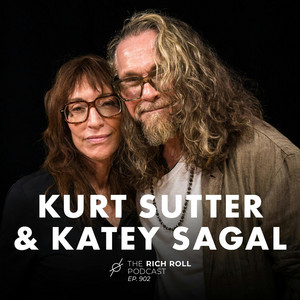
Kurt is a screenwriter and a television show runner, best known for creating the hit show, Sons of Anarchy, which actually co -starred his wife, Katie, who is a musician and Golden Globe winning actress who's literally been appearing on screen in her entire life.
You might remember her from Married with Children all the way to Futurama and everything in between.
But today it's really all about recovery.
It's about relationships.
We talk about family, parenthood, and most notably, what happens when two people make the deliberate choice to evolve together, through all of life setbacks and celebrations, as well as PIE, their new podcast venture in which they explore all these themes and more with rare Hollywood honesty.
I do not leave my work at home.
I do not leave my work at set.
Those characters talk to me all the time.
It is a blessing to be able to be an artist. It's just kind of crazy, man.
It's insane what we do.
I know. It's great to have you guys here.
I've been looking forward to this for a really long time and, you know, Kurt, I've known you for, I don't know, almost 20 years probably at this point.
Yeah, at the Rosewood.
Yeah, yeah. Yeah. I mean, I'd seen you around but that's where I got to know you.
And Katie I've only met you a couple of times so you're the lock.
This is what we're gonna unlock today.
You know. Oh good, I mean...
It shouldn't be too hard. Yeah but you guys are an interesting couple.
There's a lot of interesting overlaps with my own family and my own marriage.
But you know, you're a Hollywood big shot power couple.
You've conquered Tinseltown.
Are we? You've got Golden Globes and Hollywood, walk of fame stars, but you know what?
You had to like tiptoe into my little garden, right?
And like tackle the podcasting thing.
I mean, come on, it's not enough, right?
Like the hungry ghost is still alive.
More and more mountains to climb.
You should just listen to our pillow talk as we're never gonna work again.
That's our pillow talk.
That's what we're on.
That's exactly it. So, no, we just really wanted to have a podcast because we just actually are pretty reclusive and don't know a lot of people.
And we thought. You know everybody.
No, seems that way.
But you know, I went to your Hollywood party, you guys know a few people.
Well, we know a few people.
That's why we have the Christmas party is because.
We don't see anybody all year.
Because I don't like to leave the house.
She's much more social than I am.
But really the podcast was like, hey, I wanna get to know whomever And that seemed like a good excuse to get them at home.
I think it also started with who should we invite to a dinner party?
Oh, we don't really know.
Well, Kurt, I heard you say like, oh, I started it because like I don't have any friends.
And, you know, I share that kind of isolationism you know, reclusiveness you know, mercurial and you know kind of my own worst enemy in that regard. And that is the gift of podcasting.
Like you get to have people come over and hold them captive and you have an experience.
And then there's lots of talk about how you're gonna hang out sometimes it happens.
I mean, I've had, I have amazing relationships because of this thing.
So it does, it does serve that.
But on the friend piece, like this is a thing for me because I basically just do my thing.
And then I go home and I have these experiences at this table and it's great.
And that really is like my social life outside of my family life.
and I've spent a lot of time like reflecting on like the state of my friendships and the lack of nourishment that I've given them.
And I was remembering as I was thinking about like, you know, what we're gonna talk about today, that there were a couple times where you reached out to me, like, hey, let's hang out.
Let's see, you know, whatever, let's connect.
And then I'm like yeah, yeah, yeah.
And then it doesn't happen.
Like this is a pattern that I'm in, you know, that I'm very aware of and yet have failed to kind of transcend.
But I also manifest that pattern as well.
So when people don't get back to me, it's like, I think most of the time it's like, oh, I should have followed up with that.
Do you know what I mean?
Like, I just assumed it was my part that didn't get fulfilled.
So you're off the hook on that one.
Okay, I feel better.
Okay, end of podcast. We've resolved that.
That's a conversation and I've had with my therapist a lot.
That's so interesting about friends, and trying to maintain, meet new friends at an older part of your life.
And it's really, it's a thing, it's a real effort that you have to put into.
And I think that's why I find it difficult.
Not difficult, but just like you have to make it, have intention with it.
I think particularly when the kids are older also, Like when they're in school you're kind of around other parents, you become friends with the parents of your, sometimes, I know, right.
Like that's a whole tricky thing as well.
But now that the kids are older, it's kind of like, oh okay.
You know and this is a whole other obviously thing, but, you know moderation is not my strong suit.
So like I find it very difficult to have casual friendships.
Like if I'm putting energy into a friendship, like I want it to have a certain amount of depth and intimacy, and that requires the other person to need that as well, and sometimes I will be maybe too forthright or too engaged and I can tell that people are like, whoa.
Scare people off. A little bit like, oh, coffee, buddy, coffee.
You know what I mean?
Uh -huh. And you know, it's what we get to do on our thing is go who are you and then I isolate if I don't get the response, you know what I mean?
Yeah. If I don't get the response.
Well I think it's all hooked up to recovery community.
I mean, because as we're all in that community, there's not a lot of small talk that goes on.
Right. I mean, we're talking about real things that, you know, you know, that almost killed us at a certain point in our lives.
And so we have a certain way that we dialogue with people.
And if they're not in that, it is difficult.
It's difficult to find where to land.
Yeah well you have to create an environment that is conducive to that for somebody who doesn't have that kind of relationship with communicating that way.
So you have to like lead with vulnerability or make sure that they feel safe.
And not everybody is willing to go there.
But I think people in recovery make for great podcast hosts because of that very thing.
And I just remember, because I've been doing this, like over 12 years at this point, but I was a very early like adopter as a listener of podcasts, like way back when there weren't very many, but I would keep coming back to like Mark Maron or something because guys in recovery, like they go, they know how to get right into it, they're not afraid to like tell their secrets and go to those places.
And I think there's something about being in recovery and your relationship with honesty that lends itself very well to this medium.
And I just know when I started mine, I wanted to model the AA meeting experience for a broader audience that is not necessarily in recovery or has any kind of problem, but just like this is like how to have like a real conversation, like that feeling of connectivity that you get when you're participating in like a vulnerable experience between a couple people.
Right, that's great.
And it feels like that's what you're doing.
And that's kind of the motivation.
Yeah, well, I think it's also, we don't really know, I mean, I don't really know how to not do that.
You know what I mean?
After a certain I've been in recovery a long time and it is what taught me how to be able to communicate with people at all, you know?
Because for years in my younger life, I was, you know, it was a false self.
It was a false. I don't know, I was being who I thought I should be.
So I think after years of talking, I hate the overuse of the word authentic, but after years of speaking authentically, it becomes the only way you know how.
So it's interesting you find the people that are maybe afraid to be that way, suddenly they're not so afraid because we create a safe space.
you know, if you're vulnerable, it's easier for someone else to be.
Yeah, you create the permissiveness for them to be so.
So you're sober, what, like 38 years or something?
Yeah. Yeah, yeah, yeah.
Yeah, so let's tell your story.
Let's do a little what it was like, what happened and what it's like now.
I mean, you grew up in LA in kind of like a, you know, a movie TV family.
Yeah, I grew up. My father was a director.
My mother was a singer and then a writer.
They met when my mother worked on the Jerry Louis Dean Martin show years ago.
And Norman Lear introduced my parents.
My father was. He's your Godfather.
He's my Godfather. He's crazy.
And he, I wouldn't be here if it wasn't for Norman because he put them together, she was working for him.
And my dad was directing in Yiddish theater and they all hooked up.
And so I grew up all around Los Angeles.
Yes. It's cause we would move depending on work.
I lived this circus life that we live now for most of my life.
And growing up with creative parents doing their thing, but they both passed away young, right?
They did. And my mom had heart disease from the time she was 35, which is very, very young.
And she had a host of other things going on with depression and all that.
So she actually passed away at 47.
And I have lots of feelings about what actually might have gone down that it is said that she died from heart disease.
And then my father, yeah, was actually, I guess we can talk about all this, yeah.
He was actually killed on a movie set.
It was like a helicopter accident, or something?
Yeah, he walked into a helicopter blade, which was brutal.
as it's interesting because from the places that we come from, my dad was a bigger than life kind of angry dude.
And I think some of that contributed to him being disoriented and not getting his shot and pissed off, his script was in the helicopter and he kind of whipped around before the thing shut off and that's what happened, yeah so, yeah.
How old were you at that time?
I was 26 when my dad passed.
I was just turning 20 when my mom passed.
Yeah. My 20s were rough, man.
I mean, you know, I understand why I was checking out all the time.
It just progressively got weirder.
I also had, you know, a medical thing when I was 28.
I had cancer when I was 28, thyroid cancer which is the kind to get apparently.
And so it was a rough, it was rough during my 20s as I was trying to be a rock star, which was awesome.
Right, so music was always the thing from the beginning.
Always, yeah. And the drugs and alcohol piece, like when did that enter and what did that look like?
That entered when I was about 14.
And really what it was, is my parents, my father being a director, liking everything to look a certain way.
I was overweight as a teen.
Even though now I look back at pictures, Rich, I looked pretty good.
I was not like obese, but I definitely had a food thing.
And so my parents took me to the doctor, they gave me diet pills, which is what happened.
So I'm 14 and suddenly I have legal speed from the doctor.
And then on the weekends, I'm drinking wine and smoking weed.
And then the speed becomes, this is what I think it was, I think I needed some sort of antidepressant because I didn't really lose any weight, I just felt better.
You know, it just made me lighten up.
And then eventually that turned into, you know, Street Speed and it turned into Cocaine and it turned into all the fun stuff that was going on when I was a wannabe rock star and working a lot with rock star.
You know, I worked as a background singer for years.
So I was on the road a lot and it was just kind of a lifestyle, but it had become something I needed from a really early age You were a background singer for quite the collection of talent, weren't you?
Yeah, I. It's like Bob Dylan, Tonya Tucker.
Tonya Tucker, Bette Midler.
Olivia Newton -John.
Etta James. Well, I was kind of a, you know, I did a lot of road work, but I also did some recording.
I don't read music and I'm like a really good faker.
So I'd always, like I would do session work and I couldn't read the notes, but I could hear the notes.
So as long as I was in the right place, harmonizing, I was fine.
Yeah, it was really on my way to, I started writing songs when I was young.
When I was like 13, I taught myself to play the piano. And then those diet pills really helped with songwriting.
I gotta say, give me some of those, some cigarettes and a piano. And I was off and running.
Locked in. Locked in.
Just talk about when you would tour with Etta, how you would end up singing more and more.
Yeah. I got a gig with my first...
I've been married a couple times.
Well, three times. And so my first husband, he auditioned to be in one of my bands and got the gig and then he was also playing with Edda James.
So he got me on that gig and I was Edda's background singer.
And Edda as we would tour, I went all over the country on a bus, me and Edda and a bunch of dudes and she'd let me open the show for her.
So I'd go out, as the tour would start, she'd have and has me go out and sing one song.
And then by three quarters of the way through, I'm doing like five songs.
She's exhausted. And I was like, you just keep going.
I mean, it was really, it was amazing.
It was a lesson in just so many things, but yeah, I worked as a band, I mean, gratefully.
I was able to support myself, so.
Do you still consider yourself a musician first?
I was just talking to Kurt about it because yes and no. Now, I feel like my acting trajectory, which was completely by surprise.
Now I've learned how to be an actor and I love acting.
But music is my first love, but really what I want to do now, I was just talking to Kurt about it.
Because I've always had a band, I don't have a band right now, but I want to start a choir.
I like choir singing.
Like Kanye Sunday School?
Maybe. You me? I hadn't even thought about it like that.
Just a different version.
You love community.
I like community and I love making music with people.
There's something really fantastic about singing with people.
Like my last band was a lot of groups singing.
It wasn't you and somebody, it was like a band.
And that's what you...
And that's what I really liked.
Yeah. And you raised your two oldest children playing music with them, which is something my wife did as well.
Oh, she did? So our two older boys are musicians, but like their whole relationship, like growing up, it was like, they would make music together all the time.
And she will say like, that's her greatest joy, yeah.
If you have that thing, if you can do that, that's the thing you never wanna let go of in your life, whether you're just doing it with your family or in your house, or, you know, I talk to people all the time that say, yeah, I used to play this and I used to do that.
And I'm just like, man, Don't be a used to be because it's such a gift and it's such a great connection to something.
It's just a great connect.
So that's lovely to hear.
Yeah, my kids and I have always played music together.
Jackson is an amazing drummer, guitar player and Sara too a great singer, great songwriter.
And yeah when they were little we just all.
Jackson's not so much doing music these days though.
because he's becoming a big time star as an actor.
Yeah, he's working more than I am right now, for sure.
He's doing good man.
He's doing good. He really is.
He's on that show, Tell Me Lives.
I haven't seen any of the shows, but I did see Ambulance.
Oh yeah. That movie rules.
I love that movie. You're like, Here's Michael Bay extravaganza.
Yeah, I mean, that was great.
I can't take credit for this, but Tyler and Trapper my boys, they would call that a five star, two star, which I think is a great rating.
It's the best of like two star movies that like you just, you can't not watch it.
And there's Jackson, mostly laying in the back of the ambulance.
He's the guy that gets shot.
So he's in there. He's like, he's the guy for like the whole movie.
I mean, that's a huge part in that movie.
It was really, yeah.
He's had kind of a career path the way I did.
Like we both started as musicians.
He dropped out of college and said, you know, I can't do this.
I said, well, you have to do something.
So he went and started taking acting classes and pretty quickly started booking things.
So he had some natural ability, which I think I must have had too, because it kind of happened that way for me as well.
Does he get the Nepo baby stuff or does he.
He hates it. Oh, if I say that to him, you know, he doesn't.
Listen very creative, talented people raise their children in creative households.
And, you know, there is a genetic piece to that.
But his credit man, he's hustled and.
Takes a lot of pride.
And we don't have the same last name.
He doesn't play it.
He doesn't play it, even though I did get to be in an episode of his TV show, which was really fun.
And no, he gets offended by that comment.
What brought you into the rooms?
Me? Yeah. Oh God. A boyfriend.
I've never heard your pitch. You've never heard my pitch?
No, no, no, surprisingly I've never seen you up.
I've never been in a meeting where you did your whole deal.
Well, you know how we talk about, we have lower companions, right?
So I was in this relationship for the last two years of my using with this guy that I was just absolutely insanely crazy about.
And we were just, you know, getting high all the time.
And one day he left me.
He like broke up with me and he had a bunch of friends an AA, and I knew about AA because it was kind of like, in hindsight, some of these people that he knew would sort of watch out for us, you know, late night clubbing and they'd make sure we weren't driving and all this stuff.
So I kinda went to an AA meeting looking for him.
I thought, well, I'm gonna go talk to his friends.
So I walk into this AA meeting and all these people say to me, oh, you're finally here?
We have a seat for you.
And then they said to me, I said his name was Spider.
And I said, of course, I said, where's Spider.
You know, he's like, bah, bah, bah.
As I was leaving, they said, why don't you come back tomorrow?
Maybe he'll be here.
So, and then, you know, and it wasn't it was like a couple of years before I got sober.
I knew. I knew, and I had kept trying to stop using.
And because by this time I'm working in television which means I have to get up early in the morning.
And I was kind of trying to do both.
I was having gigs at night and it was really not good.
So I was trying to manage and control my drinking and using and I couldn't do it.
And so when I got to the rooms and I heard other people that couldn't manage, they could do a lot of other things, but they couldn't manage that, I knew I was in the right place.
Yes, so. And that happened really shortly before the whole marriage with children thing, right?
Four months. You were like really new in sobriety at that time.
I was four months sober when I got that gig.
My first television job really was with Mary Tyler Moore.
And this all came about from singing gig and then an agent shows up and then before you know it, I'm on this TV show.
And I'm not sober and I'm working, well, I guess we can break her anonymity now.
She talked about it a lot, but yes, it was Mary.
And she would talk on the set about being sober.
And I was like so full of shit.
I would just say, oh yeah, me too.
But years later - You think she was doing that for your benefit?
Like, hoping you were overhearing that?
Maybe because years later, I remember taking her to lunch and thanking her because she kind of was in Eskimo, whether she knew it or not, you know?
and she planted a seed and yeah, but it took me another year or so to actually get sober after that seed was planted.
But 31 when you got sober?
And Kurt, you were 31?
I was 31 as well. I was 31 too.
Really? Yeah, yeah, yeah.
Wow, magic year. Huh, interesting.
So we're all, that's really interesting because like our age difference is the difference in sobriety.
Do you know what I mean?
I'm older, I'm six years older.
My wife's older than me too.
Really? How many years?
Probably six years older than me.
She's four years older than me.
These smart guys, you guys are smart.
Yeah, older, smart, powerful, strong women.
Absolutely. That's my thing.
That's good. That's a good thing.
I don't want to overstate it, but I think of you as sort of a, like you're this iconic to sort of do it out of LAAA.
Like you sponsor, like a lot of people, like you're very kind of like, well -known for your service and for being incredibly active.
I know you've helped like countless, countless women.
And very anonymously.
I mean, it's interesting you say that I was just asked to be on a podcast that's about sobriety.
And I just said, I had to say no. I had to say, because I talk about it In a general way and I'll use, you know, but I find it.
So not that I don't want to be of service in a big way.
I just don't feel I'd like I want to advertise it.
Do you know what I mean?
And I have you know, I remember I've started meetings in L .A.
before. I think it's that's kind of the deal.
I just keep it very it's kind of a sacred thing to me.
You know, it's saved my life and it really gave me my life.
and all those things I don't say lightly.
So it's lovely to hear that but I sponsor people because it really helps me.
I mean, it's kind of the selfish way of being scheduled.
Yeah, paradox. And so, but that's lovely to hear that I am sort of, well, I'm from here, so I'm here.
Yeah. This has been my sober.
And I'll see people in the rooms I used to get loaded with all the time.
And they'll finally come in.
It is a bit of a conundrum and I'm curious whether you've kind of butted up against this now being podcast host. Like when I wrote my book and then when I started this podcast, how do I speak about recovery without violating the tradition?
And, technically every time I do I'm violating the tradition.
And so it was like in my sort of definition or my relationship to that tradition of like not advertising in print radio, is like, I'm trying to, you know, create an awareness and a sense of possibility in people.
Because I just know like, I didn't know anything about it.
And had I known a little bit about it or had like a sort of parasocial connection with somebody who was sober, maybe I would have come in early and you know, what is the cost benefit of like talking about it?
And everybody has a different kind of, you know, boundary with that, but it sounds like you have a more traditional one.
A little bit. But now you're like doing this podcast and we're talking about recovery.
I think it's semantics.
You know, I don't, I'm a big believer in the tradition of not saying where my recovery is grounded in, you know?
And that is basically because it was talked to me really early on that if I, if I, not advertise, if I talk too much about where we actually do all this and say, all of a sudden I'm out, You know, I'm loaded again, that gives that name.
To use the word recovery, I believe is fine.
Don't use the word sobriety is fine.
But I also think for me, anyhow, the dividing line is discussing it in terms of experience.
Meaning there is not an agenda.
There is not, this is the way to do it.
This happened to me and this is what I did to get better, Right.
Which is the foundation for us of recovery, but it's also a way for me to keep it organic and if asked, I'm honest. And you know, I found over the years that my probably biggest service that I've done One is, for my own protection, is letting people that, whether usually like work circumstances, letting them know about my recovery keeps me protected because that's one, two, five, six, eight people that I'm not going to feel comfortable using in front of.
And it also, I say this is what I'm doing and I never ask what they're doing.
And I, pretty much on every project I've worked on, there's been at least one person, usually more, who has either questioned me, who I've helped get sober, who I've steered in the right direction, and I see that as a form of service that I don't consider a breach of anonymity as much as it is.
I do it to save my own ass to a certain degree, you know?
It's also the concept of attraction rather than promotion.
I mean, I really I feel like, you know, doing this in all my affairs, which is basically how I have to live my life, which is by spiritual principle.
You know, you bring that into the world and it's amazing how attractive that is to certain people that are like, you know, I'll be on a job sometimes.
And I've just learned to extend myself, you know, to be a part of rather than separate from.
And many people have asked me like what, you know, and all of a sudden the conversation will be about, well, this is just how I've learned how to live my life.
And it's not in some big grandiose way.
It's just, you know, it's just how we do it.
You know, it's the how I have to do it because I need to stay connected to that kind of behavior because I could be the other way.
So, yeah, no, I trust me.
I've been the other way.
Yeah, yeah, I get it.
I love coffee, but the jittery anxiety that comes with it, not so much, and while I've tried my share of coffee alternatives, most fall pretty far short when it comes to that satisfying boost that I'm looking for.
So, when Peak sent me Nandaka, their adaptogenic coffee alternative.
Let's just say I was a bit dubious that this would be any different from the others, but I gotta tell you, I was pleasantly surprised.
It definitely leaves me feeling elevated, energized for sure, but also calm, focused but steady.
And this is because it's made with fermented Pu 'erh tea, which provides a slow release of caffeine.
The formula is legit.
It's made not only from gut health promoting probiotic teas, but also triple toxin screened fruiting body mushrooms, not mycelium, including chaga, reishi, cordyceps, and lion's mane.
It also has ceremonial grade cacao, warming spices like ginger and cinnamon and cacao butter for enhanced absorption.
All organic, all vegan, no junk.
And listen, it tastes great.
So if you're looking to adjust your morning ritual, now's a great time to try Nandaka.
You can get 20 % off for life and a free starter kit that's a rechargeable frother and glass beaker.
When you visit peaklife .com slash richroll, that's P -I -Q -U -E life .com slash richroll.
We're brought to you today by One Skin.
I can tell you that as you get older as I am doing right now, you just can't get away with the things that you're used to and you start to care about things you just always previously took for granted like skin care, something I admit to having completely overlooked for decades, spent under the sun in chlorinated pools and basically baking myself shirtless on hot summer trail runs.
Now, I'm not somebody who obsesses over appearances, but I am fascinated by the science of cellular aging, which now has matured to a point where we have so much more agency to protect ourselves against what we previously took for being inevitable, all of which has led me to OneSkin.
Here's something wild.
Your body starts to accumulate these things called zombie cells as early as your 20s.
These senescent cells stop producing collagen and instead begin pumping out inflammatory compounds that wreak havoc on healthy cells, accelerating skin aging.
And this is where OneSkin's OS01 peptide comes in, Developed by an all women team of scientists who tested over 900 compounds, it's the first ingredient scientifically proven to target cellular senescence.
It's not really about looking younger, it's about your skin actually functioning better at the cellular level.
I've been using it consistently and I am genuinely impressed with the results, which isn't something I say lightly about skincare products.
One Skin is the world's first skin longevity company.
By focusing on the cellular aspects of aging, One Skin keeps your skin looking and acting younger for longer.
Get started today with 15 % off using code RichRole at OneSkin .co.
That's 15 % off at OneSkin .co with the code RichRole.
If you've ever wondered what generations of nutritional wisdom looks like bottled, Meet Bragg, the OGs and original architects of whole food wellness.
Their organic apple cider vinegar is a perfect example of thoughtful, clean nutrition.
It's non -GMO USDA organic, produced in the USA with absolutely no additives or processed sugars, made with 100 % apples, and naturally fermented, of course.
It's kinda like this perfect and versatile and super healthy addition to salad dressings and a wide variety of recipes for this tangy, nutritious boost. From the very beginnings of my personal adventures in nutrition and wellbeing 18 years ago, Bragg, I got to tell you, was the first brand I turned to.
I actually talk about this in my book, Finding Ultra, which came out 13 years ago.
And it's a brand that I've remained unwaveringly loyal to because their products are best in class, because of their insane commitment to quality, because they're a B Corp, which speaks volumes about their integrity and commitment to the ethics about health and production.
And not for nothing because Bragg is a brand that's been doing things right for over 100 years.
100, a century of walking their talk.
So check it out. They've got tons of products.
And when you use the code Rich Roll, you will get 20 % off your first order when you visit brag .com visit brag .com.
B -R -A -G -G .com to get your daily dose of wellness.
For somebody who's listening to this or watching this, you know, who sort of flirting with the idea of, you know, maybe I have a problem or, you know, like, I really should kind of like not do what I'm doing, that has fear around, you know, what AA is or what recovery looks like or, I mean, what is the message that you would like to convey to that person?
Well, first of all, people that don't have a problem don't ask that question.
They don't say to themselves, do I think maybe I have a problem?
Most people that ask that question have a problem.
And what I would say is that it's a very isolating disease.
And so if you are alone in that, the very first thing you need to know is that you're not alone in that.
And that I know of my experience of first going to group recovery meetings was the light bulbs going off of like, oh, I'm not the only person that can't seem to manage a life without being medicated in some way, or you know, and there was huge relief in that.
So what I guess I would say to somebody is community is the opposite of addiction.
So if you are feeling that way, reach out to some kind of community.
You don't have, you can walk into a room like that and not even say anything, you can just sit there.
Nobody's gonna force you to do anything.
That's one of the beautiful things about it too because we're all so isolated people, you know.
Yeah, we're sitting in our pool of shame.
We are, we all are.
Convinced that nobody could possibly understand and just how unique our pain is, yeah.
But it's very enlightening to walk into a room of like -minded people, in any circumstance, but that's what I would say to somebody that thinks they have an issue, is maybe call your local central office.
There are a million of them, and find out where you might want to go, or Zoom.
I mean, the Zoom meetings are amazing.
It's funny, I knew I wouldn't make my one o 'clock meeting today, And I'm not just saying this because I was listening to speaker tapes on the way here, deciding how long it was going to take to get here.
And it's a woman and I've heard her before and she always makes me laugh.
And what I was struck by was, oh, yeah, I forget like how much fun there is in that sense of relief, right?
in that letting go of like there's just this like and it you know and I think it's just concerning sometimes for people who are new because like it's what it's not nothing's funny man this isn't fun and so you know some of the attraction for me is that this fear that oh my god my life's or I'm never gonna have fun again, and that we, for me, I probably didn't have an honest, truly an honest, sober moment of happiness or joy or sincere laughter until after I got sober, right?
And where I was able to honestly take a look at myself and have some self -deprecating humor that wasn't about control or shame and things like that.
And it's so dark and when people are laughing, and I just forgot like oh shit, yeah.
That's part of the deal, man.
That's what we get to open up to.
It's interesting how people, I think people also get a little freaked out when they hear that people with 38 years of sobriety still go to meetings.
This is the next thing.
Yeah, for like you still do that?
Is it like, do you think you're gonna?
No. Speak to that. What I've learned is that Alcoholism, drug addiction is in my brain, is in my thinking process, it's my lack of perception.
It's my way of looking at the world that, I don't know, chicken or egg, I don't know what came first. I don't know if I was born this way or from years of childhood oh -no -ness, I just grew up fear -based.
And so the fact that I don't drink and use substances doesn't mean that my thinking process doesn't still need treatment, because it's the way I look at the world that if I'm not living present and by somewhat of spiritual principle which means doing unto others is simple stuff.
If I'm not reminded of that, I will very quickly go off the beam and think like everything's turning to shit.
And the next thought after that is like, what's the use?
And then the next thought is I might as well get loaded.
That's down the road, I'm not afraid of that every morning when I wake up, but it's the uncomfortability of living that way, of thinking that way.
As if we stay present mind, right here, right now, everything's fine, but I forget it.
I'll remember that right now, I'll leave this room and I'll forget it.
That's why I still go to meetings, that's why people still go to meetings.
And when I say living by spiritual principle a lot of people get a little like, cause there's a lot of God talk around what we do.
It's a spiritual principle of your own understanding.
It's whatever, the universe is clearly bigger than we are.
All you have to know is you're not it.
Something greater than you.
The group who has figured out a way to stay sober longer than you can be your higher power.
It is a power greater than you.
Absolutely, yeah. But people do get really caught up in that.
And I think beyond that, it's the community piece, it's the connectivity piece, like connection being the opposite of addiction and the service piece.
Like at some point it's like, what can I contribute to this?
How can I give it back?
Because that's what nourishes me and gives my life meaning.
It's kind of like, remember when you first had kids?
I don't know for you, but for me, I was so relieved that I could think about something other than me being a self -centered actor, who's also an alcoholic.
I mean, it was just so much about me.
So, you know, the gift of sobriety was suddenly it wasn't all about me.
And the gift of having children was also like, Oh, I get to think about them.
I don't have to worry about me so much. And there's something so freeing about that, you know, and so not, you know, it's so boring to think about yourself all the time, right?
I mean, really? Yeah.
It is an obsession of the mind though.
Oh my God. This is crazy.
Yeah, we get so tired of ourselves.
I have a feeling Kirk gets caught up in his own mind about himself here and there.
Oh, occasionally. You guys met in recovery, I presume, yeah.
Yeah, we actually met in the sister program in Al -Anon, we met in Al -Anon because at the time we met, I was going through a divorce with my second husband who God love him, just passed.
He had struggles, he couldn't maintain his sobriety.
And there came a point in that marriage where I had my two little kids and we had to go our own way.
So I didn't do anything about that marriage until somebody said, you should go to Al -Anon.
So I went to Al -Anon and learned how to live with that, sort of, and realize I didn't really want to live with that.
And so I was going to Al -Anon and he was there for a totally different...well.
I had a marriage. I was married briefly for about a year.
And that marriage ended.
And went to Al -Anon.
And then I realized that that's where all the really attractive women were.
So that became my primary program for about two years.
And all of whom have needs that need to be met.
Absolutely. And I've started that program again.
Cause I, you know, it was, it's a, it's a great, it's great tools.
It's the handbook, right?
But I found the meeting, it's online, it's a hybrid meeting.
And the meeting that we met at.
It's still going. Wow, 24 years ago.
24 years ago. Wow. And it's still going on.
And so wait, when did you guys first start Dating?
2001. 2001. Cause - Got married in 2004.
That's when Julie. That's right.
I mean, mid 2000 was when I started dating Julie and I was coming up a short premarried.
You got married as well.
That's right. That's right.
I forgot about that.
Mine only, mine didn't make it past the honeymoon, but you know.
Yeah. Oh, that's right.
His kind of didn't really.
He was just acting as if.
Yeah, and she and she's a lovely woman.
And she is also passed recently, but she was a lovely woman.
And we were just, both of us were like, what?
That's so funny. She, I saw her at that meeting and obviously I knew who she was and, you know, there was a little bit of, hey, and but I wouldn't ask her Alex, I didn't have a job.
And then I got a job.
I got my first writing gig and, and then I didn't see her.
She for like six months, right?
Seven months? I was taking the kids to soccer.
She had soccer on Saturday morning, so I didn't see her.
And then she showed up one Saturday.
And I was like, you don't do it now, man.
And I asked her to coffee, right?
Yeah, and then I brought my sponsor on our first date because I had such a bad picker.
Uh -huh. I mean, I really had a history of not great choices.
Like bad boys, spider, spider types?
Yeah, pretty much. or really like, yeah, broken, just kind of broken.
I mean, not that Kurt was completely not broken, but so I brought my sponsor to our first coffee date.
And I remember in the middle of the coffee date, Hardcore Al.
Hardcore Al -Anon. She reaches over to me.
She goes, He's okay.
And she left. How did you handle the fact that she brought her sponsor on your first date?
He knew her. I knew her sponsor from that meeting and I thought she was great.
And I totally got it.
I was kind of glad she was there because you know, I wanted to make sure that this all made sense too.
So the fact that, you know, she got the okay, I was like, all right, I guess this is okay.
It was such an interesting date.
It wasn't like a coffee date because with a sober person, like, I'll never forget, he opened up about himself in so many intimate ways, like right away.
Like, this is who I am, this is where I've been, blah, blah, blah.
And I thought, wow, that's, I mean, I was glad to get all the information.
but I've since sponsored girls that go on dates and my main thing to them is like, don't say everything right away.
What's great about it is that Kurt presents in a very specific way.
So you get the bad boy exterior, you have the sweetness on the inside and there's some rough stuff in there too, but he's fundamentally like a genteel person, right?
But he looks like a spider.
Oh, he absolutely does, which is the perfect combo for me.
I like rough around the edges and put a sweetheart inside.
He's all that. Tell me more about like, why you felt like you couldn't ask her out until you had a job.
You know, I was a struggling artist for so long.
I just started out as an actor and I moved out to LA and then that didn't happen and then I went back to New York to study with my mentor, became a Meisner teacher and a theater director and then I went back and got my MFA.
Like I had this very circuitous path.
And I was in LA and I had been focusing on writing and I really had a sense that that's what I was supposed to do.
And I had enough sobriety under my belt and I felt like I'm on the right path.
And even though I was starving and didn't have a dime to my name, I just felt like it was doing the right thing.
But my whole thing was I just want to tell people what I do in one sentence.
That was all I wanted, to say I'm this, right?
So when I got the, my first gig was on the shield as a staff writer and I got the gig and I started getting paid.
For me, it wasn't about the money as much as the fact that yeah, it was great to be able to pay rent, but it was, oh, fuck, I can tell people that I'm a writer now and don't...
And a real writer, not a writer in the aspirational sense of like Starbucks with my laptop.
That's I just, I couldn't have that conversation.
I would just tell people I'm a fucking plumber.
I just couldn't have that conversation with people anymore.
So I was able to say, you know, when she said, what do you do?
I could say I'm a writer and you know, and followed up with an actual job description.
And it wasn't like I felt like she, it was me, right?
It was my stuff that wouldn't allow me to engage somebody who I thought was a significant human being and it had nothing to do with notoriety or it was just like I knew she was a mom, I knew she had kids, I knew she was an adult, you know, and I just knew that I had to show up and at least have a sense of self -worth and esteem that would allow me to engage honestly.
Yeah, you could stand on your own two feet and look her in the eye and feel yeah like, you know, I totally get that.
But it is funny cause you're like a plumber.
I mean, I think it was probably something like 2003 or four when I first met you or you started showing up at Sasha's and you said you lived across the street, but I was like, who is this guy?
Like is he like a carpenter?
Like what, you know, like a semi -homeless guy or whatever.
Like, I think you may be like your first or second year on The Shield, I had no idea you were a writer.
Right, right. For a long time.
Right. Yeah. Because we don't talk about that in the room.
Yeah. Which is the other great thing about this.
Yeah. Yeah. Most people, to this day, like I pull up, the Uber driver, pull me up to our house and he'll look at me and go, you live here.
You know? That has to be, that never gets tiring though.
I'm sure, right? And now it just, now I wait for it.
You know, now I'm like a head -ass man.
Well, I think you look like a very - But you know what I mean, yeah.
Hollywood dude. Yeah, right.
Or they'll just assume I'm in music.
Right, right, right.
You know, I mean, that's the next, you know, because I guess that's the...
That's the hair and the tats of it all.
That's the cover photo of it all.
Well, the other ripple in your relationship, not only are you both in recovery, I mean, that's one thing I don't have. My wife has no problem with addiction issues at all.
So I don't share that with you guys, but you guys also collaborate and work together.
And so it's very integrated or enmeshed.
And so how do you keep that like healthy with healthy boundaries and make sure that the relationship doesn't kind of descend into something transactional?
Well, we actually, the only project we seriously worked together on was Sons and we learned a lot.
I mean, there was some bumpy bumps.
I mean, I had to learn for me the boundary of, he's my boss.
And so I don't have, our marriage is very much about open communication, You know, sort of like, you know, we speak on things that might not be that comfortable or whatever.
But as a boss, you know, I would open my mouth too much and just say like, well, why am I doing, you know, I'd come home and wanna talk about the acting.
Well, we both loved doing it.
And I'd wanna say, well, why did you write this?
Or why did you, you know, just like really inappropriate stuff as an actor, my job is to interpret what I'm given.
That's my job. And it's not to tell the person that's given me what to interpret like, that they should change it or do something.
That's not my job. We had to get a little help.
We had to get some help with it.
Yeah, boundaries. Ultimately kind of didn't talk about it when we came home.
That's what we tried.
Thank God we had three kids so we could shift focus.
But I think overall we did really well.
We did, I think, and we were excited.
We were both excited.
We really wanted to work together and it was a perfect project and it was really cool.
And then at one point, it was, there was some comment about that suggested that you weren't in the episode enough.
Oh, was that what I said?
And I was like, what?
And then, and then after that, we're like, we should get some rules.
You know, and we did, we went, we, we had a mutual therapist and we chatted about it.
And, um, but you know, here's the deal.
We also know that we both love what we do.
And we talk about it not because we have to, we talk about it because experientially it's very fulfilling for us.
You know, we learned that, oh, it's okay to talk about the experience in a what I'm getting out of it, kind of way.
And we sort of figured it out, how to get it on track, I think.
It was kind of funny sometimes to watch the other actors responding to the fact that, like, Kurt would write me a sex scene.
And they couldn't quite understand, like, how do you know, but we were very able to separate personal from business.
I mean, we're actors and writers.
So we like, you know, it's not some voyeuristic weird thing, which is, I think, some, like Kurt would tell the story about Jimmy.
Jimmy Schmitz was so like, who's the sweetest human being.
Sweetest. And very super respectful.
And he was a love interest of mine on the show.
It's not like I would show up on set for the sex scenes, but it would be like, you know, I'd be on set and Jimmy would just get wholly uncomfortable.
So I realized, okay that's not - And we weren't.
Yeah, and we weren't, you know what I mean?
We were fine. You were okay.
Yeah. We were just doing work.
But you need him to show up authentically, right?
So you had to skedaddle.
Yeah, I just gave him space so he would, You know, cause I didn't, you know, and look, I get it.
And we, at that point, we'd been doing it long enough where it was, you know, you might've, it didn't matter, you know, it didn't matter what you were doing.
Well, I think when you come from the craft point, like you were studying to be a teacher and studying to be an actor.
So he understands that all that stuff is very mechanical and choreographed.
You know, it's not what it ends up being and you know what people are responding to.
How do the tools of recovery come into play in like navigating conflict in your relationship, and then also like in parenting?
I can speak to that.
I can say that, you know, the traditions that we live by are what's best for the whole, right?
So I always look at our marriage as there's him, there's me, and then there's the marriage.
So, and the family.
And so decisions are based basically on what's best for the whole.
Which that's where I think the tools of recovery actually work really well.
We both want our way.
We're humans. We all want our way.
But then ultimately if there's a conflict with that, I know for me my thought process goes to what's best for everybody.
It's like, okay, a simple example would be are we going out to dinner or are we having dinner at home, I wanna go out to dinner, I wanna have dinner at home.
Well, you know what, the kids haven't been over for awhile and blah, blah, blah, you know, whatever.
So let's all have dinner at home, whatever it is.
So I think that's where recovery tools kind of come in.
Also, this is one of the things I love about my marriage.
I mean, I love a lot of things about my marriage but there's a lot of accountability for bad behavior that happens pretty quickly.
Like, you know, if he's being an asshole, he'll tell me that like within five minutes.
And, or, you know, there's a lot of accountability for each one of our own parts.
You know, if I'm being really selfish about what it is that I want, and I recognize it, I'm able to say to him, hey, I'm not being okay.
I'm really sorry. I did that.
But the big piece is being able to hear that and not be reactive, right?
Like, how can you receive that kind of feedback and like processes and not like escalate some kind of conflict.
Well, usually with us, well, I find with him, I don't have to say to him, hey, you're being like, why are you being so non -communicative?
Or why are you shutting me out?
Or why are you, he notices it, I don't even almost have to say it.
Or if I do have to say it, he takes it, he receives it.
You know, the thing about being an examined person is that you have to have a certain understanding of your faults, your weaknesses, your strengths, you know.
So, when somebody says to you, and you know you're a reclusive person, somebody says to you, hey, man, you've disappeared.
Where are you? Hello.
If you have any self -awareness, you know that that's your tendency.
And you're then able to say, hey, you know what, I think you're right.
I have been doing We don't rectify it right away.
It just means like, you know, maybe we're gonna hang out and watch a movie together instead of just going off in our separate worlds.
Does that make sense?
Yeah, I get it, I get it.
I think marrying that to this idea that self -awareness is huge, but also self -awareness will avail you nothing, right?
Unless you actually marry it to some kind of act contrary action.
I think that's where absolutely our individual recovery comes into play too, because we both do the work we need to do to move ahead spiritually.
And we've had some crunchy times man.
Really crunchy times.
And I talk about it sometimes from the podium, which is there is money, property, and prestige became my higher power.
And I always say that money, property, and prestige is fantastic.
Like it's fantastic to have a big life, but if your sense of spirituality or God, whatever you wanna call it, if it doesn't proportionally get as big, you lose your way.
And that happened to me, and I was in a dark hallway for a good five or six years, and knowing the whole time that the only way back was the way we know how to get back.
And it wasn't until I kinda crashed and burned, you know, on professionally, emotionally, psychologically, you know, relationship -wise, that I was willing to sort of go, I'm at sea.
And I wouldn't let go.
And she wouldn't let go.
No, like she, yeah.
I was like, you know, I'm not a quitter, But she also had enough of her own recovery to go, this is, this is.
This is his problem, not mine.
Yeah. And I'm grateful that most women would not have stuck around.
And to suddenly then be willing to work a program like I worked when I walked in the door.
And our mutual friend of ours, Jeff, was the guy that was my confidant, even when I was in the dark hallway.
I was smart enough to bring in one sober brother that knew everything and he would always say, maybe we should do some work around that and I'd be like, yeah, yeah, that's a great idea and not do it.
And then when I became willing, he was there and said, yeah, let's do it and became willing to do that work five years ago now.
And, you know, and all, Well, you know, and look, everything that brought me to that place is still very much, you know, on the table.
But now I have a new perspective, and to bring it back to your point, I lost sight of the greater, you know, the greater good because I was so self -absorbed.
And now being able to actually be present in the pandemic, I know it was brutal, but it was probably the biggest spiritual opportunity for me in that it cleared everything off the table.
Everything. It was just me and my primary relationships.
I became willing to do the work and find it again.
And so grateful and I'm in love with you like I've never been in love with you.
Wow, are you saying that on the podcast?
112 years of marriage.
I know it's been a fucking long time.
Yeah. Well, it's kind of like what you were talking about.
I listened to your episode with Esther Perel and she's talking about how you can remarry the same person.
Do you know what I mean?
And like, you, you know, there's people that, I mean, I've had three marriages with three different people but you can also have three marriages within one marriage.
You know, it kind of, you just have to keep, the whole thing has to grow.
It's an evolution. It is.
Requires constant investment.
And yeah, you, you go through different stages with it but that recommittal process, I mean, I'm sort of in sort of an analogous, you know, kind of journey with this myself and just to kind of take what you shared out of abstraction into, you know, kind of something that, that, you know, maybe the audience can understand.
I mean, basically, allow me to project onto you.
Make sense of what I'm saying.
No, I mean, I know you, and I get it, but you know, tell me if this is like, if this tracks.
I mean essentially, you're this aspiring writer and then, you know, you get this staff writing job and you parlay that into a showrunner gig where you create this show, with Sons of Anarchy and it just explodes, like, it's a phenomenon.
Like it is just larger than life.
Like the fan base for that show is insane.
Like I texted Kurt, I was on the East Coast and I was at the train station at like Penn Station in New York City, waiting to board this train to go down to DC.
And there was a business woman very like, you know, like accountant type like woman and she was holding her iPad and she's watching Sons of Anarchy in the big hall.
like standing up, holding it, you know, like, and I was like, dude, you know, and I mean, a huge women fan base for the show too, which is sort of interesting and that's a whole other discussion.
But anyway, the point being, this is a phenomenon, and not to say that it went to your head, but like this idea of power, property and prestige, it is an intoxicant, right?
And now you're off to the races and what are you going to do next?
And this is your moment.
And how am I going to build upon this?
And so that's when the self -obsession kind of enters and you lose sight of A.
how you got to that place, like all the tools that created the individual who was capable of like manifesting and executing on all of this.
And the casualties being all the people that you care about the most who are knocking on the door saying, hey, Kurt, like remember us?
Or like, where are you?
And you're like, I'll get to it.
I'm too busy. You're not going anywhere.
Yeah, yeah. And then, you know, and that will play out until you reach a certain point where the pain is sufficient enough to course correct on some level.
And I would say that, you know, in my case, like, I mean, this thing is, you know, I never thought I would be a successful person, you know, and be able to rub a couple of pennies together.
And, and I was coming out of financial wreckage and acting out of like urgency and PTSD, and that translated into workaholism.
and then it's just like you got to keep it going, you know.
And kids get older and they're gone.
And then suddenly you're looking across at your wife and you're like, wait, who are you?
And she's like, I've been here, I'm waiting for you.
And we're in that process of like, how do we reconnect and how do we remarry each other and enter this new stage.
And as somebody who also prefers to be reclusive and is intimacy avoidant, you know.
It's like scary, right?
Like, well, if she knows who I am, like, this isn't gonna work.
I think we've just parlayed into our podcast. Yeah, I know.
We'll just make one for the whole thing.
But anyway, I guess what I'm saying is, I can really, it's like, the facts of your experience are different, but I can relate to that emotional journey that you've been on.
And so, what was the kind of moment where you realize like, hey, I've put all the things I care about most at risk for these things that society culture at large is like rewarding me for.
And when do you figure out that that is like an empty promise in comparison to the things that really matter?
I think for me, the moment was, you know, I knew I was in the hallway and I knew there was not an attractive or half solution out of the problem.
And what happened at Fox then slash Disney, you know, I set all those fires, I watched them burn.
I warmed my hands by them and I, in hindsight, it was inevitable and basically, sorry.
Yeah, so people understand.
You parlay Sons of Anarchy into this other show Mayans, right?
And you co -create this with Elgin James and I don't know the details of what happened, but basically you imploded that thing.
And John Landgraf, who was always your champion at FX and kind of this compadre who had shepherded your career was like no mas and kind of kicks you to the curb.
Yeah, I mean, I had already made the decision to hand the show off to Elgin for the third season cause I wanted to do other things outside of the motorcycle genre.
But my intention was not to completely unplug.
And so I got called into John and Dana Walden, who is now the President of the World, President of television, called me in and I'm so naive or so I guess not naive, I'm so arrogant that I thought I was being called in for a season three pickup.
And I walk in and there's, and I noticed these like dudes in suits in the hallway and I'm like, they don't look like executives.
And I got into the room and I just felt the tone, I was like, oh fuck, I'm peshy and wise guys right now.
I'm gonna get whacked.
And I did, and I will say this, Jon, our career sort of came up, we came up on the same trajectory.
And we both, I believe, had the similar struggles And we both, he was a mentor, and the show helped put him on a trajectory.
And I would say that John and I are probably better friends now than we've ever been.
And when I had some clarity about everything, I was able to go to lunch and essentially thank him.
Like recently, right?
Yeah. Yeah, because that was the bottom.
It had to hit me at that level that got my attention because my lack of connection to my family, right?
My distance from my wife and my kids, none of that was getting my attention.
What got my attention was, you know, we don't need you anymore.
And that was the thing that brought me to my knees, where I could suddenly be vulnerable enough and aware enough to look around and go, oh shit.
Well, I'd like to just chime in too, cause we were still there.
He, at a certain point, while this all was going on before the Mayans thing, he also had tried to leave the marriage.
He was not sure he wanted to be in the marriage anymore.
So there was that personal piece to it.
And so it was kind of a sequence of events that then that was the ultimate like, okay.
Cause the marriage was then kind of working its way back up And then that whole Mayan situation happened.
And I think that the fact that we were all still there, we didn't go anywhere.
And when you have a partner and you know them well, and you can see what's going on, and it's really hard not to take it personal, but you just know that at their core that's not who that person is.
Like even when he was like screwing up on the...
It wasn't the Mayans that he was screwing up, He just didn't really want to go that much is really all it was.
He was done with money, but I just know that from my perspective.
I could see him just trying to rip everything up, trying to rip everything up.
And what's interesting is that I had moved out for a little bit and came back and like ultimately.
For what? You know, I didn't know why I couldn't leave. Right?
it. And I told, you know, it was like, Esme was very young and I was like, well, I have to stay for the kid.
And that's part of that is true.
But the bigger piece of it is that I knew that that was a decision I needed to make, that I needed to do the work.
So I truly understood what it is I was feeling to make that decision, not make it out of fear or self -obsession.
Again, that's the awareness I had and began to do the work thinking, all right, this will give me this...
With the answer, a clear answer.
I'll get a clear answer.
What I realized is the reason I never left or couldn't truly leave is because I wasn't supposed to, do you know what I mean?
And to be able to come back, I don't know if you have this experience but we have the same fight over and over again.
It's the same fucking argument we have and depending on, you know, but it's never - We're never like detrimentally arguing.
We're not like - You know, it's so interesting to me what we, you know, when we have a partner and what it is that we're supposed to learn, right.
So I know what I'm supposed to learn is I have a huge abandonment wound that when we went through all this shit, right?
This is the mirror, you know.
Are we talking about your life now?
Can you take what I just said and make it more clear for the listener?
So when we went through all this transition, I really got an opportunity, that's what I'll look at it now, as much as it sucked to look at all that and to sort of heal some of that to the place where, because I think ultimately in a relationship, you have to know you're gonna be okay no matter what.
You're gonna be okay whether you're with this marriage or not.
And I had such a big, you know, my parents dying young.
People I've lost too many people, you know, just all that shit.
Yeah, here we go again.
Yeah, here we go again.
And it was a great opportunity as my marriage was somewhat threatened.
We went through that period of like, do we or don't we or blah, blah, blah.
And man, it was painful.
But I got to the other side of it to where when it finally did come to where it was supposed to be, Like you said, which was that we're supposed to be together.
I really felt like, oh my God, this was invaluable.
I learned so much about self -love, self -care.
I'm okay no matter what, I'm not that ugly little fat girl that my dad used to berate, you know, all the shit.
I just kind of believe that things don't happen randomly.
I think that that is like exactly what I was supposed to learn.
Yeah, like your, the nugget, the lesson, the beauty for you is having to confront those issues and reach for a deeper, you know, sort of surrender and detach from whatever unhealthy, you know, kind of relationship you had with just being in a relationship period, right?
Like, hey, like I'm confronting this.
I have to overcome this fear and get to the place where I know I'm going to be okay either way, which then of course, lands you in this place where you're a healthier person to be in that relationship and you're doing a different version of the same thing, Kurt, at the same time.
Like, it's an incredible thing.
We tried to get away from each other, it just wasn't.
And it's also, you know, and I know you'll appreciate this and connect your own dots to it, but there's that sense of I can't live any other way, right?
Like I can't avoid my truth because I know I'll, I'll die.
Either physically, emotionally, spiritually, artistically, like I have to seek my truth.
And some people will not, do not want to do that work.
And I get it. And to figure it out they'll, they'll just get out.
And then, however long it takes, they're back in the same rhythm, in the same pattern.
And I intuitively knew that if I didn't do this work, that I would find myself in a similar situation, worst down the line, whether with K or with somebody.
I just knew it was gonna fucking keep happening if I didn't seek what was happening and seek my own truth and truly have a sense of what the fuck was going on, that it wasn't gonna get any better.
you know and what I talk about now a lot is the the idea that you know I'm 64 years old right so when I can look at it as holy shit I'm this old then I still have to do this kind of work or I can reframe it and go holy shit I'm 64 and I'm still willing to fucking roll up my sleeves and do the work I need to work.
And I always say this, I use him as an example, but Norman Lear, at 85, went back and like figured out his daddy shit.
Went back into therapy.
Into therapy. And that had such a huge impact on me.
And I remember like maybe two things from the documentary, what stuck with me was like, here was a guy that was seeking and willing to do that.
And so now I try to look at that kind of stuff, not from like, oh, I can't believe I'm still working on this shit to holy I'm still willing to work on this stuff.
To grow. And to grow.
We're brought to you today by Element.
Whether you're training for a spring race or maybe just navigating a busy day, A proper hydration makes all the difference.
And that's where Element comes in, a zero sugar electrolyte drink mix without the junk food in typical sports drinks.
We all need electrolytes to perform at our best, but most of the options out there are loaded with sugar and artificial ingredients and artificial coloring, all kinds of stuff that you don't really want.
And what I appreciate about Element is their carefully formulated mix provides exactly what your body needs and nothing it doesn't.
become an essential part of my daily routine, whether I'm training, recording podcasts, writing, or just trying to stay sharp through a busy schedule.
And I'm not alone, Olympians and professional sports teams rely on it too.
The best part, you can get a free Element sample pack with any purchase at drinkelement .com slash Rich Roll, whether you're training or just staying active, Element has you covered.
That's drinklmnt .com slash Rich Roll.
This episode is brought to you by IQ Bar, our exclusive snack sponsor.
IQ Bar is the Better4You plant protein based snacks made with brain boosting nutrients to refuel, nourish and satisfy hunger without the sugar crash.
Finding portable nutrition that aligns with my plant -based lifestyle has always been challenging, but when IQ Bar sent me their ultimate sampler pack, their chocolate sea salt flavor immediately stood out It's super good.
Just the right balance satisfying without being overly sweet.
They're completely free from gluten, dairy, soy, GMOs and artificial sweeteners.
Just clean, straightforward nutrition.
And unlike so many bars out there, these don't send your blood sugar on a rollercoaster.
There are just tons of bars out there.
Believe me, I've tried them all.
But IQ Bar stands above with over 25 ,000 five star reviews and counting, which is cool because it means more people than ever are starting their days on the right foot with IQ bars, brain and body -boosting bars, hydration mixes and mushroom coffees.
And right now IQ bar is offering our special podcast listeners 20 % off all IQ bar products.
Plus you can get free shipping.
To get your 20 % off text richroll to 64 ,000.
That's richroll to 64 ,000.
Message and data rates may apply.
See terms for details.
The universe put you two together for your own individual growth and evolution, right?
And when you can kind of engage in your relationship from that perspective rather than this person is holding me back or is my enemy, but actually is my teacher, is the mirror that I need right now to reflect back all the things that I actually need to work on and then embrace that as opposed to run away from that.
And that's the great hindsight you take away from it.
Not that it's not messy in the middle.
I mean, you know, we're making it sound like it was all very altruistic and we all got to this great place and it was fantastic.
I cannot tell you how dark some nights got.
You know what I mean?
Where you're just like, holy shit, I'm a human that cannot hold this amount of whatever this is.
I think the other thing or piece that I wanted to kind of underscore is you engaged in this dynamic with all of these tools that you've learned over decades of commitment to your recovery.
But the sort of particular acute crisis that you faced, Kurt, is not unique to somebody who suffers from alcoholism.
It's a predicament of being in a human body.
And I think it's particularly acute for men, right?
Like we're raised in a culture in which our value is measured in accordance with like our job and like our salary in the trappings of the material world.
And you incorporate that over the course of a lifetime.
And then you're in a position where you're kind of enjoying the fruits of that.
It's not unusual for that to take up a disproportionate kind of weight in terms of like your ego.
And some people can sort of drink too much, but be able to do it their whole life so they never have to look in the mirror.
And many people have success in the material world then it's not quite problematic.
So again, it's sort of like the gift of bottoming out on drugs and alcohol that you are this extreme person, so you can take that all the way to the edge and have that bottoming out experience so that you can then you know, okay, here's the next level of growth that's awaiting for me.
Don't you think too, I mean, you're the physical dude.
Don't you think hormonally there is some kind of change that happens in men for sure, well women for sure, but also in men, that sort of decrease in testosterone or whatever it is that happens at a certain age that suddenly what was enough isn't enough or there's kind of like a desperation, I'm going to say the word midlife crisis, but I hate to say that word because I remember when Kurt was going through some stuff, he hated it if I would say, that's what maybe, but I think that's hormonal too, don't you think?
I don't know. I don't know if it's hormonal.
It's hormonal. I mean, yes.
Does that impact mood and all that stuff?
But I think it goes back, look, to bring it back to what we began the conversation about, is that like money, property, prestige, all that stuff is great, but it's air.
It doesn't have substance and it doesn't hold esteem right?
The esteem is like poof and it's gone like the headline and then it's gone and where's the next?
And you know and I experienced this coming into another project is that if that's not the fire anymore if you know well money was never the fire but respect, prestige, like that was very important like I wanted you know artistically I wanted to be But when that no longer holds the weight and it's not the fire underneath you, what is?
And that's when you just go, oh, fuck.
You're lost at sea.
That's when you go, what I have to look at is to your point is taking a look at how I got here and go, oh, the way I have to shift it now is, it has to be about love and service, right like I am doing this now for love and service because I found that that is the only esteem that lasts right that is the only esteem and as an every human being but I don't mean this to sound the way it is but I think to your point there's a certain amount that men there's an expectation that we, that esteem is very important, right?
And it is the ultimate dopamine hit.
Yeah, esteem meaning like the validation of others.
Yes. Yeah. And I think - Or a job well done.
Right, of course. Like we wanna feel like we're providing value in the world, but we want that recognition for that, right?
Like so much of our value is tied up and like how we're perceived like in this culture.
And I think, to your credit, Kurt, like being able to recognize that in yourself.
I mean, you know, you had these incidents that like really brought it up for you, but to step out, you know, outside of that, like, you know, have a trail and assess.
Like most people it's like, if you tell like they did these studies with, you know, billionaires and millionaires, like what's your number when you're gonna retire, oh, it's 10 million, if I get that right.
You know, then they get it and they're like, like, well, you know, now it needs to be 50, you know, like, it never ends, right, like this is the thing.
It's just, there's always another bend, you know, around the way and we dilute ourselves into thinking like, well, it'll happen when I get around that next bend.
And it's like pursuing it to the gates of hell and death.
Right, but to be able to go, hold on, like, no. Well, enough's enough at a certain point.
It's like, how, you know, what is enough?
And I didn't want to be like, I just remember hearing an interview early on when I was a staff writer and I don't I don't honestly forget who the writer was but it was a well established writer and he was so fucking miserable and I thought why is this guy like how could he be unhappy how could in and as I closed in on that sense of like well that doesn't mean anything anymore I understood like oh I don't want to be that guy I don't want to be the guy who has to go to work.
And it just becomes like laborious, like if I'm truly driven artistically to do what I do, I have to find that fire.
And if it's not the attaboys and the paycheck, what is it?
And it has to be about, well, here's an opportunity for me to be of service.
What I do is of service and how can I engage people and give them a sense of ownership of what they do and really look at things through a completely different lens that, yes, it's my vision, but that if I don't open my eyes to how it impacts everybody else, there's no, you know, there's no path, right?
Well, we're in entertainment, you know, that's a service job.
Entertainment is a service job because we're providing, you know, emotional, whatever humor, whatever it is for people.
That's what we do. I don't think that, yes, it's particularly acute for men, but it's not like it's a gender specific thing.
I mean, but I think the difference in your relationship is you grew up, Katie, in this world, right?
So it's been around you, it doesn't hold the same kind of like fascination and allure.
Whereas for Kurt, it's like, you know, he traveled across the country and had a dream.
It's like, Oh my God, I'm here, you know, like, and then it happened fast, Not fast, but it seems like - No, it did happen fast. From getting the job at the shield to Sons of Anarchy it was a pretty compressed period of time, right?
Yeah, no, I always say, cause I grew up around it.
So this is like the family business.
I just remember my father coming home, exhausted.
I mean, there was nothing glamorous really about it.
I mean, it was just, unless I took my elementary school friends over to watch Dr. Kildare, a man from uncle being shot.
He's a director on Moshe.
Yeah. That's pretty cool.
That was pretty cool.
Yeah. Then it was like, oh, that's kind of glamorous.
But other than that, it was just, it's interesting to have kids going in it too and you're just like, I remember when they were little, letting them know every time I did not get the job.
I did not want this to look like an easy breezy, you just happens.
And so I think they have a pretty realistic view of it because I grew up with it.
I just grew up knowing this is a gig, this is not gonna change my life.
Well, Jackson's has that sense of every time a job is over, I'll never work again.
So we've given him that gift. Cause it is that, like, Kurt is somebody who came here hungry, right?
And now you're raising kids in privilege and it's sort of like, there's expectations that come with that and all of that.
And like this is the dilemma of success, right?
It really is especially in parenting, yeah.
Well, and I also just want to say, as we're talking about this, It's money, power and prestige, it's easy for us to say all that coming from Hollywood elite people.
Places where we have made some money and had some power and prestige.
If you're a person and you're listening and that is not your experience, maybe you haven't achieved that thing that you thought was so you know, it's easy for us to say all this in other words is what I'm saying, because we have achieved certain things that we set out too.
And so I don't want us to sound so like - Yeah, but I think there's parallels, regardless in terms of the arc of that with most folk.
Do you know what I mean?
Obviously not what we do.
In different, yes, absolutely.
There's a version of this that makes sense for somebody that is pursuing something completely different.
But still has an ambition or I believe.
But we're all looking for meaning, right?
we're all in search of purpose in our lives.
And so the message, regardless of how successful or not successful you are is that the answer, as much as we want it to be found in property, power, prestige, these things, it ultimately isn't.
And yes, it's convenient to say that as somebody who has that.
And it falls on deaf ears like, yeah, for you, but not for me, right?
Exactly, right. And everybody has to have their own journey with that.
But I guess the message really to somebody who lacks that and aspires to have that is that those things are good.
Like it's not like, oh, they're better, but like the deeper meaning and purpose of like being in a human experience is not going to be found there.
It will make other things in your life better and easier, but it's not gonna provide the thing deep, deep, deep within you that is looking for answers, I guess.
I always think money is about freedom.
You know, it's convenience and freedom.
And it does provide you with that.
It does, absolutely.
And time. In terms of like arcs, there also is like this other arc with Kurt, which is in his like Spider version of himself.
I remember like way back when, you know, in the blogging era, and I think maybe we talked about this when you were on the show the first time, which was like back in like, when was that, like 2018?
Yeah, man. You would get in all these scrapes and you would like do these tell all blog posts where you were naming names and just like speaking out of school, bad boy, Hollywood.
Maybe that Katie made you fall more in love with them.
And they're like, here, here's the bad boy I was looking for.
And there was something, you know, punk rock about that, like, look at this guy.
He's the only guy who's unafraid to like call it as he sees it.
And I'm sure that was a rush.
And then you had to start kind of like, you got the bill for that, had to, hey.
Stop pushing Sam. Yeah, and then you're on Twitter and picking fights with people and it's like, and then finally like that all disappeared.
So clearly you had some kind of come up and with that.
And then just to finish kind of like the arc part of it, even in the wake of the John Landgraf like Mayans experience, you wrote this letter, right?
Like it was sort of a, you were defending your position like and kind of calling out where you thought like the way it was being characterized was unfair.
Like, this is actually not what happened.
Here's what happened.
And owning some aspect of it but there was a self -defensiveness piece to it.
And now here you are on the other side of a sort of analogous experience with this latest project, the Abandons, which you created and wrote and like were there and made it all the way through most of the production of the first season.
And once again, it's sort of been, I don't know the circumstances of this but you've walked away from that project.
but what's different is there's no letter, there's no defensiveness, there's no angry name calling blog posts or Twitter spats over this, like you've just, there seems to be and I'm saying this as somebody who knows nothing other than like reading a deadline piece and knowing you, to me, like there's the evolution, like the emotional maturity.
And so is this, you know, explain like that.
Yeah, look, I think, you know, I will say that there's some of the exit language is still being negotiated because it will come up obviously when the show premieres and you know, to what people already know, which is the old standard creative differences is you know, I had a great experience with my creative partners at Netflix.
And for a year and a half, we were on a similar path and, you know, and at some point in the production, I became aware that perhaps we were making two different shows and that my vision and the way I wanted to make it did not necessarily line up with what it is they needed for their platform.
And, you know, I am fully immersive, eat, drink, sleep.
I do not leave my work at home.
I do not leave my work at set.
Those characters talk to me all the time.
I am on set all the time.
I am, you know, probably to my own detriment, engaged.
And I, when I became aware that my vision was not what the algorithm needed, I, you know, yes, it was hard, it was difficult to step away, but I also know that, even if I wanted to, or could, I don't think I could have written the show or created that show continue to produce that show any differently than I was.
Because I I was not capable of now manifesting what it is their algorithm needed.
And it was painful to come to that decision and come to that end.
But I also know that I know myself well enough and I know what it is I do well and what's a good fit and what's not a good fit.
And so I think the difference is, coming out of this circumstance without any regret or remorse for my behavior, my actions, my creative input, like, I feel pretty whole and clean about all of that.
So, as difficult as it was that there's no lingering sense of - I can just say my perspective.
You're more angry than I am, though.
No, I'm not well, I'm not angry right now.
I would just say that, you know, Kurt went into that project really with the understanding saying that I wanna do this differently than I've done things before.
As he's talked about the lessons learned from the past, and he did that.
I mean, he came into that project with the attitude and enthusiasm of love and service, of collaboration, all the things that, you know, perhaps that guy that was writing all the Twitter shit before was your fists up in the air, he was not that guy.
And I think he's handled himself, you know, it's just so great when you want to do things differently.
You know, you know how people say to you like, well, this is just who I am.
And you're just like, no, man, don't limit yourself like that.
And so I watched Kurt really morph into what this, you know, we set an intention of, this is how I want to do something and he did it.
And he did it. And so I think I'm just commending you on the way you handled it.
And you're right. he has handled it without any of that ranker that happened before, no letters.
No arrows to shoot or whatever.
But I think it highlights this other thing, which is this tension between like commerce and art.
Like your artistic integrity, like this is your superpower.
Like your imagination, you're very protective.
Like you have a vision and you're not gonna compromise.
And the scruff that you've gotten in seem to be kind of relevant to like somebody trying to encroach on that, right?
And you're in a collaborative medium.
So that's inevitable.
But the reason you've been able to have this career is because you are so committed to that.
You believe so strongly in like the specificity of your vision.
So this is what gives birth to all of these great things.
And yet often, becomes this Achilles heel and a collaborative medium that's also commercial.
And so Netflix, I mean, the one, like...
It's not really a bar, but like the one little edge to like what you shared is like algorithm, right?
Like, yeah, fuck you, algorithm.
But like the algorithm is why, this is why Netflix is Netflix.
But here's the deal.
And I mean this, this is absolutely being truthful with this is that there will be of...
The writing was good.
The acting was great.
The directing was like the pieces of it are all there.
Now I'm not doing the final third of it, which is post, where I pick the music, where I put it together, or I do the final rewrite.
So it is not wholly—it is not my project.
But you know, I'm a guy who loves empirical data, right?
The algorithm is driven by empirical data, so I'm not saying the algorithm is wrong.
They may very well be right.
Like, it's, you know, most likely the show that they end up putting together that fits that algorithm will be more successful than perhaps the more tangential, whatever show that I had intended it to be.
I can come out of it with a sense of like, oh, that's a hard lesson that, you know, I've learned.
And where is it that now in this landscape, where is it that my kind of storytelling fits?
You know, that is the lesson.
Or not the lesson, but that's the awareness, right?
But yeah, I don't say that as a bad thing.
You know, it is why they are who they are.
And I mean that. It's like, that version of the show may very well do better than any other version that could have come out and I can't, and also it's their fucking money, right?
So they can do whatever they want with it.
So I really, you know, like, and I know that.
Like I had to take a step back and go, yes, that's not my show, but that may be a show that everybody wants to watch, you know, and that's humbling, right, but it's true, you know.
the algorithm isn't somebody's fancy.
It's, you know, I've seen the depth of the data.
Yeah. It's fascinating.
It's fucking fascinating.
They could basically tell you everything about who's watching what for how long and why.
Yeah. And it was amazing.
We live in a culture that usually isn't driven by empirical data.
You know, at least, you know, in some social and political realms. It's kinda like who's to say what's right, what's wrong.
It's all perception.
It's like, you might be right.
But having that, like, entertainment is a service business.
Like you're here to serve audiences.
The people who are paying the bills are saying, like what you wanna do isn't really in service of the audience in the way that we would like it to be.
And being able to gracefully say, I get that, and not harbor resentment or, give them the middle finger.
And your daughter is in the project, right?
Right, Sarah's in it.
So it's like, yeah.
And I have a little bit of a thing in it too.
and we'll see if we're still there.
And look, here's the deal, dude.
Was I resentful? Was I, you know, was I hurt?
Absolutely. But you didn't do those things that you've done in the past. It's the action part.
I can understand that those feelings don't last forever.
They don't define me.
And again, knowing doing, you know, digging in and looking at my part and going, okay, they didn't sting as deeply.
Did you write the emails and just not hit send, or like, what did you...
I mean, I think this is like, there is a universal kind of lesson in this because we all run into similar situations in which like shit goes sideways and we wanna blame other people and we're reluctant to like, look at our side of the street and all of that.
So when you're like, I did all this work so that I didn't behave that way.
Like for somebody who isn't in recovery or doesn't understand like kind of what that means, like what is the word?
Like what do you do to kind of grow emotionally to handle it differently?
I have a good team, I have a great, I have an agent that I love and I have a great lawyer and I'm able to go to them and invent and you know, now it's very interesting.
I was telling somebody the other day that, oh, he's telling my shrink where you're talking about it.
And I said, I said, I'm pretty cool.
I said, and he plays tennis with my lawyer, and I said, I just can't go to Michael about it because he gets more upset than I do now.
It's the most Hollywood thing ever.
I know, really. It's like, I always ask you, like, what is the emotional work that you did that would be relatable in the audience?
You're like, well, I called my lawyer and my agent, but then I, then my shrink talks to my lawyer.
It's like, come on.
No, no, no, no. But, meaning I went to people who could understand the experience and I threw up on them.
And me too. I mean we all, you know, he processed it with the right people.
So whatever you do, you have those confidants, those people that understand that you can then vomit on and, you know, and then let that go and try to look for some self awareness and some acknowledgement of perhaps your part.
And then, you know, steer the ship a little bit away from perhaps something that might result in an action that ultimately you regret or that sets you back even further?
You know, to me, it kind of does go back to that recovery piece where, you know, we have to figure out our part.
When you do step work, you have to figure out your part.
That's how you release the resentment.
So I think it works in all areas where you just are like, there's always your part, there's always two.
So I think once you get to the place where you can realize, okay, here's what I, you then you're able to not push send.
You're unable to write the email maybe or tell somebody and just, you know, not.
Sometimes I can't talk to her about it because she still gets more angry than I do, you know?
Well, cause it was, it's a beautiful piece of work that I watched a lot of time and investment and serious love go into.
And so it was a bit, yeah, pissed me off.
Well yeah, can I make you pour your heart into this thing and you're living and breathing it, and then they're like, thanks but we'll take it from here.
I mean, it's like, you're not human if you're not feeling the pain of that.
And I'm sure it will be a challenge.
Is it still coming out in the spring?
We don't know. We don't know what's happening really.
Honestly. I mean, since I've had to detach myself that was very easy because I had to detach myself.
So yeah, I think that's the plan.
And look, my sense is that I, you know, it ebbs and flows.
But I think to your point, and I heard you said that as you said that it was like it was a beautiful experience.
Yeah. And it was a beautiful piece of work.
And it was a beautiful world.
And, you know, yes, it didn't land or go the way I thought it would or perhaps wanted it to, but I know all of that is true.
And you still did it.
I know on some level that seems like, oh, that makes it worse.
But like I also go, yeah, but I got, I got to fucking, I got to have the experience of it.
You got to express your vision and be true to your artistic sensibilities.
And then you had the opportunity to grow by detaching your identity or your ego to this thing that you created and letting other people like put their fingerprints on it.
Yeah, what he just said, that's what I mean.
That's right, that's exactly right.
Here's the other thing, like we're in a interesting cultural moment and, you know it's easy for a lot of people to like point fingers at people like yourselves.
Oh, the Hollywood elite, like it's this monolith, right?
And you represent like one, you know, ideology or something like that.
And you're a whipping post for, you know, a lot of different ideas, but set against that, speaking of algorithms, like we're seeing these massive tectonic shifts in the media landscape and the movie industry is being impacted by this.
And so coming out of the pandemic, we see theater attendants plummeting and the explosion of the streamers and now kind of like the challenges that all these streamers are having and trying to like make it this thing that seems like it should be profitable but actually isn't unless you're Netflix.
A lot of money being spent, It's a lot of movie stars doing television shows.
It's all blended and like, is this a movie?
Is this a TV show? Is it a limited series?
Like there are shows on right now that are extraordinary.
Like Michael Fassbender in the agency based on that show, Leburo, like...
Leburo is amazing. It's incredible.
Like the Leburo is one of the best things ever.
Me too. And now they're re -imagining it for an American audience.
Is it as good? It's tracking very closely.
Like it's very, the fidelity to the original you know, storyline is pretty clear and there's some flare and you know, it's CIA and it's set in the London office, so it has a, and it's all British people that are doing it and it's being done like at such a high level.
I haven't heard one person talk about this show like, and I'm obsessed with it, like I just think it's my point being like incredible talent, incredible projects.
Are people watching this?
Is this a business model?
Is this working? and if it's not like that money's not gonna go elsewhere soon.
And so what is this augur for people like you that are in this ecosystem and in this economy like there's an uncertainty, like things are not the way they used to be and the way they were for a very long period of time, and I'm confident business models will get figured out.
So on the one hand, it looks like there's more opportunities for creative people because there's so many projects going on But the ability to actually like make a living doing this has never been more precarious or difficult.
Here's my prediction.
This is why you're doing a podcast. It's not even a prediction.
Not for money actually.
It's more just turning around behind and looking at history, right?
The same way they thought television would kill radio, that it would kill movies, like streaming was gonna destroy the movie industry.
You know, there is a glut and you have people now that realize the experience of going to the cinema is half of it, right?
Of enjoying whatever.
Now, has the movie industry taken a hit, has theaters taken a hit?
Absolutely. But I do think, and I say this because ultimately there will be no more subscribers.
And it's already happening.
There will be an ad -based system coming to Netflix and it will all go back around.
You've already seen it, like I'm watching something on Amazon Prime and they're showing ads.
And it's like, didn't I pay to not have this?
Like what is going on?
It's the only— It's going to go back to the way it was.
It will. TV was invented to sell soap.
Exactly. It's the only reason we have television.
It was something. They needed something to put between the ads and it is the only revenue model that services the greater sources of revenue, and it is inevitable that it goes back to some sort of ad -based revenue system.
It just is. And when that begins to happen, you ultimately have, you know, there's a limit to the people who are willing to pull out dollars.
And I do think not that it'll shrink back to what it was, but I think you will see things, you know, level out and begin to, we are stretched right now.
It's really hard to sell things right now.
That's what I do here a lot and know personally, it's just, there's a lot more picking and choosing going on and everybody's trying to figure it out.
But I think ultimately, I always, I just think entertainment survives, like the whole conversation with AI and is it gonna be this, is it gonna be that?
I think at the end of the day, human experience is what we're banking on, can never not be marketable.
So, I just think that, you know, we're just going through a cleaning out process right now.
And I think it will bounce back.
I agree with curt, I think it'll be some sort of broadcasty revenue stream and just has to be.
And the irony is that.
Unless you're Ted Sarandos, I guess.
Uncle Ted. He's out buying a mountain now, building a mountain now.
Something. There's this energy around television right now, because with other platforms it's so connected to other product, right?
That there's such caution about the entertainment piece impacting the other markets that...
What does that mean?
You mean like Apple and Amazon?
Yeah, like Apple and Amazon.
What they actually sell.
It's like they don't want to do anything that fucks up iPhone sales, right?
And so there's this weird, like, swing back in terms of ideology and limitations and content.
Absolutely. Like there was like in the 1950s on CBS, right.
It's this weird, like, it's limitless content that has to be right here.
Yeah, and less gatekeepers and unmediated and all these ways.
And you've seen the clap back.
Like, I think that the place where I noticed it the most is in the documentary space.
In the beginning, like Netflix was like a Haven for documentary filmmakers and all these edgy, really cool documentaries would show up there and you would get exposed, you know like wonderful work that you ordinarily would never see, right.
And they really built their business on that.
That was a leading edge kind of reason to subscribe to Netflix.
And then it became about growth into all these foreign territories and any kind of documentaries that were speaking truth to power that would threaten the growth of those subscriber opportunities.
There's no reason for Netflix to put a show like that on its platform.
It doesn't matter how good the movie is.
Now it's crime. Now it's all true crime.
It's all true crime and it's, this is what people want, right?
This obviously works.
So that you're just seeing more and more and more of that.
And it gets diluted to the point where the other thing that it has to come back around to is human imagination.
And the artistic voice and the vision.
And maybe AI will be able to like, you know, manufacture that not anytime soon hopefully, but that's all you have as an artist, right?
Like that's all that you can like go back to and rely upon.
You should absolutely have, you should get Langraff on your podcast. Oh, I'd love to.
You know, cause he is, he's so fucking smart and has such a strong and educated and experiential point of view about everything you're talking about.
And he, unlike me, has a way of delivering in a very, you know, John is the king of, Not like in a bar fight way.
But he's extraordinary in his understanding and as you said, how everything is getting diluted and homogenized in a way that is undermining of everything we're trying to support or manifest. That's my little plug.
So where does that leave like the two of you, the future, like how do you evaluate like what you're doing next and manage like the kind of fear and uncertainty that comes with it.
Oh, how to manage it well, cause there's lots of fear and answer is to, you know, stay present, know that for today there's enough.
I don't know, for me, I sort of, I just did a great show called One Piece, which is for Netflix, and based on a Japanese manga show, it's the second season of their live action.
I played this really cool character, so that was really fun.
And, you know, for me, it's a little, it's definitely different than what he does.
I mean, he has to make up a whole bunch of shit.
I can be a hired gun on something that's well -written, and you know, I'm just like a gun for hire right now.
So I never, I don't ever know what's next.
I'm the first one to say I'll never work again.
So, and I know that's not true.
It's been proven that it's not true, but Kurt has to remind me.
Yeah. I mean, it's also for me, I know that everything that I've done that has moved forward in a way, you know, to progress to production or whatever is, I would say, 95 % of the time is something that I didn't see coming, right?
And now it comes out of effort, meaning I have to still write every day.
I still have to try to pick up look at projects that I've started working on.
You know, like I have to be engaged and move forward. But I guess I've been doing it long enough and I have enough trust. It's not even faith at this point, right?
if I'm looking at it happening over and over again it becomes I trust that process.
So I can trust that if I keep doing what I'm doing that if something is supposed to come along and even if I wanted to try to figure it out, chances are I'm not going to be able to.
The key is still showing up to work knowing that this is leading to where I'm going, this is not where I'm going, if that makes sense.
In a sort of war -of -art Steven Pressfield kind of way...
Yeah. It's just the idea that I...
You show up for the work.
Show up and know that.
You show up in the rooms. You show up for the page.
You show up for the audition.
That's what you do.
And I mean this is why we were talking about our kids who are trying to all do this.
and it is such a different world now.
And to say to them, they've chosen this insane non -linear thing to do.
There is no like track.
You are constantly having to reinvent.
There's no right way.
There's no like ladder that you climb up necessarily.
And it just takes a little bit of, like I always tell my kids and I tell anybody that's young doing that, like you have to sort of, you have to have this kind of faith in your talent that it's also built on that I can't do anything else.
I don't know what else to do.
And not that you don't, there's plenty of artistic people that have to find something else to do, but it just takes like, it's just kind of crazy, man.
It's insane what we do.
And to trust that it's gonna keep going.
You're all carnival people.
It's really circus, we call ourselves circus people because we move a lot too, we're always like, I mean, one year we had this big ass house that we bought right when we got married.
And you know, I think we both lost our shows right at the same time.
And we were like, okay, pack it up time to go.
And we downsized just a little bit, you know, you know, you just kind of, I mean, for me, that's how I grew up.
My dad was always like, you know, from the big house to the littler, you know, it's just, it's just kind of goes along with it, you know, you live in uncertainty.
You know, I remember telling this, probably both Jackson and Sarah, but that you know, when you go like auditioning, and for me, doing that work I do every day is part of me doing the next job so that when you're auditioning, you're not auditioning for that project, you're auditioning for the project, you're going to get six months down the line.
And having that perspective, for me it takes the pressure off of me to go, what am I doing?
How is this going to sell?
Is it like, I can just go, oh, this is what I have to do.
And in terms of auditioning, like, it takes the pressure off of like, I got to get this.
You know, I got to get it.
You know, it's like, no, I do the best I can.
You do it because you do it.
It's a way of saying like, it's about the process.
Yeah, like, and it's hard. It's hard to do when you're not working and when you're fearful.
But it really is. You know, there has to be that kind of approach no matter what it is.
I like what you said about trust. That's a great way to, you know, cause I'm always couching it as faith, but it's really like you can kind of trust your experience that you know, it's happened.
So it's gonna keep happening.
I'm saying this to myself.
No, that was a bill Burns thing.
Oh really? Yeah, he had a whole talk about it.
Do you think like what you do is only for the people who feel like they just couldn't do anything else?
It's sort of like, to go into the arts, it's not a meritocracy in the commercial sense.
and there's so much uncertainty and it's a beautiful way to live because you're marrying your, I think what's so under appreciated is the artist life, especially as someone who's like, it's about my artistic integrity.
There's something about that inward journey that is also about knowing yourself.
Like it is a spiritual thing, like it's a spiritual practice and it's a way of being, it's a way of life more than it is like a career track.
And that's not for everybody.
So for somebody who is aspiring to a creative career or thinking about it, like you mentioned like things that you tell young people, like what is the counsel that you would give?
What I would say is you have to really want it.
You have to really want it, all the good and the bad of it, the struggle of it and because it's insane.
I mean, it's like, and it's very, very limited as to who gets on the other side of the wall.
There's this big wall and then if you get into the pool, that's a big step and a lot of people just don't.
And so you just have to...
I don't know, my parents used to always talk to me about a plan B and I was always like, bullshit, I'm not having a plan B.
I don't know, I sing and this is what I do.
I don't know what else to do.
I remember right before I started working in television, I thought, well, I do like houses.
Maybe I'll, I guess I could sell real estate.
I guess I could go...
I mean, LA's filled.
I mean, all real estate agents are people who came here to be an actor and to pursue something in Hollywood.
So that sounded like pretty awful.
So, I mean, luckily, you know, shit happens, you know.
But the plan B thing, it's like if you have a plan B, then you're the first, when it gets hard, you're probably the first person to slide out.
To lean on your plan B.
Yeah, so I don't really, you know, I don't even know the answer to that question except to love what you do.
I mean, it is a blessing to be able to be an artist. I mean, I remember Ron Perlman telling me this when he was talking to me about his kids who were also in the arts.
And what he would say to them was, the greatest gift of my life is to be able to do art.
And so how do you discourage a child from wanting to do that?
Now if my kids were not talented, I think I would be the first to tell them, you know what, not for you.
And I would say it very, very honestly, but you know, they're talented.
So I get it. And I don't know if I have any advice except just jump in with both feet and be your own best advocate.
Yeah, I mean, you don't wanna discourage somebody who has a dream, right?
And when you, like, someone like shadow artists, right?
Like if you are, you know, kind of attracted to this world there's lots of different jobs and occupations.
Absolutely, yes, but, you know, it's, I don't know, I don't know man.
Now I really understand my parents.
My dad was very discouraging of me being in the arts.
My second brother went to law school.
He's the only one of the kids in the family that didn't go into, even though he was an entertainment lawyer, but my dad was so, like that was his favorite, cause he went to Harvard and did all the stuff, and I was just in my room banging on my piano, thinking this is what I'm gonna do.
And I just remember him just so worried about me.
So worried, like, which in fact, he's the guy, he got me a SAG card because my dad gave me a bit part in something because you know, getting a SAG card is hard. Right, if you're gonna be a musician, how are you gonna get - Yeah He's kinda get health insurance.
So that was his deal.
He was like, all right, well, you're gonna get a SAG card. So whatever you do, you'll have health insurance, which years later, I appreciated much more than at the time I thought he was trying to force me.
You're trying to make me be an actor.
I don't wanna be an actor.
That's what I thought.
And your dad hated actors.
Yeah, he didn't like actors.
He didn't hate them.
He understood the intolerable nature of them sometimes.
Well, I've so much respect for, for both of you individually as, as, as artists, but, but even more so, like your commitment to your, your spiritual growth and your commitment to each other and, and to see like the evolution of your marriage and your relationship.
And it's evident, like how close you are now, like, and that's a product of the work that I'm sure you've both invested in this process and like I said, it's a process that I'm in right now and so it's inspiring, just see you like thriving in this way.
Thank you, man. Yeah, a lot.
Thank you. This was great, man.
We did it. We did it.
You feel all right?
I think so. Do we do it all right?
Yeah, I didn't. Were we too personal?
No it's good. Cause you have super, you have like super intelligent guests on the show.
I was like what are you going to talk about?
No, this is great. Like I didn't know I should juggle it I know what the fuck I'm going to do.
But like if those people come on and they're not coming from the heart, you know what I mean?
These are the conversations that I love the most and I savor and reflect on the most. So, all right, everybody, so check out PIE.
It stands for People, Inspiration.
People, Influences.
Influences. And Experiences.
Yeah, Nature and Nurture.
Because means what?
What does that mean?
Nature and nurture.
Nature and Nurture.
We sort of dive into not what it is you do, do, but what created the person that wanted to do it.
So, it's more about understanding, you know, how someone became who they are.
So, we try to take a deep dive into, you know, not into exposing trauma or anything like that, but as much as to understand how, like, a perfect example we were just talking about was with Rain, right?
is like when you hear his story you're like holy shit.
So that's what we love is being able to immediately get to that level of conversation that sort of digs deeper than most people perhaps are used to doing in either this format or and then we're not stupid so there is a portion where you get to talk about about the shit you're doing.
And eat pie. And eat pie and sell shit, you know.
But we're gonna, we like to talk about, you know, marriage and parenting and all that stuff too.
Because, you know, we are all products of where we come from.
So, you know, we'll tear you open, Rich, we'll, we'll look forward to it.
No, not really. Yeah, no, it's good.
Available on all the, in all the places, right?
I think so. On YouTube, the Kurt Sutter YouTube page.
Yes, we do. All the podcast places.
Yes, we, we're on YouTube on my channel.
and then in podcast land.
Yeah, yeah. There you go.
Welcome to the wonderful world of podcast. I love your whole deal.
This is so cool. Well, you're welcome any time.
Thanks you guys. That was really fun.
I appreciate it. Much love.
Peace. That's it for today, thank you for listening.
I truly hope you enjoyed the conversation.
To learn more about today's guest, including links and resources related to everything discussed today, visit the episode page at richroll .com, where you can find the entire podcast archive, my books, Finding Ultra, Boising Change and The Plantpower Way, as well as the Plantpower Meal Planner at meals .richroll .com.
If you'd like to support the podcast, the easiest and most impactful thing you can do is to subscribe to the show on Apple Podcasts, on Spotify and on YouTube and leave a review and or comment.
This show just wouldn't be possible without the help of our amazing sponsors who keep this podcast running wild and free.
To check out all their amazing offers, head to richroll .com slash sponsors.
And sharing the show or your favorite episode with friends or on social media is of course awesome and very helpful.
And finally, for podcast updates, special offers on books, the meal planner, and other subjects, please subscribe to our newsletter, which you can find on the footer of any page at richroll .com.
Today's show was produced and engineered by Jason Camiolo.
The video edition of the podcast was created by Blake Curtis with assistance by our creative director Dan Drake.
Portraits by Davy Greenberg, graphic and social media assets courtesy of Daniel Solis.
And thank you, Georgia Whaley, for copywriting and website management.
And of course, our theme music was created by Tyler Piot, Trapper Piot, and Harry Mathis.
Appreciate the love.
Love the support. See you back here soon.
Peace. Plants. Namaste.