
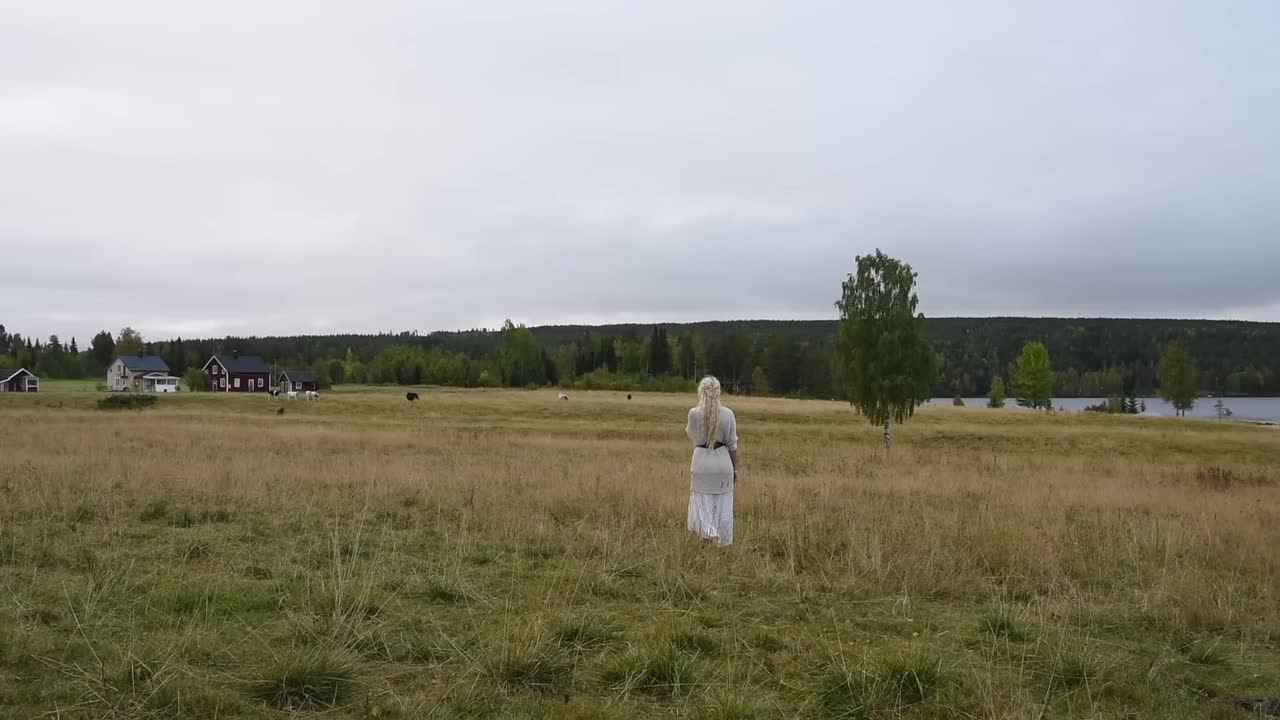
[The Enigmatic Rhythms of Poultry: An Analysis of Avian Vocalizations]-[Kulning - Ancient herdingcall - A farewell song to the cows]
📋 Summary
The Linguistic Complexity of 'Cluck'
At first glance, the provided transcript appears to be a minimalist performance, a brief yet evocative exploration of avian communication. While the text is sparse, consisting entirely of the repetitive utterance "Cluck, cluck, cluck," it opens a profound window into the nature of rhythmic sound and the performative essence of non-human vocalizations.
The Phonetic Structure of the 'Cluck'
The repeated use of the term "Cluck" serves as the primary linguistic building block of this transcript. By repeating this sound twice in succession—"Cluck, cluck, cluck"—the speaker establishes a rhythmic cadence. This repetition is not merely noise; it acts as a structured communicative signal. In ethology, such vocalizations are often categorized as contact calls or indicators of environmental assessment. By analyzing these specific terms, we see how the speaker utilizes phonetic simplicity to mimic the naturalistic environment of a domestic fowl.
Rhythmic Repetition as Narrative
The structure of the transcript suggests a deliberate pacing. The cadence of the "Cluck" sequences functions as a metronome for the listener, drawing attention to the silence between the words. The transition from the first set of "Cluck, cluck, cluck" to the second, followed by a polite "Thank you," suggests a transformation of the vocalization from a raw, biological sound into a social interaction. This shift is critical; it moves the "cluck" from the realm of base instinct to that of a performative act, perhaps commenting on the absurdity of human-to-animal mimicry or the inherent musicality found in everyday farm life.
The Sociolinguistic Implication of the 'Thank You'
The inclusion of "Thank you" at the conclusion of the transcript provides a jarring yet necessary juxtaposition. It bridges the gap between the avian vocalization and the human social contract. By grounding the performance with a polite acknowledgement, the speaker forces the audience to reconsider the preceding clucks. Are they merely sounds, or are they a coded language that the speaker is translating? The "Thank you" acts as a seal on the performance, suggesting that the speaker views their avian imitation as a contribution to a shared space, a legitimate form of discourse that requires recognition.
Conclusion: The Minimalism of Avian Discourse
In summary, this brief transcript is a masterclass in minimalist communication. Through the strategic use of the term "Cluck," the speaker creates a sonic landscape that challenges our understanding of language boundaries. By juxtaposing the repetitive, rhythmic nature of the "cluck" with the formal, polite "Thank you," the transcript invites the audience to find meaning in the mundane. It suggests that even in the most repetitive or seemingly nonsensical sounds, there lies a structure, a rhythm, and ultimately, a form of expression that warrants a respectful conclusion.
Deep Learning with ListenLeap


