Hey, Proof listeners.
I want to tell you about Ooni's outdoor pizza ovens.
I'm absolutely obsessed.
I bought one last year and have been making restaurant quality pizza in my backyard ever since.
And now I'm jealous because Ooni has introduced two bigger, better, and smarter pizza ovens.
The portable 14 inch coated to range from Ooni is the next generation of outdoor gas powered home pizza ovens.
The other new arrival is the made for entertaining 18 -inch Koda 2 Pro.
They're both powered by innovative G2 gas technology for improved heat distribution and a consistently epic pizza every time.
There's nothing like baking in a 950 -degree Fahrenheit oven.
This temperature range lets you cook everything from burgers to a whole roast chicken, not just pizzas.
You can even get real -time temperature readings direct to your phone from the Bluetooth -enabled Uni -Connect digital temperature hub, which is sold separately.
The Coda 2 ranges really are bigger, better, and smarter.
Learn more at uni .com.
That's O -O -N -I dot com.
It's very illegal. So there goes my big idea for the commercial.
Give it a try at mintmobile .com slash switch. Upfront payment of $45 for a three -month plan equivalent to $15 per month required.
New customer offer for first three months only.
Speed slow after 35 gigabytes if network's busy.
Taxes and fees extra.
See mintmobile .com.
Hey, business owners.
We know you know the importance of maximizing every dollar.
With the Delta SkyMiles Reserve Business American Express card, you can make your expenses work just as hard as you.
From afternoon coffee runs to stocking office supplies and even team dinners, You can earn miles on all your business expenses.
Plus, you can earn 110 ,000 bonus miles for a limited time through July 16th.
The Delta SkyMiles Reserve Business Card. If you travel, you know.
Minimum spending requirements and terms apply.
Offer in 7 -16 -25. There's a reason why food plays such an important role in cultures around the world.
Food connects us to our families and to our communities.
It also tells us a story.
Where did our family come from?
Who are we today? I remember the first time, back in 2021, I had a proper conversation with my colleague Sarah Ahn.
We talked about her work on our social media team as well as the blog and videos she had created to honor her mother's Korean cooking.
After that meeting, I wanted to dig deeper.
I figured I would pick up a recipe or two.
But I found much more.
more. Sarah's storytelling was so powerful as she wrestled with big topics.
The challenges of straddling two cultures, American and Korean.
The struggles children born in the U .S. sometimes face as they try to understand the faraway forces that shaped their immigrant parents.
And the complicated parent -child relationship and how that changes when the child becomes becomes an adult.
And Sarah's authentic voice was so compelling.
My partner on Proof, our managing producer, Yumi Araki, knows what it's like to straddle two cultures.
In this special episode, she's digging into Sarah's relationship with her Korean culture and her family.
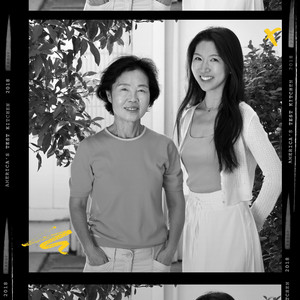
We learn how cooking together helped Sarah and her mother, Namsoon, deepen their bond, and how the time they spent in the kitchen led to the creation of a memorable cookbook.
Today on Proof from America's Test Kitchen, when food and cooking become the love language and the literal language that brings a mother and daughter together.
I'm Jack Bishop. A happy Mother's Day to all, and stay tuned.
Proofs Managing Producer Yumi Araki has the story.
I know Sarah Ahn as a colleague, someone who helps put out content from America's Test Kitchen to the world on social media.
Here's a day in my life as a social media manager at America's Test Kitchen.
Today, I had to go to a cooking class.
But the rest of the world probably knows Sarah Ahn as the popular content creator who posts as Honest Kitchen.
That's A -H -N -E -S -T.
It's a riff on Sarah's last name, Aun, and the word honest. And that comes from my personality of just being a very honest and upfront person.
Sarah posts about Korean food and her daily life in the Aun household with an all -laid bare approach. The content from Honest Kitchen I look forward to watching the most is the subject of many of her posts.
Hey, guys, this is my mom's radish kimchi recipe, also known as kkakdugi.
And she's been working on this recipe for over 30 years.
Sarah's mom is often sporting loungewear in an Asian squat and wearing a pair of long gloves while mixing ingredients together in a big bowl on the kitchen floor.
Today, we're going to learn how to make my mama's rice because every time someone eats it, they're like, oh, my goodness, this is the best rice I've ever had.
When Sarah isn't narrating a video about her mom's recipes, the honesty in Honest Kitchen shows up in Sarah's food reviews.
Like this one from 2023 that caused Trader Joe's to sell out their version of kimbap.
Okay, so we're going to microwave it according to instructions and see how that goes.
Cheers. It's not bad.
But most of all, the quality of honesty shows up in the way Sarah documents the authentic and unvarnished realities of her life.
So every night, my mom makes my dad a pretty big meal because he works 12 to 14 hours a day working outside.
You're probably wondering, what the hell does he do to work so much?
He paints homes, and that's just a way we make a living.
And I know I sound so nonchalant.
It's clear why Honest Kitchen has such a strong following.
It's the way she shares introspections about her life, her mom's food, and Korean culture that resonates so much with audiences.
The posts that made Honest Kitchen go viral was no exception.
So I recently took my mom to Korea, and she hasn't been back since moving here 30 years ago.
This was admittedly one of my most proudest moments because I don't come from a family of money.
I don't even come from a family that lives in comfort.
So to have this opportunity, I felt very lucky.
People were in awe of Sarah's unabashed reverence towards her mom.
One commenter wrote, I can relate.
So proud of you for bringing your mom home.
You made her the happiest, for sure.
This quality was something that struck a chord for me, too.
I remember reaching out to Sarah on Slack when we first started working at America's Test Kitchen in 2021.
She shared a link to her recipe blog.
It was just a small, quaint blog with a couple readers and just a very small following.
There were recipes for dishes I was familiar with.
like kimchi and japchae, and things I wasn't familiar with, like chulmyun, which reminded me of a similar Japanese cold noodle dish.
But the about page is what stopped me in my tracks.
The tenderness with which Sarah described the source of these recipes, her oma, her mom, was unforgettable.
I'm the daughter of Namsun Ahn, the text read.
My sole purpose is to collect and share my mom's recipes.
I felt intimidated by her capitalization of the word mom.
It made me feel like maybe I haven't been holding my own mom in high enough esteem.
I thought, is this for real?
How did she get so unabashedly filial?
Where did this deep adoration come from?
And had Sarah always been this way?
It turns out, Honest Kitchen was born from a time in Sarah's life when she was searching for ways to reconnect with what it meant to be Korean.
So much of the learning and the closing of cultural rifts was happening in the kitchen with Namsoon, and Sarah wanted to document it all.
Growing up, Sarah lived between two worlds, her world at home and the world outside.
In 1993, Namsoon and her husband Joseph left South Korea to make the United States their new home.
As young adults in Korea, Namsoon had a job with the Ministry of Culture, Sports and Tourism.
And Joseph was an industrial engineer.
Namsoon was born just six years after the Korean War ended in 1953 when the country was impoverished.
So she'd worked hard to rise out of poverty.
But by the late 1970s and into the 1980s, South Korea experienced another economic downturn.
So Namsoon and Joseph decided to leave. During that time, America was the land of dreams, Namsun says.
Despite being told by their families to stay in Korea, Namsun says they decided to, quote, chase that dream of ours in America.
But the American dream wasn't easy to achieve.
When they arrived, Namsun and Joseph didn't speak much English, so their job prospects were limited.
In America, Namsun became a homemaker and later ran a restaurant.
Joseph found work as an exterior painter.
Despite the hardships, Namsun and Joseph worked hard to build a stable and fulfilling life for their children.
When I asked Namsun what Sarah was like as a kid, she told me, She was detail -oriented.
She had an uncanny ability to capture things in her mind.
every moment, instantly.
She's very good at remembering her dad's look at a specific moment or a certain appearance or characteristic of an object.
She was very good at remembering these things.
And she has been very interested in films since childhood.
Namsun and Joseph also made sure to share their Korean heritage with their children.
When Sarah turned one, the family celebrated her dol -shan -shi, a traditional Korean first birthday.
Sarah wore a tiny green hanbok her grandmother had sent from Korea.
When Sarah and her brother Kevin were old enough, they went to Korean language school at their church. On any given day, Joseph would walk in the door after a long day of work, and Sarah and Kevin would run towards him with delight as Namsun prepared Korean meals and brought everyone to the table.
In the Ahn household, being Korean was the norm, Nothing that felt out of the ordinary.
But outside the home, Sarah's Korean -ness was noticeable.
Sarah grew up in a predominantly white neighborhood in Orange County, California, and she was often one of the few Asian kids in her class.
Anytime my identity was remotely mentioned in class or somewhere out and about, I would immediately be made fun of.
And so I just had this unfortunate association of my Korean identity being associated with embarrassment.
One day, when Sarah was in elementary school, she had Namsoon make her a special dish for lunch. I brought the kimbap to school and my mom had packed some extra for my classmates because I wanted them to try it.
Kimbap is a dish made of rolled rice that's stuffed with seasoned vegetables and protein.
It's usually made for special occasions like field trips and picnics They're a true labor of love since each ingredient is prepared in its own way with different flavors and wrapped carefully with rice and seaweed into a beautiful fat roll Namsun tells me, in Korea, kimbap is considered tasty To me, it was a special type of food Namsoon was excited to make a lot of kimbap so Sarah could eat it and share it with her friends.
I was waiting eagerly, Namsoon remembers.
She packed the kimbap in Sarah's purple lunch pail.
At 11 .45 a .m., the lunch bell rang.
Sarah was so excited that she had even packed extra sets of chopsticks so she could share with her classmates.
But when Sarah pulled out the kimbap, the room fell silent.
One of her classmates piped up to say, Ew, why did you bring that?
It looks so disgusting.
And everyone just looked at the kimbap and then me and then the kimbap.
And I just felt the heat and a flush of red just taking over my face.
And at that time, I felt so angry and embarrassed and ashamed to be Korean.
Namsoon remembers Sarah's response being muted when she came home from school.
So I didn't ask further, Namsoon says.
But Sarah had one request, which she recounts in one of her social media posts from 2023.
I went home that day and told my mom, Mom, please don't pack me the kimbap anymore.
Can you just make me a sandwich instead?
In this world where I live at home, where it's safe to be Korean and where my Korean identity is in its purest form, when I stepped outside of it, it felt like I was in a completely different world where it wasn't accepted.
Sarah remembers unfairly blaming Namsoon for the embarrassment she felt from the kimbap lunch. To protect herself from future humiliation, Sarah determined that that maybe it was best to keep her Korean customs to herself.
Slowly, she began to separate her home life from her life outside.
Part of that bifurcation meant distancing herself, perhaps not by choice, but in effect from what made her Korean.
I think it was a subconscious effect where I didn't want to learn anything about Korean and not want to learn the Korean language at all.
So up until preschool and really towards the end of high school, my desire to learn Korean became completely dormant.
There's a rift that emerges, slowly but surely, when you distance yourself from your parents' culture.
Cultural customs become sources of frustration or embarrassment.
Eating your culture's cuisine at home can begin to feel like a punishment.
Dishes that took hours to create no longer feel like they're a labor of love.
Instead, they become another marker of difference in a culture that just doesn't accept you.
When Sarah was in middle school, Namsoon took over as the owner of a noodle restaurant.
She handled everything from cooking, placing orders, washing dishes, prepping ingredients, to running the register.
She was away a lot, and Sarah remembers feeling like even when Namsoon was present at home, her mind was somewhere else.
Fissures began to form.
And with every hour away at the restaurant, the distance between Namsun and her kids grew quietly, yet noticeably.
Sarah's Korean language skills fell behind as she and Kevin stopped going to language classes to make room for school -related activities.
Sarah could understand Korean just fine, but she found herself having a harder time articulating more complex ideas or emotions.
Sarah describes what that's like in one of her videos from 2024.
One of my biggest insecurities as someone who is 100 % Korean is that I am not fluent in Korean.
It doesn't really make sense because both my parents only speak Korean, and the only way I can communicate with them is through Konglish, which is Korean and English combined.
I grew up speaking Korean, and then I went to school and English just took over, and it became a priority because my parents were concerned that I wouldn't be able to pick up on English very quickly because I was a bit of a slow learner back then.
And then before you know it, the capability to speak Korean just gradually decreased.
I relate deeply to this.
My first language is Japanese.
But I attended an American K -12 school in Japan.
And like Sarah, my Japanese language skills waned as I focused on my classes, which were in English.
Eventually, speaking exclusively in Japanese became a mental challenge that was made easier by throwing in English words here and there.
This inability to fully articulate what you mean in your parents' first language is even more frustrating when you're young and still navigating what it means to be living between two cultures.
In the middle of arguments, Sarah or Namsun would sometimes pull out an electronic dictionary to help them get their points across.
This little tool that she used, it was like an electric translator.
And so we would use that.
But I'm sure I felt frustrated that I couldn't articulate what I wanted to say that my mom would understand.
but I think my mom has always been open -minded.
And so she understood in that moment as a child that this is what Sarah's trying to communicate, but it's just not being translated.
Namsoon also encountered what she calls differences in thoughts.
They were born from the cultural differences that existed between her and her American -born kids, like how love should be expressed.
I struggled so much with my parents because they never expressed their love for us verbally.
And I would always ask my mom as a kid, you love me, right?
Or why don't you ever say I love you?
The kids were Korean, but also American, Namsun tells me.
So that came with differences in thoughts and cultural differences.
So all that, I felt that when my kids were growing up.
As Sarah and Kevin grew older, Namsun also found herself having to revise her definition of success and what it looked like for her kids.
Namsun would realize that the rules and norms that had helped her succeed in Korea might be different from the ones her children lived by.
In terms of success, Namsun says, of course, money should be the basis.
But as time went by, she realized that success also meant being able to achieve what one wants to, when they want to.
She never forced us to think that we have to become a doctor, engineer, or lawyer.
We were never told to take AP classes.
It was very hands -off, but I expect you to do well and I trust that whatever decisions you guys make, it will be good.
Namsoon trusted her children.
Even though she might not have ever said, I love you, she continued to show her dedication through action and intuition.
She hoped that Sarah would someday internalize that love.
After the break, Sarah has an epiphany and begins her journey of closing the cultural distance.
And now, back to our story.
It's hard to say when the cultural gap between mother and daughter was at its widest, but a trip Sarah took to Korea after college would begin to close the distance.
In 2017, Namsoon's relative, who Sarah calls Uncle, invited Sarah to stay with his extended family for two weeks.
It was Sarah's first time as an adult visiting Korea.
They visited the border between North and South Korea.
Korea. They went to festivals, and notably, they went to a musical based on a Korean folktale.
In the tale of Shim Chung, a blind man is told by a monk that if he's able to gather 300 bushels of rice, he might regain his sight one day.
Down at the village, the man's daughter, Sim Chung, encounters a neighbor who tells her some merchants are looking for a human sacrifice in exchange for a large sum of money.
Sim Chung decides to offer herself up, thinking it'd be the best way for her father to get those 300 bushels of rice.
So she leaves with the merchants on a boat and throws herself into the ocean.
Sarah was moved by Sim Chung's filial act of love and and sacrifice.
There was such power in her actions, and they spoke so much louder than words.
I left the theater in tears, and I told my uncle, it's just allergies, like my eyes are reacting from my allergies.
But it was actually a cathartic cry of like, I just can't believe I was ashamed of this for quite some time.
I don't want to say ashamed.
I just realized that this was my Korean identity, and I kept it dormant for some time.
And it was at that moment, I felt more at home than ever before, even though I was in a new country.
After the play, Sarah's uncle took her to eat Seoul -style bulgogi.
Sarah had eaten bulgogi before, but this preparation was new to her.
There was a simmering broth that came with it, which Sarah wasn't used to.
Sarah's uncle told her how to create the perfect bite, Add the beef and vegetables on top of some rice, ladle some of the broth on top, and enjoy the comforting mix.
Sarah felt whole. She couldn't wait to tell Namsoon about the bulgogi and the musical when she returned home to California.
When Sarah came home from her trip, Namsoon remembers something had changed within her.
She says Sarah's interest in Korean culture had grown.
Her reaction to the tale of Shim Chung indicated to Namsun that Sarah was indeed Korean at heart.
It would have been hard to feel that kind of emotion if you were not Korean, Namsun says.
When I heard she cried after seeing it, she is definitely Korean.
I felt that a lot. Namsun also noticed Sarah taking a greater interest in her cooking.
Within days of returning from Korea, Namsun remembers Sarah telling her, Mom, your food is good.
Namsun was elated. Sarah's praise had created an opening.
Once I heard that my food was good, Namsun says, I felt like I wanted to do more.
So I started making more Korean food for my kids.
By this time, in 2018, Sarah was starting her first job out of college.
She was thankful to land a job that made use of her public health degree.
But she wasn't happy.
When I was at that stage in my life, I felt very miserable and confused what life meant.
Sarah had done all of the right things.
Gone to a good school, graduated, and gotten a good job.
But Sarah had always wanted to study film.
Her parents had actually encouraged her to pursue her passion.
But knowing all of the sacrifices that Namsun and Joseph had made for the family, she felt compelled to seek out a financially stable career path.
But no matter how hard Sarah tried, she just wasn't passionate about her job.
What would her life be like if she had pursued film instead?
dead. At the end of her workday, I would come home, drop my work bag, and immediately just start cooking with my mom and watching her cook and taking notes in my notebook to collect all her recipes.
When Namsun made jinmichae -muchim, a spicy dried squid dish, Sarah wondered whether the squid really needed to be toasted before coating it in the spicy marinade.
Yes, I think I think it's needed, Nam -soon would say.
And then they'd make one batch with the squid toasted and the other not toasted.
In the end, Sarah would admit that Nam -soon was right.
The untoasted batch felt like she was chewing on rubber bands.
Another shortcut Nam -soon refused to take was with her beef broth.
It was a recipe she learned from her own mother, where boneless beef and aromatic vegetables are boiled together for an hour.
She'd use that as the base for dishes like sogogi muguk, a beef and radish soup.
And then slowly but surely, I realized, oh my gosh, these recipes are unlike any other recipes I can find online.
Sarah wanted to document Namsun's recipes so she could keep track of all of her tips and tricks and preserve some of the history that came with them.
So she took the pages from her notebook where she kept Namsoon's recipes and turned them into blog posts.
And that's where Honest Kitchen started.
It was a blog. I didn't really know my food was delicious, Namsoon says.
Maybe all those years away from home, running the restaurant, might have paid off in some way after all.
As they spent more time in the kitchen, Sarah realized that Namsoon had sonmat.
Sonmat translates to taste of hands, but what it really means is that you have an innate culinary intuition that's born from years of experience and ancestral knowledge that's passed through the generations.
Give two people the same dish to make, and the cook with sonmat will create the more delicious one.
The ultimate marker of sonmat is that the food tastes like it's imbued with love.
It was clear to Sarah that Namsoon had inherited her mother's sonmat.
She wanted to know more about her grandma.
Even if Sarah hadn't grown up with her grandmother, Namsoon says, she began to ask, how was grandma's food?
Namsoon also remembers Sarah telling her, I want to learn grandma's recipes.
piece. People would often ask Sarah's halmoni, her grandmother, how she would make her food and her kimchi dishes in particular.
Because according to Nam Soon, it was a taste that you couldn't replicate.
Sarah's grandmother raised her children in the aftermath of the Japanese occupation and the Korean War that followed. The country was decimated from the war.
But from what I can gather, and father, Sara's halmoni made the best out of her circumstances.
When Namsun was in elementary school, there was a busy street that led to a farmer's market.
Farmers would stand on top of large stacks of Napa cabbage and radish and yell down to customers asking how many bushels they wanted.
As the day went on and the farmers continued to toss the Napa cabbage down to their customers, the outer leaves would fall off and pile up on the street.
Everyone in Namsoon's family would rush to the market to pick up the spare leaves and bring them back home.
Namsoon's mother wouldn't make kimchi with the leaves, but she'd make a simple beef broth soup with Napa cabbage when she was hosting Kimjang, the annual tradition of kimchi making.
Women in the neighborhood would get together to make a whopping 150 to 200 bushels of pogi kimchi in the span of four to five days every November.
remember, pogi kimchi is the kind of kimchi where the filling is layered between each Napa cabbage leaf and fermented for a longer period of time.
Namsoon says they did this so there would be enough kimchi for the neighborhood to last the winter into the spring.
Namsoon also noted that her mother was reluctant to teach Namsoon her recipes.
It wasn't because she was some culinary gatekeeper.
The kind of effort she put in, making everything from the fermented shrimp and fish to the soy sauce from scratch, was done out of necessity.
She told me she didn't want her daughters to live a hard life like hers, Namsoon explained.
But through years of trial and error, Namsoon was finally able to resurrect the recipe and pass it on to Sarah.
The power of recipes and the stories behind the food Namsoon was making took on a new urgency for Sarah.
Was there a way she could capture not just the recipes, but also the legacy and backstories that came with them?
Sarah also realized that Namsun wouldn't always be there to impart the kitchen knowledge that she'd accumulated over generations.
That's when Sarah tapped into a dormant and unrealized skill.
She began pointing her camera at Namsun while she was in the kitchen.
Honest Kitchen was now a social media account.
In this post from 2023, Namsun tells Sarah she's been having memories of her mother making a cilantro kimchi dish called gosu kimchi.
It's captivating because it feels like we're a fly on the wall during Namsun and Sarah's kitchen conversation.
Namsun tells Sarah that not many people, including South Koreans, are familiar with the recipe.
Namsoon explains that cilantro wasn't really abundant in South Korea or its cuisine during Sarah's 할머니's time, which is why many South Koreans might not be familiar with the dish.
Sarah lets the conversation play out as we learn that kkosukimchi is likely a North Korean dish that Namsoon's family ate every winter.
Sarah learned that her grandparents were living in North Korea before the nation was divided into the North and South.
As a consequence of the Korean War, Sarah's grandfather, her hajboji, was imprisoned in North Korea for nine years while her halmoni was left to raise her children on her own.
This time period was filled with chaos and trauma.
Rama. Sarah's halmoni was briefly separated from her family, and even lost a son in the desperate flee across the border.
But miraculously, she later reunited with her husband, and they rebuilt.
They went on to have two daughters, one of whom was Namsun. In the Koso Kimchi video, Namsun tells Sarah, this is something my mom made.
I didn't eat it then, but lately I've been having memories of my mother making this and I've been thinking the food my mom made was actually good.
Slowly but surely, Sarah and Namsun's collaboration on Honest Kitchen was closing the cultural rifts that had formed long ago.
Her content resonated with hundreds of thousands of followers.
That video that Sarah posted in 2022 about taking Namsun to Korea for for the first time in 30 years, has around 99 ,000 likes on Instagram to date.
Nothing is more beautiful than Incheon Airport itself.
I taught my mom how to use a T -Money card because this is something that definitely didn't exist back in her day.
As Honest Kitchen's popularity grew, Sarah was invited by TikTok Korea to film a commercial with Namsun about how they helped sell out Trader Joe's kimbap.
On that trip to Korea, Sarah was also invited by Sabashi Talk, Korea's answer to TED Talks, to give a speech about her content.
Her Sabashi Talk ended up being a full -circle moment in many ways.
If you were to ask the same girl who was once bullied for bringing kimbap to school nearly 10 years ago that she would one day be a part of selling out kimbap throughout America, America, she would not believe you.
Today, my Korean friends who have kids tell me that their kids happily take him back to school and come home asking their parents, what Korean food can we pack next?
The way Sarah's content was resonating with so many people didn't go unnoticed at America's Test Kitchen.
Moved by Sarah's storytelling, in 2023, Proof's very own host, Jack Bishop, was the chief creative officer of America's Test Kitchen at the time.
And he asked Sarah if she wanted to publish a cookbook with Namsun. It was Sarah's opportunity to document Namsun's knowledge permanently, a keepsake that would cement Namsun's recipes and stories forever into a book.
But when Sarah approached Namsoon about it, she says there was immediate hesitance.
For me, making a cookbook, it was not an immediate yes, Namsoon says, because the cookbook was not just something that we were creating on our own.
So I felt a lot of responsibility behind that.
Could they truly do these recipes justice?
Would they have to adapt anything for an American audience?
Sarah also noted that Namsun, she was very worried and hesitant about the toll it would take on us.
Sarah and Namsun had worked so hard to close the cultural rifts and strengthen their relationship.
Why throw a wrench in that with the monumental task of developing a cookbook?
The process was taxing.
When it came to recipe development, Sarah and Namsoon butted heads.
Namsoon preferred not to take shortcuts in the kitchen, so adapting her recipes for a wider audience was difficult, especially with the galbitang recipe.
In the middle of learning the recipe from my mom and the frustration of having to adjust this recipe and just the nuances with it, the translation got lost. It was hot.
It was boiling. We were outside.
side and I was like you can't do this outside we're supposed to do it inside who has a kitchen stove outside and she's not understanding what I'm saying and she's saying stuff to prove her point of why she needs to do this and then we just blew up and then in that moment we're just like we just walked away we're like I don't know what you're saying you don't know what I'm saying you don't understand what I'm trying to say and why I'm doing this from my mom's perspective and vice versa and we didn't talk until that very night and that was a perfect example of how just just the language barrier
made it 10 times worse than it needed to be because we were able to communicate and resolve that conflict through communication.
Sarah also pushed Namsoon to fully explain the techniques and tricks that she knew by intuition because they might not be obvious to someone who may be cooking Korean dishes for the first time.
name. I realized that even the steps that feel second nature to me, Soojin, Sarah's Korean name, needed to know that skipped process because the recipe is through her eyes, Namsoon said.
So there was much more explaining to do.
But at the end of the day, there were lots of discoveries.
Gary, our interpreter during my interview with Sarah and Namsun, came in to answer right away when I asked whether or not Sarah had sonmat.
And while Namsun says Sarah doesn't quite have sonmat, Sarah's attention to detail, that filmmaker's eye, and her uncanny ability to remember things paid off during the recipe development process.
I had to remake everything my mom made towards the end.
And if I wasn't satisfied with how it came out, I would refuse to move on because I wanted this cookbook to be meaningful but also logical and taste the way my mom's food should taste.
So if I never tasted like what it should taste like my mom's food, I refused to move forward. Namsun says the cookbook was also a bridge that helped them communicate at a deeper level, in a way that transcended language altogether.
I think we were able to communicate a lot, Namsun says.
So I understood Sarah better, and Sarah understood me better by listening to my history.
I think having these conversations made me realize that there was a person before my mom was a mom.
It allowed me to meet Namsoon.
She tells me, in Korean culture, when you meet people, we greet each other by saying, let's eat together, let's eat.
It's that kind of greeting.
I think that makes the relationships between people a lot smoother.
So when we eat food, it's like that.
But when we cook together, it makes things even smoother.
When I interviewed Sarah and Namsun earlier this year, their book wasn't out yet.
So I asked them what they hoped readers would get out of it.
It's just to be able to relate to these stories and know that you're not the only one and that there's others who can very much relate to what one is going through.
Namsun says, I think the personal stories that are interwoven throughout are really heartwarming.
So I really hope when people read those stories, they're satisfied by them.
And I hope they feel their hearts warmed.
At the end of my interview, I asked whether there was anything else Sarah or Namsun wanted to say.
And I want Soojin to win the New York Times Best Seller Award. Gary chimed in.
I hope that Sarah's cookbook can become the New York Times bestseller.
Fingers crossed. On April 1st, OMA, A Korean Mom's Kitchen Wisdom and a Hundred Family Recipes was made available to the public.
Sarah and Namsun have been on a book tour across the United States.
It's been amazing to witness from afar how quickly the tickets have sold out, how many other content creators have marveled at their book.
And most of all, it gives me great joy to see that Sarah and Namsun are finding success Whatever your definition, in all the ways possible.
Sarah and Namsun's book editor, Valerie, came out to surprise them at one of their East Coast tour stops.
Hi, Valerie! Oh, Valerie, I'm in my house.
It's good to see you.
Thank you. Hello. And I'm here with some amazing news for you both.
Champagne, flowers.
Your book has made the New York Times bestseller ever.
Yay! not only that it's number two number two thanks to proofs managing producer yumi iraqi for bringing us today's story Next time on Proof...
It's a lot saltier than I thought it was going to be and a little bit acidic, kind of like olive juice.
We travel to Georgia, the country, to get a taste of their delicious and cheese -filled national dish.
If you like Proof, be sure to subscribe wherever you listen in so you can get new episodes as soon as they drop.
And while you're there, why not leave us a rating or write us a review?
It really helps other people find the show.
This episode was hosted by me, Jack Bishop, and the podcast is made by the following cast of characters.
I'm Yumi Araki, the managing producer.
I'm executive producer Caitlin Kelleher.
I'm senior producer Alex Curran -Cardarelli.
I'm associate producer Angelica Quintanilla.
And I'm associate producer Louise Karen Kensler.
Audio services are provided by Ultraviolet Audio with scoring, mixing, and sound design by Matt Boynton, Brian Campbell of Signal Sounds composed our theme music, additional music by Kyle Forrester and Jordan Pearson.
Stan Margolis is our director of post -production, and our director of production is Diane Knox.
Special thanks to Sarah and Namsun Ahn for making time out of their busy schedules to speak with Yumi.
Special thanks also to Gary Park for serving as a patient interpreter, to Gia Lee for her incredibly swift and thoughtful translations, and to Jacqueline Kim for her wonderful audio support.
Nina Gianelli is the Senior Vice President of Television, Video and Podcasts.
Dan Souza is the Chief Content Officer, and Dan Surratt is America's Test Kitchen's CEO. Proof is a production of America's Test Kitchen.
This podcast is part of the Airwave Media Podcast Network.
Visit airwavemedia .com to listen and subscribe to their other fine shows.
An Airwave Media Podcast.