
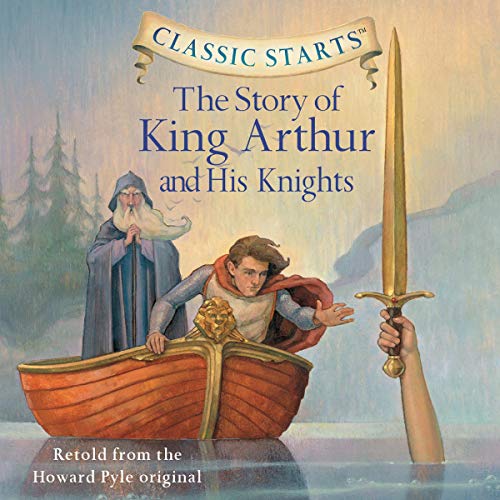
[The Book of Three Worthies: An Introduction to Arthurian Legends]-[The Story of King Arthur and His Knights - Part 12]
📋 Summary
Introduction to the Worthies
In the prologue of The Book of Three Worthies, the narrative introduces a compelling inquiry: "Just what are worthies, you might wonder?" This central question serves as the gateway to understanding the scope and focus of the text. The author clarifies that these figures are not merely historical footnotes, but rather "three very excellent, honorable lords of King Arthur's court." By establishing this framework, the text prepares the reader to embark on an exploration of the virtues and exploits of these legendary men.
The Distinguished Trio
The prologue explicitly identifies the members of this esteemed group, naming them as "Merlin the Wise, Sir Peleus, and Sir Gawain." Each of these characters carries a distinct reputation within the lore of King Arthur. Merlin, characterized by his epithet "the Wise," represents the mystical and strategic intellectualism of the court. Sir Peleus and Sir Gawain, conversely, represent the chivalric archetype of the "honorable lords," embodying the martial prowess and moral integrity expected of the Round Table’s finest.
Structure and Narrative Intent
The text outlines a clear structural plan for the upcoming chapters. The author promises that "we shall tell their stories one by one," signaling a methodical, character-focused approach to the biography of these legends. By dedicating specific sections to each individual, the book aims to provide a comprehensive view of how these "three very excellent" men contributed to the legacy of King Arthur’s court. This prologue functions as both an invitation and a promise of a structured, epic journey through the lives of these iconic figures.
Deep Learning with ListenLeap


