What does it mean to be black in America?
An NPR's Black Stories Black Truths,
a collection of stories that's varied, nuanced, and dynamic
as black experiences, you'll hear.
It means everything.
Search NPR Black Stories Black Truths,
wherever you get your pockets.
You're listening to LifeKit.
From NPR.
Hey, what's up everyone?
Andrew Limbong here in For Maryl, Cigara.
I'm at that age where the decent amounts of my Instagram feed
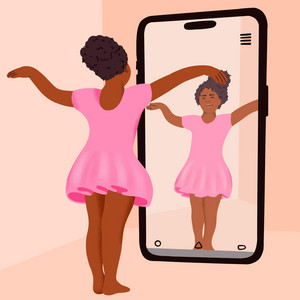
is friends posting pictures of their kids.
At the park, at the pool, at church,
the recital or tournment or game.
And it's great.
I'm not going to be one of those people who get on a soapbox
yelling about kids on my feed.
But there is something,
disconcerting about the whole process, isn't there?
So I do think
parents should be aware that they're not going to know
at the moment that they share a piece of information
or even a photo or a video where it might go.
That's Leah Plunkett.
She's on the faculty of Harvard Law School
with a specific interest in children and family law and technology.
Given that the devices we hold in our hands,
once I'm holding right now,
are digital billboards.
They are metaphorically speaking digital billboards
by the side of every highway,
everywhere in the world,
now and in perpetuity.
She wrote a book about how adults unwittingly compromise
the privacy of children by posting.
It's titled Sharonhood, you know,
like the sharing and parenthood.
And listen, my wife and I are actually pretty strict
about what we share about our kid on mine.
But it turns out we're not the only people
in our kid's life with access to a smartphone.
In my book, literally and metaphorically,
Sharonding refers to all the ways that parents,
but also aunts, uncles, teachers, coaches,
and other trusted adults in a kiddo's life,
transmit children's private information digitally.
Today on LifeKit Leah and I talk about the potential harms
of posting your kid online too much,
how to decide what to post,
and how to talk to the grandparents about
maybe not putting the pictures of the family beach trip
on Facebook. That's ahead.
It's a high stakes election year,
so it's not enough to just follow along.
You need to understand what's happening
so you are fully informed on November.
Every weekday on the Imperial Politics Podcast,
our political reporters break down important stories
and back stories from the campaign trail.
Do you understand why it matters to you?
Listen to the Imperial Politics Podcast,
wherever you get your podcasts.
In this country, some truths aren't self-evident.
In NPR's Black Stories Black Truths,
a collection of stories as wide-ranging
and real as the people who tell them,
we celebrate the Black experience
for all its soul and richness.
Search NPR Black Stories Black Truths
wherever you get podcasts.
Last year, over 20,000 people joined
the Body Electric Study to change
their sedentary, screen-filled lives.
And guess what?
We saw amazing effects.
Now, you can try NPR's Body Electric Challenge yourself.
Listen to updated and new episodes,
wherever you get your podcasts.
All that sitting and swiping,
your body is adapting to your technology.
Learn how and what you can do about it.
I really felt like the cloud in my brain kind of dissipated.
Once I started realizing what a difference
these little breaks were making,
there's no turning back for me.
Take NPR's Body Electric Challenge,
listen to the series wherever you get your podcasts.
What are the stakes here?
I think most of our listeners
aren't professional mommy bloggers.
They're pretty, pretty.
I haven't checked the data.
I'm running under that assumption.
But just post their kids on Facebook or IG
or TikTok, they're like,
oh, he's my kid.
Either they did something cute or something funny
or embarrassing, whatever.
What is the harm in that?
There's definitely a digital entertainment sector
that involves people sharing money.
Distinct from that
is the sharenting that a lot of us,
probably most of us,
do every day without always realizing
that we're even doing it.
We just get into the habit of,
my baby was born, my child started kindergarten,
my teenager's going to prom.
And so it comes almost always
from a really good place or a benign place.
So there are some harms that can arise
that should be factored into each individual's
personal determination about whether
when, how, why, and to what end
to sharent, if at all.
So take away one.
Sharenting comes with different levels of risk.
Leah breaks it into three categories.
The first category of harms is the scariest,
but also the least likely.
Things where criminal, illegal, or dangerous things
can happen as a result of sharenting.
I'll give an example.
Kids social security numbers,
when combined with date of birth, name, address, right?
Those are often actually kind of good targets
for identity theft to open fraudulent credit,
because most minors don't have
credit attached.
Parents set themselves up sometimes
to have their kids be particularly vulnerable
targets for identity theft when you can see
on a public-facing social media post
everything you need to know about how old a kiddo is,
where they were born, what their full name is,
where they live.
And then of course there can also be the
really tragic, super scary instances rare,
but do happen of stalking, bullying, harassment,
and the types of harms that can be fall kids
in the brick and mortar world.
If people learn in the digital world,
either how to find them,
or sometimes perhaps actually more insidious,
learn things about them.
And so having people that you think you know,
if they start to find out, Andrew,
that your kid is really afraid of spiders,
or really loves popsicles, right?
Whatever the things are,
other people don't need to have information
about those ins and outs of your child's
emotional life and personal life.
The second layer of potential-sharing harms
comes from the tech companies themselves gathering
information about your kid.
So concrete example of that would be a situation
where you as a parent are putting out a lot of
data about how your child is doing in school,
or how they're doing in their extra curriculars,
or how they're moving through the world.
And we are just going off of a click wrap
or click through agreement.
You know, we're generally kind of clicking
I accept I accept.
And there's a lot of latitude that those agreements
then give companies and third parties that work with them
about what they do with data and why.
And so I do think parents should be aware
that they're not going to know at the moment
that they share a piece of information
or even a photo or a video where it might go.
And last but not least,
there's how your sharenting habits might affect your child's
ability to tell their own story.
To themselves or to others in the future.
If the world is sort of figuring out maybe not everything
but some significant things about who they are
and maybe making projections about who they're going to be,
it can and sometimes will undercut their ability
to figure that out for themselves.
So, Andrew, those are my three kind of categories of risks.
Consider all these kinds of risks and decide for yourself.
What are you comfortable with?
And this doesn't mean never sharing
about your kids in a digital age.
You know, reading your book, it's clear you're not like a lullight.
You're not saying, you know, go live in the forest or whatever.
Definitely not.
You're on a podcast right now.
I think you told me like your kids are nine and 13.
You guys have a guinea pig, right?
So you're not completely locked down.
How do you think about it?
Like if you're not swearing off social media,
I assume like how do you think about traversing the digital realm?
I have not sworn off of social media.
I'm not a lullight.
I'm very attached to my phone.
Sometimes actually my kids say too attached.
So that's another conversation.
But I have become an extraordinarily minimalist Sharon.
I was never a huge Sharon on social media.
But I did used to do more before I started researching this topic.
And since I started researching this topic,
I sort of adjusted my own personal compass
to be very, very minimalist.
So I pretty much never post my kids on social media.
If I do, you don't see their faces or anything that would really be able to identify them.
I don't use full names.
I don't celebrate their birthday.
I mean, I do celebrate their birthdays in person.
I don't celebrate them on social media.
So I really try to keep it at a holiday card or less rule of thumb.
Take away two.
Instead of completely going dark,
think about limiting the information you share.
Leah's holiday card rule is a good template for this.
And so what I mean by that is people use to send holiday cards
that have long notes sometimes or even short notes saying
Leah graduated from high school, right?
Or Andrew started college.
Whatever it is, there were some updates.
And they were updates that you'd be pretty comfortable with anyone from your great aunt to your boss seeing.
They weren't really going to embarrass anybody.
They weren't particularly private.
So when I do Sharon, again, quite minimal,
I really try to keep it at that level.
And in terms of photo and video, I don't show faces.
I don't show the kids standing in front of where they go to school.
Those are some of the ways that I've turned the dial.
But I do text a lot of pictures and videos to very close friends and relatives.
I'm part of several group chats with grandparents and aunts and uncles,
some friend groups that are dispersed around the country and around the world.
And so Andrew in my book, that is still Sharon Ding.
I am transmitting children's private information, namely their pictures and their videos digitally to other people.
I think it's extremely low risk Sharon Ding.
And if you want to be even more low risk about it, you signal or another end-to-end encrypted messaging app.
But absolutely, I want my best friend in Michigan or my best friend in California to be able to see my child's sports game or theater event.
And I will fully text them maybe even more than they want pictures or videos.
And so that's one way I have adjusted the dial a little bit.
You talked about sending pictures and videos to grandma and grandpa.
When it comes to security, the weakest link of the chain is going to be the way in.
And if I send a picture to my kid's grandparents and they're like,
haha, so cute, the beach, let me send it to my neighbor Jerry. It's not on Facebook. It's no big deal. You know what I mean? Like, how do you make sure that or how do you do your best to make sure that the network is as closed as possible accounting for human error?
Closing the network as much as possible accounting for human error does involve having conversations that I analogize to being a little bit like food allergy or food restriction or food sensitivity conversations.
So it may feel at times a little bit like socially awkward or heavy handed to show up at someone's house and be like, okay, my kid has a walnut allergy. I just need to make sure there are no walnuts anywhere around what they're going to be eating, right?
But of course, if you have a kid with a walnut allergy, you're going to say that the first time you go over to somebody's house.
If it is, if there's any chance you're going to be eating there, especially if you're dropping your kid off, and then over time, you don't need to say it every time because they know that Leah has a walnut allergy. I don't really. But Leah has a walnut allergy, right? Just say something up front.
And that's takeaway three, talk to your circle about your limits and expectations when it comes to posting about your kid online.
It doesn't have to be like laying down the law, but a conversation about expectations, Allah, food allergies, like Leah is suggesting can make that chat easier.
And it's not going to absolutely eliminate or even necessarily mitigate human error. You can't eliminate all of it.
And if you spend a lot of time trying, you're probably going to make yourself unhappy. And you are going to really kind of take time away from accomplishing the more important goal of actually connecting to the people you care about.
So this is like personally, so like we my wife and I were pretty tight about like the picture we share about our kid. And then but then like we had the baptism and it was like it was like Billy Eyler's like all these Indonesian ladies are just like everybody had the camera pop up up up up up up up. And then I was just like, well, I don't know what am I going to do now.
Right. And so there are just like public of it, you know, or like a soccer game or like a karate, there's all their parents, they're taking pictures and like maybe your kid is in the background.
Like so how do you handle you obviously can't stop the events say no pictures allowed. Right. And so how do you approach those types of situations.
My kids go to parties and play sports and do theater productions and I have never tried and knock on what I'll never be in a situation where I feel like I have to I've never tried to limit what other adults or other kids present do.
Right. That's not my jurisdiction. And I'm not going to be that person. And I don't think it makes sense to be that person. I think it undercuts the community in ways that I wouldn't want to do.
With something though like a baptism or another right of passage. Look, I think it's probably impossible to get everyone who's there to not not celebrate their joy and pride by taking out a phone.
It is okay to do some form of gentle request. You know, thank you so much for being in this moment with us to really be in the moment we would request that you refrain from pictures or videos.
Just put it out there. Some people will listen, some people won't. And then you make the call about whether or not it matters enough to you to follow up privately and directly with people that you see actually taking pictures and videos.
My guess is it probably isn't how you're going to want to spend your time right now. But again, people have very good reasons for maybe choosing to have a different line there.
I guess that's something that could also be baked into the invite right. Like, she's like, right that into the.
Yeah. Or right into a program. The thing I always come back to is having our kids understand that there's some things that we don't take pictures of.
And there's some things that we don't take videos of and parents get to set the rules for their home subject to laws around child protection and hopefully also just common decency and good judgment.
But just that moment of is this something that we photograph or take a video of and who decides and why I think it's really an important digital citizenship moment to model for kids from a pretty young age.
Yeah, so let's talk about that moment and that conversation and let's just like break that down step by step so like you're out with your kid right and you know, I imagine we're starting this age three four right like depending on how for I think the conversation starts with very, very young kids and it involves narrating what you are doing and why.
And it can involve saying something like hey, we're having a really great meal for using a recipe or grandfather sent us I'm going to take a quick picture for him everybody smile for grandpa.
I would explain what you're doing why you're doing it where the image or the video is going.
And at a pretty young age I would start giving kids a say maybe not a veto that's up to the family but a say in are you okay with it.
Take away for model being a good digital citizen for your kids that means explaining why you're taking a picture where it's going and you can also gauge how your kid feels about getting their picture taken.
Anyone not feeling up for it right and then you be the judge of do you even want to ask that I think totally fine as a parent to just pull rain can be like hey everybody.
Yeah, give me 30 seconds of not screaming or eating and just look nice for granddad and on we go right.
So that's legit too and I will fully confess that I do not always follow that digital citizenship script that I just outlined I try to follow it enough so that my kids have heard it.
But I will fully pull rank sometimes as a parent but even with that I am still trying to give some explanation of what I'm doing why I'm doing it where it's going and bringing it back to some type of relationship with a person people group or community that is meaningful to us.
So with that in mind, Leah has a checklist of questions to help you decide whether or not to post or share on social media.
The first is are you posting a picture of your child in any stage of undress if you are really please don't post it on social and I just think that that is a good rule of thumb to get into.
The next would be think about whether you are sharing your child's location information full name or date of birth.
If you are, I'm not saying you can't do it you actually can't you're the parent but I'm saying just think about whether that level of detail is actually necessary for your post.
That's often times like the first post so and so was born yesterday at XXXY hospital at 5.27pm right?
Is that just something that you're like don't do that?
I would say for the welcome to the world baby posts, a couple of things to think about.
What is can you do a post that is just a little bit more privacy protecting right so you can you know maybe you don't need the middle name maybe you save that for an email or a message right?
Do you need the exact date of birth maybe you do or maybe you could get away with like you know we recently welcomed having things that are even just incrementally more privacy protecting can in some circumstances add up and also they are good for those digital citizenship muscles both your own what you will be showing your kids and also creating norms within the community.
Yeah back to the checklist and then I would also say just very quickly ask yourself if my parents had done a similar post about me at this age.
How would I felt about it is what you need from that post whether it is connection community crowdsourcing information or the very real emotional benefits that come to you as a parent of feeling seen and feeling validated which is real and does matter parenting can be hard it can be lonely.
And having that source of emotional comfort that is separate actually from the connection but like the likes and all of that if you really need one or more of those things right now and you're kind of like all right I can delete this next year and yes I know nothing's ever gone forever but I can clean it up a little bit on the back end then absolutely go ahead but that would be my checklist.
So you know if listeners listening to this and they're like oh god Lee I did all of these things like are they cooked like how should they you know go proceed from here I had the same reaction when I started researching all of this and I'm then here to tell you take a deep breath don't panic I am sure that for your listeners they are well within the realm of normal
learning behavior they can change or not change if they want to change then easy way to do it doesn't have to take too much time go back over your social media posts so far and if your settings weren't set to as private as they could be reset them if you've posted something that you're now like oh I'm not so sure I love that take it down you can still take it down that's okay just go ahead and also the last thing I would say is please don't
be hard on yourselves there is no shame spiral required you are in the company of parents since I imagine the dawn of time in terms of making the best choice you could at a given moment as a parent and then later being like oh maybe I'll do that differently going forward or maybe I wish I had done it a little differently then but on we go because that is the nature of parenting
well the blanket thank you so much my pleasure all right let's recap take away one share and think comes with different levels of risks so consider the potential harms to your kids and your family and decide what you're comfortable with before sharing online that that doesn't mean going fully off the grid but take way to consider limiting the
information you share lia's holiday card rule is a good template for this that means only sharing information you wouldn't mind anyone from an employer to your great aunt knowing about your kids take away three try having proactive casual conversations with loved ones and other adults in your kids life about limits and expectations when it comes to posting about your kids online kind of like how you might talk to someone if your kid out of food allergy and was eating at a friend's house
for the first time and finally take away for model being a good digital citizen for your kids that means not just thinking about how you post about your kids but how you use your technology in general reminder you're always allowed to adjust your habits if your tech isn't serving you
for more life kit check out our other episodes we've got one on how to protect your own privacy online and another on kids and screens and lots more on everything from friendship to personal finance
you can find that at mpr.org slash life kit and if you love life kit and want more subscribe to our newsletter at mpr.org slash life kit newsletter also we would love to hear from you if you have
episode ideas or feedback you want to share email us at life kit at mpr.org this episode of life kit was produced by Andy Taigel our visuals editor is back Harlan our digital editor is Mel Grieb Megan Kane is a supervising editor
bethonovan is the executive producer our production team also includes market serenow clamoration item and Sylvie Douglas engineering support comes from David Greenberg and Becky Brown I'm Andrew Limbong thanks for listening
this election season you can expect to hear a lot of news some of it meaningful much of it not give the up first podcast 15 minutes sometimes
little less and will help you sort it out what's going on around the world and at home three stories 15 minutes up first every day listen every morning
wherever you get your podcasts what does it mean to be black in America and nprs black stories black truths a collection of
stories as varied nuanced and dynamic as the black experience you'll hear it means everything search npr black stories black truths wherever you get your
podcasts.
This is my voice I can tell you a lot about me and I'm not changing it for anyone in mprs black stories black
truth you'll find a collection of mpr episodes centered on black experiences search mpr black stories black
stories black truth wherever you get your pockets.