To our game dev listeners, are you wondering how to expand your game around the globe?
Well, wonder no longer.
Xsolla Payments is a solution built for global game commerce and monetization.
It boosts player engagement with localized checkout experiences using your players' preferred payment methods.
The simple user interface makes it easy for gamers everywhere to pay for your games and in-game content exactly how they want.
Even better, they can save their favorite payment methods for quick purchases to help them get back in the game faster.
And you'll love Ixola Payments because of its customizable checkout and integration options with everything from sidebars and iframes to fonts and images, making the buying process feel like an extension of your gaming experience.
For payers
Ready to go global?
Visit xsolla.pro slash A-I-A-S-P or click the link in our podcast description to learn more.
Secure your digital world in physical form with IM8Bit.
For 20 years, IM8Bit has been crafting premium expansions on the industry's best games.
They've pioneered community experiences like Day of the Devs and Summer Game Fest and have brought over 200 award-winning physical games and soundtracks to life, from breakout hits like Sea of Stars and Persona 5 to originally published titles like Escape, Academy and Simpler Times.
IM8Bit's passion is fueled by artistry in games, whether interpreting beloved brands from a new point of view or extending the mythology of a game, perhaps one you're developing.
What's the IM8Bit difference?
Their collectibles are premium, but for them, they're personal too.
See for yourself at imabit.com.
Hey, everyone.
I'm Trent Custers, co-founder and studio director at League of Geeks, and you're listening to The Game Maker's Notebook.
We have a really special one for you today.
I've been chatting with my old pal Keita Takahashi, creative director and co-founder of Evola.
It's a wonderful chat.
I'm sure he needs no introduction.
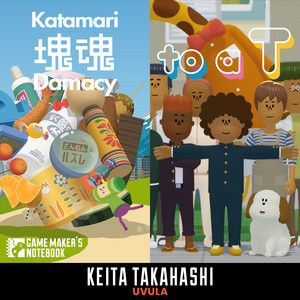
Just created the wonderful game Tuati. which was published by Annapurna Interactive, but also, of course, legendary game designer of Katamari Damacy, 10-year, 1-year teens, and the list goes on, Watan, etc.
We start things off as we always do, talking about how he got into games, his earliest memory.
He talks about studying art and sculpture, but not wanting to be an artist.
He talks about failing the Namco job interview, but finding a supportive voice internally that gave him his first opportunity, and many of them in the studio.
The origins of Katamari Damacy.
Of course, we chat a lot about his wonderful and much beloved title.
We speak about the response to Katamari and his unique approach to how they treated the sequel.
And then we chat through some other projects and we kind of blast through these things like Watam, his Playdate title, Crankin's Time Travel Adventure and how his strong relationship with Sony Santa Monica and folks there led to the long-term partnership he's had with Annapurna Interactive.
Which brings us to 2AT.
We talk about how a desire for information inputs utilizing both arms that Keita had led him to simplify that concept towards the absurdity of a teenager stuck in a T-pose.
That's what the game is about.
We talk through how he approached the game's development, starting with storyboards and, of course, working with his longtime collaborator and also wife, Asuka Sukai, who composed the music for the game.
A huge part of Keita's inspiration, from the beginning of his career, you'll hear, to the end is creating experiences in video games that have to be experienced.
They can't be explained.
And I think that's a hallmark throughout this chat that we have.
So I won't hold you up for much longer, but it's a wonderful opportunity to dive into the mind of a much beloved game designer.
So here we are, Keita Takahashi.
Welcome to The Game Maker's Notebook, a podcast featuring a series of in-depth one-on-one conversations between game makers, providing a thoughtful, intimate perspective on the business and craft of interactive entertainment.
The Game Maker's Notebook is presented by the Academy of Interactive Arts and Sciences, a member-driven organization dedicated to the recognition and advancement of interactive entertainment.
Welcome to the Game Maker's Notebook.
Thank you.
Thank you for having me.
Yeah, it's wonderful.
Wonderful to catch up with you again.
You know we start off this podcast with a question always, which is what's your first memory in games?
But I think, because of your relationship with games and play, I'm really interested to hear you know if games even you know video games had an impact on you or whatever when you were younger, or whether it was some other kind of form of play or adventure that.
Do you have an early memory of a video game?
Yeah.
What's your kind of earliest memory that you can think of?
Video games.
I think when I played a video game for the first time in my life was, of course, in Japan.
It's before the Famicom came.
Way before.
It's called... Are you familiar about Japanese game history?
A tiny bit.
You might have to do a little bit of education.
I believe there was a console named Cassette Vision.
Oh, right.
Cassette Vision.
I love it.
Yeah.
Yeah, Cassette Vision.
And then I play a code Kikori no Yosaku.
Kikori no Yosaku means in English, how do I explain?
Like a guy who cut the tree, chop the tree.
Oh, like a woodcutter or a lumberjack.
Yeah, lumberjack, yes.
Yeah, right.
He needs to avoid the wild bear or wild pig while cutting the tree.
I believe that's it.
That's great.
I love it.
What a good game loop.
Yeah, cut the trees whilst avoiding the bears.
Yeah.
California game.
Yeah.
How old do you think you were at that time, Keita?
It's third grade or fourth grade, which means nine or eight.
And whereabouts in Japan?
Were you in Tokyo or were you in another part of Japan?
Whereabouts did you grow up?
It was another part of Japan.
It's more southern place.
It's called Fukuoka.
Oh, Fukuoka.
Fukuoka.
Yeah, I've been there.
Wonderful place, right.
Huh when, when do you go?
I went in 2010.
This is a little bit of weird trivia about me.
I was the um, the tour manager for a rock band.
Oh yeah, it was so.
There was a japanese band called fact um and they were doing a headlining tour, and my friend from an australian band said you should come and be the tour manager, and so i spent six weeks going throughout japan, and fukuoka was one of the stops.
Actually, I'm so surprised because you have very good memory with exact time.
You said 2010.
I'll tell you how.
2015 and 16.
Yeah, I know.
Yeah, it's come back to me.
I think because you know, as you can imagine, touring with a rock band throughout all of Japan was definitely a high point in my life.
So it sticks out in my memory.
So how was your early days?
Obviously, play forms a huge part of the way in which you work and everything like that.
Were you playing video games a lot as a child, or were you more one of these kids running around outdoors?
How would you explain your childhood and your relationship to play then?
I didn't have the console until I forgot, after Famicom released, even maybe three or four years after release.
Finally my parents gave me the console.
Before I get the console, I every day went to my friend's house who it's his parents running the electric shop like a selling, like a corner shop, electric corner shop.
Like selling the battery or fridge or TV, oh right, like appliances and electronics and things.
Yeah yeah yeah, these parents love the video games and they have the tons of games, so I went to their house every day.
That's amazing as a kid.
That's crazy.
Yeah, like having a having a friend whose parents basically owned a video game store almost is really cool, yeah.
And then I still remember his father.
Dad was playing the game while smoking like a moth.
That's a weird thing, Oh man.
Like, yeah, could video games look any cooler than like a Japanese dad smoking while playing games?
That's very funny.
Okay.
And so that was in your teenage years that you know.
You were going around there hanging out playing a lot of games.
Yeah, I think so.
Right.
But then if I'm not mistaken, you actually studied sculpture in university, right?
So talk to me about your sort of relationship with art in your later teen years and that decision to move into art and sculpture.
That was a huge jump from college student to college student.
It's a huge jump.
I think I like drawing art or making something when I was super young.
Like before I entered the elementary school, which means from.
How do you say?
What was the name before the elementary school?
Preschool.
So my parents let me go to art class in the preschool.
I really loved making art.
But in the middle school or high school, I didn't do anything.
But Before I started considering about the college, I just asked myself what I want to study in the college.
I just recalled that I was very good at art.
Also, I still love drawing something.
So I decided to go to the art class, no, art college.
Then I tried, but I failed the first time.
In art college?
Do you mean to get in or you actually failed art college?
Failed to get in.
Yeah, right.
Okay.
Yeah, the application process.
And then in Japan, we have to spend another year, then try next year.
Right.
I went to another after graduate high school.
I went to, as they say, extra school, especially for learning art.
I went to a design class, like a graphic design or something, but that study was so boring for me.
It's like art with all the fun ripped out of it, right?
Yeah, art for commercial sake?
Yeah okay, like a color layout thing or collage was.
That was so boring for me.
And I just remember how I amused when I played with clay.
Ah, okay.
Yeah.
Okay.
I think I should try 3D, some 3D stuff, which means sculpture.
Yeah.
Not 3D art, but the sculpture.
Then I just, change my course across to the sculpture, then try.
Then I success.
I passed the exam.
You got in.
Awesome.
And your parents, were they supportive of your, you know, you going into art?
Were they happy about what you were doing or were they were like, what are you doing, Keita?
Why aren't you a lawyer or an accountant or a businessman or something?
They didn't say to me directly, of course, but definitely they were worried.
Healthy concern right yeah, I know, because even that's fine, even I could enter the art class, that's fine, but after that, what should I do?
Yeah, that's my concern.
I was worried about that more than my parents.
Yeah, You're like, don't worry, I'm more concerned than you are.
Yeah, exactly.
I don't know what's going to happen.
I think most art students don't know what's going to happen after art school, right?
Right, right.
I love making 3D stuff.
I love clay that's soft and nice, smooth.
But how do I get a job?
How do I get earning from making something?
For some reason, I didn't want to be an artist.
So that's so interesting.
So that wasn't actually.
Even That wasn't interesting to you was the idea of becoming a professional artist making fine art or sculptures or something afterwards even.
Even though you enjoyed it, you understood that wasn't really the goal that you were looking for as well.
Yeah, because you see in the park or town, like on the street, sometimes you see fancy sculpture which is still ugly for me.
Please just plant like a tree, big tree or something, which is more nicer than object.
Artificial object could be.
Yeah, it didn't sound like a correct for me, and also that yeah, the art is very luxury stuff and unnecessary for my life.
But this is just my bias yes, of course.
Yeah, this is not true.
I don't want to be a judge.
Everything that's my time of my thoughts, so I'll go ahead.
And so when you – let's sort of skip forward to when you finished art school and you know you've done your 3D sculpting, you've had all this fun working with clay in your hands and everything.
What did happen next?
How did you – did you find yourself out of a job for a while or did an interesting opportunity?
I know like one of the next major things is, you know obviously, your time at Namco, but like what was happening between finishing art school and then ending up there.
So in – in the college, I think after two years I was keep thinking what should I do while making sculpture?
And then I saw a lot of students in sculpture department how, to say, make the garbage because so they made something in the class, right?
Yeah.
But they just throw, I forgot, how do I say in English?
Like they would just throw it out?
Yeah, throw it out to the big container, a big garbage bin.
Yeah, the big dumpster.
Yeah, big dumpster.
Because it's finished.
Yeah.
And then, yeah, just typing.
They made something for the lesson, then they just throw it out.
Waste it out.
I really hate it.
Hate that I wanted something different.
I don't want make wasted stuff.
I wanted to make something that I could keep using instead of being waste, which mean the one idea come up with is was I think I should make a tool, but not art.
Yeah right interesting, something useful right, like a tool that you can use.
Yeah, not art.
I don't know what an art is actually, but the tool is more straightforward, like you can use.
Then makes it useful.
At the time, the class subject was making goat.
Goat, which is the animal.
Yeah.
Goat out of some material.
I forgot the material.
And I know that material, but I don't remember how do I say in English.
Right, like make a goat out of paper mache or something like that, right?
Yeah, yeah, yeah.
So the other students just make a goat.
So the professor want us to make actual size of the goat.
Oh, right, like life-size, two-scale goat.
Yeah, yeah, yeah.
Oh, wow.
Goat meat luster, like a dire tree parts.
And then I saw they just burned, like threw out after finish that class, which I really hated.
So my plan was, okay, let's, we should, I should make flower pot.
Oh, right.
Okay.
Not a goat, just a flower pot.
Yeah.
No, the goat-shaped flower pot.
Oh, goat-shaped flower pot.
Of course.
I love it.
Technically, you're still doing the assignment, right?
Yeah.
I put the hole on the back.
Oh, right.
Yeah, on the back of the goat.
Yeah.
Yeah.
And then, so there's a place to put the soil, also the flower seed or something.
And then I needed to think about how the water would be drained.
I made a pipe to the boobs.
The water drains through the boobs.
It makes sense.
It makes sense, yeah.
Yeah, yeah.
That totally makes sense.
And then in the presentation the students need to do show and tell after the last part of the subject.
I made a fake flower, then I brought the water can from the house, from my house.
I just give him the water, then explain, so this will be a flower pot.
If you give him the water, the water will be drained from the boobs.
I'm so glad that I could make a two, but also the funny stuff.
Yeah, exactly.
Other students made a laugh around.
Right.
That is my point, which means, oh okay, I made a two because I wanted to make a two, but making people smile or laugh is more important than making a two for me.
Interesting yeah, were you.
Were you surprised at um, your reaction to people laughing?
Did it sort of surprise you how much it moved you or the kind of the importance that you felt?
Uh, i mean, i expected that someone laughed because this is funny, because i wanted, i wanted to make a fun.
But if you actually get the laughing from the other people yeah, that's really.
That's more different than just eye imaging.
Yes, of course.
Yeah, wow.
And so you kind of credit that with... It sounds like that's had a big impact on your games.
I mean, this concept of humour and play and everything is all throughout your games.
And so what did you do with that?
I mean, now you've had this experience in school.
How did that inform how you felt about what you wanted to do next after college, and what did you?
How did you go about trying to find that?
Right.
So that was very epic moment for me.
And then I decided to keep doing the same because that is what I wanted to do.
I realized, I know that's very simple, simple answer, just making tool or making the fun stuff.
But that was very big because I made my, I found the answer by me.
Yeah.
Not reading the book or anything.
Not watching the movie.
No, no.
So the answer is still living inside of my body or brain or anything.
That's still my core element.
And the next one.
I forgot the next one, but i, i made, i keep making, i kept making the similar stuff.
I made a transformer transformer, which is, i made a lower table, but the transform to the robot awesome.
Yeah, those kind of stuff.
I really enjoyed making those things in the final before graduate college.
This is the time.
What should I do after graduate school?
Of course I didn't want to be fine artist.
I mean, I couldn't, I know.
I don't remember exactly, but I just realized oh, video game industry providing entertainment to the whole world, which might fit me well.
Even I didn't play video game at the time.
Also, I didn't have any PC.
So I didn't know how to use the PC.
But I tried.
I tried Namco because I had a good memory with Namco.
In the old memory, the Pac-Man or old Namco game was very unique and nice.
So I tried.
So you just applied.
Was there a job going or did you just send them a letter or you...
I just survived because in Japan, maybe this is the system, unique system in Japan.
The new grad has kind of privilege to enter the company.
Yeah, okay.
With yoga, prioritize is higher than other people.
So I applied.
I think I passed the first exam and second exam.
Yes, then...
I had the interview with design team.
Design mean art design, not a game design because I applied as an artist.
During the interview, I think I remember I complained about the recent Namco game, which doesn't look unique.
Bold strategy.
I like it.
Very bold strategy.
But it passed.
I passed.
Yeah, they must have appreciated the honesty, right?
And maybe they were thinking similar things and then you said it and they were like okay yeah, he's not wrong.
Yeah, but I failed at the executive interview.
Oh, okay, right.
So you didn't pass the final boss.
Yeah, because I was too honest.
I don't know.
Yeah, honestly worked with the art team, but not with the executives.
Okay.
Yeah.
Yes, right.
That's a rule.
That's a rule.
And so then did you have to go through the process again or how did you then end up working there?
So actually I didn't know that I failed the executive interview because I got like a success letter, but it took more than two weeks, which is really more than longer than the usual process.
After I enter the NAMCO, some HR people told me hey Keita, you know what?
You failed the executive interview but some design manager helped you with me.
Oh wow, he.
He loved my art, so that's great.
I think there's something i could do for the namco.
So how wonderful it must have.
It must have felt daunting and scary hearing that you failed the executive interview but then at the same time so um, so rewarding and inspiring to know that your design manager has already been sticking up for you and believes in you so much.
Did that kind of put a lot of confidence into you in your new job?
Yeah, kind of, yes.
I think so.
That is a guy who helped me to make Katamari.
Right.
And did you start, So now let's talk about.
Obviously, Katamari is one of your most beloved games, and rightly so.
How you mentioned that this design manager helped you make Katamari.
Did you work on any other games before Katamari, or did you just sort of start getting started on this new wonderful game that was maybe more unique than the last one they made?
Do you think so?
So when I, after joining Namco so the new employee, it'd be like a special time to have a lesson like how to make a game.
Wow great, like internal company training yeah yeah, training also also some people, some people need to go to the arcade and they work as a employee at the arcade like two months, three months wow, okay.
So yeah, working as an arcade people was also interesting, too interesting experience like checking the coin in the arcade machine.
Yeah yeah, watching people interact physically with these games and yeah yeah, yeah also sometimes the coin stuck so i have to open the machines.
Yeah, remove the cigarette butts, all that sort of stuff right yeah yeah, this kind of stuff.
Then at the end of this training term, we need to make a group, have to make a pair with the engineer then making game.
Oh, right.
In short, making the mini game in a few months.
Then after that, the all new employees, all of them just go to the actual project.
But my boss which is that the game design manager also me didn't put me project because it seems boring.
Also, she, my manager, want me to learn how to make a game.
So he let me put into the tiny prototyping project first.
Oh, great.
Wow.
So I could learn, I could work with more experienced engineer and game designer directly.
Yeah.
How to learn how to make a game.
That was very helpful.
Yeah.
I think I had two or three prototype project, which all of them never success.
They all canceled.
Yeah.
In fact I was fine, but the other people who joined the NAMC at the same time finished some of the game already, but I didn't make any product.
Yeah, you've been there and everything that you've worked on has been cancelled so far, right?
Yeah.
My boss started to worry about my career.
So he just pressured me to Maybe you should start thinking about game ideas more seriously.
Then Katamari Idea just came up.
It just came to you?
It's funny.
That can happen sometimes, right?
You're just like, oh, what about this?
You don't remember a seed of inspiration or anything?
You didn't see a piece of rubbish blow along and pick up another one or anything?
It just sort of came to you one day.
So I was thinking about the game idea from the beginning of the Namco right after joining.
I wanted to make a game because game company being artist is maybe fine, but making the game as a director or game designer is more fun stuff also that that someone can do only
Also, the boss wanted me to think about the game.
My first priority, highest priority was I want to make something that only game can do.
You know, like a fighting game, racing game.
You can drive the car in your life.
You can fight people on the street if you want to as well.
Right people as well.
I know that's illegal, and then also, of course, the interactivity as well, but that's not so easy to come up with a nice idea.
But when I the idea of the Katamari come up, it's very unrelated, but it was just a night.
I was walking, I was walking through the station.
I was just thinking something.
In my brain, I just saw the object spinning.
Oh, the object is spinning.
Then it started moving.
When I arrived at the station, the object spinning, moving around, attaching to the other object and then making bigger, and then ride on the train and then take off the train, the object still spinning, then getting bigger bigger, bigger and then same size as the earth, the planet.
Then maybe, if the object not bigger enough and sometimes making it broken then be small, like those kind of idea came up at the same time.
I was so excited about this idea the next day i just told my only game designer friend at the time Were they at Namco as well?
Were they a colleague?
Yeah, yeah.
Yeah, okay, yeah.
Yeah, at Namco, at the colleague.
And then she said, oh, this is great idea, actually.
Right.
This could be the game.
Then, yeah, I just impeached this idea to the design manager as well.
Then he also liked it.
This is the beginning of the Katamari.
Right.
And so your game designer friend said it's a great idea.
You pitch it to your design manager.
They like it.
Was there then another round of approvals?
Because it is such a such a strange game to be made with inside.
Namco, you know like this is the company that made Tekken and Soul Calibur.
And obviously there are wonderful, unique playful games that came out of Namco, like recommend and everything else.
But yeah, how did you?
Was there another final boss?
Did you fail this executive interview as well to get the game approved, or yeah?
So this is just the beginning of that story since, so my boss is the designer?
No no, like an art design manager, then me as well.
Like an artist, just artist in Namco employee, everyone could.
How do you say, once they got the idea, did a sheet like one sheet.
Then they write down the idea.
Oh, like a form for your gameplay ideas.
Anyone could, oh, cool, okay, right, yeah.
Right.
But since we were just artists, even, so there's some hierarchy.
Of course, the game design not.
To me, it's more judging and more like a how do you say?
Higher status yeah, than the artists, yeah.
So they decide like oh, this is a good or bad okay, they're the judges of what is a good game idea right okay, right and then.
But we hate that, we hate us, we hate the system.
And they have.
My design manager was kind of genius and nice people, so also.
So at that time, Namco's president, Masaya Nakamura, the original founder of the Namco oh wow okay yep yes he, I don't know what should I say.
He had an interest about education yeah, so I don't know where this story came from, but Namco worked with digital health.
Digital health, which means the school to teach about how to make, how to use a tool of the 3D CG or computer in general.
Oh, right.
Okay.
Like a technical, like a digital design school kind of.
Yeah.
Yeah.
Yes.
And then they made the game design course or game, like a video game course.
Video game.
One of subject was making their own video games with student with in student but with some Namco source people right so it's like a Namco initiative with this school so that students can work with Namco game designers and engineers and some resources and things right yeah yeah yes Mostly artists, other 3D artists.
Oh, okay, cool.
My boss knew that.
He pitched the Katamari idea to the school.
He explained the students could make the object the Katamari rolled up.
Ah, right, of course.
And Namco engineer could help to make other game.
Then me, me could start learning how to make a game as a designer.
Amazing.
They found a loophole.
Yes.
That is genius.
Incredible.
Yeah, I think so.
That yeah, that's Operation Katamari mock-ups.
And you i guess you sidestepped the ire of the judgmental game designers right to to get your game approved.
Yeah, like it was like this feeling.
Well, i think it worked out for everyone involved right, like it's the game.
The students obviously got to work on a great game and obviously so many objects to model up and everything.
You got to learn how to make a game.
And then katamaru damacy obviously went on to be a success for namco.
So It seems like something where all do you think all is forgiven.
They're happy?
I think so.
I believe so.
I forgot the exact time, but it took three or four months to finish.
We were using Nintendo Cube.
I believe it was not PS or Xbox.
Yeah, so you started on the GameCube.
Yeah.
The senior engineer explained to us the GameCube was a little bit easier for a less experienced engineer.
Ah, right.
Okay, right.
So we used our GameCube.
Then we did presentation for the internal Namco.
They love the game. and my design manager just bring up to the executives about this idea they definitely they skeptical about me because I'm just still an artist some design stuff that prototype of the Katamari so they didn't they like the idea but they didn't give us internal resource we got the green lights for the Katamari, but the condition was using the outsource company.
Oh, okay, interesting.
Do you remember being disappointed when you heard that?
Yeah, yeah, of course, really.
But, you know.
Like a green light of the new game.
Yeah.
And I was just an artist.
And then that's great, right?
Yeah, yeah, exactly.
Yeah, it's fantastic.
Oh, wow.
Is there anything that you remember from that game, Keita?
Because so much has been spoken.
I'm sure you've spoken a lot about the game and your inspirations for it and things like that.
But is there anything, because it was your first game that you were leading the development of and as a designer, do you remember anything in particular that you learned from it, or any epic moments, as you say, in regards to that have gone on to influence how you've made games moving forward?
Were there any big lessons that you learned or realizations that you had?
I'm sure a bunch, but any that stick out.
You mean through the Katamari?
Yeah, just through Katamari.
Yeah, through development.
I don't know.
I don't know what I learned, but it was so fun, it was great.
You had a great time.
Yeah, it was just crazy.
Yeah, so the outsourcing company was not Tokyo.
It was Osaka.
It's far from Tokyo.
So I actually moved to Osaka.
Oh, you moved to Osaka.
Wow.
Yes.
And then I went to the outsourcing company.
Oh, and you were working from the outsourcing company's office.
You're right.
Did you get along with everyone there?
Is it a good working relationship?
Yeah, that's what I have learned, I think.
Yeah.
So I mean, how do you say a guy from bigger company and then me, surrounded by outsourcing company, employee?
I would think a guest.
Right.
Yeah.
You're the visitor.
Yeah.
You're the honorary guest.
Yeah.
Yes.
It does feeling so bad.
They are like a yes man.
Oh, right.
Okay.
Yeah.
Of course, yeah, because you're the big Namco guy that come into town, yeah.
Right.
But it's not possible to finish the game with such a situation.
Of course, yeah.
I really want to be getting along with them, like no sugarcoating talk.
Yeah.
Socializing with other companies' employees, then...
But sometimes I need to be very responsible because I was very charged with the game design.
Then there are outsourcing company employees work as how do you say, maybe it's not great work as a servant.
Yeah, of course.
They do.
Yeah, they just do whatever you say. if it's failed, then responsibility to come to me, right?
Yes, yes, of course.
I didn't like the situation, but that was so.
I needed to make very exact design document for every single feature, even just moving, then rolling the Katamari.
I made a design document in Illustrator, like Adobe Illustrator.
The explanation also needs some art, very exact explanation.
I think I spent a lot of time very, very tons of time to make the design document, which is kind of good because making document makes the idea more clear.
Yeah, Yeah.
And for you as well, right?
I find, as a designer, the process of documentation is also a process of refining my own idea and better understanding it myself, through having I found that as well.
I used to teach writing for games and narrative design at university and I never learned more about my own craft and why I work the way I do than when I was teaching, because I'd be teaching and I'd be saying something that I just think is about games writing, and then a student would say, but why, why do you do it like that?
Then you have to explain it and they say, but why?
And these and that kind of constant refining of things?
Yeah, i completely understand.
It does make things incredibly clear.
Even your own process right right, right.
Did you a katamari, though?
Obviously, so many of your games are so tactile, i must say kata, i am surprised to hear that you spent so much time in documentation, considering how tactile they are.
Were you still hands-on with the build very early on, working with the engineers and designers to make sure it felt perfectly right?
I imagine that was a huge part of the process, that tactility.
Yeah, I think so.
Even just document, making document, definitely we need to implement, then play.
Yeah, of course.
Yeah, document isn't a video game, yeah.
I wish, I wish, wouldn't that be nice?
Yeah okay well hey, let's.
Um, we've got, we've got many games to talk about and obviously you know we're here.
I'm really keen to talk about to a t as well, but let's give a head.
I think my final question around katamari is obviously the response to it.
Right, it came out uh, and there were some folks, obviously almost universal acclaim, but it was very different and unique for its time.
It was a time in video games where i think video game, a lot of folks were proving what video games can be, and i think katamari really came out as a demonstration of that of like, the wide range of opportunities for play, and it was wonderfully embraced by the games community and then obviously went on to have commercial success as well.
Uh, do you remember that time when it was?
You know, the reviews were coming in and obviously there were a bunch of rewards.
But even, as you say, if we go back to the goat flower pot thing right like, the game inspired so much joy in people.
Do you remember, like, the release and how it felt?
So I surprised at the first, the first thing I surprised was the Sony loved the idea.
Right, okay.
You're like, oh, all right, yeah.
Really, Sony said they won't make a commercial, like an ad for the TV.
Mm-hmm.
I hear you.
Also, even they want us to release a few weeks earlier than the original plan in Japan.
Oh, okay.
Right.
Wow.
Yeah, PlayStation has asked us to do that before as well.
Oh, really?
It doesn't make the schedule easier.
Yeah, our first game, Mellow.
They were like you need to release this six weeks earlier than we thought.
Okay.
To be honest, yeah, it was a very fun project. also tough, difficult.
And while I was doing the debug, I often slept while playing the Katamari because it's kind of, how do you say, it's watching the rolling object in the screen.
Yeah, it's like a visual lullaby, right?
It makes me sleep even within the nice katamari bgm katamari songs that's still very nice but even though i said a lot that makes me really boring or maybe that's maybe it's too boring oh yeah too boring to play but maybe that just my situation was too tough like yeah exactly you're crunching on the video game yeah it's more of a you thing yeah Yeah, I was just exhausted.
Do you remember seeing those?
I mean the Japanese commercials.
I remember them going around at the time, the PlayStation commercials.
Do you remember seeing them for the first time?
Because they're just, they're so fantastic.
Yeah, those, you know, the Sony commercial at the time was, every commercial was so nice, so good.
Yeah, they had really great TV commercials, yeah, for the PS2 era.
Yeah, I was so proud the game picked us.
Yeah, absolutely.
Yeah, wow.
That's fantastic.
Since, like what I mentioned earlier, since I had a concern like I kept sleep, I didn't expect that the people loved the game so much.
I was so surprised.
I mean, even in the Steel series, it's keep going.
Yeah.
It's crazy.
There's a lot of love for this game.
I think, you know, what's the term?
Cult classic, right?
It's like it's a much beloved cult classic these days.
It's such a fantastic game.
I think people's eyes light up when you talk about Katamari and the music and everything.
Obviously, music's been a huge part of your games moving forward too.
We'll talk about that.
So let's talk about, obviously, after Katamari, there was We Love Katamari.
How did things sort of change internally at namco?
Uh, once you've had this game, your success, do you finally, did you have the trust of the executives?
Were you able to?
I imagine we love katamari was made internally, or did you continue on making that externally?
Oh, i'm sure uh definitely uh outsourcing yeah right okay yeah, i guess it worked right right um so, so the namco asked us Why don't we make a sequel?
But it was very misleading because I made Katamari, because there are so many sequels and many similar games exist.
One of the biggest reasons why I wanted to make a Katamari.
So that means if I made a Katamari sequel, it's kind of the same.
It defeats the point of making Katamari, right?
Yeah, yeah.
It could be, I was feeling like I'm gonna be a prisoner.
Yes, yeah, you're stuck in this same game idea for another however many years.
Yeah, also, I think the first response was, if I say no, who will be the director?
Then Namco said, oh, the one of the outsourcing company, game designer will be the director.
I didn't like the idea either.
I had a, yeah, I had a just hard choice making a sequel or let them make the sequel.
And then I just picked that I made the sequel.
And did you, how was your time on the sequel?
Did you, did it feel like a prison in the end or was it fun still?
It kind of boss.
A fun prison.
Yeah.
Okay.
I just changed my perspective.
So sequel, let's do what the only sequel could do.
Yes right, of course.
So the title should be should be crazy and stupid because everyone knows Hatamari already.
So we could change the title the idea came up with.
So everyone loved Katamari, so we love Katamari.
That's great.
And then, of course, the very meta thing of, like you know, the king of all cosmos reacting to the story right of Katamari's success very clever, yeah.
Yeah, also Japanese package design we took a photo of in front of the Namco building.
That's awesome.
I did not know that.
How cool.
Oh, really?
Yeah, yeah.
That's fantastic.
That is also what you can do only for the sequel.
Yeah.
Yeah, I think it's amazing.
What a smart decision.
As you say, this could be a prison, right?
But you chose to You chose to do it.
And so then, finding a way to make it fun you know, like to be able to have fun and not take yourself so seriously is such a wonderful way to approach it.
I know.
Yes, I know.
I'm kind of a lucky man.
And my situation is not so bad because I still could make a game, right?
Even the sequel.
This is still brilliant.
But for me, it's not so great.
But so even you are in the tough situation, that still could be fun.
It's up to you.
Yes.
Yeah, totally.
Yeah, exactly.
We make a lot of our situation and how we feel about it is determined by us and our perspective and how we choose to engage with it.
Wonderful.
Okay, let's talk about, because your next follow-up game was Nobi Nobi Boy, which was completely different, right?
You had a chance to turn things around and change things up.
Right.
So, Nobi Nobi, the concept was I love the Katamari, but I didn't like the game has the time limit.
Because having the time limit is very easy to make that idea as a game.
But I didn't I could not find other nice element to make the Katamari as commercialized game.
Also, I wanted to make something you can keep playing forever.
Right.
Okay.
Yeah.
Again, it goes back to not throwing things away, right?
Something that is lasting.
Yeah, lasting.
Without fighting or anything.
Fighting or competing.
But somehow, he playing like a Kray.
Kray, like I made a Kray.
And in that time, the PlayStation 3 come out, bluff a lot how PlayStation 3 is powerful.
I forgot the exact name of the CPU.
Do you know that?
They has like some neutral- A special name for the CPU?
Yeah, I can't remember.
I do remember.
We had the dev kits in our studio at the time, but I can't remember what it's called.
But yeah, I know what you're talking about.
Can you see what special something?
Is it the cell engine?
Yeah, cell engine.
Multiple processing that make the physics engine calculation 10 times faster than something.
Blah, blah, blah, blah, blah.
I thought, oh, maybe we could use the physics in game.
That would be amazing.
Then that's the start of the failing.
That was off in the wrong direction already, yeah.
Then the idea just making stretchy object we cannot do in the real life because there's no material like a keep stretching forever.
Yeah, then I'm out there attaching again and I wanted so my idea Nobidobi boy game in my brain it was more like in the game there's other human people living in the world, then Nobidobi also living at that world kind of separately.
Then if the Nobi, Nobi boy stretch, then the people react about how Nobi change.
If the Nobi Nobi change, Nobi stretched out, then people try to ride on the Nobi.
I wanted make the tons of reaction of the human character.
They make some more playground style game with physics engine.
Then the Nobi also can eat the people.
Definitely, they will escape to the house.
But the Nobi could keep running, like following the guy.
And then Nobi could just surround the house then squeeze in, squeeze them, then make the house be very tiny, or something.
I was thinking like those more physical reacted game with Clever, smarter NPC.
Also much more Nobi Nobi voice.
But that's too much.
That was just too much.
Yeah.
That was too much.
It never sort of reached your.
There was a gap that you weren't able to close between your vision for the game and what you were able to do on the team.
Yeah.
And yeah, that's why it took... I forgot it took five or six years.
That was too much.
Yeah, it's a long time, isn't it, to work on one game?
Yes, I should have made design document a lot.
You needed more documentation for that one, yeah.
Actually, yeah, I didn't do that a lot.
Wow.
I think.
Yeah, interesting.
So you think that it was hard for you you sort of failed to communicate your vision very clearly and articulately to the team.
And as a result, you're kind of spinning your wheels a bit on that game.
Yeah, because not like Katamari, Nobi Nobi team was an internal team.
So I thought I was able to communicate a lot well rather than outsourcing company.
Interesting, but no, yeah.
Okay, well, after Nobby Nobby Boy, if I'm correct, did you take a break from video games, right?
Like you left Namco, you did some stuff.
I think you were designing playgrounds or something at one point.
Am I right in saying that?
Yes.
Yeah.
Everyone thought I left from the game industry some point.
But I just quit the Namco, that's it.
Yeah right okay, you just quit Namco okay yeah yes, but you are right.
Yes, I was.
I joined the playground project in UK in Nottingham.
It was very fun project, but it's cancelled.
It was cancelled, of course, because my design was too risky and dangerous.
Yeah, that's it.
Too dangerous to the children of Nottingham, right?
Yes.
Human being in jail.
Yes.
I love that.
Not even children, just adults even.
Now I want to see these playground designs.
Did you enjoy the process of designing these playgrounds, even if it eventually, you know, or it didn't eventuate in the end?
Was it a good break from video games?
Yeah, I think so.
I mean for me, thinking about the playground design, playground equipment design and making the game, also making the sculpture, all are the same for me.
Wow, okay, yeah.
But the people working with them are different interesting right okay, so to you it feels like the same medium, but it's just actually like different vibes everyone that you're working with.
Yeah yeah, I'm more serious about safety, of course yeah, than us game developers, for sure yeah, they don't.
They didn't want to make us equipment because of just fun.
The safety is more high priority.
Safety is expensive, like a cost.
Yeah.
Do you look at playgrounds today?
You have kids, right, Keita?
Am I right in saying that?
Yeah, yes.
I'm sure you've seen a number of playgrounds in your time with kids.
Are there some that you look at these days and you're like, too far, too safe?
And then I guess the other question too is that do you have a favorite playground somewhere that is dangerous enough for you that you think it's cool?
I'm not saying I want dangerous playground.
I just said the playground could be for everyone, not only for child.
I don't like the parents just watching the smartphone wife, kids playing the at playground that that could be more universal space for everyone.
Also, maybe anima could join too.
So yeah, even now i know some some, some crazy parents play with that kids at the playground.
It's young, young parents, but yeah, it's not so different.
Um, so That is still my dream to make my playground.
So I need to be a billionaire.
That's why.
So you can decide, yeah.
You can pay for it yourself.
That's why I keep making the video game.
I love it.
Everyone buy Keita's video game so he can make playgrounds for our children, right?
That's the goal.
Yeah.
And for ourselves as well.
Playgrounds for us too, right, Keita?
Yeah.
So around this time, am I right in saying that you also – kind of that?
You formed a company as well like the current company that you have now with with your wife.
Right, like that's your company?
Yes, right and so.
But you had you and you're making, you're making little games or games with in that company.
But then you also went on to tiny spec and you spent a bit of time there and you moved from japan around this time too.
Right yeah, from japan to vancouver, canada.
Yeah, how was your time in vancouver?
Think that was beautiful.
That's the first time to live from, like a first time living outside of the chevron.
That was crazy time.
Also, that was beautiful.
Yeah, you're working on glitch at tiny spec, am i right?
Yes, it's like a like a 2d 2d social game, like a little social mmo kind of thing right, Yes?
I think when I met you, that's what you were working on at that point in time all those years ago.
Really?
Yeah.
Okay.
I mean, I think I didn't do anything.
I just went to the office and made one idea per day.
As a designer, if the team loved the idea, then they could implement something like that.
How fun.
That sounds like a dream job.
That's great.
Just go in and give one idea a day.
Yeah, I think so.
And interesting, I think, for our listeners too.
A little interesting tidbit or piece of trivia is that TinySpec is the startup that created Slack.
Obviously, right.
Like Stuart Butterfield was there and then it went up.
That was their internal messaging tool.
Am I right?
Yeah.
Yes.
Wow.
They were using IRC.
Do you know IRC?
Yeah, i do yeah yeah, yes.
And then, and then, after that um, you moved to san francisco and then i think i remember i don't have it with me right here, but i remember the next time, i think, or one of the next times that i bumped into you you're working on what time and you gave, you gave me a little, a little green cube, a little wooden cube with a little little face on it.
I still have it to this day.
I should have, i should have brought it with me for the, for the podcast.
Tell me a little bit about what time.
Am I right in saying that your time in Vancouver inspired a lot of that game and your idea for that game?
If I remember correctly, I think I saw my kids playing with blocks, but not from the other games.
Sorry.
My inspiration comes from my life.
Yeah, of course.
The kids playing the block, like a stacking block, then break it.
Then, ha ha ha ha, he laughed.
That's it.
Definitely, yeah, breaking stuff, explosion is so fun.
Maybe I could make it.
Also yeah, since this is the first experience that for me to live outside of Japan, I know you or the people living in North America or other countries.
It's a very common thing to live or work with a lot of different race of people.
Yeah, like the teams are much more diverse than Western companies.
But that's still very impressive for me.
So many diversities are out.
They use the English as a tool to get over the differences, which is nice.
Yeah.
That common language, right?
That sort of meeting ground in communication.
Yeah.
So that is also another inspiration for the Watan.
The changing, getting over difference by laughing or explosion.
That's the kind of scene of the game.
And this is your um, your first time as well, working with anna perna interactive, who've been obviously a big supporter of your games, their publisher, yeah to a t as well.
Yeah um yeah how, how is that relationship and, and you know how, did working with them help help you sort of deliver on your vision?
So before they made anna perna interactive, They were part of the Sony Santa Monica outsource department.
And then the Sony decided to close the department.
Then they turned into a new publisher.
So I was working with them when they were at the Santa Monica studio.
So they keep working with them.
We are when they coming to the Annapurna Interactive.
So we have a long time relationship.
Right.
Yeah.
That was so nice.
They are so nice people.
Yeah.
Wonderful folks.
I remember that at GDC they for the first time, I think before they'd even announced Annapurna.
I remember I met with them, you know, Hector and Nathan and Deb and those folks.
And they, they told me, they told me their plans and it was so exciting, you know coming, all that they were planning to do.
You know, coming from Sony and stuff.
Yeah yeah amazing, all right, cool.
So now we're i guess we're sort of at the point now where one of the sort of the next things that you know coming along is um, you know there's, is there's um, some other things in there too?
Right, you did kranken's time.
Actually, let's talk about that, the play date.
Right, like kranken's time travel adventure, you're fun there.
It's such a cool little device to work for.
Oh, i think so.
I don't remember exactly when, but while we are working on the Wattam,
It's a moment we have to stop working because the Sony Santa Monica canceled the Wattam.
We needed something different to work on.
We were working on the other game, which is for the Google AR game.
Oh, like a Google Cardboard or a VR sort of game, was it?
Yeah, yeah.
Right.
Do you know that?
I know Google had tons of different AI project.
Yeah.
I think that was called Tango, Project Tango.
Project Tango, yeah, I know Project Tango.
I think we made game called World for the Tango project while stopping the war town.
Also, the panic, because panic is kind of, panic is of my friend.
They love the Katamari.
They wanted to make a Katamari T-shirt.
You know the panic, right?
Yeah, I know panic.
Yeah, the publishers of a cable and those folks, publishers of Untitled Goose Game.
Yeah, yeah, yeah.
Yes.
They just, the cable told me they are making a tiny handheld machine, has a crank.
Such a cool idea.
Right.
When they asked me at the time, even they didn't show me exact photo or sketch of the handheld design.
Yeah.
The idea of the cranking came up with super quickly.
I don't know.
I forgot how.
But the original idea was you know the old filmings, old film machine yeah yeah yeah, where you have to wind the the camera yeah, and then you can rewind.
I thought i could, may i could combine this rewind rewind system to with some action game like a dodging or stopping yeah, dodging thread with rewind and wind crank.
I still have the idea.
Then we made it.
That also took five or six years.
Your little handheld cranking game still takes five or six years.
How was the documentation for this game?
Did you do any?
One page PDF.
Good.
Nice.
But it's still looking Keita.
I think it's still one of the best uses of the crank on the on the play date.
It's so great, it's such a such a beautiful uh, use of that technology, of that input.
Yeah, i think so.
Thank you okay.
Well, let's talk.
Let's talk a little bit about to a t.
I mean, that's what we're here for.
I've just spent time playing the game.
It's absolutely, it's a wonderful experience and, you know, really has you know the charm of not Just Keita, but you know, Uvula.
Like, it does, there is, funnily enough, there is some 10-year, 1-year teens vibes in there.
You know, like, it's got a lot of that charm as well.
Talk to us a little bit about how the idea for Tuati came out.
I imagine, like you say, so many, if not all of your games are, you know, drawn from experiences of your actual life.
You're a dad yourself.
Is that how this game came about?
So after I finished Watan, I know Watan looks simple.
The simple system, simple looking, but it's so complicated because we use the physics as a basis there.
So complicated, even me, I don't remember how I made it.
And we really want to make a simple game as a next, for the next.
I was thinking a lot of idea.
One of the ideas was using L and R sticks to control the character's arm and peek or something.
Peek objects or throw objects.
Even maybe you can punch the other character.
That idea is not so great and not so fun.
But the one thing I noticed what the character, what that character looks like when the player doesn't input.
Oh, so that mean maybe TPOS, right?
Yeah.
Because the stick, you need to be straight for to get the accurate input.
Yeah.
So the characters are to be stick out other TPOS.
Makes it easier to get those accurate inputs, yeah.
Yeah, that T-pose gave me tons of inspiration, and then also the story and the narrative and the character, everything.
And then while I watching the anime, anime show, the Japanese anime or US anime, whatever so they have like opening scene and also the ending song.
Ending scene yeah, start with opening scene and then show story, then ending at the ending scene.
I like the uh format.
Yeah, that episodic structure right.
Yeah, so i wanted use the format for key character game idea, then just So all of the idea to the one pot, then baking the curry.
The video game curry, yeah.
Yeah.
Video game curry, put the cheese or avocado or sometimes the banana.
That's it.
Wow.
So I guess now would be a perfect time for those people folks who are listening right now who actually aren't familiar with Tour T or know what the game's about.
Can you maybe explain, give the elevator pitch or a short explanation of what the game is, so our listeners understand what the game is.
Can you?
Okay, I love it.
You know, you're the first person to put that back on me.
I appreciate that so much.
Okay, let me try and pitch it and then, Kata, you tell me if I'm right or not.
You play as a young teenager called teen and you are stuck in a T-pose and you have to navigate life as a teenager in this T-pose, since that includes everything from kind of choosing your outfits to brushing your teeth and eating your cereal in the morning, going to school and kind of dealing with the dramas of being a teenager and navigating the world.
But whilst being stuck in this T-pose,
Is that a good elevator pitch?
Yeah, there you go.
Yeah, it's such, it's such a wonderfully.
The thing that i think i love about it kata as well is that it's it's such a wonderfully bizarre idea but the game treats it so like, seriously and like, and it's, you know, it takes its idea seriously and it has so much fun with it.
The structure is great.
But let's talk about the songs, because you touched on them.
So another important thing for our listeners to know is that the game is in an episodic structure.
You go through the different episodes and every episode does start and end with a song, like an anime, like you were saying, Keita.
But your wife is the composer as well, right, and wrote this song.
So tell us about your working relationship with your wife.
What a special opportunity you have.
Yeah, it's an opportunity, right?
My wife, Asuka, is a genius composer.
We worked together since the Katamari.
She was the one who composed for the Katamari as well.
Wow.
Is that how you met?
Yeah.
Actually, yes.
I know since the couple and both are creators, we fight sometimes.
Healthy for every relationship, both romantic and professional, right?
Yeah.
Creative decision difference.
Giving the feedback, but she doesn't like the feedback.
Fun.
Making the game.
Also easy, which is fun, right?
So, yes, the theme song.
It's not like a music author, but she's capable to compose anything.
So I just asked her, yes, can you make a theme song for this game?
You know, because she's also Japanese.
She knows how anime songs like a layout thing, like a how do you say it?
Intro, nice beat, but in a few moments it has to be like a calm down, then last part, then excited again like those kind of jet coaster moment in the show plan, like a one minute or two minutes, I think I just ask.
So this is the condition.
Then Just make a very nice, positive theme song for this game.
Yeah.
She nailed the brief.
It's great.
Yes.
It's such a great, upbeat song.
It's so much fun.
My partner and I were playing the game, sitting there on the couch, singing along to it every time it came on.
Yeah.
Also, the prep did a good job to perform the song as well.
Yeah.
Now the game does tackle themes of you know, like some more serious themes that I think teens, you know all of us, have probably encountered in our lives going through teenage years, like whether it be, you know, going through puberty and stuff like that, but also bullying and harassment or feelings of not fitting in and things like that, dealing with other kids who might be mean.
Tell us a little bit about that and your desire to put that, put that into the game, because i know connection has been, you know, a big theme in a lot of your games, especially watam.
Obviously it was a big centerpiece for that game in regards to themes and topics.
Is there a similar thing that you're feeling there?
Was there experiences like that you saw your kids go through at school, or experiences that you went through or your wife that informed this?
Of course, i was bullied when i was in the middle school, maybe because i was fucked.
Right okay, right.
The classic, yeah, the classic bullying reason, yeah.
Yeah, but I could survive through 93.
I got tons of lessons from that period.
But I think the general idea using Teenager for the game was, I think this is a very personal thing.
I got the shock when I heard some news that say the Teenager.
Some teenagers refuse to giving a baby in the future because they are so worried about the future, the environment getting worse, the vehicles, does the voice exist?
They don't want to have a baby because the future is so uncertain.
I knew, Maybe we knew this stuff, but I just realized that I didn't do anything for the younger generation, even for my kids.
Maybe I did do some for my kids, but it's not clear to say.
But I kind of regret that I didn't do anything for younger generation.
Maybe I did some donation, but I think I thought I could do more for them to show more bright future.
Or maybe the world still could change by yourself, not by us.
We are too old, too lazy.
But yeah, I feel something I need to do.
I need to show them in the game.
They say something.
Of course I'm not a represent of the younger generation, but I just thought I should do something, anything.
So that's why I picked the teenager as a main game character.
Also, yeah, having the teenager in my house is also another reason.
The teenager is serious creature.
Even I was serious mysterious creature right, even I was.
I was a teenager 14 years ago.
But yes too mysterious, it's interesting, right.
Even the same, it's kind of can't talk.
Communicate with teenager is so interesting, giving me some new perspective every day.
Yeah, i bet, i bet i remember there was a.
There was a series, a television series in australia, you know from by the national broadcasting program, and they were talking about teens and you know why communicating with them can be so um, tricky sometimes.
And right yeah, it's because apparently that's a part of their brain, one of the parts of their brain um, that's developing, is the part that is able to recognize subtle emotions and And so, in particular years of being a teenager, you can now detect these subtle emotions, but you don't actually know what they mean in people's faces.
And it creates this mass panic or kind of confusion, you know, that happens under the surface.
And that's a lot of the reason for these big kind of swings in reactions and everything.
That's just one thing I read, I watched where I was like, okay, that's crazy.
And I totally relate to that as a teen.
I know what you mean though, about I feel it too.
You know the world is in a tricky place right now and it's really scary.
I have cousins and nephews and nieces and stuff like that that are growing up now that you know there is this anxiety about, and I think a lot of us have it right.
But these kids who are, it's very different to when we were growing up, and I think the world was filled with a lot more promise and hope, and there is that.
I feel it too, that guilt of.
When one of my young cousins asks me these questions about things, or they express that they feel this way, you do immediately think you reflect on our role in this and things that we could have done more.
And there is a large degree of guilt there sometimes, right?
And you think about, is it too late for me to do more?
What can I do to help these kids who don't have the same kind of hope and prospects for the future, or at least the feeling of those prospects that we had as kids?
It's a very, it's a very powerful moving, um, emotion and sort of realization to go through.
I don't know how many people, how many teens play the game to a T or so.
I know some younger people, younger children play the game and they enjoy them being people.
They try to do something.
That's fine.
That's great.
Yeah.
I think that's a different something that I also wanted, like.
Uh, Like you mentioned, the current mood is so dark and no hope.
So I wanted something that gave a very positive mood.
Even if it's not like a common game, I wanted people to smile again.
Yeah.
Like I made at art college.
Kind of like I became an art college student again to be my or to get back my origin.
I don't care if it's a game or art, like a cartoon or art, I just want people be smile again.
Yeah, to move people in some way.
Yeah, I imagine Katie, do you think it's a?
Do you think it's a shame that more adults don't play as much these days, and especially play games that I think have more um, you know joyful or you know what people might seem as frivolous or sort of silly, silly themes.
You know, like you could, someone could be um, you couldn't blame someone for mistakenly thinking that like to a t is a kid's game or something right.
But as an adult playing it, i very much enjoyed the, the role playing and the absurdity and the and the, the beauty of the story and the lessons within it.
Yeah, that's kind of sad, to be honest.
Yes, because the looks i mean my games looks like.
I know i like because i love cute stuff, because if that looks cute then the people tend to categorize other child stuff.
Yeah yeah, it's so funny, isn't it?
Oh so, but i should make a south park type of the game Cute, but for adults, right.
Yeah.
So I'm guessing you're a South Park fan then.
No, not, not yet.
Not yet.
Oh, wow.
So tell me a little bit about the, the development of Tuati.
You mentioned about having this idea that really it came from this idea of the T-pose and you know the that sort of restricting the inputs and then the episodic structure.
But there really is.
There's so much to this game in regards to the different types of interactions that you know they really were bringing us.
We were on the couch laughing, having a ball Keita.
So, you know, tick, job done there.
We were really, we were really loving it.
But you know things like the.
You know rinsing your mouth out and spinning into the sink and all that sort of stuff is just so much fun.
And then the flying thing Talk to me about your development process on a game like 2AT and the team that you're working with now.
Are you sitting down?
How did you approach this game?
Did you write out a story first and figure out what you wanted to do?
Did you first just start fiddling around with interactions for the T-pose?
What order and how did the game start to stand itself up?
The first, I made a storyboard for all of the episodes.
So the original storyboard was, we had 12 or something, 12 episodes, a true storyboard.
So the storyboard was divided by this is the interactive part, and then this is the cutscene part.
The interactive part blah blah, blah.
But this is just a storyboard.
So I need to play imagine, or maybe this in my brain you can be balancing out, because i didn't want watch only a sequence a long time.
I, i wanted to be nice, balanced out the some.
Some interviewer asked me how, how i made it.
I couldn't explain because that's just imagine.
I i was able to sort it out then, after made a storyboard, explain to the team what should we make?
First, the.
Ironically, the episode one was the toughest episode because yes, the morning routine eating breakfast, washing face, brushing teeth are most difficult complicated, but that's that makes sense because that's the different story.
But you know the game, the typical game, the shooting and punching action as animation is.
So we saw a lot the character punching and fighting with enemy.
The animation is beautiful nice, but it's kind of simple one button, then kick pop punch, jump.
But as a game designer i was wondering how i make like a regular routine as a game because, because Washing face,
Washing face is kind of simple.
But still, you have to open the faucet and scoop the water.
Splash your face.
And then close the faucet and wipe my face.
So many steps.
Then brushing teeth is more crazy.
You have to open up the face and grab the toothbrush.
It's just so crazy.
But the human being did it without any complicated thoughts.
Another thing what I wanted to say, the human beings are great.
Human beings are great.
We are great.
We are greater than AI.
AI can't brush their teeth.
Maybe they don't need.
Yeah, robots don't need to brush their teeth.
That's fine.
Yeah.
But also there are so many more joy in our life.
Like I know, we don't do like when rinsing the mouth like a yes yeah, like a splash in the water, like that in the game.
I don't do that usually, but that's the funny yeah, but we about miss the tons of the chance that we can have a fun in the life.
Then we do some stressful work or for some reason we do love the social media and just consuming something that's not so healthy and fun to do, so I think I won't slap the face of the adult, then wake up yeah, and let them know there's a bunch of regular fun things that you can do without any purchasing subscription.
All the amazon was anything, nothing.
Yeah, you can get the dopamine without paying jeff basalt, right?
Yeah, it's something that i think is really a hallmark in your games, and i think why universally, people have such a great response to your games and i think why they elicit such joy kata, is because you do have this uncanny ability to take things that might be mundane, everyday things, whether it's collecting rubbish or, you know, watching things blow down the street, or you know, holding hands with your pals or knocking over blocks or brushing your teeth that there is this implicit joy in the things that we do and that there is.
But I think then, even more so, that there is value in taking those things that usually seem mundane and platforming them kind of as a play experience and as a chance to explore and experiment with them in a in another medium, i think is um, and obviously sometimes in this, like really fun, absurd rapper of a girl stuck in a t-pose or something like that.
Um, it's just it, really um, it highlights the joy in the little things right, i think.
So yeah, for some reason, i mean also that is what we need at this moment yeah especially yeah, the joy.
There's a Haruki Murakami quote that I think about often.
I'll actually bring it up because it's quite sort of pertinent to this chat that we're talking about now.
Let's have a look.
Bear with me here.
And it talks about just focusing on the little things.
And I remember I first noticed it when I – it was during COVID.
Yeah.
And it says Haruki Murakami, quote says maybe working on the little things as dutifully and honestly as we can is how we stay sane when the world is falling apart.
It's beautiful, right?
And I think you know talking about this anxiety that you know this new generation of kids have about the future, and rightfully so sometimes it can feel so overwhelming.
I have a friend who works as a climate activist and environmentalist and you know, in regenerative farming and things like that.
And it's, he's... really at the coalface of what's happening with climate change.
And it's very overwhelming for him, even as a 30-something-year-old man.
And often when he's getting overwhelmed, that is the thing that sort of re-centres him, which is refocusing on these small things, on the little day-to-day things and the wins that you can have from your day and the fun that can be found in them.
Yeah.
Is there...
I know that we're talking a lot about and I'm sort of making some sweeping assumptions about what people take from your games.
But is there anything that you feel that and maybe it is just this thing that we're talking about but is there something that you feel with every game that you want your players to walk away from that game with?
Is it a sense of joy?
Is it a sense of hope, deeper connection?
Do you think there's a sort of something that you're looking for for people to take away with them from each of your games?
Yeah um, i know it's impossible, but it'd be nice if the people played my game change their perspective.
Really, be more.
Let's give you a.
Yeah, i think that's it.
It'll be perfect.
It's job done, you reckon.
You can go to make your playgrounds after that.
Yeah.
Even just five minutes or 10 minutes.
Yes.
I think that's incredible.
That's really interesting as well.
Yeah.
It's like not even needing to change their perspective for their whole life, but even to just stop and make them think and see something in a new light for even just a short amount of time right.
It's a really powerful thing our medium can do.
I think there's something to be said as well in our medium about interactivity and the fact that we can, kind of you know, whilst I was playing to a teen I was this teenager, you know, stuck in a T-pose and I was role playing that
And so I'm better able to empathize and sympathize with the situation and what they're going through and understand it from their perspective.
But I think so much of that is in the tactility of your games, in the feel and the play.
Is there, do you?
Do you find yourself focusing more on, let's say, feel and that sense of play over mechanics and goals as you're working through your game?
Or is it all kind of one in the same to you?
I don't know if I'm good at thinking about the mechanics.
Yeah, mechanics, thinking about mechanics, maybe I'm not good at that.
And also I'm not to think about that.
It's maybe not be the answer, but I won't.
I won't make something you cannot explain in the world, because if you could explain, then that's it.
That's fine.
I don't need to make anything If the prayer said I can't say, I can't describe, but this is great.
This is so nice.
That's my goal.
I love that.
Exactly, right?
This is why we make these things is because they're experienced, as opposed to like you say.
If I could just explain it to you, then I would do that right.
But they have to be, you have to feel it.
You have to experience it.
You might like this, Keita.
I remember seeing an interview or maybe I was reading it with David Lynch right, the film director who passed away recently.
And he said every time I make a film, people want to talk to me about what it's about, or they ask me for my commentary on the film.
And he's like, the film is the commentary.
I don't have anything to say.
That's why I made it, right?
It's kind of the same thing.
It's like we want players to play our games, not to just, you know, have us say something to them.
That's true.
Yeah, we don't need an interview.
Exactly.
Exactly.
Well, look, that's a perfect segue.
We don't need an interview.
But I've had a wonderful time chatting with you, Keita.
Thank you so much.
It's so good to catch up after all these years.
Thank you.
Yeah.
And look, for anyone out there who's listening, 2AT is just such a wonderfully charming game.
And I mean, as Keita said, it's not just for for kids or for teens, it's.
It's really a beautiful experience for those of us who are looking for a little bit more whimsy in our life.
Um, and especially one that you can also sit down and play it with your kids.
So thank you Kata for joining us today.
Yeah.
So fun.
Yeah.
It's good to chat about this stuff.
I really enjoyed it.
Yeah.
Thank you for joining us for the Game Maker's Notebook.
For more information on the Academy of Interactive Arts and Sciences, our podcasts and our other initiatives, please visit wwwinteractiveorg.