Hey everybody, pay attention because this episode is sponsored by Squarespace.
Now, I'm somebody who spent a lot of time thinking about the transformative power of storytelling, how sharing our authentic journey can inspire others.
But it's one thing to construct a story, it's another thing to tell it, and another thing all together to actually turn that into a digital reality that allows you to share your vision broadly and importantly to create impact.
And to do that you need a great platform and to do that you need Squarespace because it's so much more than a website builder.
With Squarespace's new Blueprint AI, it's actually like having a design partner who reads your mind and, you know, look, I know there's a lot of hype out there, a lot of slinging when it comes to emerging AI tools, but Blueprint really delivers.
For example, you can share a few goals and then it just automatically generates all this personalized content that actually feels authentically you.
And for tech challenge creators like myself, they've got this drag and drop editing feature that makes the whole process surprisingly intuitive.
I also appreciate how Squarespace has continued to evolve to support creatives in new and bespoke ways.
For example, they've got this cell content feature, so for example, if you're creating online courses or exclusive videos, or maybe membership content, Squarespace makes it super easy to set up a professional paywall and generate a sustainable revenue stream for your passion.
So check it out, head to squarespace .com for a free trial.
And when you're ready to launch go to squarespace .com slash rich roll to save 10 % off your first purchase of a website or domain.
We're brought to you today by Bon Charge.
Now it's fair to say that I've subjected my skin to a lifetime of harsh treatment, thousands of hours in overly chlorinated indoor pools, extensive sun exposure, and pretty much almost no concern for skin care.
And I would say it wasn't until I was about in my mid 50s that I started doing what I should have done all along which is taking care of my body's largest organ.
The shift marked a fascination with the science of skin rejuvenation and in turn led me to the incredible product line from Bond Charge, most notably their red light face mask.
There's so much cool science behind Red Light Therapy and numerous red light products and brands are available, but what drew me to Boncharge was their approach to specific wavelengths.
Their red and near infrared light is designed to rejuvenate your skin at a cellular level.
It's completely noninvasive.
Just 10 minutes is all it requires a day, which I do at home, preferably when nobody's looking.
This design is incredibly thoughtful.
There's no cord, it's comfortable, and it's slim enough for easy travel.
There's just nothing elaborate about it.
Just science -backed wellness made accessible at home.
So check it out. Go to Boncharge .com slash rich roll and use coupon code rich roll to save 15%.
That's B -O -N -C -H -A -R -G -E dot com slash R -I -C -H -R -O -L -L and use coupon code rich roll to save 15%.
My grandpa, growing up, every time I did anything in my life, he would tell me, give him help.
It's about being willing to meet yourself in every moment and give everything you've got in what you do.
And I think for me now, the question I ask is like, what can I give and how far am I and to give everything I have while I still have the opportunity to give it.
Are you fully committed?
Are you willing to endure the risks?
Are you willing to welcome the hardship and embrace all the fear and uncertainty required to play the game of life full out?
What this means exactly might be much different than your knee -jerk assumptions.
It requires discipline, of course, hard work, an embrace of uncertainty, a high tolerance for discomfort, and the resilience to weather the many ups and downs life has a preference for serving up.
But it also demands patience, a strong sense of values that define your why, and a sense of holistic life balance to always nurture and prioritize the things that matter most in the pursuit of a meaningful life.
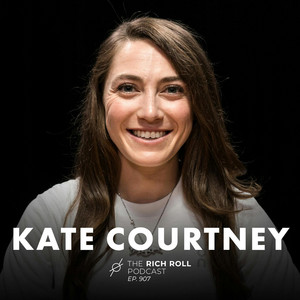
This is what Kait Courtney calls sending it.
A concept she is here today to elaborate upon along with many other nuggets of actionable wisdom hard earned over her decade spent at the highest tier of world class athletic performance.
not only is Kate world champion and Olympian she is the face of American mountain biking but as storied as her career has been it's also not without its heartbreaking low moments.
It feels really good to associate your identity with your sport when you're winning, but the gift of coming up short is having clarity in that separation.
Moments that forced her to question her path and re -examine her why, culminating in this recent career -defining move in which personal performance now stands on equal footing with her personal mission to inspire the next generation of female riders.
You mentioned legacy earlier.
What is the higher purpose distilled down to a single thought?
That's a really good question.
This is a very exciting and pivotal moment in not just your athletic career, but your life.
And so I feel very privileged to be able to help you unpack this special time today.
Thank you so much. It's cool, but we have to start with Tom Cruise.
Which place to start.
For anybody who paid even, kind of the slightest amount of attention to the Paris Olympics, you probably saw a video of Tom Cruise, kind of descending into the closing ceremonies of the Paris Olympics to gather the torch and then smash cut him on a airplane and skydiving down to the Hollywood sign in Los Angeles where he then received the torch from you who was riding up on your mountain bike to hand it off or no, he handed it to you, right?
And then you rode off and then into the USC stadium in the time where the 1984 Olympics ceremony took place to then hand it off to Michael Johnson, right?
And this video, I mean, it must have been seen hundreds of millions of times, if not a billion times.
And a lot of people going, who is that person on the mountain bike?
Yeah. Which was a pretty cool experience.
So I need to know everything about this.
Everything about it.
It was an unbelievable life experience.
I'll just start. I got the call and they said, you know, we'd love to have you be a part of handing off the flag to LA.
It's a home Olympics.
It's in California where I grew up.
It's also an Olympics that will be very focused on female athletes, of which I am one.
And it's also in the state where mountain biking was founded.
So mountain biking originated in Marin in the 60s and 70s, so I think those things combined made me a good fit for being a part of it.
And of course, that was a huge honor to be asked.
But I had very little details.
They just said, okay, will you be willing to come with an A -less celebrity?
And I was like, okay, an A -less celebrity.
I don't know if they'll even know who they are.
And then they called me two days before the shoot under an NDA and said, oh, by the way, the A -less celebrity is Tom Cruise.
And I was like, oh, I've heard of him.
And you will need to get my husband an NDA immediately as well, because I'm gonna have to tell someone.
Yeah. But yeah, it was this really kind of surreal experience and to be honest, I'll say in the interest of transparency, when I first got the call, I felt this kind of imposter syndrome, like oh, do I really, what if I don't make the team, like what if I don't make the team in Paris, like do I want to be the face of this?
And I got really good advice that in life you have to take those opportunities And that those opportunities are a result of who you are and where you are and all of these factors, some in your control and some out of it.
And at the end of the day, it was just a really cool thing to get to do.
And so I really focused on just enjoying it and being present for it.
And I actually took away a few really important lessons from it as well.
Which are? Which are?
Meeting Tom Cruise is a really unique experience.
and being on the set, I'll just say it was hard to go home and not tell all my friends about this, but he flew in in a black chopper and they look up, oh, Tom's here.
I'm like, oh, my God, this is crazy, I'm in a movie.
And he had come from shooting in Europe, flew overnight, jumped out of a plane in the middle of the night, comes there at 10 in the morning to film this little scene with me.
And as an athlete, we travel a bit, we know kind of what it feels like to do that, that's really hard. Like I know how flashy and fun and cool that might look.
That's a really hard physical day to have, right?
That's a lot of work.
And he showed up on set with joy, like pure authentic joy for what he was doing.
And I think I mentioned something about it and I said, well, this is fun.
And he looked at me and said, it's all fun, isn't it?
And to me that was really impactful to see someone who has already achieved the highest level in their craft. Has already done enough.
You could fade stage left without a great life, but is absolutely hustling because he loves what he does.
And you can see it in everything that he did on set that day, giving extra time to every person who is working on set, knowing that okay, he has this light and he can shine it on people.
Taking time, asked me if I wanted a photo, and I'm like, okay, yep, obviously I do, but I kind of wanted to give you some space.
And instead of just doing it as if it was a big to do, he did it with joy, and he brought the photographer over and made, actually we need to change directions, the light's better.
And to me, it was a masterclass in what it looks like to give everything in what you do.
That tracks with everything I've ever heard from anyone I know who's ever worked with a guy.
Like he brings a level of intensity, but also a hypervigilance of like the presence, you know, that he kind of commands when he's in public, like knowing that everybody, you know, is aware of who he is and everything that comes out of his mouth and the energy that he's carrying will be, you know, kind of a story that will be told later, you know.
But at the same time, it's like, It's not a like, it sort of feels performative, but I think it's really authentic to who he is.
And maybe it's something he's cultivated over time.
But there's no question that he brings a level of professional athleticism to his work, like the intensity with which he performs these stunts and his level of investment and care in these projects, these huge movies that he makes, it's like undeniable.
Like he is a unicorn in that regard. Like nobody is doing what he is doing and executing it at that level, and then to also have that incredibly rigorous schedule and still be exuberant and enthusiastic and kind of share that with other people in that infectious way, it's kind of an amazing thing.
He is like an alien in that regard. I don't know if there's anybody else that can do that, pull that off.
No, but it's a good lesson.
And it connects to a lot of themes that I've been thinking about in my career at the moment, which is when you're really pursuing something you love and you're trying to be the best at it.
I think I've always thought of that as a journey of self mastery.
You get more disciplined, you get more in control, you master yourself in the pursuit of doing this thing well.
And I think in this phase of my career and in studying other people who are pursuing mastery in very different arenas, I'm starting to see that it's more about understanding and revealing, and expressing something authentic about yourself, which grows harder when you have this structure around it.
It grows harder when you, everyone who meets him has the story to tell about who this person is and how they carried themselves.
It's easy to like become so shut down in that, but it's really a gift and something to aspire to to be able to still be authentically expressing something true through what you're doing.
Yeah. The idea of mastery kind of in a writ large way, like not just mastery of like being, you know, an elite mountain bike racer, but like mastery of self, like holistically.
Your best expression as an athlete will be by virtue of your level of investment in mastering like all of you, right, rather than like segmenting it.
And I think a lot of athletes, like that comes with maturity and with having to face obstacles and losing big races and things like that, where you get to this point where you're like, okay, what is the why behind this?
And how do I weave who I am into what I do so that these things are not like separated but like kind of integrated in a way that raises the tide for all aspects of my life.
And I feel like you're not only like in that process, like you figured that out or you are kind of advanced in your ability to kind of like solve that equation for yourself.
Yeah, I think that's certainly a process, but I'm learning more.
And I think to be able to be learning more at this phase of my career than ever before is actually something that's really exciting.
I've been a professional athlete for almost 10 years.
And I'm learning in a different direction in some ways now, which is that zooming out and that kind of holistic approach that hopefully also makes you better at the core thing that you're trying to achieve.
Yeah, I've said this before, but I think it belies that instinct or that sense that my best performances are gonna be unlocked if I like limit my life and just do this one thing and just become maniacal about it.
And every exceptional athlete that I've had the privilege to like sit across in this context, kind of will tell you the opposite.
Like when their lives are fuller and all of their kind of, values aren't like put in one bucket, but kind of like dispersed across other things in their life that are important.
That, that becomes this unlock for, the level of performance that had always eluded them.
I mean, your friend Chelsea Sadaro is an example of that, I think I love Chelsea Sadaro.
I know you guys like your friendship is like my favorite thing that video of you guys in the pink matching pink outfits.
Like when you guys trained together like that's the best. While finding a training partner like that goes a long way in some of these outer challenges of training and trying to get into the physical shape to perform well, but more so on that mental side.
And I think it's really grappling with that, right?
Like there's I've heard you say before, there's this instinct that if you like went and lived at altitude by yourself in a cabin in the woods and like only ate rice and only trained and meditated 10 hours a day, you'd be your best. And to be honest, in certain phases of my career, I've done pretty close to that.
To try to get an edge, to try to kind of control the outcome and you know, nail it on this one day.
And, spoiler alert, that really didn't work for me.
But I think you have to test those edges, and I think that's the value of pursuing something for a long period of time, is you kind of test all these different edges and you find the nuance.
And I remember there was an interview from Steve Magnus and Brad Stolberg did an interview once with a famous running coach, and I can't remember his name, but I remember the content of the interview.
And they were talking about at the beginning of your career as a coach, you kind of, you know the basics, right?
You're supposed to do zone two, you got some intervals, here's generally what you're supposed to do.
And over time, you add things in.
You try, oh, what's this cold plunge thing about?
What if we did this with diet?
What if we incorporated mental training and you try all these things and you add and add and add and add.
And at a certain point, it's too much and you kind of lose the plot.
And then I think you take things away one by one and say like, what's really at the core of what it takes to be great?
Not generally, but like great for N of one, great for me.
Like, what does being great look like for Kate Courtney in the XC mountain bike season this year?
And what you kind of come back to is a lot of those really simple lessons that may be a beginning coach new, but now you have the nuance of why each thing matters and how you can apply them in just the right way to maximize the results.
And as an athlete who is accumulating experience over time, you develop a self understanding of like what you need and that relationship with a coach becomes more of a collaborative partnership rather than like, tell me what to do when I do it, right?
That's a whole evolution as well.
I mean, you've gone through a couple of coaches in your own career.
What has that evolution been like for you?
Yeah, coaching is so important.
And I think it fits a different role for different athletes depending on their mindset.
I love working with a team of experts who know more than I do about their different roles and who can help put together a plan that brings out the best in me.
So coaching has always been really, really important for me.
I love data, I love numbers, and I love that process of working together.
I have gone through three coaching changes.
I kind of started with a more junior development coach and that was the right thing at the right time for me.
It kind of managed my training load and also my, kind of the pressure that I was putting on myself.
And that was during my early years of racing and into my U23 years where I was also a full -time student.
And I'm really grateful for that period.
Looking back, I get a lot of questions from young athletes.
Should I be training 20 hours a week in high school and college?
And I took three rest days a week when I was at Stanford because I had to.
And actually I think it allowed me to develop as an athlete so that by the time I graduated, I was ready to go to a new level.
And that involved a coaching change to Jim Miller, who has coached a lot of Olympians and world champions and was at USA Cycling at the time.
And I remember going into his office when I was 18 and saying I want to go to the Olympics and I want to win a world title.
And I actually forgot about that conversation, but he reminded me of it much later.
But at that time, I needed someone who really took those goals seriously and was willing to kind of hold the standard of what that took.
So a lot of those years for me were about almost overreaching in a productive way, knowing, okay, if I wanna be able to compete as an elite racer, like, here's the bar and we're gonna keep trying to meet it.
And then 2018, 2019, time comes along and we kind of had that formula for meeting that bar and being able to accomplish a lot of those goals.
Then I had another coaching change.
But maybe it's worth discussing what happens in between.
Well, I think before we even kind of move into that specifically, let's like take it all the way back and kind of set the stage here.
You mentioned at the outset, California is where mountain biking was originated.
That's where it was invented.
That's where it started.
Not only that, it really originated in Marin County around Mount Tam, which is where you grew up, right?
And I remember I went to Stanford before you were born, but those were the very beginning years of mountain biking.
And I remember the first like Stumpjumper bikes and things that were coming out around that time and Marin Cycles that was like a big brand at the outset of mountain biking.
And you were sort of born into this culture, right?
Like you grew up with your dad tooling you around on Mount Tam.
So this was kind of in terms of your origin story, like it's kind of like part of your DNA.
It really is. And I think the interesting thing about growing up in a culture is that you don't really appreciate what's unique about it until you grow beyond that and see oh, there's other ways of doing things.
But I grew up in a community where being outside was a huge part of why people lived there.
being out on Mount Tam, whether it was running or hiking or being on your bike, that was not a sport.
That was just kind of like part of your lifestyle.
And for me, I see that as a huge gift because I really fell in love with this kind of adventure, community, spending time outside part of the sport before I ever knew that competitive mountain biking existed.
And I really credit that to growing up in an area where that was part of the DNA.
So where did the competition aspect of it enter your life?
In high school. So I grew up doing a lot of different sports and I would say, I was always told I had a lot of hustle, but I was not very good, which is kind of a bad combination because you know you're already trying very hard and maybe it's just not meant to be, but I think I then discovered trail running and running cross country.
And that was kind of the first thing that felt like a real fit.
I think I was drawn to the way that work accumulated in an endurance sport and I think also the mindfulness aspect.
Like being out just being able to let your mind and body wander a bit on the mountain.
I love those things.
And so I was looking for a sport to cross train for running in the spring and my high mountain bike league, and I joined the team.
It was me and five guys, and did my first mountain bike race and immediately I was just drawn to, not just the training, but the racing itself.
And I think that's a feeling I hadn't yet experienced was that like love of the actual competition piece and of being in the race.
That felt very different for me than running or any of these other sports that I'd tried.
Two things, did you win your first race?
I did win my first race.
I was racing in the freshmen girls category of the high school mountain bike race.
Second thing, you went to a high school that had a mountain biking team.
Like that's like wild.
Is that like only in Marin County or are there high schools with mountain bike teams that I'm just unaware of this?
So the NorCal league was the first. So yeah, this was quite a while ago that I was a freshman in high school and we had a mountain bike team, but now that program has grown massively.
So Nike, the National Interscholastic Cycling Association has over 25 ,000 student athletes across the country and they have not sure, there are over 20 leagues.
I'm not sure where they are exactly now, but it's an incredible sport for high school aged kids and I think there's a few dimensions to that.
I think it's very family oriented.
Families are very involved with going to these races and making them happen.
It's a Mass Start event, so there's room on the start line for everyone.
And also, cycling uniquely, I think, lends itself to a multitude of goals, so you might want to win the race, but you might want to just go farther or faster than you went last time.
You might want to get healthy.
You might want to just have a sport to be a part of, and I think it has a home for all of those different approaches and to fit into people's lives in different ways that I think is really valuable for kids of that age.
So you get into it, you start to develop this, interest and passion for the competition aspect of it.
And you have a pretty, as far as I can tell, like a kind of a rapid rise in the sport.
You enter Stanford in 2013, right?
Yeah. And at some point shortly thereafter, like you sign your first professional contract, right?
So you're a professional athlete as a young student in college.
Yeah. It was not a huge contract.
It was for $0 in bonuses.
So I always say that I always say that because I think it's important to know as you understand my mindset at that time I loved racing my bike and I was very serious about it.
And I was curious about what might be possible for me in the sport But there wasn't a pathway immediately accessible to me of what it would look like to go and try to make a living doing this.
And so for me, school was my focus.
And it felt like mountain biking was almost my hobby.
Like I got to go and do all these races and I was supported very, very well.
That's really what you get from those early pro contracts.
You get bikes, you get flown to World Cups, You get mechanics and physios and help making that racing possible.
But for me, I think my goals are really driven by me at that time and I was being given this amazing space while I was in school to have a bit of a positive distraction and to slowly make progress.
And so in my four years at Samford, I raced U23 category so that's 19 -22, and in the World in the world cups, I was eighth overall, fourth overall, second overall, and then my last year in school I won the overall.
And so I just got a little bit better every year.
And when you're eighth in U23, when you're freshmen in college, there's a big gap between that and making a living as a professional racer in the elite category.
Win the overall, that jump is much smaller and feels much more possible.
And so I kind of had this slow trajectory in college where my perspective changed throughout those four years that it went from being kind of a far off dream to like a real possibility to try and make a go of it.
And during that period of time, were you training on your own or was there like a group that you would train with or what did that, it was sort of up to you to figure out how to get that done, right?
Yeah. So it was very individual.
I had my coach, Jim Miller, at the time, and I really just followed that training plan and just tried to make everything fit together the best I could.
And that's one of the things, there's kind of a benefit and a cost to having a sport like mountain biking that's so individual, is you spend a lot of your time training alone.
It also makes it very flexible.
And so I think for me, at that time, studying felt like a break from training, and training felt like a break from studying.
And that makes it sound like a perfect balance.
It was often pretty messy, and there were trade -offs.
But I really enjoyed actually training by myself, being on group rides sometimes, having good training buddies, but being able to just lock in, get it done in the shortest time possible, and get back to work.
Yeah, and you were a Humbio measure, right?
Yeah. I did the Humbio core.
Did you do Humbio? Yeah, well, that was gonna be my major, I ended up switching to American Studies, but I did the core, like it was a great program.
Interesting shift, the core is very hard, so you probably imagined that sophomore year was a little challenging.
No, so I mean, I bring that up only to say, it's the academic aspect of this is rigorous, so you're balancing those two things at the same time.
Yeah, I have a very distinct memory.
From that time it was doing the Humbio core, and there were a lot of group projects and like group dynamics which is actually a very wonderful part of that program is that you work together with your other classmates.
But I remember in the spring I would go and race the World Cups and I would miss three weeks of a 10 week quarter which I had to do a lot of bargaining with the teachers to be able to do that.
I'm writing extra papers, I'm reading extra books, I'm getting notes.
It was certainly hard to even be able to set that up.
But I remember, I got on my first World Cup podium in Europe and that was kind of the pie in the sky for me as a U23 rider is like being able to compete in Europe.
It's a very Euro dominated sport at the moment, even though it started in the US.
And that was kind of like the highest level.
And so I get on this podium, I'm in third, I get a trophy, it's super exciting.
It's something I've been chasing for a long time.
And I went back to the hotel, and I only got internet in the hallway.
And I was like, in the hallway till three in the morning, trying to do this group project just crying.
Just crying and getting it done.
And to me, it forced me to be so clear on why I was doing everything I was doing, and that I was making a choice.
And I think that was really valuable for me at that time to know that I was making a choice.
I'm choosing to do this because I care about it and I love it and I wanna succeed and it means a lot to me.
I'm also choosing to be in school because I love it and I'm curious about it and it's important to me.
And I just had to get through those moments and it was often really challenging, but also I look back and I had a very full life at that time in a way that was really great.
Yeah. the glamorous life of the fledgling professional athlete.
But I will say, you know, in my experience, Stanford is pretty great about accommodating, you know, people like yourself who are balancing sort of competing goals.
Like it's sort of a place that celebrates that, like let's make it work as opposed to maybe a stodgy, you know, kind of East coast institution who would say, well, you have to make a choice, either if you're gonna do that or you're gonna do this, but you know, we're not gonna be flexible.
And I feel like one of the reasons why I wanted to go to Stanford is because you could feel that.
They're like, oh yeah, we're here to like help you achieve your dreams or your goals and your ambitions.
And, often those things come in all different kinds of shapes and forms that don't fit into like the exact kind of like paradigm of a university.
Yeah, I think they do a really good job of that.
And at the core of it, I think they recognize is that having multiple pursuits can actually be very valuable.
So having multiple things that you're trying to master or make progress in at one time, like being an athlete made me a better student and being a student made me a better athlete.
And I feel that you can really see that at a school like Stanford where most students have something else that's interesting to them.
It's not just about like having an outside achievement, it's about having something else that fuels your fire and keeps you really motivated.
So during that period of time, when you're going from eighth to, you're kinda working your way up the ladder.
Was there a specific moment where you're like, oh, this is what I'm gonna be doing.
Like this is where I'm gonna be placing my focus.
I can see a future for myself in this as an athlete.
Absolutely. I think it was really that last year in 2017.
It was my last year as a college student and also as an under 23 racer.
And I actually missed the Olympic team in 2016.
So it was a decision between me and two other athletes.
And it was a stay up till midnight and see the team come out situation, right?
Like you're waiting, you're refreshing, you're refreshing.
And I didn't make the team.
And that was honestly pretty devastating for me at the time.
I think I knew that my results weren't necessarily quite there yet, but I was also much, much younger than anyone else trying to make the team.
And so there was a good chance that I would have been selected and I miss the opportunity.
And so I really got serious that fall.
And that's actually, I guess I got the timeline a little wrong here.
I actually started training with Jim that year.
That was kind of my first year.
But you're like, I'm not gonna let that happen again.
Yeah, so I started training with Jim after that and was like, we need to step up the game.
And this last year is kind of my opportunity to see what I'm capable of and if it's worth pursuing this as a career, of course I wanted to.
But it's a little bit of a, you knock on the door and the door opens or it doesn't.
And unlike track and field or swimming, there's some discretion that comes into play with the Olympic selection process in mountain biking.
Completely. But it comes into play later in your career.
It does, a little bit.
But it really, that moment for me, I think clarified my goal.
the goal in that moment was I want to go in 2020 and I don't want it to be discretionary.
I want to make the automatic selection and I want it to be really clear that I earned a spot on the team.
And that really kicked off that kind of next phase.
And so the moment when I knew that would really be feasible was when I started the 2017 season, that last year year 23, and I won the first race.
And I knew it was possible to be on the podium, I knew I really wanted to be competitive and I was right there but outright winning that race was a really big step in my career and it made me feel those goals were in reach and that the work I was doing was getting me there.
Yeah, so 2017 you graduate from college, you go full time pro And then you go on this like, sort of epic tear from 17 through 19 where you're just crushing it.
Like, you're really sending it.
And you become kind of like the new face of this sport entirely.
So walk me through like the experience of suddenly kind of winning everything at the highest level and the spotlight that it placed upon you and kind of how that kind of informed this new you know, kind of chapter in your career.
Yeah, so I graduated 2018, I'm fully focused on mountain bike racing and I go into my first year of elite racing and I ended up doing a big stage race at the beginning of the year, the Cape Epic and we won that which was a big step actually to survive that.
That's a huge multi -day incredibly rigorous mountain bike race in which you race with a team member and it's a tandem thing.
Yeah, so we were really kind of stretching my limit and I was trying to rise to the occasion of this first year elite.
And all year, I'm in the top 10, and I kept getting close.
If you're paying close attention, I'd be with the leaders and then I blow up.
I'd be with the leaders and then I'd have a flat.
I'd be with the leaders and then something would happen.
And at the last race of the season at the World Championships, I had one of my best races ever.
And I was in second place going into the last lap and was able to make contact with the leader and she made a mistake and I attacked and I won a World Championship title.
And that moment was something that I hadn't like closed that possibility.
It wasn't something that I said was definitely not possible but I certainly had not expected to win that race.
I think my goal, I always set goals and kind of three levels.
So I had like the bronze level goal is just kind of, be top 10, keep the status quo, it's a solid performance.
My silver level, like, okay, this would be a step up was finally get into the top five.
And the like, shoot for the moon goal was top three, like earning a medal.
And to win was this kind of breakout moment.
And you only really get that once in your career.
I think when it's happening, you don't necessarily appreciate that, but that kind of surprise, over -delivery, everything comes together, and you've shown that something that felt impossible was possible, it kind of causes this seismic shift in your career where you can no longer say, oh, I don't know if it's possible to win, like it's been possible at one point in your career, and now the goal is to back that up.
If you've ever wondered what generations of nutritional wisdom looks like bottled, meet Bragg, the OGs and original architects of Whole Food Wellness.
Their organic apple cider vinegar is a perfect example of thoughtful clean nutrition.
It's non -GMO, USDA, organic, produced in the USA with absolutely no additives or processed sugars, made with 100 % apples and naturally fermented, of course.
It's kind of like this perfect and versatile and super healthy addition to salad dressings and a wide variety of recipes for this tangy, nutritious boost. From the very beginnings of my personal adventures in nutrition and wellbeing 18 years ago, Bragg, I gotta tell you was the first brand I turned to.
I actually talk about this in my book, Finding Ultra, which came out 13 years ago.
And it's a brand that I've remained unwaveringly loyal to, because their products are best in class, because of their insane commitment to quality, because they're a B Corp, which speaks volumes about their integrity and commitment to the ethics of both health and production, And not for nothing because Bragg is a brand that's been doing things right for over 100 years.
100, a century of walking their talk.
So check it out. They've got tons of products, and when you use the code RICHROLL, you will get 20 % off your first order when you visit Bragg .com.
Visit Bragg .com, B -R -A -G -G .com to get your daily dose of wellness.
So, back in March I had the privilege of delivering a keynote at the Bicycle Leadership Conference in Tucson, which was really fun and just nice to spend time with this community of people who like me, love bikes, and are so committed to getting more people on them.
I also love the desert, and love when I can to tack on a few days after events like these to spend time in new places.
I'm in the middle of writing a book these days.
So after the event concluded, what did I do?
I got an Airbnb of course.
And I spent the rest of the week on sort of this self -styled writing retreat, enjoying the quiet mornings to create and the afternoons to explore, not as a tourist, but more like what it would be like to be a resident.
And lately I've been thinking about how the spaces we inhabit shape our experiences when we travel.
That's where Airbnb creates this really interesting opportunity, be allowing you to share your space when it makes sense for you.
The extra income from hosting could even help fund these perspective -shifting journeys.
Your home might be worth more than you think.
Find out how much at airbnb .com slash host. All of you who have been alongside me for this Podcast A Coaster ride know that I am and have been for quite some time an avid user of, and a partner with AG1, but this is not just another version of the shout -out you've come to expect.
this is actually sort of breaking news because AG -1 has just launched their new next generation nutritional formula.
It's the same single scoop, you know, but now it's been significantly upgraded with more vitamins, minerals and upgraded probiotics.
It's an upgrade that's of significant proportions based upon four human clinical trials that go above and beyond the industry standard in testing to make a great product even better.
More specifically, the new formula has been optimized to improve absorption, new vitamins, and new minerals have been added and AG -1 has enhanced their probiotic blend, all part of their ongoing commitment to producing the best foundational nutritional supplement designed to support overall wellness.
Now clinically backed with an advanced formula, this is the perfect time to try AG -1, if you haven't yet.
I've been drinking AG -1 for many years now, as I mentioned, and I'm so happy to be partnering with them.
So, subscribe today to try the Next Gen of AG -1.
If you use my link, you'll also get a free bottle of AGD3K2 and AG1 welcome kit and five of the upgraded AG1 travel bags with your first order.
So make sure to check out drinkag1 .com slash Rich Roll to get started with AG1s next gen and notice the benefits for yourself.
That's drinkag1 .com slash Rich Roll.
So it's 2019 you're killing it.
you're at the top of your game, you're like a coiled spring, right?
And then the whole world shuts down, right, when you're kind of ready to have like this insane year.
Yeah, that was a really challenging process for me.
So 2019 I'm racing the Rainbow Jersey, I'm the world champion and I was able to back that up, I really, I had breakout results at the World Cups, I won the World Cup overall, which is kind of the average of all the World Cup series, and I did automatically qualify for Tokyo in 2020.
And as you probably know, in America, when you pre -qualify for the Olympics, it becomes a big media story and you get a lot of opportunities as a result of that.
So it was kind of the fall of 2019 into 2020.
I'm doing the media, I'm doing the Team USA kind of appearances, doing commercials, getting ready for this Olympic Games.
And I think at the time I was really excited about the opportunity to finally compete and to compete with the chance of meddling.
And that story was repeated over and over in the press, right?
Okay, you're she's from where mountain biking began and now we're gonna go win Tokyo.
It's a very tidy narrative.
It's a very tidy narrative.
And I felt that pressure really mounting but I think when March came around, I was finally starting to race.
And I was like, okay, now I just get to do the thing.
And then all the racing got canceled.
And they moved things in like six -week increments for us.
So they'd cancel a race, move it six weeks.
Cancel a race, move it six weeks.
And so, we just kept training and staying prepared.
Obviously then they moved the Olympics.
And I think that year for me was really stressful because I was trying to like hold on to this narrative and hold on to what was the best shape of my life really going into that year and this kind of like four year plan was working.
And then it became a five year plan.
And that kicked off what ended up being a really, really challenging couple of years in my career.
Had they not done that kind of six week thing and just said, listen, the whole year is off, like you could have taken a breath, regrouped and figured out how to strategize to make yourself as ready as you could for the following year.
But that kind of thing of like, it's about to always happen like is not only anxiety producing and stressful, but informing your training decisions, which are like, how do I stay on this razor's edge, you know, and continue to kind of do that moving forward, which isn't in the interest of any athlete.
Yeah, I think it's hard for everyone.
And I wanna acknowledge that, you know, having your athletic goals put on hold is not the most challenging outcome of the pandemic.
And people were dealing with things that were much more stressful and life altering than that.
But I do think the mindset was challenging for everyone because in hindsight, of course, I should have taken the year off.
I should have learned a language, like taken some writing classes.
I don't know, done something else.
But in those moments, it's really a skill to be able to shift and to be able to accept reality as it's unfolding and make a different decision.
And I don't think I had the capacity to do that at that time.
I think it really felt like I had to do this thing and I was not able to let go of the pressure and stress that I was putting on that one goal that now was a year away.
How much of that stress was driven by intrinsic motivation and expectations versus like the extrinsic kind of like being in the media spotlight aspect of the whole thing.
It's such a good question.
And I don't know if I can give a really clear answer to it, but I think it was some of both.
Goals as an athlete, they do initially come from you.
Like I was the one who wanted to target that race and to really see what was possible.
But I think being at your best as an athlete involves an element of curiosity.
I wonder what I might be capable of and curiosity involves a level of uncertainty.
There's a multitude of outcomes, some of which may be better than what I expect, some of which may be really disappointing.
I accept that full range and we're going to do this thing and and give everything to it and be curious about the outcome.
And I think sometimes that kind of crystallization of the storyline of what you're supposed to do takes away the curiosity and takes away the fun and then ultimately takes away your ability to go all in and perform because the band of outcomes that is acceptable, and whether that's acceptable to me or to the media or to my team or whoever, becomes so narrow that you can no longer really engage with the activity.
And the risk of overly self -identifying with them, like who am I if I'm not standing on this podium or winning this medal?
Yeah, absolutely. And I think that's a trap that is really easy to fall into as an athlete where you just, it feels really good to associate your identity with your sport when you're winning, right?
You're like yeah, you know what maybe that's who I am.
I'm having problems here.
This looks great. Yeah, I'm the person who wins.
But the gift of coming up short is having clarity in that separation.
And that's, I would say really been at the crux of what I've been sorting through since that Olympic experience, spoiler alert, it did not go well.
I think everyone can imagine.
I wanna unpack the Tokyo experience, but I think before that, I also wanna kind of better understand this cloistered subculture of mountain bike racing, as an American, like I have a lens on it, but I also know that it's very different in Europe, right?
And that's really kind of where it blossoms in a way that we don't really experience here in the States.
Yeah, it's a much bigger deal in many European countries.
It's the national sport in Switzerland, and - Which is where I met you for the first time.
Which is where we met for the first time.
you were training there at the time.
Yeah nearly Xeric. So yeah, just because of that focus and the focus and investment in development.
They've produced a lot of really, really talented racers.
And I think also geography plays a big role because it's a lot easier to drive from one European country to another and go to an Austrian cup one weekend and then a Swiss cup and then an Italian cup.
Whereas for an American to get to those races it's a 10 hour flight and spending a lot of time away from home.
So because of that, I think there was a lot of kind of inner country competition in Europe that brought the level up in a way that wasn't necessarily happening in the US at the time.
Although I will say now we are seeing a huge resurgence of US athletes being super, super competitive.
And how does the whole point system work?
Like there's a world cup series, right, and a bunch of races and you get points as you go along and then there's sort of like who won the world cup and then a world championships.
How important is that in the context of like the Olympics?
Like is it more important to go to the Olympics?
Is it more important to like distinguish yourself in this world cup series?
Like how do you think about that?
Very good question.
I'll give a brief mountain biking 101.
Cross -country mountain biking, the races are about an hour and a half in length.
So it's kind of the length of the half marathon. But I say that effort is more like sprinting a marathon. So you have a lot of anaerobic short climbs, there's technical descending, there's single track, there's some jumps, there's some rocks.
And you do about five laps of a 4 or 5K course, and that's a mass start event, first person across the finish line wins.
So we have nine or 10 World Cups a year of that race, and there's a series overall, but there's also the individual events matter quite a lot.
And there's kind of the World Cup overall champion is the person who accumulates the most points in that series.
I would say they focus a bit more like the one day event of cycling.
And this goes across mountain biking, across road, cycle across all the different disciplines have a one day world championship.
And if you win that world championship you win the rainbow jersey, which is kind of, I'd say next to the yellow jersey is the most visible and kind of celebrated jersey in the sport of cycling.
And then you get to wear that for the next year.
And you get to wear it for the next year which is pretty fun.
And you get to wear stripes forever.
So you have stripes in your jersey for the rest of your career.
So that is like the every year competition.
That will be my focus this year.
The World Cup races, targeting, you know, a few of them in particular and then the World Championships.
And then every four years we have the Olympics.
And in mountain biking, what's really interesting is that the Olympics is a very, very small field.
We only have about 30 athletes in the Olympics race.
And there's, you know, 80 to 150 in a normal World Cup.
So what ends up happening is because the selection criteria are so tight, winning the Olympics is likely harder than any kind of World Cup or World Championship event, just because it comes every four years everybody's focusing on it.
we know like what it takes to kind of get it to all line up on that day.
But the depth of the field is quite different.
So it's probably easier to get a top 10 in the Olympics than in your kind of any world cup.
So it's this interesting dynamic with the sport where all of it can matter a lot, but there's definitely like a different media focus on different events.
So much emphasis on the Olympics.
And my frame is always like swimming or track and field.
Like in those sports, the variables are very limited.
Like you have your lane, no one's going to jump into your lane and get into your way or anything like that.
Like you can kind of anticipate what you're going to face.
Mountain biking is different.
Like the course is very dynamic and you guys are bumping into each other and there's all kinds of strategizing going on.
So like so many things can happen only so much of which you can kind of prepare yourself for.
That being said, like going into Tokyo, So my sense was that you were raring to go.
Everything was lining up and this was gonna be your day.
So is that true? And explain what unfolded.
Yeah, I think my training that year was a little bit different.
We were really trying to target that race and do the anaerobic work that was called for by the Tokyo course.
And things went well but not perfectly all spring.
And I think that alone would have been fine.
I ended up, I broke my arm at the Second World Cup and kind of had to take a period to recover from that.
And I think just at every juncture, I doubled down.
And so that mindset, by the time I got to the actual race, I think my stress levels were so high that I really felt like I need this to go well.
And of course in bike racing, you just mentioned, things actually rarely go perfectly.
Like even in your best races, there's a fumble or a weird pass or a moment that you had doubt or didn't feel great and then it comes together.
And I don't think that I had the ability to like tolerate that range of experience in that race.
and I ended up having a mistake and clipping out early in the race and started near the back.
And that alone should be fine in a race, but really, really challenged me in that event.
And I was not able to put together the performance that I believe I was capable of at that time.
So you ended up 15th in that race?
Yeah, it's interesting.
It's that tension between the amount of like grit and dedication that you have to demonstrate in order to get there in the first place.
But if the answer to every question and setback is like more grit, more suffering and holding on even tighter than you were before, at some point that starts to go at cross purposes with the ultimate goal.
Like when you're holding on so hard, You don't have the emotional resilience to deal with those kind of variables that don't go your way, and you're unable to kind of roll with what's actually happening, in reality, to perform at your best. Yeah, I heard someone say once that high performance is like holding sand, where if you hold it too tight, the sand slips through your fingers.
If you hold it too loose, the sand slips through your fingers, And it's really just having that right amount of tension to be able to both take things very seriously and be completely invested, and also have that little bit of a relaxed, loose, accepting, flexible, adaptable mentality.
And I think that's really the task in elite sport is finding that set point, and understanding what it takes to get there for you as an athlete mentally and physically.
Which is gonna look different for every single different person.
That's the fun part.
Yeah, how did you kind of emotionally manage that setback from Tokyo?
Yeah, I think it's easy now to kind of like chunk these periods of my career together.
I think there was kind of a year of just dealing with kind of the emotional fall out of that, trying to like get back to having fun on my bike.
I remember I got a blood test after Tokyo and my cortisol was like 55.
It's like five times what's normal for me.
And really that became the first task is like get back to a baseline for me and start to sort through some of these maybe less helpful mental patterns that developed during this period where I was so attached to this outcome that I didn't end up getting.
And that was actually a really valuable process for me.
I think it forces you to create a bit more of that separation of self and craft, and that was really important to have at that time.
So focusing a bit more on like life outside of biking and family, my husband, my friends and community, riding my bike because I loved it.
those things really brought me back to that baseline.
And then I think after a period of kind of two years or a year and a half, I really started to feel the itch to get back to that level of competitiveness.
I think I worked through that emotional piece and got myself to a level where I could accept the outcome and be in the race.
But it almost like, dulled my racing a bit, like I was performing kind of, I've been ninth through 15th in almost every World Cup for the last four years, right?
Where you're racing really well, it's actually very hard to get to that position, but it's very different than competing to win.
And I think that requires even another level of evolution for me and bringing back that competitive edge and that fire and desire to really like be competing at the top.
Every elite athlete endures a career of ebbs and flows and peaks and valleys and things like that.
And success in a longevity context is always very much a function of that athlete's ability to kind of put everything in its proper context and have perspective over that and to understand that those ebbing periods or those dips in performance are all learning experiences that can kind of inform performance going forward. But that's gotta be very difficult when you had this kind of like couple years where you were just like killing it and then things aren't working out for a period of time.
And you could tell yourself, well I'm in a rebuilding phase or I'm like exploring other aspects of my life.
But I would imagine, you're kind of like always thinking about like how am I gonna get back to like that place where I was and not just live in the shadow of past performances.
I mean, were there moments where you're like, okay, I could keep getting nights and tents and things like that, but is that really what I wanna do with my life?
Is this really the path for me?
Were there moments where you thought like, maybe it's time to hang it up or like, how did you find that fire to stay in it?
And then also on top of that, the fire to be like, okay, like now I really wanna be focused on performing at my absolute best. Completely.
It's really challenging in a sport where you kind of put a little bit in and you got a lot out and then you're putting a lot in and you're not quite getting the returns that you're looking for.
And I did have that moment.
I think for me at its best sport makes me a better, a more complete, more joyful, hard -working version of myself, like it makes me better for every other aspect of my life.
It makes me a better partner, makes me a better community member, it is really elevating to all these other things, and that's when things are working really, really well.
Did you always have that awareness or did you earn that awareness over time?
I think I earned that awareness over time, that one of the things I love about my sport is that when I'm kind of lit up in this way that I get when I'm pursuing this thing that I love, it translates to being more lit up and alive in life as a whole.
And that wasn't really happening for this period of time.
It felt like it was almost draining me of that excitement in life's force.
Like, I'm just like trying to hold on and hold on long enough to get back on the podium, right?
That was the goal. I'm like, okay, this will be fixed with a result obviously, which never works.
But I think, you know, in that period, I will tell you a story.
I had a race the world championships and it was the first qualifier for Paris and it was a top three.
And I said, okay, I've been in this kind of medium, period like what if I just go all in and try to get top three at this race and like this is the beginning of like being able to peak for events and really perform and I had a six -week training block and everything pretty much went perfectly like I never got sick I never had an issue I did every workout as I was prescribed hit every number got good sleep every night and I got into the race and I was not competitive at that level.
And I remember riding around the course, drafting my retirement letter in my head thinking, okay, if this is it, this is it, and I can do something else if that's what I want to do.
And I remember I had just read Abby Wambach's book, Forward, and she talks about this retirement juncture and she had a line in there that's really stuck with me, which was when she was going through retirement, she had the realization that soccer never made me who I was, like I brought who I am to soccer.
And that really permeated my thinking at that time, I was like, okay, mountain biking doesn't make me who I am, I'm bringing who I am to mountain biking.
And if it's not serving my life as a whole, maybe it's time to think about opening the aperture on what's possible in my life.
And my husband was there, we were in Glasgow, and we had a day planned, which I'll be honest with you, was a celebratory plan, right?
We're like, oh, we'll go to Edinburgh, and we'll spend the day celebrating after worlds.
And we spent like 10 hours walking the streets of this beautiful old town and talking about what I wanted from this chapter of my life and career, and what that looks like for me, but also for us as a team and as a partnership.
And we still talk about that moment a lot because it was like complete vulnerability, openness on the table, like what are the options?
Like what is exciting?
And he gave me the advice that in life you can never just move away from something, You always have to move towards something new, towards something that's exciting.
You don't just move away from something that didn't work or didn't feel good.
You need to have something in its place.
And so we've kind of talked through it and I said, I still feel deeply that I have more to give in this sport and what would make it worth giving that?
And so we said, okay, And coach -team -career -ones -changing leaving this conversation.
And we didn't make a decision on what.
But I kind of had this two day reflective period.
And through a series of what I can only call synchronicity, I ended up connecting with a coach who had worked with Pauline Fran -Prévot when she was around my age, and she was 28.
And she'd been struggling and she similarly she won all three — road, gravel and mountain like world titles in one year.
And I think had a similar period of struggle after that.
She had some injuries and some challenges.
And I think a lot of people told her to retire.
And this coach ended up working with her and solving some of those problems with her.
And she targeted her home Olympics in Paris and she won by three minutes.
So it worked out for her.
But I wasn't as interested in that like results story.
I was more interested in the way that this coach approached the whole athlete and supporting an athlete holistically to find their best in the racing, and also in the training, and be able to bring that kind of personality and individuality back into the sport.
And so I drove up to altitude camp and made the decision in one day to switch coaches right then and started working with this new coach. And that's been a really amazing journey.
So on that tip of like a holistic approach to training in life, like what were the specific changes that he implemented that were meaningful?
I think sometimes we just need a change.
Like, I think it's easy to say, oh, this worked with this coach and this didn't work and get really into specifics.
But sometimes you just get stuck in a pattern or a rut or the stimulus that you've had is no longer getting the response that it used to.
And so I think just having that change was really refreshing.
But I also think, you know, having someone see where I was fully and really deeply believe what I believed that I have more to give and he's gonna be a thought partner and a partner in revealing that and getting me to a place where I could give that physically and mentally was really exciting to me.
And I think that's what I come back to when I think of that Edinburgh, like, walk in the darkness was this felt like a light to move towards.
This felt like, okay, this is exciting.
This is worth trying.
And I went to altitude camp and I called him up.
Okay, coach, his name's Barry Austin.
I said, Barry, what's my training for the next few days?
And he said, you've been so focused on doing that you've forgotten how to be.
I just want you to be up at altitude and ride your bike for three days and then we'll make a plan.
And that alone, like it was an indicator that I'd found someone who recognized my strengths but who also could bring a different perspective and kind of get me out of this echo chamber of high performance where everything got narrower and narrower and narrower, and I was trying to control and control to get an outcome.
And this, again, this was widening that aperture.
And also probably confronting for somebody who's such a data geek, right?
Like, what do you mean B?
Like, how's that going to show up on my garden?
I'm like, could you tell me what watts I need to be at?
Yeah, I mean, I've heard you talk about the difference between maximizing and optimizing, which I'm curious about.
but this chapter feels like, okay, it's this journey from like optimizing to maximizing to expanding.
Yeah, it really was.
And I think one of the things that I really appreciated about the training early on was that it was very different and that it really involved mindset.
And I think when I'm super attached to numbers, you talk about the maximizing versus optimizing.
My goal became to just get the numbers higher and higher because that's what worked when I was young, right?
When you're really young and you start out, you like reach the next level of data and then you reach the next level of performance, right?
You're building the engine and you're kind of notching the numbers up every year.
And you have no reason to believe that that's ever gonna stop, yes.
Yes, which it always does, of course.
And there's definitely, within different energy systems, there's a range where you kind of get to that optimal And it's not necessarily useful to spend all your time getting your two -minute power up and getting four watts for all this energy right?
So it's maybe getting a little technical, but you can over index on some of those things.
And my coach both moved me away from numbers in some areas, but he also gave me these workouts that were open -ended.
So it was like do it until you can't anymore.
And I'd call him okay but like what number do you think I can do.
No, no numbers. How many do you think I should be able to do?
No answer. And I had to go just figure it out.
And I think that challenge was exactly what I needed to get back to actually how I felt as a young athlete, where you're just, you were just pushing your edge, and you're wondering, can I do one more?
And only you can answer that question.
And that was a huge part of that early period with this new coach was, actually my numbers did improve when I was able to just really focus on that effort and start to shed that kind of expectation piece of, it should be this number, if it's not, I'm behind, and I won't perform well.
It became, I wonder if I can do one more.
And then I'd get a lot of positive feedback.
And it started this new cycle and this new loop of kind of getting back to what I think is really the best high -performance mindset for me.
I spent my life challenging conventional narratives about fitness, about nutrition, about what's possible now and in the future as we age, something that I'm increasingly focused on as I inch closer to my sixth decade.
And with that, there's a conversation that's becoming increasingly urgent, and that is, how do we reimagine midlife, not as a period of decline, but as this profound season of growth and possibility.
Well, on June 5th, my friendship Conley and I are bringing that conversation to life and in person with an event called Wise and Wild, a midlife journey into longevity, purpose, and peak living, which is this really beautiful one -day immersive experience that's taking place in L .A.
and is about breaking free from outdated scripts.
I'll bring the endurance mindset, the relentless curiosity about human potential, and Chip's going to bring decades of wisdom about emotional intelligence and purposeful living.
June 5th, L .A., this isn't just an event, it's an invitation to reconnect with your deepest self, to design a next chapter that's driven by intention, not fear.
So if you're 40 or older, feeling that relentless call to go deeper to challenge your own limitations, this is your moment.
Early bird pricing is available through May 20th, go to MEAWisdom .com slash Rich Roll to learn more and reserve your spot.
Hey everybody over here.
I need your full attention because today's episode is brought to you by on.
Now, listen, confession here.
I'm somebody who has spent many decades obsessed with hard metrics, actually measuring the value of my life against the number of seconds I could shave off my splits, or the distances I could run, and even the number of people my words and my voice could reach. But age and wisdom hard earned have actually taught me a lesson, and that lesson is that the hardness required to do hard things is only gonna get you so far.
The best of what movement, and even life, has on offer is so much more about soft wins, because the victories that stick with you, I can tell you, never have anything to do with a stopwatch. So, what is this idea of soft wins?
Well, it might be that perfect trail moment where maybe you're moving slow, but you're in the zone, where time dissolves and you're purely present and so connected with nature that you're overwhelmed with gratitude, or it could be that soul -filling feeling that you get when you share a deep conversation with a running buddy.
Or perhaps it's just the way you feel restored after that group jog following a stressful day at work.
This, soft wins, is what ON is all about and why partnering with them feels like partnering with myself.
Because not only is ON best in class when it comes to premium sportswear with gear that's battle tested by world -class athletes.
They're also innovating what it means to be active and more importantly why we move in the first place, which is what I care about and talk about all the time here on the podcast. Find out what all the fuss is about by maybe starting with their new Cloud Surfer 2, which is this beautiful effortless shoe that embodies the soft wins philosophy by reconnecting you with this very wide.
So whether you're finding joy in your pace or rediscovering your love for running, fills your cup, that is a soft win we're celebrating.
To explore your own soft wins and check out the new Cloud Surfer 2, head to on .com -slash -rich -role.
So it's this emergence or this liberation from the data and the numbers being something that served you to then being something that you served that began to limit you.
And by just, kind of focusing on the mindset piece or just feel like that's the way out of holding onto those numbers too tight as a predictor of kind of over extrapolating on those datasets as a predictor of outcomes.
Absolutely. And it's a hard process to do that, like connecting with that feeling and that qualitative aspect of racing really well.
But that's racing. And that's like the superpower of every athlete, like that connectivity with yourself, like knowing how to like, you know, read into that and, you know, kind of lean into it as opposed to, you know, being so focused on the computer.
Absolutely. And what we ended up figuring out, so I did this off season of training with this coach and I got a lot stronger and I thought okay, maybe that's the answer, maybe I just needed a little more power.
And I go to the first race and I actually was competing against one of another athlete that he coaches.
Her name's Candice Lille.
She's a good friend.
She was my partner at the stage race earlier this year.
And I got dropped on this climb and he looks at the data later and was like, this is super weird, you were doing more power than the other athlete.
And we kind of have an understanding with this coach, like, he never shares data of other athletes with you, but we all try to kind of help each other improve, which is a really interesting environment that he's created among a few of these professional women.
But he noticed this discrepancy and he got video footage from the side of me riding.
And we discovered, I basically had this big gap in my pedal stroke where I was fighting so hard to produce power and so disconnected from what it felt like.
Just for the purpose of the numbers.
100%. Not actually moving yourself forward. Truly.
So I had developed in this period where I was just kind of strangling the power meter to try to get a result.
I developed a bit of a gap in my pedal stroke and this inefficiency for how much power I was doing, I should have been going a lot faster.
And that was at the beginning of last year and it kind of kicked off what has now been a qualitative journey.
This is why I mentioned it of we've had to retrain the way that I actually pedal a bike.
We had to kind of do a bunch of testing to figure out how to do that and what that might look like and how we measured it.
But then also spend so much time on my bike, not focused on numbers, but focused on executing this form and having this specific feeling on the bike where I could start to get that efficiency back.
Because feel and mindset go hand in hand.
And you know, when you become so attached to the numbers in a race context that can harm you more than help you.
Like if you're looking at your Watson, you're like, Well, I can't go over this threshold cause I'm gonna blow up.
So no matter what's happening in the race, like I'm gonna keep it right here.
You're not feeling your own body, right?
And if you got rid of that and just went on feel, you have no idea what the numbers are and you can uncork like some, you know, crazy performance that you didn't know that you were capable of.
I had Alex Hutchinson in here the other day who wrote this great book, Endure.
I don't know if you read this book.
I loved this book. It's got a new book coming out.
Anyway, he tells this great story when he was, I think he was in high school or maybe it was college.
His goal was to like break four minutes for the 1500 meters.
He'd never done it.
And he thought if you could just do that, like that would put him in a new kind of like category.
And he was in some stupid dual meet, like a meaningless meet and the first lap his split was some crazy split that was like so much faster than he ever thought that he would ever go.
And he's like, wow, well either I'm gonna explode, but like, I feel good so I'm gonna keep going.
And he ended up like going way below four minutes in this just random nothing meet.
And then he found out later that the split that the guy gave him for the first lap was like way off, like it wasn't correct or whatever, but like it goes to the mindset piece and the idea of like feel, right?
And I think as much as we've learned and how much that's impacted the betterment of training through, you know, watts and lactate and lactate buffering and nutrition like all of these things are good, right?
But when we hold onto that, it's back to the hold on too tight, right?
I think the real like horizon in terms of like growth and human performance is like is right here, right, in between our temples.
Completely and that becomes a big mindset journey to try to understand these things.
I think it's something I've learned about myself is that I am prone to binary thinking.
It's like it's all amazing or it's terrible, right?
It's like you use data and that's all you use or you don't.
It matters or it doesn't.
And the truth is always somewhere in between.
But that gets to the metaphor of the holding the sand, right?
Of the holding the sand.
It's a Zen Cohen, the whole thing.
And I'll say, for example, like we would not have discovered this missing piece in my performance and there are other missing pieces that's not like the silver bullet, but it's certainly a big focus of where I can gain efficiency, but we wouldn't have discovered that without power numbers, right?
Like we kind of, the data helped reveal the missing links, but it was not necessarily the solution to this missing lens.
Sure, but the whole reason you had that inefficiency in your petal stroke is because you were so locked into the numbers.
Yeah, so it's this really interesting relationship where I think we focus a lot on the 1%, and that's become, the marginal gains mindset has become huge, and there are studies and research and real backing behind a lot of these 1 % things, But I do think so many people ignore the 99%.
Like if you just feel good, you're relaxed, you sleep well, you have good relationships with the people in your life, and you're enjoying doing your sport, like that takes you a long way, right?
Like there's these big factors.
And I think mindset is one of those things where if focusing on the 1 % robs you of the ability to bring the right competitive mindset it to the sport, the 1 % won't help you, right?
You'll develop a pedaling inefficiency and be on the treadmill of frustration, right?
It's the ability to kind of hold these things in balance and right size the importance of the different aspects of performance.
It's such an important point.
I'd never heard it, I didn't know that it had a name.
Like what did you call it?
The marginal gains theory or approached training.
those marginal gains though, are like so sexy and fun.
They're cold plunges and they're like special expensive sort of supplements that you put in your smoothie or they're like sleep hacks and all these, that's where all the discourse is because it's just not that interesting to talk about like how you need to just go out and ride your bike all day and not worry about it.
Yeah, it's kind of a social media thing too, I think that influences that.
If you string together all of these like little cherries on top that will like obviate all the other stuff that you actually need to do.
Yeah, and I think there's also been a focus on this kind of sacrifice discipline, like Navy Seal version of high performance in the discourse and on social media.
And there's an element of that.
Like, you do have to be disciplined, you do have to show up and do your job and get it done, but if you do that to the expense of joy, if you do that at the expense of curiosity, you lose this softer side of performance, the mindfulness, the focus, attention, goal setting, Like all of these mental skills that at the end of the day probably play a bigger role in differentiating at the very, very tip of the spear.
How did you learn that lesson?
I don't know that I like learned it in one moment, but I do think a focus on meditation and mindfulness has helped me in that area.
And again, that's somewhere where I've had to find like the right place for that in my life and in my performance, but I've always been really drawn to working with the mind and observing your thoughts and being in the present.
And I've connected with a few great teachers around that.
I took some classes at Stanford. I know you were like kind of teaching it at Stanford, this isn't like a new thing.
It's like a TA, yes, and then I connected with a great meditation coach Patrick Sweeney during that actually challenging period after the Olympics.
And a lot of the focus was on flow state and reading a lot of texts about flow state and how that's been applied to sports in the past. And that really opened my eyes to, again, right sizing that element of discipline and focus and pushing the numbers with this kind of soft skill aspect of sport and understanding I mean, like both are an element of being at my very best. How does that play into, you know, confronting fears and managing setbacks and obstacles?
I think it gives you a tool set that you can use to manage those challenges.
For me though, it's less about like meditating my way out of the challenge, it's more about understanding that I can build the mental skills to learn from a situation.
And that goes back to like the big growth mindset focus and Carol Dwack has done a lot of amazing research in this field and it, it's something that I come back to often and that has actually really informed the way I'm thinking about this phase of my career.
But ultimately when we talk about the challenges as I was dealing with around that kind of Olympics and expectation and pressure, I really shifted from this growth mindset of challenges will make me better.
Opportunities are opportunities to succeed.
I can learn, I can improve to this more fixed mindset of I have to be perfect and I have to get this outcome and I need to control this process.
And I think that is really what taught me, Like that not working was a beautiful lesson for me.
Right, I mean, you have to kind of crash into the wall before you're willing to let go of that being the operating system.
Yeah, absolutely. Because somebody can tell you like, yeah, that's not really gonna work out.
But if it's working out, you're not gonna stop doing it.
A lot of these lessons have to be learned the hard way, I think.
I don't know why that is but it definitely is the case.
You mentioned earlier in this sort of dark night of the soul and you're walking around Glasgow or Edinburgh, this epiphany or this realization that you had more to give to the sport.
And I think you could define that narrowly to mean that like I have wins in me that are yet to be unlocked.
But I think there's a broader definition that is slowly kind of like unfolding in all of this that gets to like a bigger why.
The why can't just be like I wanna win an Olympic gold medal, it has to be something more than that.
Winning alone doesn't really carry value.
It doesn't carry the subjective value in the context of your life.
It's subjective. Like mountain biking is this very small microcosm of the world that most people who are listening to this podcast probably don't spend a lot of their time I'm thinking about.
I spend all my time thinking about it.
And it's because I love it and I care about it.
And that's where the meaning comes from.
And I feel that I had this realization that it's not just achieving the goal in this next chapter of my career.
It's the way that I'm going about it.
And I want to be able to fully express myself in every aspect of what I'm doing in pursuit of something.
and to acknowledge that that's kind of the point is to be all in is to take the risk, make the gamble because you love something and you wanna see what might be possible.
In this evolution that you're in right now though there's also a service piece, like a giving back piece.
I guess that's what I'm getting at in terms of like the why it's sort of like yes, and like a way to really kind of root yourself in this mission based perspective way of pursuing excellence in your sport.
I found in this last period that one of the things that was most gratifying to me was connecting with young female riders.
When I started in this sport and I think a huge part of my desire to get on the top of the podium in that early phase of my career was that I didn't see a lot of other American women my age doing that.
The next kind of role model for me, Leah Davison, was 10 years older, and she was on podiums and she inspired me to want to do that, but there wasn't that clear link and there wasn't that clear path.
And I think honestly, Americans were underestimated.
And so that was part of wanting to like get on that podium.
And what made that meaningful was seeing not just what that win, but what this sport can do for other women and for aspiring, not just racers but riders.
And so, I was kind of having this experience where I'd go to the races and I'd be 10th and I'd kind of be disappointed and it wouldn't be that much fun.
And then I'd go home and I'd ride with these girls and they would be lit up being on their bikes and they would, you know, be overcoming challenges, was trying a new rock garden, doing a bigger hill, and just talking about life.
And it felt so silly to see the disconnect of how I was feeling on my bike and what you're meant to feel in striving to be better in this thing that's really fun.
And that disconnect started to really bother me that they didn't care whether I was 10th or 15th or I was fifth.
They're like, great, that's cool.
Hey, how do you do this?
Like, you know, how do you go over a wrap?
How refreshing though?
It was refreshing. And so I ended up starting a foundation in 2023, the She Sense Foundation.
And we primarily support grassroots organizations that get more girls on bikes and hopefully create a bit more community around getting more women on bikes and making the sport more accessible and inviting for women everywhere.
So that's been a really gratifying project to work on.
And I think it fills this bigger meaning for me.
It's not just about getting more people on bikes.
It's about inspiring women in particular to like send it and take risks and go after things.
And the bike just happens to be a really beautiful vehicle to not just communicate those lessons, but to like experience them and learn them and feel them for yourself.
So for the non -cyclist people out there, or when you say send it or she sends like, what does that mean?
What does that mean?
Sunday is a term it's common in mountain biking and in rock climbing and skiing.
And it basically refers to that kind of go for it moment.
I always think about, you know, it's if I'm on a course and I go and there's a jump and I look at the jump and I think, okay, I think I can do it and I go back up to the top of the hill and you're sitting there thinking, okay, I have to let go of the brakes.
it's like the moment that you let go of the brakes and you go and you begin to pick up speed and you commit to doing this thing that's scary and hard but you think you can do, that is sending it.
As you get older, is that relationship with fear, has that like changed at all?
Cause like you have to be so fearless, like when you're bombing down these trails and there's roots and rocks and like, I mean like people like get, they die, they have head injury, where like all kinds of crazy shit can happen.
And kind of as you get older, you're like maybe a little bit of breaks here, it gets harder to like fully send it doesn't it?
Or are you able to like just fully send it every time?
I think you get more skill and then the skill helps you to mitigate the risks.
So for me, having really good skills coaches and being able to understand where my limits are actually takes out a lot of that feeling on my bike.
But I think the bigger challenge for me was sending it in my career overall.
So having this desire to keep racing and this desire to see what's possible and to give everything I have, not just on the race course, but also back to my community, back to the sport and changing the opportunities that women will have in the future in the sport.
That is more of an emotional risk than a physical risk.
And that is what I think with age, I end up focusing more on.
It's like a meta thing.
You have to send it on the bike, but how are you, Kate, like actually sending it at the highest level?
And that requires getting really honest with yourself about what is this career that I'm in?
Why is it have to operate within this kind of like strict paradigm?
What would a different version of being a professional athlete in this sport look like and like imagining, you know, what doesn't exist yet and like sending it in order to create a scenario that suits your life and your goals and your why, which is really cool.
Like it's ambitious this thing that you've done because not only did you create this foundation, you've re -imagined like, you know, how somebody in your position could pursue their career as a professional.
So I'm kind of inching you up towards like telling me about this newest chapter in forming, I mean, it's a team of one right now, but I imagine like you are seeing this will grow into more than just you at some point, but somebody who's been a professional athlete for 10 years and done it kind of in the traditional way you have sponsors and you're on a team, et cetera.
you're kind of treading unchartered territory now.
Yeah, so this year I will be racing with that foundation as the title of my team, so She Sends Racing, and I will be wearing a jersey to start the year that has that foundation front and center, and then we'll have the logos of partners that are personally supporting me, and that's a big jump in my discipline.
I think it's more common in Traplon and actually being friends with Chelsea Sodaro has helped me understand like how you can make a more privateer program work.
But I think applying that to the World Cup circuit is just logistically difficult and has some inherent challenges.
And also not to mention the kind of like mental challenge of being the captain of your own ship and having to make these decisions and ultimately being accountable for the things that go well and the things that don't go well.
So that's been a big kind of more entrepreneurial journey for me this year that has added a lot of layers to my everyday life outside of the training and racing.
So basically in your sport, every athlete is a member of a team in order to compete on this World Cup circuit.
Is that right? And so for you to say, I have been on a team for a very long time, I'm no longer gonna be on any of these teams and I'm gonna create my own team and that team is me.
Right, is that? Yes, yap.
I'm trying to understand why this is such a departure.
Yeah, so the rules have changed slightly in the last year and I think it opened up this window of opportunity.
Essentially before to compete in a World Cup, typically you've been on what we call a factory team.
So usually sponsored primarily by a bike brand and that's kind of your main sponsor And they provide not only like your salary, but they provide your support.
So your bikes, your support at races, and you kind of operate as a team.
The rule change was that if you are in the top 100 of world rankings, you can enter any world cup kind of independently through your federation.
And so that opened up this opportunity to not necessarily race under the umbrella of a team, but to race for my own team.
And it's kind of the difference between having a job at a company and kind of starting a company, right?
It's that kind of transition.
And I do think it will be kind of more popular in the coming years.
I think it's something that suits a certain type of athlete.
And I think I've had to learn a lot about myself and about what environment works for me and about what I need to both chase my high performance goals at the top level but also to feel this purpose and connection and meaning really, really tied to everything I do.
And this structure has really allowed me to do that.
You live in Silicon Valley, your husband is an entrepreneur.
You literally live like in the area where Steve Jobs used to live.
So this is thinking different, right?
It's sort of in the, it's in the air, it's in the ethos of this place that you call home.
So it's not surprising that you're like bringing a kind of first principles thinking to this rule change and figuring out how you could do something different in that.
And I think it's exciting.
I would imagine with that rule change, most athletes would be like, yep.
Well, I can enter as an individual, but like why would I not be part of one of these factory teams?
There's safety in that, I have support, et cetera.
And for you to say, well, I'll create my own support system with the partners that I wanna work with.
Yeah, and I think I resisted the idea for a while, the seed was kind of planting.
Well, it was a lot of work.
I would imagine it probably ended up being a lot more work than you thought it was gonna be.
Oh completely, and I think I actually knew that it would be that way.
So I really resisted it for a while and I just couldn't shake the idea and the idea was about more than just, having different logos on my jersey or riding a different bike or, you know, getting to hire my own mechanic, like it was, it was about testing this hypothesis that I will be a better athlete if I bring my full self, full multidimensional self to this sport and that I think for me, the idea of building something that was really mission driven, where at its core, the values that I want to bring to the sport are at the heart of everything we do.
That was a really compelling idea for me.
And when I started to kind of explore it, I started to connect with brands and companies and people that really shared that mission and that really shared those values.
And once I started to have those conversations, it was almost like I couldn't not do it.
Mm -hmm, at the same time, the UCI isn't exactly known for being open -minded.
The stories are legend at least in road cycling about kind of the traditionalism of this sport and their resistance to kind of evolution.
And this is an evolution that you're presenting.
Like, how is this being received by the UCI?
Is there sort of a like, hey, not so fast or is there like, hey, this is awesome, this is great, we can't wait to see what you're gonna do with this.
I may have to answer that question after the first few World Cups, but I think so far it's been really supportive and my goal is to bring more attention and more support to mountain biking as a whole.
So hopefully we're kind of pulling on the same string there and at a minimum - That's sort of like I dare you to poo poo this when I'm trying to like bring more people into the sport.
Yeah, and ultimately my goal was to create a race environment where I am given the best chance to produce my best performances but to do so in service of this larger mission and this larger purpose of getting more girls on bikes and bringing more people into the sport and inspiring more people through what is possible in the sport.
And that is at the core.
Every single brand that I am partnered with signed on because they were excited about that mission and is supporting it in some big fundamental way.
And that just feels really different.
And I think, you know, when I thought about what I wanted this next chapter to feel like, one of the things I came back to was I wanna feel good on the start line.
I don't wanna just feel good on the finish line depending on how it goes.
I wanna feel good on the start line.
And when I pull up to the First World Cup and I'm on a bike with a brand that I work super closely with and it's a custom paint job that you can buy and a portion goes to getting more girls on bikes.
When I'm wearing a jersey where every brand on that jersey, I've spoken to the CEO of the company and they share my values and they have created companies and products that are trying to make the world better and serving their own missions that really align with mine.
and like that is something that I think will feel just as good as any win in my career.
Well, we can get specific about that.
I mean, you mentioned kind of factory bikes, we all know the huge bike brands that are out there and you're now working with a company called Allied.
It's an independent smaller bicycle company, is that what you call it?
In Arkansas, that, correct me if I'm wrong is owned, or at least, there's a majority stake owned by Stu and Tom Walton of the Walmart family.
And those guys together are responsible for, so much in the cycling and mountain biking community alone, because of their enthusiasm for the sport and the money that they've put into kind of evangelizing it and democratizing access to it.
Allied is a new brand that I'll be working with this year and they're relatively young in the cycling world but they make an incredible product and it's one that I had the chance to ride before committing to work with the brand.
And the bike was obviously, it's my tool, it's a huge part of how I made that decision, but I think what you mentioned about the larger ethos of the company and what the Waltons are helping to create in Bentonville is something I was really excited about because ultimately they are getting more people on bikes and they're getting more people out and not just racers but young kids, families they're creating a lower barrier to access for the sport that I think can really change people's lives and that's something really exciting to be a part of and I think we will be able to grow together in the coming
years. Mm -hm, and you recently announced this partnership with Rivian, which is super exciting, right?
RJ is the best, we just had him on the podcast, and super into mountain bike riding.
Yeah, I have to credit RJ, I don't think I would be pursuing this new team structure without him.
Very early on in the process, I started reaching out to people for help and advice, and I ended up connecting with him, and he was able to get on the phone with me, which was really a great opportunity.
And I started to ask him, I understand what the value proposition is for a brand like Outlet.
I ride their bike, I'm an American racer who brings an American brand to the World Cup, you post photos of it, the deliverables are very clear, it's a more traditional relationship.
But how could I add value to non -endemic companies like Rivian, and it's a slightly different proposition and I wanted to understand like what would make a professional athlete valuable to your brand?
And he made this distinction right away that a lot of companies in the more endemic space are marketing based on product.
It's about the product being superior and the evolution of the bike and the evolution of the equipment.
And that is super valuable.
And as a racer, I know how to tell that story.
But what a brand like Rivian is focused on is really aligning with people and events and things that communicate their values and this vision and kind of bigger brand ethos.
And that is what connects to mountain biking.
So Rivian wants to empower people's adventures.
They wanna get people out.
They want to inspire people to do more and go more places.
And that is the storyline that as an athlete, the deliverables look different, the relationship looks different, but that is where there's alignment and where these brand partnerships can not just be really fun and interesting and cool, and obviously it's a dream brand to work with and a dream car to drive, but where they have depth because there's an alignment of vision and values that we can co -communicate.
Yeah, spoken like an entrepreneur also, right?
You know what I mean?
And so I'm listening to you and I'm like, this is all like exactly right.
Like you understand like brand and storytelling and like narrative, like when I think about Rivian, it's like you're the embodiment of this ethos that they're trying to kind of explain, to the public, like this is what we're about.
These are what our values are.
This person sort of represents that.
But the idea that in 2025, like can you just be a professional athlete who goes out and does your thing, or do you have to be like an expert in like marketing and brand relations?
Like you kind of do, right?
Like it is a different world where you have to think about these things and you have to care about them.
And I loved the approach that you took with RJ because it wasn't like, hey, I need a sponsor, I'm trying to create this thing.
It's like, and it wasn't even like, here's what I can do for you.
It was like, I don't even know if there is something I could do for you.
Like, your approach is like, how can I serve you?
Before we even talk about this, like, is there a way for me to serve you?
I'm not even sure I understand what that might be.
Like, is a mindset shift of like service.
Like it's not about what you could get from some you know, multi -billion dollar brand.
It's you thinking about like, how would a relationship work in which I could provide value to them?
It's interesting because I actually hadn't even, I mean, obviously Rivian would always be a dream partner, but it was really - Of course, any athlete would love to be associated with a brand like that.
But that conversation happened in that phase where I was still exploring and trying to understand would this work?
Could I do this? How would I do this?
what would this look like, and how could I create something that doesn't just serve my athletic goals or raise money for my foundation?
Of course, there's other ways to do that.
But that would create something of value to all these different parties.
And that's getting an economic structure right, that's getting these partnerships right, the marketing strategy right.
And I didn't have enough information to really know where those limits were.
and I truly called RJ for advice and a little bit of a litmus test of like, do you think this would maybe be worth thinking about?
And in that conversation, he gave me that advice and told me that Rivian would be, you know, exploring being one of the first partners.
And that conversation alone, like really shifted my view of, okay, I think there's something here that's worth pursuing.
And when you say, you know, can you not just be an athlete anymore?
I actually think you can.
I think there's many, many ways to structure your life and structure your career.
And not every athlete is going to want to do what I'm doing.
It requires a lot of work.
There are trade -offs.
And for some athletes, this would be the worst version of their athletic career.
They're distracted and it's stressful.
But for me, what we're talking about and what I felt on that call is this curiosity, this excitement, this opening of possibility, this intellectual challenge of understanding how these pieces moved together and how I could be a meaningful and valuable role within it.
That is, I believe, part of what was missing in this narrowing of my athletic career is that I actually...
I need these pursuits, and this excitement, and this fuel outside of riding to be able to be my best on the bike.
Well, also, I feel you kind of getting animated talking about this.
So it's like you obviously are, like this is interesting and exciting for you to like have these types of conversations.
But I also think it's on the subject of mindset shifts.
Like in the traditional paradigm of athlete working with brand, it is a narrow kind of relationship in which your monetization is tied to like, what races are you going to, and you have to get on these podiums. And when you're on the podium, you wear this piece of apparel or whatever it is, whereas someone like Rivian, this represents like a broader perspective on how an athlete can be an ambassador for a brand and create a career that still you have to perform, but it's not really about like whether you win or lose.
It's about like this message that you're carrying that other people care about.
And I think most people who follow you on social media aren't doing it because of your specific race performances it's because you have a certain energy and an enthusiasm for the sport and getting outdoors.
And there's an inclusivity to the whole thing that makes people feel good and energized around their own relationship with fitness and nature, et cetera.
And that has longevity beyond your professional racing career.
To me, that really gets at the value of sport in general is to be able to communicate these experiences, these learnings, this journey that we're on as athletes and make it useful to other people and use it to connect with other people.
And I feel much closer to that now in this new structure where there's kind of, there's transparency, like it's just me, it's really, I didn't know that, like when you first announced it, I was, I'll admit, I was like casually, I saw that, but I didn't like get into the details of it.
And I was like, oh, she started a team.
So I, and then whenever you show these videos and images, like you're always riding with a bunch of other people.
So I just thought like, oh, that's so cool.
She has a whole team now that she's in charge of.
It's interesting, I call it a team though, it is just me racing because it requires a team, mountain biking is a team sport, I have a full time mechanic, I have a coach, I have a strength coach, I have a mental coach, I have a physio, right?
There's all of these people that are very very skilled, some of the best in the world at what they do and the skill that I bring is racing the bike but the race is really the culmination of that whole body of work and the work of that entire team making it possible.
And so for me, even though I will be the only athlete on the start line, it does feel like a team.
And you get to have all those people yourself though.
Well, some of them I share.
No, it's great, because I'm just like a Matt, like you watched the Tour de France, they have these huge buses and you see the staff and the team and all of that, but they're serving, like I don't know, like 20, 30 guys.
I mean, there's gonna be some scrappy moments.
So I think my mom is moonlighting to cook for a few races and come be an extra set of hands, but it will be a much more simplified setup.
SRAM will be providing all my World Cup support, so I have some great brands like helping make sure that I have what I need on the ground.
But actually for me, I think having a more simplified performance environment helps me feel more calm and to be a bit more in control and that helps me race better.
Sure, we mentioned earlier that we first met in Zurich and the reason I was in Zurich was I was going to visit the On Labs headquarters for the first time.
And that was kind of the beginning of my relationship with this extraordinary brand but like, from what I hear, I think you are part of the On team now.
We're teammates now.
At the moment of this recording, I don't think it's been made public.
I think it's in process, but I think we'll make sure it's done by then.
Which is pretty exciting.
It's really exciting.
On is a dream brand to work with, and they really fit into this mission -driven kind of category of brands.
I find when I think about it, there's a lot of ways to make a shoe or make a car or make a bike.
and there's definitely easier routes than the way that they specifically are pursuing their high performance shoes and apparel.
But the reason they're doing it that way is because of these values that underlie everything the brand stands for.
It's this emphasis on performance.
It's this real commitment to environmental sustainability and it's this view of like how we should be doing things that again is so in line with the way that I want to approach my racing career.
It's not just like the product you produce or the race you win.
It's really what you bring to that process and how close you can stay to those core values as you are pursuing it.
And the community piece.
And the community piece, yeah.
Which is sort of part of what the whole SoftWinds like campaign is now, you know what I mean?
Well, yeah, I absolutely love working with them.
I feel so privileged to be working with a company that is really innovating.
Like when I visited their headquarters, I don't know what I expected because I've never visited like an apparel or a running shoe company headquarters before, but it felt like, I mean, there was so much energy, so much youthful energy, so much enthusiasm.
and they're always like trying new things all the time.
It felt like more like a technology company.
I mean I know they call it an innovation company, but it's like, that was the vibe more than like, oh we make running shoes and gear.
It was like, what if we reimagine this whole thing, what would that look like?
Yeah, it was a building you just wanted to spend time in because it had this energy that made you feel more was possible and made you wanna try, try to do more and be more and discover more and experience more.
And I think that's, that's something that speaks to the brand as a whole, but also the people that were in that building.
And now, well, you also have Momentus you've got like, and you work with Rafa also, like you've got, you've got a lot, you have like a lot of like incredible brands that you're working with and the idea that you're like thinking about them and how they all fit in and how do all the values kind of like overlap to create this thing?
It's not just about like LA28 or this season's world cup series.
It's about how do I create something that is sustainable with lasting power that is elastic that can like grow.
And with the foundation piece like work to bring more people into this sport that I love.
And I feel like that's a real like fuel source that will power you to great heights, but also kind of nourish you in the moments when maybe you didn't perform quite as well as you wish you had.
Absolutely, I think having that as a big focus helps free me up to just race because I love racing.
And the structure you just talked about, it's interesting, we haven't talked much about social media, but obviously that's a big part of my job as an athlete, It's a big part of being in the public eye these days and of working with brands.
And I think through the course of that, we've talked about my trajectory in the Olympic period and in the last 10 years, the rise of influencer marketing and the way that we tell stories and work with brands and what the actual job of a professional athlete looks like has changed dramatically at all these different junctures.
And at times it's felt really good And at times it's felt really challenging for me to find meaning in, is it about what you're posting?
Is it just selling products?
Is it, am I just posting about race results?
Where does this fit in and how can this be constructive and is it constructive at all?
And I landed at one point with this perspective of there's primary work and secondary work.
And social media is secondary work for me.
It's how I document the primary work.
So if the primary work is racing my bike, it's telling the story of racing my bike.
And I think at its best, everything is like that, right?
It's, you write the book and then social media reflects that you wrote the book, but social media was not the end goal.
And I feel really liberated in this period to create primary work with each of these brands.
So it's not just, okay, post this thing.
it's could we do something interesting and fun and values aligned that furthers all of our goals, right?
And that, helps make the world a little bit better.
And then you can reflect that on social media, whether it's like leading a huge event and getting more girls on bikes, or whether it's creating a custom line of something that benefits the foundation, or even just being involved with an exciting product launch. Like those partnerships become this primary work and there's depth to them in a way that makes it really fun and exciting.
And I think people can feel that.
They can feel the authenticity and the realness of those relationships.
And that it's not just this kind of made for TV experience of telling a brand story.
I mean, I think that's really cool.
And I guess I wonder like with LA 28 on the horizon like by the time that descends on this city like where do you see she sends?
Like what does it look like at that point?
Like what is the evolution from where it is now at its kind of inception to where you want it to be in three years, five years, 10 years from now?
It's a good question.
And of course, as an athlete in an Olympic sport, the Olympics coming to LA is a huge target.
It's a date on the calendar.
But when I reflected on what would make that goal worth pursuing, I really thought about this four year period of my career and the kind of legacy piece that I wanted to leave. And I feel we've talked a lot about the Olympics.
It's not all that I focus on, but it is a really beautiful way to kind of separate out these four -year periods and I think they affect us a lot as athletes in how we're preparing for things.
And when I think about the goal in these next four years, I think about what I want it to feel like to be there and look back and see that journey generated a lot of value, not just for me as a person and having the opportunity to pursue my goal, but that it affected the sport.
It impacted the opportunities for women in the sport.
It brought more young girls into the sport, and ultimately inspired people to just go for it.
And I think for me, the biggest, scariest goal is starting my own team, setting this four -year horizon where there's complete uncertainty.
like I am just starting to think, okay I think this...
I have enough money to like go to the races and everything's gonna work out and it feels really good and I'm excited.
But it was a huge uncertainty even in the last six months of whether I could put this team together.
That's not to mention trying to race against the best in the world.
So there's a fair amount of uncertainty in this.
But if I go to these programs and if I ride with these young girls through SheSends and I tell them, if you have a dream you gotta go for it and you gotta commit and take risk and you don't know what's possible, I have to be willing to live that.
And this four -year journey, that's me living it.
That's me going for it.
And it's that old Zen and the art of motorcycle maintenance quote of like, it's not the top of the mountain that sustains life, it's the sides.
It's really the act of going all in that matters.
When you get on your bike to train these days, Do you feel like a renewed vigor?
I definitely feel a renewed vigor.
I think what's interesting for me is that I feel a renewed kind of focus and edge and it reminds me a lot of the way that I felt when I was a full -time student and I would rush from this class and I'd jump on my bike and nothing would be perfect.
I didn't have time to do two or three things and I just gotta get moving because I got a limited window And the feeling of focus and determination that comes from doing it anyway, and just being all in on that moment is something that I think I almost need a little bit more chaos in my life to lock into that feeling.
And I've definitely been feeling that more on my bike.
So what do you say to the person who's looking for something to go all in on, but doesn't quite know what that is?
It's a really good question.
I think it's about listening to that curiosity and excitement and I think you just follow it.
You just follow the little breadcrumbs of that feeling and be willing to take a little risk when you need to find out what you're capable of.
It can't be manufactured and it can't be faked, right?
But you also can't just wait to be struck with it.
I think those things are revealed through doing things and to your point, being willing to explore your curiosities.
And I think the modern world has a way of eroding our relationship with our own curiosity because we're told we need to do these things or this is what success looks like or the path that you should be on.
And curiosities are an indulgence or something that we kind of like repress or quash rather than kind of move towards.
It feels like there's a lot of focus on what we get out of things right now, which is important.
I mean, I would not be sitting here if things hadn't, if the pendulum of luck hadn't kind of swung in the right direction at certain races in my career.
So I'm not saying that accomplishments and what you get out of things doesn't matter at all.
like I live in reality.
But I find that a better compass is what you can give to things.
And I'll tell you a little story, and this now, I've related everything back to the Olympics, which you know, I guess these pivotal moments, they really make an impact and you learn from them, but I always thought, like from when I was a little kid, that if I went to the Olympics, I'd go get the Olympic tattoo, right?
That's like the sexy focus thing.
So I go, I don't have this great experience.
I obviously do not get the tattoo.
You don't want to look at it and be reminded of.
Completely. And then I don't make the Paris team, which we didn't really get to.
But, yeah, I was ranked 10th in the world and actually had a really good season.
But the other two Americans were top three at the first two World Cups, and they just absolutely crushed it.
And they earned those spots.
And so I'm like sitting at home.
And during this period I went and visited my brother and we ended up going and we got matching tattoos.
And I will tell you what we got.
It's very small, you don't know where it is, but it's on my ribs and I ended up getting the words, give him hell tattooed on my ribs and there's a good story as to why.
So my grandpa growing up, every time I did anything in my life, he would tell me give him hell.
And that was his like mantra to us was just like, give everything you've got in what you do.
And he sent me videos before a bunch of hard races where he said that message and it really impacted me because it's about being willing to meet yourself in every moment and give what you've got.
And I think early on maybe the Olympics, maybe pursuing racing was about getting the flashy tattoo and having the accomplishment and being able to say like, here, look what I did and here's what I got for it.
But I think for me now, the question I ask is like, what can I give and how far am I willing to go to exhaust that potential and to give everything I have while I still have the opportunity to give it?
It's service, it's like, what am I giving, not what am I extracting from this?
Yeah. And I think when you're looking for what will fill your cup and what will be a worthy pursuit over a long period of time, I think it's a lot about what thing are you doing where you're giving everything and in that moment, you're enjoying it, right?
Like the deep engagement with the activity, whether it's like giving back to the community, whether it's giving everything in an interval on your bike, like where that act is so illuminating that at the end you have gotten something.
Yeah. It's a byproduct.
It's also kind of this weird thing again where you might trip yourself up because it's like give him hell, like give it everything you've got.
Like that pushes all the buttons of the like I'm gonna over train And I'm gonna like live in a cabin and be like, if I'm gonna give him hell, then here's what I need in order to do that.
But you're coming at this like more mature, more expansive, like to give it all you've got, like requires that holistic piece where you are making room for going on bike rides with all of these women and girls that you're trying to get into the sport and you're working with these like you're doing, your life is much bigger now.
Right, like giving it all you've got means serving all of these different things.
All of these value buckets that, you know, allow you to sustain your athletic career, but give your life meaning.
It goes back to maybe what we talked about with the coaching evolution, where at the beginning, yeah, maybe it's about giving them hell and then you kind of have this period in the middle where things become more complex and you learn that there's actually a lot more to that.
There's a lot more chutes and ladders in the activity of giving everything you've got then you can see from the beginning.
But I think when you come back to it like, that is still true, that still holds water that like giving everything is part of what makes a pursuit worthwhile and a worthy use of your time.
But now I think I have a bit more nuance and maybe a bigger kind of landscape with which to apply that mindset.
You mentioned legacy earlier, like what is if you had to define like your gravestone or like what is your epitaph say?
Like what is the higher purpose distilled down to a single thought?
No pressure. I don't know that I put, send it on my gravestone, but maybe something along those lines that really, she went for it.
She held nothing back in going after what was important.
And maybe that's what evolves most as an athlete over time and just as a person, as you age, as you start to get a more textured view of what's important, it's not just this result or it's really people, it's how you spend your time, It's what you give back, the community that you surround yourself with.
It's all of these ties that kind of bind us all together that really are important and matter.
But I think at the end of the day, the best way to honor that view of the world is to go all in on those things that matter.
Yeah, she really sent it.
She really sent it.
You know, it's funny, like Send It is basically like the 2025 yeah bra version of your grandfather's phrase, like give him hell.
It's the same thing basically.
Yeah, maybe I'll put give him hell on the tombs, that would be a surprise, I think, I'm a pretty straight -edge person in general, so I think that was also, it's a bit of a surprise but yeah, I think my grandpa was onto something there And he had a very good long life and imparted a lot of wisdom and lessons to his grandchildren so.
Well, you have imparted a lot of lessons and wisdom today.
I adore you. I'm such a fan of everything that you're doing and I can't wait to see how this all unfolds.
So I'm very excited for you and I appreciate you coming here today.
What's the next race?
Like, what does the calendar look like in the near future?
Well, first, thank you so much. It's really an honor to get to sit down and spend this much time with you.
The next race, I have a US Cup and then the World Cup will start in April.
So the first World Cups in Brazil and that will be kind of the first big reveal of the new team kit and my first opportunity to send it.
What is the color scheme of the bike?
Is that like a big secret?
Like you're brilliant at how you kind of drip out these things on social media.
Like you don't just make one big announcement.
Like these are all like staged.
Well, it might take longer to get kids and bikes painted than people expect.
So there's some art to it, but yeah, it'll be a purple sparkle galaxy vibe.
So we're having fun with it.
Wow, okay, all right, cool.
And when's the next training camp with Chelsea Sedaro?
Oh, hopefully soon, yeah, we're gonna have to get out.
That's a whole thing, you guys could do like retreats.
You would have so many people who would wanna join you.
Yeah, it's been a really amazing friendship.
And I think there's a lot of value in spending time and talking with people that share such a big part of your identity and can help shed light from a different direction, which you do as well.
Yeah, cool. We'll come back anytime.
Thank you. This is really delightful, I appreciate it.
Cheers. Thank you. Peace.
Yes. That's it for today.
Thank you for listening.
I truly hope you enjoyed the conversation.
To learn more about today's guests, including links and resources related to everything discussed today, visit the episode page at richroll .com, where you can find the entire podcast archive, my books, Finding Ultra, voicing change and the PlantPower way, as well as the PlantPower meal planner at mealplanner .ritual .com.
If you'd like to support the podcast, the easiest and most impactful thing you can do is to subscribe to the show on Apple Podcasts, on Spotify and on YouTube and leave a review and or comment.
And sharing the show or your favorite episode with friends or on social media is of course awesome and very helpful.
This show just wouldn't be possible without the help of our amazing sponsors who keep this podcast running wild and free.
To check out all their amazing offers, head to richroll .com slash sponsors.
And finally for podcast updates, special offers on books, the meal planner and other subjects, please subscribe to our newsletter, which you can find on the footer of any page at richroll .com.
Today's show is produced and engineered by Jason Camiolo.
The video edition of the podcast was created by Blake Curtis and Morgan McRae, with assistance from our creative director, Dan Drake.
Content management by Shannis Avoy, copywriting by Ben Prior.
And of course, our theme music was created all the way back in 2012 by Tyler Pyatt, Trapper Pyatt, and Harry Mathis.
Appreciate the love, love the support, see you back here soon.
Peace plants. Namaste.
half of the day.