
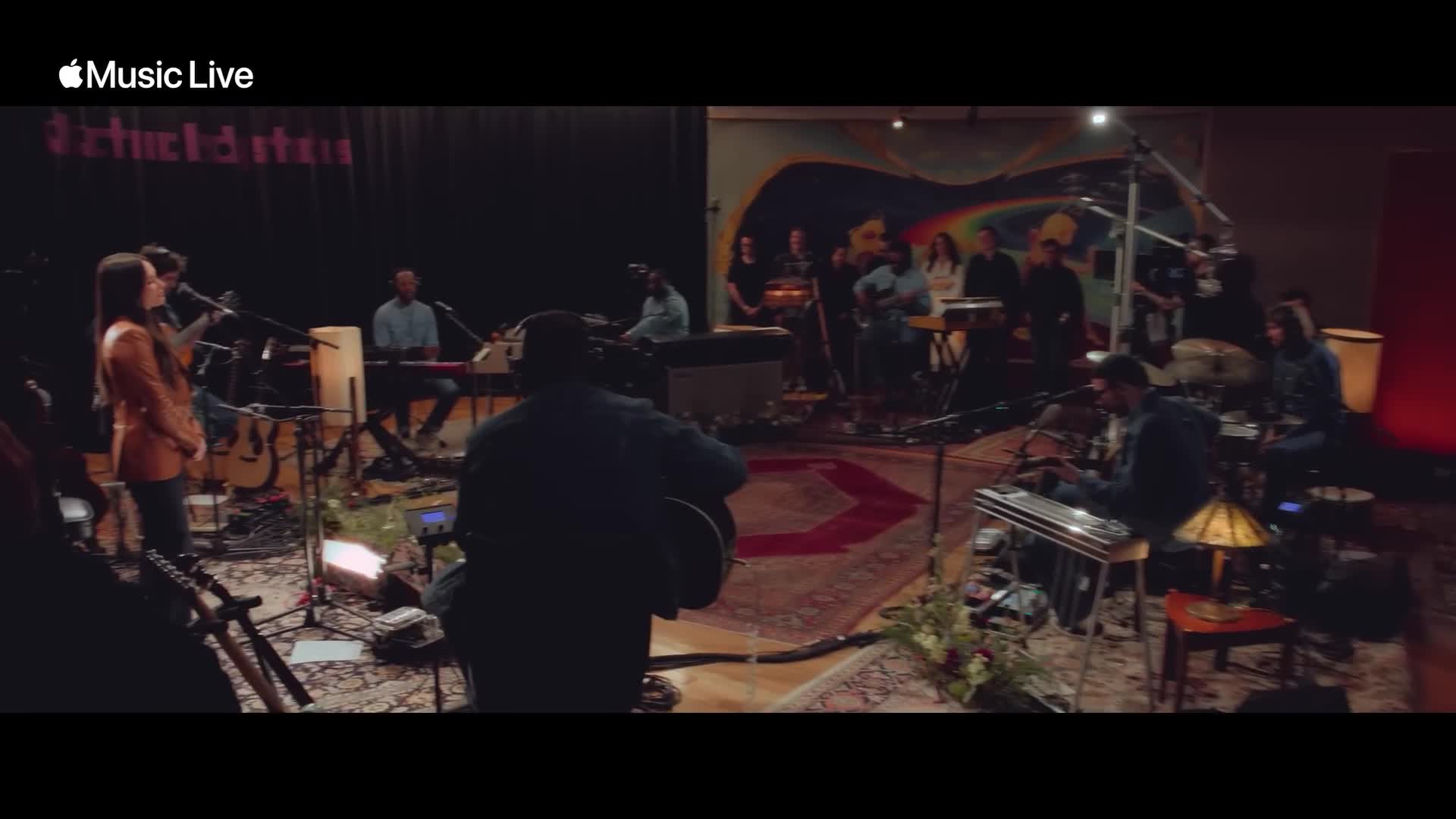
[The Saturn Return: A Journey of Self-Discovery and Personal Evolution]-[Kacey Musgraves — Deeper Well (Apple Music Live 2024)]
📋 Summary
Navigating the Saturn Return: A Transition into Maturity
The phenomenon of the 'Saturn return'—a period typically occurring in one's late twenties—serves as the catalyst for a profound personal metamorphosis. As noted in the transcript, 'When I turned 27, everything started to change.' This astrological and psychological milestone often forces an individual to reassess their environment, habits, and the fundamental structure of their lives. The speaker’s journey reflects a shift from a state of aimless consumption to a deliberate, self-aware existence.
Discernment in Relationships: Givers vs. Takers
A pivotal realization in the speaker’s maturation process is the binary categorization of social dynamics. They observe that 'there's two kinds of people': the 'giver' and the one who is 'always trying to take all they can take.' This recognition leads to a necessary pruning of one's social circle. By deciding to 'say goodbye to the people that I feel are real good at wasting my time,' the speaker establishes firm boundaries. This is not rooted in malice, but in the necessity of self-preservation, specifically citing the presence of 'dark energy'—something they 'can't unsee.' The decision to part ways ('you go your way and I'll go mine') is framed as a peaceful, albeit firm, detachment, allowing the speaker to prioritize their own well-being.
Breaking Cycles: From 'Wake and Bake' to Conscious Living
The narrative also addresses the shedding of past coping mechanisms. The speaker candidly admits to a former reliance on substances, noting, 'I used to wake and bake,' using a 'gravity bong' to start the day. While this once provided a sense of comfort, the speaker acknowledges it was merely 'wasting my time.' The realization that 'everything I did seemed better when I was high' is reframed as a temporary crutch that eventually lost its utility. The passage highlights a core philosophical shift: 'It’s natural when things lose their shine / So other things can glow.' This transition signifies moving away from artificial enhancements toward a more authentic, sober engagement with reality.
Self-Actualization and Defining One’s Soul
The final stage of this evolution involves an intellectual and spiritual departure from inherited wisdom. While acknowledging their upbringing ('We had what we needed shoes on our feet'), the speaker recognizes the limitations of their early education: 'The things I was taught only took me so far.' This admission leads to the arduous but rewarding task of 'figuring the rest of my soul.' By embracing the idea that 'I've gotten older' and 'now I know how to take care of myself,' the speaker encapsulates the essence of adult autonomy. They have moved past the 'flat' worldview of their youth to discover a 'deeper home' within themselves, marking the completion of a vital cycle of growth and the beginning of a life defined by intentionality rather than circumstance.

Deep Learning with ListenLeap


