
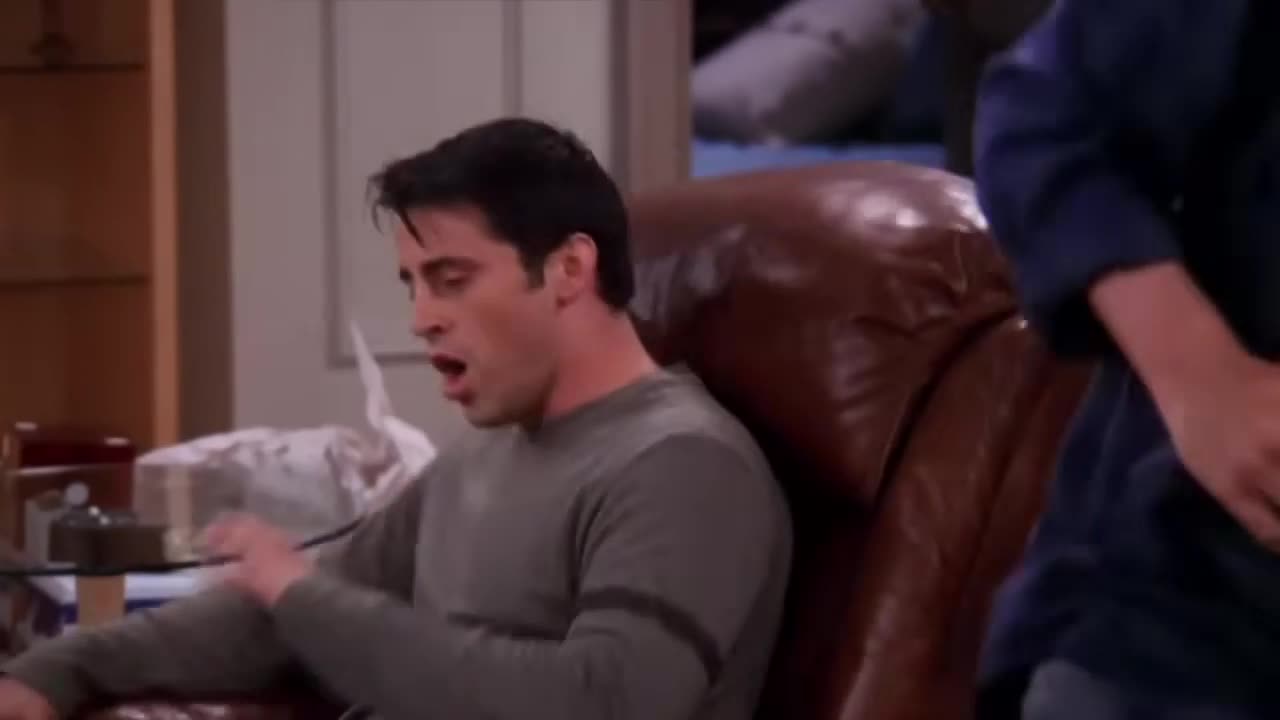
[The Boundary of Friendship: Generosity, Pride, and Letting Go]-[Joey’s Parting Gift for Chandler | Friends]
📋 Summary
The Tension Between Financial Dependency and Personal Dignity
In this poignant exchange between Joey and Chandler, the central conflict revolves around the complex dynamics of a friendship strained by financial disparity. The dialogue begins with an immediate sense of desperation, as Joey grapples with a gambling addiction, punctuated by his plea, "Just one more hand," followed by the realization of his downward spiral: "I cannot lose another dime." This desperation creates a power imbalance that Chandler attempts to rectify through subtle, albeit misguided, acts of charity.
The Symbolic Gesture of the 'Big White Dog'
Chandler’s attempt to gift Joey his "big white dog" serves as a thinly veiled mechanism to provide financial relief without triggering Joey's pride. Joey, however, is quick to perceive the underlying motive, noting, "I see what you're trying to do here. You're trying to give me money again." The interaction highlights the friction between Chandler’s desire to "help you out" and Joey’s fundamental need for autonomy. By offering to purchase the dog for "a reasonable price, say, $1,500," Joey attempts to reframe the charity as a transactional exchange, thereby preserving his dignity while still accepting the assistance he clearly needs.
Confronting the Stigma of 'Charity'
Joey’s reaction to the perceived pity is visceral. He characterizes the previous financial support as "charity," a label he firmly rejects. This highlights a recurring theme in their relationship where Chandler’s generosity is interpreted by Joey as a lack of faith in his ability to "take care of myself." Joey’s insistence that he "will be OK" is a defense mechanism against the vulnerability that comes with needing financial support from a peer. It underscores the difficulty of maintaining an equal friendship when one party is constantly in the role of the provider and the other in the role of the dependent.
The Emotional Core: Friendship Beyond Currency
The climax of the conversation shifts from the monetary to the emotional. Joey acknowledges the true source of his pain, stating, "The only thing that I'm going to miss is you." This shift strips away the artifice of the "big white dog" and the gambling debts, revealing that their bond is not defined by the "bills" or the "charity," but by the companionship they have shared.
Ultimately, the podcast snippet serves as a masterclass in the unspoken language of friendship. It illustrates that while financial assistance can be a necessary component of support, it often complicates the psychological landscape of the relationship. Joey’s final admission confirms that even when the financial "help" is removed, the emotional attachment remains the most significant, and perhaps the most difficult, aspect to leave behind.
Deep Learning with ListenLeap


