With the rise of prediction markets, you can bet on anything from weather to what President Trump will say in his next press conference.
I'm not a fan of Trump, though I do spend most of my day listening to him and tracking what he's doing.
On the Sunday story, who's winning big on these apps and who's losing?
The Sunday story from the Up First podcast.
Listen now on the NPR app.
This is Fresh Air.
I'm Terry Gross.
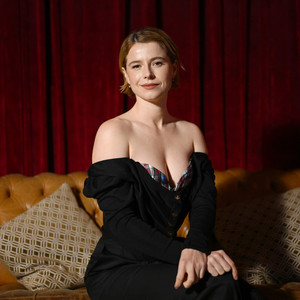
The film Hamnet is nominated for eight Oscars, including Best Actress for my guest Jesse Buckley.
Hamnet's other nominations include Best Picture, Best Director for Chloe Zhao, who's also nominated for Best Adapted Screenplay, along with Maggie O'Farrell, the author of the novel Hamnet, which the film is based on.
Buckley plays William Shakespeare's wife, Agnes Hathaway.
Little is known about Shakespeare's real wife.
The film is largely an imagined version of her.
What's true is that the couple's son, Hamnet, died at age 11 from the plague.
In the film, he catches it from his twin sister.
Shakespeare has already left the couple's home in the country to go to London and work on writing and staging his plays and has promised to bring the rest of the family as soon as he's settled and has a little more money.
When Hamnet gets sick and it's clear his life is in jeopardy, Agnes calls for her husband to come home, but he doesn't make it in time.
Shakespeare and Hamnet don't get to say goodbye, and Agnes is left to experience the horror of her son's death without her husband.
In this scene.
When Shakespeare does return, she's angry that he came too late, but she also feels guilty that she didn't pay enough attention to Hamnet while she was caring for their daughter, who survived the plague.
Shakespeare is played by Paul Meskell.
I should have paid her more attention.
I always thought she was the one to be taken away when all the while it was him.
I was fooled.
There's nothing anyone could have done to save him.
You did everything that you could.
Of course I did.
You weren't here.
I would have cut my heart out and given it to him.
I would have laid my life down on the ground for him.
I know.
And no one would take it.
I know.
No, you don't know.
You don't know.
You weren't here.
He died in agony.
He was in agony.
Anya's.
And he cried and he cried and he cried and his little body was wracked in pain.
Don't shush me.
He was so scared and you weren't here.
Hamnet has become known for leaving a lot of people in tears.
Buckley won a Golden Globe for her role on Hamnet.
Other films for which she received various awards or nominations include The Lost Daughter, Women Talking Beast, Wild Rose and Men.
Her next film, The Bride, a feminist take on The Bride of Frankenstein, opens March 6th.
On TV, she was a star of season four of Fargo and a star of the HBO series Chernobyl.
She won an Olivier Award Britain's equivalent of a Tony for her performance in a revival of Cabaret.
Hamnet is now playing in select theaters nationwide and is also available to watch streaming at home.
Jesse Buckley, welcome to Fresh Air and congratulations on your Oscar nomination and your Golden Globe win.
Thank you.
Thank you so much for having me.
My pleasure.
What were you able to learn about Shakespeare's real wife?
And how does that compare with how she's depicted in the movie, how you depict her in the movie?
Well, I think, before I'd read this book, you know what had been written about Shakespeare's wife was It wasn't great.
You mean it wasn't positive or there wasn't a lot?
No, it wasn't positive.
I think she was kind of given the title of being a woman that had kept him back from his genius and
I think what Maggie O'Farrell so brilliantly did, not just with Agnes and Shakespeare's wife, but also with Hamnet, their son, was to bring these people who, in our imaginary world, filled Shakespeare and the plays that have lived forever, and given them status beside this great man, which is full and vibrant.
In this imaginary version of her life.
People think she must be part witch because she was born in the woods and so was her mother.
And she knew so much about herbs and herbal medicine and got along with animals.
She was a falconer.
So we don't know how true that is, right?
No, but I think it's interesting.
You know, I think what is so frightening about her?
Like, that was a question I was asked.
Like what is it about this woman that is other that people feel a need to call her a forest witch or a daughter of a forest witch or whatever you know, somebody that is too much against the society at the time?
And my experience of playing this incredible woman was her uncompromising embodiment and connection to nature and her own elemental nature.
And I guess at that time it was kind of the beginning of puritanism and capitalism, and paganism was kind of becoming something scary and people were beginning to decipher themselves off like machines.
You know how you could work a land and and create produce was something that at that time in history was becoming conscious in the culture.
And yet this woman was just deeply connected to nature.
One of the producers, Pippa Harris, is quoted in the production notes talking about how you embody the character of Agnes.
She says about you, she's quite a wild child in the sense that she's very much at one with nature.
She's slightly mystical.
She believes in the soul and the spirits, and she's a really caring person.
When you hear that, does that sound like you?
Um, yeah.
Yeah, I mean, I grew up around a lot of nature.
I grew up in southern Ireland in a town called Killarney, which has lots of mountains and lakes and mountains.
There was a lot of freedom and expression by just living in that place when we were younger.
And I think when you grow up in a landscape like that, your mind and your soul is wild.
You know, things just grow because they want to grow.
There's no planting or formula to the nature in that place.
And I think that was really informative to me as a child and still is.
Getting back to that quote, do you believe in spirits and consider yourself a little mystical?
Because I'd love to hear more about that if you care to share it.
Spirits, I do.
I believe in energy.
I believe that you have a conversation with somebody's energy and spirit.
Absolutely.
And I think even people who've passed, that there is a spirit in the very memory of them that lives on.
And I guess, in the mystical sense is like I guess what that's making me think of is like it's about curiosity, isn't it?
Curiosity of an unknown and a seeking.
And I guess I like to live in that place, to be curious about something unknown.
One of the best known scenes in the movie is when your son has just died and you're just like howling with grief and despair.
And I'm wondering, is that something that you rehearsed a lot or prepared for?
Or did you try to be spontaneous about it?
Because like that's a scene that really brings out everyone's tears.
No, I didn't know that that was going to happen or come out.
It wasn't in the script.
I think really Chloe asked all of us to dare to be as present as possible.
And of course, leading up to it, you know, you're aware that this scene is coming.
But that scene doesn't stand on its own.
By the time I'd met that scene I had developed such a deep bond with Jacoby Jupe, who plays Hamnet, and Paul and Emily Watson and all the children.
And we really were a family.
And Jacoby Jupe, who plays Hamlet, is such an incredible little actor and an incredible soul.
And we really were a team.
And I think we both recognise where we might go, but where that might end, we didn't know.
And look, I...
The death of a child is unfathomable.
I don't know where it begins and ends.
Out of utter respect, I tried to touch an imaginary truth of it in our story as best I could.
But there's no way to define that kind of grief.
I'm sure it's different for so many people.
And in that moment all I had was my imagination, but also this relationship that was right in front of me with this little boy.
And that's what came out of that moment.
You hadn't yet become a mother, but you did get pregnant, I think, like a week before Hamnet opened.
Do I have that right?
Yeah.
A week after I wrapped filming.
Ah, okay.
Something was cooked.
Were you trying or was that really a surprise that seems so... The timing of it just seems amazing.
I wanted to become a mother for a long time.
And schedules, life being in different places work um, you know, it was hard uh, and that was kind of like an a beautiful thing but also an intense thing to kind of feel that in my own personal life, beside this mother that I was living inside in in Agnes um, The thing I've realized becoming a mother is that it humbles you down to your knees and any idea you think of yourself in being a mother or becoming a mother or in birth or any of it, I mean good luck, because it's never like that.
It always brings you on a way more kind of wild journey.
Yeah.
I'm wondering if portraying the mother of Hamonet and the wife of William Shakespeare spooked you, because you had just experienced the grief that a mother has when her 11-year-old son dies, and now you are about to become a mother.
So were you spooked by the thought, a son can die, a child can die?
I wasn't spooked.
Not because I didn't think about it, but I don't know, what are you going to do?
You know like lock yourself up and not kind of.
You know my work, I'm not scared to touch the shadowy bits.
I like them.
They like help me...
I think my experience when I don't touch them is that they show up in a more destructive kind of bigger way.
So actually, the thing that this story offered me, that brought me into this next chapter of my life as a mother, was tenderness, you know, and that was a word and a feeling that I think I didn't know was what I was looking for.
And a mother's tenderness, it's ferocious, you know, to birth. is no joke.
To be born is no joke.
And the minute something's born into the world, you're always in the precipice of life and death.
That's our path.
We all know we're going to head towards that destination, I guess.
And I wanted to be a mother so much that That overrode the thought of being afraid of it.
The director, Chloe Zhao, sent the cast to a coach who uses dream analysis as a tool for insights into who you are and who your character is.
Did you find that helpful?
Yeah, I actually introduced Chloe to this woman that we worked with and I've used it as a way to create for a few years now.
I find it so helpful.
I'm not very good at linear thoughts or projections and I found school very difficult because it was too linear and formulaic and I couldn't learn like that.
And you know, with characters and work it's the same.
I don't want to project an idea onto the women that I play until I've lived beside them and then in them and I find dreams, really curious things and I, you know, when you open a book or you open the script and the world of that script begins to kind of reflect itself around you and your unconscious does stir the waters towards that world.
And I find it a very interesting and useful tool to abstractly enter into an essence of a being, rather than projecting an idea on top of them.
And I create so much from this way of working.
I write, I collect pictures.
I'm like a magpie, you know, music.
I paint.
It spills out of me when I start working like that.
So I find it so useful.
Would you be willing to share an example of a dream that you found useful in making Hamnet or another film that you made?
I remember when I was filming Hamlet, I had a dream.
I think it was leading up to the death scene.
And we were in, I'm going to get, you know, I'll just give you, I can't remember totally.
But, you know, and I just to say like dreams are the language of metaphors as well.
So anyway, this dream, I remember being in an ocean and And I knew that there was a little girl stuck under a rock at the bottom of the ocean.
And I knew I had to try and get her out.
And I kept trying to swim down to this place.
And as I was swimming, this huge stingray came and started to like.
Basically, the whole ocean became the belly of a stingray.
And he was kind of devouring that world.
And I remember when we got in to shoot that scene, I definitely put that stingray somewhere in that room on that day.
Do you see the stingray as being a metaphor for death, kind of taking over, consuming everything, grief.
I guess so.
I don't know.
I mean, it could be many different things for many people.
And I try not analyze it.
I try and like just let it be kind of free thinking, you know, a free thought that can.
Sometimes I have dreams, you know, like I had a dream three years ago.
And I read a script recently and that dream came like straight to the front of my mind.
And I was like, oh, this script is this dream.
And actually...
This is like something that I know I need to like get very curious about this dream.
Like what happens if I return to this dream and try and work on it once a week for six months?
Like will something get unraveled?
Just as an exercise, not for like anything special. woo woo.
It's just curious, isn't it?
And it's also just to say it's not a new thing.
Like the surrealists were using it.
Dali was using it.
I'm pretty sure David Lynch used his dreams in his films as Fellini.
There's this extraordinary Fellini book of all of his dreams.
And he's created.
It's this most beautiful book where all the characters that he's found in his dreams are all painted in this book, and you can see them in like Eight and a Half and La Strada, so it's not a new tool, it's just something to get curious about.
In addition to starring in Hamnet, you star in a new film called The Bride, which is Maggie Gyllenhaal's take on The Bride of Frankenstein.
Like, what if The Bride of Frankenstein was a feminist who spoke out about misogyny and corruption?
But she's also totally wild and out of control, really nasty.
So it must have been...
It must have been such a kind of shock from going to making The Bride to making Hamnet.
Because I think, even though The Bride's opening later than Hamnet did, I think you made The Bride first.
I made The Bride first, yeah.
Oh, and also, you know, in Bride of Frankenstein you're reanimated like you've died and you're brought back to life like Frankenstein.
Whereas, you know, in Hamnet, that's all about a dead son staying dead, living in spirit.
Well, kind of.
Living in spirit.
Kind of.
Yes.
Like Shakespeare, reincarnates his son through the vessel of a story, which is what happens at that end, you know, is when she reaches out, she can touch the thing that she thought she'd lost, because her husband has created the greatest magic trick of her life.
When her son dies, it's so ginormous that she can't find him until that moment when the vessel of a story can help you.
Yeah, touch the things that you can't hold by yourself.
We need to take another break, so let me reintroduce you.
If you're just joining us.
My guest is Jessie Buckley, and she stars in Hamnet, for which she won a Golden Globe and is nominated for an Oscar.
We'll be right back.
I'm Terry Gross, and this is Fresh Air.
Greenland has said it is not for sale.
Denmark has said it can't even legally sell Greenland.
And whether Trump can or will or should try to control or purchase a territory that does not want to be sold is one question.
But on Planet Money, we are more interested in how we even got to this moment and how we might gracefully get out of it.
Listen to Planet Money on the NPR app or wherever you get your podcasts.
On the latest episode of Sources and Methods, NPR's national security podcast.
The US and Israel have attacked Iran.
President Trump is calling for regime change.
Telling Iranians quote when we are finished, take over your government.
We break down the most important questions about what happens next.
I'm Mary Louise Kelly.
Listen now to Sources and Methods on the NPR app or wherever you get your podcasts.
Hi, this is Molly C.V.
Nusberg, digital producer at Fresh Air.
And this is Terry Gross, host of the show.
One of the things I do is write the weekly newsletter.
And I'm a newsletter fan.
I read it every Saturday after breakfast.
The newsletter includes all the week's shows, staff recommendations, and Molly picks timely highlights from the archive.
It's a fun read.
It's also the only place where we tell you what's coming up next week in exclusive.
So subscribe at whyy.org slash fresh air and look for an email from Molly every Saturday morning.
So let's talk a little bit about music.
You studied harp and I think another instrument when you were young?
Yeah, piano, clarinet.
I was never very good and I dabbled in the saxophone for a second too.
But you didn't study singing, but became known for your singing early in your career.
You've been in several musicals, including Cabaret and sometimes A Little Night Music two shows with like fantastic scores.
So how did singing become your thing?
Well, I grew up around a lot of music.
My mom is a harpist and a singer and my dad has always been passionate about music.
So it was always something in our house and always something that was encouraged.
And I think early on.
I have very strong memories of seeing and hearing my mom sing in church and this quite intense mercurial conversation that would happen between her, the story and the people that would listen to her, and at the end of it something had been like cracked between them and these strangers would come up with tears in their eyes and I guess I saw the power of storytelling through my mom singing at a very young age and that was definitely something that made me think I want to do that.
You played the male lead Tony, in West Side Story in a school production in your convent school right.
Yeah.
What was it like for you to play a male role in high school?
I mean, I loved doing those productions in school.
And it was an all-girls convent school.
And it was brilliant.
I mean, the thing that deciphered the girls from the men or the women from the men in the productions was the men wore French plaits and big, huge red French plaits you know like to keep their hair down and big, huge red boxy suits with a tie.
But it was brilliant.
And I remember doing when I did those shows, like even then It meant so much.
You know, I would want to go to the core of it and if I felt I didn't do it justice I would kick myself and the teachers would be like you're fine, don't worry.
But it was kind of, it was the thing I looked forward to the most and it was great fun.
You got your start as somebody who was known outside of high school.
When you were a contestant on the British TV singing competition, I'd do anything.
And the goal was that theater producer Cameron McIntosh and songwriter Andrew Lloyd Webber were going to stage a production of the musical Oliver.
And the winner of the contest was going to be the female lead, Nancy.
And so I want to play the first song that you did on the competition.
And this is a cover of the Ike and Tina Turner recording River Deep Mountain High.
Oh, my God.
Okay.
Here we go.
Terry.
When I was a little girl, I had a rag doll, The only doll I'll ever want.
I love you my oh, my River deep mountain high yeah yeah, yeah.
I lost you and I cried Oh, how I love you baby baby baby, baby.
I love you baby, like a flower loves a snake, And I love you baby, like a robin loves a snake.
So I heard you laughing throughout all of that.
What were you experiencing as you heard that?
I haven't heard that for a long time.
So it's definitely a trip down memory lane.
You know I look back at that time and I mean firstly, I thought it would take a hundred years to peek behind the curtain and be part of an industry that I was so Desperate to be part of.
You know, I loved it.
That's what I wanted to do.
And all of a sudden, at 17, I was there and I was standing in front of Cameron McIntosh and Andrew Lloyd Webber and I was getting to perform and sing.
And I was so raw and ignorant and innocent, but full of passion.
And there was a lot of like joy in it.
But also I think about that young woman and I think, God, you're so brave.
And just that compulsion and passion to be part of theatre was so huge in me back then.
And I don't know if I'd be as courageous now to go and do something like that.
But when I hear that, I'm like...
Goal girl, that's what I think.
One of the people on the panel of judges, who were also coaches, thought you were very raw, like you said, and wasn't confident that you would necessarily get any better.
How did you take that criticism?
Andrew Lloyd Webber and McIntosh liked you.
Yeah, um...
Well, there was parts of the criticism which, you know, I think was true.
I was raw.
I hadn't trained.
I had a lot to learn and to grow in.
You know, I was only 17.
But still, criticism can be crushing.
But I think there was parts of their criticism which I think was destructive and unfair when it became about like my awkwardness or you know, they would say I was masculine and send me to kind of a femininity school.
They sent you to the school?
They sent me to like go to Chicago to put heels on a leotard and learn how to walk in high heels, which
It was pretty humiliating, to be honest.
And I'm sad about that because I think you know, I was discovering myself as a young woman in the world and it wasn't fully formed.
And I've always felt I'm not... I don't think any woman is.
We're not just like the same.
I was different.
You know, I was wild.
I had a lot of feeling inside me.
I could hardly keep my hands beside myself.
You know, I had a lot of expression in me and I think to kind of criticize a body of a young woman at that time and to make her feel conscious of that was a lazy and I think um, boring.
And as I've grown up, I that's, you know I, I think women are not, they were not just to be accepted into the world in one shape.
I want all the shapes, I want all the stories, I want all the feelings, I want autonomy of of ourselves to be as vibrant and and and full as it possibly can.
Um, So yeah, that was hard that bit.
So your coach was Andrew Lloyd Webber on the show.
What did you learn from him and was it helpful?
I mean, he's been a very quiet but... extraordinary support throughout, you know.
And I think him and Cameron McIntosh and Barry Humphreys really recognised a raw flame that was to be nurtured.
And Cameron McIntosh actually was the person who really introduced me to Shakespeare.
After I finished I Do Anything.
He called me and he very generously offered to pay for me to go and do a four-week Shakespeare course at RADA, which is kind of, That's the Royal Academy of Dramatic Arts.
Yeah, in London.
And I'd studied Shakespeare at school, but I, you know, I was kind of intimidated by it.
And...
I guess that gesture changed my life because when I went and did that course, it was the first time I recognised myself as an actress and recognised that I could do what I felt I needed music for in just a word, because Shakespeare's words are bottomless, you know.
There's no end point to a word in a Shakespeare play.
And I think up until that moment I thought that music was a vessel that could hold all my feelings, until I'd met Shakespeare in that course.
And it was significant.
So both of them have been very, very like, essential to me discovering myself as an actress, and what I want to say and what I want to be and what I want to put out into the world.
If you're just joining us.
My guest is Jessie Buckley, and she's nominated for an Oscar for her starring role in the film Hamnet, and she already won a Golden Globe for her performance in that film.
We'll be right back.
This is Fresh Air.
There's one more song I want to play.
And this is from your starring role in Cabaret in a West End production in England.
And so you're playing the role that Liza Minnelli played in the movie.
And it's a kind of iconic role, and singing maybe this time is a really iconic performance.
So I want to play your version of it, in which you seem to rethink the song a little bit and you build like Liza builds, but the end kind of tones down and becomes more reflective in a way that I don't remember Liza doing it in the film.
So let's hear the ending of the song.
Everybody loves a winner, So nobody loved me.
Lady, peaceful lady happy, That's what I long to be.
In my favor, Something's bound to begin, It's.
And then sometime Maybe this time, Maybe this time I'm hearing someone so much more in control of her voice than when you were a teenager and were on the singing competition.
What do you hear?
Yeah, somebody who's grown.
And I think by the time I'd come to Cabaret I had gotten to know myself more and lived more and worked more and was in command of my instrument and storytelling better than when I was younger.
Why wouldn't you be?
Why wouldn't I?
Exactly.
I'm only human.
And actually, but even in that, you know, like Cabaret was really...
It was such a trip.
That character is a real trip.
You get on that train at the beginning of the night and you do not get off it until the end.
And what I hear in that song and what you're talking about in that ending.
I hear somebody trying to find hope, trying to like be held.
Every sentence starts with maybe you know, maybe this time, maybe this time, maybe you know like, maybe something's going to happen to me.
And I think what I discovered in playing this part, and especially in that song, and in the end, is like What if she doesn't fully believe it, that hope's going to actually arrive?
Like, what if?
What if it doesn't?
What if she hasn't?
She's like holding on for hope as much as she can until that end point, and just a tiny fraction of a thought that actually maybe it's not going to work out.
And I guess, don't we all tread in that precipice in life?
Count me in.
Just one step in front of the other.
But like, God, I hope I don't fall between the cracks.
Did acting bring out parts of your personality that you didn't know you had, or maybe didn't know how to express, or feelings you were too embarrassed to admit to or too inhibited to fully express?
One thousand percent.
I mean, it's essential to me in that way.
What did you learn about yourself from acting?
I learn something about myself through the women that I play in every job that I do, because they contain parts of me in an alternate state and space that maybe you know, if I was to, I'd have to go to therapy 10 hours a day, seven days a week if I was trying to actually you know, incubate the shadowy bits, as I call them.
But you know, through these incredible women that I've been lucky enough to play, I get to explore that and experience that.
And a lot of why I choose the roles that I do is to kind of meet those shadowy bits.
Like Marike in Women Talking, for example, she's tough.
She's hard.
She's like an armadillo.
And she was the one that really itched me.
I remember when I got that script, I was like, 12 women talking in an attic.
What's that?
What is that?
But she was the thing that kept itching away at me because I know that woman and she's not easy.
That's what I look for is like the crunchy bit, the thing that's disobedient, that's too much, that's.
And whether that's even to have a protagonist as a mother, to bring the mother to the forefront and encompass all of what it is to be a mother, whether that's in Lost Daughter or Wild Rose or Hamnet.
Let's give the full landscape of what it is to be a woman.
If you're just joining us.
My guest is Jessie Buckley, and she's nominated for an Oscar for her starring role in the film Hamnet, and she already won a Golden Globe for her performance in that film.
We'll be right back.
This is Fresh Air.
When you were making The Bride, your forthcoming film inspired by The Bride of Frankenstein, written and directed by Maggie Gyllenhaal you were pregnant and had to hide your pregnancy on screen.
So how did you do it?
Well, I wasn't pregnant for the main shooting sequence.
But when we came back to do a reshoot for something, I was eight months pregnant.
So They just had to do it from the boobs up, Terry.
It's like just the face.
The face was my only tool to work from.
But I mean, I really loved working when I was pregnant.
I thought it was pretty wild experience, especially because I was playing Mary Shelley and I was talking about monstrosity.
And here I was with two heartbeats inside me.
And I, you know, becoming a mom and being pregnant did something.
I think.
For me, my experience of it, it's so real that it really focuses you to be.
I'm allergic to fake or to disconnection.
I think since my daughter has come and I know what that connection is and the real feeling of being in a relationship with somebody kind of soft chat is.
I can't stomach it anymore.
Or talking around a thing.
And as an actress, it's very exciting to, like, recognise that in yourself and really...
Take ownership of yourself.
You know, I remember in filming that I was really close to giving birth, you know, and being like I have this amount of energy.
I will give you everything I got.
But I know there'll be a time when I cannot give you any more.
And that's going to be the end of the day.
And actually, that really focuses you on set, you know.
And I think maybe when you're younger, you're so in in awe and reverence that you've been invited into this world, which is part of where you are at that moment.
But it's also good to put in some boundaries and focus your work.
And I think I'm excited to go back and work on this other side of becoming a mother in so many ways, because I've shed tenuous layers of skin by loving more and experiencing life in such a new way with my daughter.
I'm also scared to work again because you know it's hard to be a mother and to work.
That's like a constant tug, Because I love what I do and I'm passionate and I want to continue to grow and learn and fill those spaces that are yet to be filled.
And also be a mother.
And I think every mother can recognize that tug.
Do you think, if you took a break, a long one, do you have a fear that you'd be forgotten when you were ready to come back?
No, I don't feel afraid of that.
You're just torn between what you should do?
You know, like just become a full-time mother for a while or keep acting?
I don't think I have to choose, you know.
I really don't.
I think...
I'm glad to hear that.
It just sounded to me like you thought you needed to.
No, I just think it's an honest feeling.
You know I woke up this morning.
I haven't seen my daughter in four days and it hurts.
You know, I miss her.
But I also I'm inspired to be around people that make me dream and imagine, and I need to do what I do.
And I think I will be a better mother to continue to be passionate about something in my life and show my daughter that you don't have to lose any part of yourselves.
Of course, there is.
Of course, it's hard, but it's also a beautiful thing to miss something like I've missed.
I haven't filmed for nearly a year and I cannot wait, like I, I'm hungry to create again um, and my daughter will come with me.
You know she's she's seven months, so at the moment she can travel with us and and it's a beautiful life and she meets all these amazing people and I have a feeling that she loves life, And that's a great thing to see in a child.
And I hope that's something that I've imparted to her in the short time that she's been on this earth is that life is beautiful and great and complex and alive.
And there's no part of you that needs to be less in your life.
You might have to work it out, but it's like it's worth it.
Well, that's a nice note to end on.
So congratulations again on your Oscar nomination and your Golden Globe win for Hamnet.
And thank you so much for coming on our show.
Thanks for having me.
It's a privilege.
Jessie Buckley is nominated for an Oscar for her starring role on Hamnet.
It's playing in select theaters and is available for streaming.
Her next film, The Bride, opens Friday.
To keep up with what's on the show and get highlights of our interviews, follow us on Instagram at NPR Fresh Air.
Fresh Air's executive producer is Sam Brigger.
Our technical director and engineer is Audrey Bentham.
Our interviews and reviews are produced and edited by Phyllis Myers, Anne Reboldonato, Lauren Krenzel, Monique Nazareth, Teresa Madden, Thea Chaloner, Susan Yakundi, Anna Bauman and Nico Gonzalez-Whistler.
Our digital media producer is Molly C.V.
Nesper.
Roberta Shorrock directs the show.
Our co-host is Tanya Mosley.
I'm Terry Gross.