
[Beyond the Glass: The Evolution of Rivalry into Connection]-[Jay and Manny's Blind Wine Tasting - Modern Family]
📋 Summary
The Nuance of Palate and Personality
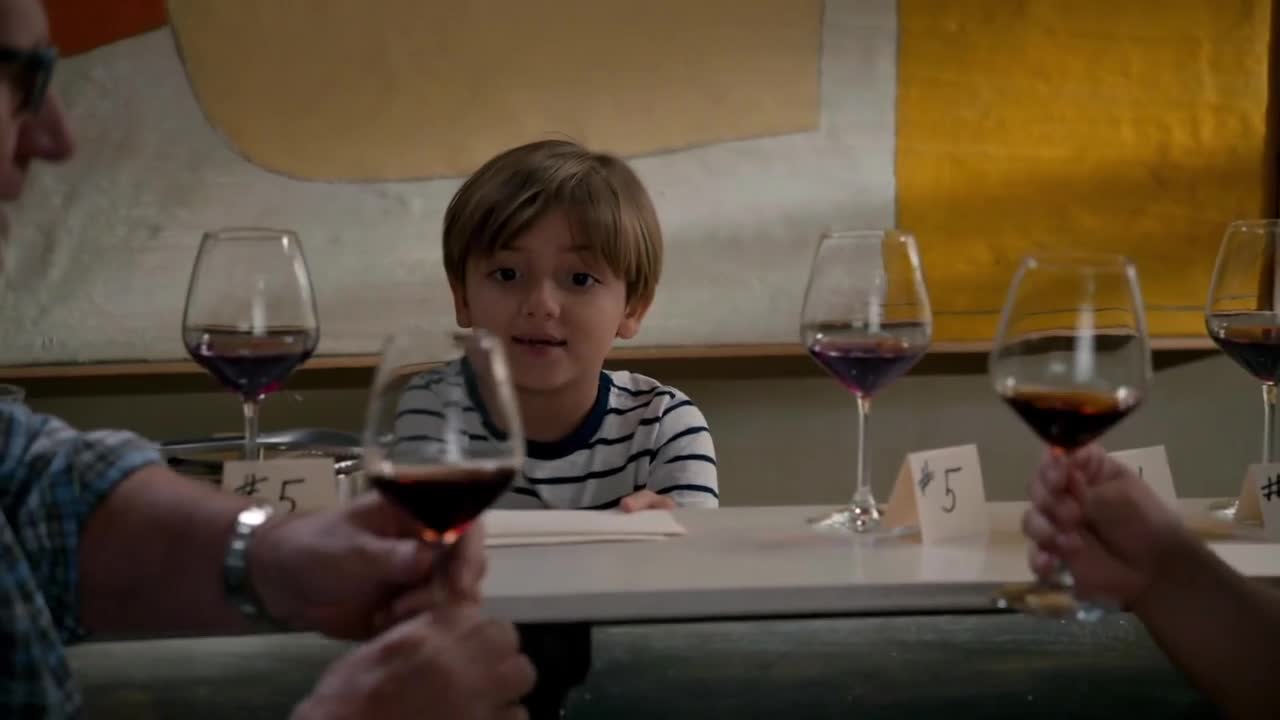
The dialogue begins with a display of intellectual posturing through wine tasting. One participant identifies a Bordeaux Merlot, mistakenly labeled as a Cabernet by an "uneducated palate," while the other recounts a nostalgic, albeit "fruity," anecdote about a summer in Paris with a sommelier named Marcel Caron. This opening sequence establishes a dynamic defined by pretension and competitive one-upmanship, where wine serves as a vessel for showcasing status and personal history.
The Toxicity of Competition
As the tasting progresses to a "mature Napa Valley Cabernet," the atmosphere shifts from shared appreciation to aggressive rivalry. The act of "spiking the football"—a metaphor used by one participant to describe the other’s obnoxious need to validate their correctness—highlights the underlying tension. What should be a refined, sensory experience is marred by the participants' mutual need to assert dominance, leading one to remark, "Only you could make talking about wine into something obnoxious." This segment illustrates how competitiveness can strip the joy and intimacy away from a communal hobby, turning a leisure activity into a battlefield of egos.
The Turning Point: Choosing Connection Over Conflict
At the precipice of the final reveal, the narrative takes a profound turn. The participants reach a moment of self-reflection, noting that for the entire afternoon, "neither one of us checked our watch once." This realization serves as the catalyst for a paradigm shift. They acknowledge that the competition is a barrier, stating, "if we flip this over, one of us is going to feel bad, and it could ruin the thing." By choosing to suspend the final result, they prioritize the preservation of their budding rapport over the dopamine hit of being "right."
Finding Common Ground in Imperfection
Ultimately, the conversation reveals a deeper level of mutual understanding. Despite admitting they "don't have a ton in common," they discover a mirror image of their own flaws in one another. One participant identifies the other as a "competitive jerk," while the other is labeled a "sensitive, even perfumey" soul based on the Paris anecdote. This vulnerability creates a bridge between them. By agreeing to turn their wine tasting into a monthly ritual "without the competition," they successfully transition their relationship from a performative power struggle to a genuine, sustainable friendship. The closing remark—calling the other a "competitive bastard" with a tone of affection—confirms that they have successfully navigated the transition from rivals to companions, finding value in their shared, yet distinct, personalities.
Deep Learning with ListenLeap


