The best operators have a relentless focus on leverage, finding ways to multiply their impact rather than just working harder.
But here's what I see happening in finance teams everywhere.
Brilliant people getting buried in expense management busywork.
If you think about it, you become a finance leader because you love strategic work, modeling scenarios, optimizing capital allocation, finding the insights that actually move the business forward.
But instead you're chasing receipts and categorizing transactions.
It's the opposite of leverage.
This is exactly why I'm so bullish on what the team at ramp has built.
Kareem and Eric understood that every minute spent on manual expense management is a minute stolen from high leverage work.
So they automated all of it automatic categorization, receipt matching, spending controls that actually work.
Check out ramp.com slash invest and see what happens when you eliminate the busy work.
Cards issued by Sutton Bank, member FDIC.
Terms and conditions apply.
In asset management, growth often depends on customization.
It's the nature of the beast in our industry and I know, having experienced the problem firsthand as an active manager.
It's a competitive differentiator to tailor products and services to clients' preferences.
Those of us growing our businesses always want to say yes to customers.
It means delivering a tailored portfolio, a tailored report, or a tailored expectation for service.
Saying yes leads to growth, and it also leads to customization and a big trade-off.
The more you grow, the more complexity you absorb.
The more you say yes, the harder it is to scale efficiently and consistently.
That's where Ridgeline comes in.
Ridgeline automates customization.
It gives asset managers the ability to deliver personalized experiences at scale without adding headcount, manual work or operational risk.
Having been an early design partner myself, I saw firsthand the power of taking an entirely clean sheet of paper to building the system.
We've all been waiting for a front-to-back platform that combines all of a firm's core functions on a single dataset.
It's how leading firms stop choosing between growth and efficiency and start saying yes to both.
I believe the best firms will be built on Ridgeline as their operating system.
I also believe there'll be a leading case study in combining the power of systems of record and AI.
If you haven't spent time with him yet, I urge you to see what Ridgeline might unlock for your business.
Long-time listeners of this show will know that AlphaSense is the market intelligence platform I've admired for years.
It gives institutional investors access to over 500 million premium sources, from company filings and broker research to news, trade journals and more plus over 200000 expert calls covering the world's most important companies and industries all of it in one platform so investment teams can move faster, go deeper and make high-conviction decisions with confidence.
I'm excited to join AlphaSense at their inaugural Alpha Summit 2025 this October in Brooklyn.
I'll be on stage alongside leaders from UBS, Wells Fargo Accenture, Google Stripes Group, the Carlyle Group and more, to talk about how AI is reshaping investment, research and decision-making.
Alpha Summit is about showing the real workflows and strategies that top firms are using today.
The event features an incredible lineup of industry-leading keynote speakers over three days.
You'll hear from these industry leaders, connect with peers across finance and corporate strategy and be part of the conversations you won't find elsewhere.
Join me at Alpha Summit 2025, October 6th through 8th at the refinery at Domino.
To register and to see a complete list of speakers and the full agenda, go to alphasensecom.
Slash invest.
Hello and welcome, everyone.
I'm Patrick O'Shaughnessy, and this is Invest Like the Best.
This show is an open-ended exploration of markets ideas, stories and strategies that will help you better invest both your time and your money.
If you enjoy these conversations and want to go deeper, check out Colossus Review, our quarterly publication with in-depth profiles of the people shaping business and investing.
You can find Colossus Review along with all of our podcasts at joincolossus.com.
To learn more, visit psum.vc.
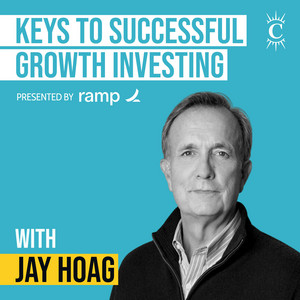
My guest today is Jay Hogue.
Jay is the co-founder of Technology Crossover Ventures, known as TCV, which pioneered the growth investing category and has backed legendary companies like Spotify Netflix, Expedia and many others over three decades.
Jay explains how macro factors like regulation have become unexpectedly central to technology investing.
He offers his contrarian take on today's market, arguing that consumer internet represents significant opportunity, while most investors chase SaaS and AI deals.
We discuss investing in new technology versus commercialization, TCV's evolution from cold calling to AI-powered sourcing of 11 million companies and their three-person unanimous investment committee structure.
Please enjoy my conversation with Jay Hogue.
So Jay, we last did this four years ago, which is crazy to imagine how quickly that four years has passed.
That was a strange world and a strange market.
We're in another interesting time today.
I'm curious to start how today's market conditions feel the most different to you than the market of the rest of your investing career.
What feels most distinctive about today?
Yeah, I mentioned, yeah, we did this, I think, in September of 2021.
And as a longtime Chicago Cubs fan, I'm quite superstitious.
So I'm sure it didn't cause the tech reset in 2022, but let's hope that we'll not have a recurrence.
Let's see what's different.
There's always parallels and similarities to prior periods of time.
I guess what is different is, particularly as technology has gotten so big, over now, the 30 years of TCB and the 43 years of my career, the focus on macro, which is not something I spent a lot of time focusing on, really is different.
So regulation of tech, how do tariffs impact global trade all those issues which really were never part of the lexicon or focus, for technology is probably something that's pretty new.
I think it's very difficult to figure out.
A lot of people are talking greater authority about that, which I think they know very little.
That includes myself.
That's certainly something that's quite different.
What feels most opportune about this market?
Where do you think that there's the most opportunity to earn strong returns, making new investments, starting today?
The world has shifted so strongly in the last several years.
And again, I'm leaving COVID out for the moment because that was such an unusual time.
Where I think, as you think, about technology investors, huge focus on SaaS, huge focus on all things AI and huge de-emphasis of consumer-based Internet businesses.
And so I think that's actually a pretty interesting opportunity where one can be contrarian.
And we continue to see interesting private opportunities that I think most of the world's not focused on.
I was talking to a founder actually building something new in consumer today.
There's a heavy AI angle to it, but nonetheless consumer.
And he made an interesting observation, which was how hard it was for him to go find venture investors who are great, primarily focused on consumer.
It's almost like a dying breed of people, exactly to your point.
If you could describe why you think that is and what about consumer is interesting today, because it does seem like a lot of the big consumer businesses started 15, 20 years ago and have just dominated ever since.
And there seems to be less white space, but maybe you think differently.
I don't think necessarily it's less white space, because you could argue that the big, enormous internet franchises consumer internet franchises that have emerged are playing on the opportunity set of 5 billion plus smartphone users, incredibly engaged audiences across gaming or music or entertainment or other media and just incredible consumer engagement with those devices.
And therefore, that should create enormous opportunities for new consumer-based franchises.
It's always been hard to break through a virtual shelf space concept.
So I'm not saying it's easy to build consumer businesses, but I think the fundamental reason why so many people are not focused on it is because of money chases momentum or follows perceived momentum at the risk of insult, possibly like seven-year-olds playing soccer.
The ball goes over there and everybody goes over there.
And so I think, as far as SaaS and AI, it's super shiny, super interesting and that's where everybody's focused.
And I just have a hard time believing there are not going to be any new consumer internet businesses founded and built over the next 10 or 20 years.
I'd love to hear you talk about the difference between investing in new technology versus investing in commercialization, something you already mentioned a little bit.
As a growth investor.
Of course, things are working at that point typically, so things have become commercialized.
But it seems like the tech is really still being built now, and it's changing really, really fast.
What have you learned about that difference?
Many super interesting technologies have taken place far longer to reach commercial scale from a revenue and monetization standpoint than predicted.
What would be examples of recent vintage and autonomous vehicles were?
The pure technologists said it was ready for prime time five, seven years ago.
Now appears to just be that.
AR and VR, generally great opportunity set, but still really looking for commercialization.
To me, that's the lesson to keep in mind that it's the applicability of technology, not just the availability of it.
And when I get into defensibility, what is an monetization model?
How big and defensible can it be?
How can you build an enduring franchise, not just have the hot tool of the day?
If you think across all 30 years of TCV, is there a most common type of what I'll call fool's gold investment that you've encountered, a pattern that you see over and over again, that you think of as an exciting investing trap.
As a technology investor technologists, and sometimes it feeds into technology investors.
Often overestimating the near term on your way to underestimating the long term.
And that's just something to be careful of.
And the other thing I think we talked about last time, I was going back through any of the most valuable tech companies in the world today.
Are they exceptions to this statement?
I don't think they are.
No.
Every area and every great company goes through a desert of disillusionment in investors' minds.
Where it was great and then all of a sudden people are casting dispersions on the sustainability of it.
You think about Apple.
Apple was left for dead in 2008.
Apple and Microsoft, the two companies worth $3 trillion today.
Microsoft, from an investor lens, wandered in that desert for more than a decade.
And that's just worth keeping in mind.
It will not be up and to the right in a linear fashion for the vast majority of these companies.
I'd love to hear you opine on the public versus private market dynamics today, which are very, very different from most of your TCV's history.
And it seems really important.
You're a crossover investor.
You're maybe the first major crossover investor, which has now become a popular style.
But it seems like, with the dynamics of private companies staying private for much longer, much more liquid private markets, people preferring the state of being private to being public, there's a permanent shift.
That's happened.
Do you think that that's true?
Do you think that that's healthy?
I'm not sure it's a permanent shift.
I'll get into the reasons for that in a minute.
Everything is bigger.
It's given that it is TCV's 30th year.
Actually, technically, it's June 23rd is our 30-year anniversary.
I went back and looked at some stats just to give you a scale difference.
The entire venture industry in 1994 raised $4 billion.
Today, that's a small fund for some, which is pretty staggering.
In terms of market cap, at the end of 1994, the NASDAQ was at 751.
Today, it's north of 17,000, so that's about a 23x increase in the NASDAQ value.
And it didn't have it from 94, but in 1991—
As you looked at the large public technology companies, there were 31 companies north of a billion dollars and another 13 companies between 500 million and a billion.
That was large tech back then.
And I mentioned today there are six companies north of a trillion.
So in addition to Microsoft and Apple, I mentioned NVIDIA is at 2.8 trillion.
Amazon and Google at 2 trillion, pretty staggering.
And then Facebook slash Meta at 1.5 trillion.
So that's dramatically different market values than 30 years ago.
Today's market puzzles me for at least one reason.
I understand it's standard to say, oh, companies want to stay private longer, et cetera.
I think that's true in some cases, although that was pre-Google going public.
That was also the concern.
They were staying private too long.
And I understand if companies have specific things they want to invest in, under the cloak of being private, probably going public.
But I'm old school in that I believe the vast majority of the best companies will benefit by being public over the long run.
There's discipline of being public.
These days, you can manage the guidance expectations however you want, including not providing guidance.
It provides a public currency.
It provides a fully liquid stock for all your employees on a persistent basis over time.
I'm totally puzzled as to why the technology IPO market is just so moribund.
We're now in our fourth year of pathetic numbers overall.
So maybe I'm missing something.
But even in mediocre years, historically, there were 50 or 60 US-based tech IPOs.
So I hearken for those years.
And part of the explanation for it is I think there is a lot of private capital in general in real estate and credit and private equity and elsewhere, but certainly focused on tech.
And to some extent, that is creating liquidity for the best companies, but not all companies.
The tender offers at Stripe and others.
But when you say it's a permanent shift, I guess my question back is well, if you're investing billions of dollars into a private company today, in some of those transactions, that capital needs a return someday, right?
So are you assuming that there will be a robust private liquidity market in the future or that that capital will need an IPO market in the future?
Because at some level I think some of the values now are beyond the scale where they can get acquired rationally.
Where are you seeing more opportunity between public and private today?
Because if you just think about the supply demand dynamics of capital itself, like you said, there's tons of demand for Stripe shares and private markets.
I'm curious between the two where you operate and you're totally flexible between them.
Are you seeing more or less opportunity in one versus the other today?
We're not totally flexible.
The C and TCB is crossover, but I tend to think we're more one of the early players in growth, distinct from early stage venture and private equity.
Certain characteristics of growth that we found attractive and continue to find attractive.
We will hold... our private investments as they go public, the best ones for a long period of time.
That's an economically driven decision.
We may take one times our money out, but the best companies over time, like Netflix Spotify, et cetera, compounded high rates for a long period of time.
So we're being hopefully economically selfish by retaining our stake.
And then we will selectively and opportunistically deploy capital publicly.
The Netflix pipe in 2011 being a great example.
Or just situations where our view is, if this is a private company, it's at a compelling value.
And there might have been a dislocating event, but we're trying to get actively involved and treat it as if it was private and ignore the day-to-day public trading.
So that's a little bit of a long answer.
In today's world, I don't think of it as quite as much as public or private.
I think of it very much as a company selection criterion where we have a very private market, very bifurcated public market.
Tech's always been a world where there are haves and have nots.
True category leaders in a segment get very robust multiples and long-term value.
And a lot of other companies don't get robust multiples and don't necessarily generate a lot of long-term value, be they private or public.
What is it about growth that you still find attractive?
And I know that was a key part of the early DNA.
But fast forward 30 years.
What is still interesting to you about that category specifically?
So the original pitch, which remains true today, I think, and everything was a lot smaller, as I mentioned venture.
Venture was a lot smaller.
Private equity is a lot smaller in 95.
Think about KKR, others were still tiny enterprises.
And growth didn't really exist.
It wasn't viewed as a separate category.
The way I think about it is early stage venture will invest in, to some extent, science projects, meaning undeveloped technology that they have to develop a product or service and prove that it works and it's cost effective and then start to ramp the monetization of the business.
And inherent in that model is the successful ones can generate 50 or 100X return and return an entire fund.
But I think inherent in the early stage model is very high loss rates.
So it could be 30%, 50% for a seed or early stage fund.
Successful ones, it's all baked in the model.
You can end up with great funds.
At the other end, large private equity I tend to think of and of course they invest across all swaths of the economy, not just tech.
They tend to be much bigger businesses, more slow growing.
And the way to generate returns could be through the facile use of leverage.
It could be through cost cutting.
It could be through lots of acquisitions and consolidations.
And the best of those firms also generate good returns.
But I think much more through financial measures than otherwise.
And in a world where rates went down for decades, 10 years, 15 years, that was a huge tailwind.
I'm not a forecaster of interest rates, so I can't say whether that'll be a headwind or not.
But I think that was a huge tailwind.
Growth sits in between.
And the original virtues were investing after the technology risk has been eliminated.
So a product or service is available.
Consumers are touching it or enterprises are touching it or small businesses are touching it.
And our job then is to evaluate the rate of market adoption and then help grow those companies.
The benefit of growth is you're typically investing in a decent sized business.
That hopefully means hopefully senior in the structure.
Your risk of principal loss is quite low.
And then if you're fortunate to stumble into the Expedia or Netflix or Spotify or Revolut in Europe or others, you're generating returns from very rapid growth.
Ends up about half our businesses were profitable at the time we invest, half are not.
But the compound effect of top line growth and very high incremental operating margins means ultimately earnings are growing a lot faster.
And that's how we generate our growth.
Very little leverage, all based on company building and growth in a great product.
I found that this sort of game to be the most fun when you have the least competition.
And when you started, like you said, growth wasn't really its own category.
And so you had less competition.
Today, there's lots of growth investors.
Can you describe what the competitive dynamic feels like with other investors when you find a company that you really like?
How has that changed and how do you manage it?
It does ebb and flow.
I mean back in 95, when we started.
As you might imagine, it wasn't just that there was not much interest in growth.
There actually wasn't that much interest in technology.
So now it obviously is obvious to everyone, but people view it as a tiny prize.
As technology returns have been robust, money follows.
That just seems to be how capitalism works.
And so there are a lot of growth investors, many of whom built very successful firms.
Some have gone from success and growth to really scaling assets and becoming much more private equity, like big buyout funds etc.
And that's not bad.
That's just different.
And many have gone from being purely focused on the tech vertical to other categories of growth, be it retail, healthcare I mean healthcare to IT, just hospitals, etc.
We've made the decision to stay, I'd say, relatively small although first of all it was 100 million and our last fund was 3 billion, so it's relative but really just stay focused on technology, because we think it's the greatest industry and it also requires a tremendous amount of expertise to be able to execute against.
Yes, competition's increased, but I'd say in the last four years, it's actually decreased.
If you harken back to last time I was here, everybody had entered technology and growth investing in 2021, and that led to its own challenges for a lot of the capital that was deployed during that period of time.
Many early stage funds doing growth, many public funds doing growth, many private equity funds doing growth and some will be successful, but a lot may not.
I tend to think firms generally have a center of gravity.
The disciplines you're exercising are great.
Otherwise, you won't continue to get capital.
I suspect that a number of folks have retrenched based upon having deployed a lot of capital in 2021, but not necessarily having a great return associated with that.
I'd love to talk about the history of the business.
You mentioned 30-year anniversary is coming up.
The life expectancy of new investment firms is definitely less than 30 years.
It's hard to build an enduring investment franchise.
If you think back on that time, What are the key moments or filters that you went through that allowed you to not just survive but scale and thrive across three decades?
Because that's quite unusual.
It's interesting to reflect on it.
We are active participants in our industry.
But to me, all of the credit and blood, sweat and tears, so to speak, goes to the founders, who are as we've spoken about before.
They have to be a little crazy to become a founder.
And I think it requires unbelievable sacrifice on their part.
You can't be a founder of what will be a great technology franchise and do it part-time and have a great work-life balance, as often gets bantied about.
It's impossible.
As I reflect back on when Rick Campbell and myself started TCB, we quit our jobs in 94.
We are on that founder journey as well.
Knock on wood, it's worked out great.
But I was thinking about first of all.
It's a little bit of a shock to be sitting here celebrating 30 years.
We did a few more good things than mistakes we made.
So we're able to do that.
People backed our first fund and continue to invest as we built the firm, which is awesome.
But it requires a lot of resilience because in my investing career I've been through so many crises.
Like a company founder, you have to be ready to deal with adversity, to deal with people thinking you don't know what you're doing.
I was reflecting personally, you were to say, well, go back to that time period.
So it's great that our bet on technology paid off.
It's great that our focus on growth paid off.
And the third thing we talked about is being a long-term patient investor in the best companies.
The last requires being invested in the best companies.
So there's a little hard work, but a lot of luck involved in that too.
But I was sitting here today, a lot older, 30 years older, obviously.
When I quit my job, I was 35.
And we closed our first fund.
I had just turned 36.
We had a son who was turning three, a son who was turning four.
And my wife is expecting our daughter.
We had just moved to Palo Alto and we're starting a new fund.
I'm trying to think if there are any other.
They say like there are four or five main life stresses.
You did them all at once.
Just get it all on the table.
In hindsight, it made no sense.
Yeah.
But thankfully it worked out.
What were the keys?
I'm going to mix my sporting metaphors.
Batting average business, you can't hit 1,000, but you have to be a decent hitter.
Or, using basketball example, Steph Curry in the news after the game said last night greatest three-point shooter of all time, greatest scorer of all time, only makes 425 of his three-point shots.
Now, as an investor, you have to be over 50%, but it's still not, you're not going to be perfect.
So part of it is you have to be willing to take some level of risk, no matter how much diligence you do.
And then from a managing the firm standpoint.
We try not to repeat our mistakes, either as a managing the firm or investing, but probably made every mistake in the books.
Cause we talk a lot about obviously, Netflix and Spotify and others, but it's also we had plenty of bad investments, investments that didn't work out well.
And then also in hindsight ones where We sit around and say well, I'm not sure what we were thinking on that one, particularly in the internet bubble days.
But it comes down to internal talent.
And I think last time we talked about Reed Hastings and the concept of stunning colleagues and the fact that a great investor is not 30 or 40 better than a typical investor.
Similar, a great engineer is not 30% or 40% better than an average engineer.
It's order of magnitude.
That's been the focus on the internal side, people side.
We've had an enormous number of people over that 30-year period of time contribute to TCV.
Some have gone on to greatness at other firms as well.
I'd love to do a little bit of how the firm works type questions and try to categorize them in the normal life cycle of an investing firm of this type, which I would say is see the company, know it exists and start digging in.
Pick which ones you want to invest in, win those investments, be a good salesperson and then support them.
Maybe sell is the last criteria, which is relevant because you hold for so long.
So maybe we'll go in order.
What have you learned about the sourcing side of the business?
What does great look like versus good or something in making sure you see all the right businesses and engage them at the right time?
So that's one area where there's been many iterations, I think, for the industry.
And then for us, see if I can walk through it.
There's also a sector overlay because we go to market in different sectors.
So consumer application software, infrastructure software in Europe, four big sectors.
But way back in the day, well before TCV, there were outbound deal sourcing factories, TA Associates being a classic one.
And then some of the folks spun out to start Summit.
It was phone.
It was cold calling to try to build a database of interesting companies, get whatever financial metrics they could and then sort through all that and go chase X number of investment opportunities.
We started building that core in TCV in 1999 because originally it was Rick and myself and we were doing everything.
We knew some venture guys and calling it a sourcing effort sounded much more grandiose than it actually was.
We went with that people-driven hordes of associates.
They would come in and commit to three years and then sometimes go off to business school and come back or go off to a portfolio company and come back or just go off to another firm or another company.
But going back about 12 years, one of our associates said, we need to automate this.
And it moved from phone work to email work, to lots of scouring of the web and going to trade shows and all this other stuff.
And so we have a data intelligence group that and I'll stumble on some of the metrics that is the front end of our sourcing effort.
And there's actually AI-applied data here, where we have massive number of data sources tracking employee growth.
App downloads various product usage measures.
And it's ingested.
I think something like 11 million technology companies, many of whom are really really tiny obviously, at this point.
That is ingested and analyzed.
We score companies.
And that in addition to all the inbound leads we get from benefit of our 30 years.
If Reed Hastings sends a note saying you should check XYZ company out, we're going to check it out.
But the data intelligence group is a automated tool.
It just has applied.
The sourcing means we don't have to hire a thousand associates to go out and try to scour the world.
It's a tool where we're much better as humans, allocating our time and prioritizing certain companies over others.
If we have a list, you're aware of all these companies and then you start engaging the ones that seem the most interesting.
What is the process like, the actual internal investment process like at TCV?
Are individual investors allowed to just pick what they want?
Is there some sort of committee process?
Walk us through the actual process of selecting investments.
And I realize we probably have to couple this answer with how you win them.
Because they're interrelated and you're building the relationship with the company as you evaluate it.
But maybe talk us through the nuts and bolts of how that actually works inside.
Company XYZ we've had a tough time breaking into.
How can we leverage our extended network to get in.
And that's where the initial sorting out process comes.
We also have a weekly global pipe meeting where all of us professionals are involved, where we're bubbling all that stuff up to where.
What might be actionable in the next six to 12 months?
The reason I say six to 12 months, there's thousands of financials that happen all the time.
But what we're really trying to do is get to know these companies over an extended period of time and be working today on what might be a 2026 investment.
Because a young company is not yet in the growth stage.
That's part of their by design.
X number of things get through the sector screening process and get presented to the IC.
Say, let's move forward with these.
Let's not move forward with those.
And then we actually have a three-person final investment committee that has to be unanimous on investment.
It is unanimous.
At the end, it's you, and two others presumably, that have to say yes on every single thing that you do.
And how many is that a year, typically?
How many new investments would you make?
We have a velocity fund which is invested in expansion stage companies, and the growth fund, which is big fund.
We might typically invest in six to 10 a year.
You start with tracking 11 million companies in an automated fashion down to six to ten.
How many do you think you like?
Barely say no to a year.
What is right outside that?
Six to ten, meaning like it's on the line.
You're excited about the company, probably at this stage.
If you invest in six to ten, how many are on the cutting room floor right before that final approval?
I couldn't tell you actual percentage, but it should be a reasonable, robust number.
Which may sound crazy, but early stage investor i'll use ai as an example, But also just in general, if an early stage investor will have many more, I'll call them bets, but investments in a given fund, in part because they want to have as many chips on the betting table as possible to get that one or two that really will pay off big.
Missing a significant portion of those.
I think for an early stage venture fund in any given vintage can be really problematic.
As a growth investor, we tend to run pretty concentrated.
So our typical fund might be 20 to 25 investments.
And so we really have to have conviction.
And we are focused on doing all that work ahead of time to say, this is the one in this category.
So we're not betting on two or three players in a given segment.
So it should be hard to get to a full yes.
And there should be a bunch of we're not sure.
And then they end up being no's.
Can you describe the taste of the three people that are on that final committee?
Like if you had to describe how the taste is different between the three of you.
How would you summarize it?
I would say the similarity is rigor.
The differences, the degrees of aggressive or conservative vary by practitioner.
So it's actually a good mix.
Where do you fall on that spectrum?
Strangely more on the aggressive side, as it not taking unverified bets, but I'm not turned off if it's different, because it's non-consensus.
It's good again, a quadrant consensus non-consensus right, wrong if you're wrong and non-consensus, that's really bad, but if you're right, it's often where the excess returns are.
Of course, the world can come to an end and all the current macro stuff could be a decade of unpleasantness in the world, But many of the companies I mentioned earlier.
They showed an ability to grow through any and all environments.
If you look at churn rates for some of these subscription services during recessions, you can't see any difference.
So I have a firm believer in the best quality technology companies.
One may, at different points in time, have to be aggressive on valuation and pay more, but it will be a long-term win.
So that's where the aggressiveness comes in.
As opposed to thinking, well...
Intellectually, this should sell at X times revenues because that's where the median SaaS company has sold over the last decade.
What's it like holding a company like Spotify or Netflix for a very long period of time?
It's easy to talk about those two because they're unbelievable companies.
CEOs like we know all this in hindsight.
But certainly there's been periods, if you study those companies history, when tons of people, or most people, doubted them, where they had challenges that they had to overcome.
You said earlier existential challenges often.
But just maybe to pick one and tell the story of what it's like actually holding something like that.
Not just the fun part, which is great return.
They're both huge companies, but the challenging parts of holding something like that.
Netflix was challenging.
There was a very challenging financing in 2001 that we led.
So it was not just challenging staying with it publicly, but that predated the IPO.
What made it challenging?
Netflix founded in 98.
It was enabled because, instead of a VHS tape, which is heavy, a DVD can be mailed cost-effectively via first-class mail.
But the original model was...
You rent one, return it.
And the economics on that were not attractive.
So subscription was what unlocked to ultimate profitability.
But company filed to go public in 2000.
Market melted down.
It went down 60% twice.
That was not very fun.
And there was a financing in 2001, a day myself, where we had a discussion and huge supporter with Reed and conveyed we will provide the financing, but I'm not sure how to price it.
Series A through E had been up into the right.
And so he went and canvassed the marketplace. to see what the price of Netflix was.
And there was no equity provider, zero.
We did a restructuring financing in 2001 in order to get them through to the other side of profitability and free cash flow positive.
And then they went public in 2002, although traded down for a while and traded sideways for like six years.
But that was the tough part of the journey.
Why are you staying with this company was part of the discussion at the time.
I think One of the benefits of experience is we invest in these 20 25 companies in a fund and hopefully they're all the next Netflix or Spotify.
But after some period of time, you realize, well, they aren't.
But which ones have that decade or multi-decade growth really going to be a dominant player?
And we go through that sorting process.
So what's the challenge of holding?
When they go through periods of material revaluation in the public market, you get second guessed at the wazoo.
And sometimes you second guess yourself like oh, With the correction in 2022, people are like why hadn't you sold everything and everything in 2021?
Well, if you could predict when the market's going to sell off, that'd be a productive discussion to have.
But I don't think one can predict that.
Public scrutiny and second guessing can make it hard.
But that's really kind of it.
And it's obviously proved to be really rewarding.
Now, fun lives also mean you can't own it forever.
Netflix market cap Friday was $480 billion.
And at the time of the IPO, TCV owned 43%.
43% of that would be a much bigger number than Netflix. what we realized.
Does that make you wonder if the whole structure is wrong?
If all of the returns come from a couple of companies, should funds be set up to not have to sell?
I don't think the structure is wrong because we entered into a contract with our limited partners, and so we abide by it.
And it's always easy to look back.
Hindsight's just perfectly crystal clear.
But I think that is why some have explored Sequoia or Sutter Hill or others explored kind of the permanent capital, evergreen-like vehicles.
Did you ever consider that?
No.
Why not?
I just think the financial structure is...
Great as it is.
Not broke, don't fix it.
Often as a GP, we have a European waterfall structure.
So once we return all the limited partner capital, then we start getting our carried interest.
And once we do that and we're distributing stock, we can choose to retain the Spotify or Netflix shares as a way to store our own financial assets.
If you think about this interesting question of should or does the investment firm itself have lots of enterprise value?
KKR and Blackstone all these things are publicly traded huge, huge companies whereas some investment partnerships explicitly target that the thing doesn't really have any value, that this ephemeral thing, that partnership that may dissolve, isn't worth much.
They don't plan to sell any of it.
How do you think about that question, which seems like it's important for every investment firm to answer about itself?
What I personally think about, I've never been motivated to let's go globally dominate.
I do think, and I'm only a casual observer or student, say, of a Blackstone.
I think they had a very simplifying organizational assumption, which was they were on a path to go public.
And to maximize the public value, they would go from being a buyout shop to a smorgasbord of financial service offerings.
Offer that in a very compelling way to the large SELPs in the world.
And so credit and fund to funds and they have a growth vehicle, et cetera.
And that seems to have worked out superbly for them.
For me, that level of scrutiny and visibility is not appealing.
So it's not something we've really ever contemplated.
The alternative too, is sometimes people sell a piece of the GP but that's mostly my casual analysis of it front-loading economics that you would otherwise get.
How do you think about setting the firm up for the circumstance where someone else leads it other than you succession?
Success in planning is John Dorn.
He's 20 years younger than I am, which is a lot.
I plan on having an active role, but he's running the day-to-day.
He's actually moving to the Valley.
He lives in London with his family in July.
And so I get hit by a bus.
That's one level of succession planning.
I'm very careful around buses.
I don't envision going anywhere, but that's very simple.
It's always 20 years.
It always seems to be a 20-year gap.
That's the magic number for the younger partner.
We talked about stunning colleagues earlier.
Well, okay, then the next question is, how do you identify?
Not just being brilliant, it's just, are they a good investor?
To be a good investor, somewhere in your 20s, you're maybe trying to figure things out, and then you invest in a certain number of companies when you're 30, and then I mentioned when we started TCVS, 36.
It's a long-term business.
Again, disasters can be very short-term measured, but it's really hard to know if somebody's a great investor, except for the passage of time.
Does anything feel broken to you about the investing world and system today?
It could be anything in the triangle of GPs, LPs, companies, anything at all.
Is there anything that you would change about the way the system itself works today?
In a strange way, no.
I wish the AI enthusiasm hadn't distracted everybody, meaning this may be a bit of a dinosaur approach.
This is a really great business.
It's also a really hard business.
I think there's a whole bunch of players who think it's easy.
And I invest in these 10 companies.
They all were marked up and all is great.
And a lot if you think about it.
Global financial crisis was a big reset in 08 09, not so much for tech, but financial system.
And with the exception of 2022, it had only been up into the right for many people who were then 10 12, 14 years into the business era.
There still might be a lot of pain to be felt from some of the investments made during that period of time.
And there hasn't been a day of reckoning.
And a lot of investors have jumped on the AI bandwagon, not necessarily saying pay no attention to this stuff over here.
We're an AI shop.
But I worry a little bit about some of the 2020, 2021 capital, which is enormous sum being, by and large, broken capital, broken part of the system.
I used to describe when the internet bubble happened, venture returns went like this.
And venture egos went rhythmically.
And then bubble burst and returns did this.
And egos for a lot of people in the investment business didn't come down.
Success has many fathers, failures an orphan.
I wish there was a little bit more modesty in our business.
Any advice that you would give to a young investor, maybe 30 years old or something, having made some investments cresting into that period you talked about earlier, that wants to go launch a firm today, based on the 30 years of success that you've had at TCB?
Do it if you love it.
Don't do it because you think it's going to be financially rewarding.
It can be, but success has to precede that.
If you add people, do it in a measured way and only add exceptional people.
We have had a lot of exceptional people.
We also have had periods of time where we expanded too quickly.
Go, try to find a segment that is relatively unexploited and therefore maybe has to be a little more contrarian, which also then means the fundraising is going to be harder.
But don't follow the herd.
Anything else that we haven't touched on across our two conversations that you feel like is an important ingredient in your story, personal or professional?
I went to high school in a small town in Wisconsin.
We did an aptitude test.
My best industry to go into was agriculture, going off to college, et cetera.
But I was a huge John Wooden disciple. longtime coach at UCLA.
And his pyramid of success is something I've tried to live by is you need to have your own definition of success, not somebody else's.
And that success is a peace of mind which is a direct result of the self-satisfaction of knowing you've done the best to become the best you're capable of becoming.
So to me, That's the art stick I try to hold myself up to, and maybe that's why I don't sleep that well in the morning, because I want to get up and continue to try to be as best I can.
The one other personal angle in the Netflix story which has never gotten much airtime, thank God I paid attention to my first aid.
Training as a kid is I think it was in 2002 ended up having to do the Heimlich maneuver on Reed.
So, if value add is, you saved the life of a CEO.
He had a piece of meat that couldn't get dislodged, which is two of us in a conference room.
So it's almost humorously, but pay attention to your first aid class in me coming.
Say a little bit more about John Wooden.
So that pyramid that you described.
Yeah.
You can pick which spot in the pyramid you think is hardest, or you've seen people struggle with the most, or you've seen be uncommon for people to actually pursue.
Say more about your interest in him and how you actually do the thing that he advocates.
Yeah, it's component building blocks that lead up to definite success.
And he had some funny lines like, be quick, but don't hurry.
To this day, I'm not exactly sure.
As a youngster, I aspired to play in the NBA.
The preparedness was one of his key things.
Unfortunately, I lacked athletic ability.
My career lasted 15 minutes in college tryouts when a guy with cutoff shorts lasted longer than I did.
Reinforced that I wasn't going to be an NBA player.
In my senior year of high school, I was point guard on my team and sectional finals guarded an individual named Bill Hanslick who was averaging 25 points a game and went on to play for Notre Dame, which I think where you went, and then the Denver Nuggets.
And I like to joke that I was trying so hard because I was always working hard and pretty savvy on the court.
I defended Bill Hanslick and I held him to 10 points over his season average.
So he scored 35 on me.
That's what greatness looks like.
That's not, could be my path.
But John was a ethics and preparation and hard work.
We're all part of the pyramid.
Jay, so fun to do this with you.
Congrats on 30 years, quite an achievement and accomplishment.
Incredible companies built along the way.
Thanks so much for your time.
Thank you.
Always a pleasure.
If you enjoyed this episode, visit joincolossuscom, where you'll find every episode of this podcast, complete with hand edited transcripts.
You can also subscribe to Colossus Review, our quarterly print, digital and private audio publication featuring in-depth profiles of the founders, investors and companies that we admire most.
Learn more at joincolossus.com slash subscribe.