I was such a douchebag.
I had some, like, affected voice.
There's something about you that people love.
What is that thing?
You really would have to ask that person and then ask the millions of other people that are just like yeah, that guy's not for me.
The first line of your obituary, what's it gonna say?
I'm not answering that fucking question.
Hi, I'm Michael Sebastian, editor-in-chief of Esquire, and this is What I've Learned.
Today, I'm joined by an actor who's been working since the age of 10, an award-winning director and now media mogul.
He's also very, very funny.
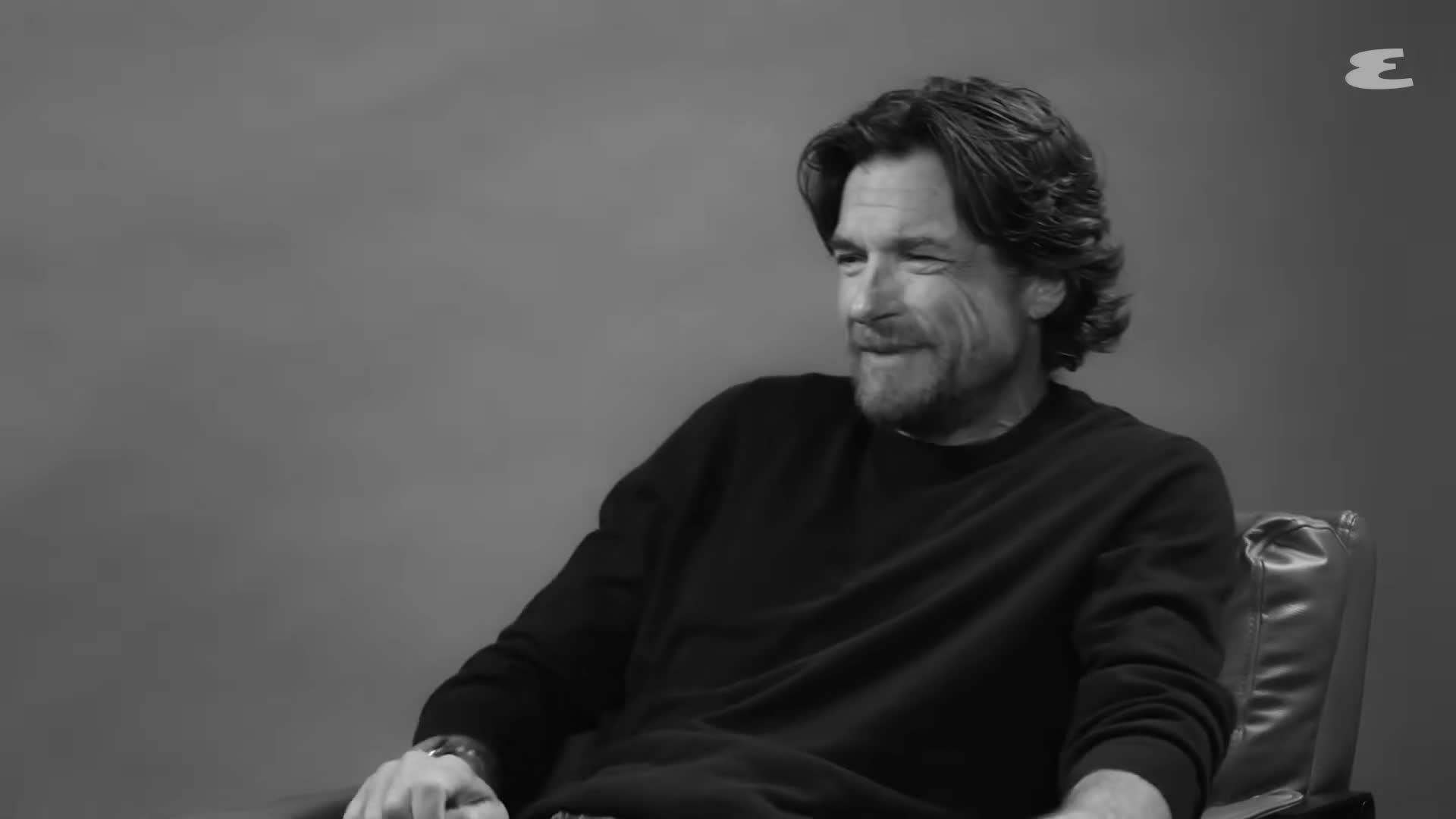
Please welcome Jason Bateman.
Hi.
Hey, how you doing?
You're putting the applause right now just under this.
Yeah, yeah, yeah, exactly.
That's right, yeah.
This is film before live studio audience, actually.
I should have mentioned that.
Welcome, everyone.
Shh.
So I've got some questions to ask you here, but one thing that I just want to tell you as we start this is that you have the distinction of being a man who both my wife and my 10-year-old daughter have crushes on.
Yeah, no, it's true.
Tell them hello and thank you for their incredible taste.
Well, actually I should say that my wife at least did have a crush on you, because she watched Little House on the Prairie growing up.
So James was like one of her first crushes.
Got it.
And now our 10-year-old daughter is watching it, and she also has a crush on James.
Smash cut to Black Rabbit.
Exactly, exactly.
Okay, but where I want to start is that the New York Times once described you as quote-unquote constitutionally mild.
What do you think that means?
Constitutionally mild.
It sounds like another one of their hilarious.
Obviously they have incredible journalists and their use of language is that's what they do for a living.
I got a terrible review from them on the pilot of Ozark.
Mike Hale basically said that I was so boring to watch.
It reminded him of the person that he buys a ticket from in the airport.
You know, like that person that works at the counter.
I just, I thought that would, I laughed my ass off.
I was just like.
That's just like.
If I was a reviewer, I would love to be able to be that good at being specific.
Constitutionally mild.
I'm going to spin it to the positive and say that I have a calming effect over viewers, usually in the parts that I play.
By choice, I really like playing the part that is us.
If you were in that situation, which character would you be?
You'd probably be the constitutionally mild person, the everyman that is experiencing all of this craziness.
Maybe that's what they meant.
It's interesting that you go there immediately because you have been described, I feel, like your wife in an interview described you as an everyman.
People talk about how you're sort of like the ultimate straight man.
Is that something, did you set out to be that character?
I mean, there's two reasons behind that.
Number one I do like playing the part that is sort of your proxy inside of something the person who's ingesting all of this stuff and the person that the camera cuts to to show the reaction to it.
How would you react to it?
I like being that person.
The other reason is that I kind of got a little cringed out from watching acting 15, 20 years ago.
I started looking at people, like you know, with the lisp and the lazy eye and the accent and the limp, and it was like seeing a lot of acting.
Yeah, i really started looking for the characters that would lend themselves to a very naturalistic approach.
Um, i feel the opposite coming coming on a little bit more like because that's how, that's how i started, i really want to be a character actor.
I feel like i might want to take on a little bit more in the other end.
Uh next, but we'll see.
Well, in Black Rabbit, I mean, you don't play the every man or the straight man.
Yeah, the first time I'd really sort of changed my look a bit for something in a long time.
And it was cool to look in the mirror right before I left my dressing room and go oh, that's not who I thought I looked like.
Right now,
I look like that.
OK.
He's actually doing a lot of acting for me.
And so now I can do some of my naturalistic stuff behind that and I don't need to look like a guy who's an ex-drug addict and act like that.
It just sort of seems like that.
You mentioned the hair and the beard and everything like that that you had for Black Rabbit.
How long were you growing your hair and your beard for that?
I mean, it's actually, it's not too dissimilar from this ugliness today.
I apologize.
That was probably...
Nine, 10, 11 months, somewhere in there.
I thought that I was going to cut it and shape it into something different on the day.
But I got there and just said no, he's probably a guy that wouldn't do anything to his hair in over a year, or his face.
He's just thinking about other things.
So you're not going method, in other words, for these roles?
Not yet.
Yeah, not yet.
Maybe in the future.
I've got to find a dealer first.
So you have two daughters, one of whom I believe just left for college, right?
Yeah.
How's that going?
Incredibly well.
She's very, very into it.
Fortunately, it's in town here, so we see her every once in a while.
And we haven't drowned in a puddle of tears that we've left her in some foreign state and now are living without her.
My 13-year-old, still very much at home.
That's going to be tough when she goes.
Hopefully she'll pick a school here in LA as well.
But it's, you know, I love how confident they both are.
They're different every single year, as you know.
And some years, they're behaving in ways you're like, ew.
And then other years, they're behaving in ways like, oh, boy, I hope they figure it out.
And then other years, they've got it all together.
And it's just like this constantly.
My college daughter is just is so confident and she's just eating up everything about life and the college experience and the future so bright and I remember feeling that when I was 18 to see.
I just love seeing that blind confidence of 18 and you think it's all just going to be unicorns and rainbows forever.
And then, you know, she'll be a little bit humbled with the practicalities of life and hopefully she'll come and seek our counsel for that.
What have you learned raising two daughters though?
What are some of the things that you've learned about yourself from that?
I think any parent learns a deeper level of patience and compromise and understanding and empathy, deeper than you thought you might ever, or maybe at a time you didn't anticipate learning it.
One of the early ones came in traffic.
You know, or stop and go traffic on the Ventura Freeway and you can't move and it's hot and the air conditioning's not working and the infant in the back seat is screaming their head off and you just can't negotiate with them.
You just have to deal with it.
You know, like many things in life and it's a great teacher of many things.
That was one of them.
Yeah.
Yeah.
So you were a child actor and you know there's so many child actors that don't kind of make it out of that stage of their career.
You did.
I still feel like I'm still trying to make sure I make it out.
Really?
Yeah.
And I'm going to be 60 in four years.
It's like we don't change that much after we're 18, 19, 20.
I mean, I still feel like I'm there.
It's just my skin creeps a little bit now.
Like that's the only difference.
There's a healthy portion to that.
You know the humility of that, the humanness of it, that it's never, you're never done trying to get done what you want to do.
Because as you start to approach some pre-established goal, you start setting the next one, as you see that attaining this one might be possible.
I think you hope to be the kind of person that won't sort of rest on the accomplishment of that and be content with the status quo, but instead use the energy and confidence and happiness of attaining that goal or getting close to it to fuel the moxie to set a higher one.
There's always this healthy feeling of short of accomplishment that I enjoy.
You've given a lot of interviews over the 40 some years that you've been in in the spotlight, but there's one in particular that you gave in 1987.
While you're promoting teen wolf 2, oh boy, you're talking to jane paul.
Oh buddy, i just saw this.
It came up on my stuff and i watched this interview for about 90 seconds and I had to turn it off.
The hardest work, I think, for me at least, is after you leave the studio.
You know you've got to.
If you're not in a good mood well, you know you've got to be in a good mood for your public.
I was such a douchebag.
I mean, I had some, like, affected voice.
I was wondering about that voice, actually.
I think it's because I'm all banged up from the night before.
But there's also just such a self-satisfaction.
And I think I'm talking about how many things I turned down to do Teen Wolf 2.
Hey, guy, no one's buying that.
And anyway, not a lot of people have interviews of themselves almost in every year of their life, since they were 10.
There's so many phases that you're just not proud of.
I get to look back at some of those and sort of appreciate that hopefully an interview like this, it goes down a little bit more easy.
It's a wildly unique experience, though, to have that.
You're like one of a handful of people that has had this experience before.
What does that teach you?
What do you take away from that?
Your opinion of what reality is can only be as accurate as your ability to be honest with yourself.
I thought I was fantastic, but I clearly was telling myself a lot of things that just weren't that accurate.
Or I thought people were buying something that a more sophisticated eye, the one I have at 56, of which there were many 56-year-olds on that set that day were probably looking at me going oh buddy, take it easy.
You got a lot to learn, and no one is buying your bullshit.
They were kind enough not to say it at the time.
I wish they had.
I probably would have dropped it a little bit earlier.
But it wasn't until I was kind of in my mid-20s that I started to accept some of the humbling honest truths about behavior and how I come across and what's really going on and really being confident with being honest and being human, you know.
Yeah, I mean, but does that kind of fuck you up, though?
You know, first of all, You know, starting at the age of 10, I was teaching myself how to be a professional liar, convince people that I was something other than what I was thinking inside.
You know, that's our job, pretending to be other people.
So I thought that people would buy this role that I was doing on Today Show, which is, you know, super confident and there's no problems in the world.
I'm the man.
I was playing a part.
And so I started to stop acting so much in my real life in my mid-20s.
It took certain events to happen where I accepted the humblingness of being just who we are.
How did you feel though, in your?
I guess it would have been in your 20s, in the 90s, before you know Arrested Development comes along and you know you're not landing the roles that you would necessarily be known for now?
I mean, was there a moment of panic or despair?
Oh, it was horrible.
My 20s were very confusing and challenging.
There was therapy, there was, you know, seeking advice.
There was a lot of self-doubt that was happening.
At the same time.
I was trying to catch up for all of the time that I was working and not playing yeah, so I was doing a lot of playing too which, you know.
All those worries go away at night, but they come back, you know, the next day even more so exactly and, and so there was a learning curve with that as well, and fortunately it it, It wasn't really more than that decade.
The 20s were a lot.
And then in my early 30s, I stopped drinking, married my girlfriend, who's still my wife, and got arrested development.
It was all kind of right in that 12, 24 months.
I mean, that's a huge moment, your early 30s.
You land Arrested Development, you give up drinking, you get married.
I mean, what do you take away from that?
What's the lesson there?
There always was a plan.
The three things I always said I wanted to do when I was a kid, that I wanted to get done as an adult was to be a father, a husband and direct a movie.
If I wanted to do those three things, I can't be doing this handful of things when I'm an adult.
So when would be the time to get these things done?
Well, probably when it's somewhat palatable tolerable, acceptable to be doing them, your teens and your 20s.
So I was really getting a lot of that stuff out of my system, knowing that at 30 is probably about the time you got to get your shit together and start to try to execute the plan.
So I was very conscious at 30.
I mean, I also knew like somebody told me that your lungs stopped reproducing new cells after 30.
So I stopped smoking to like now's the time to do it.
Did you get this out of your system?
Because I didn't want to be 56 and think, God, I've never I've never really been hungover.
I've never really done this, that.
I know people that have midlife crisis because they just didn't release the valve back when they should have.
I'm sure you know some of those people too.
So I'm glad I got it out.
So there's something about you that people love.
What is that thing?
What is that thing that people love so much?
I don't know, dude.
What do you think it is?
You really would have to ask that person and then ask the millions of other people that are just like yeah, that guy's not for me.
I do a public job, so I am asking for people to like me to tolerate what I'm selling, whether it be playing a character or doing stuff like this, where I can't hide behind a character or it's not a writer's fault that you don't like that character.
It's just me.
I am a people pleaser.
I do care about what people think about me, for sure.
I read all the reviews.
I don't really read comments, because that's a whole different thing.
But I'm doing these projects for public consumption.
So it matters to me what the public thinks about them.
It matters to me what critics think about them.
So I'm factoring all that in.
Like for all of us, what's most important is that the weather inside is 72 and breezy.
And that takes a lot of work to stay happy, to stay clear.
To be proud of yourself.
Yeah, you know, because you can't, you can't hide that you can try to drink through it, You know, but as you said it, you're sober in the morning.
Yeah, and you got to live in those hours too, so I do try to keep my room clean and do the kinds of things that won't chase me down the street during the day, and You have incredible comedic timing.
Seth Gordon, the director of Horrible Bosses, called it the classic Bateman timing.
What is that?
Describe that to me.
I don't know.
There are obviously many, many, many, many that do have that.
And I don't have it all the time.
I think you know when you're in the shower and you've got the soap going and you're doing your loop, you know.
Or even when you come out, the towel, you have a pattern that gets everything dry.
If you ever start to think about or brushing your teeth, if you ever start thinking about what you, you lose your place.
So if I think about what that is, I'm off.
And sometimes I've thought about it, you know, in stuff, and it's not great.
So I recognize that I need to be in a place of relaxation where I'm not being too contrived about it all and trying to just kind of just be in the scene and let it happen.
My mother is British, and I was in a house that had a very dry sense of humor.
And so I think that's where it kind of got started, where there was.
She never felt the need to laugh off something dry and sarcastic, she said.
There was no winking with her, which to me was hilarious.
Like Jeffrey Tambor did that on Arrested Development.
He was setting a tone for the show comedically, like there's not going to be any winking on the show.
Every it's going to be serious, and if any of these characters knew that anyone was laughing at them, they'd be deeply offended and might get violent, you know um.
So to me that was like oh great, this is.
This is the comedy i grew up with, this is the comedy i've wanted to do but really wasn't able to do fully, And all the sitcom work that I had done prior to that multi-camera work where there's a studio audience where you hear them laughing.
And so tonally, there's a little bit more of a participation with the audience and the actors.
So it's a bit more of a performative experience as opposed to an acting experience, if that makes any sense.
No, no, no, it does.
And, by the way, the story about your mom being British, I feel like it unlocks a lot of you know what your sense of humor is.
Yeah, yeah.
It's so dry that it actually can seem almost cruel at times, I feel like.
And yet you pull it off, though.
Well, yeah, I do play asshole well, I think.
And I apologize for that, but I am thankfully aware of it, such that I do look for moments where I can flash the character being less sure of himself.
So I try to work in a level of dumbness into somebody who's cocksure so that there's a blend in there that makes it a little bit more palatable.
Does that carry over into your personal life though?
Like, are you?
Yeah.
Notwithstanding what I've said so far in the interview, there aren't a lot of things I know a lot about.
But the few things I do know a lot about.
I will dig in at times when I'm working with someone and say well, but wait, I really think I have the right answer about this.
And so I'll be confident about certain things.
But I do try to balance that out by when I am wrong, I will admit it and be very self-effacing and make fun of myself all day.
And I'll also be very aware of if I'm working with an alpha that can't do any time being a beta, otherwise it's not going to go well, I will take the beta role all day to make that relationship work.
Or even if they're not an alpha or it's just, I just feel, even in a scene, if I feel like one character is kind of taking a lane that I thought I was gonna take, you don't want a redundancy there.
I'll move my character over into this lane so that there's the proper, you know spectrum color-wise, in there.
There's a little bit of overlap.
On SmartList, for example.
I'm often playing the dummy on that because Will or Sean are playing the person that really knows what the fuck they're talking about with this.
And you can tell they're not going to move off of it.
And it's like, all right, well, we're not going to have a fight here.
And so I'll just play dumb.
It's just people skills.
It's nothing you've got to go to school for.
In Black Rabbit.
There's so many good moments, but actually my favorite Jason Bateman moment or Vince moment is the two debt collectors come into the kitchen at the Black Rabbit and it's just you.
One of them says something like, uh, the cheap, the cheap pay.
And you can't help, like, the character can't help himself by saying, cheap pay twice.
The cheap pay for it.
Thank you, Nancy.
And a great example of kind of what we were talking about like.
Well, imagine just seeing that written in the script, you know you would read it as like oh, he's being a dick.
He's correcting him twice.
What's that?
Cheap pay twice, I think it is.
You know, like I've said it like a dick in other films, but this guy's got a pair of scissors in his hands.
And so you got to kind of soften it a little bit by pretending to kind of not really know if this is the right answer but you correct me if I'm wrong, but it's, And I think I even looked to the other guy, like right.
So I know how to pretend to not know the right answer to make sure people don't get offended.
I don't know.
Again, it's just people skills.
It's such a great moment of humor in a very dark, what looked like it was going to become a very dark scene.
Essentially,
Right, yeah.
That was later.
Yeah, that was later, yeah.
Do you think Hollywood is a meritocracy?
Some of it is, for sure.
I don't want to be super pessimistic about that.
But there's a good and a bad that half of the industry is not a meritocracy.
The bad obviously, is that if you're the best at your job, you're not guaranteed employment like you would if you were a 300 hitter in baseball.
You'll play for 20 years.
But if you're a 300 hitter as an actor, It's like, who says you got a hit on the last job?
That last job didn't work for me.
I didn't like that film.
It's all sort of subjective.
The good of it is that there's nothing predictable about our business.
You never really know if you're going to I don't know.
That's what we were talking about earlier 56.
I still feel like I'm trying to not be a child actor failure.
Because I don't know if I'm going to be working next year.
I mean, where's the wood?
People ask me, you know, I want my kid to go into the business, what do you recommend?
And I don't recommend kids starting in it for two reasons.
Number one, what we were saying earlier about you kind of teach yourself schizophrenia at an age when you should be allowing for all the clues and signals of who you are to come in.
You're trying to figure out who you are at that age, not trying to develop believable other versions of yourself.
That's kind of a very complicated thing to ask a kid to accomplish.
The other thing is that you could be spending all of those years training for for an occupation, an industry.
That is a meritocracy where you can come out of college credentialed and say i have a based on this diploma, i've got a base salary, i've got some job security that i can rely on.
I i feel like i can't ask my girlfriend to marry me.
Coming out of college, i can provide blah blah blah, like you don't have that ever in this business.
Jerry Seinfeld tells a story to an up and coming comedian who's like should I stick with this?
And he tells a story about, like Glenn Miller's band, flying into somewhere in Minnesota where it's snowing and cold and they have to walk from the airport to wherever their gig is, or something like that.
And they come upon a house where it's like, it looks warm and cozy inside.
There's like a family in there.
And they walk up to the window and they look at it.
And one of the musicians says, I mean, wow, can you believe this?
And the other one says, I know.
How do people live like that?
I feel like this is the trade-off with being in Hollywood, though.
Sure.
To each their own.
But I happen to be somebody that really loves that.
I love a fireplace.
I love nesting.
I love being with my family.
Boredom is sort of the door behind which relaxation lives, I think.
My mom was a flight attendant for Pan Am, so she was flying internationally half the month, whole childhood.
She was only there two weeks of every month and Christmas sometimes would be on the 15th or the 2nd of January whatever, depending on whether she was in town.
So we never really had Sunday dinners.
And my dad was a freelance writer, director, producer.
So he would either be on location or maybe downstairs in the basement writing a script or something.
So we were kind of latchkey kids.
And my parents were our managers.
So there was sort of a peer relationship with our parents, as opposed to that deferential kind of parents of the North Star.
So I look for routine.
I look for something that is calm. because of all of the unpredictability of this business.
Some people thrive on that.
I prefer the balance of it.
I'm this close to being crazy, like all of us, but I'm also this far over into sanity.
And I'm really proud of that, because it's a daily job, I think, for all of us.
And there's been a lot of things in my life that can get me confused, just like a lot of things in everyone else's life.
And the way in which you are honest with yourself and process these things and talk to people, whether it be a partner, a family member, a therapist, a friend, whatever it is or yourself, the better off you are and you can take on more and maybe have a more dynamic life.
That's a really beautiful answer right there.
I've been working on it.
I knew this interview was coming.
So Black Rabbit is about two brothers.
You have a famous sister, Justine.
And I'm curious, what is your relationship like with her right now?
We have lunch coming up next week. great.
We respect one another.
We don't see each other a ton, mostly because it's kind of the way we were brought up.
As we are now adult children and adult siblings, there isn't the typical sort of like well, we see each other every Thanksgiving or every Christmas and our kids, our cousins,
There isn't that in a great way.
And there's a a way in which we live that is non-traditional and it's very consistent with the way that we were brought up.
We allow each other to be a different person than maybe the last time I saw you, which could have been a year ago or a week ago.
That's sort of a contract you have with people that are your very close friends.
You allow them to morph and see the effects of what's going on in their life manifest in their current personality and their current way in which they live.
And so it's a really healthy relationship that we've worked on.
I'm really proud of us for being at the spot that we are.
You've been married to the same woman, Amanda, for 20 plus years, is that right?
Yes.
Jason, what's the secret?
I married a friend as opposed to a girlfriend.
That was a big one for me because I'm sure, like you, the girlfriends that you had before this current marriage you're in didn't last.
You know, you break up with girlfriends.
I found that I didn't break up with friends.
And so what were those relationships?
What was keeping me with my friends?
What was that dynamic?
What did I like about them?
What did they like about me?
Who was I when I was with them?
And so, since I only wanted to get married once, I thought find someone I'm sexually attracted to, that's also a friend.
Amanda, I knew was that for many years before she agreed to go out with me and really before I really deserved to go out with her.
I was still working out a bunch of other crap and she sensed that and once I got all that crap out of me, she said yes, and we haven't looked back.
What's the difference between love and sex?
Love is something that you feel and share with someone else.
Sex is something you do with someone else, sometimes with that person you know, and i mean, like i'm sure you've had sex with people that you didn't love.
So sex is an activity.
I guess, maybe the the more apt sort of yin yang thing is what's the difference between sex and making love, which is sure, and making love maybe sure yeah, i just don't know if sex and love are even in the same bin.
Your, your introspection really shone through with your, your answer to that, because most people answer that question and they're like it's like a one-liner or something like that.
You like really thought about that, you know right well, i mean they're, they're different, you know they can coexist yeah um, but definitely different, both incredible, Both are great.
I recommend them both.
If you've got free time this afternoon.
You've expressed interests before in hosting a TV show.
You've said this before in an interview.
But now you're hosting something that's arguably bigger than a TV show.
Is hosting a TV show still an ambition for you?
Yeah, for a bunch of different reasons I won't bore you with.
But one of the reasons I wanted to be a talk show host is to talk to interesting people and ask them questions, you know.
And I'm getting to do that for an hour.
It's such a gift.
I'm so grateful that we've got the audience that lets us continue to do this.
And all we're doing all it feels like we're doing is is bullshitting like this.
Those two guys are two of my best friends, if not my best friends, and they're two of the funniest people I've ever met with.
And so that's enormously helpful to the cocktail.
Talk to me about what happens before and after with your two co-hosts, you guys start recording.
I'm at my house, they're at their houses.
I'm in my pajamas nine out of 10 times.
I go to this one room that's set up in the house, that's got a shitty table and a shitty chair and a microphone from Amazon that screws into the table, that squeaks, and I open up the laptop 60 seconds before we're set to go and click join Zoom, like everyone does.
The moment that we come up on the screen, they're recording.
So there's no prep involved.
They're like, okay, so let's start the little pre-chat.
Let's talk about this.
What the listener hears is exactly our experience as well.
Nothing different.
You've been doing this for five years.
You've interviewed tons of people, including three presidents at once, right?
Yeah.
What have you learned from, I mean, what are your takeaways from this?
Not from like... being the host of this, but from talking to all these people.
The big one is that you know they are all.
They, being these incredibly talented, accomplished.
You know superstars.
They're exactly like us, the listener.
They are nervous to do the show.
100% of them, you know?
We're nervous doing it as the hosts.
It's weird.
Everybody is human.
Everybody's self-conscious.
Everybody's wondering if they sound like an idiot.
Everybody kind of hopes that they're funny.
That's really the cool takeaway that the three of us bring from it, and hopefully the listener does as well, is that what we usually end up asking them is what take us from where you were, which is kind of where we all are as question askers and the listeners.
How did you get to where you are now?
Take us through that process.
How could we possibly do that?
What was the step by step of that?
And so it becomes hopefully a bit tangible to the listener about well, you kind of put one foot in front of this foot in front of this foot, and opportunity knocks here.
Do you have the balls to grab that and see if you can do that.
And then confidence lives on the backside of having accomplished that, and then that confidence runs you towards the next like and it's like oh, so it is possible, maybe for me too.
And that's kind of an uplifting thing to finish your listen with.
You know that it's, it just becomes tangible.
Was there a guest where they appeared on screen and you like, instantly felt nervous?
Tom York and Johnny Greenwood from Radiohead.
They were the big white whale for me.
And when they said yes, I couldn't stop thinking about it until the day we recorded.
They revealed their camera and there their faces were.
Now I got to start asking questions.
And that was tough for me because I just think they're it.
Do you remember being on Johnny Carson when you were 15?
A lot.
Yeah, I'm sure.
Yeah.
Okay.
So Johnny Carson asked you a question, said if you could be reincarnated as an animal, what would it be?
Do you remember your answer?
I said a bird, right?
Would you change that now?
No.
Still a bird.
No, I think it was the one thing I got right at that age.
Yeah, I mean, let's think about it.
A bird is never in traffic.
A bird can go to.
I think I said this can go to any sporting event they want and have the best seat.
You said the Olympics, which was really funny.
Yeah, but I think the Olympics, yeah, it was 84, so I was 15.
Yeah, the Olympics were in LA that year.
You could sit on the field. of any game, you could sit on the mound at the World Series.
How you feeling about the Dodgers this year?
Well, I'm sure this is going to air after they've gone through this postseason, but we are currently two games up on the Phillies in the Division Series and it's nerve-wracking but I'm pretty confident.
I think we're going to win again the World Series, so we'll be back-to-back champions.
I think we're going to get a third one next year.
Yeah, okay.
And then I think we're going to break the record with a fourth right after that.
That's all on the record.
If that happens, that's going to be incredible.
I'm calling it right now.
Yeah.
But you're also a Jets fan.
Is that right?
No.
I mean, sure.
If they're sending tickets, I'm happy to put on the hat.
You know, I'm a whore.
I like the sporting events.
I do like the Jets.
I like the Knicks.
I like the Rangers.
But I'm in L.A.
I like the Dodgers.
I like the Kings.
You know, we didn't have a football team for a long time.
So I'm a bit of a whore when it comes to football teams because I had a bit of a gambling problem with with football for a while there.
So I started to just kind of like fall in love with whoever had the best spread.
I'm most passionate about baseball and specifically the Dodgers.
All right, last question.
The first line of your obituary, what's it gonna say?
Oh boy.
I don't know, man.
I'm not answering that fucking question.
Dead today is Jason Bateman.
What I'm trying to get at here is like, what are you going to be known for?
I really, truly hope people will remember me.
And this is probably people in my personal life not necessarily, you know, people who only see me on the other side of the screen, but people that I work with and people that I love and live with.
Hopefully they enjoyed themselves around me, whether we're hanging out or I'm working for them, or they're working for me or we're working together.
You know, like it just takes a little bit more effort to be the best version of yourself.
And I try to get that done each day.
It makes me feel better about myself and hopefully it makes everyone else feel a little bit better, the lives that i'm affecting um, so hopefully that's the takeaway.
Well, i enjoyed myself.
So you know, mission accomplished there.
Thanks for having me.
Yeah yeah, thanks for coming.
Uh, thank you, jason bateman, for joining us.
For what i've learned.
Check out esquire, where he's on the cover.
He's on the cover of esquire so uh, go check it out.
Yes, to see the pictures.
Yeah, oh good yeah yeah yeah, i photographed very differently, Do you really?
Oh, it's not great.
Can we actually maybe rethink the cover thing?
Yeah, yeah.
Is that possible?
Keep your knees bent on that.
Yeah, yeah.