Hey, Proof listeners, it's Jack Bishop.
You know that here at America's Test Kitchen, we're all about giving home bakers the tools they need to bake like pros.
And I'm not just talking about stand mixers or baking sheets.
I'm talking about the ingredient central to so many of our favorite baked goods, butter.
Bluegra is a European-style butter with 82% butterfat.
That means less water and more butterfat, which translates into tender pie dough, flaky pastries and luscious buttercreams.
Pflugra butter is also slow churned, which gives it a creamier texture that blends effortlessly into your dough.
And Pflugra butter was developed by chefs for chefs, meaning home bakers like us get professional quality results in our own kitchens.
Whether you're rolling out pie dough for that holiday party or baking up pastries on a Saturday morning, consider Pflugra Premium European Style Butter.
Are you earning and investing in the stock market?
In real estate?
How about in relationships?
Are you earning and investing in your life?
I'm Doc G, semi-retired hospice physician and host of the Earn and Invest podcast, where we have the 201 or next level conversations about money and life.
Not only how you make money and grow it, but also how you use your wealth to create a better and more fulfilling existence.
Join us every Monday and Thursday wherever you listen to fine podcasts.
Last time on Proof, James Hemmings returned by ship from Paris as America's first French-trained chef.
From Jefferson's kitchen, he fed presidents and revolutionaries, turning dinners into diplomacy.
The food that he prepared made Jefferson famous because it was extraordinary food.
Before him, we really didn't have French cooking methods of preparing food.
But looming in the background was a bitter irony.
Back in America, James Hemmings was legally enslaved once again after experiencing a taste of freedom in Paris, a city where slavery was abolished.
He wanted that freedom back.
Jefferson offered it on one condition.
James had to train his brother Peter to replace him in the kitchen.
After three years of training in 1796, Jefferson decided the bargain had been fulfilled.
I, Thomas Jefferson of Monticello, A-4 said, do emancipate, manumit, and make free James Hemings.
But back then, true freedom was elusive and maybe even dangerous.
Hemings left Monticello and stepped into a country that didn't know or care that he was one of the greatest living chefs.
He was just another Black man.
Maybe he had a harsh reality check of like, I'm just out here without a f***ing net.
Today on Proof from America's Test Kitchen, the final chapter of our three-part series.
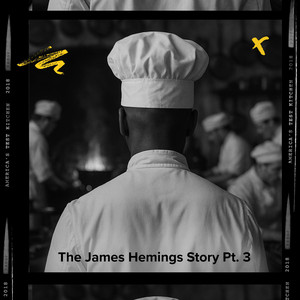
Part three, the life and legacy of James Hemmings.
I'm Jack Bishop.
Hemmings faces off with one of the most powerful men in the country before he meets his tragic and mysterious end.
Ark Raiders, a multiplayer extraction adventure video game set in a lethal yet vibrant future Earth.
As a raider scavenging the remnants of a derelict world, you settle into an underground settlement.
Hoping to thrive, you jump on the chance to start over.
But doing so means you must return to the surface, where Ark machines roam and survivors' motives remain dangerously unclear.
But if you're brave enough, who knows what you might find?
Play the server slam open test from October 17th through 19th on PlayStation 5, Xbox Series X and S and PC.
Imagine fast hydration.
Combined with balanced energy.
Perfectly flavored with zero artificial sweeteners.
Introducing Liquid IV's new energy multiplier sugar-free.
The ones that make you feel like you're glitching.
It's made with natural caffeine and electrolytes.
So you get the boost without the burnout.
Liquid IV's new energy multiplier, sugar-free hydrating energy.
Tap the banner to learn more.
Listeners, just a quick warning that there's a mention of suicide in this episode.
Listener discretion is advised.
Reporter Otis Gray has the story.
And I started scratching the surface.
I became more enthralled with James Hemmings.
Chef Ashbel McElveen is one of the founders of the James Hemmings Society and his connection to James Hemmings runs deep.
In the 90s, while working abroad as an international chef.
He says he woke up in a cold sweat, convinced he'd heard Hemmings' voice.
The encounter sent McElveen digging into his life, and he's been tethered to James Hemmings' story ever since.
He was a 19-year-old in Paris, and so was I A couple hundred years later.
I had that kind of kinship with him.
Very sorry that I'm interrupting.
Come in.
Come in, come in.
Welcome to the podcast.
I've been at Jefferson Medical Center all day with Chef McElveen talking about James Hemmings while he gets some tests done.
And if possible, I have to get blood from you real quick.
Yeah, I'm ready.
What are we podcasting about?
Is it a secret?
We're near the end of James Hemmings' story, and I can feel McElveen's urgency in telling it.
At age 75 speaking from a hospital bed.
He's driven to get this out and tells every nurse who walks in about James Hemmings.
Who was enslaved to Thomas Jefferson and...
And the reason why you eat French fries and macaroni and cheese and all of those good things.
Most people in the culinary world don't even know James Hemings' name.
McElveen is one of a handful of people who've dedicated a lot of work to keeping that name alive, to making sure Hemings is not lost to the silences of history.
All right, thank you.
Because he knows when stories aren't shared, they can disappear.
America has to know this.
When James Hemmings leaves Jefferson's estate in 1796, the country is only 20 years old.
James Hemmings is 31, and he is officially a free man.
That April, as Virginia's apple trees burst into pink and white blossoms, James Hemmings leaves Charlottesville, Virginia.
He leaves behind his brother Peter, who he trained in exchange for his own freedom.
He leaves behind his sister Sally, who had just born her second child, Jefferson.
He leaves his mother.
He leaves behind the fraught safety of Monticello.
So after Hemings leaves here... This is Brandon Dillard, historian at Monticello.
After he has a legal manumission document, it's about five years that he's traveling.
We don't know the specific details of where he is.
The year Hemings disappears from Monticello in 1796, a lot happens.
George Washington publishes his farewell address.
Thomas Jefferson and John Adams then face off for the presidency in a very personally slanderous campaign.
Adams wins, becoming the second US president, and Jefferson becomes his vice.
Later, in the year 1800, the Capitol officially moves from Philadelphia to the marshlands of Washington DC.
Around the world, defiance is in the air.
In France, revolution still rages.
1796 brings a failed attempt to land troops in Ireland and ignite rebellion against Britain.
In the Caribbean, enslaved people have risen up under Toussaint Louverture in the Haitian Revolution.
And in the young United States still resisting British interference on the seas.
The first US cookbook is written by Amelia Simmons, including a recipe for apple pie.
Apple pie would become as American as the vanilla ice cream.
It would later be served with ice cream that Hemings introduced to the evolving country that he'd just wandered out into.
So he's traveling on his trade, and that's something that he could use, but not everywhere, right?
Because he is still a black man, living at a time when legalized slavery and segregation are not 20th century segregation but spaces themselves are segregated in a different kind of way.
By that time, the Fugitive Slave Act had been active for three years, allowing enslavers to drag free black people off the street on suspicion alone.
So even if he was living and working as a chef, freedom papers offered little protection to Hemings.
He could have been kidnapped and sold back into bondage at any time.
But in 1797 the trail on Hemings' whereabouts picks back up in the form of a letter from Thomas Jefferson.
Jefferson's writing from Philadelphia to his daughter Maria, and he says that he's seen Hemings.
My dear Maria, James has returned to this place.
Jefferson doesn't say much, but he does say that he'd heard rumors that Hemings was drinking excessively.
But he's seen Hemings and says that he shows no signs of that.
And has not given up to drink as I had before been informed.
In the letter, he says that Hemings intends to travel to Spain, seemingly ambitious as always.
I have endeavored to persuade him to stay where he is and lay up money.
I am afraid his journeys will end up in the moon.
For years after that letter, there is no record of James Hemings.
Maybe he did go to Spain and taste saffron for the first time threads, bright as fire, steeped into rice until it glowed, or paprika, watching it smoked into a deep red powder that clung to his hands.
Maybe he even went as far as Vienna, where cafes brimmed with chocolate and the bitter perfume of coffee which, unlike alcohol, sharpened thought unnerving rulers who feared that it made people a little too outspoken and could stoke revolution.
Nearby, in France, Napoleon had taken power and the revolution had beheaded or exiled many of the aristocrats that Hemings cooked for.
We just don't know where Hemings was.
But in 1801, his trail picks back up in Baltimore, Maryland.
Hemings didn't just go to any city because his skills wouldn't have been appreciated.
This is John John Williams IV.
And I am a reporter at the Baltimore Banner.
He covers a lot of beats and particularly I am looking at the legacy of racism, slavery and other discriminatory practices.
I met Williams at the Banner offices downtown. on Baltimore's inner harbor.
Williams has also followed Hemings' trail until it disappears.
And he says to get a sense of those final years, it's important to understand what this harbor was.
Baltimore then was like the wild, wild west.
In 1801, Baltimore was a booming, rugged port city where fortunes rose and fell overnight.
Ships from the Caribbean, Europe and up the coast crowded its wharves, unloading sugar rum coffee, tobacco and people.
This was like an epicenter for enslaved Black people to come in through these ports.
Slave ships were coming right here in this water, like 20, 30 feet away from where we are.
This roiling harbor made Baltimore one of the fastest growing cities in America.
Its streets teamed with free black sailors, enslaved dockhands merchants politicians, drifters and thieves.
The British called Baltimore a nest of pirates.
Pirates, prostitutes, Name your pick, but there have always been aspects of it that are very rich.
Baltimore was also where a generation of freed Black cooks were reshaping the city's food culture, turning the skills they had honed in bondage into the businesses of their own.
Catering took root here, one of the first industries where Black entrepreneurs could thrive, cooking for banquets, political gatherings and wealthy households.
Hemmings may have been at the forefront of this, taking Chesapeake staples like blue crabs rockfish, sweet corn, stone fruits, and transforming them with the precision he had learned in Paris.
He was doing these finer things.
You had a population here that could afford him and pay him.
So who do you think James Hemmings was in Baltimore?
I think he was walking around like a bat.
We do not know much about Hemings' time here, but we do know that in 1801 Thomas Jefferson is elected the third president of the United States and he summons for James Hemings through a letter.
At the time, Hemings was working at a place called the Columbian Inn.
The Columbian Inn used to be on the corner of Baltimore and Howard Streets.
This was the last known whereabouts.
I feel a little woo-woo.
Tanya Hopkins was with me.
She's a culinary historian, co-founder of the James Hemings Society, and she's also been our letter reader.
She's been researching Hemings for over a decade and has never been on this corner.
I kind of feel goose bumpy, you know, knowing that I'm standing in a place that he would have walked on.
Today, this is an extremely busy intersection with a trolley running through it.
Now we got a 7-Eleven...
Right, this is the arena.
Clearly not an old tavern.
In Hemings' time, right down the street from the Columbian Inn was the Indian Queen Hotel.
It was owned by a guy named William Evans, an acquaintance of Thomas Jefferson's.
And in February of 1801, a letter Jefferson wrote arrives in Evans' hands.
Dear sir, you mentioned to me in conversation here you sometimes saw my former servant James.
We know that Hemings could read and write.
So why would Jefferson write to Evans?
Who knows?
Jefferson was in Washington about to move into the White House and essentially says to Evans hey, I'm about to be president.
When you see James next.
Send for him and to tell him I shall be glad to receive him as soon as he can come to me.
A week later, Evans writes back to Jefferson and he basically says hey, I told Hemings that you'd summoned him and he took the night to think on it.
The answer, he returned me, was that he would not go until you should write to himself.
Jefferson soon received another letter on this too, from his former employee Francis Sayes, who also knew Hemings.
And Sayes mentions in that letter that Hemings wants details from Jefferson.
What are the conditions?
How much am I getting paid?
Like, I'm a free man.
This is a new relationship.
Just to hit this home, the president of the United States summoned his former enslaved cook to work at the White House.
And he wouldn't go.
Chef McElveen again.
He defied the most influential man in his universe and stood up to him and said no, you don't respect me as a man.
I know you.
A month goes by, and Jefferson does write a letter, but not to Hemings.
He writes again to William Evans.
Dear sir, I cannot go without thanking you for the trouble.
In this letter Jefferson essentially says that he assumes Hemings' unwillingness to come to DC must be from quote some attachment he had formed in Baltimore.
For I cannot suspect an indisposition towards me, end quote.
He says.
I would wish James to understand that it is an acquiescence to what I suppose to his own wish, that I did not repeat my application.
Basically, I won't twist his arm.
And don't worry, I sent some lines out in Philadelphia.
Where I have been successful in getting a cook equal to my wishes.
Best wishes and sincere esteem, Jefferson.
And that was the end of the exchange.
Then, five months after Hemings stood up to Jefferson, Hemings travels from Baltimore and returns to Monticello, the place of his former enslavement.
For a short time, Hemings works here in the late summer of 1801.
Brandon Dillard again, historian at Monticello.
Even after all this, he cooked for Jefferson again.
That's right, he cooked for him.
They interacted.
Yeah, yeah.
According to Dillard, Jefferson has taken office in the White House and returns to his beloved Monticello estate for the summer.
So despite their recent face-off, Jefferson asks Hemmings to come cook for him, not as a captive, but as a hired chef.
We know he's paid for the time he's here.
He's a free man.
But what's actually transpiring in his life that motivates him to come back here, we don't know.
Jefferson had cooks at Monticello.
He didn't need Hemings.
And Hemings had work in Baltimore.
He didn't need Jefferson.
It's likely for Hemings that he just wanted to see his family again.
When he arrived in Charlottesville that August, he'd be reunited with them.
He'd see his brother Peter, who he trained in exchange for his own freedom.
Peter would have been running the Monticello kitchen and would soon learn beer brewing.
He'd see his sister Sally raising three-year-old Beverly and the infant Harriet, both children she had borne to Jefferson, her enslaver.
This is one of those examples again that shows that the realities of enslavement or people who are living in the borderlands between enslavement and freedom is super complicated.
And the personal dynamics of his little sister being here having Thomas Jefferson's children.
I can't even remotely fathom the kinds of mental anguish.
Maybe James slipped them some of the money he'd earn or stayed up late churning ice cream just for them and drizzled it with a berry compote.
We don't know.
We do know he cooked for Jefferson's household.
The late Virginia summer would have brought peaches heavy on their branches, sweet corn tomatoes splitting in the heat.
He might have folded okra into gumbo thickened with filet, or roasted guinea fowl over the hearth.
Beautiful food, backdropped by the reality of his oppression, even as a free man.
The trauma of enslavement, the trauma of familial separation and the trauma of sexual violence occurring within their own families.
Knowing that he is probably one of the highest trained people within his trade and yet being unable to immediately rise to the top because of the color of his skin.
I think if we consider all that stuff and consider all that context, we have some insight into the kinds of things that might have driven him.
But I still don't think that that tells us that we really understand or that we really do know the details at the end of the day.
As the leaves begin to turn, Hemmings leaves Monticello and heads back to Baltimore, once again leaving behind the people he loved.
It'd be the last time he saw his former captor and his family ever again.
After the break, what happens to James Hemmings?
At IKEA, your dreams can come true.
Well, maybe not the ones where you're being chased by a monster.
We're talking about kitchen dreams.
And there are IKEA products and solutions for all of them, whether it's a whole new kitchen, a statement glassware set or just new cutlery.
If you've got big dreams or small dreams in any size of budget, IKEA can help you bring them to life.
Visit IKEA.us slash Dream Kitchen to learn more.
Dream the possibilities.
And now back to our story.
Less than two months after Hemings returned to Baltimore from Monticello, Jefferson writes another letter to William Evans, again the hotel owner he used to summon Hemings.
November 1st, 1801.
Dear sir, I received some days ago a very fine rockfish.
The letter starts off with Jefferson thanking Evans at length for a fish he'd received from him.
It was indeed a remarkably fine one, and i pray you to accept my thanks for it.
And then, halfway through that same letter, a report has come here, through some connection, of one of my servants that james hemmings, my former cook, has committed an act of suicide.
As this, whether true or founded, will give uneasiness to his friends, will you be so good as to ascertain the truth and communicate it to me?
A week later, Jefferson receives a letter back.
Sir, I'm sorry to inform you that the report respecting James Hemings having committed an act of suicide is true.
The result of which was that he had been delirious for some days previous to his having committed the act, and it was the general opinion that drinking too freely was the cause.
Your obedient servant, William Evans.
As far as we know, this is the only mention of Hemings' death.
All of our historians have said this.
This is the reality of telling the stories of enslaved people.
Their lives, and too often their deaths, simply weren't recorded.
Which is why someone like Hemings, an extraordinary man who cooked for the founding fathers, can still just vanish from the record.
That silence leaves us in this space of uncertainty.
And in that space, anything is possible.
There were enough things to kill James Hemings out there at any given time to have accounted for his death in 1801.
This is Lenny Sorensen from Episode 2.
She's a culinary historian who helped rebuild Monticello's kitchens.
There were just lots and lots of reasons for people to die, and they did all the time.
All of the historians I talked to poke holes in the suicide story.
The letter says Hemings drank himself to death or committed suicide under the influence.
And it's well known that Jefferson didn't like having people given to drunkenness in his service.
He even outwardly refuted that Hemings had any issues with alcohol.
So the idea that Jefferson would so readily accept the idea that James was an inebriate and would have committed suicide under the influence of alcohol is done wash for me.
Sorenson says that claiming Hemings died under the influence fits into a long pattern.
Enslaved people were often branded by their oppressors with these vices laziness dishonesty drunkenness, attempts to strip them of dignity justify their oppression.
It's a way in which the slaveocracy constantly diminished the intellectual and emotional lives of Black people.
I don't trust this guy's testimony.
I just don't.
History is written by the oppressor, right?
Tanya Hopkins again.
We only have everything from Jefferson's perspective.
We only have what Jefferson recorded.
Thomas Jefferson was an extraordinarily prolific writer.
He recorded everything.
And we have about 19,000 of his letters.
Only a few even mention James Hemmings, and not one of them mentions his sister Sally, or the six children she bore, Jefferson.
Lies of omission.
Because if it doesn't exist, it means it wasn't real.
Baltimore was a rough and ready port town.
And you know, you could lose your life very quickly.
Chef mcleveen thinks there's actually a pretty obvious theory for what happened to hemmings, and john john williams tends to agree.
James hemmings arrived back from paris with the finest clothes.
He was a dandy okay, he was a garish dresser.
He liked the finer things in life.
He was for a black man at that time, sitting on top of the world.
He had gone places that Most people hadn't even left the state or the city.
He came back with the demeanor.
If he went out on the street, it was apparent to every white person that he was there better.
It's not a far stretch to think that he would stand out and meet the wrong person and that would be it.
So James, I believe, was murdered for his possessions.
That's what I believe happened.
Now we're outside the Sharp Methodist Church.
I did some research to find where Hemings might be buried as a free black man in 1801.
I went to cemeteries, churches.
I am not the first to do this.
But yeah, no signs of an existing cemetery.
The likeliest site is a potter's field in North Baltimore.
I mean, it was essentially like a mass grave.
For non-Christians, black people, and for those who died by suicide.
And now it's just a massive crossroads.
The gas station right here.
There's no signs of there having been a cemetery here.
For the last few years Williams has been reporting exhaustively on ancestral burial grounds in Maryland.
So if anyone's qualified to figure out where Hemings is buried, you're probably that person.
Mm hmm.
Yeah.
You'll probably never find his grave for a number of reasons.
In the 1800s, black communities had little protection or resources.
They were often pushed out, targeted with violence.
And in the following century, new forms of erasure appeared in the form of redlining and the destruction of neighborhoods to make room for highways and rail lines and parks.
They've probably been paved over.
There are probably now malls or parking garages or parking lots or development high-rises.
This country has done this for years.
You can't really go anywhere in this state and not step foot in an area that used to be a black cemetery.
With bones in the ground.
Absolutely.
We're just discarded on earth and in death.
His life is unresolved right now.
It's like very much in chaos.
We'll likely never know what happened to James Hemmings.
Too much has been paved over.
Even the original kitchen where he cooked in Monticello, the place where he blended French technique with Virginian ingredients, where he helped shape the idea of American cuisine, was filled in with cement in 1940 and turned into a tourist bathroom and only recently has been re-excavated.
But while the kitchen itself could be covered over, what happened inside it could not.
The Monticello kitchen is where we know James Hemmings stood beside his brother Peter, teaching him everything he'd learned in Paris in exchange for his freedom.
Day after day at the hearth, transferring knowledge that he could never have known would ripple outward for centuries.
Every enslaved person outside waiting for their food could see what was going on and hear him say do this this way, do this that way.
So that literally is the first cooking school in America.
Among his students were Edith Fawcett and Frances Hearn, young girls who began in the lowest kitchen tasks fetching water, shelling peas, tending the fire.
Those girls would go on to cook in the White House and establish their own legacies as some of the finest chefs in the country.
Like Virginians.
It was them that took that James Hemings' style of half French and half Virginian, This amazing food that was Frenchified.
Everybody's learning, learning, learning, learning.
Lenny Sorensen again.
Black women cooks and chefs are at high demand.
All those years of visiting senators, diplomats and statesmen like James Madison, James Monroe, even the Marquis de Lafayette.
They all dined at Jefferson's table, likely carrying the memory of those flavors home, having their own cooks try to replicate the refined dishes that Hemings had cooked.
And the dispersal of the enslaved over.
You know the 1820s, 30s and widely spread in the inter-slave trade that you have people from kitchens in Virginia who were being sold into kitchens in East Texas.
That's how his cooking tradition spread.
It's being passed on from kitchen to kitchen, from mother to daughter, from father to son.
It was from that kitchen, that Monticello.
Well, they're going to bring with them what they know and they're going to try to do the very best to maybe not get sold again.
After emancipation, many freed Black Americans relied on the skills that they had mastered in bondage cooking, hospitality and service.
They would eventually build thriving catering businesses that laid the foundation for America's modern food and event industries, taking the French brigades and recipes with them.
Then the invention of the railroad brought on the Pullman-Porter dining cars, where the extraordinary black cooks on board these coaches were preparing meals along the pulsing veins of America, to cities like Chicago and Detroit, all the way to the West Coast.
Some cooked settling and establishing the first soul food restaurants across the nation.
Their legacy would echo through chefs like Edna Lewis and Leah Chase, who reclaimed Southern cooking from the white writers of the segregated South.
And Lena Richard, the first black woman to host a televised cooking show, bringing Creole cuisine and Frenchified sauces into homes across America.
And on and on and on.
That was that transfer of knowledge.
It all came from James Hennings.
Today, in the kitchens of countless chefs who draw on those traditions, that transfer is still unfolding today, knowingly or not.
I'm determined to get this story out there.
I'm going to live to deliver this story.
I'm going to birth this baby.
The sun has set outside the windows at Jefferson Hospital and my conversation with Chef McEldeen is coming to a close.
I have one more rapid question.
How does it feel for you not knowing exactly where James Hemings is buried?
I don't feel anything because it just it doesn't matter.
Why doesn't it matter?
It doesn't matter because I don't look for his grave because it's immaterial.
What he left was legacy.
And that's more important than knowing where the ashes are.
The ashes don't matter.
They just don't matter.
Legacy It's a word I kept hearing from McElveen, from Sorenson, from Hopkins, from Williams.
It's the reason that they've told this story however they can, to whoever they can.
You're here right now doing this story, talking to a lot of the people that I know here, this and the other, and this is going to go out to a greater number of people.
Because as of now, Hemings doesn't have a plaque.
He doesn't have a grave.
What he has are recipes and people who continue to echo what he did.
That's where the power is.
That's where the impact is.
You might not necessarily see it, but you just don't know how it's going to affect somebody else.
The more i learned about james hemmings, the more questions i had, and the more questions i had, the fewer answers i found.
It's like it's less about Finding the answer to where he's buried, but asking the question.
Absolutely the fact that we are mentioning his name and people are hearing more about him, I think is bringing him more dignity and peace in the afterlife.
It kind of felt like the search itself is a memorial and the food We know that Hemings introduced to us feels like a headstone.
It's the ultimate disrespect to remain quiet because a generation or two before they couldn't have that opportunity.
James Hemmings is the one we know about, who cooked and shaped the way that we eat in the silent back kitchens of history.
And there are millions and millions more.
Which is why somebody like James Hemings is so important, because it shows us the individual agency of one person who managed to, in many ways, fight against this system that tried to say that he was not capable of all the things that he proved he was capable of.
And that's all i see.
Hey, this practitioner just messaged me and said that they were planning on discharging you.
Oh yeah, we're gonna eat dinner and then we're gonna go perfect, thank you, thank you, thank you anyway.
So let's eat very delicious hummus.
I think it has a little bit of sumac and olive oil in it.
Oh nice, What is legacy, if not the work of filling in those silences, of saying the names that history left out and listening for the voices that still echo even when the record goes quiet?
For James Hemmings, it echoes everywhere in our lives.
That macaroni and cheese dinner, only a nickel a serving, too.
In our food, the way we cook, our culture.
Red mark for hungry Americans.
Howard.
In comfort food, foods that remind us of simpler times.
Carvel ice cream is made with a Carvel special secret formula.
In foods that have been grown into empires.
Welcome to McDonald's.
May I take your order?
Feeding and supporting the livelihoods of millions of people.
And a super-sized fry with 30% more.
In flavors that bring joy.
You get two sundaes for the price of one when you bring in a friend.
In sounds and smells that burrow deep into our psyche.
In the cooks who've taught us.
And if you're going to have a sense of fear of failure, you're just never going to learn how to cook.
In the cooks who've inspired us.
Fellow travelers, this is what you want.
This is what you need.
In restaurants.
And the French brigade kitchens that either haunt you or entertain you, depending on what you do for a living.
76 beefs.
Yes, sir.
So next time you grab ice cream with a friend, tell them you know where it came from.
Because it all comes from someone.
A lot of people, actually. my role?
How can I contribute to this?
We may not have those things if it weren't for James Hemmings and the people who carried his legacy forward.
It's all about helping people, feeding them.
My daddy brought me up that way.
The silences of history are loud, but we can speak over them and we can eat over them.
So what happened to James Hemmings?
He lived an extraordinary life, against all odds, at the very center of American history.
He set the table 220 years ago, so future cooks and chefs could sit at it today and the rest of us could enjoy the food on that table.
In the end, he changed the way we eat.
That's what happened to James Hemmings.
Thanks to Otis Gray for bringing us this three-part series on the life of James Hemmings.
You can find him on Instagram at sleepy underscore podcast.
Listeners, a new season of Proof is coming up shortly, so make sure to come back to the feed next week to find out more.
If you like Proof, be sure to subscribe wherever you listen so you can get new episodes as soon as they drop.
And while you're there, why not leave us a rating or write us a review?
It really helps other people find the show.
I'm Yumi Araki, the managing producer.
I'm executive producer Caitlin Kelleher.
I'm senior producer Alex Curran-Cardarelli.
I'm associate producer Angelica Quintanilla.
I'm associate producer Louise Curran-Kensler.
And I'm Kyla Forman-Andrade, the TV and podcast intern.
Audio services are provided by Ultraviolet Audio, with scoring, mixing and sound design by Matt Boynton.
Brian Campbell of Signal Sounds composed our theme music, additional music by Kyle Forrester and Jordan Pearson, and Margolis is our director of post-production and our director of.
Special thanks to the Maryland State Archives, the Baltimore City Archives, Gail Jessup White, Annette Gordon-Reed, Damon Lee Fowler, the team at Monticello, David and Tanya Thomas, the late Thomas J Crowell, Grace McNally, Avery Thompson, and a huge thanks to Morgan Givens for his sharp editorial assist on this series.
Nina Gianelli is the Senior Vice President of Television, Video, and Podcasts.
Dan Souza is the Chief Content Officer, and Dan Surratt is America's Test Kitchen's CEO.
Proof is a production of America's Test Kitchen.
This podcast is part of the Airwave Media Podcast Network.
Visit airwavemedia.com to listen and subscribe to their other fine shows. an Airwave Media podcast.