This is Hidden Brain.
I'm Shankar Vedantam.
Have you ever noticed?
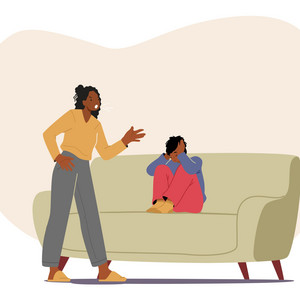
When you offer a friend or a colleague or a partner a suggestion for improvement, they often experience an urge to defend themselves.
Rather than listen to how they might change or do something better, they try to preserve the status quo.
Like generals fighting a war, they try to protect every square inch of the person they are, instead of embracing the person they might become.
In our episode last week, Winning the Battle Against Yourself, we looked at how we often fail to make changes in our lives because our best intentions are at odds with what scientists call the value system in the brain.
This brain network tends to prioritize the here and now and nudges us toward immediate gratifications instead of long-term benefits.
If you missed that episode, I'd urge you to go back and listen to it in this podcast feed.
Today, we look at one of the most powerful reasons we fail to make changes in our lives.
Very often, the people around us can see what we need to do differently or better.
But when they tell us, when they offer us feedback or heaven forbid criticism, we respond with anger, with denial, with defensiveness.
This is a paradox because many of us also believe we want to live lives of continuous improvement.
What better way to improve than to listen to suggestions for improvement?
What causes so many of us to feel defensive?
How can we listen better to feedback and offer feedback in a manner that will be heard?
Overcoming defensiveness as a way to improving our lives.
This week on Hidden Brain.
We've all been there.
Someone pipes up at a work meeting to ask why we were late.
Or a partner tells us we need to do a better job cleaning up after ourselves.
A friend asks why we haven't called in a while.
Almost effortlessly, the excuses come.
The traffic was bad.
If the sink was not full of dirty dishes, we would happily wash up our mugs.
Did our friend not know that we have been going through a really difficult time at work?
At the University of Pennsylvania, psychologist Emily Falk studies the science of defensiveness and what we can do about it.
Emily Falk, welcome to Hidden Brain.
Thank you so much for having me.
Emily, you are very close to your grandmother, Bev.
Recently, she shared with you her thoughts about the time that you spend with her.
Can you paint a picture of what happened that evening, Emily?
Yeah, it was a typical night in my house.
And what that looks like is one of my kids was jumping up and down on the couch.
He was playing his guitar.
The other kid was trying to show my grandmother something that he had built, probably a Lego creation, like kind of really, really close up in her face.
I was trying to get dinner on the table.
So you can imagine sort of dishes clanging and my phone is probably pinging with emails and text messages from people that I work with who would really like a response very quickly.
And when I was in that situation I sort of had this sense of like oh my gosh, there's so many different things that I'm trying to juggle right now.
And in that particular moment I decided that I was going to prioritize a little bit of time with my grandmother.
And my grandmother, Bev, is now 100 years old and she's one of my very favorite people.
So she's over at my house for dinner and I went over to her.
I left, you know, the pasta going and handed that over to my partner to handle.
And I took her hand and I walked her outside and sort of in the dusk I was feeling like a little bit of a sense of relief.
Like I was feeling like, okay, we're getting outside, we're getting a little quality time together.
And I felt like I had made the right decision, until she turned to me and she said that even though she really liked coming to my house and seeing my kids, who are some of her very favorite people, she said we aren't really spending time together.
And you know, it really struck me when she said that, because like I really didn't want her to be right about that.
Like, of course, we're spending time together.
What do you mean?
Like, you're over here making dinner for all of us.
And, you know, we're we're outside together now.
So what do you mean we're not spending time together?
Thank you.
Can you just describe what went through your heart as you heard that, Emily?
I mean, you're juggling a lot.
You're dealing with your kids.
You're getting dinner ready.
Your phone is buzzing.
You have calls from work.
You're kind enough to have your grandmother over at your place.
You're trying to host everyone together.
You've taken time out from this incredibly busy and stressful evening to go for a walk outside with your grandmother and she says you're not doing enough.
I definitely initially was like, no, you're wrong.
Like, we do spend time together.
Look, what are we doing right now?
It's the same kind of defensiveness that I feel when you know somebody calls me up and says like why haven't you called me?
And it's like, well, we're talking right now.
What do you want from me?
So, I mean, yeah, I definitely felt some defensiveness in that moment.
Can you talk about how common this is, that this is a reaction that we have, that I think is such a universal reaction when someone basically gives us feedback about something that we don't want to hear.
And this could be somebody in our personal lives.
It could be someone in our professional lives.
It could be just a casual acquaintance.
But our first reaction very often when someone gives us feedback like this, is to dig in our heels and say what are you talking about?
Yeah, I think this is an incredibly common experience where we point out something that somebody could be doing better.
Like, for example, maybe your partner could be taking out the trash, or your kid could be doing their homework, or somebody on your team at work could be responding to your collaborator a little bit more quickly.
And when we point out these things that we wish other people were doing differently, the things that are most salient for them are all the things that they're already juggling.
Just like you said, with my grandmother, I was juggling a lot of different things having to do with my work and my kids and getting dinner on the table.
And those things were front of mind for me.
And so when we point out the ways that other people could be improving their their health behaviors you know choosing healthier activities quitting smoking drinking less getting more exercise or studying harder or you know making choices that are different than the choices that they're making that really can feel threatening it can threaten our self-image it can threaten our sense that we're making good choices.
So you say that defensiveness arises in part because the brain tends to conflate what is me with what is good?
What do you mean by this?
I mean that our brain has these systems that help us think about what's good and bad, our value system, and brain systems that help us think about what's me and not me, which I call our self-relevance system.
And the self-relevance and value systems are really intertwined with one another.
So when we make decisions about what's good and bad, it's tapping into the value system, but that's overlapping with our self-relevance system.
And so those kinds of decisions are conflated with one another to the degree that we tend to have these biases where we think of things that are me typically on average as being good and things that are not me as as being on average bad.
We also have optimism biases, where we think of ourselves as being above average.
Like more than 50 of people think that they're an above average driver.
And so When you say, well, you know, you might not be an above average driver.
You're actually like pretty risky driver, pretty dangerous driver.
People don't say, oh, thank you.
Like, I'm so glad that you pointed that out.
Now I'll go and like get some lessons so that I can, you know, be less of a danger to myself and other people on the road.
There's the old comedy bit about how people who are driving faster than you are maniacs and people who are driving slower than you are are, you know, super stodgy.
And of course, you're driving at exactly the right speed.
So I think what I'm hearing you say Emily, is that when we're being defensive, you know, it's not just that we're trying to defend ourselves against the accusation that we might not be a good driver or a good partner or a good student.
In some ways, we feel the attack is on us.
Our sense of self is under threat.
Exactly.
It's not just that I'm thinking about that specific situation of are we actually spending quality time together right now or not, but also, like I said to you earlier, am I being a good granddaughter, which is an identity that's important to me.
Am I being somebody who shows up for her family in a way that feels good for them?
And so this idea that we... cling to the idea that we're doing things right is extremely common.
Like there's a New Yorker cartoon, I think, where there's a bunch of guys sitting around a boardroom table and the caption is my last comment appeared to be inviting feedback.
Do not be fooled.
And that's funny, because the guy maybe said something like he's interested in feedback, but everybody sitting around the table knows that what he actually wants to hear is that he's doing a great job.
So if a sense of self that we want to protect is at the heart of defensiveness, one idea to reduce this defensiveness is to make the self less salient or less prominent.
You conducted a study that looked at how the practice of self-distancing affected college students' defensiveness when it came to hearing messages about alcohol.
Tell me about that study, Emily.
In that study.
What we had people do was we had college students who told us on a day-to-day basis about how much they were drinking alcohol.
And we randomized people into different conditions.
Some of them just reacted naturally to alcohol the whole time.
Some of them were given a technique where they took the perspective of another person who is part of their social group, who drank less than they did.
And so those people, on a day to day basis, were given reminders like let's imagine that you and I are friends and that you drink less than I do.
I would get text messages saying that say you know today, if you encounter alcohol, you should approach it the way that Shankar would.
And other people were given messages that told them to essentially take a step back and just react in a more mindful way.
So basically, to have whatever feelings they were having, but to do it from a more distanced perspective.
And both of those kinds of tools for creating psychological distance, taking the perspective of another person who drinks less than you do, or reacting in that non-reactive way that characterizes mindfulness.
Both resulted in people drinking less than on weeks when they reacted naturally, or compared to people who were reacting naturally.
Another way to reduce the dominance of the self and potentially decrease defensiveness is to identify less closely with the characteristics that define us as people.
Researchers have found that when we create a ranking of personal traits, some feel very central to our sense of self, while others are more peripheral.
How can we use this to reduce defensiveness, Emily?
Yeah.
So there's this really wonderful research that I like that comes out of Brent Hughes's lab.
And what he's done is look at these networks of different kinds of traits and the way that people think of them as relating to each other.
And so there are some That are more central like, for example, our kindness or our compassion, might be traits that we think of as core traits that are at the center of this network.
And the traits that kind of depend on those but aren't necessarily our most central traits, like maybe being witty, that those things are a little bit more open to feedback.
And so this team of researchers, led by Jacob Elder in Brent's lab, found that it can be easier for us to incorporate feedback about traits that are more peripheral than our core ones.
Like we really don't want to change the things that we think of as being like really really core to us.
So what the team found was that, after receiving feedback, people were more willing to update their self-views about peripheral traits.
Like one example they gave is well-spoken.
People generally don't think of like well-spoken as something that's really core to their identity.
But if the committee gave feedback that was like this person doesn't seem like they're that friendly, then we might come up with reasons why, like well, I know that I'm friendly and maybe I was nervous and that didn't really come across in this video.
But like, I know that that's true about myself.
I mean, I'm thinking about the interaction you had with your grandmother Bev in some ways, when she said you know, we're not spending enough quality time together.
The message that you're hearing almost instantly is you know she's saying I'm not a good granddaughter and that is core and central to my identity.
And I'm going to fight to defend that because that is who I am.
On the other hand, if your grandmother had said something like, I know you're super busy.
You really care about me.
I know you really want to spend time together with me, but I can see how busy you are and how many different things you're juggling.
Is there a way we can figure out how you can balance your time so that we can spend some quality time together?
Now the criticism to the extent that it is criticism is just about the fact that Emily is very busy.
And how do we problem solve her being less busy so she can spend more time with me?
It's not so much a criticism of Emily being a bad granddaughter.
In some ways, is that what you're talking about, in terms of focusing our efforts to influence someone else on something that might be not a core portion of their identity?
Well, it's interesting because I think that as the receiver of the feedback, we can kind of toggle between those different kinds of states.
I think it's really hard to control how other people receive those messages and we have much more control over how we do, because there's a world where she says I'd really like to spend some more quality time with you.
And I take that as evidence that she thinks I'm not a good granddaughter and that's threatening to my core sense of self and my identity, that maybe I'm not like as generous or kind or whatever as I could be.
But there's also a world where I can do the translation that you're describing and just say like oh, let's figure out how we can make this work logistically right.
If I can let go of some of that defensiveness and recognize that this is a goal that I have, also to spend time together then we're both much better off.
One of the things that I think we really do have control over is our ability to decide whether we want to be the kind of person who responds to loving critique, constructive critique openly, or whether we want to let defensiveness get the better of us.
And obviously there are situations where people are just mean or rude or whatever, and I'm not saying we should put up with that, but that often there is useful information in the feedback that other people are trying to give us.
That can be more productive than this automatic reaction that I think probably stems from the conflation of self and value.
Can you talk a moment about the role that meditation might play in helping us be less defensive?
Because, as you're talking about simply listening to what your grandmother was saying, as opposed to listening to the implication of what you thought your grandmother was saying because, in fact, your grandmother was not saying that you're a bad granddaughter.
She's just saying I feel like we don't spend enough time together and I'd like to spend more time with you.
Can you talk about the role of meditation in helping us in some ways just process the world as it comes to us, without layering on our judgments and values on top of it?
Yeah.
So one of the things that meditation helps people do is let go of that more bounded notion of self right.
The idea that there's a fixed sense of who I am and that that can't change, or that It has a particular and rigid structure.
So when you look at the brains of people who have practiced meditation for a long time, their self-relevant systems behave differently than the rest of us who aren't long-term meditation practitioners.
And so that also really suggests this other possibility that just kind of letting go of that bounded notion of self can make us open to all kinds of other possibilities.
So far, we've been talking about reducing defensiveness by making the self smaller, in a sense by shrinking its footprint.
But we can also become less defensive by making the self bigger and more multifaceted.
When we come back, how enlarging the self can help us keep our minds open.
You're listening to Hidden Brain.
I'm Shankar Vedanta.
This is Hidden Brain.
I'm Shankar Vedantam.
Emily Falk is a psychologist and neuroscientist at the University of Pennsylvania.
She studies why we are often resistant to change and the role of defensiveness in keeping us from making change in our lives.
Emily, you say that one of the ways we can reduce defensiveness is by reminding ourselves of what really matters to us and remembering how many aspects of our lives actually do carry this sense of importance.
Talk about the practice of values affirmation and how it can help us avoid becoming defensive in the face of threats.
Values affirmation is a technique where we reflect on values that matter a lot to us.
So things that bring us a lot of meaning or purpose in our lives, which for some of us might be things like our friends and family, or our spirituality, or maybe our creativity.
And the idea is that when we reflect on those core values, it can allow us to zoom out and see that just because we made a mistake it doesn't have to mean we're a bad person.
Or just because somebody is asking us to change one thing doesn't mean that like everything about us has to change.
And so this is a way that we can hold on to a core sense of self, while making ourselves more open to potentially changing things that aren't working, or to kind of shift preconceived notions about who we are.
So, as one example, our team has done research looking at folks who are relatively sedentary, people who don't move around a lot.
And what we found is that when we randomized people to either get to do a values affirmation exercise, reflecting on these kinds of sources of meaning and purpose in their life, things that really matter to them first, compared to a control group who reflect on values but the ones that aren't necessarily their most important values.
That what shifts is how their brains respond to the thing that comes next.
So when we give those folks coaching about why and how they might want to get more physically active, everybody in the whole study is seeing the same coaching messages.
So things like, the more you sit, the more damage it does to your body or, according to the American Heart Association, people at your level of physical inactivity are at risk for cancer and heart disease.
And Even though everybody's seeing objectively the same messages, the people who were first given this chance to engage in values affirmation show more activation within the brain's value system, more activation within the self-relevant system, suggesting that maybe they're open to those messages in a different way than people who weren't given that opportunity to first zoom out and reflect on their core values.
How do you employ this technique in your own life, Emily?
Do you try and reflect on your own values if you know you're about to hear some feedback that is going to be difficult?
Yeah.
Well, I mean, I think it also depends how you think about what difficult means.
Like right now we're in performance review season at Penn.
And, you know, something that we do in my lab is we do a bidirectional feedback meeting.
Like we fill out the HR forms where it's very top down.
Like as a manager, I need to give feedback to all the people who report to me.
But in that HR system there's actually no place where they give feedback about what I'm doing well and what I'm not doing well.
And so we have these meetings that I know are on my calendar.
I know it's about to be the time when I'm going to be giving feedback to somebody else.
But also they're going to be telling me what did I do as their boss over the past semester, over the past year, that was helpful for them and helpful help them grow, but also what did I do as their boss that they wished I had done differently.
And there are a couple different things.
Like one is when I have the luxury of a little bit of time in my schedule, I do try to do a little bit of that kind of mini values affirmation, like reflecting on things that actually really matter a lot to me.
So I might like look at photos of my kids or journal a little bit about things you know, things that I feel grateful for and things that um are most important in my life.
Um, but I also try to like reconnect with um.
Why we're doing what we're doing in the Bidirectional feedback meetings is we usually start out with the things that are going well right.
The things where they really genuinely do feel supported, the places that we're really connected, the places that we're on the same page.
And I will say that when people do this genuinely and authentically, it feels really good to feel seen and to feel recognized for the things that we're doing that are meaningful.
It feels different than the way that we engage when we're busy in our day-to-day lives, right?
And so, having that foundation, then it feels possible to hear the constructive criticism or the constructive critique.
I'm thinking about.
One of the senior folks on my team last year told me that it felt really demotivating when it took me a long time to get papers back to her.
Like she would work really hard to put a paper in my writing queue and then because of whatever else I had going on in my life like sometimes it would take me weeks to give her feedback and she said you know, when I do that, I lose steam.
It makes me feel like unmotivated to keep the process going.
And you know, there's kind of like with the situation with Bev.
There's an interpretation of that which is like, oh like.
Look at my calendar.
Like I have meetings all day long and you are one of many people who wants my feedback.
Right.
And so I think there's a way that it feels very easy to respond defensively there.
But there's also something that's really valuable about the feedback that she's giving me, which is like we both have a goal to share the research that we're doing with other people.
And I certainly don't want to be the bottleneck in that process, and especially if it's going to feel demotivating for her.
So you know, over the past year I've tried to think with her together about how we might plan and schedule so that I know when these things are going to be coming into my writing queue and that I can turn them around more quickly.
Right.
If I know that that's something that's really important to her, I can prioritize it and and that's been really good.
Another senior person on my team, you know, told me that she felt like it was sometimes hard to get meeting time with me and that she felt like it was, you know, she didn't want to impose basically, and that that felt really hard.
That like, since I was clearly, you know, running around and doing so many different things and juggling them and sharing that with her, that it felt like maybe she shouldn't take time in our meetings to like, catch up about our weekends or maybe she shouldn't take time to, you know, get into the weeds of little things that weren't the most pressing things.
And so this year I've worked on trying to protect more time to meet with that person and you know it's bi-directional performance feedback time again, and she's like It's a little bit better, but I still feel that way sometimes.
And so you know, I guess I just don't want to like paint this picture like we do this one thing and then everything's fixed.
But I think that my goal is to go into those meetings thinking about how we can work together to make things a little bit better each time.
So you've also found that feeling a sense of meaning and purpose can also expand our sense of self and make us less defensive in the face of challenging information.
How so, Emily?
What role do purpose and meaning play?
Well, so purpose has all kinds of benefits.
Purpose.
There's a lot of research that highlights how purpose can make us more open to constructive feedback, like we're talking about here.
It can also make us more likely to engage in conversations, behaviors that are good for our body, like there's a reciprocal relationship between things like getting a good night's sleep or going for a walk or connecting with people that we love, and a sense of purpose.
So when we do those things that are good for our bodies, we can feel more purposeful later, and then, when we feel more purposeful, it makes it more likely that we'll do those things.
And I think that an important thing to highlight there is that sometimes I think we think of some people as being more purposeful, like Mother Teresa, super purposeful right.
But in reality, most of us fluctuate on a day-to-day basis around some set point.
Like we have our average, but some days we feel more purposeful.
Some days we feel less purposeful.
And on those days where we feel more purposeful maybe because we reflected on the things that really matter to us, or maybe we took the time to go for a walk around the block or to call our best friend on the phone that that has all these other benefits as well.
Can you talk about how there are also different kinds of purpose?
So, for example, you know I could say my purpose is to become very wealthy and I want to listen to your feedback and perhaps not feel defensive about your feedback, because in some ways your feedback could help me in my goal of becoming very wealthy.
But research has also found that when a sense of purpose involves self-transcendent values, it tends to be more effective in diminishing defensiveness.
Can you talk about this work, Emily?
So when we had people do a values affirmation exercise where they ranked different values that might be important to them, as you said, some people choose values that are these self-transcendent values that connect them to a bigger whole, to people or a world that's bigger than myself.
And when people tend to endorse these self-transcendent values more as composed of more self-focused values, that they show lower reactivity in brain regions that track threat.
So it seems like getting those kinds of health coaching messages when they have this other psychological resource of self-transcendent values to rely on, that that incoming information might be less threatening.
I understand that one other way to expand our sense of self and reduce defensive reactions is to have what psychologists call transformative experiences, you know, like going to Burning Man, for example.
Tell me about these experiences.
How do they work and why would they affect defensiveness, Emily?
Yeah, so this is research that I really love.
The idea is that there are certain kinds of experiences that we have that can be relatively transformative, experiences that often involve kind of letting go again of that bounded sense of self and seeing the way that we're connected to something much bigger than ourselves.
So something that connects us to other people, to the rest of humanity.
And so this can happen through meditation.
It can happen when people take psychedelic drugs.
It can happen through rituals where people come together and do things.
So like you mentioned Burning Man.
And my friend and fellow neuroscientist, Molly Crockett, has explored how these kinds of transformative experiences are characterized really by an expansion, an expanded sense of self.
And so going to festivals like Burning Man and studying how people think and feel and behave in those kinds of contexts, Molly's team has found that those kinds of transformative experiences often involve having more of a sense of connection to other people, more of a sense of of not having a bounded sense of me and not me that our brains are typically, and sort of more, automatically generating.
So when people do these kinds of things where they're connected to their community or experiencing community in a really different way, then that can help them let go of that sense of ego that sometimes I think is characteristic of the defensiveness that we feel.
We've looked at two different ways of working with our self-image in order to reduce defensiveness, to make the self smaller and to make the self bigger.
In addition to these approaches, we can also shift the way we engage with the information that makes us uncomfortable.
When we come back, how to put a different spin on information that we would otherwise want to shut out.
You're listening to Hidden Brain.
I'm Shankar Vedantam.
This is Hidden Brain.
I'm Shankar Vedantam.
Psychologist and neuroscientist Emily Falk studies why we fail to change and how we can do better.
A central focus of her work has been on examining the role of defensiveness, the way we shut down feedback by digging in our heels.
If you have follow-up questions or thoughts for Emily after listening to today's conversation and you're willing to share your thoughts with the Hidden Brain audience, please record a voice memo on your phone and email it to us at ideas at hiddenbrainorg.
Use the subject line, mental barriers.
That email address again is ideas at hiddenbrain.org.
Emily, your research has found that people often react defensively to direct appeals to change their behavior, but they respond quite differently to the same information when it's presented in story form.
Why would this be the case?
Well, one of the things that's really fascinating is the way that stories seem to get around our defensiveness.
We see this in all kinds of situations where people are able to reason about facts and information in a different way when it comes from a story than when it's just presented as a list of facts.
And I noticed this a lot as a parent.
When my kids were little, I read an article summarizing some research about the way that Inuit parents sometimes use stories to help teach children how to control their anger.
And That work highlighted all of the different ways that stories can be used to shape our understanding of morality, our understanding of how we should behave.
I also saw it on a day-to-day basis in my household.
I have twins and the twins often would get into very hyped-up states with each other where They'd be fighting over a toy or they'd be fighting over who got to wear the blue pajamas, or they would be fighting over, you know, who got to go first to get into the bathtub.
And any of these things seemed like just very dire, stakesy situations.
And.
When I would ask them, guys, can you please just calm down?
Or what's going on?
Why are you behaving this way?
That didn't have any effect at all.
But when I would ask them, would you like to hear a story?
Then sometimes they would pause and listen.
And we had two characters in our house, Charlie and Charles Adams, named after the cartoonist who we all like.
And when we tell stories about Charlie and Charles Adams, then we get a completely different reaction.
The kids would be able to suggest ways that Charlie and Charles Adams could very generously share the toy.
Or, you know, take turns wearing the special pajamas.
Or you know take turns getting into the bath first.
And then, after they had stopped and reasoned about it for those other people, then we were able to say well, do you think that you guys could do any of those things?
And sometimes it would work.
And, you know, this came up the other day with my neighbor.
I was over at my neighbor's house and two of their kids were having a little bit of a tussle.
And I said, hey, guys, you know what happens when Emmett and Theo are in this situation?
And just, you know, tell a situation that's very similar to the one that's playing out there.
And then these little humans, whose prefrontal cortex isn't fully developed, can still reason in a completely different way, reasonable way.
And what do you think is happening?
Because, as you're telling me this, I'm reflecting on how, when I listen to a story, it suddenly pulls me out of this mode of do I agree or do I disagree and puts me into a mode of like.
Let me try and understand what's happening inside these different perspectives.
And suddenly I'm now analytical, I'm observant, I'm not defensive.
Yeah, and researchers who study narrative persuasion call that experience transportation being transported into a story.
We can identify with the characters in a different way than when we're experiencing things ourselves.
And research in the brain that our team has done shows that there's fundamentally different pathways that are unfolding when we're reasoning about stories and other kinds of facts.
So we had smokers who came into the lab and we used this brain stimulation technique called transcranial direct current stimulation, which temporarily disrupts the function of certain brain regions.
And so we used it to temporarily disrupt regions that typically are involved in that kind of effortful thinking.
30 years, it increases your risk of lung cancer by X percent.
Then when we disrupted the function of these brain regions, it made it so that they were less able to reason about those facts, compared to when we use sham stimulation, where they're hooked up to the machine but not actually having those brain regions disrupted.
On the other hand, for people, for the smokers, who came into the lab and did the same procedure, but they were given stories.
Even when we disrupted the function of these brain regions that we typically think of as being key for our ability to reason, they could still generate just as many arguments and think about what was happening.
Like, so being told, John smoked for 30 years and he developed lung cancer.
They were able to reason about it in a different way.
And I think part of what's happening there is that other brain systems are being called into use.
So we know from other research that social relevance brain systems that help us understand what other people think and feel are engaged when we hear stories and when we tell stories.
And that that kind of thinking might be fundamentally different from the other kinds of reasoning that we're talking about.
So you've hinted at this idea in different ways Emily, but when we think about the challenges we have from the perspective of someone who is not us, it dramatically changes the way we think about the perspectives that we have.
So, in other words, when your kids hear the story about these other kids who are dealing with a problem, all of a sudden it's not personal, in a way.
They have the latitude, the freedom to say what is the course of options that are open to these other people.
And when you're in the position of being the advice giver rather than the advice getter, it changes the way you think about the advice.
Exactly.
And research by folks like Ethan Cross.
Some of the research that's been done here at Penn in the Behavior Change for Good initiative shows exactly that that when people are put in the position of either taking the perspective of a distanced relationship other person like the perspective of a fly on the wall, or the perspective of somebody else, or their perspective of someone giving advice to another person, that that makes it easier for us to actually think about the situation in a more wise way ourself.
And so we can come up with better solutions.
We can come up with wiser solutions.
And um, I'll say personally the number of studies that I've run where I have tried to convince somebody else to do something, to get more physically active or use sunscreen or floss or whatever it is, and then I just end up convincing myself.
I'm just this constellation of all the studies that I've ever run, because for so many years I've been doing these studies, trying to convince other people to do stuff.
You once ran a study where you asked college students to take the perspective of a peer who had different habits when it came to drinking alcohol.
In some ways, you found that that was an effective way of getting through to someone who might not have wanted to hear the message if it was directed at them.
Yeah, we ran a study where we had college students get messages on a day-to-day basis.
We sent them text messages and some of the students got messages where they were just told to respond to alcohol.
However, they normally would.
And others were told to take the perspective of somebody who we knew from prior surveys that we had done with them was somebody that they were friends with and drank less than they did.
So it's somebody where they're familiar with that behavior and, taking the perspective of a friend who drank less than they did, also reduced their own drinking.
Emily, I understand that your partner made a request of you recently that led you to feel a bit defensive.
Can you set the scene for me, please?
What were you and Brett doing at the time?
Well, in the hour or so after my kids go to bed, it's a really nice time where Brett and I usually hang out with each other.
And usually we hang out in the kitchen and we clean up from the day.
And by we clean up from the day, I mean Brett cleans up from the day, and I hang out with him while that happens, which is really a lovely characteristic to have in a partner somebody who's just as happy doing dishes as sitting around.
And so in this particular evening, Brett was doing his wonderful typical thing of doing the dishes.
And I was sitting in a very comfortable chair checking my email.
And there was a student who needed something from me in order to be able to move ahead with a project.
And I was trying to get back to them quickly because that's something that I like to do.
I don't want to be the bottleneck.
And as I was on my phone doing this task, Brett said to me that it was really frustrating for him when he felt like you know, this is time when we're supposed to be hanging out together and I'm on my phone.
And, you know, I definitely felt defensive in that moment.
Like, there are all kinds of good reasons why I'm on my phone, right?
One of the things that you love about me is that I'm a good boss and I'm a good collaborator and I'm a good scientist and, like This is just going to take a second and it's not really disrupting the conversation.
And I can still hear what you're saying.
And do you want me to just recite back to you exactly what you just said?
And of course, like that did not interest Brett.
Like there's research that highlights that when other people are on their phones it's annoying, right?
Like it's super annoying.
And in the moment I was defensive.
I was not prepared to concede that, of course, he was right.
It's rare that he says to me, like, I really don't like what you're doing.
I need you to change something.
And so even that sort of subtle like it feels really bad for me when you're on your phone, when we're hanging out.
That was noticeable.
Yeah.
And so, over the next couple of days, I started thinking about.
You know, who do I actually want to be in this situation?
And I started thinking about the people in our lives where you go over to their house and you don't even know if they have a cell phone right.
Like they are definitely not checking their email or their texts and how different that feels from you know the person who, every time you bring something up, they're like.
Let me just fact check that.
And they like go on their phone, beep, boop, beep.
And, like you know, give you whatever stats or show you a YouTube video or something like that rarely adds to the conversation, right?
And so thinking about those people in my life who are so present in those interactions felt really motivating for me.
And I thought, like, that's actually how I want to be when I'm with Brett.
And so I tried to make some environmental shifts, like leaving my phone in the other room when we're hanging out.
And that works for the most part.
I'll say I'm not perfect.
I felt a little confused. caught out the other night.
It was that hour after the kids went to bed and I was texting with a friend and she had just finished reading my book where I tell this story.
And she was like, aren't you supposed to be hanging out with Brett right now?
Why are you texting with me?
And I was like, oh, my gosh.
So then I was like double defensive.
Like, I know that I'm supposed to be hanging out with Brett.
Brett's probably like a little bit annoyed about the situation.
And now my friend is probably judging me that like, of course, I just told everybody that I want to be doing this.
And yet that is the person I want to be.
So I was like, you're totally right.
Took the phone, put it somewhere else.
And so I really appreciated that she called me out on that.
Emily Falk is a psychologist and neuroscientist at the University of Pennsylvania.
She's the author of What We Value, The Neuroscience of Choice and Change.
Emily, thank you so much for joining me today on Hidden Brain.
Yeah, thank you for having me, Shankar.
It's such a pleasure.
Do you have follow-up questions or thoughts for Emily that you'd be willing to share with the Hidden Brain audience?
If so, please find a quiet room and record a voice memo on your phone and email it to us at ideas at hiddenbrainorg.
Use the subject line, mental barriers.
That email address again is ideas at hiddenbrain.org.
When we come back, our latest edition of Your Questions Answered.
We'll discuss listeners' thoughts and questions on memory with psychologist Kira Green.
You're listening to Hidden Brain.
I'm Shankar Vedantam.
This is Hidden Brain.
I'm Shankar Vedantam.
Cast your mind back to a day last week.
Let's say Thursday.
What did you eat for dinner that day?
What clothes were you wearing?
Who were you with?
And what did you chat about?
Drawing a blank?
You're not alone.
We tend to think that we should remember what happens in our lives, and when we forget details we berate ourselves, treating our memory lapses like flaws.
Psychologist Kira Green studies the science of memory and forgetting.
We recently talked with her on the show.
That episode is titled, Forget About It.
Today, Kira returns to the show to answer your questions about memory and forgetfulness.
Kira Green, welcome back to Hidden Brain.
Thanks for having me again.
Kira, as I remember from our previous conversation, you say that most of us think that forgetting is the opposite of remembering.
What's wrong with looking at things that way?
Well, I suppose the problem with it really is that it makes us think about memory as though it's along a continuum of accuracy.
That, you know, what we're aiming for is kind of top level accuracy.
So remembering something is good, not remembering something is bad.
And I think that's the way a lot of us tend to think about memory.
You know, it's about achieving that accuracy, getting that thing right.
But actually, you know, we're not computers.
It's not a matter of retrieving something, and you either retrieve it correctly, in which case you get a nice big checkmark, or you don't retrieve it, and then it's a big X and you've done something wrong.
And we're actually reconstructing our memories actively all the time.
A lot of people have this metaphor that memory is like a filing system, you know, either like a filing cabinet or on a computer, and that you should just be able to go in and pull out the file and retrieve it.
And it's right there.
But we're not doing that.
We're actively constructing the memory.
And then when we do that, during the process of that construction not all the details are exactly the way they will originally have been.
We'll sort of construct it in a more kind of schematic way that will give us the gist, the important parts of what's there.
And through that process of reconstruction, what we're doing is pulling out the bits of memory that are important to us and letting the parts that aren't important to us or aren't relevant to a particular situation drift away.
What we call remembering and forgetting are actually part of that same process of constructing a memory along particular lines that includes some details and doesn't include others.
Remembering absolutely every detail isn't necessarily something that we should want.
And sometimes we actually need to forget.
And one of the things that forgetting allows us to do is to kind of prune away all the unnecessary aspects of memory so that we can remember the gist of our day-to-day lives and kind of pull together and observe patterns across all of our experiences.
So in your research Akira, you make a distinction between things that are important for us to remember and things that are not.
So, for example, it might not matter in the long run if I remember where I left my keys, but I do want to remember my college graduation or my wedding day or the birth of my child.
How do the salience of events change what we remember and what we forget?
Well yeah, so it's definitely true that most of us will remember highly salient or highly emotional events with a lot more frequency.
And a lot of that is that we tend to think about those events a lot more.
We're more inclined to bring them to mind.
So we do tend to think about things that have a lot of emotional resonance for us, either positive or negative.
And one of the interesting things about that is that people tend to have very high confidence in those memories that they're particularly salient, that they think are particularly important.
Like you mentioned the birth of your child or your, you know, like an accident that you were in or you know something kind of really that's maybe personal or of national or international importance, but that has some huge salience for you.
You'll tend to remember that with really high confidence, but that confidence often doesn't come paired with actually very high accuracy.
So, when it comes to those highly emotional memories, our confidence in them can actually be misleading.
So that salience, that emotional resonance can really lead us to thinking about those memories a lot, which means we're engaging in that act of reconstruction process a lot more frequently.
And that actually means we're, in a way, creating more opportunities for errors to creep into those memories.
Okay, let's turn to listener questions now.
Here's one from a listener named Shelly.
I was diagnosed with ADHD at age 60, and I've had it all my life, and that diagnosis explains a lot.
And one of the things that I find the most distressing about it is that my working memory is very poor, unless I very consciously plug into my body and say things like you put your car keys in your coat pocket instead of putting them back in your purse, or your sunglasses are on the table, not in your purse.
Don't forget where you put them.
If I don't do that, then I feel like I'm wandering the world unconscious.
I will be walking across the house with a tool in my hand to go do something and I get distracted and I set that tool down and I have zero memory of having done it or where I put it, and I feel gaslit by myself.
Like I am gaslighting myself and it makes me really crazy and undermines my confidence.
And I wonder if there are any exercises to do or any way to help make that better or at least not feel so bad about it.
Thanks so much.
So Kira, we talked about having compassion for ourselves when we forget, but how do we do that if we are constantly forgetting things?
Yeah, so I think it is important to recognise that we all forget these kinds of things all the time.
So I think Shelley spoke very eloquently there about her issues with ADHD and those attentional issues.
That can also, of course, very much play in with memory issues.
But most of us, I think it's.
What's important to understand is that when somebody is diagnosed with a condition like ADHD, or even maybe somebody who is aging and concerned about their memory with age, is that they become much more kind of laser focused on these kind of failures of memory and see everything as oh God, that's a symptom.
Whereas if you know you take somebody who doesn't have this condition or isn't concerned about it, they just won't tend to worry about these kinds of day to day failures.
I was having a conversation the other day with a lady who was an older lady and she was talking about how, You know, she really got lost, trying to find the room that we were meeting in in this building where I work.
It's this really enormous, sprawling building.
And I was saying you know like I get lost in this building all the time and I've been working here for 10 years.
If you were 25 and you got lost in that building, you would blame the building.
You wouldn't blame your memory.
Uh-huh.
But then in terms of kind of practical things that you can you can do.
Firstly, it's really boring, but a lot of the time it's just having procedures.
So it's just having things like habit is actually one of the most effective ways of helping with those kinds of day to day and kind of lapses of attention.
So things like having a place, a really visibly obvious place where you always put your keys.
Like, I don't have ADHD, but I still have a key hook behind my door.
And if I don't put my keys on that key hook, I'm going to struggle to find them later.
So I always try to remember to put the keys on that key hook.
So just having those things and making them a habit.
It won't work instantly, but making them a habit really does help, because we will engage in that kind of habitual behavior without consciously thinking about it.
And there are a lot of good kind of technological tools that you can use, even if it's just really simple, things like using a calendar, using a to-do app, using something that will give you reminders of hey, you need to do this thing.
Don't forget about that.
If you know, I'm someone who's likely to get distracted and completely breeze past the meeting that's going on.
Soon, set a reminder for yourself, like 10 minutes before and then five minutes before and then at the meeting.
So you're giving yourself warnings.
And then you're just working with the way that your mind works, recognizing its strengths but also recognizing its limitations, and that you can work with those rather than trying to fight against them.
We received a question from a listener named Tom.
He's 49 years old and starting to worry about the things he forgets.
I want to play you his question and then ask for a clarification.
I've noticed specifically, almost at 50, I lose nouns.
I forget specific words.
They're not gone entirely.
They may come back.
This seems like forgetfulness.
But is it just being forgetful?
Is it old age?
Or is there something happening in the memory where the data bank is so full up?
It might take a bit longer to find that connection.
Or is it a condition?
I don't know.
That's my question.
Love your show.
Thank you.
So in some ways, Kira, I think Tom is saying that he is his own control group.
He isn't comparing himself to somebody else.
He's saying, compared to who I used to be, I feel like my memory is not what it was.
I'm wondering how you would respond to someone like Tom but also address his deeper question, which is how do you tell the difference between something that is just regular, normal forgetfulness and something that might be inching towards some kind of neurological condition?
Yeah, and that's a really tricky question.
And it is one that, of course, a lot of people have concern about.
So first thing is to say that, yes, undeniably, a lot of aspects of our memory do decline with age.
So the peak of our cognitive abilities is typically in our early 20s.
So it's kind of downhill from there in terms of a lot of features.
I find it myself that you have that sort of tip of the tongue effect where you're trying to think of a word and it won't come to mind.
And then later you want to be like, hey, everybody, I thought of it.
I remembered the word.
I have a vocabulary.
I haven't forgotten the words.
I just couldn't think of it at that moment.
So that is a very common experience.
So a lot of all of these kinds of day to day failures of memory forgetting someone's name, forgetting a word, that sort of tip of the tongue feeling.
These are really really common things that everyone will experience from time to time, but they can also be an indicator of early stages of cognitive decline.
And essentially, it really comes down to the frequency of these issues.
How frequently are they occurring?
So what I would say to someone is if this is something that happens occasionally, you're not really seeing.
You know, other aspects of your life aren't showing significant signs of cognitive decline.
It's probably not a big deal.
If you think that there are other signs, so if you find, for example, that you often get confused or that you find that you're having more trouble regulating your emotions, those can be signs of kind of mild cognitive impairment or early stages of decline.
And if someone does have any concern about their memory and about age-related memory decline, the first port of call really is to speak to your GP, your family doctor.
Another important resource can be family members, in particular spouses, because they often have a really have much more insight into our behavior than we might have for ourselves.
So it can be helpful to say to a spouse, have you noticed any decline in my behavior?
Have you noticed that I'm forgetting things more frequently?
And if they say, no, it's the same as you always have been, then that's fine.
If they say, well, actually, maybe there's something that can be something you do want to check out.
One anxiety we hear about a lot these days is whether there's a link between new technologies and our ability to remember important information.
In other words, do our phones rot our brains?
Here's listener Krista.
I was just listening to Setting the Past to Rest, which is a fascinating episode.
And I had a question about how much impact on our working memory does notification from cell phones and messaging apps have.
This reminds me Keira, of an episode we did with a psychologist, Gloria Mark, who found that people check their email on average 77 times per day.
Is it hard to focus and remember things when our phones are constantly pinging and distracting us?
Keira.
I have to say, to me, 77 times a day seems like an underestimate, but I can well believe it.
So I think, again, there's kind of this distinction here between attention and memory.
And they are very tightly interlinked, but they are also different things.
So a lot of the time what's happening there is?
Our attention is constantly being interrupted by constant notifications.
Something buzzes.
And those things really do kind of capture our attention.
And that's, again, a kind of evolved mechanism that we have this attentional capture.
But there isn't really any evidence that that's actually affecting Are they, the function of our memory?
What it can do, of course, is because say something like working memory is essentially really a process of attention.
OK, so in order to engage in working memory, so let's say, I give you a list of words to remember and then I ask you to repeat them back to me.
OK, and that's a very conscious process.
It requires a lot of attention to engage in that.
If you get distracted, that information is gone.
OK, so during that kind of short term period, if your attention is distracted, then you're not encoding that information.
OK, it's not that it's been encoded and then it's been wiped out of your brain.
It's that you didn't encode it properly in the first place.
And that, in fact, a lot of the time when people talk about various failures of their memory, even in kind of things like say, eyewitness memory actually a lot of the time it's not a failure of memory at all.
It's that their attention was distracted, so they didn't encode the event.
They were looking at their phones, so they didn't see the crime happening across the street.
So I don't think it's the case that that technology is kind of hacking our brains or changing anything.
But it is a case that it can sort of steal our attention away from where we want to be.
I'm wondering though Kira, I remember as a kid.
I remember the phone numbers of probably 100 or 200 of my friends.
I could remember all of their phone numbers.
And of course now I just put the phone numbers into my phone and I just look up their names and I press the button and I don't remember anyone's phone number.
Surely technology must be playing a role in what we choose to remember and how we remember?
So I think those are two different things.
Technology does play a role in what we choose to remember, but I don't think it affects how we remember.
So the fundamental mechanism of memory is the same and has always been the same.
What's different is what we choose to devote our attention to and what we choose to remember.
I could still recite my best friend's phone number to you, even like the phone, her home phone number from when she was a kid.
I could still recite that number to you now.
And that's because I dialed that number over and over and over again.
And I needed to know it because I was using a landline.
I don't need to know her cell phone number now.
I can just pick up my phone and call her.
So that's a matter of us deciding what's a good use of our mental resources.
We have a limited amount of attention to go around.
Memory isn't really a limited resource, but attention is.
We have limited bandwidth.
We only have so much of it to go around.
And we choose to devote that to where we want to devote it.
We don't always make those choices very well, which is why we might spend time scrolling on Instagram when we really should be working on a paper.
And yes, I'm speaking about myself here.
But I'm still making that choice that I'm choosing to value the Instagram things.
And it may not be what I ought to value, but it's what I'm choosing to direct my attention to right now.
I could choose to direct it elsewhere.
But the fact that I'm choosing to do that doesn't mean that I've now lost the ability to write a paper.
It's just that I'm directing my attention elsewhere.
Our guest is psychologist Ciara Green, who's joining us to answer listener questions about her work on memory and forgetting.
More of those questions in a moment.
You're listening to Hidden Brain.
I'm Shankar Vedantam.
This is Hidden Brain.
I'm Shankar Vedantam.
This is Your Questions Answered our segment in which we answer listeners' follow-up questions about ideas we featured on the show.
Today, we're talking with Kira Green.
She researches the science of memory and forgetfulness at University College Dublin.
Kira, a listener named Chris has an interesting question about how memory and forgetting work.
Here he is.
My question is, does the brain store memories thematically?
The reason I ask is I have really a terrible memory for my own personal history.
But if something comes up in my life, immediately come to mind three or four other instances of my past where the same theme is evident.
So I'm just amazed at the way the organization of the brain works.
Thank you.
So we've previously discussed how sad events in our lives can cause us to dredge up sad memories, and happy events can make us remember happy memories.
Is Chris on to something with his thesis about thematic memory, Kira?
So, you know, it's a great question.
And Chris is absolutely right.
It's a really good way to think about memory in this way.
So, yeah, memory is fundamentally associative.
You have a particular memory and that activates a network of neurons in the brain.
And then each of those neurons in that network are also linked.
They're physically linked. with other neurons, which are part of other networks in the brain.
So you physically experience one memory and that literally sends an electrical signal that triggers a connected memory.
So from a purely basic neurological perspective, that is exactly how it works.
We also know that memories are stored in these kind of very associative patterns.
And I talked earlier on about this idea of how we sort of extract gist from our memories.
And one of the things that we do with that is that we use them to build up these sort of blueprints, these schemas for our lives and for our expectations of the world.
And a lot of that is essentially based on themes that we recognize the underlying commonalities between our experiences.
Something happens to you or you think about some memory from your life and that triggers another memory.
And because that memory has a lot in common with this one, there are going to be a lot of connections in common.
So there's going to be a lot of those neural connections between those memories and you'll end up with this sort of domino effect then of all these kind of related memories being triggered.
And those are going to be memories that are related in your mind.
If I saw those three memories laid out as like video clips, I may or may not see them as being related.
But they're related for you in some way.
Maybe it's an emotional element.
Maybe it has something to do with the setting.
Maybe it has something to do with the people.
Whatever it is, there is some underlying commonality among those memories.
For you that your brain has extracted out that gist and recognised those as being similar.
So yeah, absolutely, we do do that.
In our previous conversation you mentioned that, on average, people tend to remember more positive events than negative ones.
We got a question from a.
I have always heard about the negativity bias, where you only can remember critical things or negative things that have happened to you or said about you and forget all the positive things.
How does this... relate to the concept of only holding on to positive memories of the past.
This is a great question, Akira.
How does the negativity bias, which we have discussed at length on Hidden Brain, intersect with your research on memory?
So in general in autobiographical memory we actually see a positivity bias, so that people will tend on average to remember events in a more positive light.
Now I think what's interesting about often happens is a very common thing that people will fall into, like what Joe said there and what a lot of people will say is they'll say so, I'll only remember the negatives, or I'll only remember the positives.
But it's not really that.
It is more of like a bias.
It's more about like kind of slightly tilting the scales in one direction or another.
On the whole, for most people, on average, we tend to have this sort of positivity bias that leads us to remember our lives positively and to see the world through rose-tinted glasses.
But those are averages, okay?
There are things that can affect that, and one of them is depression.
So if people are depressed, they're much more likely to experience that sort of more of a negativity bias.
So if somebody is depressed and they have built up their kind of blueprint, their framework, their schema of the world, that schema is likely to be quite negative in tone and it's likely to contain a lot of negative experiences.
And then that means that people are likely to see the world through that more negative lens.
In all of these things we talk about these very generic terms, about grand averages, but there's also just a lot of individual differences in here in terms of individual people.
And I think it's also whenever I talk about this and I mention this kind of positivity bias, somebody in the audience will always say but I have these really, really vivid memories of terrible things that happened to me.
And I'm like, yes, of course you do.
Because you know we're not suggesting that there's a big eraser in the brain that just comes in and wipes out all your negative experiences.
It's not that black and white.
It's not that simple.
Of course, those negative events are still there.
Those can be very traumatic.
Those can cast a big shadow on people's lives.
But we're just saying that on average, over the course of all of your lives, all of the events of your life, you're likely to recall a lot of your past experiences in this slightly more positive light.
Hmm.
We received several questions from listeners who were interested in the relationship between grief and memory.
Here's one from a listener in Uganda named Amanzi Miki.
I had a question directed to Kiara Green about memory.
Could she get into more detail on psychology about people who move on potentially fast from a life altering event like losing a parent or losing her grandparent?
I wanted to understand that more and if she has any ways someone can get back to a memory like that to better understand themselves.
Thank you.
So I think it can be a painful aspect of the grieving process Kira, to feel like you're starting to forget key details about someone you've lost.
But at the same time, it could be that this forgetting is an important part of healing.
And I think Amanzi is getting at this question about how we can move on from intense grief while still cherishing and remembering our ancestors.
What do you think, Kira?
Yeah, I think this is something that a lot of people, of course, have a lot of concerns about.
And it's often one of the The worst parts of grief is that sense that you're starting to forget the person and that they're drifting away and that, of course, there's no more new memories with that person coming.
So I'm not sure there really is a straightforward answer to how we can avoid that, because we can never really avoid the natural course of memory.
I mean, of course, what we can do is try and keep someone's memory alive, is talk to other people about them.
And then keep so, rather than having their memory sort of preserved in amber in your own brain, that you're keeping it active.
You're keeping it engaged by talking to other people, by getting their experiences of what that person was like and incorporating those into your own memory.
And in many ways, that kind of flexibility of memory then, can allow you to incorporate other people's perspectives into your memory and your understanding of that person and can help keep their memory alive and keep their memory fresh.
But yeah, I'm afraid I don't.
Actually I don't really have any tips for how to not forget somebody.
I'm afraid that is just sometimes the way things go.
Hmm, And in some ways Kira, when we talk to other people about someone we love and try and remember things together, you're also getting at the idea that memory can be a social process.
It's not just reconstructed, of course, just in our own heads, but it can be sometimes reconstructed collectively.
Yes.
So we talk about this idea of collaborative memory.
So people remembering together.
And that's often framed in a very negative way.
So, for example, we have in the forensic literature, we'll have a discussion of co-witness effects, which is the idea that let's say, I witness a car crash.
And then you witness that car crash too.
And then we talk about it later and you tell me about some detail I didn't see and that contaminates my memory of the event.
We might see that as, oh, now my memory has been contaminated.
My memory has been altered and this is terrible because my memory has changed.
But actually what a lot of the evidence shows is that this kind of collaborative memory on average ends up meaning that the group on average ends up with a better memory, with more details of the event.
So you and I together will recall more details of the crash than either one of us would have done on our own.
So that's in a very forensic context.
But of course this applies in other kind of social contexts as well, that memory is collaborative, that we often work with other people, maybe without thinking that, but just in the course of our lives, day-to-day conversations, when we're remembering events, we're talking about them.
The way even that we discuss the same event with different people can be completely different, and that can trigger us to remember an event in a different way, to give it a different sort of emotional tone, to remember or recall different details.
And then maybe that memory gets slightly altered when we kind of reconsolidate it, when we lock it back down again.
But that really kind of social process of memory, I think, is something that is often overlooked.
That memory, as you say, it isn't happening locked away in a little box.
You know, our brains might be inside our skulls, but our minds are out there and engaged in a social setting.
And our minds are constantly in contact with other people's minds.
And we're getting information from other people and social cues from other people.
And all of that helps to construct a memory that sometimes seems to be outside of one person.
It's a memory that's shared by a group.
And I think that's actually a really valuable thing.
Kira Green is a psychologist at University College Dublin.
She's author of Memory Lane, The Perfectly Imperfect Ways We Remember.
Kira, thank you so much for joining me again today on Hidden Brain.
Thanks for having me.
Hidden Brain is produced by Hidden Brain Media.
Our audio production team includes Annie Murphy-Paul, Kristen Wong, Laura Querell, Ryan Katz, Autumn Barnes, Andrew Chadwick and Nick Woodbury.
Tara Boyle is our executive producer.
I'm Hidden Brain's executive editor.
Thank you.
To try Hidden Brain Plus for free for 30 days, find Hidden Brain in the Apple Podcasts app and click the Try Free button.
Or go to apple.co slash hiddenbrain.
I'm Shankar Vedantam.
See you soon.