This message comes from progressive insurance and the name your price tool.
It helps you find car insurance options in your budget.
Try it today at progressivecom.
Progressive casualty insurance company and affiliates.
Price and coverage match.
Limited by state law, not available in all States.
Stephen King's novel.
It has been made into a miniseries and a couple of movies, and now it's time to return again to the clown who keeps on giving.
The new HBO prequel series It Welcome to Derry finds a whole new crop of kids being terrorized and devoured by whatever lives underneath their little town in Maine.
And at the nearby military base, some of the local adults are acting pretty sketchy, too.
I'm Linda Holmes, and today on NPR's Pop Culture Happy Hour, we're talking about it.
Welcome to Derry.
This message comes from Paramount+.
Streaming November 16th on Paramount.
It's The Return of Landman from Taylor Sheridan, co-creator of Yellowstone.
Academy Award winner Billy Bob Thornton is back, featuring an all-star cast including Academy Award nominees Demi Moore, Andy Garcia and Sam Elliott.
Tensions come to a head as Thornton's Tommy and Moore's Cammy Miller struggle to maintain control of EmTech's oil.
Landman, new season, streaming November 16th, only on Paramount+.
This message comes from Carvana.
Buy a car 100% online at carvana.com with financing to fit your budget.
Enjoy seven days to return if it's not a fit.
Limitations and exclusions may apply.
See return policy at carvana.com.
Hey, I'm Daoud Tyler-Amin.
And I'm Ann Powers.
We are an editor and a critic at NPR Music.
And we're also friends who love digging into music histories and thinking about how songs can change over time.
And we're doing that on a new show.
We're totally nerding out about the songs that just stick with us and why.
Find our first episode in the All Songs Considered feed on October 23rd.
Hey, it's Ray from Car Talk.
Are you tired of all the depth and thoughtful care that goes into NPR shows?
Want some good old-fashioned goofing around and stumbling to figure out what's going on?
Well, I've been taking occasional car questions again.
You can hear them by signing up for NPR Plus along with lots of other bonus content.
Just go to plus.npr.org.
Joining me today is Jordan Morris.
He's a podcaster and his graphic novel Youth Group is available now.
Hello, Jordan.
Hey, Linda.
Good to be here.
And also joining us today is podcast producer and film and culture critic Kate Young.
Hello, Kate.
Welcome back.
Glad to be back.
All right, so It Welcome to Derry is a prequel to the 2017 and 2019 films It and It, Chapter Two, and it's being made under the guidance of a team that includes Andy and Barbara Muschietti, who worked on those movies.
We know from past versions of It that the monster appears cyclically and hibernates in between, and this series is about its reign of terror back in 1962.
We begin with a boy who vanishes after a very unfortunate hitchhiking experience, and then some of the other local kids start to have terrifying visions of their own.
They'll come for him.
They'll take him away.
And he'll...
Yeah, it doesn't sound great.
Anyway, elsewhere in Derry there's a military base and a couple played by Taylor Page, and Javon Adepo arrives in town in connection with his new position there.
One of his fellow service members is a man named Dick Halloran, the same Dick Halloran from The Shining.
And he's one of a number of ties between this series and other Stephen King stories.
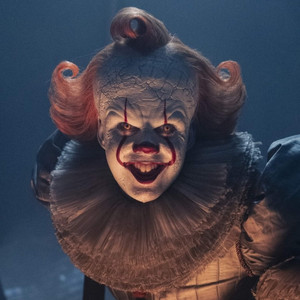
There is a lot going on here, a lot of it very bloody, and although Bill Skarsgård is back as Pennywise the Clown, it takes a while to lay eyes on him, so do be patient.
And do not, by the way, try to reconcile this 1962 tale with the timelines of the 1986 novel, because you will get very confused very quickly.
Episodes of It, Welcome to Derry are airing weekly on HBO.
Jordan, I'm going to start with you.
What did you think of It, Welcome to Derry?
I mostly liked this.
I think it is a really good delivery system for thrills and chills.
I was shocked that I was shocked.
I think a lot of it to me was very scary and a lot of it is very shocking.
And I think that's not something that horror TV usually does for me.
Like horror TV, I find it's usually spooky or atmospheric and can be a lot of fun.
When I put on a horror TV show, I don't expect to be scared and shocked.
And I was at this.
I think I said impressively gross to someone after I watched the first part of it.
Real gross.
Yes, you will say at least once per episode, wow, that's messed up.
I think that some of the stuff that didn't work for me, I think some of the shocking stuff, plays with history.
This is a period piece.
And I think that maybe they use some of that historical stuff kind of recklessly, kind of like calls back to the horrors of history.
And I think it's not saying a lot other than like, hey, that history was pretty messed up, huh?
Yeah.
And maybe they're using some of that stuff just for shock value.
And some of that can leave a little bit of an icky taste in one's mouth.
But I was pretty compelled by the story.
And I like a lot of the actors.
So yeah, I mostly enjoyed it, but was left with an ick once or twice.
Yes, with some reservations.
Okay.
Kate, what did you think?
Well, it's interesting because I definitely had a lot of crossover with you, Jordan.
I think like, For the most part, it was okay.
I think I'm not really like a horror television kind of person, but this was fine.
But it did stand out to me, the way that it does use history in a way that I just kind of like it didn't offend me, but I was like, do we have to do this?
Yeah.
I think as the show goes on, it gets a little better and it makes a little bit more sense to me.
And I think it fills out in a way that bothers me less.
But I also don't necessarily know that it's like a crucial part of the story.
Mm-hmm.
I do think, however, that I'd commit the absolute sin of being too squishy.
I hate squishy things.
There's a lot of squish in this TV show.
It's very squishy.
It just grossed me out.
And I'm perfectly fine with that.
I think that's the nature of a show like this.
I quite like the movies and I've seen them several times, and they scare me every time, despite always knowing where the scares are coming from.
But with the TV show, there weren't any particularly jump scares that stood out.
It was more gross than scary, which I suppose is a choice, but it didn't stick out for me as something that I would necessarily recommend.
Yeah, I get that.
I agree with both of you in that I do think it's impressively gross.
I didn't necessarily find it as scary because I think...
Some of what Stephen King is really good at to me is things that are thematically scary, and not just necessarily in the moment scary, because what it the novel is about is in part this discovery that when you're older, the things that you thought that you got over when you were a child, you have to sort of revisit and go up against again.
That's not really present in this telling, because they've sort of undone the structure so that really you're just looking at contemporaneously a group of kids and a group of adults, as opposed to a group of kids and later that same group of kids as adults.
And so, to me, The things that are scary about being haunted by something throughout your whole life are a little bit missing from here.
I also think it's interesting that they kind of de-emphasize in the marketing of it.
They kind of de-emphasize the kids quite a bit, which is partly because This is right in the first episode, which has already aired.
But like, not all of the kids that you meet survive the first episode.
And so I don't think they want you to attach too much to those kids.
But I did find that it was a little bit disorienting to have that kind of shift in who we're supposed to be paying attention to right at the end of the first episode.
There's something about this that makes me think it's better as a set of really gross set pieces that than it is as a version of it.
Because I think so much is lost from what I think of as the point of it that I'm not sure what this is really supposed to be about.
And as you both mentioned...
It starts to kind of dig around in the history of Derry and in particular its history with race and with the local Native population.
And I think those are certainly things that I'm always glad to see anybody try to include if you're talking about the history of a town in the 60s and even now.
I'm not really sure they got there in terms of doing really great and interesting work around that history.
And it seems like they're consciously trying not to make it Stranger Things.
You know which is so easy to do?
You know, Stranger Things is so inspired by it.
You know, it would make sense just to go back and do a Stranger Things, but with it.
And one of the ways they're trying not to do that is being really messed up and killing a lot of kids.
Yeah.
Yeah.
It seems like maybe the reason for doing that is less story and more.
We're going to shock people every week and, you know, have people posting about how messed up this is.
I think that's a perfectly fine goal for your horror thing.
But, you know, kind of blunting the story a little bit.
I'm glad that you mentioned Stranger Things, because I also had that thought that it's very much another entry into the you know boys with bikes canon.
Right.
And I think that, given the time frame and given the situation that they're dealing with, it makes sense to me that, kids being kids, they would want to investigate the circumstances that they're dealing with, especially understanding that they have very little credibility with adults.
But I personally have a thing about bad things happening to children.
Yeah, yeah.
I think a lot of people do.
There's a lot of stuff that is very much within the realm of like a regular horror film or story.
But it takes on a different valence for me when it's children, especially when it's multiple children, especially when it's children who are very obviously abused in their lives.
And that I didn't love so much.
But I can't really argue against it because again it's a horror TV show.
Well, I think the other thing about it is, you know it.
The novel starts with the death of this little child, Bill's little brother of Georgie.
And that's really the trauma that sets up in many ways his entire being throughout the novel.
So it's always been a story that had loss.
Right.
And trauma involving kids.
But I think where they went in this one and they've talked about this a little bit.
The creators have talked about this a little bit in the press around.
It is like well, we really wanted to go ahead and just show you that like anyone can die.
It's the thing that has become, very honestly, kind of standard in a certain portion of serialized television is to do that like you'll never guess, but anyone can die.
I don't necessarily think you have to do that with a bunch of kids, i don't necessarily think it's necessary to do that.
But my bigger issue is And I'm thinking about this partly because this is also something they've spoken about in the press is that one of the things that they kind of set this up to do is to be like we're going to explain this monster and we're going to explain like how it got to.
Why does it appear as a clown and who is Pennywise and what's the history of Pennywise?
I found this novel, when I read it as a teenager, to be the scariest, most fascinating thing I had ever read.
I absolutely adored it.
I adore it to this day, despite its problems.
Wait a minute, an 80s Stephen King book?
No.
Despite its issues, some of which have been sort of relegated to the dustbin of history in every adaptation of it that's ever been done, quite reasonably.
But despite all of that, never once did I think I really want to know why it's a clown.
Like it just is.
That's how horror is.
That's how Stephen King books are in a lot of ways is that when he gets himself into trouble, I think sometimes in some stories is when he does try to over explain things and give things too literal of a manifestation of whatever the evil is.
Whereas to me, absolutely.
You tell me like there's a clown in the sewer and Every time I walk my dog past a gutter grate I always say to him no Pennywise, every single time we walk past a sewer grate.
And so it's too explained, I think.
Yeah.
As the series goes, it gets a little, let's say, Marvel-y in that we have...
Stuff to collect, magic elements.
Artifacts.
Artifacts, yes.
You have to go on a quest to get a certain amount of MacGuffins.
Yes.
So yeah, and I think that stuff can be very fun and very comic book-y, but it feels like it's not this story.
In general, horror gets less scary the more you explain it.
Yeah, 100%.
I will say though, I am personally kind of glad that it takes us a couple episodes to get to the clown of it all.
Yes.
I have a little bit of murder clown fatigue, I will admit.
I even skipped the Gathering of the Juggalos this year, which I never do.
Because, you know, we got the Terrifier movies.
We got the clown in the cornfield.
I understand why murder clown persists as a trope.
It's fun.
I am glad that the monster manifested as other things rather than a clown.
The things it manifests as are very gross and disturbing.
Too squishy.
Too squishy.
There is a fixation on really disgusting childbirth situations in this show that I was like okay, you are really making it seem like you have a massive issue about this, specifically because they have one and you go.
That was gross.
And then there's another one and you're like, that's even more gross.
It's a real detail the second time around.
It's real detailed and there's teeth and things are going on and it's really...
Oh, boy.
Call your mom, everybody.
Call your mom.
It's almost like you're talking about the It movies.
Yeah.
And their character trait is girl.
Exactly.
And I did appreciate that there's two girls who are very different from each other.
And there's two black families who are also very different from each other.
And in fact, I mentioned Dick Halloran, who works at the military base.
So you have, like multiple characters through whom to try to do some of this history and kind of history of race and racism in Derry.
I was grateful for that, I guess, in terms of, you know, who we wind up following in the cast.
I love Taylor Page.
I was glad about that.
And if they're going to try to do that history, I am glad that they widened out that much and included, as we alluded to, you know, also some members of the local Indigenous population.
And I'm glad they did all of that.
I'm not sure it ultimately works, but I'm glad, I am glad to see more than one girl in a storyline.
Yeah, I think and it's a weird thing to say about you know, a TV show that involves killer wombs, but it's hearts in the right place.
I really...
It's taking some swings.
And in general, I like the kid actors in this.
I think they're pretty good, and I think they're written well.
I do too.
They're not given a bunch of comedy quips written by 50-year-old comedy writers, you know?
They do sound like kids and kind of act like kids.
I think, in particular, Lily, who is sort of the main girl...
The things that she's scared of would be very scary to a girl that age and very overwhelming.
And I did really feel for her in the times when she was scared and when she felt you know that she couldn't talk about the fact that she was scared.
I did really like Lily too.
And I'm glad you brought her up because I think, I mean, obviously we're supposed to identify with her.
She's one of the main characters.
But I thought that one of the things that the show does really well is look at the stigma of mental health.
I think that at a certain point I thought to myself So this entire town knows about this terrible thing that happened to her, but they don't understand why that might be an issue and why it might upset her and why that might mean she needs some help.
Okay, got it.
Following.
It makes me sad for her that she is aware of those dynamics to a degree that she's very much pulling her punches a lot of the time, because she knows that if she says certain things or if she makes certain claims,
That might mean essentially like incarceration in a psychiatric facility.
You think I had something to do with this?
No, no, no, no.
God, no.
But people hear stories. found covered in her friend's blood.
And, well, you can see how this doesn't look good.
I said, like, several times while watching this, were people this mean to kids back then?
I mean, I think they probably were, you know.
Oh, my God.
The, like, number of adults that are nice to kids in this is very small.
Yeah, which I definitely think has always been both a theme of it and a theme of Stephen King in general.
There's always been a lot of that in his writing about kids.
Yeah.
I do want to like drill down on the race stuff a little bit because I think, other than the killer clown, that's probably like the biggest storyline.
The thing that the show is, I think, most concerned about.
Right.
It's interesting because of the context in which it plays with that theme, like.
One of our main characters is a Black officer in the Air Force, and he has been transferred to Derry for this big project that they're doing.
And one of the things that happens to him fairly early on is that he gets you know hate-crimed in the barracks only for
What we learn about that later to be something that's so like casually cruel.
That that was part of what kind of made me kind of step back from the show a little bit.
I think that it actually is a lot to mine there.
And I think that that it does do some good work in some aspects of the show, especially around some of the military stuff.
A lot of the stuff around the indigenous community felt like very noble savage to me.
And I didn't, you know, I couldn't articulate 100% like why it felt that way.
But I just like like I would be very interested to hear more about what does and doesn't work about those portrayals, because it just I like those characters a lot but something about it just felt like really squeaky to me.
Yeah, I like those characters too.
And I think I would exactly agree with Jordan that when it comes to those things, I can understand how they thought that they were doing a good thing right by addressing themselves to communities that would really be present.
If you're going to talk about Maine in the 1960s, you know it would be very dishonest not to confront this, especially since some of the kind of legacy characters in it are Black right.
So if you include sort of their history and what's going on, you know, prior to the timeline of the movies, that kind of is setting up those families.
If you didn't address yourself to those things it would not feel genuine.
But at the same time, when you talk about noble, savage stuff with the, What bothers me more about it and I think we can say this.
I think this is not spoilery, but like it does sometimes feel like the indigenous community is there to have lore right.
Rather than to live in the community and, you know, just be like people who are in the community.
It's like the local tribe exists to kind of have mystical stuff going on.
That's not a full portrayal of people, right?
It's just, as Jordan said, it kind of ties back into some of this marvelizing lore stuff.
And I think that's where that part of it, I was glad to see it.
I was glad to see some of the actors, but I'm not sure it served them as well as I would have liked to see them served, I think.
Because I actually think if we were talking about it and a story about it that concerned only the Indigenous community, that I would actually be really interested to see.
You know, he kind of hibernates for like, what, 27 years before he turns up again.
So they're very much accustomed to dealing with this.
And I am much more interested in Seeing what it is.
A community like that that understands what's happening and knows how to protect against it, while also understanding that its power never wanes, is more interesting to me than you know.
A military installation that thinks oh, there's an ancient evil, let's weaponize it.
Yeah, I got a little bit tuned out of the military stuff at some point, which is a pretty big part of the show.
And I got to the point where I was like, yeah, okay, military stuff, I get it.
They want to turn the thing into a weapon.
Yeah, that's a tale as old as time.
Naturally.
You know, it's a little bit Oppenheimer and all that stuff.
And I just got to the point where I was like, all right.
There are elements of this show that I really liked.
It's just the whole thing did not really hang together for me, I think.
Well, we want to know what you think about it.
Welcome to Dairy.
Find us at Facebook.com slash PCHH.
That brings us to the end of our show.
Jordan Morris, Kate Young.
Thank you so much for being here to talk about this very, very squishy program.
Thanks for having me, Dan.
Thanks for having us.
This was so much fun.
And just a reminder that signing up for Pop Culture Happy Hour Plus is a great way to support our show and support public radio.
And you get to listen to all of our episodes sponsor-free.
So please go find out more about that at plusnprorg or you can visit the link that is down in our show notes.
This episode is produced by Liz Metzger and Mike Katziff and edited by our showrunner, Jessica Reedy.
And Hello, Come In provides our theme music.
Thank you for listening to Pop Culture Happy Hour from NPR.
I'm Linda Holmes, and we'll see you all next time.
Families around the world aren't having as many kids as they used to.
Researchers say the average woman is having half as many children now than they did in the 1970s.
I love having only one child.
On the Sunday Story from Up First, why are so many families making this choice?
And what exactly does it mean for our future?
Listen now to the Sunday Story on the Up First podcast from NPR.
On the ThruLine podcast from NPR, the story of the undersea cables that run the internet.
Other historians have compared it to the Apollo missions of going to the moon.
Listen to ThruLine in the NPR app or wherever you get your podcasts.
Watch or listen on the NPR app, YouTube, or wherever you get your podcasts.