This is the Global News Podcast from the BBC World Service.
I'm Charlotte Gallagher and in the early hours of Thursday, the 19th of February, these are our main stories.
The UN meets to discuss the future of Gaza, but concerns are raised about Israel's actions in the West Bank.
Who is the American billionaire thought to have played a key role in making Jeffrey Epstein wealthy?
As Mark Zuckerberg takes to the stand in a landmark trial.
The parents who say social media was responsible for the deaths of their children speak out also in this podcast.
We're trying to be as careful as possible to not shine the light in their face and when the server comes to their table and asks them how their meal was, they go actually it went really bad, because this is ridiculous.
Hospitality bosses weighed in as food influencers clash with couples on date night.
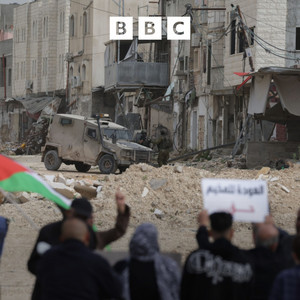
It's more than two years since the recent conflict in Gaza began and, despite the implementation of a ceasefire late last year, Israeli airstrikes are continuing and Palestinians are being killed.
The future of the Gaza Strip still hangs in limbo, and now a senior United Nations official has warned that Israel's plan to tighten its control on parts of the occupied West Bank is a serious concern.
Rosemary DiCarlo was speaking at a UN Security Council session in New York.
We are witnessing the gradual de facto annexation of the West Bank as unilateral Israeli steps steadily transform the landscape.
The meeting was called to discuss how to bring the war in Gaza to an end.
But the Israeli foreign minister, Gideon Saar, accused the UN of being infected with what he called an anti-Israeli obsession.
Amazingly, So many countries say that Jewish presence in our ancient homeland violates international law.
The opposite is true.
No other nation in any other place in the world has a stronger right than our historical and documented right to the land of the Bible.
The UN talks came a day before the inaugural meeting of Donald Trump's Board of Peace, which has its own ideas on Gaza's future.
Neda Tawfiq has been following the session in New York.
The meeting was actually chaired by the UK Foreign Secretary, Yvette Cooper, who has a very different assessment compared to the US.
She believes that the two-state solution is in profound peril, whereas the US has really been touting what they believe has been real progress since Donald Trump's 20-point peace plan was endorsed by the Security Council.
And so you have this real tension between what we're hearing at the UN and what we're hearing from the United States.
And what we heard in the council today was real concern by a majority of member states that not only was the fact that not enough aid is getting in to Gaza, but also that the situation in the West Bank is now a serious threat to an eventual two-state solution, citing the fact that we have seen record settlement expansion and this decision by the Israeli cabinet to approve these far-reaching changes that expand their authority in the occupied West Bank, which today the UN political chief, Rosemary DiCarlo, said amounted to de facto annexation.
And the UN.
Obviously it makes a lot of pronouncements and it's talked a lot about Gaza and Israel and the West Bank.
Is there a feeling that it's slightly powerless in this situation, considering you have Trump pushing his board of peace?
There is absolutely a recognition that the UN Security Council has always been and remains paralyzed because the United States, Israel's key ally, has a veto power.
And there has been a lot of criticism that this has amounted to impunity for Israel because the United States is not taking a tougher stance.
And you heard Yvette Cooper talking about needing more international solidarity to make some headway on a two-state solution, saying that the UK in March would hold a peace-building conference.
Now, that's at the same time that again tomorrow, the United States, with this board of peace, says that they have 27 nations on board, that they have 5 billion for rebuilding, pushing a way forward that would include disarming Hamas, trying to get more reconstruction in Gaza.
But at the same time, the US ambassador to the UN, Mike Waltz, not even mentioning the West Bank.
So there are certainly areas where there is deep separation between the United States and some of its allies, in fact on Israel and Palestine.
And so many diplomats are waiting to see what the word of peace comes up with.
But at the same time, there is a real fear that that the two-state solution is getting further away from being reality.
That was Neda Tawfiq.
An American billionaire thought to have played a key role in helping Jeffrey Epstein acquire his wealth, has described himself as naive, foolish and gullible for trusting the sex offender.
The retail tycoon Les Wexner, who's 88 accuses Epstein of stealing vast sums of money from his family.
Mr Wexner issued a lengthy statement, as he appeared in private before a US congressional committee.
But some Democratic Party members of the panel are challenging his version of events, as our correspondent Helena Humphrey reports from Washington.
Les Wexner was one of Jeffrey Epstein's main sources of wealth.
The retail magnate behind brands including Victoria's Secret, first met Epstein in the 1980s, later hiring him as his financial advisor and giving him control over vast sums of money.
Mr Wexner gave his evidence behind closed doors, but released a statement saying he'd only visited Epstein's island for a few hours with his family and had no knowledge of the convicted sex offender's abuse.
He described Epstein as a master manipulator and accused him of stealing funds, prompting him to cut off contact.
But Democratic Party members of Congress were critical.
One of them, Stephen Lynch, accused Mr Wexner of knowing about the crimes but failing to stop them.
Another, Robert Garcia, alleged that Epstein would not have been able to carry out his crimes without the financial backing of Mr Wexner.
There would be no Epstein Island, there would be no Epstein plane, there would be no money to traffic women and girls.
Mr Epstein would not be the wealthy man he was without the support of Les Wexner.
An FBI document released in the Epstein files described Les Wexner as the sex offender's co-conspirator, but he's never been charged with a crime.
Being named in the files is not in itself indicative of wrongdoing, and he has denied any knowledge of Epstein's abuse.
Helena Humphrey.
And as we record this podcast, we're learning that Bill Gates, the Microsoft founder, has pulled out of a keynote address to a major AI summit in India after growing scrutiny over his ties to Jeffrey Epstein.
A statement said the decision was taken after careful consideration to ensure the focus remained on the meeting's key priorities.
Records released by the US Justice Department include emails written by Epstein that say Bill Gates caught a sexually transmitted infection, which his spokesman has called absolutely absurd.
The appearance of his name in the files does not imply criminal activity of any kind, and we'll have an update on this in a later edition.
Mark Zuckerberg, the boss of Meta, has struggled in court to defend his company from claims Instagram targeted young users, as he was confronted with multiple internal documents.
He maintained lawyers were mischaracterizing the communications which were presented as part of a landmark trial in Los Angeles over whether social media is designed to be addictive and puts young people at risk.
It was Zuckerberg's first appearance before a jury after years of rising backlash against Meta, which also owns WhatsApp and Facebook.
Our correspondent in Los Angeles, Peter Bowes, reports.
Arriving for his day in court, Mark Zuckerberg for the first time facing a jury over claims that social media is deliberately designed to be addictive.
The case, one of more than a thousand waiting to be heard was brought by a 20-year-old woman, identified only as KGM or Kayleigh, in court along with her mother, because they claim her obsessive use of platforms like Instagram and YouTube from the age of six exposed her to harmful content.
From the witness stand, with Kayleigh sitting opposite.
Mark Zuckerberg launched his defence of Instagram.
He was shown internal meta emails from a decade ago that referred to specific company goals, including time spent increases by 12.
He said the company used to give timers goals, but that's not, he said, how we run the company now.
He added, when there's something of value, people tend to use it more.
Laurie Schott's 18-year-old daughter, Anna Lee, took her own life after her mother says she became addicted to social media, Instagram in particular, using beauty filters and becoming obsessed with the way she looked.
I've lost my daughter.
These parents here, all have lost their children.
Nothing's going to bring them back.
They should be graduating and getting married.
But no, their parents are here fighting for them.
And I just want justice, accountability and change.
The trial is being watched closely as a test case, with many more people preparing to take similar action to, as they see it, hold the social media companies accountable and change the way they operate.
That was Peter Bowes. still to come in this podcast.
I'm okay, probably just a little bit embarrassed.
I shouldn't have had a drink, and especially in these conditions.
It's not the standard that I set for myself.
The Australian TV reporter who got caught up in the Winter Olympics festivities but has the backing of the Prime Minister.
Now to the story of a tragic death on Austria's tallest mountain.
That could change how the law there judges the obligations people owe each other.
That's after a man left his girlfriend behind during bad weather and she died of hypothermia.
Evan Davis spoke to Severin Glazer, a professor of criminal law at the University of Innsbruck in Austria, about what happened and who could be formally held to blame.
They made a couple of mistakes in the preparation.
The woman was wearing the wrong shoes.
They were not well equipped.
They started their tour too late.
They did not turn around when they had the chance.
They did not give any signals. that they would need help when a helicopter approached them.
And finally, when his girlfriend was completely exhausted, the defendant left her alone on the mountain.
He tried to seek for help alone.
Finally, when the police, the Alpine police, found his girlfriend, she was dead from freezing.
I suppose the legal question is whether she has to be responsible for herself or whether he is responsible for her.
This is the main question.
Is she responsible for her own death or is he responsible for her fate as well?
They had no contract.
Like you could pay somebody to be your leader in a tour and he would be obliged by civil law to look after you and prevent you from harm.
They did this as a couple, as friends would do something together.
It's the open question.
Now whether two adults have to intervene in order to prevent the partner in a dangerous or risky event or expedition from any harm, not just dealing in mountaineering together, but in any other dangerous situation, diving or whatever.
All sorts of situations where people might get into trouble.
So obviously he was more experienced.
So that counts for something.
If he was less experienced, there would be no charge.
Probably not.
But I could not exclude that there would be charges going in the same direction as well.
But since he was apparently more experienced than she, the public prosecution seems to derive some sort of authority claim from better experience that he had.
What is the charge?
It's not murder.
What is the charge?
He's not charged with murdering his girlfriend.
The charge is killing in severe negligence.
So he's charged in having made so severe mistakes that he's charged with this special provision.
Just out of interest...
This would matter to me if I was sitting on the jury in a case like this.
What is the ability to communicate from the mountain?
I mean with a phone.
How far down the mountain do you have to be before you could get a signal to call for help?
I'm not a technical expert, but the Österreichische Alpenverein, the Austrian Alpine Association, told that mobile phones work on the top of the mountains in Austria, wherever you are.
According to the information I read, he could have reached the police or somebody who could have helped any time.
And as a matter of fact, the police tried to call him several times and he turned down the calls.
He didn't answer?
He didn't answer and he put his phone even into the backpack.
Evan Davis speaking to the law professor Severin Glazer.
The long-serving former Fijian Prime Minister, Frank Bainimarama, and a former police commissioner have been arrested and charged with inciting mutiny on the South Pacific island.
They're accused of mobilising the Fijian military after the general election in 2022.
Our Pacific Islands correspondent, Katie Watson, first told me more about the former Prime Minister.
Frank Bainimarama, who was in the Navy, who was a UN peacekeeper, And he led Fiji for 16 years.
He took power in a coup in 2006.
And he became a really prominent politician in the Pacific.
So he advocated strongly around climate change.
But he was also accused of restricting freedom of speech and intimidating his critics and causing quite difficult relationships between the likes of Australia and New Zealand.
Now, when he took power in 2006, in this coup he said that the army was the only institution disciplined enough to usher in real reform.
He described it as a long overdue cleanup.
So he remained in power until 2022.
And that's where this, well, now this arrest and charges stems from.
So what has he been charged with?
And it's also not just him, is it?
It's also the former police commissioner.
Yeah, that's right.
So it's his good friend, a long term ally, the former police chief, Sijuveni Kihilo.
They basically were questioned over their attempts to overthrow the government.
So that government that was elected in 2022 and that ended his time as prime minister.
So at the time of the elections Sitchiveni Kehilo, the former police chief he'd issued a statement saying that the police needed the support of the military to maintain law and order amid concerns over rising racial tensions.
And the prosecutors alleged that the two men encouraged senior officers to overthrow the current military commander after those elections.
So they are expected to face court later today.
Will this possibly affect political stability on the island?
Well, I think there's certainly a lot of frustration.
There's a lot of divisions.
About one in three people live in poverty.
Many of those are indigenous.
Fiji is a very young population.
So I think there's a feeling of the old guard is still in charge.
And perhaps, you know, there's a lot of distrust around politics.
The country's had four coups since the 1980s.
And each of those coups have been linked in some way to ethnic tensions between countries, indigenous Fijians and Fijians of South Asian descent.
So the fourth coup was when Frank Bainimarama took power.
That was also linked to ethnic tensions.
There are general elections that are expected to take place between August of this year and February of next year.
But certainly there's a kind of a deep distrust, a difficult political climate in Fiji right now.
Katie Watson.
It used to be that a review from a major publication could make or break a restaurant.
Now that power increasingly lies with influencers, who can turn a family-run cafe into a viral hit or flood a major restaurant chain with bad reviews.
Now owners and customers around the world are starting to take action to crack down on what they call entitled behaviour.
Stephanie Prentice reports.
Would your favorite dish in a restaurant be less tasty with a side of LED lighting, as nearby influencers filmed food content?
Or would you be pleased a place you love is being promoted in a world where running a business isn't easy?
That battle seems to be hotting up in major cities.
In New York, some influencers have reported fellow customers getting tough with them.
We were seated next to this couple.
We're trying to be as careful as possible to not shine the light in their face.
And when the server comes to their table and asks them how their meal was, they go.
Actually it went really bad, because this is ridiculous.
Others have had their bright ring lights turned off by staff.
Now in London, home to dozens of Michelin-starred restaurants, one leading restauranteur is biting back.
Jeremy King, the man behind the Ivy chain, says his new project.
The Park is being plagued by tripod-toting influencers, blocking bathrooms to do photo shoots and complaining about cold food after leaving it untouched.
Gerry Dalgosio runs the London-based Bite Twice Food Reviews and told us what he thinks of Jeremy's comments.
We do not use ring lights.
A lot of people do.
Now, I really think in a low lit restaurant, that's really going to damage the ambience.
So I don't think that that's fair.
I don't think that trying to control a space.
Now, what Jeremy alluded to in his quotes were that fashion bloggers are coming in, getting changed in the toilets, coming back out.
They're like controlling areas.
They're not there for the food, because these restaurants are so beautiful and picturesque that basically, people come there change their outfits.
Now, that's a circus.
You're turning a restaurant into a circus.
While some restaurants often invite the influencers, hoping for a boost in business through positive posts, others are asking at what cost?
Nisha Katona is founder of Mowgli Street Food, which has 26 restaurants across the UK and is known for its influencer-friendly fairy lights and rope swings.
When you go into a new city.
For restaurateurs now, it is the only way for people to know that you're going into a city.
So it's very.
It's a kind of wise marketing strategy.
But yes, you do pay.
Very often you are paying for the meals.
People come in with changes of outfits and if they go and do that in the toilets then actually it'd be churlish to kind of you know to object to it in a way because they are out there telling people how beautiful your restaurants are but it can get to the point where yes when they bring lights in and there are tripods and they're not eating So what's the solution?
At the park.
Jeremy King said he won't rule out a mobile phone ban if disorder continues, while London's Harrods department store has already banned influencers eating and filming anything bought inside their famous food hall.
That matches a policy by the Korean-style cafe Day in the US, which banned all filming after being overrun by what it called hordes of people armed with tripods.
Just walked to the place that does the olive oil ice cream.
And Folderall in Paris boomed with TikTok tourism so quickly that neighbours repeatedly called the police, and the overstretched team there labelled themselves an unwilling sensation, saying they wanted to keep their core customers and hiring a bouncer to fend off anyone approaching with a lighting rig.
Leading some to ask, could becoming an anti-influencer business be the future of true hospitality?
Stephanie Prentice.
And sticking with dining, because in France, restaurants selling traditional French food like steak and chips, coq au vin or mussels in white wine sauce are closing at a rate of 25 a day.
One problem is is that they've become too expensive.
Many people say they're going out less because they can't afford it, and large numbers of bistros and brasseries are now worryingly empty.
This report from John Lawrenson in the western French town of Angers.
It's half past twelve and the Angevin, a restaurant in an industrial park on the edge of Angers, is still pretty empty.
The owner, Michael Mourot, is disappointed about lunch times like these and anxious about the future.
We should be three quarters full at this time, but we're more than three quarters empty.
The last year's been really bad, because of the rising cost of our raw materials, first of all.
A basic like minced beef, for example, was about $10 a kilo a year ago.
Now it's about $15.
Michael says he's kept prices low 19 for his three-course lunch menu but he's still lost 10 of his clientele over the past year.
Statistics for France show average net profits in the restaurant sector that were 11 pre-Covid have now fallen to under 3.
For Michael, things are a bit worse than that.
Nowadays, I feel like I'm working for nothing.
Once I've managed to pay my staff, pay my suppliers and pay all the obligatory charges, taxes and contributions, it's almost a relief if I manage to break even at the end of the year.
When you say break even, do you manage to pay yourself a salary?
Not every month, no.
It's like everything's falling apart.
It is possible that I lose everything.
After 20 years of work, 20 years with nothing to show for it, obviously it's not a happy prospect.
In the pretty square in the centre of town, surrounded by buildings of white stone, none of the people I stop and talk to have done this lunchtime what was until recently the French thing to do.
I never go to proper restaurants.
It's a question of time but also money.
For special occasions, like celebrating getting my internship, I go to restaurants, but otherwise no.
Usually I eat at home because it's cheaper and healthier.
Céline Vial, département or county-level president of the Hotel and Restaurant Owners Union, says traditional restaurants are disappearing fast.
Between June 2024 and June 2025, the number of restaurants that closed in France increased by 10%.
About 9,800 closed for good in that period.
Here in Angers, there have been plenty of closures in the past few years.
A traditional restaurant will go bankrupt and immediately be replaced by a kebab place or a burger chain or some other fast food restaurant.
But it's not just the prices.
Younger French people are much less keen on sitting down for a traditional French meal than their parents or grandparents.
Céline Vial says that if things keep going the way they have, there will soon be two tiers of dining, with a few eating in expensive gastronomic restaurants only, while the rest will eat fast food or at home.
Finally, an Australian TV reporter has apologised after she appeared drunk in a live broadcast from the Winter Olympics.
Danica Mason was heard rambling about the price of coffee and responding to claims of being a frozen iguana.
Her repeated live hits into the Channel 9 breakfast show sparked an uproar on social media, but she's found plenty of fans too.
As Olivia Noon reports.
Standing beside mounds of snow.
Danica Mason was ready to deliver her sports summary, but instead gave viewers this update.
Literally, the price of coffee over here is actually fine.
It's more the price of coffee in the US that we are going to have to get used to.
I'm not sure about the iguanas.
Where are we going with that one?
But anyway, let's get into the day spot because there is plenty happening back home.
It left her studio co-host scrambling with one trying to suggest her slurred speech was a result of the cold weather.
She's now apologised, saying she misjudged the situation.
I shouldn't have had a drink, and especially in these conditions.
It's cold, we've got altitude and not having had dinner probably didn't help as well.
But I want to take full responsibility.
It's not the standard that I set for myself.
She said it had left her embarrassed.
However, there's been an outpouring of support on social media, with even the Prime Minister, Anthony Albanese, saying there was nothing to see and that he was pro-Danica.
That was Olivia Noon.
And that's all from us for now.
If you want to get in touch, you can email us at globalpodcast at bbc.co.uk.
You can also find us on X at BBC World Service.
Use the hashtag Global News Pod.
And don't forget our sister podcast, The Global Story.
This edition of The Global News Podcast was mixed by Mark Pickett and the producer was Paddy Maguire.
The editor is Karen Martin.
I'm Charlotte Gallagher.
Until next time, goodbye.