My name's Rosemary Klein and after listening to the show for a little while, I was up one night and I was thinking I think I have an idea.
Rosemary's big idea?
Citric acid.
Because I feel like most people don't consider all the citric acid that's in everything.
It seems quite the ubiquitous ingredient.
And I was just really curious about how... how it came to be in everything.
Rosemary, your curiosity is our mission.
You're listening to Gastropod, the podcast that looks at food through the lens of science and history.
I'm Nicola Twilley.
And I'm Cynthia Graber.
And this week, we are taking your questions for our latest installment of Ask Gastropod.
Citric acid is something I honestly had never thought of before.
But before we start investigating, here's another burning question.
Hi, Gastropod team.
This is Hannah from Ghana country, South Australia.
I've heard every kefir grain can be traced back to its origin in the Caucasus Mountains a really long time ago.
I've also heard that kefir grains themselves can't be reproduced in a lab, so what we buy in the shops might not be real.
Is that true?
All great questions, and we are going to get to the bottom of them this episode.
But that's not all.
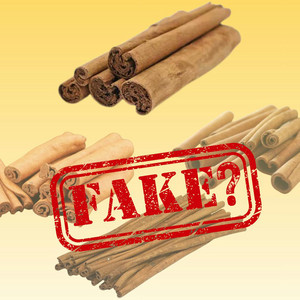
It's the season where people are doing a lot of baking, and one of our listeners was confused by the cinnamon options in the store.
Why is only one of them called true cinnamon?
Are the other ones fake?
What's going on?
What's the difference?
I guess we're going down the cinnamon rabbit hole, too.
Our pies and cookies and buns need and deserve the truth.
This episode was supported in part by the Alfred P Sloan Foundation for the Public Understanding of Science, Technology and Economics and by the Burroughs Welcome Fund for our coverage of biomedical research.
Gastropod is part of the Vox Media Podcast Network in partnership with Eater.
Hey, guess what?
This is also our last episode of the year.
But don't panic.
We'll be back in 2026 with lots of fresh new episodes.
And you know what helps ensure that we can come back and make all those shiny new episodes for you?
That's right.
It's your support.
We are an independent podcast still.
We have a tiny team, just me, Cynthia, and our superstar producer, Claudia.
We do everything ourselves, and we are so grateful to those of you who can help us keep doing it.
We know not everyone can support the show financially and that's why we're happy we can send it out to the world for free, for all of you to enjoy.
But if you can support the show at whatever level possible, it makes a huge difference.
You'll hear every episode.
We do get support from advertisers and we also have a couple of grants from foundations.
But those are not enough to keep the show running.
Listener support is what makes Gastropod possible.
Plus we have all sorts of fun perks, from stickers to invitations to the yearly gastro hang to special extras every episode.
Go to gastropod.com slash support to find out more.
And thanks to you all.
Support for this episode comes in part from Vitamix.
Quick kitchen history lesson.
Electric blenders, first introduced in 1922, were invented to make milkshakes.
What followed was iconic Americana the era of teenagers in checkered floor, soda fountains and drugstores jiving to jukeboxes, slurping shared milkshakes through two straws.
In the late 1930s, Vitamix began promoting their new blenders for use beyond making milkshakes.
Soon, electric blenders found their way into kitchens across the country, where they've been essential cooking tools ever since.
Vitamix reimagined the blender as a powerful, versatile tool, ideal for making soups, nut butters, marinades and, of course, delicious nostalgic milkshakes.
Vitamix's trusted versatility blends together culture, science and history right on your countertop.
Only the essential at Vitamix.com.
For a brief moment after COVID, it seemed like work from home was here to stay.
But now it's revenge of the bosses, with companies like Amazon, JP Morgan and others returning to the old five days a week.
What's the best policy and approach?
Stanford economics professor, Nicholas Bloom, has been studying remote work since long before the pandemic.
He believes the best solution is hybrid.
He tells us why this week on Solutions with Henry Blodgett, wherever you get your podcasts.
Citric acid is the food industry's Swiss army knife.
It does so many things.
This is Kantha Schelke.
She's a food scientist with her own company, Corvus Blue, and she also teaches at Johns Hopkins.
Just based on its name, you might be able to make a pretty good guess about what exactly citric acid is.
Citric acid is something that gives that tartness to lemon juice.
If you evaporate lemon juice, you can isolate that tartness.
And that's citric acid.
So what does it look like?
White crystals, just like table salt.
Completely odorless.
And the taste?
Oh, intensely sour and tart.
It's that mouth-puckering zing you get when you bite into a lime or a lemon.
And limes and lemons are exactly where you can find a lot of it.
In nature, citric is, you know, just like the name suggests, citrus fruits.
So oranges and lemons and grapefruit.
That's where you get citric acid in the most concentrated form.
But it's also found in other fruits and vegetables.
Even carrots have citric acid.
Small amounts.
But as our listener Rosemary has noticed, these days, citric acid is found in absolutely everything.
Most canned tomatoes, citric acid.
I've found one brand that doesn't.
Salad dressings are notorious, and obviously sodas, canned soup, jelly flavored chips and crackers.
I have to watch hummus, canned mushrooms and then any kind of sauce like a dipping sauce.
I have to be real careful, because it's usually in that too.
Rosemary says she has to be careful and that's because she discovered a few decades ago that citric acid whether it's in a lime or in tomato sauce, it makes her feel pretty crappy.
Fairly recently, within the last couple of years, we picked up some Italian sausage from Costco and I love Italian sausage.
And that night, horrible headache.
Went back and looked.
Sure enough, citric acid.
So we asked Kampa why citric acid pops up in so many different kinds of foods.
So it's one ingredient, countless jobs.
The first job is kind of an obvious one, and that's what it does for a food's flavor.
It adds tartness to sodas and candies, but it also balances sweetness so that sweetness is not cloying.
But citric acid has many more tricks up its sleeve than just tasting sour.
One of its main jobs these days is to act as a preservative.
Citric acid prevents the bacteria or any other kind of mold from even growing, because it lowers the pH, so nothing else grows.
It is an inhospitable environment and that's why you find it in jams and jellies and canned goods, even in meat and ham.
Citric acid also acts as an antioxidant.
That's something that protects cells from breaking down.
When food is cut and that surface is exposed to air, the cells get damaged and citric acid protects against that.
So when you're buying frozen food, especially frozen fruits and stuff, they add citric acid so that in the freezing process they don't darken.
That antioxidant keeps it from turning brown.
So things look fresher and more appetizing.
It's used on refrigerated cut fruit and veggies too, like pre-packed apple slices or vegetable trays.
It's also sometimes used in ice cream.
And in this case, it does something called emulsification.
So what it does is it keeps fat from separating out from the liquid watery parts.
That's some of what it's doing in salad dressings and sauces too.
You'll also find citric acid in fresh mozzarella and even wine.
They use it in cheese making to curdle the milk and also in wine making to adjust the acidity.
And finally, you'll also find citric acid in vitamins and drugs, because it helps your body absorb them.
An acidic environment helps your body... take up nutrients more efficiently.
And that's what makes the medication or the supplement or the preparation more palatable, but it's also more effective.
And it's not just like citric acid is only doing one of these jobs at a time.
It's working as a preservative while it's emulsifying or preventing browning.
So it's not surprising the food industry loves it.
It has other advantages too.
In the food industry, you also want something that is recognized as safe.
So it's labeled as grass, generally recognized as safe.
And food authorities worldwide have no daily intake limits for this because it is safe.
The other reason is it's incredibly inexpensive to produce.
It's economical at massive scale.
So is it possible?
There are huge, huge tracts of lemon and lime orchards out there that are solely dedicated to producing all the world's citric acid.
Used to be.
Back in the late 1800s, when the industrial scale citric acid business first got going.
That is how it was made.
In those days, they manufactured citric acid from unripe fruit.
Mostly imported lemons and limes and oranges, et cetera, from Italy.
Judah Ginsberg is retired now, but he used to work for the American Chemical Society and he wrote about citric acid because he was writing about landmarks in chemistry.
The landmark in this case was the headquarters of a biotech company that you'll have heard of, largely because of their vaccines Pfizer.
Pfizer started out in Brooklyn.
It was founded by two cousins who had immigrated from Germany.
Their first big hit was a toffee-flavored antiparasitic drug, which, yum.
Over time they started to produce other things quinine borax, boric acid, other chemical kinds of products that were common in the 19th century and often still used.
Later on, they became interested in citric acid.
Their big success came when they got the emerging in the late 19th century soft drink companies Coca-Cola Pepsi-Cola, Dr Pepper to use their citric acid products.
Things were going pretty well for Pfizer's new citric acid business, but then geopolitics became a bit of an issue.
During World War I the supply of fruit became more difficult to obtain because of the German submarine blockade and German submarine activity in the Atlantic.
Oh no, just as Americans were getting hooked on packaged foods and sodas that rely on citric acid.
Fortunately, microbes came to the rescue.
Yes, you can drink.
A German scientist named Karl Wehmer had already figured out that one particular microbe could make citric acid.
No lemons required.
He discovered that using the penicillin mold combined with sugar could produce citric acid.
But he could not figure out how to do that in any way that would be commercially successful.
Right idea, wrong microbe.
Turned out that the right fungus for the citric acid job was actually our good friend black mold.
James Curry was a food chemist and he discovered that citric acid could be fermented from strains of a mold called aspergillus niger, which is black mold essentially.
Pfizer hired James Curry because they wanted to bring that breakthrough in-house to try to get around the lemon and lime shortage.
The cost of citrus had gone up by more than 50%.
The problem they ran into when trying to produce citric acid in this way was that asparagus niger is aerobic.
It needs oxygen to function.
At the time, the only way to do that was in shallow pans, and still they couldn't ramp up the production enough.
This was super frustrating.
Imagine having to tend to all these separate long, shallow trays, each filled with sugar solution, with a mat of mold growing on top.
Still, citric acid was so important that Pfizer built an entire pilot plant in Brooklyn in the 1920s that relied on this tedious method.
In the very first year of production, Pfizer produced more than 50% of the world's citric acid.
And within a few years, they'd stopped using any lemons and limes at all.
But still, even with the success, there was just a physical limit to using shallow trays.
Pfizer wanted to scale further, but this wasn't the best technology for it.
By this point, companies across Europe and America were starting to use microbes like aspergillus niger to make all kinds of industrial chemicals.
And they all ran into this issue of how to scale up production.
The solution was to use bigger tanks, but the microbes didn't like that.
They couldn't get enough oxygen to breathe in deep tanks.
This is one of those scientific quests where everyone's kind of working on it at the same time and lots of them were working at companies, so they kept their progress secret.
That makes it hard to say for sure who did it first, but in terms of Pfizer, a guy named Jasper Kane figured out a solution in the 1930s.
Jasper Kane, who started as a 16-year-old working for Curry.
He discovered a way to bubble air through the mixture during fermentation and that solved the problem.
The other key innovation was a stirrer that kept the mixture in motion.
Initially, jaspercane made the system work on one of Pfizer's other microbial production lines.
They were also using aspergillus niger to make something called gluconic acid, which is mostly used in industrial cleaning agents.
Then Cain tweaked the system to work on citric acid, too.
This is all great.
Now the world had a steady and growing supply of industrial citric acid, which is another reason it's found in everything today.
But Pfizer's breakthrough also ended up saving hundreds of millions of lives.
And that's because Pfizer's development of deep tank fermentation for gluconic acid and for citric acid was key when it came to scaling up the development of the world's first important antibiotic, penicillin.
Penicillin was discovered in 1928.
It's kind of a famous story where scientist Alexander Fleming left his petri dishes full of staph, a bacteria that can cause nasty infections.
He left them out growing while he was on vacation and he came back to find some of that staph had been killed by penicillium mold.
Right away, people realized it was a wonder drug.
But that didn't mean they could do much with it, because they couldn't figure out how to make that penicillium mold grow on demand, as much as they wanted it to.
The women who were hired to grow the mold, they were called penicillin girls.
They grew it in tiny containers of broth and could only harvest a few milligrams a week.
There's a story that sometime in the early 40s, a British barbie was...
Working on his roses.
A bobby is what my granny would have called a policeman.
And he pricked himself on a thorn and it got infected.
And he was treated with penicillin.
He got seriously ill from the infection.
He was treated with penicillin.
He got better, but there was not enough penicillin available.
He died.
This is astonishing and horrifying.
But so it was until another world war came along, and suddenly it seemed extremely imperative to make more of this precious drug.
A number of chemical companies worked on this problem, using different processes and different ways to go.
But Pfizer, with its knowledge of deep tank fermentation, turned to that solution.
And they were eventually able to develop a process where they could mass-produce Tons of mold like that you've seen on spoiled foods are processed by rapid fermentation.
The penicillin culture is then dehydrated.
Each fermentation batch of 12,000 gallons yields about 15 gallons of concentrated penicillin.
And it accompanied the troops that landed in Normandy in 1944 and turned out to be an important boon.
All penicillin produced is used by the Allied fighting forces.
And was later applied to the production of other antibiotics that came in the late 1940s, such as streptomycin, tetramycin and so on.
And that's why we can all thank citric acid for the wide availability of these life-saving antibiotics.
Weird, but true.
And this deep tank aspergillus niger method is still how citric acid is made today.
Although Pfizer no longer has its factory in Brooklyn and in fact, most citric acid is made, guess where?
Yes, China.
And so between how useful citric acid is for the food industry and how cheap it is to make.
Today, citric acid is an ingredient in so, so many packaged foods.
That's why our listener Rosemary has to be careful when she's shopping, because whether it comes from lemons or limes, or from aspergillus niger, it all gives her a headache.
But it turns out that some people are perfectly fine with citric acid from lemons and limes, but they do seem to have a reaction to the manufactured kind.
So the interest around this came about because of exposure to patients who would report certain symptoms regularly after ingesting certain foods.
And what we wanted to find out, what exactly was the cause?
Juliana Swice is a plastic surgeon and one of the authors of a study looking into sensitivity to manufactured citric acid.
They found out there were a number of cases of people who seemed to only react to this kind of citric acid.
Some had joint pain, some had kind of overall fatigue, aches, body aches.
One person reported just a lot of brain fog.
Some reported GI symptoms with diarrhea and such.
So we really didn't know why.
The only thing we knew is when they stopped ingesting the products that contained citric acid, their symptoms went away.
Ileana and her colleagues wrote up these patients' experiences as a case study.
A scientific case study is just exactly that, an observation.
It isn't proof that citric acid is the cause of those symptoms and it's not a clinical trial that could also prove a connection.
But case studies are often the kind of publication that might kick off additional research, because scientists see something that might be going on, they come up with a hypothesis or two for why, and then they test that.
In this case, Ileana and her colleagues hypothesized that maybe the problem was the aspergillus niger, not the citric acid, that the fungus might be causing these types of symptoms for the patients in the case study.
Usually.
Usually people with a healthy immune system can tolerate fungi very well.
If you have a compromised immune system, that is when you might be more likely to have a reaction to a fungus.
Kenta told us that in the manufacturing process the mold is removed and there are standards about how much mold can be left in citric acid.
Most food companies make sure that they get the citric acid before they use it, along with a certificate of analysis that actually shows that its mold count, its microbial count, is super low or zero.
So usually you avoid it.
But once in a while, things happen.
And you may get a citric acid that was produced elsewhere that did not go through those stringent hygiene steps and the testing and documentation steps.
And that could be an issue.
And Ileana thinks it's also possible that even healthy folks might develop an allergic response to that.
If you are exposed to high amounts of a fungus.
Even with a healthy immune system, you may develop some sensitivity to it.
You may develop an allergic reaction to it.
So it is based on your immune system, but it is also dose-dependent, in that if there's a lot there, you're more likely to develop a reaction to it.
There isn't a lot of manufactured citric acid in each individual food, but it is in a lot of packaged foods, so your exposure could add up.
She also hypothesizes that it could be the mold causing the reaction, or it could be a chemical that the mold creates that's left behind that causes the reaction.
She doesn't know.
This is actually something she and her colleagues are looking into.
Is there any mold left in citric acid?
How much?
How much might be a problem?
And if so, is everything made by aspergillus niger a problem for people with this sensitivity?
Because we make a lot of industrial chemicals that way these days.
This hadn't been studied in the past because, as Kantha said, citric acid is considered something called generally recognized as safe or a grass, which means that the government is like cool, it's all good.
One of the other problems is that we don't have a lot of inspectors these days, because the FDA is underfunded and so there isn't a lot of inspection for things like whether there's any mold in citric acid coming from factories in China.
This potential manufactured citric acid issue sounds scary, but it shouldn't actually be a big cause of concern.
As Ileana was really careful to point out, it's just a case study for now.
The research hasn't been done yet, and most people have no reactions and need not worry at all.
I personally am a citric acid fiend because I love sour things and I don't plan to cut down on my gummy worm consumption in the slightest.
I use citric acid.
I buy in the store for my hummus based on a fantastic recipe in the cookbook Sababa.
And the amount used in most foods is really quite small.
But if you do have an autoimmune disease and if you have food sensitivities but can't figure out what's causing them, this could be something to look into.
Thanks for sending us down this rabbit hole, Rosemary.
Next up, the mysterious origins of kefir.
But first, a quick word from our sponsors.
Hi, everyone.
This is Kara Swisher.
And this week on my podcast On with Kara Swisher, I'm interviewing one of my favorite people, Rachel Maddow.
We talk with the MSNOW host about her new narrative podcast about the incarceration of Japanese Americans during World War II.
You may think you know that story, but you actually don't.
And we also break down the parallels between Japanese internment and Trump's mass deportation policies.
Take a listen.
People who are working in the regime right now.
That is terrorizing people on the basis of race explicitly.
They're going to have to answer for it.
And they may have to answer for it just to their own families and to God.
But if we do this right, they're going to have to answer in court as well.
The Full Conversation is out now and you can find it wherever you get your podcasts.
Search for On with Kara Swisher and hit follow.
President Trump said many wild things this year, but one of the wildest was on Pod Force One, where he talked about this multi-day aptitude test he took at the age of like 11 or 12.
They said, your son is brilliant at music, could be an incredible musician.
Alas.
This is not what my father wanted to hear.
Right out of college, Trump tried producing Broadway shows.
And he has taste.
You can argue about whether it's good taste, but Trump loves music and movies and architecture, LOL.
And he's been using his time in office to shape popular culture.
The culture was already moving right.
It was embracing the trads and the chads.
And so, in the waning days of 2025, we're looking at how the counterculture long the province of lefties and hippies, moved swiftly and sharply right.
And we're going to ask if it'll ever move back.
Today Explained drops every weekday.
This week on Net Worth and Chill.
I'm tackling the topic that stresses everyone out this time of year.
How to survive the holidays without destroying your bank account.
From gift-giving guilt to those limited edition holiday temptations, I'm breaking down practical strategies to save your wallet while still showing up for the people you love.
I'll share real numbers on how much the average person overspends during the season smart swaps that don't feel cheap, and how to set boundaries without being the Grinch.
Plus, I'm exposing the marketing tactics designed to make you panic, buy and revealing the framework for creating a holiday budget that actually works.
Get ready for an honest conversation about staying financially sane during the most expensive time of the year.
Listen wherever you get your podcasts or watch on youtube.com slash you're rich BFF.
I'm interested in kefir.
I'd like to know more about what it is exactly and where it comes from.
Good question, Hannah.
For those of you who aren't familiar with it, kefir is a liquidy product you'll find in the dairy section and you could be forgiven for thinking it's just basically drinkable yogurt.
Wait, Cynthia, did we not just make a yogurt episode?
Am I losing my mind?
Maybe, but we did do a yogurt episode and we didn't talk about kefir, because it's actually not the same thing.
Let's start with how you make it.
With yogurt, you just mix a little bit of the old batch into the new.
The microbes are hanging out and they start fermenting the fresh warm milk.
But to make kefir, you have to use something called kefir grains.
And those grains are small globules.
They're kind of like small cauliflowers.
And they contain bacteria and yeasts that are knitted together in an exopolysaccharide matrix.
That sounds terrifying, but it's actually just a sticky layer around those microbes, holding them in their cauliflower shape.
And that voice, that's Paul Cotter.
He's head of food biosciences at TIAGUSC, the Agricultural and Food Development Authority in Ireland.
He studies kefir, which is quite a recent addition to the fermented dairy aisle in most of the West.
You add those grains to your milk.
You leave it sitting out overnight or for 24 hours or so, depending on how strong you want the flavor to be.
The microbes that are present in the grain kind of are let loose into the milk.
They carry out the fermentation process and make the fermented milk.
The grains feed on milk sugars and they grow, and then you take them out before you drink the kefir and you reuse them for a new batch.
But it's not just the fermentation method that makes kefir different from yogurt, it's the microbes themselves.
You have other microbes that are present, so a variety of different types of lactic acid bacteria, not just the two that you find in yogurt, but you can also have other microbes from different categories, like acetic acid bacteria and some yeast as well.
So the The nature of the microbes that are present are what distinguishes kefir from yogurt.
And so it tastes different too.
I love kefir.
In fact, I used to make it at home when I drank dairy more frequently.
It has a much tangier, almost sourdough-y flavor than drinkable yogurt, which is why I prefer it.
Okay, so that's what kefir is, which is part one of Hannah's multi-part question.
But what about her next question about its origins?
That's a very difficult question to answer.
Yeah, you can...
You can get some information about the origin of some dairy products, like cheese and others products on the basis of the sort of containers that were used.
But they think specifically when the first grain was established.
It's very hard to put your finger on.
Most people believe that kefir originally comes from the Caucasus Mountains, which are basically in and around the country of Georgia, like at the not very clear border of Asia and Europe.
And in fact, the people who live in the Caucasus play a key role in kefir's history.
The story goes that the tribes in the region believed they'd been given these grains by Allah with strict instructions not to give them to strangers.
But after our good friend, germophobe and Nobel Prize-winning yogurt hero, Ali Metchnikoff, spread the good news about the health properties of fermented dairy, the All-Russian Physician Society decided it was important for the national well-being of Russia to get a hold of these kefir grains.
They asked the Blandov brothers.
They owned a dairy in Russia.
The physician's society asked them to get the grains from the local tribes, but the kafir-owning tribes weren't sharing.
So then, a woman who worked at the dairy, named Irina Sakharov, went to visit the court of one of the local princes.
He refused her, too.
And here's where the story gets a little complicated.
In both versions of the story, the prince was, in fact, charmed by Irina.
In one version.
He decided to kidnap her so he could marry her, but the Blandovs managed to rescue her.
She then sued the prince for the kidnapping she won and, rather than be compensated with money, she asked for and got the kefir grains.
Another version of this story that seems to come from the prince's great-grandson is that the prince knew how valuable his kefir grains were and how important they'd be to Irina, and so he eventually gave them to her freely.
We don't know which one is true, but what is true is that she brought kefir to Moscow in 1908.
I remember somebody telling me once that having access to kefir was enshrined in the Russian constitution around the time of World War I, that Lenin introduced kefir as a way of making sure that the serfs had a supply of protein to keep them somewhat healthy and to perform the work that they needed to be done.
Times have changed, but kefir is still wildly popular in Russia today, and Irina was apparently officially thanked for getting the grains by the Russian government in 1973.
But while all of these shenanigans do confirm that kefir is traditionally found in the Caucasus, they don't tell us that that's the only place it's from.
And in fact, it's not just from the Caucasus region.
There's a similar beverage in parts of the Middle East and in Asia.
In Tibet, there's a kefir drink called Tibetan mushroom that also uses the same types of grains.
And on the edge of China, in the Tarim Basin, some Bronze Age mummies have been found with chunks of dehydrated kefir around their necks.
So it seems kefir might have originated in a few different places separately.
We were wondering whether these grains had come from multiple different sources.
And as part of one initiative, we sourced grains from right around the world through social media and other sources, just to compare and contrast.
Paul and his colleagues collected 64 samples of kefir from 25 different countries and analyzed all the different microbes in each one.
They then grouped the kefirs based on the similarities among the different samples.
And we did see multiple different kind of subgroups of kefir, on the basis of which microbes dominated when you carried out the fermentation.
So we had this very grand idea that that was reflective of different origins of those grains.
And so there were four major subgroups based on the milk kefirs that we studied, four main types.
And again, we thought that those reflected some ancient origins.
This was exciting.
Paul couldn't connect those four main types of kefir to geographic origins on a map.
But still, it seemed as though maybe kefir had been developed independently four times.
So that idea held up for a couple of months until we contradicted this very majorly, very considerably.
This was an accidental discovery he made in a follow-up study.
He wanted to figure out how stable the microbial communities are and the resulting kefir is.
Like?
Is the kefir you make and drink this week?
The same as the one you make the week after or next month?
We sent some kefir grains out into the world to have some people from the public to help us to answer that question.
And we gave them the option of using different substrates, different types of milk sheep's milk, goat's milk swan, raw pasteurized milk and also store it in different manners.
Some of them also were very regimental in terms of carrying out a fermentation on a daily basis.
Others forgot about their kefir for a week or two and then had to resurrect it and bring it back to life.
Everyone was given the exact same kefir grains at the start.
And by the end of the experiment, six months later, much to Paul's surprise, the grains had all evolved.
And they all now fitted into one or other of the four main types he'd identified in the first study.
So that ruined our idea that they were all coming from different original origins, but rather that it's the substrate that is guiding changes in the microbial composition.
The substrate, that's the type of milk they used.
But also it depended on the temperature of the milk and the frequency that someone started a new batch, things like that.
So, in other words, these four main types of kefir are to do with how you grow your kefir, not where it was originally from.
Sorry, Hannah, we still can't answer that part of your question.
But you also said you heard that scientists had never created kefir in a lab.
And if anyone can tell us whether kefir could be created in a lab, it ought to be Paul, a scientist who studies it in a lab.
So we asked him.
To my knowledge, that hasn't been successfully done.
So no, as far as we know, nobody has made kefir in a lab.
Instead, kefir is all made by these grains and then they grow and you can break them apart and give them to a friend to use in their batches of milk.
You just keep using the grains.
Which sounds super traditional and handmade.
And so maybe Hannah is right to worry that the stuff sold in the supermarket is not the real deal.
One of my bugbears is that there are commercial products out there that are called kefirs that are not really kefirs, to my mind.
Paul has studied and tasted a lot of the kefirs out there in the stores and he says some are really just basically drinkable yogurt.
They don't have the same microbial community as kefir does.
They don't have the same sour, kind of yeasty tang that kefir does.
So how is a wannabe kefir drinker who doesn't want to deal with keeping these cauliflower-like grains growing in their fridge at home?
What are they supposed to do?
Yeah, that's a challenge in that.
So I guess those that are made using the artisanal approach with the grains is the safest bet.
And so you're probably dealing with going to a farmer's market or a health store shop rather than a supermarket.
But it is challenging and I've been asked on a few occasions just to test myself to see if I could distinguish between ones that were made in the correct way or the artisanal way, versus ones that are more like yogurt.
And unless you know which microorganisms are on the label on the side of the bottle, It's very difficult.
You might think that if the kefir you want to buy has a long list of microbes on the side, then great, that must be the real thing.
But Paul says not necessarily.
He's seen ones that just list a bunch of microbes you'd never find in a traditional kefir.
In other words, buyer beware.
And while we're on the topic of fake versus real, can it really be true that most of the cinnamon sold in the US is fake?
That's the final question we're taking on this episode.
The answer is coming up after the break.
Support for the show comes from New York Magazine's The Strategist.
The Strategist helps people who want to shop the internet smartly.
Its editors are reporters, testers, and obsessives.
You can think of them as your shopaholic friends, who care equally about function value, innovation and good taste.
And their new feature, the Gift Scout, takes the best of their reporting and recommendations and uses it to surface gifts for the most hard to shop for people on your list.
All you have to do is type in a description of that person.
Like your parent who swears they don't want anything.
Or your brother-in-law who's a tech junkie.
Or your niece with a sweet tooth.
And the Gift Scout will scan through all of the products they've written about and come up with some relevant suggestions.
The more specific you make your requests, the better.
Even down to the age range.
Every single product you'll see is something they've written about.
So you can be confident that your gift has the Strategist seal of approval.
Visit thestrategist.com slash gift scout to try it out yourself.
Hi, my name is Allison.
I'm calling from Cleveland, Ohio.
I am interested in learning more about cinnamon how it's grown, the different types and what does volatile mean when I'm looking at it on a label or at my local bulk food store.
I ran into that one day and was kind of baffled.
We've gotten a few questions from you all about cinnamon.
Some of you have been wondering what Allison is, wondering what all of those different types at the store are.
And you've also asked us if it's true that most cinnamon in America is actually fake.
Is it?
That is a great question.
Cinnamon is a lot more complicated than I think people make it out to be.
Justine Lee has thought a lot about cinnamon.
She's a food writer, but she's also just a straight up cinnamon fan.
I think my earliest memory of just really loving cinnamon was at the mall in my like hometown where everyone knows Cinnabon and I had one of those like kiosks at my mall.
And I just remembered walking into the building and kind of smelling that very like in your face waft of like cinnamon from even just like many feet away.
Cinnabon smells of sugar and dough and, of course, the super powerful punch of cinnamon.
And while it might be ubiquitous in American malls, cinnamon is kind of unusual in the spice world because it's not a seed or a fruit, a flower or a leaf.
Cinnamon, by definition, is the inner bark of trees from the genus Cinnamonum.
So basically, how it's processed is that you first take the bark from the tree, peel it off and it curls as it dries into the cinnamon sticks that we know, or it gets ground into the powder.
These cinnamomum trees are found all through tropical Asia.
There's more than 200 different species in the family and a lot of them have aromatic inner bark.
Thousands of years ago nobody knows exactly how long people discovered that this bark smelled and tasted distinctive, and they used it for medicine and in food.
Certainly, it was used throughout Asia, where the trees are native.
But traces of the main chemical in cinnamon.
It's called cinnamaldehyde.
It's also been found in Egyptian mummies and in ancient flasks in what's now Israel.
Ancient Greeks and Romans were also fond of it.
Herodotus, who was a Greek historian, wrote about it.
He had a whole super cute story that cinnamon came from the nests of the cinnamologus, aka the cinnamon bird.
These cinnamon birds would build their nests on, quote, sheer crags where no man can climb up.
And cinnamon hunters sneakily gave the birds huge chunks of meat so that when the birds carried them back to their nests they were weighed down and so heavy they broke the nests, and so the precious cinnamon sticks fell down.
Great story, but it's not true.
What's interesting though, is that the ancient Greeks and Romans had two different words for cinnamon, a version of the word cinnamon and also caterpillar.
They seem to have been understood to be different, but the words were also sometimes used kind of interchangeably.
No one is even sure that these spices were actually from the tropical Asian cinnamomum plants, because cinnamaldehyde is also found in some African plants.
What we do know is that ancient Greeks and Romans were fans of this flavor, and that fandom lasted for many, many years.
And centuries later.
The European obsession with spices that came from far away was one of the main motivating factors for the age of exploration in the 14 and 1500s.
The Portuguese were the first up sailing the globe and they found cinnamomum trees on the island of Sri Lanka, which they called Ceilão and the British then translated as Ceylon.
The Portuguese quickly claimed a monopoly over this incredibly valuable spice.
They imported it to Europe and called it cinnamon.
During, like the spice trade, it was a highly sought after commodity, both for flavor and you know the preservative and medicinal uses.
Europeans were hot on organizing and naming nature, and they called this Portuguese import cinnamomum zelonicum, meaning that it belonged to the cinnamomum genus and it was the species that came from Ceylon.
Then in the 1800s, a Czech botanist named J.S.
Pressel wrote a massive tome in which he bestowed Latin names on a wide variety of plants, and a lot of these became the accepted scientific name for these plants.
For some reason we don't know why, but we assume it's because the Sri Lankan cinnamon was the one most commonly imported into Europe.
He named that cinnamon plant cinnamomum verum, or true cinnamon.
But there were, like we said, many other trees with aromatic bark in the cinnamomum family, and three in particular are often also sold as cinnamon.
So there's cinnamonia cassia from China, there's Saigon or Vietnamese cinnamon, and then there is Indonesian, or it's called karinta cinnamon.
These three varieties have different scientific names.
Cinnamomum cassia is Chinese, cinnamomum loreroi is the Saigon or Vietnamese variety and cinnamomum burmani is Indonesian or Karinchi.
These three are more closely related to each other than they are to cinnamomum verum from Sri Lanka, and they're sometimes lumped together under the name cassia.
You can tell cinnamomum verum apart from the other three by looks alone.
Ceylon.
If you look at the bark of the cinnamon Ceylon cinnamon it's a little bit lighter in color.
The bark is thinner.
It's definitely more delicate.
Whereas the other three, they look pretty similar to each other.
Generally, they are all darker red-brown.
The bark is thicker than Ceylon.
But the most significant difference has to do with the level of cinnamaldehyde.
And the higher that is, the more potent and more aromatic and the stronger the kind of flavor and taste and aroma of a type of cinnamon is.
This is what people are referring to when they talk about volatiles in cinnamon.
They're talking about the levels of cinnamaldehyde.
Ceylon cinnamon may be known as true cinnamon, but it actually has fewer cinnamaldehyde volatiles than the other three.
Because of the lower kind of oil content of cinnamon True cinnamon it does have like a more delicate floral flavor.
You'll notice, kind of in the side by side, that true cinnamon is a little bit more like gentler and the other type of cinnamon is just like a lot more like bold.
The Saigon or Vietnamese cinnamomum plant typically has the highest levels of cinnamaldehyde.
So it's very in your face.
It's very punchy.
It's like that true, like pure cinnamon nostalgia flavor that people know.
People in America.
Anyway, they might have eaten what I did when I was a kid, like red hots and things like that.
Indonesian cinnamon typically has a slightly lower level of volatiles and Chinese a bit below that.
But all of those three, they have a kind of hotter profile than Ceylon cinnamon does.
So you can choose which one you want to use in your baking, depending on how punchy you want the cinnamon note to be.
With Saigon.
It would like be an obvious choice for me when I'm making coffee cake or something like an apple cinnamon dish.
And of course, my beloved cinnamon rolls, I would use it there.
Meanwhile, cinnamomum verum or Ceylon cinnamon makes more sense in more subtle uses, like flavoring the custard in a Portuguese custard tart or when you want that warm, spicy background in say, a Mexican mole.
And in fact, Ceylon cinnamon is more common in Latin America.
It's called canela in Spanish and that more subtle flavor is what you'll mostly get when you have cinnamon in a dish, like mole there.
Another place where Ceylon cinnamon is still more common is Europe.
I grew up with cinnamon cookies and rolls in Northern Europe that were much less in your face than Cinnabon.
But very little of the cinnamon you'll find in the US is Ceylon cinnamon.
Saigon cinnamon and the other cinnamons that are, in fact more regularly produced for US consumption.
They're just more affordable.
But cheaper does not mean fake.
All these cinnamons are cinnamons.
The true one is only called true because a Czech botanist decided that should be its name.
Still, it's fun to know that you can tailor your cinnamon experience to your desired profile.
Look for Ceylon cinnamon if you want that warmer, low-key flavor.
Go for Vietnamese if you love that hotter, spicier cinnabon note.
And here's our little secret.
Here at Gastropod, we'd both rather use cardamom instead of cinnamon any day, but to each their own.
Thanks this episode to all of you who sent in your questions.
There were so many good ones, we've saved a bunch for the future.
Thanks to our experts this episode Kantha Schelke, Judah Ginsberg, Ileana Sweiss, Paul Cotter and Justine Lee.
We have links to their companies, research, and articles on our website, gastropod.com.
And thanks, of course, to our producer, Claudia Geib.
We'll see you in the new year.
Thank you.