Discussion keeps the world turning.
This is Roundtable.
You're listening to Roundtable with myself, He Young.
I'm joined by Steve Hatherly and Fei -Fei in the studio.
Coming up, ever walked out of a meeting thinking, well, I didn't achieve anything, yet I feel exhausted?
It might not be the workload.
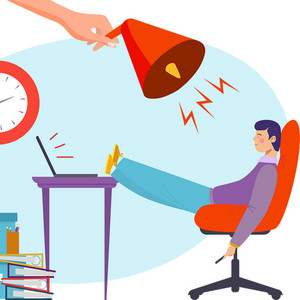
It could be your boss's management style that's training you emotionally.
We discuss how bosses, whether intentionally or not, contribute to workplace burnout and emotional fatigue.
And sometimes the timing of a bath or shower makes all the difference.
Did you know that bathing on an empty stomach or right after a workout could be very dangerous?
We'll get into the do's and don'ts before you jump into a bath.
Our podcast listeners can find us at Roundtable China on Apple Podcasts.
when you're there and you're so inclined, please give us a five -star review.
It will help others to find the show.
Now let's switch gears.
On yesterday's show, we touched upon the North American workplace trend of revenge quitting.
One key factor driving these dramatic exits is workplace burnout.
But what's behind the frustration?
In offices around the world, people can relate to the feeling of exhaustion at the end of a workday.
Even if they haven't been physically busy, this emotional fatigue is a hallmark of job burnout, a condition that's far more complex than just being tired.
Why do workplace dynamics leave us feeling drained emotionally?
And how can we better cope with it?
Often, the answer lies in how our bosses manage and interact with workers because sometimes it's their actions that leave us feeling emotionally depleted.
Well, I'm just summarizing a whole bunch of things that I've read on the internet, okay, on social media.
So what are the true sources of workplace burnout?
Yeah, I think we're all as human beings, employed human beings at risk of burnout all the time if we don't take care of ourselves properly in the office.
And sometimes those are things that we can control.
And oftentimes those are things that we have trouble controlling.
They're outside of our scope of power.
Christina Maslach in the United States is the pioneer of research on on the definition and the predictors and the measurements of job burnout.
And it's described as a kind of psychological syndrome that emerges as a prolonged response to interpersonal stressors on the job, chronic interpersonal stressors.
They just won't go away.
And the way that it's defined is in three different key dimensions.
One is an overwhelming sense of exhaustion.
Another, which I think is interesting, is feelings of cynicism and detachment from the job.
And then a sense of ineffectiveness and a lack of accomplishment.
And that three -dimensional model is important because it clearly puts the individual's stress experience, not only the stress experience, but the stress experience in the context of the work environment.
Because this involves the perception of the employee and also the perception of that employee from other people too.
It's complicated. isn't it?
Because you're so stressed.
You're so exhausted.
You don't feel motivated.
You don't feel a sense of reward.
But then you have to exist in this social environment, which is the workplace with bosses, with your co -workers.
And within that environment, you're having to have conversations all day.
You're having to respond to emails and take phone calls all day.
And that's what makes this such a ticking time bomb, if you will, once that fuse is lit.
And also, I think quite surprisingly, the job burnout has been included, recognized by the World Health Organization as an occupational phenomenon.
It's not really a medical condition, But it's something that can be really because it's a problem that's related to the work environment behind it.
And it sort of indicates that job burnout is not directly caused by a person's mental health status.
And it's not because of this person's psychological resilience or ability to withstand pressure, but mostly because of the environment that he or she is in.
And I think that's very important Because for people who are experiencing this problem You don't need to blame yourself It's not about you It's more of the environment that you are in Yeah, and more importantly The company can't blame you either Saying, oh, you're just weak Oh, you can't handle it No,
it has nothing to do with your inability to handle it Maslow gave a really, I think, easy to understand example And that example is a bird, a canary in a coal mine When the canary goes into the coal mine, it sings, it has lots of energy, it has beautiful yellow wings, and when it comes out of the coal
mine, it is exhausted, it's covered in dark ash, its mental state is not strong, it doesn't sing anymore, and that's what burnout is.
Before you went into the company, you had all that going for you.
You were singing, you had bright, beautiful wings, and when you came out of the company, you were covered in coal ash, metaphorically speaking.
Yeah. Do you think it's actually very important to have the awareness or, for example, on our show highlighting that this is a workplace phenomenon for people to know?
I think one of the worst scenarios, which does happen, is when you don't know that this is not your fault and then when you're that sick bird out of the coal mine.
And let's say if unfortunately it's a toxic work environment, then you're the one who's being blamed.
And then it's like, oh, you're not stronger.
Like you said, Steve, oh, you're weak.
You're the one that's not professional or whatever it is.
And then it's just very difficult to come or bounce back from that.
And can I also please highlight one fact that the study that Steve, you cited from the beginning, that's a study 50 years old.
I was so shocked because for maybe because of my own age limitations, I thought that we're talking about here is a relatively new phenomenon.
When you look at that study, uh -uh, no way.
It's been around for 50 years.
So this is probably what a capitalist industrial society with lots of companies, big organizations run and have and employ so many people.
And this is a systematic problem.
There are two things happening when you're working.
One is the physical aspect of your job, and the other is the emotional aspect of your job, and they call that emotional labor.
And emotional labor is managing your emotions, managing your expressions to meet job expectations, to meet societal expectations within the workplace itself.
I'm talking about things like appearing cheerful.
You see your coworker at the elevator in the morning.
good morning, when you don't want to, you don't feel like saying that.
But you have to, right?
Because you have to put on that front.
You have to appear empathetic as well, even when those feelings might not be so genuine.
And they say too, that this type of emotional labor burnout often comes in jobs that are related to customer service, where you have to take care of clients or customers all day long or in healthcare as well.
And that makes sense too because nurses and doctors and hospital staff are constantly dealing with customers of a sort, right, patients, and oftentimes those patients will not be in the best mood because the reason they're there is they're sick, and that's not an easy job to take care of those people
either. These are the types of jobs that can lead to emotional labor burnout at work.
Well, Fei -Fei, what do you see as, you know, the hidden emotional labor and daily interactions that contribute to burnout?
You know, that's kind of surprising to me because, for example, gossiping with your co -workers.
Sometimes we can take it as a relaxing activity of the day, you know, gossiping with them over coffee or breakfast.
But apparently because there is also a kind of a pressure and also emotional labor involved because you also need to sort of maintaining your image in your office.
Everybody has a sort of an image established in your company.
And in every sentence and every communication you uttered, you're sort of part of that image building.
And then I think another sort of current factor counting into this emotional labor is the frequent online communication, which is basically, I think, an essential part of mostly every job in the current society, because we tend to communicate over some sort of messaging application or messaging software.
and you need to communicate within or without outside of your company of all the tasks, basically every task that you do.
Yeah. And then when you're communicating online, we all experience this every day, right?
You're working on a task, then you get a group chat notification, you have to stop your task, you have to open up the group chat, read the message.
And if it doesn't apply to you, then you think, why did I open that?
And then you go back to the task.
but when you go back to the task, then you have to refocus, you have to reset yourself.
And all of these little micro moments are emotionally taxing.
We don't think about that.
Now, if you're not experiencing burnout at the office, if you're feeling great and everything's good, you won't notice anything negative about these things.
You won't notice the interaction at the elevator in the morning where you have to smile when you see your coworkers.
You won't notice that little gossipy moment at the water cooler.
But our point here during this discussion is if you are experiencing burnout and you're starting to get exhausted at work, we want to let you know that you should feel comfort in the fact that your feelings are justified often because of those little micro moments that they just take away your energy
piece by piece by piece by piece.
And it's also a confluence of factors.
And every person that suffers from the burnout could have a different mix of factors in each individual situation and now let's get to the juicy part one of those factors might be your boss might be contributing to the emotional exhaustion you're feeling too how can a manager's actions or lack of be
the hidden factor that adds to the emotional strain that people are feeling.
And this is according to, you know, multiple articles we've researched.
Okay. We can't just emphasize more enough.
Well, let's go over maybe a couple of different types of bosses to see if this might apply to any of our listeners work environments.
The control freak. I don't know if you've had the pleasure of working for a control freak before but they will often check your progress hey how's it going finish that report yet oh not yet okay 2 p .m right they'll do that um they'll require reporting on every detail they'll this is bad too they'll
interfere with your work method you know not everyone will accomplish a task the same way right people like to work in different in different ways.
But the control freak boss will strictly interfere and say, no, it must be done this way.
And then this is the worst on the list, I think.
A control freak boss will oftentimes just ignore your personal ideas, deny even listening to your personal ideas if you have any.
These are the traits of the control freak.
Yes. And also, I think having control of part of, or essentially the whole of your life is kind of the fundamental psychological needs of everybody.
And I think at workplace, when you have a boss that's macro managing every part of and every step of your task is mind grueling.
But then at the same time, there's also another type of boss that doesn't give you any emotional support.
I'm not saying, you know, bosses need to be there for every turn of your emotions.
It's just, you know, you're working mostly in a team and the boss is kind of the leader of the team.
And a good workplace is a place that you can find support in that team.
For example, everybody, you know, you're going on, something's going on in your personal life and you can count on your team members for that short period of time on some of your work priorities.
But then sometimes some leaders lack this awareness that they need support and guidance emotionally and they're unable to understand and recognize some of your emotions, especially I think negative emotions.
Yeah, and by the way, it's not easy to be a boss.
Mid -level management and low -level management, that is a really, really, really difficult position.
And in my experience through my career, oftentimes low and mid -level management, they can be put into that position without the proper training in how to deal with difficult employees, great employees, employees that need emotional support sometimes and motivating others in different ways.
So I just want to say that as well.
It's not an easy position.
But that said, have we encountered this type of boss?
Ah, this type of boss is the one that will give you the passive aggressive behavior.
This can come in many ways, shapes, and forms.
They'll attack you passively, if you will.
Here's an example. You finish the report.
Here you go, boss. And your boss says, oh, this is good.
You finally got it right.
I hate it. It's like the worst boss ever.
It's like saying you got it wrong.
You thought it was a compliment, but it wasn't.
It was a veiled insult, is what we call it.
That's called that kind of passive -aggressive attacking of the employees.
Would you rather the boss just say, well, you didn't do it very well?
Well, hopefully you never hear those words.
Be straightforward in just attacking me in my face.
Or they'll have inconsistent behavior as well.
Well, in one meeting, they might show you a lot of support or even worse, if you visit their office, they'll show you support.
But then when it's meeting time with the rest of the group, that support disappears.
That's very emotionally confusing for an employee.
It's emotionally exhausting for an employee.
And it's another factor that can lead to burnout.
Right. And also for some of these bosses, maybe they're just thinking about themselves.
And I think that's one of the problems with unqualified or really bad bosses, that is, if you're promoted to management level, then it's not just you.
It's not just your team is achieving results, but it would be nice if you're also being considerate and looking after the other people a little bit.
I don't know if I'm asking too much, but if you're just thinking, I'm gonna, you know, climb this corporate ladder, I'm gonna, like, go forward and everything at expense of that.
And then people aren't stupid.
And then when they feel like they're just being used for you as a stepping stone, of course, they're not gonna feel good.
And they're also kind of these kind of boss that they're not really sure what they're looking for.
They're not really sure where they're going as well.
So when they're giving out your tasks, it looks like, you know, they're everywhere.
Lack of direction. Yes.
And I think that's also kind of on some level worse than the kind of boss that He Young just described that just want to climb up the ladder.
But at least they have a direction.
yeah I'm not asking a lot one last quick point this is a personal story and this is why I said this is why I think I said it's not easy to be a low -level manager or a mid -level manager especially if you get promoted from within before I moved to Asia I worked for a beer company in Canada and I got promoted
after my first year to manager level but during the first year I worked with all my co -workers and we became friends and we used to have a meeting on sundays and everybody would complain about it and even i complained at that time these are stupid why do we have to have meetings on sunday then i got
promoted guess what okay everybody see you sunday for the meeting what do you think they said the co -workers wait a minute you're the one who said those were so stupid and you still want to have these meetings it's a headache it's a headache when you get promoted that's why i wanted to make the point
that it is a challenging position yeah because you're switching from maybe doing what you do really well uh professional complaining i don't think we need training in that but when you progress to quote -unquote management then maybe you do need training because it's a very different kind of job and you're
communicating with people all the time okay so one last question for this topic when the pressure of work is weighing you down what's the secret to finding your way back to balance let's talk about practical ways both for employees and bosses to avoid burnout and create a healthier work environment well
i think recognizing that it might be happening to you is step number one because if you notice yourself having a short fuse with your co -workers with your clients if you notice that feeling when you wake up in the morning, oh, I don't want to go to work today.
Those are signs that burnout is upon you.
And when you recognize that feeling, then you can start to take appropriate steps to fight against it.
Well, for me, I think getting some exercises or getting involved in some relaxing activities always help.
From time to time, you will get this very tired and don't really want don't want to go to work emotion coming up and I think you know going out for a run maybe having a cup of tea chatting with your real friends instead of work friends can be very helpful turning your work brain off and for bosses you
asked about bosses so I think good advice would be to check in with your employees from time to time ask them how they're doing ask them if you You can do anything for them to help their work experience if they need help on a project or just ask them about life in general.
Show that level of emotional support would go a long way, I think.
Coming up, if you're considering jumping into a bath, take a pause before you do.
We'll discuss the health risks you should know.
Stay tuned. Looking for passion?
How about fiery debate?
Want to hear about current events in China from different perspectives?
Then tune in to Roundtable, where East meets West and understanding is the goal.
You're listening to Roundtable with myself, He Young.
I'm joined by Fei -Fei and Steve Hatherley in the studio.
We all love a good bath or shower, especially in wintertime.
But there are certain times when it's better to hold off, Whether it's after a big meal, a few drinks, or post -workout.
Let's talk about when stepping into that hot water could do more harm than good.
So there's been studies around saying that you can compare taking a bath to exercising.
What do we know about that?
Well, the study, and this is from 2005, examined the effects of hot water immersion on cardiovascular responses in body temperature.
And it found that if you submerge yourself in temperatures at around 40 degrees Celsius, it can lead to a significant increase in heart rate and skin blood flow.
And that's comparable to mild physical exercise.
Important note, it doesn't replace mild physical exercise.
It's just kind of the body's physiological response.
And in 2018, a team of Finnish researchers published a review of health benefits of sauna bathing in the Mayo Clinic proceedings.
And Harvard Health Publishing cited several studies link frequent sauna use.
That's about four to seven times a week to lower blood pressure and a decreased risk of cardiovascular disease.
But then at the same time, according to the authors, this benefits may also come from better, may also be related to the relaxation, the point that they're able to afford frequent sauna visits, you know, four to seven times a week.
That's a lifestyle that can also be very helpful to your heart related outcomes.
Sure. So there are great times to take a bath.
There are great times to take a sauna or a shower.
but there are times to avoid it as well and one of them is bathing on an empty stomach I've never heard this before but it's generally advised to not take a hot bath on an empty stomach particularly because physical exertion like bathing in hot water it can make those feelings of dizziness that can come
with a hot bath or weakness when blood sugar levels are low it can make those feelings worse blood flow is diverted to the skin when you take a hot bath and this combined with low blood sugar can lead to lightheadedness.
So what they say is eat something, eat a little.
You don't have to have a seven course meal, but eat a little something before going for a hot bath.
So you don't faint.
Yeah. Yeah. What are some of the other things to avoid before going into a bath?
Of course, you can't really go into a bath with a full stomach because after eating blood is redirected to the digestive system and to aid digestion and then taking a hot bath afterwards may divert blood to the skin and potentially leading to digestive discomfort so it's recommended to wait 30 minutes
or an hour after eating before engaging in activities like bathing to avoid discomfort bloating or indigestion bloating swell after a big meal also after drinking alcohol they say that's that's a no -no as well and this is a valid concern for fainting as well because the combination of alcohol and hot
water can increase the risk of dizziness and fainting and even more serious issues like shock although that would be very extreme cases so be careful with that and then this one I exercise all the time so I thought this was kind of interesting, they say after exercise your muscles and your skin need
increased blood flow to repair and to recover and a hot bath can cause blood vessels in the skin and muscles to dilate which could take blood away from other critical organs like the heart and the brain and it makes sense after I read that because I'm a big fan of American football.
And whenever I watched documentaries about teams, immediately after practice, they soak themselves in an ice bath with ice cubes and the cold temperature.
The reason they do that, this is from a Ivy rehab.
Um, the cold temperature triggers physiological responses like, uh, reduced inflammation, and that helps to aid recovery and then offer potential stress relief.
I've wondered why they jump in an ice bath after, after really serious exercise.
And that's why they do that so if you're a real athlete jump in some cold water not some hot that's really useful information um i wonder if you've checked out your local gym with some of the nicer ones they have a sauna yeah in there right so i've always thought that okay after the exercise then you
go into the sauna and then take a bath and apparently no no no it's like triple no yeah i mean i think if you're in good health it might be okay but if you're an individual with cardiovascular cardiovascular conditions then the advice would be to avoid it so caution allow your body to cool down and normalize
before you jump into hot water the experts say okay and please remember that caution for everyone and with that we're signing off thank you so much steve hatherley and feyfei for being part of today's discussion i'm he young we will see you tomorrow