Discussion keeps the world turning.
This is Roundtable.
You're listening to Roundtable.
I'm Steve joined today by Yuxun and Yeohong Lin.
Coming up. Oh it's very controversial.
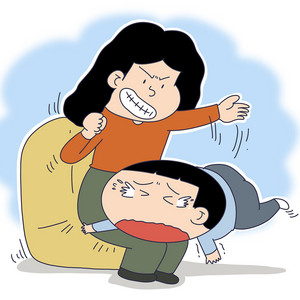
Spanking is definitely not on everyone's list as an effective way to discipline children.
Some see it as a harmless form of punishment but others take it much more seriously.
We'll check in today with where the world stands on the issue.
After that, grab your popcorn because the 15th Beijing International Film Festival is in full swing and today we have one more stunning film from the festival to recommend to you and our film critic Yuxin will be introducing it to us.
Our podcast listeners, that's you!
You can find us at Roundtable China on Apple Podcast and please don't forget that we love hearing your voice.
You can send us an email, that's always appreciated, but a voice note is so much better for us.
Send those our way with your thoughts on any of the issues that we discuss here on the show.
How do you do that?
Roundtable Podcast at QQ .com, Roundtable Podcast at QQ .com, and now...
The practice of spanking, both at home and in schools, is highly controversial.
Some argue it's a necessary and effective form of discipline, believing it provides immediate consequences for misbehaviour and also deters future transgressions.
Others, though, they contend that spanking is a form of physical violence that can lead to long -term psychological harm, including increased aggression, anxiety and depression and that it teaches children that violence is an acceptable means of resolving conflict.
What about at home versus school?
Does that matter? Should it matter?
Where does the world stand?
Now we're gonna find out.
But here's my first question.
I wonder if you were spanked as a child if you mind sharing the answer to that or not?
I can go first. For me, I was always threatened with being spanked, but never actually spanked.
My dad used to do something quite specific.
He would, after I misbehaved, he would call me over and he would lead me over his lap with my bum facing up.
And then he would raise his hand like he was going to spank me, but it would come down quickly and then just pat So he kind of made a game out of it somehow.
I never asked him about that psychological strategy So the threat was there, but I never actually got worst and throughout there.
Well, yeah, I think afterwards I just kind of knew that it wasn't really going to be a threat anymore But that's how he continued to do it until I don't know I was seven or eight or something Maybe it's because I was I am a girl, I was never spanked, and I was never threatened anyway or any form.
I have a different story, unlike yuk2.
But not in the form of spanking, my dad also has his specific way of maybe as a punishment I would say he would pinch my thigh and it will like It's very safe way to punish a call you say It hurts so bad, you know um and it will last a purple or green mark on my thigh and will make me like Have a lasting pain for a couple of days actually But yeah, of course it won't damage my whole physical health but it will make me remember that kind of moment Which is the point of doing something like that Coming up on the calendar pretty soon, it's called International Spank Out Day It was initiated back
in 1998 as a way to remind parents that there are other alternatives Where does the world stand now in terms of spanking children?
Around the world, 68 countries have banned the hitting of children in any form including spanking.
This movement began in 1979 with Sweden's ban on all forms of physical punishment including spanking in any setting and the family home.
Some of the countries and territories that have bans are Argentina, Australia, Brazil and a lot of them.
It's a really long list. Those are some of the examples.
Yeah, I was curious to know about Canada's laws where Canada fit in because that's a long list, right?
68 countries around the world.
This is from the justice for children and youth website.
Here's the question, in Canada is it illegal to hit someone?
Yes. Is using physical force on children an exception?
Yes. In terms of kids, section 43 of the Criminal Code of Canada allows the use of some physical force if the purpose is for disciplining a child under the age of 18.
Only parents or people who are in the place of a parent, for example, a step -parent, can be excused if they show a use of reasonable force on a child for discipline.
And I found that to be very surprising that there's 68 countries around the world but Canada is not one of those countries.
And here in China, actually the law on protection of minors of the People's Republic of China states that parents or other guardians of minors must not commit domestic violence against children.
Here, the catch is it's only when it's reported.
If it's reported, it definitely would be seen as domestic violence but you can't really expect a 7 or 8 year old kid to go to a police station or a court to report on their parents or spank them, to the extent that there's not even any mark left on the body.
So, it's kind of like, if you say exactly if it's illegal, it is, but people are still having an unspoken understanding about this.
Yeah, in the United States, each state in America has their own laws, and all states and territories, they aim to protect children from abuse, of course, but all state laws also allow parents - it's basically the same in Canada.
if the hit or the spanking or the whatever it is does not leave an injury or a mark.
Again, a long list around the world, but in North America, the rules are a little bit different.
You mentioned how it is in China, and I found the numbers from around the world to be quite surprising.
How do international organizations stand on the topic?
Yeah, first of all, what many people won't admit is that hitting a child can provide an emotional release and a fleeting sense of power for the grown -up, actually.
An adult may feel frustrated that they've lost control of the child, but when they strike the child, the child stops when they're doing and usually starts crying, and this adult feels vindicated by getting the child's attention, and their pent -up frustration or anger is released, and that may be the situation that most of the parents will think, and also in some, I think Chinese dramas, some parents will say, okay, this is my child, and I have all the right to know and do whatever I want to discipline them.
And maybe that is also the reason why we need a lot of these laws or kind of a day for telling people that this is not right.
Well like I said, it's a divisive issue.
And I think the general stereotype, and maybe it's not a fair stereotype, is that older generations might view it as something that's okay or acceptable.
A lot of the people I know in my age group when I ask them that question they look back and they think oh yeah yeah my dad used to spank me when I was a kid or my mom used to use a ruler on my my fingers, but the modern day idea seems to be that that isn't acceptable anymore, but that's just what occurs to my mind though when I think about the issue.
What is it that people are feeling these days?
What are they thinking about it?
People are having mixed feelings about it and I think it has a lot to do with the seriousness of the spanking, or of the hitting, or of the actual behavior.
For example, here in China in Jiangsu province, there was this public incident.
It's kind of like an incident of a parent.
It's a dad and his daughter took his son out to play, kids like to sneak out of the house in play.
And the dad found both.
And because he knows it's the older sister who took the younger brother out.
So he punished the girl physically in public areas and it was seen witnessed by surrounding people.
Now the girl is around, uh, is definitely a minor and she did not report any case, but people witnessing the accident reported the case and the father was administratively detained for 14 days for intentionally injuring another person.
So when I say Chinese law prohibit parents for hitting their kid, I meant it.
And it is real. Yet here in the Chinese society among parents, we still have occasionally the conversation of, do you hit your kid?
Do you spank your kid?
Do you know how to do it scientifically, which means you do not really hurt them, but you send the message.
And it also has something to do with when do parents perform the spanking in terms of are you doing it because you're very mad and you do not have other means to discipline your kid?
Like you should explain about how international organizations view this topic the parent losing control for a moment.
Or maybe you have already cooled down and you tell your kid I am going to spank you in 20 minutes.
Be prepared. It's because of this and that.
And in the future, if you do not make the same mistake, this would not happen again." So there are really different understanding towards this different practice in different homes.
Also other worry, that enforcing these laws may be difficult in practice.
And there are also opinions that suggesting that legal definition of maybe physical punishment and also domestic violence needs to be further clarified to avoid, you know, disputes arising from vague boundaries during enforcement.
Remember when you were saying this, that were charged as harming another person, right?
It's not domestic violence.
So it's hard to actually see and maybe clarify some of these situations that happened.
And I think that is why people want this kind of discussion.
done. Yeah. Yeah. Because it's such a gray area a lot of the time, I guess.
What about for schools?
How does it work? Because in the home and in schools, it's kind of different.
In the United States and many places in schools, it's allowed. In many places, it isn't.
But there is a growing movement to ban it outright.
This is from the National Education Association as of 2024.
Corporal punishment is legal in 17 states and practice in 14.
And additional six other states have not expressly prohibited it.
Several members of Congress, though, have tried to prohibit corporal punishment in schools.
In 2023, there was a Senator that introduced the Protecting Our Students Act to outlaw the practice of corporal punishments in school.
That received some federal funding.
And the numbers are decreasing.
There were complaints or cases from students.
In 2013, there was around 100 ,007 and then in 2020 -2021, there were about 20 ,000 of those.
So the numbers are decreasing, but they're still a call for more action.
In China, do students receive, is it acceptable to receive a slap on the wrist or something like that from - Definitely not.
Oh okay, yeah. here in China, if we say there's still space for parents to act in homes, in schools, there are no leniency at all for teachers.
Teachers shall not use hitting, pricking, or any means that directly cause physical pain for students, and not only that, prolonged standing beyond reasonable limits, representing a representative righting tasks, forcing students to perform uncomfortable movements or postures like jumping.
If you want the kid to be running on the playground for too many laps, it's not okay.
If you want them to squat and jump for too many times, it's not okay.
And deliberately isolate the kid, and also classify them as, this is also considered as a disguised corporal punishment that can harm their body or mind.
all of these are not okay.
I don't know if it was used in China, I know it was used in Korea many years ago, it's not anymore, by the way, but having a child stand in the side of the classroom and hold a book.
Oh, hold a book. Hold a book over their heads because it gets heavy after a few minutes, right?
That's not allowed anymore at all, either.
Yeah, it's just a different form of a physical punishment, right?
Mm -hmm, and none of those is okay.
Yeah, exactly. UK, not allowed in schools, Australia not allowed in schools, Canada not allowed in schools as well.
But coming back to just the topic in general and how people view it, there were some polls done in different countries and I'll start in Canada.
This is a 2023 Angus Reade poll and they wanted to know how people felt about spanking their kids in general.
50 % of Canadians believe spanking is sometimes acceptable, 45 % say it is never acceptable.
In the states 32 %—this is from a 2021 General Social Survey—32 % of Americans agreed that sometimes a child needs a spanking.
That's down from 50 % in 1993, showing a declining acceptance but still a relatively high number, I think.
In South Africa—let's go there for a second—this is from the Human Sciences Research Council in 2019, 57 percent of adults agreed that spanking is necessary to raise children properly.
That was the quote.
In Sweden though, this is from the University of Gothenburg in 2021, 10 percent supports spanking.
That's down from 53 percent in 1965.
And that's why I said this is still such a divisive issue because it seems the world has agreed that in school it's absolutely unacceptable but at home there's some grey area thinking where 50 % this and 32 % that and it still seems like we're not there as a society yet to say it's not acceptable anywhere.
It might be because we say there are five different love languages.
There might also be several different types of punishing languages.
Some kids are prone to long conversations, heart to heart, some want clear boundaries at home, as long as you set the rules straight, they understand.
Some are just too naughty and active and forget about things, on the one foot of a second and they need a little bit of physical punishment!
Some people think that and some people think that.
Some people think that.
Which is put forth by the Canadian Pediatric Society, where they give some recommendations for parents, set clear expectations, have natural consequences, let the children experience the results of their actions.
If they say, no, I don't want to wear a coat in the middle of winter.
All right, go ahead, outside, see what happens to you.
That's the natural consequences there.
Physical punishment as well.
You could argue, again, this is why it's such a gray area.
Again, that day is coming up on your calendars as well.
Alright you're listening to Roundtable, I'm Steve with Yuxin and Ngo Hong Lin and when we come back Yuxin has a film recommendation for us from the 15th International Beijing Film Festival.
Looking for passion?
How about fiery debate?
Wanna hear about current events in China from different perspectives?
Then tune in to Roundtable, where East meets West and understanding is the goal.
Whether you are a film buff, a rising director, or just here for the cheese -flavored popcorn, because yes that is the best and that is not up for debate.
BJIFF, the Beijing International Film Festival for 2025 promises big screen thrills, fresh talent and a spotlight on Beijing star power as a cinematic hub.
Today our film critic and film recommender is Yu Xun.
What do you have for us today?
Yes, so the film I'm recommending is the film called On the Beat, or in Chinese, Mingjing Guo Shi, which is a Chinese movie written and directed by Chinese director Ning Ying which is being showcased at this year's film festival in a newly restored 4k version.
Yes, presented in a style close to that of a documentary, actually, this film offers a calm and objective portrayal of the daily work and lives of grassroots police officers in Beijing in the late 1990s.
1890s. So, you know, I believe this film was also trying to use the perspective of these officers to reflect the social atmosphere and also urban life of Beijing at that time and actually many viewers expressed after seeing and watching the, you know, they were deeply impressed by the imagery in the film, you know, all of these grey walls, narrow alleyways and also beehive shaped coal stoves, do you know that?
The coal used to be like beehives, that kind of coal.
Yeah and Chinese people used that to like, maybe boil water and cook and something.
Yeah, and all of these rustic tiled roofs and everything.
Questions. For you to watch a film from the 1990s 1990s from Beijing and now you're living in Beijing.
That must be kinda cool right?
Because you were not around Beijing in the mid 1990s.
Or anywhere. For that matter.
But that kind of atmosphere will always like intrigue you or intrigue me to have that kind of nostalgia of time and people and things back then.
And that's also a lot of people were saying this kind of visual felt like a vivid return to Beijing 30 years ago and serving as a precious memory of that city's past. So as a lot of people saying and this new restored 4K version brings people a more immersive feeling of watching all of these things back then.
And another point I would like to mention is that you know the the the digitally remastered in high definition 4k version and um the team paid special attention to iconic elements like pigeon whistles in the movie which is a hallmark of old beijing which bring hands to enrich the film's local color and historical atmosphere.
You've seen this movie?
You want to go with me?
No, but I would love to, because of all the reasons that Yu Xun just said, plus the fact that it's about the life of grassroots police officers.
Their stories must revolve around a lot of fun gossips as well as how people use to face challenges at that period of time.
It must be very different from ours already.
Um, correct me if I'm wrong, this is a review from IMDb from someone who saw the film, this is a spectacular movie, it's a hilarious and realistic look at police life in Beijing at that time, the film was produced on location and used real police not actors.
Even better. Is that, that's true.
That is absolutely true, the lead role which is a police officer is played by a actual police officer.
That's awesome. know I would love it because I used to watch this documentary about the grass -roots police officer stories in Hunan, I think Changsha, city of Hunan province, and that was absolutely fun.
When you don't use actors in a film, the reality aspect of it is just all the more there, all the more present.
Give us one sentence why you love this movie and why people should watch it.
As you guys are saying, the main character is a actual police officer and also most of the actors in the film feature mostly non -professional actors.
So that is why it is giving you a sense of soul, realistic sense, that it is portraying a real life back then.
Like that documentary feel on the beat from 1995 from director and writer, Ying Ning.