You're listening to Roundtable, my name's Steve, and today I'm with Yushan and Yushun.
Coming up, remember the screech of chalk on a blackboard?
Ugh, it's a terrible sound.
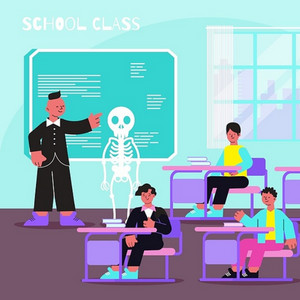
Well, in China's classrooms, that sound has been replaced by the silent glow of the electronic blackboard.
It's a multibillion-dollar upgrade, hailed as the future of education, but it's left parents squinting with a familiar fear.
Are we trading our children's eyesight for a high-definition education?
Is this a technological leap forward or a step back for our kids' health?
After that, Roundtable's Heart to Heart, and today it's romantics.
Don't miss that one either.
Our podcast listeners, that's you, can find us at Roundtable China on Apple Podcasts.
Don't forget, we love hearing your voice as well.
So send us a voice note with any of the thoughts that you might have on any of the issues that we discuss here on the program.
Here's how you get in touch, roundtablepodcast at qq.com.
Once again, roundtablepodcast at qq.com.
And now...
The classroom isn't what it used to be.
Forget the dust from chalk.
The latest teaching tool is sleek, glowing, and staring right back at your kid.
We're talking about the electronic blackboard, the smart blackboard.
It's a massive multi-billion dollar industry now here in China and it sounds like a win for education.
But there is a kicker.
Parents are worried.
And their number one concern is... their kids' eyesight.
So is this an educational revolution, or is it just a big high-def headache?
And, more importantly, can AI really solve an anxiety problem that started with a screen in the first place?
It's the irony actually, of this situation, but as we get into it, i think we need to define it.
What's an electronic blackboard?
Yeah, so these electronic blackboards, often referred to as an electronic screen or smart blackboard.
It is a key component of modern education now and is designed to be a standard piece of equipment in contemporary classrooms.
But when you're saying it's replacing, I don't think they're like all fully replaced.
Yeah, I would agree with that.
I was watching a few videos earlier today to see how they're implemented in American and Canadian classrooms.
And sometimes they use both.
I saw one instance where the traditional chalkboard was divided into two sliding pieces and when you pushed them off to the sides, it revealed the digital chalkboard behind it, which was hidden before you slid the two pieces apart.
So teachers are making use of both these days, I think.
Yeah, most of the time it is becoming a kind of a very important vehicle for these educational modernization and sometimes it can provide very, very rich expressive forms and powerful interactive functions that really reshaped the teaching environment.
For example, when teachers need to show some 3D effects, let's say in geography, you need to see that kind of map kind of thing.
And then they can use this digital screen to show students have very vivid image.
And then, when they need to write on board, they can also.
Sometimes they can even write on these screens.
Oh, yes, of course.
Yeah.
And when they write on the screens it'll correct it kind of, because teachers can have some bad handwriting, particularly if you're writing on a screen.
But what I saw was they wrote out the words, I believe it was square, circle, and triangle.
And it fixed it as if it were kind of like a Microsoft Word font onto the screen.
It was pretty cool, actually.
These screens sound like they're turning more computer-like these days.
And what's really interesting about these smart blackboards, I think, is...
For example, maybe the they can even run like virtual say, chemistry experiments right on the screens for some schools and blending traditional and the high tech side of teaching both together.
I remember back in when I was in high school, that's we're talking about 12 years.
13-ish years ago.
That was when these type of let's say we called it the whiteboard back then was first introduced in high schools here in central Beijing.
And The teachers were astonished, but not all of them were using it.
I guess we'll talk about the teacher's attitude later.
But one of our chemistry teachers, she was enjoying it.
She was drawing a chemistry experiment like described in today's news articles about such electronic blackboards.
Like just drawing a test tube, putting that just using her hand and moving that into a beaker and saying that add hot water inside and warm up the chemical stuff inside the testing tube.
And she just drag and draw everything on the whiteboard and experimenting drawing and it started to turn from a class to us to her experimental drawing.
Yeah, her art class.
They are becoming more and more popular these days.
They're not cheap though.
The basic types will cost you about 15,000 to 20,000 yuan.
That's about $2,100 to $2,800.
Then you can grade up.
If you so choose, the professional types cost about 20,000 to 35,000 yuan.
That's up to almost $5,000.
And then you're going for the big luxury one.
If you're going for that, that'll cost you over 35,000 yuan.
That's a fancy one.
That's equipped with features like AR teaching and multi-screen collaboration.
The point there is that they're not free, that's for sure.
What's the state of the industry right now?
It's growing, I assume.
First of all, education is absolutely one of the biggest area that it is being using.
So the popularity rate of multimedia classrooms and this we're not talking about all of the classroom have equipped with these Digital blackboards.
That means classrooms equipped with hardware such as computers, projectors and sound system in primary and secondary schools.
Nationwide exceeded 95 as of 2023.
And that's the stats from Ministry of Education.
So first of all we can see.
The whole image is that 95 of schools are using multimedia hardware and some of them even upgraded into these digital blackboards.
And the overall market size for these interactive display devices in China was estimated to reach around 186 billion yuan in 2024.
That's about 12% increase year-on-year.
That's the stats from IDC.
So the sector is growing then, but it still remains competitive because you've got your traditional education equipment suppliers that are still taking up a large percentage of the market.
Almost half, I'll say.
Most of them, they hold a combined market share of 52%, and some leaders include Seawall and Honghe.
So Seawall one of the brands is a major brand among the traditional educational equipment suppliers.
This one alone achieved 927 million yuan, that's roughly 130 million US dollars, in successful bids in the first quarter of 2025.
But that's only like 52%.
The other say percentage were taken by two other pillars within the competitive landscape market that include appliance companies like TCL and Heisen's.
And also the other part is taken by technology companies such as iFlytech and Huawei, who are also working on AI solutions, just cooperating high-tech with educational resources.
So it's become really widespread.
What's the reason for it being so widespread?
What does it actually add to the classroom?
Well, first of all, I think there's definitely the enhanced comprehension and visualization for the kids, because they can quickly handle these new equipments.
They can quickly handle concepts.
That's difficult to explain through chalk and speech or that is hard for teachers to draw.
Just in general.
Nowadays with the technology, it's like sitting down and watch a cartoon, let's say.
Everything is demonstrated through a more vivid performance, sometimes even game-based.
They design little matches or little vocabulary flashcard activities for the students, making it just a lively equipment during the class.
And that would be a time saver for teachers too.
True.
If you want to play that flashcard game, you'd have to have the flashcards, put them on the board or hand them out to the students, and it's just that you're saving minutes and minutes here by having that smart screen.
I'm guessing too, that students might find it a little bit more engaging, because students are used to screens.
In fact, they enjoy them very much.
So putting a lesson on a screen might be attractive to a student and make it something that they are more likely to pay attention to.
I would say it's beneficial for both teachers and students.
First of all, as you said, it can be more engaging like stimulate students interest and also imagination, creativity.
They use little games and for teachers.
Actually some of these are hardware companies.
They sell these hardware and then they will come with some softwares.
So teachers don't need to spend so much time on preparing for a lot of these lesson plans, and some of them are default in building these hardwares and they can totally just go through everything.
But I'm not saying teachers are not doing anything, but they can use a lot of these tools.
Yeah, it just streamlines the preparation process in a lot of times.
Okay, but let's get to the concern.
Let's get to what parents are concerned about, and it's directly related to the screen and the children's eyes.
Yes, that's... the myopia risk we're talking about.
This is the most intense concern from parents, worrying that the use of electronic screens contributes to rising rates of myopia in children.
And I actually kind of looked it up a little bit.
So from International Myopia Institute, it's highlighted that the hot spots of myopia are East and Southeast Asia, where countries such as South Korea Singapore, China and Japan have a prevalence of myopia of 80 to 90.
Nearsightedness.
That's true.
So I guess the parents, they have...
A good reason to worry about.
But still, like you mentioned at the very beginning, it's a little bit ironic in the sense that Yeah, why are you worried now?
Yeah, the kids are already surrounded by screens, big or small, in all aspects of their lives.
So...
I mean, that's the criticism, right?
I just said it.
Oh, why?
Why are you worried now?
Your kids are constantly staring at their screens anyway.
Yeah.
But I mean I get it because from the parents point of view they can say yeah, all kids are looking at their screens all day.
And that's enough.
So why are we also having to do this in a classroom when it might not be entirely necessary?
I get the concern.
And myopia, as you mentioned, it's already an issue.
So it's just kind of adding on to the concern, maybe exacerbating the problem a little bit, these bigger screens.
Especially for parents who have kids like aging in, let's say, primary school or maybe even middle school, because Yushan has already given given out some of the stats.
And China's National Health Commission in 2023 also released some of the overall myopia rate among children and adolescents in China.
That's around 52.7%.
And including 30, more than 35 percent for primary school students, 71 percent for middle school students and then more than eighty percent for senior high school students.
Yeah, so there you go.
So the parents, that's already on their radar, of course.
They're aware of it, and now they're seeing a potential problem that could maybe even make their children's eyesight worse.
So it's pretty easy. to understand.
There are also concerns about overuse, perhaps that the teachers might become too dependent on these screens.
Because of the ease of use for many teachers, because of the ability to streamline their lesson plans or make them more effective.
Using them during the whole lesson time is another concern as well.
But, that being said, there are difficulties with these smart boards and there are reasons for teachers to be frustrated with these as well.
Hmm, insufficient training and also support is one thing for a lot of the teachers, because it is quite a new tack for them, as they've been like.
Most of them are trained for writing on the blackboards or preparing like a physical paper and everything but, and then when they are having these kind of a new technology and new way of doing thing and interacting with students, they also need time to adapt to it.
Yeah um, We talked about the fact that it could be a time saver, but it could be a frustrating waste of time for many teachers too.
And these boards might be effective for certain subjects like chemistry or geography or what have you, but they might not be so effective for other classes.
I was reading some blog posts about teachers who don't like these things, and one was from a dance teacher.
Oh, sure.
Who said, this thing just sits in my classroom.
And I told them before they bought them, I don't need one.
Saved some of the school's budget.
And they said, oh, no, we can't pick and choose.
It's just every classroom gets one.
So when it comes to school budgets, which can sometimes be very, very tight, there's concerns there as well.
All right.
Well, let's wrap this one up with this question then.
Do we have to choose?
I wonder, does it have to be A or B or can we find a happy middle ground?
Well, not necessarily has to be either, or kind of choice that we're making here, because both the electronic blackboards and the traditional blackboards they they are viewed as complementary and coexisting tools within the classroom.
So, in general, the electronic screen best suited for the three-dimensional and visual and vivid presentation of scenes, while the traditional ones can remain as the writing board that's effectively illustrating the process of thinking and analysis.
So still, Let's just keep how it is nowadays.
The two pieces of traditional blackboards covering a piece of whiteboard behind it or electronic boards behind it, and combine it as a holistic system in a way that both the teachers and students can benefit from.
Use it when it enhances the quality of the lesson but Don't over rely on it.
And that might alleviate some of the concerns that parents have.
You're listening to Roundtable and Heart to Heart is up next.
You ask.
We answer.
Roundtable.
Heart to Heart.
We heard from Becky for today's Heart to Heart and we have her audio clip, which is followed by her email.
But let's hear what she had to say first.
Hi, Roundtable team.
I'm Becky, a 30-something listener who's been loving your podcast.
I wanted to share my thoughts on love and marriage, how it sometimes feels like a calculation instead of a spark.
I've written more in the email below, but the short version is I'm stuck between wanting connection and overthinking the what-ifs.
If you're up for chatting more, I'd be thrilled.
Thanks for listening.
Becky, we are up for chatting more, and because your email is related to romance well, I'm going to hand over the reins to you Sean, and we've prepared some appropriate music to accompany your email.
Dear Roundtable team, to me, love and marriage should be a win-win mutual support, understanding and growth.
But lately I've felt stuck and overthinking, almost like love has become a calculation instead of a spark.
For example, as women, we face unique physical tolls like pregnancy that men don't share.
I find myself wanting more care in return.
Yet men also carry pressures like 彩礼 bride, price burdens, and want effort from their partners too.
And let's be honest, most of us just are ordinary people with ordinary incomes.
I worry, will marriage improve my life or make it harder?
That fear makes me overanalyze every connection, even when I meet someone great.
Wow, well done there.
Yeah, it sounds like a poem, you know.
I felt like I was watching a micro drama on Billy Billy or something.
I hope I delivered Becky's message clearly because yeah, it's totally something that people both men, young men and female we can all resonate with.
Any thoughts?
So, I mean, we'll start with you, Yushin.
What do you think?
Is marriage a calculation, or should it be the traditional concept of oh my gosh, I love you more than anything on this planet, and I will for the remainder of my days alive.
First of all, I have to say, Becky, you are definitely not alone.
And I think a lot of women and men in their late 20s or 30s are having these kind of ideas.
And I think you mentioned mutual care.
And that is very, very important.
I think love or relationship in this way isn't about perfectly splitting responsibilities and also costs.
It's about shared empathy.
And you said two sides have to, I think, sacrifice in some way.
But the healthiest relationships today are the ones defined by the couple themselves, right?
Your relationship and your marriage.
It's up to you two to decide that what really matters, and whether those traditions or expectations belong in your story.
So I don't think that you need to follow any societal expectation in the way that what kind of things that you need in your marriage.
It's up to you both, or maybe your two families.
Hmm.
More about the individuals.
Don't pay attention to the noise, as they say.
What do you think, Yushan?
On my side, I'll say that the key might be to shift from calculating love to conscious love, where both sides are aware of realities but still choose to build something real together.
When I say conscious love, I mean a kind of love that's aware aware of our fears, expectations and limitations, yet still choosing to connect deeply with one another.
It almost struck me in a way that Becky, you sound like someone who's tried many times to build connections but haven't find someone yet to really face that conscious love and root together and build something new from there.
As you navigate this very complicated thing of trying to build connection with someone, just like Yusheng said, focus on what you want.
Look within and seek for the true support that you seek from a man, let's say, or whoever that you're trying to look for, or whatever kind of relationship you're looking for.
And stay true to yourself.
That would be my advice.
Yeah.
It sounds like you're maybe worried or frustrated, but your time will come for sure.
And when it comes, Becky, oh, you'll know it.
Yeah.
You'll know it when it comes.
And that's a pretty good feeling.
All right.
That will do it for today's roundtable.
Don't forget, we're in a relationship with you.
Is it a spark?
Is it a calculation?
It needs not a definition, but just know, we here at Roundtable, we love you.
I'm Steve for Yushun and Yushan.
Join us next time.