This BBC podcast is supported by ads outside the UK.
If journalism is the first draft of history, what happens if that draft is flawed?
In 1999, four Russian apartment buildings were bombed.
Hundreds killed, but even now we still don't know for sure who did it.
It's a mystery that sparked chilling theories.
I'm Helena Merriman and in a new BBC series I'm talking to the reporters who first covered this story.
What did they miss the first time?
The History Bureau, Putin and the apartment bombs.
Listen on bbc.com or wherever you get your podcasts.
This is a special edition of the Global News Podcast from the BBC World Service.
I'm Will Chalk.
Iran has warned Donald Trump it's prepared to teach him an unforgettable lesson.
It's after the US president warned he was considering very strong options.
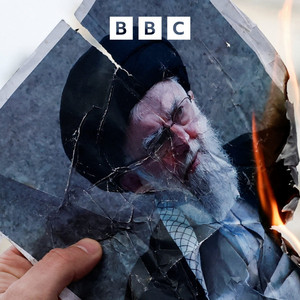
Clearly, what started last month as a demonstration in Iran's capital Tehran, about the country's faltering economy has already grown into something much bigger.
Hundreds of people have reportedly been killed as the protests continue to spread across the country, and internet blackout is still in place, making it difficult to get information.
The BBC has been taking questions from our audience about what this all means and what's at stake.
So let's hear from my colleague, Matthew Amrolowala, who's been speaking to two of the BBC's diplomatic correspondents Caroline Hawley in London and Paul Adams in Washington, as well as Siavash Adelan from BBC Persia.
Sivash, to you, first of all, as I say, we're into the third straight week of this.
From the fragments of information that's coming in, what can you tell us?
The main fragment of information that came out was a video clip, a very heart-wrenching and horrific image of people at a mortuary outside Tehran, the capital, where hundreds of bodies were piled upon each other and relatives or families of these people searching for their loved ones.
Now, we hadn't known the scale of the killings until this video had come out.
And then from the fragments of information we're getting from people via Starlink, sending us messages telling us the grim atmosphere right now prevailing in Tehran and other cities after that massive crackdown.
Everyone knows someone who has been killed.
So the situation is one that you would associate with the Syria civil war or with Gaza.
Today in Iran for the authorities to quell one of the biggest protests that took place over the past years.
Caroline, is this the biggest threat to the Islamic Republic since its inception?
It's certainly a huge threat and they have responded in kind.
They've clearly felt that they are fighting for their life.
They, as you know, have blamed this on rioters inspired by Donald Trump and Israel.
But we've had many cycles of unrest before and uprisings.
There was 2009 over disputed elections, 2019 over fuel prices 2022, of course, over women's rights.
And after the death in custody of a young woman, Massa Amini, who was accused of not wearing her.
And then these began on December the 28th as an economic protest.
But it very, very quickly spiraled into people expressing their anger over everything that they hate about the Islamic Republic and their economic political, social problems.
And I think what is different this time is that the Iranian regime is under pressure from inside and out.
It has been weakened by the war in June when Israel attacked with the U.S. the nuclear facilities.
So it is a moment of great peril for the Islamic world regime, or has been, and they have been using what I've been told is really unprecedented force to try to control the streets.
So it has come at a huge cost to Iranians.
We don't know, as Siavash said, the full picture, because we're only getting little pieces of the jigsaw.
The Iranian regime is trying to kind of control the narrative, now putting out pictures of its own supporters on the streets.
But we we just don't know the full picture.
And I think a lot is yet to emerge about what's been happening over the past few days.
Paul, to you in Washington a number of questions about whether Donald Trump will intervene, giving some of the recent warnings he's given to the regime.
What is Donald Trump saying?
Yeah, Matthew.
Before the latest reports of mass casualties emerged, he did indeed warn that there could be an American response and that it would be dependent on how the Iranian authorities responded.
He also has spoken about his desire to rescue the protesters, as he's put it.
Now, he flew back to Washington from Florida yesterday and aboard Air Force One.
He said that he was looking at what he described as some very strong options, presumably military options.
He is going to he's expected to receive a briefing on those options tomorrow at the White House.
But he also said that the Iranian regime had, on Saturday, reached out to Washington to try and negotiate.
He didn't again didn't say exactly what about.
And he said the two sides were working on arranging a meeting.
But he also said, and I'm quoting here but we may have to act because of what's happening before that meeting.
So clearly a strong warning that America might be poised to take action immediately fairly soon.
I'll come back to that point, but sir vash caroline, was touching on it.
This was sparked by inflation and economics at the end of december.
It is now morphed into something entirely different, with so many of the protesters on the street calling for the end of the regime.
But tell me more about how the regime itself is portraying it.
What is appearing on state television, for example?
Well Well, on the first day of the protests, you had the government saying that they recognize these protests because it was a strike by shopkeepers that come out in the streets protesting against inflation and the way that the currency market works, which is really to their detriment.
And then, as the pattern usually is, it morphed into something bigger than the other, people joined the protests and it became against the entire system.
The government's narrative so far has been we recognize the protests, we'll sit down and talk with those genuine protesters.
But very soon separated the protesters from what it called the rioters.
And then when the...
Crackdown turned very violent and the protests turned very massive.
The rioters became armed terrorists trained by the Mossad and by the CIA to sow discord inside the country.
And now, with these high numbers of deaths that have emerged ever since this crackdown, what the government is saying?
That most of these people who have been killed are the security forces and innocent private citizens killed by the protesters, which the government calls terrorists.
Caroline, let's go back to something you were mentioning a little earlier, because the Internet blackout is making it very difficult to actually find out the facts of what is happening on the ground.
But it has a wider impact too, from all of those desperately around the world trying to find out about loved ones who are living in Iran.
That's right.
It's not just the internet blackout.
It's also the international phone lines have been cut.
So imagine how terrifying that is for people who have been unable to get hold of relatives back home, wanting to know what's happening to them.
Obviously, the internet blackout is designed as well to keep from talking to each other, so that it makes it harder for them to organise.
But yet we are still getting voices out.
Although just one little anecdote.
On Thursday night, I was trying to speak to a woman who I've been speaking to over an encrypted app since, since 2022 and the Women Live Freedom campaign.
And she just said, I've been out on the street for an hour.
The crowds are unbelievably huge.
And then she said, I can't say anything more.
Delete our conversation.
She's never, never sounded that scared.
But I've so obviously I've been unable to contact her again, but I've just been speaking to a UK based activist.
And she told me that a friend of hers said in Shiraz had somehow managed to make contact today.
Had said that there are still protests going on.
Very interesting, actually, what this man told her.
He has apparently been shot himself by pellet guns.
And he said what the authorities there have been doing is shooting everyone wildly.
This is his account with tear gas and with pellet guns.
And then if there's anyone who dares to confront the authorities by, for example, throwing stones at security forces, that's when they open fire with live ammunition.
Now, I've not heard that account before, but that's that's just one account that I'm hearing via a UK based activist from Shiraz in Iran.
Paul, let's pick up on something you said in your earlier answer.
You made the point that the Iranians are saying they are willing to negotiate with the US, but only on an equal basis.
But in terms of the Trump administration, do you get any sense that he is seeing this as an opportunity to topple this regime?
Well, Matthew, I'm sure that's on his mind.
Donald Trump has been ambivalent about this in the past.
He.
It is mostly obviously been about Iran's nuclear ambitions and America's keen desire, along with Israel, to curb Iranian activities around the Middle East.
Though, after the 12 day war last summer, in which both Israel and the United States attacked and delivered serious blows to Iran, Donald Trump did post on social media the phrase make Iran great again and sort of hinting at the possibility that regime change was on his mind,
And we've heard some of the similar rhetoric in the last few days.
Just on Saturday, he said Iran is looking at freedom, perhaps like never before.
The USA, he said, stands ready to help.
And he called the leaders in Iran violent.
I don't know if you call them leaders.
They rule through violence.
So the idea of removing that leadership, I think, is on his mind.
Although I'm sure that many, many voices in Washington will be advising him to be very, very careful if he decides to go down that route.
A quick postscript on just that, because Jackson has contacted us to say would US allies be supportive of any strikes in Iran?
Iran, despite its many, many recent setbacks, is still a large, complex, important regional player.
And I think the possibility of regime change is one that needs to be looked at incredibly carefully, because I think the consequences of it could be highly unpredictable, both within Iran, which has a complex economy ethnic makeup, but also across the region.
What would be the impact, for example, on a place like Iraq, where Iranian influence has been great in recent years?
What would be the implications for Iran's various proxies around the region?
Of course, Israel would be delighted to see the head of the snake, as it sees it, defeated in the wake of the blows delivered to people like Hezbollah, the Houthis, Hamas and, of course, the end of the Assad regime in Syria.
Iran's regional influence has been hugely dented and damaged by events over the past 18 months or so.
And so there are strong voices, certainly in Israel, saying that it is time to finish the job.
But I think the consequences could be so complex that I think the notion of regime change will be one that the Trump administration, even with its enthusiasm for taking abrupt and robust action around the world, will be fairly careful before embarking on.
Yes, you're absolutely right.
Iran's tentacles have stretched across so many countries in that wider region.
Siavash just on the possibilities of a conflict, your assessment of how people protesters even feel about a possible war.
Well, in the very beginning days of the protests, President Trump warned that he will intervene if the regime starts killing protesters.
Now some protesters were trusting that warning, thinking that if they go out to the street they will be protected by the United States, somehow believing that the US has an actionable plan to prevent a crackdown.
Obviously, that didn't happen.
The regime completely ignored President Trump's warning and went ahead and carried out one of the biggest killings in the past year.
So a lot of people may have lost faith in President Trump's warning that the killings have taken place.
The question is whether the protesters demand some of them for regime change will be met.
From what President Trump said, the Iranians contacted me, wanted us to negotiate.
We might negotiate with them, but we might hit them as well.
So he's not saying he's going for regime change, and he's not saying that he will not hit Iran.
Many protesters are hoping that will lead to regime change.
Others are just worried about the prospect of plunging from one crisis to another.
A real quick one on this, because Iran's parliamentary speaker said Tehran would consider US bases and Israel as targets if they detected signs of an impending attack.
So again, they are watching very, very closely any sort of potential action from Israel, from the US, and then deciding what they might do.
Absolutely.
They have their own scenarios in mind.
They initially had warned that Iran might even carry out preemptive strikes in anticipation of an Israeli or a US attack.
But today Iran's foreign minister ruled that out, yet said we're very ready for a war, even more ready than we were back in June, when Israel attacked Iran.
I'm going to come to Caroline in a moment but Paul, I just want to ask you one more question if we go down this particular route, because it is unclear, isn't it as we're talking now, what sort of arsenal that Iran has left after the conflicts of 2025
Yes.
I mean Donald Trump at the time was trumpeting America's success, saying that Iran's nuclear program had been completely obliterated.
I think all the intelligence assessments since then, or at least what we understand of those intelligence assessments, suggest that the damage was very significant but not necessarily terminal.
Iran's nuclear program and indeed its entire military infrastructure is quite diffuse.
Elements of it are extremely well protected.
And it is not thought that the nuclear effort kind of ground to a halt as a result of the attacks of last summer.
So elements of it persist.
Clearly, you know, it wasn't just the operation, the 12-day war.
The Israelis had already launched attacks before that, which had had a devastating effect on Iran's air defenses.
And so Iran is in a very weak position, whatever the leadership may suggest.
And even though the US doesn't have a huge flotilla of ships and aircraft, carriers and so forth in the region, it's got enough.
And we know that it can do things from a distance to deliver more blows, not necessarily kind of Venezuela-style helicopter-borne operations to capture elements of the Iranian regime, but certainly the ability to destroy barracks, to go after the besieged militia that is responsible for so much of the repression on the streets and to launch kind of symbolic attacks that could even kill or target elements of the Iranian leadership.
This is a special edition of the Global News Podcast on 12 January 2026.
You are listening to Caroline Hawley and Paul Adams, two of the BBC's diplomatic correspondents, and Siavash Adelan from BBC Persian, answering questions about the anti-government protests in Iran.
If journalism is the first draft of history, what happens if that draft is flawed?
In 1999, four Russian apartment buildings were bombed, hundreds killed.
But even now, we still don't know for sure who did it.
It's a mystery that sparked chilling theories.
I'm Helena Merriman and in a new BBC series I'm talking to the reporters who first covered this story.
What did they miss the first time?
The History Bureau, Putin and the apartment bombs.
Listen on BBC.com or wherever you get your podcasts.
I've got eight or nine questions still to go.
Caroline, let me put one of them to you.
The former Shah of Iran's son has been very outspoken.
Is he being considered as one of the people who could take over if the regime was to fall?
That's a really interesting question, and there are many people now who are putting their minds to what would happen the day after.
Who would rule Iran?
How would it be governed?
I think the key problem with Iran is because of the political repression there.
There is no formal opposition in Iran.
It's simply not allowed.
There are very significant figures who fought against the regime, battled for human rights, like Nagas Mohammadi, who won the Nobel Peace Prize.
Now, she's a very significant player in Iran.
Then what you've had recently during these protests is calls for which we've heard before in previous uprisings and previous protests death to the dictator.
But new this time.
Very new were calls for the monarchy to be restored and for the former Crown, Prince Reza Pahlavi, to return to Iran.
People saying long live the king.
And this had not happened in previous bouts of unrest that I've heard of.
Yes.
Now, he's an unpopular figure among many Iranians.
He's very controversial, links with Israel, that kind of thing.
So there are many questions about him.
But what I've been hearing from people is that they are so desperate to see an end to this regime that some say yes, we need a rallying point.
And he has become that rallying point.
And so when he last week called for people to turn out on the streets on Thursday and then again on Friday,
That seems to have paved the way.
And Siavash may have a better sense of exactly how key Reza Pahlavi has been in all of this.
But he called for people to come out and they did.
And then they were cracked down on.
Sivash, pick up on that point, because two points.
How much support does he have within Iran?
And it is always risky Caroline, ending with that point people outside of Iran calling for people inside Iran to take to the streets, given all the risks we know about.
Well, the issue of the Iranian opposition is very complex.
At the moment, if you want to divide them into categories, you have the monarchists, led by Reza Pahlavi, and you have the non-monarchists, the Republicans.
The Republicans are very fractured, composed of various groups.
But the monarchists, owing to a very powerful campaign not just against the regime in Iran, but against also the Republicans and the opposition, other opposition forces, they have managed to rally the people, the protesters, in fact, in a way that surprised really many, many observers in Iran instantly.
Providing a positive vision, not just something against a dictatorship, but really through AI images that have proliferated inside the country with social media, that people have a vision and that vision is becoming a powerful country, economically prosperous, something like Iran's neighbors in the south, like UAE and Saudi Arabia.
And that kind of image is what the young people are yearning for.
The more support he has gained.
That kind of seemed to spread out more because people are seeing that he is the only person who managed to inspire enough people to come out in such huge numbers out on the street.
But whether to give you a percentage wise, it's very difficult.
Very difficult.
Caroline, a quick question, because a couple of questions have come in.
People asking what Iran was like before the Islamic revolution.
Well, I never visited unfortunately, but definitely it was more socially liberal and footage has sort of re-emerged of women wearing mini skirts and that kind of thing.
But it was also extremely repressive with secret police.
The Shah of Iran was seen as an autocrat and he was deeply unpopular and ultimately overthrown.
But I never visited.
Paul, let me ask you about what the Iranian foreign ministry have recently said.
They have summoned the French, the German, the Italian.
The UK envoys over support for these protests.
There will be worry, won't there?
Not just what is happening within Iran, but how the rest of the world is responding.
It's a very difficult dilemma right now.
I mean, look at Donald Trump's situation.
He has spoken about his willingness to rescue the protesters.
He runs a real risk now of doing nothing and being seen by a large part of the Iranian population as being full of hot air but not willing to to follow through with action, and consequently experiencing a large loss of face something that Donald Trump does not like doing or of going in and doing too much and triggering, you know, huge levels of internal instability and regional instability too.
And perhaps to create the kind of situation which might suck back Western and, in particular, American militaries to a part of the world that frankly, none of them want to go back to.
That must be a specter that is in his mind.
You know, this is not an easy one.
This is not Venezuela.
This is a much, much more complicated situation.
And so there will be people saying, you know, think hard before doing too much.
But also, frankly, given the rhetoric so far, you can't be seen to do nothing.
Sivach.
Let's loop back round to the scale of what we're seeing, because it is not just Tehran and a few other cities.
It is in so many different places now, isn't it?
Well, let's be careful in using the present tense, because we don't know whether the protests are still ongoing.
They may have completely been put out after this crackdown.
But what we did see on the 8th of 9th of January, which was historical events, is people taking out to the street in very large numbers.
This is not just like the previous protests, where you had youngsters confronting the security forces in scattered pockets of the city, but this is people from all age categories, all walks of life coming out to the street and challenging the system.
This is what it takes to start a revolution, and we were in the initial phases of that.
So this protest was historically very important.
And it's really important, isn't it, not to underestimate.
You have the supreme leader.
You have the Revolutionary Guard.
You have decades of the tightest grip from this regime over its people.
People simplify the overthrow of this regime.
There are so many layers of security.
The security apparatus is so powerful.
So much investment has gone into consolidating this.
It's not as if people come out in the streets and the Revolutionary Guard's will suddenly melt away.
More killings, according to the estimates that we're getting, have taken place in such a short span of time that even during Syria's civil war
So we have a very powerful force that is prepared to fight to the end.
And if it feels cornered, it might even take risks or do things that might seem suicidal.
I'll come back to you in just a moment for a final thought.
Paul, a final thought from you, because it does feel like we're reaching a crossroads, a crunch moment.
But we've seen with the Trump administration, they have moved extraordinarily quickly at times.
You think of hitting Iran's nuclear abilities.
You look at what happened in Venezuela only recently.
Things may well move on this remarkably at speed.
Yes.
And look, this is an administration very much buoyed up by its recent successes.
Donald Trump has spoken of America's unrivaled military prowess the ability of the American military to carry out operations whenever and wherever it wants.
But he also referred the other day to Operation Eagle Claw.
In 1980, the operation that Jimmy Carter launched to try and rescue American diplomats held in Tehran after the Iranian revolution.
That operation ended in disaster as helicopters collided in the Iranian desert.
That is a specter which still hangs over America when it comes to dealing with Iran.
And it is something the president.
This president is aware of and will be just one of many reasons why he will be thinking hard.
Sivash, just 20 seconds.
What are you looking out for in the next couple of days?
I don't think, given the severity of the crackdown, more protests will be taking place or they'll expand.
I think what we have to look for is the possibility of a US attack, where it will hit and how the Iranians will take it, whether that might embolden some Iranians to go back out on the streets.
I'm Will Chalk.
Until next time, goodbye.
If journalism is the first draft of history, what happens if that draft is flawed?
In 1999, four Russian apartment buildings were bombed, hundreds killed.
But even now, we still don't know for sure who did it.
It's a mystery that sparked chilling theories.
I'm Helena Merriman and in a new BBC series I'm talking to the reporters who first covered this story.
What did they miss the first time?
Listen on bbc.com or wherever you get your podcasts.