Ted Audio Collective You're listening to Ted Talk's Daily where we bring you new ideas to spark your curiosity every day.
I'm your host, Elise Hugh.
We have this expectation in the developed world that things should just work, things like lights, and our phones, and water faucets.
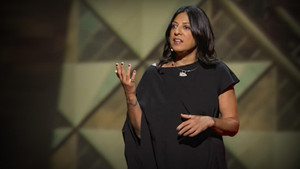
But as engineering professor Deb Chattra reminds us, water, power, and communications are all part of networks of infrastructure.
Systems, and this systems model, is a helpful approach to think about how we should take care of each other and the planet after the break.
These days we're surrounded by photo editing programs.
Have you ever wondered what something or someone actually looks like under all the manipulation?
It's me, Elise, and this October I'm giving a Ted Talk in Atlanta about finding true beauty and a sea of artificial images.
I'm so excited to share the stage with all the amazing speakers of the Ted Next conference, and I hope you'll come and experience it with me.
Visit go.ted.com slash Tednext to get your pass today.
And now our Ted Talk of the Day.
I'm going to tell you about the most boring part of my day.
So on a typical evening, I come home to my apartment in Cambridge, Massachusetts, and I turn on the lights.
I stream music to my stereo from my phone.
I head into the kitchen to make dinner.
For making someone like pasta, I would get water from the sink, and I put it on the stove to heat up.
I'd get vegetable dough of the fridge.
I would get olive oil, spices, out of the pantry.
I can have dinner on the table in about 20 minutes.
I'm pretty good at this.
And then it takes me maybe another 10 to clean up.
So that's like scraps in the garbage, watch the dishes, and I'm done.
Boy, right? But here's the thing.
When I come in the door, and I flip that light switch, those electrodes might be getting their push from a nuclear reactor, from a hydro-lichicity project, a thousand miles away.
The gas of my stove comes from National and local pipelines that heat my house.
It also heats the hot water that I do the dishes in, and then that water drains to one of the largest waste water treatment plants in the country, and then out to Boston Harbor.
So, alone in my kitchen, I am a continent-spanning colossus.
Like I am a cyborg. I have these technological systems at my literal fingertips.
These are our infrastructure utilities.
This is energy. It's fuel.
It's electricity. It's water.
It's sewage. It's telecommunications.
It's a supply chain behind that.
And these are the systems that make my life as I know it possible.
And on that typical night, they're basically invisible, at least invisible to me, right?
There are thousands of people whose life and time and work and care goes into making sure the system is functioned.
They are the real world of technology in which we all live.
So, I'm Archeson. He's a development economist, and he's known for studying some of the poorest communities on the planet.
He made the case that the reason why we want money is usually not because we want it for its own sake, but because it gives us agency.
In his words, it gives us the freedom to live the kind of life that we have reason to value.
So, my parents moved from India to Canada before I was born, a group in Canada.
And I think about the way that my foremothers would have spent so much of their day getting clean water, getting fuel for cooking.
And I actually think about the fact that a very large fraction of the planet that is still true today, and that is especially true for the people who look pretty much like me.
Right? This is the main thing that they do with their days.
The difference between my life and theirs is not so much that I have a bank account, how much I get paid, is a lot more to do with where I am.
Because my individual agency, my ability to do things in the world, is really underpinned by these shared infrastructural networks.
I'm going to give you an example, because the most significant example of this is artificial light.
So, having light on demand means that you can kind of do what you want, when you want to do it.
It's a superpower, and this is what I mean by agency, right?
It's that ability to act in the world.
So these infrastructural networks make it all as possible by bringing these resources to where we are and to where we use them.
So, as you heard, I'm an engineering professor, and that means I think a lot about the physical reality of the world.
And one of the great truths is that energy is the thing that we need for anything to work.
We pay for it in dollars, but energy is the true currency of the material world.
And in many cases, the most efficient or the most powerful way to harness and distribute resources is through networks.
And networks are intrinsically collective.
So, if you think about roads and wills, they have to go somewhere, telecommunication systems become more valuable when more and more people are connected to them.
Electricity is cheaper.
For thousands of years, people have had shared water supplies, because if you have a bunch of people living close together, everybody needs water every day, water flows down hill.
So, it makes sense to cooperate, to build a reservoir, to build an aqueduct, to build pipelines, to bring water to where your shared community is.
And of course, you have a bunch of people living close together.
The value of some kind of shared sewage treatment very quickly also becomes clear.
So, our infrastructural systems connect us to each other, but they also connect us to the land around us.
And this is now true really on a global scale, right?
So, if we think about the internet, we think about mobile phones, we think about particular and sort of shipping, transportation, aviation, these are now planetary networks.
And our infrastructural systems also connect us to our past and future, because the networks that we live in today are the physical manifestation of the values and choices that were made by people who came before us.
Right? It's like, what are those networks going to be?
How would we use them? Who would benefit from them?
And of course, who would be harmed by them?
And of course, we look at these networks today and we're like, that seems like a really uneven distribution of benefits or even an unjust distribution of benefits.
That's worth keeping in mind, because of course we are the people who are now making the decisions for those who are going to come after us, right?
So, I think of this as infrastructural citizenship.
The idea that we have a relationship to each other, actually we have a responsibility to each other, that has nothing to do with what it says in our passport.
But it has everything to do with the fact that we are like physical living beings that are located somewhere on the planet.
So, you know, I said that infrastructure is how we get our agency, our freedom to act in the world to do things.
And it's all powered by energy, because everything is powered by energy.
And that means that for most of us, most of our energy usage is then mediated, it goes through these infrastructural systems, because they shape and they enable what we can do every day.
So, things like, where does your electricity come from?
How is it generated? What kind of transportation options do you have?
Do you drive? Do you take public transit?
Do you fly? Things like, where does your water come from?
Or how do you heat or cool your home?
So, many of these physical systems then, they both enable what we can do, but they also make it really hard to do other things, to do alternatives to those things.
Our infrastructural systems, basically because of the way that we use energy and because they shape and enable what we can do, it means that they also constrain the things that we can't do, right?
It makes it much harder to do things that are not the things that are made possible by these systems.
And what that means is, actually, this is a thing we're all familiar with, right?
Because we know how hard it is to move the needle on climate change as individuals.
That our individual personal decisions, like it's hard for them to do anything because there's really no such thing as a personal carbon footprint because things go through these systems.
So, what that means is that we know that we need to decarbonize these systems, right?
But these are physical systems that are embedded in the landscape.
And that means that we need to think about these sort of landscapes as a whole.
As we think about decarbonizing these systems, we can think about making them resilient and transformative.
The reason why this matters is that these physical systems that are embedded in our landscapes, we think of them as boring and reliable, but our landscapes, of course, have been stable.
And we know that that's not the case anymore, right?
Climate change, what climate change is?
It's making our landscapes less stable.
And that means, you know, this is longer heat waves, this is stronger hurricanes, this is fires, this is flooding.
Everything that we think about as extreme weather events, you know, this idea of a natural disaster, right?
The thing that makes it a disaster is precisely that it's not natural, right?
It's that it affects humans and human communities.
We, you know, we talk about the severity of natural disasters and what we often feel that severity through the impact on infrastructural systems.
So, you know, we think about like what systems go down, how long they go down for, how long it takes for them to come back up again, how big the outages, right?
And then who's affected?
And because our landscapes are becoming less stable, sooner or later, the who's affected will be all of us.
And now back to the episode.
But we can flip this around.
Because as we decarbonize the system, as we transform them, we have the opportunity to make them resilient, to make them responsive, to make them more equitable.
This, I mean, our infrastructural systems, they are the most powerful tool that we have for how we can respond to climate change.
And we know that we can do this, right?
Because after decades of policy commitments, we've done the research, we have the renewable energy technology to transform this.
We know that there's at least a pathway.
And once we know that a pathway exists, we know that many pathways exist.
But we can only choose to walk those pathways together, right?
This is no longer an engineering problem to be solved.
And this is where being an infrastructural citizen comes in, right?
It's this idea that we can sort of stand together to identify and articulate the benefits of these systems, starting with the fact that they're really not economic, right?
But the way that these make our lives work is not just a question of money.
And that's even more true for the harms, right?
That we can't think of these as sort of monetary harms.
The harms that we do to each other, the harms that we do to our communities, the harms that we do to our shared ecosystem.
So I said I think a lot about the physical reality, right?
So the physical reality of our planet is that energy is decentralized, it's distributed, it's abundantly, it's endlessly renewing.
But that's not the case for matter.
Our planet is mostly a closed system for matter.
And we know that we're really hitting these kind of physical limits of the idea that we can take stuff out of the ground, and we transform it, and we consume it, and then we dump those atoms somewhere else, right?
Because this is what happens with CO2 in the atmosphere from fossil fuels, it's e-waste in landfills, it's microplastics in the ocean.
The thing that's changed is that we can now make the decision to get off this one way conveyor belt from extraction to pollution, because we can use renewable energy to close these materials loops.
And we know that we really want this, we actually really need to do this, because what we're looking at doing is transforming the entire technological basis of human civilization, right?
No biggie. So this is the work, and we are just at the beginning of this work.
And that means we know we don't have all the answers.
But we do know that we want infrastructure networks that embody an ethics of care, and not the utilitarian calculus of harms and benefits.
Because we know we don't have all the answers, we actually expect to get better answers, it makes sense for us to build systems that are small scale, that are reversible, that are responsive, that are exploratory, and then to connect these together to make these larger networks.
And they need to make sense for who they're for, because they give us the freedom to live the kind of lives that we have reason to value.
We want to do this at a local scale, and we also want to do it at a global scale, because if you can't solve a problem with the same mindset that created it, you also can't solve a problem if you're not thinking on the same scale as the problem.
So this is not a do-it-yourself thing, this is about do-it-together, but everywhere.
So in the 20th century, we built these kind of massive, monolithic systems, and I have to say, I am a fan of our charismatic megastructures, so in the US, that's the Golden Gate Bridge, it's a Hoover Dam, these were built as monuments, and they were built to endure.
But in the 21st century, our infrastructural systems will need to endure not like monuments, but like forests.
So if you think about a forest ecosystem, it's powered by the sun, it's rooted in the earth, there's no waste, everything is basically used to grow new things, it endures, but it actually evolves and changes with time.
And of course, it provides a place where all school live, they can thrive.
Our infrastructural systems are how we take care of each other at scale, so that we can take care of each other as individuals.
They underpin our agency, and they really foster and allow us to develop our social relationships with each other, and that's especially true with things like global communications, right?
That means that this is now culture on a global scale.
All of these are about what it means to be human, right?
And that means that a commitment to a shared infrastructural future is a commitment to our shared humanity.
So this is the world that we can create together.
Thank you. That was Deb Chautra at Ted's Countdown Bloomberg Green Festival in 2024.
If you're curious about Ted's curation, find out more at Ted.com slash curation guidelines.
And that's it for today.
Ted Talks Daily is part of the Ted Audio Collective.
This episode was produced and edited by our team, Martha Estefanos, Oliver Friedman, Brian Green, Autumn Thompson, and Alejandra Salazar.
It was mixed by Christopher Faisy-Bogan, additional support from Emma Taubner, Daniela Balarezo, and Will Hennessey.
I'm Elise Hugh. I'll be back tomorrow with a fresh idea for your feed.
Thanks for listening. PRX.