Discussion keeps the world turning.
This is Roundtable.
You're listening to Roundtable with myself, He Young.
I'm joined by Steve Hatherly and Yu Shun in the studio.
Coming up, habits are meant to be automatic, but invisible habits?
They're wired so deep into our subconscious that we don't even realize they're driving us.
These invisible routines quietly shape our lives.
So here's the question.
What happens when we finally start noticing and changing them?
And need a boost to crush the week?
Our special segment, Motivational Monday, is your ultimate adrenaline shot to kick things off strong.
Our podcast listeners can find us at Roundtable China on Apple Podcast. Got a question that's keeping you curious from social issues to tech and everything in between?
Let us take a stab at it.
Email us at roundtablepodcast at qq .com.
Emails are fine but voice memos get extra love because it's our listeners favorite to hear your voice, your thoughts.
Now let's switch gears.
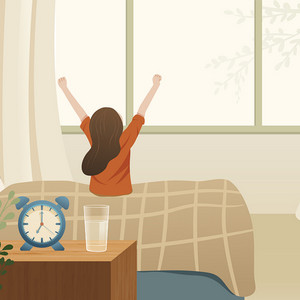
You probably remember what you had for breakfast this morning but if I asked you to examine your routine more closely, you might discover more blank spots.
Do you check the weather app before choosing your outfit?
Which shoe do you slip on first without thinking, we tend to glide through these little routines without noticing.
But these so -called invisible habits are quietly programmed into our subconscious, shaping how we move through each day.
In what ways do they change our lives?
And how can we consciously break a bad habit or or build a new one?
First of all, please explain what are invisible habits and why do we overlook them so easily?
Well, we overlook them so easily perhaps because human beings are creatures of habits, aren't we?
And human beings have known this for a very long time.
There was a psychologist from the 1890s by the name of William James, and he observed that about people too.
He said, that we are nothing but bundles of habits.
But why are they invisible?
Well, we do things on a daily basis that are sometimes conscious decisions and sometimes unconscious decisions.
The unconscious decisions are the ones that we lose sight of, right?
And these are the invisible habits.
Our brains are wired to be efficient.
And when we can turn frequent actions into habits, that we don't have to think about, then it allows us to save our brain and body energy for the bigger decisions in our daily lives that require more attention.
So if you think about it like this, I don't know if this is a good way to explain it or not, but let's say when you wake up in the morning, you have 100 energy points and you have to spend those energy points somewhere throughout the day.
You're going to do that in many different ways, through conversations with people, through consuming media, through doing your job.
So when we can, when our brain can write a little script and put it in the back of our brain, something that you already know how to do because you've done it a billion times, then your brain and your body work together to do that automatically so that you don't have to spend energy there, save your energy points for somewhere else.
Those are called invisible habits.
Yeah. Just like actions performed automatically Automatically without any conscious thoughts.
Like which hand you should wash first. Which foot you should move first. Do you wash your hands separately?
Mine are always together.
I know what you mean, the soap comes.
Yeah, or which driving route you should go daily.
Like these are things that you like do automatically and you don't even think about it.
But actually, these are decisions you are making every day.
For example, yeah, cars, a good example, right?
Right. When you're coming up to an intersection and you hit your blinker, turn left or turn right.
That's not a that's not a conscious decision.
Right. You're not saying, OK, here comes the intersection.
I'm going to prepare to press the blinker now.
No, it's just something it's auto mode.
Your brain goes into auto mode for certain things during the day.
This one, this example, I'm actually a little unsure about because if you're driving to work, for example, and you know there's one best route considering the traffic flow the time of the day etc and it's just the most calculated and tried and tested decision so is that a habit that's but when you get in your car and you automatically follow that road that path you're not think you don't wake up in the morning and think okay how am i which direction am i going to go today it's It's just an automatic an automatic thing.
But, you know, it's the best decision.
Well, yeah. But just because it's the best decision doesn't mean that we're actively consciously thinking about that decision.
Yeah. I think one example is that sometimes I saw people saying that like after maybe three kilometers of driving, then he realized that he's actually driving.
This has happened to me before.
I don't know if it's three kilometers.
Yeah. Oh, I'm so happy to hear this because I felt so terrible about that.
I thought I was the only one.
You've never done this Hayoung, you're driving.
And then all of a sudden you just, you, all of a, you feel like you've just woken up and you don't remember driving for the last like 35, 40 seconds or something.
It's so automatic for your brain because you've done it so many times.
That's one of these invisible habits.
I, that might have more or less happened to me, but years ago, cause I, after this incident, did you know folks out there, apparently the The highest rate of you getting into a car accident is the minute when you drive out of your compound, out of the garage.
Oh, within that, like, first kilometer or something like that?
Yeah. Yeah. And that happened to me once.
And then I realized, yeah, stop sleepwalking when you're, like, sleep driving.
Don't do that. So anyway, after reading that study and it happened to me and then I realized, yeah, that's something I should definitely not do.
Yeah, they can be bad for us, right?
Right. For example, another quick example would be like snacking on some unhealthy sweets or something.
Right. You're just your hand goes in the potato chip bag and then to your mouth and then to the bag.
You're not thinking about it.
You're just doing it when you're watching a TV show or something.
Right. Well, the invisible habit I can think of was actually connected to our first topic today.
Whenever you talk about shopping for anything, I just pull out my smartphone and look up the shopping e -commerce app.
I think that's the invisible habit that comes to mind and now we understand how habits operate under the radar let's compare them with something more conscious goals.
Yeah so these are a little bit different right our goals seem like our primary motivation only because we're more conscious of our goals than maybe how strong our habits are and becoming aware of if you become Become aware of your invisible habits.
It can boost your chances of successfully forming maybe new effective habits or breaking harmful ones.
The hand in the potato chip bag or the resolution that comes on January 1st every single year.
If we can break those habits, it means we can live a more dedicated life by doing things that we know that are good for us as opposed to things that are bad for us.
habits are like you can think like this as well they're like algorithms operating in the background that power our lives and the good ones helps help us to reach our goals our habits can help us to reach our goals more effectively and more efficiently conversely though the bad ones will make things harder on you harder to reach your goals um and and reach that level of success that you're achieving so to break down the difference really simply your habits are your your everyday things, and your goals are kind of like your long -term things that you want for yourself.
Yeah. The aspect I can think of is the continuity of habit and goal.
Habit is more like they can be lifelong and ongoing and no end point, while goal are more like something that you would like to reach. But right after that, it's quite easy to rebound after being achieved.
Yeah, so the connection between habits and goals, this is what the experts say, is that let's say you want to read more books, right?
So you set a goal, I want to read 50 books by the end of the year.
Or you can simply create a new habit.
And that habit might be, oh, whenever I leave the house, I'm just going to make sure my book is in my bag with me, my novel is in the bag.
So if you take the bus or the subway or whatever, you're more likely to open it and read it and make that habit become a part of your daily life as opposed to, say, having the goal of 50 books at the end of the year, which is a harder thing to achieve because it's not making it a part of your daily life.
It's making it something that you want to do, something that you want to accomplish.
So can you see the difference there?
Hmm. Like when you having that kind of goal, you may like compromise the quality just to meet the goal, like reading meaningless books to reach a quota, but not actually to form a habit of reading.
Yeah. And goals, they have a start time and an end time.
Right. And if you set a goal that's too far away from you, meaning on a timeline, then it's easy to start to fail that.
right so let's compare the habit and the goal thing again for reading books um 50 50 books by the end of the year oh it's only the first month i'm gonna wait until next month to start and then i'm gonna wait until the next month and now suddenly you've got more that you need to do in terms of your reading to catch up to your goal which causes people to revert back to their old behavior of not reading because, oh, 50 books now by the end of the year, it's already September and I haven't read more than three.
I can't do this. So you'll go back to your old behavior.
If you make it a habit, meaning take that book with you, wherever you go, I'm going to open it up.
Well, those pages are going to add up, right?
They're going to become a part of your daily life, reading 20 pages, 25 pages.
And you're way more likely to get to your goal.
If you can start that that positive habit.
Right. Goals can inspire us, but it's the habits we build that carry us across the finish line.
So if habits are so powerful, where do they come from?
Well, habits can be seen as context response associations.
Let's take a look on how our environment triggers with or without our awareness the routines we repeat.
Yeah, Yeah context response associations what does that mean well habits come from when people repeat an action which is cued by some trigger in your environment so after you repeat an action enough times then you'll do it mindlessly if you encounter the cue and the environment so let's say for for example, you have a really good habit of eating some fresh fruit every day or some healthy snack.
Right. And that snack is in the kitchen next to the refrigerator.
So when you walk into the into the kitchen, you think, oh, yeah, I'm going to grab some healthy nuts or something like that.
That's an easy example, isn't it?
Where the kitchen is the trigger for the healthy habit.
and like another example that I can think of is that of course it's not like you know life -changing good habit for you having a little let's say dock or a little shelf at the at the I think the door of your house and put your keys in on that and that actually is a environment that reminding you to bring your keys with you yeah every time that you get out of your house basically that That is the, I think, idea of creating an environment to cue yourself to do that kind of habit and without thinking.
Yeah, and it doesn't mean that your brain isn't awake when you're doing these types of things.
It just means that it doesn't really, your conscious mind doesn't really need to participate too much because you're triggered by the environment.
Your brain knows what the outcome will be.
You're not really paying close attention, but that environment can trigger that type of behavior.
Yes, and this reminds me of an earlier discussion we had.
It was aired on June the 17th when we talked about decision fatigue, and I am a very lazy person.
I do not want more fatigue than what I'm already feeling in life.
Therefore, I've felt and I've reaped the benefits of building a good habit and just go on autopilot, not to waste any brain power on following that good habit.
I might have shared this on the show before, but I'll say it again, doing 100 crunches every night before going to bed.
This is a habit that I can call it an invisible habit till now, I think.
I've conducted it for 20 years, and every time when I look at my rock -solid, toned, well -defined abs, I don't think about the work I put in.
You just do it at one go without even panting because I've been doing it for so long.
And where do you do those crunches?
On my bed. Okay. Every night when I go to bed, if I don't do my crunches, I feel like today's incomplete.
It's like my abs are saying, I need some love here.
That's automatic. Is there anything in your room that makes, as soon as you walk in the room, you think, oh yeah, it's crunch time?
No. Or bed? It's just when I've done everything and finished my skin care routine, et cetera.
Oh no, actually, this is before that.
and when I see my bed I'm just like yes gotta do this you know when you see your bed yeah that's the trigger that's the environment that that is the environment is or even more of a biological clock in your body now because at the night it's just like when you haven't brushed your teeth you feel like your mouth is not clean that's another example yeah interestingly there was a study from from 2011 that found that people who said that they'd eat when they got emotional weren't actually likely to snack in response to negative feelings.
So what that means is that the eating behaviors were better explained by habit.
There was another study from 2022, they did this from USC, University of Southern California, and they were talking to coffee drinkers there.
And the participants said they drank coffee when they were tired.
But what they found from the study was that when they were drinking their coffee, there was actually no connection, a very weak connection to if they were feeling tired at the time.
They didn't need the coffee.
It's that time of day was the trigger, the environment that triggered that habit.
And their brain thinks, oh, I'm drinking.
If you ask them, oh, I'm drinking because I'm tired.
But it's not actually the reason for that habit.
It's the environment, it's the time of day when the clock strikes 3 p .m. or whatever, they know it's coffee time, and off they go.
So we justify our habits sometimes for reasons that we think are true, but sometimes they're not true at all.
And that is so true for me in the morning.
I don't know if you're like me, the minute you walk into the office, you're like, I'm tired.
Anyway, need a boost in my morale and I got to get my morning coffee.
So when you see the office, that's the environment.
That's the trigger for the habit to go get a coffee, right?
Coffee time. And so these habits can be really, really good if they're things that are good for our lives, but they can be bad as well.
So I guess the tip here is to recognize the ones that are not helping you in your life and try to get away from those ones and introduce more that are actually helping you achieve your goals, get to your goals and make you the person that you want to be.
Then how, sorry, then how can we break a bad habit and build a new one?
Yeah, that's exactly what I want to say.
Don't think that you can change overnight, like make changes step by step, maybe shift your bedtime from 12 a .m. to, let's say, to 10 p .m. by going to bed 15 minutes earlier every three days.
Oh, yeah. Like little, little step.
Yeah. And then maybe you can now then get to the time of like 11 p .m. Well, the hard part is that bad habits make us feel good, right?
Even habits that don't benefit us still feel good to our brain because there's a dopamine release.
And it does this with anything that helps us survive or our brains might see it as survival, like eating, for example.
But like you said, Yushin, they're not easy to break because our brain is oftentimes not our best friend when it comes to things that are great for us.
Even though we know certain things are bad for us, certain habits are bad for us, our brain still desires it.
it. So when you try to convince your brain, but I like staying up until midnight because I can check, you know, my social medias and play my smartphone game.
And I, I really enjoy that time.
So you try to convince your brain.
Otherwise your brain doesn't want to do it.
That's why habits are so hard to break.
How do you break it?
Then I think there are many ways that we can think about.
And, uh, I guess for today's show, at least the, um, step of awareness, that seed has been sown.
So much of who we are is shaped not by what we decide to do, but by what we repeat without thinking.
If we want to live with more intention, maybe the first step is to look at our autopilot mode and ask if it's really taking us where we want to go.
Find the reason you want to change and then make the change.
Create an environment and create the cues that can remind wind you up good habits.
Yes, these are definitely some things, some tips one can use.
Coming up next, Motivational Monday.
Steve, what do you have for us?
Yeah, this is right on the heels of talking about breaking bad habits and making new ones in your life.
Here's the full quote.
Sow an act and you can reap a habit.
Sow a habit and you can reap a character.
Sow a character and you can reap a destiny.
So, sowing an act, sowing a habit, sowing a character, it means implementing that into your life.
So, what this means is, if you implement a certain type of behavior and you do it repeatedly, then you can turn that behavior, that positive behavior into a good habit.
Now you have that good habit and let's say you make another good habit, then another good habit, another good habit.
Then those habits start to define your character as a person and when you start to redefine your character as a person with all these amazing positive habits, then it's going to change the course of your life.
And that's why it said, and you reap a destiny.
I really love this because I really believe in it.
Start by making small changes in your lives that are going to become good habits.
Then you'll start to become the person that you want to be on the inside, which is very often very difficult to do, right?
Representing, reflecting on the outside, the person that you want to be on the inside.
Do enough of those those positive habits, you'll start to change yourself.
And when you start to change yourself, you'll change the course of your life.
Beautifully said. I think of habits like footsteps in the sand.
Each one may seem small, but together they shape the path we walk.
And when we change the direction of even a single step, like Steve mentioned, we slowly steer toward possibly a new horizon.
And this is really shifting what I used to believe.
leave? Well, I'm an optimistic pessimist, I suppose.
I used to think that the end is always the same, but maybe you can change the end.
And actually, here's something I like to share just writing off the coattails of invisible habits and what Steve shared.
Our second topic discussion Today reminded me of an old quote, Socrates had it right when he said the unexamined life is not worth living.
The quote has become one of the most enduring philosophical ideas encouraging people to reflect on their beliefs, choices, way of life, social norms, rather than simply following routines teens, or let me say social norms blindly.
And I think today's discussion really enlightened me on multiple levels.
And it's a little terrifying, but I think I've just mustered the courage to put my life under the magnifying glass a little bit and examine the visible invisible habits and the action that mount from that and that's what I want to share and you shouldn't what do you have for us I think my motivation Monday is also quite related to decision -making war the topic that we discussed it's also about the habits but it's more about do not procrastinate doing things because it is small because oftentimes when the things is quite small we will think okay what can i can do it later i can resolve it later
so one example is that when i want to tidy up the room but the clutter feels overwhelming then i delay it and delay it and delay it and then it's becoming overwhelming even small things pile up to be stressful and then having a habit of do it right away like even if it's really small like wash the dish right after i had meal it is It is something that you can do instantly that make your things go easier and make things, I think, lighter and smoother.
And that is the kind of habit that we can do so quickly and to change a little bit of your lifestyle and make your life a little bit easier.
I know, but our brain is just our enemy sometimes, right?
I'll do it tomorrow.
Take a break. You deserve it.
That's not going to make a difference if you leave it until tomorrow.
you have to fight against your brain in those moments to create those positive habits, right?
Yes. And collecting those dirty dishes in the sink.
And I think that's something we all did in college, maybe, or when we first started living on our own.
And I don't know, for me at the time, I just thought that accumulating a certain pile sounds a bit gross, I apologize.
But just and And then getting them done at one go, I didn't mind that that much. I lived with three other guys.
The dishes got so horrible one time, and nobody would do them because they were so horrible.
We decided as a group to put them in the shower.
We gave our dishes a shower.
I mean, we were 19 years old, right?
It was the most disgusting apartment that nobody should ever want to live in.
That's for sure. And we learn from our mistakes, I suppose.
Yes, we do. Yes, and that brings us to the end of today's show.
Joe, thank you so much. Steve Hatherly and Yushun for joining the discussion.
I'm Hayoung. We'll see you next time.