
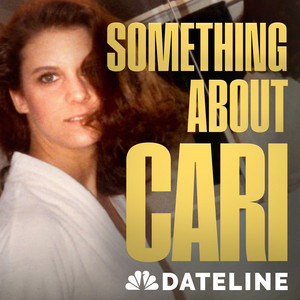
[Something About Carrie: A Descent into Obsession and Deception]-[Introducing: Something About Cari]
📋 Summary
The Haunting Spiral of Carrie’s Obsession
In the latest investigative podcast from Dateline, titled Something About Carrie, host Keith Morrison peels back the layers of a chilling true-crime narrative that defies traditional expectations of disappearance and stalking. What begins as a seemingly standard missing person case quickly evolves into a harrowing exploration of psychological warfare, arson, and murder, centered on a woman named Carrie.
The Illusion of Disappearance
The story opens with a mother’s nightmare. Nancy Renu’s daughter, Carrie, vanishes without a trace, leaving her family in a state of profound "torment" and "confusion." For a parent, the initial experience is described as "hell," characterized by "frustration" and "helplessness." However, the audience soon learns that Carrie had not actually vanished in the conventional sense. Instead, she had retreated into the shadows, weaponizing technology to wage a relentless campaign of psychological terror against her family and a former lover.
A Torrent of Digital Hostility
The core of the conflict lies in Carrie’s obsessive behavior, fueled by what appears to be an intense, unrequited rage. The podcast details how she sent "50, 60 [text messages] a day," creating a constant barrage of hate designed to "wound her worried family" and "terrorize" her former partner. The narrative probes the underlying causes of this shift: why did a "brief fling" result in such pathological hatred? Why were "deadly attacks on an imagined rival" deemed necessary? These questions drive the investigative momentum, painting a portrait of an "angry, vengeful, tireless" individual whose digital stalking "went on and on and on for years."
From Stalking to Arson and Murder
The stakes escalate dramatically as Carrie’s obsession migrates from the digital realm into the physical world. The podcast highlights the terrifying reality of being targeted, with victims describing the experience as "very, very jarring on the nerves," akin to being "in the middle of a horror movie." The severity of her actions transcends mere harassment, moving into the territory of "arson" and even "murder."
Innocent bystanders are not spared in this chaotic web. The podcast recounts instances where individuals were "blamed, even framed" for crimes they did not commit, leading to traumatic encounters with law enforcement. One victim recalls a detective "yelling" at them, demanding information they did not possess, illustrating the collateral damage caused by Carrie’s machinations.
A Love Story Gone Wrong
To provide context, the podcast explores the origins of the tragedy in the American Midwest. It traces the trajectory of a "blooming love story"—a moment where two people meet, eyes lock, and there is an instant, palpable connection. Yet, this love story "withered fast," transforming from a promising romance into a macabre display of human capacity for destruction. Keith Morrison notes that even in his line of work, where they are "never surprised by what people can do," the sheer scale of this case left him "blown away."
Conclusion: The Horror of the Unknown
Something About Carrie serves as a grim reminder of how quickly human relationships can devolve into instruments of terror. By documenting the transition from a simple romance to a sequence of events that are "beyond diabolical" and "beyond the macabre," the podcast invites listeners to examine the dark side of obsession. As the series unfolds, it promises to uncover the truth behind the smoke and the text messages, providing a comprehensive look at a case that remains deeply unsettling to all those involved.
Deep Learning with ListenLeap


