
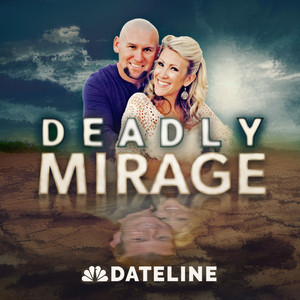
[Deadly Mirage: Unmasking the Dark Secrets of a Desert Eden]-[Introducing: Deadly Mirage]
📋 Summary
The Illusion of Perfection: A Desert Mirage Turned Nightmare
In the vast expanse of California’s high desert, there existed what residents called "the happiest place on the high desert," a community envisioned as "Palm Springs light." It was a place where the "American dream neighborhood" seemed to manifest in reality: spacious houses, children cycling through streets, and a lush, green "desert oasis" that served as a sanctuary for a "tight-knit group of 30-somethings." These neighbors lived by a philosophy of close connection, even interpreting the "biblical commandment to love thy neighbor" in unconventional ways, including engaging in shared sexual activities within their marriages.
The Catalyst of Chaos: When an Outsider Enters
The tranquility of this suburban Eden was shattered by the arrival of a "handsome outsider." What began as friendly overtures—text messages expressing a desire to "come hang out with you guys"—quickly devolved into a toxic environment. The once-harmonious community began to experience "discord," leading to social fracturing, extreme cruelty, and the necessity for legal intervention, specifically a "restraining order." The narrative of an idyllic lifestyle was revealed to be nothing more than a "mirage."
Betrayal and the Anatomy of a Murder
The podcast Deadly Mirage, hosted by Josh Mankiewicz, delves into the grim reality that followed this social upheaval. The story centers on a "railroad outpost" where "passion leads to murder." The investigation into a "sudden death" uncovered that the victim "knew his attacker," implying that the perpetrator possessed "intimate details about his life."
Central to the mystery is a disturbing intersection of faith and criminality. The killer, in a chilling display of hypocrisy, attempted to weaponize prayer to facilitate a cover-up, pleading, "God, please help this to be a method, a mode that keeps our stories being told." This highlights the central theme of the series: the "danger of indulging delusions" and the catastrophic consequences of allowing "daydreams to become nightmares."
A Web of Indiscretions and Bad Choices
The narrative is deeply rooted in "love and betrayal," characterized by a string of "indiscretions and a string of bad choices." The interviews reveal deep-seated mistrust, with one subject noting, "I didn't trust her from day one." The psychological toll of these relationships is evident as the subjects reflect on their descent into darkness, admitting, "Her frustrations became my frustrations. Her demons became my demons."
When confronted about his autonomy in these events, one participant concedes, "Do you make decisions on your own at any point? Yes, I sure do. Apparently many bad ones." This admission underscores the podcast's exploration of personal accountability amidst a culture of shared secrets.
Conclusion: The Darker Side of the American Dream
Deadly Mirage serves as a cautionary tale about the facade of suburban perfection. By peeling back the layers of a "seemingly perfect, beautiful family that had all these secrets," the podcast exposes how easily a community built on shared experiences can spiral into violence. It is a story that encompasses "sex, religion," and the fragility of human relationships. As Mankiewicz aptly summarizes, the case "had everything," serving as a grim reminder that behind closed doors, even the happiest places can hide the most dangerous of truths.

Deep Learning with ListenLeap


