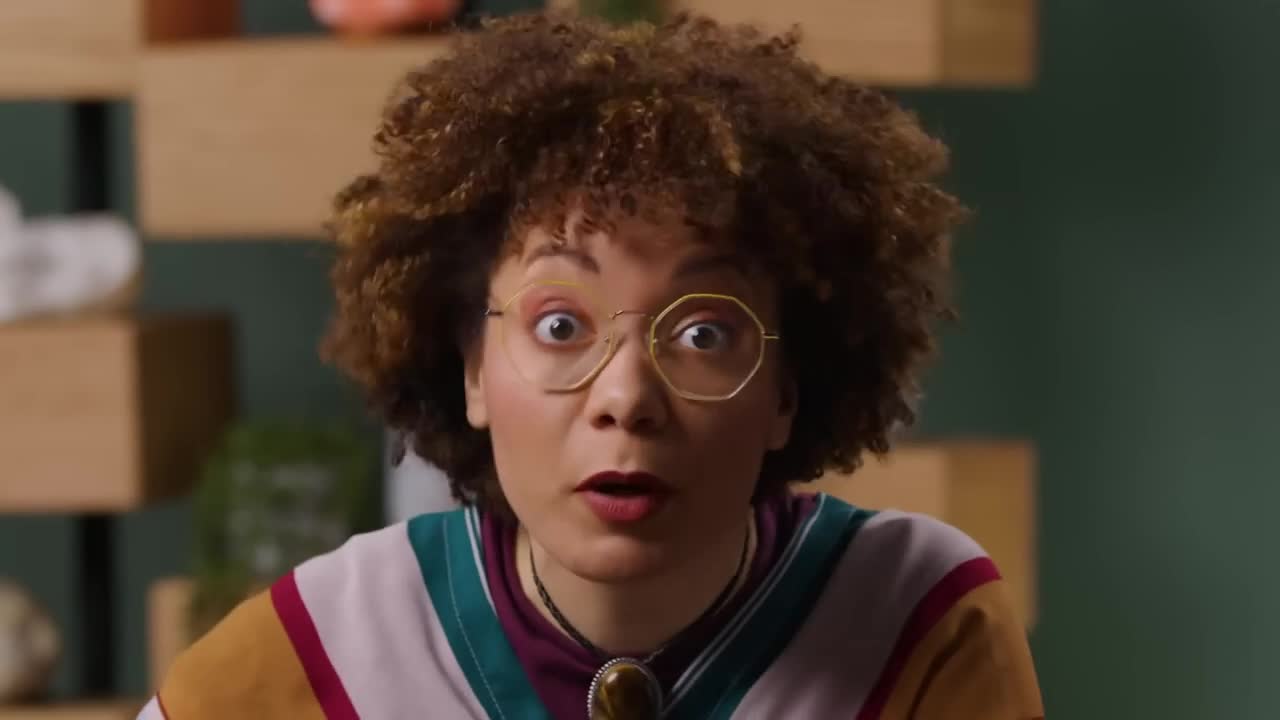
Hi, I'm Sage, and this is Earth.
Explosive volcanoes oozing red hot lava, gargantuan gorges carved millions of years ago by rushing rivers and earthquakes that trigger 100-foot waves.
Our planet is massive, but it's also tiny.
It's a sparkling gemstone that can fit in your hand.
Grains of sand that travel across the wind.
The scale is truly mind-blowing.
So don't let anyone tell you geology is just a bunch of rocks, okay?
This is Duane, the pet rock.
And this is Crash Course Geology.
Rocks rock.
I hate puns.
So what is geology, exactly?
Broadly, it's the study of the Earth.
But that can mean a lot of different things.
And it has.
Let's go back in time for a sec.
Long before geology became its own field of study, indigenous peoples gathered a wealth of knowledge about the Earth.
Havasupai oral tradition describes a river carving the Grand Canyon.
Which it did!
And there's a site in Arizona with fossilized Dilophosaurus tracks that the Diné or Navajo traditionally called place with bird tracks.
Way before we knew, birds were descended from dinos.
For many native cultures, then and now, the Earth and its elements are part of an interconnected system that we humans are a part of.
Check out Crash Course Native American History to learn more.
Across the world, early scientists and scholars wanted to understand the world around them.
Persian scientist Ibn Sina noticed that layers of rock build up with the youngest rocks on top, an essential observation for dating specific rocks.
In the same century, Chinese thinker Shen Kuo figured out that moving water shapes the land through erosion and inferred from fossils that Earth's climate has changed over time.
Take another trip across the globe and you'll find the folks who usually get all the credit for developing geology as a science.
Europeans!
There was a 16th century German scientist, Georgius Agricola, so-called the Father of Mineralogy, who observed that rocks appear in layers and that earthquakes and volcanoes might have something to do with Earth's molten guts.
Like, kimchi has everything to do with mine.
And then there were the 18th century naturalists, James Hutton and Georges Cuvier, who had opposing theories about geological activity.
James was like, Earth's geological processes work the same today as they have forever.
And Georges was like, Proposteres, geological processes are caused by major catastrophes.
They were both kind of right, but we'll get to the dirt on that drama in a later episode.
Wait, I thought we weren't doing any more puns.
Unfortunately, a lot of the geologic knowledge acquired in this era was a result of combing stolen land for resources that could be exploited for profit.
An indigenous and enslaved people's perspective and contributions to European colonizers' research went largely unacknowledged.
Rather than recognize the interconnectedness of different aspects of geology, early Western geologists largely explored questions about the Earth without considering the relationships between those phenomena.
But in the 1960s, a different theory became widely accepted that really shook things up.
I'm talking about the theory of plate tectonics.
The idea that massive plates make up the Earth's outer layer and slip and slide and smash together, building mountains and making and breaking continents.
Because of these plates, Earth's got a surface that flexes.
Hit em with the flex, Duane.
And Earth's the only planet we know with active tectonic plates, a quality some geologists think is essential for life.
With the discovery of plate tectonics, geologists finally recognized the Earth as one big, interconnected system.
Kind of like the indigenous people were saying all along.
So the definition of geology has changed over time and humans have been interested in it, since we could pick up rocks and be like hey, cool rock.
But why?
What's geology got to do with us?
Well, if we operate under the assumption that Earth is one big interconnected system, then we're a part of it.
Not just in jewelry stores or museum gift shops.
Talking about the minerals in your toothpaste, the smartphone in your pocket and the building you live in all products of geology.
And that's just on a small scale.
Geology also shapes the places you live, like through people's settlement patterns or the places they've formed and maintained communities.
Let's dig a little deeper.
Behold, the east coast of the United States.
We've got plains here and rocky terrain here.
And this guy in the middle?
That's called the fall line.
It connects a string of major cities like a big connect-the-dot.
Millions of years ago, this was the Atlantic coastline.
But over time the Appalachian Mountains eroded and all that worn away rock or sediment was carried out by rivers out here, forming the coastal plain.
If you were on a boat traveling upstream from the Atlantic just a few hundred years ago, you'd get stuck at this fall.
You'd hit fast moving rapids, waterfalls, you know, things you shouldn't go chasing.
If you wanted to trade stuff, you'd have to dock your boat and haul your wares on land until the water was calm again.
Indigenous people knew this, but European colonizers just had to figure it out the hard way for themselves.
As they struggled to get further inland, they needed a place to set up camp.
So at the fall line, that point where they couldn't travel any further, upstream settlers built pit stops.
And those pit stops became towns which eventually grew into cities like Philadelphia Baltimore, Washington DC, later home to a variety of avian mascots.
I still don't know what Gritty is, though.
And today, if you ever drive down I-95, you'll be right on that fall line, traveling the boundary no boat could ever cross.
These kinds of geological considerations have affected where people lived throughout history.
Like, humans have always loved building civilizations on river plains with nutrient-rich soil.
I see you, Mesopotamia, with the good dirt.
Geology not only affects where you live, but also what it's like to live there, including the weather.
Like the Andes Mountains of South America are so tall, they create the world's driest desert on one side and keep the Amazon rainforest lush on the other.
Geological features even influence the hazards of living in a certain area, like flooding landslides, earthquakes and tsunamis.
So yeah, geology is way more than rocks.
And we need folks to study all of this.
Like geochemists, who examine the chemicals that the Earth cycles between the land, water, and sky.
Oceanographers, who study geological processes under the sea.
Paleontologists, who dig up old, dead stuff.
And planetary scientists, who explore the geology of other worlds.
Although sometimes geology is all about rocks.
Don't worry, we didn't forget about you, sedimentologists.
You won't find geologists in just one place, either.
They're all over the planet, at universities, research labs, government agencies and companies focused on energy mining and the environment.
Somewhere out there, there's a geologist who identifies the minerals in the laptop you use.
A geologist who monitors your water, making sure it's safe to drink.
There's even a geologist protecting you from Earth's powerful blasts and shakes.
And despite geology's complicated history, today's indigenous geologists are making waves in the field.
They're combining traditional knowledge with Western science to bring new insights and better shape our policies for doing geological work on tribal lands.
Like Shailene Chavarria, a member of the Pueblo Santa Clara, who works to incorporate Pueblo teachings and culture into the US.
Geological Survey.
Geologists often work like detectives to piece together the truth about Earth's past and present using clues in today's rocks.
He rolled into my office polished to a luster, with a stone cold swagger of a boulder 12 times his size.
Somehow, I knew he had a story to tell.
Where were you 50,000 years ago? but he just wasn't talking.
Geologists can help us answer big questions, like how did life form?
Can we reduce the risks of earthquakes and volcanic eruptions?
What will happen to the Earth as its climate warms, and how can we manage its natural resources sustainably?
It might even help us figure out how the Grand Canyon got here, because we don't totally know.
I could just ask you.
What's that?
Wait, no way.
Can you tell them?
Lost against rock on our code?
No, I understand.
As far as we know, Earth is a one-of-a-kind, and we humans get to experience it all.
It's mountains volcanoes, glaciers and hoodoos which they seem like they shouldn't exist, but absolutely do.
Look at that thing.
Geology and Earth itself. is too big to just be one thing.
It involves fossils, water, oil, and weather.
It reveals processes that have been chugging along for billions of years, dramatically transforming our planet over time.
Oh, well, we bop around playing video games and doing our nightly skincare routines.
Geology touches your everyday life.
And if you let it, it'll give you a grand new perspective on the world.
There's so much more to learn.
I can't wait to hit rock bottom together.
Come on, that one didn't even make sense.
Next time we'll look back at Earth's past and discover what it was really like in its toddler years.
See you then.
Thanks for watching this episode of Crash Course Geology, which we filmed at our studio in Indianapolis Indiana, which was made with the help of all these dope people.
If you wanna help keep Crash Course free for everyone forever, you can join our community on Patreon.