
[Enhancing English Fluency: Expanding Your Vocabulary Through Paraphrasing]-[Intriguing SHADOWING English Speaking Practice]
📋 Summary
Enhancing English Fluency: The Power of Paraphrasing
Language proficiency is often defined by the ability to express the same idea through multiple linguistic lenses. This lesson focuses on the art of paraphrasing, demonstrating how simple shifts in vocabulary and phrasing can elevate your communication style while retaining the original intent.
1. Refining Everyday Descriptions
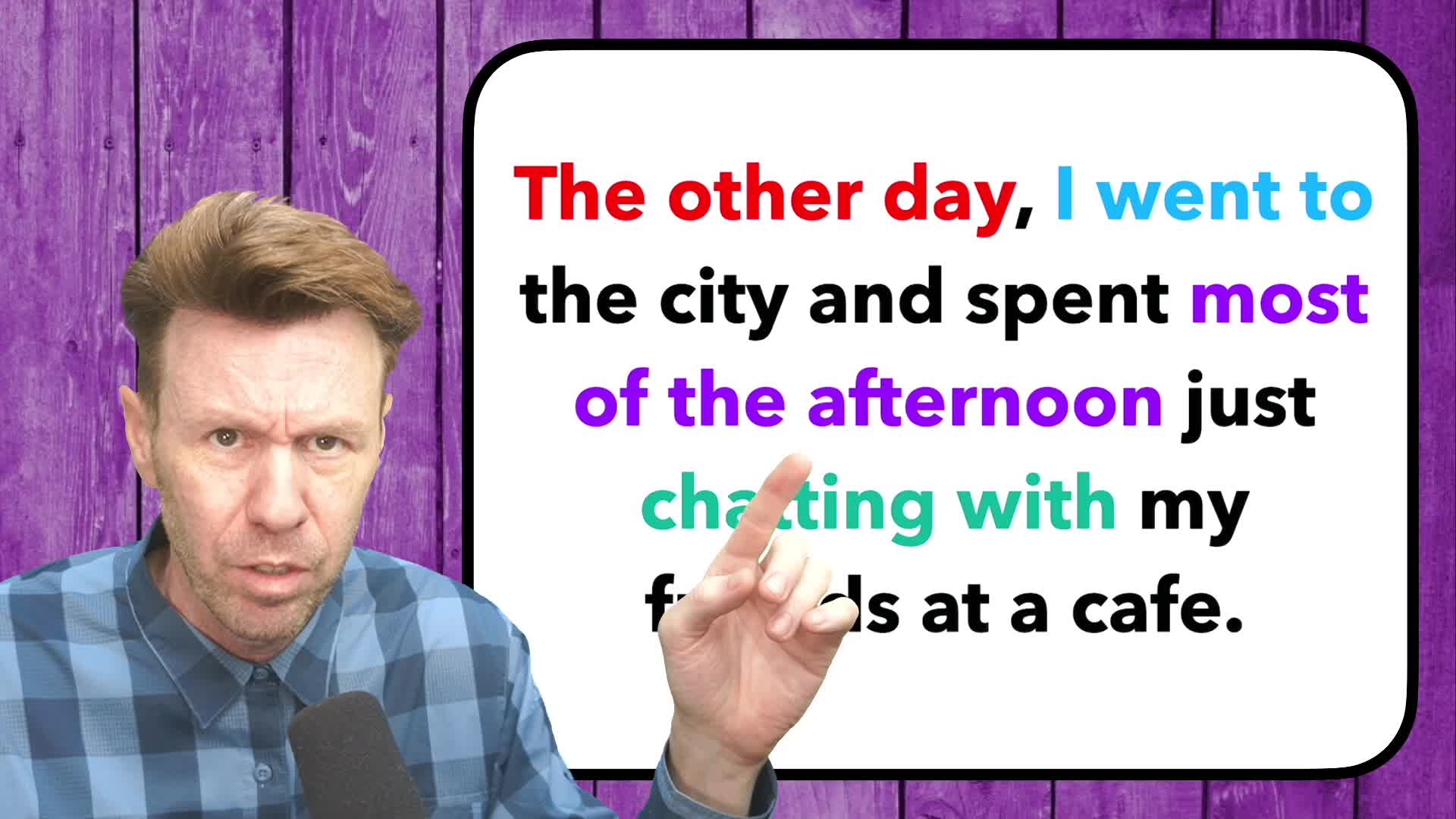
Replacing common terms with more descriptive alternatives is a hallmark of advanced language use. For instance, instead of saying "the other day," one might use "recently." Similarly, when describing the duration of an activity, the phrase "a good part of the afternoon" serves as a more sophisticated substitute for "most of the afternoon." These nuances allow speakers to convey specific tones and levels of formality.
2. Nuances in Social Interaction
Social vocabulary is rich with subtle distinctions. The speaker highlights the difference between "chatting with" and "catching up with." While both involve conversation, "catching up with" specifically implies that the participants have not met in a while, necessitating an exchange of updates like "what you been up to?" Furthermore, moving from casual terms to professional ones is illustrated by substituting "talked about" with "discussed" when addressing "various topics" such as "office politics"—a term used to describe the complex drama inherent in professional environments.
3. Sophisticated Narrative Transitions
Narrative flow is improved by using precise vocabulary to mark transitions. The lesson suggests moving from simple phrases like "before we left" to "before we departed," and replacing "get together" or "hang out" with the intent to connect "in the near future." Additionally, the act of discovery is elevated through the use of "stumbled upon" or "happened upon" an old bookstore, rather than simply finding it. This effectively changes the feeling of the action from a routine task to an unexpected, serendipitous event.
4. Emotional Precision and Temporal Context
Expressing emotion and time effectively helps listeners engage with your story. The phrase "I was thrilled" provides a much stronger emotional impact than a simple "it made me happy." Similarly, creating a sense of atmosphere is achieved by noting when "the day was winding down" instead of merely stating "as it was getting dark." Finally, moving from "making plans" to the more forward-looking "planning for the upcoming weekend" demonstrates how vocabulary choices can frame the speaker's mindset.
Conclusion
The practice of shadowing—repeating these variations aloud—is essential for internalizing these differences. By actively replacing basic terminology with more descriptive synonyms, learners can transition from functional English to a more expressive and nuanced command of the language. As the instructor emphasizes, progress is made "one step at a time."
Deep Learning with ListenLeap


