Join today's top women retail leaders at the 2026 Women in Retail Leadership Summit, held April 27th through the 29th at the JW Marriott Miami Turnberry Resort.
It's three days of fresh thinking, leadership insight, and meaningful connections.
Register now at womeninretailsummit.com and save $100 with discount code PODCAST.
Hello and welcome to Women in Retail Talks, the podcast where C-suite executive women in the retail space share their stories of professional growth leadership development, personal journeys and more.
I'm Marie Albages, Managing Editor of Women in Retail, a membership-based community of executive women at leading retailers and brands.
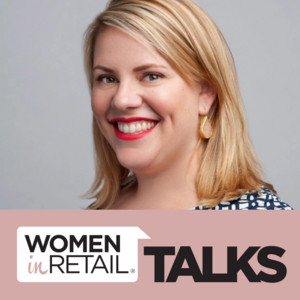
Today, I am so excited to be joined by Katie Wagner.
She's the Chief Commercial Officer of TOMS And in this episode Katie reflects on the 20th anniversary of the company, how she was brought on as CCO, how she's really thinking about wholesale as a growth engine, and so much more.
So please join me in welcoming Katie to the podcast.
Thank you so much for having me, Marie.
I'm so excited to be here with you today.
Yes, I am so excited to have this conversation.
I have been a fan of Tom's for so long.
I mean, I remember I had a pair of those red iconic Alpragada shoes when I was 19.
Now I have a pair of Tom's boots.
I wear them every day.
So I'd love to just jump into.
You know this is the 20th anniversary this year of Tom's as a company.
I'm sure that you all hear countless stories like mine.
So I'd love for you to just kind of big picture reflect on the company's first 20 years.
You know biggest successes, biggest challenges, biggest missteps.
You know wins in your eyes coming from especially.
You know a fresh perspective as someone who I believe you just joined the company in December.
Yes, 20 years.
I can't believe that it's been incredible that Tom's has been around for 20 years.
And like you, I also remember my first pair of Toms, which were also the red Alpurgatas.
And I think Toms is one of those brands that just there are so many people that have this emotional origin story.
I was just in New York at Fannie in December and ran into a gentleman and we were chatting about the trade and the industry.
And he reflected back on his first pair of Toms when he was in high school and really said that was kind of my first bit or dive into social consumerism, conscious consumerism, right.
That was kind of my first purchase that I made myself, that I said wow, I'm really doing something that might have an impact or that is good.
And I love hearing these stories.
It's really always exciting and a great moment, I think, for us on the brand side to be able to reflect people's experiences and how they wear the brand, how they use the brand, how the brand is a part of their lives.
When we think about 20 years in business and what the next 20 years look like,
I think one of the biggest successes for Tom's was really proving out that business could also be a vehicle for good.
These things could exist together.
You know Tom's was a brand that sort of was a pioneer in this space and, you know, really created a movement, I think, and a category defining movement around good in business and really created some expectations across that in the industry.
When I think about you know the learnings for Tom's, there was probably an over-reliance on the Alpurgata, just with the massive and wild success and how quickly that scaled.
Sometimes it's phenomenal to have a brand where you have an iconic product like that.
There are brands that work their entire history to create an icon that Tom's had and so naturally created with consumers.
That also can lead to a tendency to over-rely on that.
And then Tom's probably swung the pendulum and tried to get you know as far away from the Alpurgata as they could and really think about you know all of this product extension you know around the Alpurgata and into other categories.
And so now we're in that place of really fine tuning that balance.
The icon is such an important part of not only our heritage, but our future.
And again, something that we're really thrilled to have that sort of resonance with consumers.
And we also are really pleased with, I think, the other product categories that have taken hold and what consumers know us and love us for outside of the Alpurgata as well.
You know, I think one of the biggest strengths of the Tom's brand is our willingness to evolve.
And that also means evolving some of the giving impact and the impact model that we have with the world today.
And so as we think about just the evolution of the brand, how do we innovate?
How do we continue to evolve the products so that we're meeting the modern consumer where she is and where her family is?
Okay.
So you said a lot there, and that's totally my fault because I asked you a very loaded question.
So I want to get through a little bit of everything that you said, and I want to start with, you know, the social consumerism part of it.
And that was one of the things that really drew me to the brand as well.
And I think it was ahead of its time for what it was.
I mean, of course, now we see more and more brands and retailers doing that and invoking those values and making that impact.
But at the time, it was kind of unheard of.
And so, you know, I wonder if you can speak to how the, the impact has changed over time.
I think Tom's started off as the the buy one, give one, where you were donating a pair of shoes, and that has evolved into something a little bit different now.
So maybe talk about that first.
I think, you know, for Tom's, what has been consistent over 20 years is the giving model, even though that has evolved and changed.
So we started with the one for one model.
We moved into charitable giving for children around education, health and well-being.
And, you know, sometimes that can feel performative from brands.
And I think in the case of Tom's, we've been really consistent over 20 years.
We have never moved away from a giving model, although how we do that in the vehicles have changed over time.
We have 20 years of giving an impact under our belt over 200 million that we've given in the form of shoe donations or cash grants.
Over 106 million lives that we've had the ability to impact in a positive way.
And so I think what's important for us as a brand is that we don't get too stuck in a particular way of doing something because that worked once or that was really novel or innovative at the time.
We really want to make sure that we are keeping pace with the community around us and the greater community outside of our small ecosphere and really thinking about the biggest ways that, from a business lens, we can be impactful to others.
I love what you said about how, you know, a lot of times this can come off as performative and a way to kind of work around.
That is to show that consistency, like you said, of doing some sort of giving for 20 years.
And I wonder how important would you say that aspect of Tom's is to your current customers and maybe kind of any leads or, or you know, future customers?
I don't think that people are buying Toms today, and probably not as much in the past either, just because of the impact model that we have.
I think consumers are making decisions on their purchases a lot of them, whether it's footwear apparel, home goods, any of those based on things that they truly want, that they value and they think are going to be meaningful in their lives, whether that's an emotional purchase or a need-based purchase.
I do think though, with the Tom's brand and the consistent impact model that we've had, people do feel really good about the purchase.
And when we think about the Tom's brand generally speaking and how people perceive it, we always have really positive associations with the brand.
Even those people that maybe don't desire the brand or haven't purchased Tom's recently, they always have these positive associations with the brand and And we know that that's tied to our history and consistency around the impact model.
Yeah, that's great.
I mean you hear it in surveys all the time of like.
You know people, especially the younger generation.
They're more conscious about you, know how they're spending their money on things that are a value.
But at the end of the day, like what they're purchasing decisions are actually showing, is that that might be more of a secondary or tertiary kind of value to them.
But I like what you said about you know it's still valuable.
You still getting testimonials that they're feeling good about it.
Yes.
And it's, I think it's so hard today to be a conscious consumer.
There's a lot of work that's put on consumers, right.
To do that.
I mean you've got to check everything, from you know foods that you're eating to cookware that you have in your home, to any types of product.
And I think that's one of the things with the Tom's brand too, because we've had this heritage and two decades of giving an impact is there is a little bit of there's, there's credibility to that right.
That people don't have to work so hard to understand who is this brand?
What do they do?
Is the purchase that I'm making from them.
You know, something that I can count on from a conscious consumer perspective.
And you know.
So I think that history is really important so that we can remove some of the skepticism from the process.
And so that consumers don't have to work so hard to figure out the full journey of the product and purchases that they're making.
Yeah.
Yeah.
So another thing that you said that I really want to touch on is, you know, you mentioned over the last 20 years maybe an over-reliance a little bit on that classic shoe and then kind of a swing maybe the other way into all of these new categories and new product offers.
And now, you know, hitting 20 years, finding that balance between the two.
I think I read an article where you know your CEO, Jessica Alzing, said that you know there might be a resurgence or she wants to kind of bring back that classic Alpargata shoe.
So, you know, how do you balance that?
And especially, you know, coming as as CCO and coming in fresh how.
What is your kind of perspective on on how you balance all of that?
Yeah, again we're.
We're so fortunate that we have a recognizable icon that people can associate with the brand.
And so I think for us, we as a leadership team, are looking at that and saying how do we lean into that again?
You know, 20 years later, the icon is ripe for a reinvigoration and renewal.
Everything that we see in fashion is cyclical to some degree and things come and go.
And you know, I think the brand had taken their eye off of the Alpurgata and really thought that the other product categories were We're going to be so important in the story of the evolution of Tom's.
And that is true.
We always want to be able to extend wearing occasions of the brand into other categories and give her reasons to continue to expand the brand in her closet.
And we want to come back and center the icon and the importance of that within the brand.
And so we're thinking about, you know, how do we breathe energy into the Alpurgata brand? and espadrilles, those types of silhouettes?
Are those new materializations?
Are those fun collaborations?
How do we think about our influencer and ambassador strategy and really lean into people that already love the brand and are wearing the brand, and this is an authentic choice for them?
And how do we amplify that through their own channels, through our own channels?
So I think there's a lot of exciting things from a product perspective that we have up our sleeves in the next couple of years that will bring the brand, and particularly the Alpurgata, back to a top of mind position with consumers and a really desirable and relevant silhouette for them again.
Yeah.
Now, I imagine that you and Jessica were having those conversations pretty early on.
And correct me if I'm wrong, but I think you were first brought on as an advisor before officially stepping into this role.
And I know that the two of you worked together at Crocs.
So you've got that kind of like footwear background as well.
So you know, I'd love to kind of hear a little bit about how you came to the decision to accept the position and move the brand forward.
What those early conversations with Jessica were like.
Jessica was already at Tom's and we talked over the summer and she said hey, you know, I just started working with Tom's.
I'd love for you to come on and take a look at the wholesale business and work, to advise us a little bit on wholesale growth.
And just, you know, I trust your opinion.
I trust your judgment.
Tell me what you think of the brand.
And so I really started digging in, in particular with wholesale but, you know, in all aspects of the brand.
And I was really pleasantly surprised to see the performance of the brand and the strength and the performance of the brand.
Probably like you and others, you know, that we sit in the industry, whether that's in footwear and retail or kind of adjacent places to this.
You know, I always had positive associations with Tom's.
I always thought, what a great brand.
It's a recognizable, iconic brand.
And it was one of those that's like, whatever happened to Tom's?
Why isn't that, you know, a popular brand today as it was, you know, 10, 15, 20 years ago?
And so when I started I wasn't sure what I would get into kind of digging through the data, but the sell-through was phenomenal and we had some great retail partnerships.
Our .com business was performing really well for us.
And so that to me, you know, despite anything else that maybe needed to transform with the brand, if I was already able to see great sell-through on the product and resonance with the consumer.
That was a signal to me that, okay, there is a great opportunity ahead for this brand.
Those were sort of green flags to me to say this is a brand that is ripe for a revival, to be reinvigorated.
And we think about it, just as it's been a little bit sleepy, you know, for the past several years, and we're ready to wake that brand up.
And you know, Jessica and I worked together for many years and I really admire and respect her work, both on the commercial side and as a leader.
And that's enabled us to really move with speed and trust.
We already have a rhythm in our working that we don't have to, you know, sort of reinvent or figure out how to navigate through, And I think any time that you're going through a brand transformation, being able to move with speed and trust is paramount.
And, you know, that's been the case thus far.
So it's really exciting to be on board with Tom's now.
Well, you know so many of our members at Women in Retail you know ask about how do you keep those relationships going?
So I mean, the retail world is so small, footwear probably, you know, with a niche even smaller.
So any advice for, like you know, keeping up those conversations, keeping up those relationships so that you know, down the line it could lead to a collaboration like this.
Yeah, I think you know Jessica and I stayed in touch over the years and we would reach out from time to time to one another just to say hey, I see what you're doing here.
I like that or check in about, you know, our kids or other things.
But we didn't talk regularly either.
I think what I have learned in the course of my career is people really remember how you show up, professionally and personally.
And so even people that I run into, either at industry events, or customers that I haven't seen in a long time, retail partners that I maybe hadn't engaged with at a last brand event, They remember the types of interactions that you had and the person that you were when you last saw them.
And I think these things just sort of come together.
And I try my best, when I think about kind of the network and those that I've interacted with over time, to keep up with those relationships.
But what I've really taken away is the impacts that I have in the moment that I am with those people, really honoring that time listening, being heard, being really genuine, that interaction.
That is what leads to these.
You know, the next is kind of being picked up again down the road.
And so I think sometimes we forget that, right.
And particularly as, as you know, folks are starting their career, know and women are kind of told to get out there and work your network and it's so important to meet and do all of these things that is important but it's really about the quality of those relationships that you have over time as opposed to the number of people that you interact with and my goal is always you know when i'm leaving a room or an interaction with someone for that to be a positive experience even if it's a place where you're having to deliver bad news or it's you know an unpopular decision You want that interaction to be positive and say, oh, Katie Wagner was someone that I could count on or she was a strategic thinker or she really listened well in this meeting to us or she really put the retailer needs over, you know, something else that was taking place.
And so that there's that positive association with the interaction.
And that has served me really well in my career.
Right.
It's like, how do you want to be remembered?
Right.
Absolutely.
That you're showing up.
Yeah.
Yeah.
Yeah.
Any lessons, business or leadership-wise, that you picked up at Crocs that you have brought along to Tom's?
I think one of the biggest lessons that I learned at Crocs was really staying focused.
And there's an inherent simplicity to business sometimes that we overlook.
And I experienced that at Crocs too, and not dissimilar from Tom's, where Crocs had taken their eye off the icon and the classic clog.
And you will remember having been in retail for some time as well.
There was a period where that shoe was dead.
No one wanted that.
And the brand.
Really, the leadership team at the time came in and looked at that and said this is the icon we have to lean into this.
And Crocs had gotten into golf shoes and heels and all kinds of different categories outside of its core competency.
And the big lesson in that was keep things inherently simple.
And so when we're able to stay really focused and this is something bringing to Tom's as well particularly when we're thinking about a brand revitalization keeping things really focused and simple,
We don't need to get too crazy.
We don't have to get too clever.
There are just some fundamentals that need to be in place and keeping what is, you know, true and precious to us within the icon and just what we know.
We can stay really in data informed in our decision making.
And again, we can move with speed and really get things in front of the consumer very quickly.
And that playbook, I think, proved its success really well at Crocs.
And they've gone on to continue to do tremendous things.
And I'm just so proud of that brand and my time there and all of the many lessons that I had at Crocs.
But I think again, just that focus on inherent simplicity and really coming back and centering to that point every day with your teams is really a recipe for success.
Yeah, you used the word playbook.
I was going to go with the word roadmap.
I mean, we've seen these kind of brand revitalizations a lot in the last few months and years.
You know, specifically brands that were were really hot at the same time that Tom's was, you know, Crocs being one of them.
Claire's is another one that I'm thinking of.
Vera Bradley is another one that I'm thinking of.
Where you know now they're on like the shop talk stages and the NRF stages talking about you know those, how they revitalize the brands and how they like, made those things cool again.
So it's exciting to hear that you're coming to the table with that playbook and having guided Crocs through that as well, which is really cool.
Yes.
I know you said you were brought on to also look at wholesale.
And so I'd love to hear how you're looking at wholesale as the big opportunity, how long Tom's has been in wholesale and where you kind of see that growing.
I'm such a huge fan of the Wholesale Channel, by the way.
And I know that that isn't always the case for folks.
But I've spent a good portion of my career working in wholesale.
And one of the things I love about wholesale or probably the biggest thing is, I think it's such a true test of your brand and the brand strength, because the consumer is shopping in a multi-brand environment and your product is put right up against some of the best brands in the world or things that have really compelling and phenomenal price points.
And so there has to be a reason for the consumer to come back.
We get spoiled a little bit, you know, in our own DTC environments sometimes because we have complete control over that ecosystem and the consumer shopping experience or or the largest amount of control there.
And um, it's not always a true test of the strength of your brand, and wholesale is that environment.
I love the wholesale channel too, just for you know the importance around scale and visibility, brand storytelling, and a place too, where you might not get to tell your brand story as overtly as you do in your own channels.
And again, if you're able to do that in a really elevated and compelling way and the consumer is choosing you, that's so much more powerful, I think, than what we're able to do sometimes in our own direct-to-consumer channels.
I think when we look forward, you know Tom's has always been in the wholesale channel and wholesale partners for a long time have been, I would say, at the crux of the brand and really strong, large partnerships they've had over time with some of the best retailers in the US, as an example, and around the world, but largely in the US.
And I think we're really focused on thinking about an integrated marketplace approach, how we also, as we think to scale the brand, how we think about managing a healthy marketplace where all of these retailers, across channels and different tiers and with our own direct-to-consumer channel interact, and how we really meet the consumer where they are.
We have consumers in our brand that some shop on our own website.
They also love to shop in Nordstrom.
They're going to DSW for purchases.
They're also on Amazon for purchases.
And so Tom's can cross their path across many of their favorite retailers.
And it's really about thinking about how we show up in an elevated way and we're really meeting the consumer where they are at that particular time or in that shopping channel.
And then really thinking about wholesale as a vehicle for long-term sustainable brand health.
And it's not just a sales lever where you can create volume, but this is really a strategic part of the portfolio.
Right.
It really is about.
You know, you can no longer get by without tying all of those channels together, right?
Absolutely.
I think you look at brands too that tried to take an only D2C approach or scale back wholesale and really lean heavily into D2C.
And you've now seen those brands either start to go into wholesale for the first time or to start to migrate back to wholesale and think about that again as a piece of the portfolio and a really important strength.
Because there's a reason consumers are shopping in these multi-brand retailers.
There are reasons, really compelling reasons, that they are there and they are loyal to those retailers.
And I love embracing that.
I love finding that intersection point of what is important to the Tom's brand, what is important to the retailer.
And when we find that, that's really where the magic is.
And we're able to help scale the business and do that in a really strategic way, because we're doing that both through the brand lens and the retailer lens.
It's so interesting to hear you talk, even though you've only been with the company since December and we're recording in mid-January, so not even 90 days, right.
And you've articulated all of this so eloquently.
What does your first 90 days look like?
How are you communicating with your teams?
What are you observing?
What are you looking for?
I'm really trying to take a moment to listen to the teams.
What do they know?
We've got some phenomenal team members.
You know that have been at Tom's for a long time and seen many phases of this journey.
We also have team members that are brand new and coming in with a different perspective that you know doesn't have the history and the heritage of the brand, and so
Really just trying to come from a place of curiosity, ask those questions.
Understand, how are we getting to the decisions when we get to that point?
Are we thinking creatively?
Are we thinking from a place of inspiration?
Are we thinking big, you know, about how we impact the consumer or people?
Really, you know kind of stuck in the here and now in the past.
And so it's really nuancing that.
We've got places of tremendous momentum with the brand, and we've also got some places of friction.
And so it's also about, you know, thinking about those two things together, navigating that.
And then really helping the teams get clear on priorities and decision making.
I think what I've seen from the team so far is, intuitively there's people that you know are headed in the right direction and know what to do.
And sometimes it's about giving the confidence to their voice and say yes, this is the path that we want to go down.
Or hold on, should we think differently about that?
And is there a new insight that we have or something that we've learned that might cause us to pause and think differently about this?
And so we're really focused, now that we're at the start of the new year too, on setting the brand priorities for the year, making sure people are really clear on what those are, and knowing that we've got to move with agility and speed.
And that there may be points in time during the year where we say, oh yeah, our destination is still the same, but we're going to slightly, you know, alter the roadmap, right?
Or the journey plan to get there, because we've learned something new or we've seen something, or a retail partnership is manifesting, you know, faster or more positively than we anticipated.
And so you know.
To summarize, I think a lot of it is is pausing to listen to the teams, giving confidence to their voice and helping to get to decisions and priorities as quickly as we can.
So how do you set the stage and really create a culture, especially coming?
You know you're new to the company, you're in the C-suite and you mentioned curiosity.
How do you create a culture where your teens feel like they can come to you with curiosity and and know, express what they're, what they're feeling, what they're thinking, you know, even if it doesn't, if it's outside of the box or it doesn't really align with what's going on, how do you create a culture where you they, do feel confident to use their use, their voice?
Part of that, i think, is really demonstrating a curiosity.
First, i i don't know everything just because i'm sitting in the seat of chief commercial officer right, this is a title that i've been given And I've got, you know, a couple of decades of experience under my belt.
And there's things that I'm still learning every day.
And so I think part of that is demonstrating to our teams that they are experts in certain areas and they are here and on this team for a reason.
And I want to hear from them.
This is not just, you know, a place where I get to come in and give a little lecture and they say OK and go off and do these things.
I want that to really feel like a conversation and I'm okay being wrong.
And I will say that to team members all the time to say here's my perspective and I'd love to be wrong or I'd love for you to challenge me to think differently and really just helping to set the tone.
And sometimes people pick up on that right away and they lean into that and others.
It takes a little bit of time for them to trust that and know that that's okay.
But I think we've got to lead by example in that way and really allow our team members to come, You know, with innovative thinking out of the box, thinking otherwise, and sometimes it's our job to to say I love that idea and that might be something that we think about next year or the year after.
We've really got to stay focused on this priority and then share the why around that and other places to.
It's a wow, that's incredible.
Let's run with that.
That fits really well into priorities that we're getting after already.
Take the lead on that.
How can I support you in that?
And so I also always want to come to my team.
You know, and I try to end, you know, as many of my calls as I can, or throughout the call, or meeting or in-person interaction, saying what support do you need from me.
How can I help, support you and make this go faster or remove some barriers for you?
And sometimes there's an ask, sometimes it's a nope.
I just needed to run that by you and get your buy in or see how you felt, and you know, have you challenged my thinking on that?
And so we just we have to just start doing that and I think then it really naturally kind of falls into place and people pick up on that and there's a working rhythm that's created.
And then you start to see that sort of spread in the organization and they are doing that and their meetings that they are running, you know when you're not there in the room.
And that's the goal, I think, for any leader is really harnessing the potential of the talent that you have in the organization.
So we were at an event where we held an event a couple weeks ago in New York with a panel of female leaders from like Victoria's Secret and Citizen Watch Company and Performance Beauty Group and Children's Place.
And they all said you know, sometimes it's just better to be the quiet leader in the room and just, you know, wait before responding or not be the first one to respond, so that you can kind of create that curiosity and let people kind of fill the space with their ideas.
As a leader you're used to, or people kind of gravitate to oh she's the leader we have to do whatever she says.
Well, she doesn't say anything.
That kind of breathes more space into allowing for those discussions and that creativity.
Absolutely.
I love that approach.
And that's also a hard one for me.
And I think we also have to kind of know our individual styles.
I tend to be Pretty extroverted.
I have no problem finding my own voice, literally and figuratively, and and that's something that has always come fairly naturally for me and I always have, you know a particular perspective or an opinion on something.
It's very rare that you will.
You know, hear me say nope, I don't have anything to offer in this.
I always feel like i've got something that I can.
So I try to manage that.
I think that approach works really well for some.
And I love that and really allowing the voices to come out naturally.
If you're not that person though, or that's hard for you, or that's not going to be something that works with your style I think that's OK too.
We just have to be really conscious about making that space and coming back and saying Marie, what are your thoughts on this?
I'd love to hear from you, you know, or just being able to call out and say I could be totally wrong about this someone share with me some data or insider learnings that can better help shape my perspective around this, and I think that's when we get that kind of conversation going and a lot of people participating, everyone starts to feed off of that.
When we're in a collaborative session together and you know people are really able, I think, to get to the decision making, we're able to have really productive, healthy conversations where we're also challenging one another.
Cause I think that's so important when we're working together whether that's virtually or in a room together is that we're all challenging one another.
And it's not just a lot of head noddings and say, yes, I agree with that.
It's a, are we all aligned on that?
Or are we sure that's what we're hearing from our consumer?
Are we sure that ties into the strategy?
And we'll take a moment and someone will say you know yes, I think it is.
And for these reasons, or someone else might say no.
No, I'm not aligned to that, or I'm curious around this right.
And the more that we can use that framing around.
I'm curious around or this, you know.
This has me wondering.
I think we're all getting to a really healthy place and we're allowing a lot of voices to come into the process.
Yeah, I think that's the key is it's not just here's what I think, period, or here's what we should do, period.
It's let's involve as many voices as we need to in order to get those creative juices flowing and get that conversation going.
Absolutely.
I love that.
Okay.
So I have one last question for you and then I promise I'll let you go.
It's kind of big picture talking about, you know commercial roles that you've been in over the last two decades across global footwear brands, across retail.
What would you say has changed the most about your role, about the chief commercial officer role in general?
You know, two decades ago versus today,
I think at the center of this is moving at the pace of the consumer.
The consumer is able to move at such a tremendously fast pace today for all of the reasons that we know and you know a device that's in their hand at all times, that connects them to every corner of the globe and the newest, latest trends, or whatever they want to see.
And so you know, I think a couple of decades ago probably, you know a chief commercial officer, chief revenue officer.
They were really focused on, you know, just driving sales and profit and really kind of staying in their lane, so to speak.
And now, I think in this role you don't have to be an expert in performance, marketing or all of these other areas, but you really have to know how all of the areas of the organization are coming together to serve the consumer and to get the attention of the consumer and to put your brand in front of them in the most compelling way.
And so we've just it's so much more collaborative, I think, today internally for brands to be able to really find success in that.
And this is a hard business.
Things aren't overly complex, right?
Like how we think about selling products and putting our brand in front of consumers.
Isn't rocket science?
However, it's incredibly nuanced.
And there's so many brands now, brands that are just being created in someone's basement or garage today, that are all vying for the attention of consumers and large brands alike.
And it's really about trying to find those pockets of opportunity, those small wins listening, you know, and bringing that back in.
And so I think just the pace and speed of this is so much greater than what it was 20 years ago or 10 years ago.
Even that sitting in this role and for any kind of leader like you've got to have a high commercial acumen and you've got to be able to come in and keep pace with a consumer and move at their speed and probably a bit ahead of them, so that we're able to anticipate what their needs are and how we're going to best serve them.
I expect that our listeners are just nodding their heads vigorously and all of that.
I think a lot of people would agree with you that are listening.
Katie, this has been wonderful.
I wish I could talk to you for another hour or so, but we are out of time.
Thank you so much for all of your insights and your transparency.
And I wish you the best of luck in your next 60, 90 days and beyond at Tom's, and I can't wait to see what's next for the brand.
Well, thank you so much, Marie.
It was a pleasure to chat with you today and appreciate all that you do to lift up women and retail and these voices as well.
And I'm just excited that you continue to pay attention to the Tom's brand.
You know, 20 years later,
So thanks for being a fan and it was a pleasure to chat with you today.
If you've enjoyed this episode, please take a few moments to rate, review, and subscribe.
Lastly, if you're a female retail leader interested in joining our community at Women in Retail Leadership Circle, visit womeninretailcom.
Slash apply.
Thanks and until next time, this has been Women in Retail Talks.
Reimagine your leadership at the 2026 Women in Retail Leadership Summit, held April 27th through the 29th in Miami.
Register now at womeninretailsummit.com and save $100 with discount code PODCAST.