Legendary investor Ray Dalio's new book, How Countries Go Broke The Big Cycle, explains the mechanics behind big debt crises.
Larry Summers says Dalio's brilliant iconoclastic approach is an invaluable resource, and Hank Paulson says it provides a solution to what is the biggest and most certain threat to our prosperity.
Read it to understand the greatest economic issue of our time.
Available now wherever books are sold.
From the New York Times, I'm Nataly Kiotrowieff.
This is The Daily. Today, the story of Operation Spider's Web, an audacious sneak attack by Ukraine that caused billions of dollars in damage to Russian warplanes, with drones that cost as little as $600.
My colleague, Mark Santora, explains why this strike is already being seen as a defining moment in the evolution of modern warfare.
It's Wednesday, June 4th.
Mark, we're coming to you because you are one of the correspondents who has been on the ground for the longest in Ukraine.
You've been reporting from the front lines, embedding with the Ukrainian military.
And we now know what happened this past Sunday was unlike anything we have seen so far in this war.
You and a team of reporters have been working to uncover exactly what went down, how it went down.
And I want to get to those specifics here today.
But first, can you just take us through the events as you experienced them on Sunday?
Sure. So, you know, you get used to a lot of reports of explosions every day here, whether it's here in Ukraine or something going on in Russia.
But on Sunday around 1 o 'clock, we started to get these really strange reports of explosions at airfields 3000 miles from Ukraine, first we saw reports of explosions at an airfield all the way in Siberia.
And as they started to come in, we started to get videos of how these attacks were being conducted.
And it was really weird looking, right?
Because, you know, we're used to long range Ukrainian drone strikes going after Russian targets inside of Russia.
But here, we saw these trucks parked on the side of the road and then these small little quadcopters rising up from the trailer and taking off, and then cut images to burning planes and airfields.
And so it quickly became apparent that in terms of how this strike was executed, in terms of its ambition, in terms of what it might mean for the war going forward, that this was something different.
This was a signal event in this war.
Okay, so a very big deal attack carried out in what seems to be a pretty sophisticated way.
How did this happen, Mark?
How did Ukraine pull this off?
Well, this is Ukraine's answer to a problem that has bedeviled them throughout this war, which is, how do you stop massive long -range Russian missile bombardments?
And these are launched from planes flying deep in Russian territory.
They're missiles fired from ships and submarines out at sea, from land -based systems far inside of Russia, so basically out of the reach of the Ukrainians.
And these bombardments have become so routine in Ukraine that people can actually time when they want to go to the shelter by what's happening.
For instance, a Russian bomber will take off from an air base deep in Russia.
and you'll get a warning saying that the bombers are at the starting line.
A warning like, on your phone?
Yeah warning on your phone.
It'll say Russian bombers TU -95 at the starting line.
So that means you have about two hours till they get to the launch point.
You'll get an alarm.
Missiles have been launched.
Then you know if you're in Kiev, say, and depending on where the launch is from you know you have two, three hours for a cruise missile.
Wow. It's like a countdown to an attack on your phone live.
Yeah so these bombers, everyone in Ukraine is intimately familiar with now the Tu -95 and it's kinda gone in waves in the war.
The more U .S. support they got with Patriot missiles and other things, the more secure people in some cities felt as American support has faded.
Some of that feeling of security has faded with it because there's only a few really advanced weapon systems that can go after Russia's most advanced missiles and Ukraine never had enough of them.
But, as America pulls back, they have even less.
So, it sounds like the Ukrainian government looks at this problem and says, okay, this is what we need to solve.
How do we stop these long -range missile attacks from these Russian bombers?
100 percent. So, the Ukrainians do what they've done throughout this war.
They have to adapt, they have to innovate, they have to find a low -cost solution.
And so what they do is they turn to drones.
Drones are the things that Ukraine has turned to time and again in this war, to survive against an enemy that outnumbers them, that has a vastly bigger arsenal.
I mean honestly it's kind of hard to imagine how Ukraine would have survived without drones.
And you know going to the frontline over the last three years, you've just seen how they've transformed the battlefield.
I mean every time now if we go out to a frontline position with the Ukrainians, You have someone riding on the front seat with a shotgun because really, that's one of the only defenses against some of these kinds of smaller drones, so they're able to use these drones to hold defensive positions with fewer people than they might otherwise need.
But Mark, how does this strategy, while successful on the front lines, get at that original problem we were talking about, which is striking Russia where it hurts in Russian territory, hitting these bombers?
So first of all, you know, all these guys on the frontline, they're watching every day as Russian missiles and bombs are hitting the towns and cities where their families live.
So they, just like everyone else, are, you know, desperate to find a way to do something about this.
And so Ukraine begins another kind of drone program, which is to make long range drones, not these small sort of little quad copters, but drones that can fly hundreds of miles and carry powerful payloads of explosives.
So Ukraine for the first time strikes a Russian airfield all the way back in December 2022.
But Russia, obviously, starts to adapt to this new capability Ukraine has.
They've got robust air defenses, but also they start taking other measures.
They build fortifications around fuel depots at airports.
They build decoys at the size of fighter jets to confuse the Ukrainians as to what's where.
They put tires on the wings of planes in the hopes that if there is an explosion at the airport the shrapnel doesn't do damage.
They do a number of steps that, taken together, make it exceedingly hard for the Ukrainians to strike a blow that will do more than glancing damage.
So again, the solution isn't there yet.
Right. So, about a year and a half ago, the Ukrainians decided they needed to try something different.
And they come up with this very secret plan, so secret, the Ukrainians said they didn't even tell the Americans.
They try and find a way to bring these small drones, the ones that have been so effective on the front, into Russia, close to these airbases, where these bombers are based, in the hopes that they can use them to catch the Russians by surprise.
And maybe, at least slow the Russian bombardments down, and give them more of a fighting chance.
And they call this Operation Spider's Web.
We'll be right back.
Disney has been bringing happiness to families and communities for over a century, and continues to be a powerful economic contributor.
Since 2017, Disney has nearly doubled spending on film and television content, and is spending $23 billion in fiscal year 2025.
The company has also grown its US workforce by nearly 20 ,000, employing 160 ,000 people across all 50 states.
And with more than $30 billion in investments in U .S. parks, Disney is creating nearly 10 ,000 jobs.
Explore Disney's impact at thewaltdisneycompany .com slash economic dash impact.
This podcast is supported by good rx.
When everything else keeps getting pricier, good rx helps keep your prescription costs low from diabetes to allergy relief to heart health save up to 80 % on prescriptions for you and your family and pets to get rx lets you compare prescription prices at over 70 ,000 pharmacies, and instantly find free coupons.
GoodRx is not insurance, but it may be your copay price if you do have insurance.
Beat high prices at the pharmacy.
Go to goodrx .com slash the daily.
Okay Mark, take us inside this operation, Operation Spider's Web.
So there's a lot we don't know, and we're still working to piece it together.
here. But what we do know is that this operation was so high -profile that President Zelensky himself oversaw it.
We know it was so secretive, they didn't even tell the Americans.
And we know the goal was to secret these drones into Russia and close to these air bases so they can hit these bombers.
So Ukraine has to do two things for this operation to be pulled off successfully.
They have to hide the drones and they have to train the drones.
And let's start with the hiding.
They start with thinking to themselves, what is the most common, ubiquitous thing you see on the roads?
And it's shipping containers, these nondescript hulking metal boxes that you see going up and down highways every day, and you don't give a second thought.
They make a decision that they're going to turn those containers into a much more sophisticated weapons delivery system.
And what does that look like?
Well, think of a Russian nesting doll, right, where you have the big doll inside the big doll is a smaller doll on a smaller doll.
So you have this container with a roof that can be popped off by remote control.
But then inside of that container, we have another container.
And that container holds the drones and beneath the drones chargers for those drones.
And the roof of that smaller container can also pop off, at which point the drones can take off into the sky and launch their attack the minute they get the signal to go.
And what makes it even crazier, and we're not 100 % sure where each piece of this puzzle was assembled, but President Zelensky said they set up their main sort of headquarters to pull off this operation right across the street from the FSB, which is the Russian internal security services.
So they're orchestrating this whole thing from inside of Russia at a secret base that's with a stone's throw from the Russian secret police, according to the Ukrainians.
So you have people involved in every step of the way.
You have the agents who snuck into Russia to help pull this off.
You had the pilots who are going to fly these drones from a very far remote location back in Ukraine.
Each step along the way, you have spies and soldiers and drone pilots involved in executing this.
Okay, so you said step two was training the drones.
What did that look like?
So the primary target is going to be these bombers.
And so they want to teach the software how to hit these bombers to do the most damage that they can.
And they happen to have some of these Soviet -era bombers in a museum in central Ukraine.
You know back from the day when Ukraine was a part of the Soviet Union long ago mothballed but turned out to be quite useful in this mission.
So what they do is they take some of the most sophisticated new machine learning, artificial intelligence algorithms that they've been testing and expanding throughout the war, and they train these drones to basically go after the most vulnerable spot on these bombers which is where the fuel is kept basically.
Just clearly an enormous amount of tradecraft went into this.
I mean, I think obviously one of the big questions that Kremlin is wrestling with is how in the world could Ukraine have penetrated so deeply for so long to pull this off?
And I think that's, you know, we don't know the answer to that.
OK, so once they have these drones trained up, they have them hidden, they're in the country, what's the next step?
It's time to attack.
On Sunday around 1 .06pm they get the order.
The roof of these containers pops up.
The roof containing the drones pops off and the drones start to take to the air.
And then we start to see explosions, clouds of smoke rising up from airfields.
And at the same time, drones rising from containers are going and attacking airfields across Russia And then we start to get from our intelligence sources, direct video views from these drones on their attack mission.
There's one really compelling one where you see from the drone's vantage point, the same thing the drone pilot would see it flying over an airfield as two, three bombers are on fire and it dives in to hit another one.
And so you start to see these just wildly dramatic images coming out and the attack is underway.
Yeah, I've seen these videos, we've published them.
It really starts to look at this point like a movie, like some sort of scene from Mission Impossible or something.
I mean, this moment is just remarkable to watch in real time.
Yeah. You know, it's really one of the kind of incredible things about this war that I don't even think that we've fully understood, which is just how much of it has unfolded before the cameras, but you know, videos, they can lie or not tell the whole story, so our colleagues on visual investigations basically set to work right away to try and piece together both the videos coming from Ukrainian intelligence, but also Russian civilians as well as satellite images which are still coming out to try and understand, okay, they were able to orchestrate this attack, but what effect did it have?
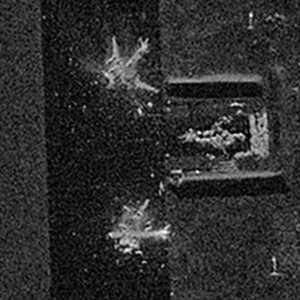
And where we are now, I think 48 hours after the attack unfolded, is we can say with confidence that more than a dozen Russian bombers and planes suffered damage.
Quite extensive in many cases.
The Ukrainians say that the number could be as high as 41.
And that amounts to, if the Ukrainian account is correct, $7 billion in damage done by drones that cost a few thousand dollars apiece.
Even if it's half as much as Ukraine's having its closer to the Western estimates That's still 3 .5 billion dollars in damage and you have to recall that this is Russia's strategic Nuclear bombing fleet.
So we've been talking about how Russia has been using these to launch conventional weapons at Ukraine cruise missiles This is also a key element of its strategic nuclear deterrence and Russia's not thought to have more than a hundred of these totally, and they're not making any more right now.
So the loss of 10 or 20 would itself be really significant.
If it's as high as the Ukrainian number that's a third of that fleet.
So we'll see what that tally comes to, but undoubtedly the attack put a big dent in the fleet.
It's just remarkable to imagine these tiny, cheap little drones having that kind of an impact.
But Mark, as you've said, we've seen drones being used in this conflict for a long time now.
So, what's different about this time?
Yeah, so aside from just the boldness of this attack, it is sort of an evolution in a revolution and the revolution of drones for anyone who hasn't been paying attention.
I think this attack should drive that home, how it can both affect what militaries think about in terms of their force protection, what they choose to invest in.
It's kind of like if you're to think about other moments in wars where a new weapon comes to life.
The weapon might have existed a bit, but then it's just used to great effect.
So in World War II, for instance, you had the Germans using the V1 and V2 rockets to bombard London.
You know, it would be some time, but that augured in the era of the missile.
And we've seen how missiles transformed, you know, how countries fight or think about fighting or plan for fighting.
And I think when it comes to drones, they've been around a while.
They've, obviously, what's happened here in Ukraine is it's gotten supercharged and just the amount of adaptation and evolution that we've seen over the course of three and a half years, has forced everyone who is paying attention to rethink some of those doctrines that were long -held about what does it take to, you know, both win on the battlefield and also, you know, to prepare for the next fight.
I also feel like there's another reason this attack is really important.
And that's just the timing of it.
It comes just a few months after Trump sat with Zelensky in the Oval Office and said Ukraine was not in a good position in its negotiations with Russia over peace, that it didn't have any cards.
And now Zelensky and Ukraine have orchestrated this pretty advanced attack after a long stretch where Russia was dominating the battlefield, right.
It's like, he's saying, Zelensky's saying, no wait, we actually do have some cards.
Here they are. And so I'm wondering, Mark, how this affects the ongoing talks between Russia and Ukraine?
So, first of all, you know, we talked about how this was a year and a half in the planning.
So while President Zelensky was in the Oval Office being berated, he knew that this plot was, you know, being cooked up.
So in any case, he knew he had some cards in his back pocket.
I think, we talked a lot about what Ukraine's goal was with this operation, and obviously a central goal was to slow down these bombardments.
But there was a secondary goal, which was to raise the cost of this war for the Kremlin.
The Ukrainian theory of how do you stop this war is you have to force the Russians to stop.
Diplomacy has so far failed.
So the only way Ukraine sees this war ending is if there is enough pressure and cost on the Kremlin to end their war.
So this attack was a part of that.
And then we saw today another remarkable covert operation, which was the third attack on that bridge that crosses from Crimea into Russia.
Now again, this one just happened literally this afternoon.
We don't know the damage, we don't know how successful it was, but it shows you what Ukraine's strategy here is, which is they're never gonna have more people than Russia.
Russia is willing to lose tens of thousands of soldiers every month.
Ukraine has been most successful when they've, you know, used their ability to sort of act quickly and whether it's surprise, deception, adaptation, that's where they've had the greatest success in this war.
And so this operation going after these Russian bombers, going after the Crimean Bridge again, these play to Ukraine strengths.
At the same time, Putin obviously has been really resistant to pressure this whole time.
And I have to wonder whether even with the latest success success is, this has any chance of working, of forcing him to the table in a really earnest way.
I have no idea. All I know for sure is that nobody wants peace more than Ukrainians.
They want this war to be over.
But none of us really know what will force Putin to stop this invasion and really either engage in good faith negotiations or agree to the immediate ceasefire that everyone, quite frankly, Ukraine, the U .S., the Europeans, all want.
And what we have instead, since this diplomatic push has sort of kicked into high gear after Trump took office, is no closer to peace, but more violent week after week.
In other words, Operation Spider's Web might end up having more of an effect on how we think about and conduct warfare in general than it will have on this actual war.
Yeah. I mean obviously everyone is always looking for that thing that will be the moment that turns the war or that leads to the end of the war, but the honest truth is this is total war.
And in total war it's everything together that matters.
So this operation will help people if it even lessens the bombardments to some degree.
That's thousands of people in a city or town who might not have to face a missile bombardment that otherwise would have come their way.
But yeah, at the end of the day, I think the Ukrainians are under no illusions.
This is their only strategy, which is to fight back to increase the costs on the Kremlin and just hope at some point between their own actions, their own fight, and then western support that that pressure becomes enough where Russia decides, okay, enough.
Marc, thanks for being here and stay safe.
Thank you. We'll be right back.
In business, they say you can have better, cheaper or faster, but you only get to pick two.
What if you could have all three?
You can with Oracle Cloud infrastructure.
OCI is the blazing fast hyperscaler for your infrastructure, database, application development, and AI needs where you can run any workload for less.
Compared with other clouds, OCI costs up to 50 % less for compute, 70 % less for storage, and 80 % less for networking.
Try OCI for free at oracle .com slash nyt oracle .com slash nyt.
This podcast is supported by Strawberry, dot me.
Unlike any class, book, or podcast, Strawberry .me Career Coaching gives you something truly unique, a professional partner who's 100 % focused on your success.
It's not just advice, it's like therapy for your career.
Your coach will ask the right questions, helping you uncover hidden strengths, break through obstacles, and move forward with confidence.
If you're ready to unlock your full potential, visit strawberry .me slash The Daily to claim your $50 credit.
That's strawberry .me slash The Daily.
Here's what else you need to know today.
On Tuesday morning, Israeli soldiers opened fire near crowds of Palestinians who were walking toward a food distribution site in southern Gaza.
The Red Cross said that 27 people were killed in the attack.
The Israeli military said it had fired near a few people who had strayed from the designated route to the site, and who didn't respond to warning shots, saying they had quote, posed a threat to soldiers.
A senior administrator at a hospital a few miles from where the shootings took place said that many of the victims were children aged 10 to 13.
And the Trump administration is proposing a deal to allow Iran to continue enriching uranium at low levels, while the U .S. and other countries work out a plan to eventually block Iran's path to a nuclear weapon in exchange for giving it access to fuel for nuclear power plants.
The proposal is seen as a bridge, for now, between the current situation of Iran rapidly producing near bomb -grade uranium and the American goal of Iran enriching no uranium at all.
This was the first indication since Trump took office that the US and Iran might be able to find a compromise over Tehran's ambitions to build a nuclear weapon.
Officials in Tehran indicated that a response would come in several days.
And finally, on Tuesday afternoon, Elon Musk lashed out against the ambitious Republican bill that's intended to enact Trump's domestic policy agenda and that's been backed by the president.
Musk posted on X that the measure, which the White House has called the Big Beautiful Bill, is, quote, a disgusting abomination, saying it was, quote, massive, outrageous, pork -filled, and would, quote, massively increase the already gigantic budget deficit.
Musk also hinted that he might support efforts to unseat lawmakers who backed the bill in the 2026 midterm elections, saying, quote, in November next year, we fire all politicians who betrayed the American people.
While Musk directed his ire at Congress, the comments amounted to his biggest public break with Trump since the two joined forces during the campaign.
Today's episode was produced by Olivia Knatt, Kaitlyn O 'Keefe and Anna Foley.
It was edited by Devin Taylor and Chris Haxel, with help from Mike Benoit.
It contains original music by Pat McCusker, Rowan Nemisto and Alicia by etub.
And was engineered by Alyssa Moxley.
Our theme music is by Jim Brunberg and Ben Landsberg of Wunderli.
That's it for The Daily.
I'm Natalie Kietrowiec.
See you tomorrow. global shipments to tariff impacts to real -time cash flow.
That's NetSuite by Oracle, your AI -powered business management suite trusted by over 41 ,000 businesses.
NetSuite brings accounting, financial management, inventory, HR into one suite to help you know what stuck, what it's costing you, and how to pivot fast. If your revenues are at least in the seven figures, download the free ebook, Navigating Global Trade.
Three insights for leaders at netsuite .com slash n -y -t.