Discussion keeps the world turning.
This is Roundtable.
You're listening to Roundtable with myself, He Yang.
I'm joined by Yu Xun in the studio and Bob Jones via video link.
Coming up, what if family wasn't about blood and elderly care didn't have to come from strangers.
On Chinese social On media, a few posts have surfaced about Ren Ganxin Yang Lao, a practice where young people form supportive contract -like relationships with older adults.
It echoes elements of God parenting and elder companionship in the West but with key differences.
Could this be a way to patch the cracks left by shrinking families and limited state support?
Maybe, but it also carries serious risks.
You can find us on Apple podcast at Roundtable China and if you have a question that you're looking for some deep well -researched answers, please send that voice memo to roundtablepodcastatqq .com.
We feature your voice memo or email question on the show and give you a tailor -made discussion and hopefully that will calm some minds and hearts.
Now, let's move on to the next topic discussion today.
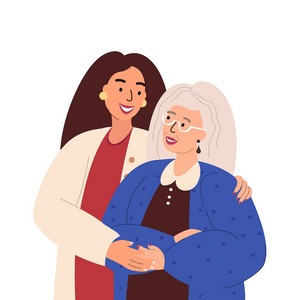
A curious phenomenon has surfaced on Chinese social media called Ren Ganqing Yang Lau, or informal adoptive kinship for elderly care.
The idea, young adults and older individuals agree to form a non -biological parent -child relationship.
In exchange, the elderly may offer financial support, while the young provide companionship or help with elderly care.
It's not exactly widespread, and it's definitely not legally binding.
Is this a creative response to aging and loneliness, or a potential breeding ground for scams and disappointment?
it reflects deeper shifts in family structures growing pressure on elderly care and Evolving social needs in an increasingly atomized society in China in our culture We have this arrangement of having a gamma or Gandhi So essentially, this is young guns in but could you explain to us in English you should end?
I'll need Bob to fill in the other question of how is it different from Godparents in Western culture, but do explain.
So in China, ganma or gan -dia usually refer to, you know acknowledging a numb blood -related parent, a father or mother, a symbolic kinship bond without legal adoption implications.
And the relationship is usually established by mutual agreement, not through religious or legal means.
Yes, as you mentioned, Heo -yeon, in English, there are similar words as Godparents, but I assume they are different, right, Bob?
Yeah, that's interesting because that we do have a tradition of Godparents, but it is very much related to religion.
The idea of the Godparent is that they are supposed to to make sure that the child is schooled properly in religion if anything happens to the parent.
So oddly, it is still happening, even though the number of people who are going to church is going down all the time.
There's still a lot of people want to have good parents for their children.
I think they see it as a kind of safety net.
If anything happened to them, then they know that there is somebody out there who's going to step in and make sure that the child is okay.
Now, as I say, it's, it doesn't quite make sense these days, because the idea of having a religious upbringing isn't as important as it used to be.
Also, I should say that, certainly my my part of the world in my culture in Wales, we always used to have aunties and uncles.
And these were people who were not related to us at all.
And it was perfectly natural to be called auntie and uncle but they were just friends, friends of our parents and they also played an important role because I think they used to step in and if there was a problem with my parents both being doctors so they were busy and they had to go to work then these aunties and uncles would step in and look after us and you know guide us and help us and encourage us and be mentors.
So there is a there is a tradition of this And you know there is a phrase.
I think in English it takes a village to raise a child Which means that it it's better if you can bring up a child within a community of a lot of people older and younger And people were not related and obviously your parents So I think that there's a feeling that there has to be something like this Bob what you're referring to is Is that more of a social phenomenon or saying of yesteryear?
Does it still exist today?
I think it is something which does still exist today, especially because the change that we have seen in society over the last 20, 30 years is people becoming alone, becoming single.
And it comes through social media, it becomes through housing, it becomes through people maybe not getting married, that they decide, okay, well, I'd much rather live on my own.
And of course, people are getting older and older.
And we're realizing that the old concept of a, of an extended family, where you live in a community and you have friends around you who can look after you if things are going wrong, if you get sick, or if you need help in some other way, financial or whatever.
We look back on it and think that was a probably better way of doing things.
Because now We're running into real problems. People are getting older.
The population is getting older.
There aren't the younger people around to look after them.
There isn't the money to look after them, so you get a lot of single people or people who've divorced or people who've lost their partner who are thinking well, you know, I'm getting lonely now and there's not the people around me.
The support network that I might want goes the other way of course, and there's a lot of younger people who spend all their time looking at social media and on their phones.
who don't know how to relate to a wider society and so you know they also are lonely in a sense they can only relate to a little black box you know the thing that they hold in their hand oh yes before we get into that elderly care part I was thinking probably in a more casual language context when we mentioned godparents maybe can be like the translation of each other of you know Ghandi or Gama because I've seen some of these series and movies saying these two people who are good friends to each other and one is going to have a baby another one it is totally like not religious -related at all but the one
is saying that okay I will be the god parent or like god father of your child.
And that is something I think maybe can be used nowadays kind of thing because I remember, I having more than one grandma in my childhood, you know?
It was usually because they were very close to my mom or just when I was little, they would often help take care of me, yeah, that - Oh, look at you.
Yes. That sounds a bit like what Bob said.
Maybe I'm raised by the whole community.
I was, you know, when I was a child, I always wander around in my compound complex. And, you know, I basically know all of the grandpa and grandmas in your neighborhood.
Well, that's nice. You shouldn't is younger than myself.
I remember growing up in Beijing and back then people didn't all live in apartments.
We lived in bangalows.
And at first, my parents were living in the dormitory of their Dan Hui.
There. That's a very old fashioned way of calling your employer.
And back then it was mostly still state planned economy and reform and opening up was just happening.
We had to do it on our own.
And I knew the aunts and uncles who are neighbors, but nobody offered to become a godmother.
And we don't say that in Chinese anyways.
Yeah, so this is a little bit less familiar for me, but this reminds me of years ago in my teenage years, I read a fascinating book called The Last Eunuch of China – The Memoirs of Sun Yaoting who lived through the final years of the Qing dynasty.
He was born in 1902.
In his account, it was common for a eunuchs, who had no children of their own, to take on ganur or ganarz, adoptive daughters or sons, but not recognized legally, obviously, and these relationships weren't just emotional.
They often served a practical purpose.
The younger generation offered companionship and end of life care, while in return they gain access to assets, connections, and sometimes even political influence in the Imperial Court.
So my point here is that this arrangement might have a very long history in Chinese culture, just not officially written in legal code.
What we said here though, until just now when I mentioned about the last eunuch, what you guys were mentioning were the older person taking care of the younger but can the younger person reciprocates in some kind of care to the godmother and godfather when they grow old?
Is this something that is almost implicitly agreed upon, Bob?
What I have seen recently is because it's very expensive to buy houses in the UK now or even to rent houses that you very often find that older people will look for younger people who will move in and stay in their houses and it is a it as you say it is a kind of mutual benefit because the younger person gets somewhere to live and the older person gets somebody who is on hand if there is a problem who can make sure that there aren't you know, they don't fall or they don't, they take their tablets, or they do all the hard jobs around the house or something that is growing.
And I think that to me sounds like what you're suggesting, that there is this kind of, I don't think it goes as far as having a contract.
And it's not extremely common yet.
But it is growing because we do have that problem in the UK that we don't have the support networks necessarily.
I mean we have a good health service, we have homes and we have senior living which is where a lot of older people can live together and they can, you know, there is support if you press a bell or something and people will come running if there's a problem.
But it's a problem that nobody has so far addressed how to solve the So in terms of the idea that you're suggesting, it's a good one.
It slightly frightens me I have to admit because of the possibility of abuse or the fact that you could end up with somebody who targets an older person and says, hey I'm going to be your friend.
And then you know start stealing from them or will you know get them to change their will or something like that.
So I mean that In my mind makes me think that's really scary.
The other thing I'll mention very quickly It's totally by the by is that these days you also find people with what they call a fam and the fam Short for family, but it's it's an unofficial family So a lot of people will young people especially will have a group of younger people together called their fam the people who they can turn to and you'll see this very much on TV programs on dramas where people will say yeah I'm going out with a fam.
We're going to do this with a fam.
We're going to go for a picnic with a fam.
So that again is slightly connected, but it's not really what you're suggesting with this particular system I think.
Yeah and that is why we are talking about it today, a lot of young people are posting these kind of things online or social media, saying that they're looking for a mother to care for in old age or I will be your child and keep you company.
These things are appearing on a lot of social media platforms like RedNote, Weibo, and Douban.
And this kind of practice, though this phenomenon is not entirely new, recent cases have emerged with increasing frequency and joint widespread public discussion.
And in these arrangements, the elders are often single or widowed or childless while the children are not relatives but have formed an emotional bond through work or just neighborhood interactions or just caregiving roles.
Sometimes it can be just the employed caregiver and they're saying, oh since we have been working together or I've been taking care of you for quite awhile and I can be your maybe gun arts or gun.
You are that kind of Adoptive child, but to be honest, I personally don't think that is Something that is that genuine, you know, do they really understand how?
Serious the responsibility of caring for the elderly is and it's not something that you can can be just resolved just by calling them dad or mom and that simple I think emotional support that it can give or it can be providing meticulous care and and Attention and something even one's own children might not always manage to do perfectly and now an outsider wants to you know, Take on that role and do you really have the you know sense of responsibility and commitment to actually follow through with it?
So I I actually doubt it.
Yeah. Well see there's something new here That is, this relationship supposedly starts from online.
So the match of the older individual and the younger person.
It happens on the social media platforms. And that's....
I wonder if that's odd for you or you guys think that this could be potential for insidious things happening.
what You shouldn't just mentioned he spoke of you know this real relationship of two people meeting up and getting to know each other and the older party receives care offline in real life so you've already sort of had a chance to vet this person to a certain extent that's sort of the traditional way of finding a potential gun or or gun your kind of thing but if it's all happening online I just somehow feel from online to offline it's just it feels dodgy or actually there are potentials of it being dodgy I wonder what are your thoughts Bob I did that that's the word that I would use actually dodgy.
Thank you for using it first. I just can't see how if you're doing something online, there are already problems with relationships online whether it be with older or younger people or people of the same generation, in as much as you don't know what the motivation is behind the person who is looking for that kind of connection.
So I just can't see Who's going to look at it and say, well, this is a good person, so it's okay for you to have that kind of relationship with this old person, or this is a bad person, this person is not to be trusted, because, you know, older people become more vulnerable as they get older, and you can't rely on them to make the correct decisions about who's going to be looking after them.
There needs to be some kind of regulatory system to oversee this.
Don't know how you do that.
I can see that we're gonna get apps on our phone Which would be you know find me a daughter find me a daddy, you know Things like mommy and daddy sounds very creepy in English when you start those sort of terms so You know, I just I can't see it.
It wouldn't work in the UK.
I know it happens as I say with people looking for almost like a mutual a benefit relationship where they, you know, you might say, well, come and live in my house and just keep an eye on me.
Or why don't you come and keep me company?
I mean, those kind of relationships I can understand, they don't happen very often, and they do tend to happen between people who know each other or who have met.
But if it's done online, which I think is this trend, I can't see how that could possibly work.
And one thing of a key word you mentioned, motivation I think is absolutely important here.
For the young, this may be a choice.
But for the elderly, especially when one gets really old and fragile, when you most need care, it's often a necessity.
So this imbalance in motivation can open the door to misunderstanding unmet expectations abuse and Exploitation in my opinion, but guys, why are some people turning to these informal kinship arrangements?
What is it say about the support systems or the lack of?
For the elderly today.
Yeah, the first thing is the aging population, you know China Research Center on aging's data shows that over 21 % of China's population is aged 60 and above, meaning every five Chinese there is one elderly person creating new pressures on maybe outer care and that kind of thing Also rise of empty nest elderly over 50 percent of elderly are, we call it empty nesters, they maybe they are alone at their home and that is we call them empty nesters and up to 70 % in major cities and rural areas and that is set by the Ministry of Civil Affairs.
As you have already said, I think this might also depend on the needs of both the elderly and young people in other words, both sides genuinely want to offer emotional support to each other, and this mode maybe could work under the right conditions and for maybe the emotional support model, it could be very beneficial for both parties if done in a non -transactional way, with both parties genuinely seeking that kind of companionship.
If this arrangement carries many risks, why not just rely on professional caregivers?
With clear, legally -binding employment contracts, the truth is many elder adults fall through the cracks of current elderly care policies.
How do we improve elderly care?
So, I think that the important thing is that people should volunteer.
Because, I'll tell you why.
Because just about every doctor I speak to these days says that the important thing is that if you volunteer to do something, it makes you feel so much better.
And because, for example, in the UK, we don't have a system of looking after older people.
we have carers, because we don't have enough migrants at the moment to come in and work in that sector, it means that older people are missing out.
But where I think things could change quite radically and help everybody is if everybody decides, Okay, we need to mix, we need to talk to older people, we need to go in and help older people live their lives better.
And I think that that would help everyone.
It would help young people, and it would also help older people.
I think there's so much investment that needs to go into this area so much state funding but I know it's a gaping hole and I don't know how that can be sorted out.
When care is based on commitment alone, it can fail when people's priorities change.
Maybe a clear, legally binding contract, even if transactional offers more security than promises that might never be kept.
But does turning care into a contract risk reducing human connection to a mere exchange in the near future with insurmountable elderly care pressure in Chinese society Is this even a question we can't afford to ask and that brings us to the end of today's show Thank you so much Bob Jones and you shouldn't for joining the discussion.
I'm ha young. We'll see you next time