So if you've been keeping up with HBO's addictive drama industry, you know it's never been afraid to wade in the muck.
Financial muck, ethical muck, a man-child aristocrat aptly named Sir Henry Muck.
The most recent season was especially messy as the paths of frenemies Harper and Yasmin erratically converged and diverged, and the sordid parallels to real-life headlines became pretty much impossible not to notice.
So after that harrowing finale, we're taking it all in and wondering what just happened and where might the show go from here.
I'm Aisha Harris and today we're talking about industry on Pop Culture Happy Hour from NPR.
This message comes from LinkedIn ads.
One of the hardest parts about B2B marketing is reaching the right audience.
That's why you need LinkedIn ads.
You can target your buyers by job title, company, role, seniority, and skills.
All the professionals you need to reach in one place.
Get a $250 credit on your next campaign so you can try it yourself.
Just go to LinkedIn.com slash NPR pod.
That's LinkedIn.com slash NPR pod.
Terms and conditions apply only on LinkedIn ads.
Greenland has said it is not for sale.
Denmark has said it can't even legally sell Greenland.
And whether Trump can or will or should try to control or purchase a territory that does not want to be sold is one question.
But on Planet Money, we are more interested in how we even got to this moment and how we might gracefully get out of it.
Listen to Planet Money on the NPR app or wherever you get your podcasts.
With the rise of prediction markets, you can bet on anything from weather to what President Trump will say in his next press conference.
I'm not a fan of Trump, though I do spend most of my day listening to him and tracking what he's doing.
On the Sunday story, who's winning big on these apps and who's losing?
The Sunday story from the Up First podcast.
Listen now on the NPR app.
Joining me today is Waylon Wong.
She's the co-host of NPR's daily economics podcast, The Indicator from Planet Money.
Hello, Waylon.
Welcome back.
Hello.
There's a hole in my bucket, Aisha.
Oh, yes.
All the buckets.
Dear Aisha, there's a hole in my bucket.
Also with us is Sam Yellowhorse-Kessler, a producer for NPR's Planet Money.
Hello to you, Sam.
Welcome back.
Hey, Aisha.
It's great to have you both.
So here's where we are at with Season 4 of Industry.
Harper Stern partnered with her old boss and mentor, Eric Tao, on an upstart investment firm that are played by Myhala and Ken Leon.
Why are you being so sharp with me?
Because this is not some recreational game or some lame extension of your retirement, while you're floating around trying to rehab your life or, I don't know, cosplaying the roles that you have spent your life ignoring.
When the f*** did I ever say I wanted it to be recreational?
Do they really curse that much on the show?
Oh, yes, they do.
They absolutely do curse that much.
Marisa Abella plays Yasmin.
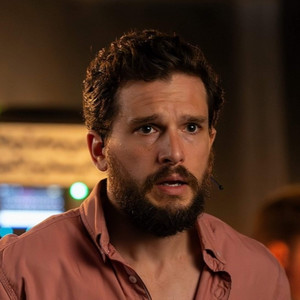
She settled into life with Sir Henry Muck, the tech aristocrat played by Kit Harington.
Henry's daddy issues and drug addiction, among many other things, quickly began to take a toll on their marriage.
Please henry, please put your big boy clothes on, go downstairs and just just try and face our public.
Oh henry, we'll get into that.
Uh now simultaneously, they merge their business interests.
She managed to land henry a ceo role at a fintech startup called tender and also get herself a job as its head of communications.
I keep wanting to call tender tinder.
I know it's not, but Ugh, that name.
So every season tends to bring at least one new big bad into the fold, an ultra villain among a sea of villains.
And this time it was Whitney Halberstrom, the CFO and co-founder of Tender, who was slowly revealed to have exactly zero scruples of any kind.
He's played by Max Minghella.
And Harper and Eric uncovered some damning evidence about Tender and leapt at an opportunity to expose it and cash in complicating Harper's relationship with Yasmin.
This, of course, led to some pretty devastating consequences for everyone.
Okay, industry streaming on HBO Max and so much happened this season.
So let's just get right into it.
Waylon, I'm going to start with you.
How are we feeling about where we are at now?
Did this reset work for you?
Did it feel fresh?
Yeah, this is like the fast five of industry.
I love that reference.
You know, I really respect the big swing they took in this reset.
You know, they really broadened out the world, right?
And so instead of being in this very insular world of finance or the trading floor, and You know, they blew it wide open and this season was kind of this you know, talented Mr Ripley meets Michael Clayton, kind of paranoid conspiracy thriller.
And so I do very much appreciate the ambition.
I think, as I'm processing this season, I'm realizing that this more expansive world is is not my favorite flavor of industry.
I think I do prefer something a little smaller.
I think it makes it more unique in that way when they stick to kind of the bread and butter finance stuff.
Yeah.
So not all of the world broadening worked for me, but a lot of it did.
I still had a ton of fun.
And I do feel like I have a lot of trust in the showrunners.
So I will follow them to I don't know outer space or wherever we go next, if we're using the Fast and the Furious model here.
I mean, I just really have a lot of fun with this show.
Yeah, yeah.
Outer space, the frozen tundra.
Like, who knows where this could go next?
That's where Harper belongs, yeah.
In a car with Ludacris in outer space.
I don't know about Harper, but maybe yes.
Well, that's where Eric Tao was walking.
He never stopped.
He just kept going north.
He just kept going.
He's still walking.
Still walking.
So, Sam, how about you?
How are you feeling about this reset, as it were?
Okay, so the question is, does the reset work or do I miss what industry used to be?
And I think my answer is both and.
Oh, oh, oh.
Love this.
Love this.
The thing of this season is that we're blowing up the format.
We're outside of the bank, we're off the trading floor and everyone's kind of fending for themselves.
I am a little bit sad.
Like every season, I get a little bit more sad that we have lost that kind of core four of Gus Rob, Harper and Yasmeen.
But I think finagling that to turn to Yasmeen and Harper is probably the right move.
They made a lot of really good decisions this season to kind of ramp up the stakes.
I take points away because it became something of like a predictable show you know sometimes like overly dramatic and the characters are very lived in.
I didn't feel like there was any kind of like massive twists or turns along the way, but it also doesn't feel cheap.
It feels very real and it's always incredibly entertaining to watch play out.
The characters are just incredibly entertaining to watch in how predictable they are and their flaws, and you know some of the lows that they sink to.
You know, I think I sit somewhere where you both are living in that there were so many things that I loved about this.
And I do feel like the reset helped it feel different from the previous seasons, even though a lot of the same themes were being talked about.
I've really enjoyed how the show has sort of every season, as I've already mentioned brings in its new kind of big bad.
And you know, in previous seasons it was Jesse Bloom, the character played by Jay Duplus, who was the hedge fund manager who Harper was working with as a client when she was still at PeerPoint.
We also had like other figures.
And I think that to expand beyond this like one financial institution and to show how it's incorporated and compromised with every other level of like the world of the economy.
So you have the media aspect of it.
You have the billionaire class part of it and the political part of it.
And you know I'm not going to sit here and pretend I know much, if anything, about British politics.
But I did find it interesting to see the way that whole idea of follow the money.
The money goes everywhere and everyone is compromised.
And I really like that.
I think where it fell short for me, and maybe we can talk a little bit more about this, is sort of this Henry muck situation here which began in season three and then This season.
I know there were a lot of people who praised the episode that was kind of contained where it was just about him kind of on the precipice of his 40th birthday.
Oh, with his ghost dad and stuff?
Yes, with his ghost dad.
Wait, that was a ghost the whole time?
Oh my God, that changes everything.
Wait, are you being serious?
It's okay.
Sorry, Waylon knows I'm like this.
Low in Sam's mind over here.
I didn't want to assume.
And the way it's shot very Kubrickian, it actually kind of reminded me a little bit.
And I think this was intentional.
There's the song that's playing, which is... Barry Lyndon.
Love Barry Lyndon.
Barry Lyndon, but also A Clockwork Orange, right?
Because they're playing music for the funeral of Queen Mary.
And a version of that appears in A Clockwork Orange.
And as soon as I heard it, I was like, what do I remember this from?
Oh, it's A Clockwork Orange.
And I understand what they're trying to do here.
But also we already know Henry is.
He just seems like the character who I didn't learn that much about.
That I wouldn't expect.
And I think that goes to your point Sam, about like it did feel as though the Henry character was kind of stuck in a loop.
But also, we brought in so many new characters.
And I'm curious what you thought about some of these new characters, especially Whitney Halberstrom, but also characters like the Kiernan Shipka character who she is playing as Haley, who they they call Calabasas in a kind of condescending way.
And she's playing sort of what we.
She's revealed to be a sex worker escort who has been brought into the tender world.
You know how do we feel about these new characters that were added in.
This is a really interesting question.
Cause.
Earlier Ayesha, you said that this season introduced a new big bad and that you know, a big bad of seasons past was Jesse Bloom, this hedge fund manager.
And it's almost like, what is your definition of a big bad?
Right.
And what I really liked about industry and the Jesse Bloom season was that like is Jesse Bloom like, like a bad guy?
Is he like super evil?
It's like, necessarily like he's amoral.
He's self-interested.
He is motivated by profit.
He happened to make a ton of money off of like betting on COVID, which feels gross.
And it fits into this gray area that finance inhabits of like profiting off of often, you know, like misfortune and kind of, like, bad things happening to humanity.
Now in season four, your big bad is Whitney.
Who is this sociopath with very little kind of ambiguity or almost like nuance, like from the jump?
And then it turns out the big, big bad is Ferdinand, who works at Tender, and they're connected to the Kremlin.
And it feels, like, too conventional in some ways.
You know what I mean?
Also, they're Nazis.
Let's not forget they're Nazis.
And they were Nazis.
And so...
I kind of prefer the morally gray big bad, so to speak, where you could even put Harper and Yasmin in that category.
Like, is everyone like a medium bad, a small to medium bad?
You know, and that is, to me, a more interesting space to play in.
And I think the fact that, like Henry Muck, who is also like a medium, bad and that he is like super privileged and has not spent a lot of time questioning his class privilege and is like really messed up in lots of ways,
You know the way he just kind of gets ensnared with this whole Russian plot.
Feels, you know, maybe less compelling than if something else had happened to him vis-a-vis Whitney, you know.
Yeah.
I think they made the right choice to kind of focus on these people who are more slightly in the gray area, rather than the outright Nazis.
Even Max, I was interested to hear you say that he was somewhat sinister.
Because definitely from the beginning, I guess I didn't really know where to place him.
And there was more of a sensation that he might just be as amoral as everyone else, but not outright psychopathic.
And they do have an episode with him and Kit Harington's character where where they kind of flesh out this like strange codependency.
I like that.
It felt like an episode of I Love Dick, where he's like writing him all these letters and like kind of showing that he's not just, like he's not unfeeling, like he's not a psychopath in the truest sense.
But he does have a very complex kind of relationship with Henry Muck.
I like that kind of like dance that they have going between them where you're not sure exactly how far it's going behind the scenes.
I wanted more of that.
Do you know what I mean?
I feel like they made this turn where it was like oh, Whitney is doing all this creepy stuff to Henry.
And I wish they had maybe had a little bit more like cat and mouse where oh, now you think maybe Henry's playing Whitney, or like you're not quite sure where these men stand with each other.
Instead, you get, you know, Whitney carrying a bouquet of flowers walking in on...
Henry in the shower when he's singing Gilbert and Sullivan.
That scene was bonkers.
Okay.
Okay.
I wanted more of that like single white female stuff going on too.
Like it did really feel like this season was playing with a lot of different genres.
Like Waylon, you already mentioned sort of the Michael Clayton and and the sort of intrigue in that way.
And then you also have occasionally kind of like a stalkery thriller thing.
I also just like, could not help but notice that you know, this was a season where not to say that.
So Conrad Kay and Mickey Down, the creators, have very obviously and directly referenced various things from real life, right?
They've talked about this in interviews.
As of this taping, the creators haven't acknowledged that they drew inspiration from Jeffrey Epstein or Glenn Maxwell, or But Marisa Abella, who plays Yasmin, has acknowledged there are parallels between her character and Maxwell in an interview she did with our pal Roxanna Haddadi over at Vulture.
But I noticed in season three that the whole subplot with Yaz and her father Charles, who is played by Adam Levy, where you know they have that mystery around his death off the yacht
But that whole thing felt very similar to the way Galen Maxwell's father died.
He died presumably off of a yacht as well.
And so I was like, this is interesting.
Down to the name of the yacht.
Oh, right.
Yes, yes, yes.
What was the name of the yacht?
I don't even remember what the name was.
Well, the yacht in industry is named Lady Yasmin.
And in real life, the yacht was Lady and then one of the daughters.
Okay, right.
So again, you can see the parallels.
And then, of course, by the end of this season, season four, we see that Yaz has kind of become very similar to what we know about Ghislaine Maxwell.
And, of course, this is Ghislaine Maxwell, who was a co-conspirator along with convicted sex offender Jeffrey Epstein and who is currently serving a 20-year prison sentence for sex trafficking.
And we see that Yaz has been going back and forth on this and starts off appalled at knowing that her father paid off women and made them sign NDAs for inappropriate relationships with his employees.
And now she has just gone full the other direction and is working with the Hayley character played by Kiernan Shipka, to bring in more women to make deals and whatnot.
It's both like I appreciate these details and at the same time, I wonder you know, how much of this do I want to see continue into season five?
Because it's so bleak.
And not that the show was never not bleak, but it does feel as though I wonder, like what the end of the road will be for Yaz and and like where can we possibly go from here?
Like she's kind of completed her villain arc, I think.
Whereas with, like Harper, I'm a little bit more curious to see where she goes from here, especially without Eric.
Yeah, I feel like the show to me, especially this season, is strongest when it's looking at the Harper-Yasmin relationship, which you know is all over the place.
It's up, it's down.
They're working at cross purposes.
They're teaming up.
They love each other.
They hate each other.
I find it really compelling that relationship and the way they talk to each other is really honest.
It's honest in a way that they are never that honest with their romantic partners, you know.
So it's kind of like this is like the greatest romance in each of their lives.
Is this like this friendship between them?
So I feel like for me it is also really hard to stomach the Yasmin arc, the way it ends at this end of the season and I am clinging to that scene.
We get in the other episode where Yasmin and Harper go out.
They're like let's just go out, and then they have this like really fun night on the town and end just like sitting smoking a cigarette contentedly with each other.
And i'm like that's girlhood, you know, even though i never did anything like that, my girlhood but um, you're like nothing's gonna change this, So I'm clinging to that.
I'm like I'm hoping that wasn't some kind of valedictory that we'll look back on with.
You know grief, that that never happened again.
I'm hoping they get back to some version of that.
And I feel like Harper's kind of moral stand at the end of this season will be something that kind of gets picked up on as a thread next season.
And maybe she'll be the want to lead Yasmin out of this dark place.
Yeah, it does feel like they're doing a thing that, like Fleabag did, where over time it kind of whittles down to like what the core relationship of the show is.
And it seems that they've decided that that's Harper and Yasmin.
Yeah, I mean, I understand.
And I think to some extent that yes, the Yaz and Harper relationship is maybe the core heart of it.
But I still I have to pour one out for her relationship, Harper's relationship with Eric, because I mean it's not clear whether or not Eric might come back.
They've.
You know, since that episode aired, you know they've been very coy about whether or not Ken Leung is going to come back.
But I just love the dynamic of the relationship and the fact that, like it A, it never got sexual as far as I can remember.
Like there was never any like, will they or won't they?
It always had more of a like father, daughter or just like straight up mentor, mentee situation, and i i'm so grateful when shows are able to do that, because they're both outsiders right, they're both americans in this world, they're both people of color.
I think the fact that like, we don't really know too much about certain characters except what we need to know and i think this season was really about eric and harper Eric trying to get closer to Harper because he's realizing he's lost any chance, real chance with his own daughters
And he's just like, okay, now I'm going to throw this onto you.
And Harper's like, no, I'm not going to do that.
And the scene when she reveals that she just found out her mother died was like one of the best things I've seen on this show and on any show.
My mom died.
My brother called me from New York yesterday to say there'd been an accident.
She just went overnight.
Christ.
I'm sorry.
You can talk about it to me.
That's the point.
Like, I don't know what to say.
I don't even know how to feel.
I love that.
And I think if it doesn't continue into season five in any way, that is something I'm going to miss.
You know, I will miss that, too.
I wanted to say on the character of Eric and on Ken Leung's performance.
Like to me Eric Tao is the most complex character, interesting Asian-American man I have ever seen on television.
I have never seen an Asian-American male character like this.
I mean, I can't think of any other example.
I think he's so singular.
He's so well-written and layered and interesting.
And I do really love the theme that you picked up on Aisha, this idea of Eric and Harper being kind of this, like father-daughter duo, who are both Americans, navigating their way through a very nuanced class system and a system of old and new money in the UK.
I feel like that was like a huge theme of this season and has been a through line throughout the whole show.
And I was thinking about how.
You see a glimpse of Eric's teenage daughter, the one that gets kicked out of boarding school and, And I remember, when you see her talk, she speaks with a British accent.
And I thought to myself oh, that's really interesting, because if Eric's goal, subconsciously or not, was to assimilate into the upper ranks of British society, or as far as you can go without being in the British peerage, you know as far as an American can go in that world, then it's kind of like.
He did it because his daughter has a British accent, you know, but he doesn't have a relationship with that daughter.
And I thought that was really poignant.
Yeah.
I was also thinking about how, Robert and Gus, they escaped this evil world by coming to Silicon Valley, like these two Brits.
They ended up coming to the US and then they're portrayed as kind of having gotten their happy endings in the US in Silicon Valley.
And I'm like this show is like doing some really interesting stuff about like the interplay between America and the UK and what it means to have money and class status.
Yeah, of course, we should be clear that like Robert and Gus were from the previous seasons.
Gus was played by David Johnson and Robert was played by Harry Lottie.
They started out with Harper and Yaz as sort of the upstarts at Pierpoint.
And I think what the show knows how to do well is sort of like let characters leave.
I mean, obviously I'm sure they're scheduling things and all that stuff like production things that we don't even know about.
But it also seems to understand that once a character has served its purpose or once they're no longer integral to the plot,
They can just leave and it's fine.
And we hear a little bit.
If you listen closely, we might learn about what's happened to them from other characters talking about it.
But I just think it's really interesting.
And it's interesting to see that we also brought in.
You know, I do want to really briefly talk about, you know, the Sweet Pea and- I love her.
Kwabena, subplot.
Kwabena played by Tahib Jimmo and Sweet Pea is played by Miriam Petchy.
And they're kind of like the underlings of the Stern Tao little upstart firm.
And they are the ones who actually go out and get most of the evidence, you know.
And I found that really interesting.
Yeah, they do more shoe leather reporting than Jim Diker, the journalist, actually does.
He didn't get a chance, to be fair.
I don't know if he would have made it, though.
He was really in rough shape.
I don't know if Fendi just had a travel budget for him set aside given everything that happened.
Oh, poor Jim Diker.
Charlie Heaton, who I was like, is this Harry Styles?
I'm sure he gets that all the time, but I really thought it was Harry Styles.
They look so much alike.
Yeah, that whole subplot was also really fascinating to me because again it's bringing in the media aspect of the way all this works.
And given how the real world we've seen how journalists can kind of get themselves embedded into things in ways that are Not quite ethical.
And he certainly does.
And yeah, just the way that it all intersects.
It's just overall, I really enjoyed this this season, I think.
I think they were also doing a thing this season where it's like Henry, you actually see him with a pretty happy ending, right?
He's on this rowboat, you know, catching fish with his uncle.
It all seems right in the world.
He's protected.
He's back in his little cocoon.
Henry gets, like, you know, what is basically the best possible ending.
He's not in an orange jumpsuit.
He's not dead, you know?
And I feel like it's the show saying that, like If you come from a certain social class and you have a certain status, you still prevail in this way.
Whereas Rishi, who had all this money, who married into a white upper class family in Britain, was not able to hang on to any of that.
And in fact, was given like a terrible, a terrible ending, you know.
So I think it's a very bleak read of what, you know, upward mobility and what you're able to do.
I mean, Henry does have that moment with Whitney where he is like, I'm not going to be like you.
I am going to lean back on my class.
He said, I would rather die as me than run as you or something, which is a pretty dumb thing to say.
And that's exactly what he does.
And it turns out he made this, like, literally the best choice in the show so far.
His only, his first good choice, his first good decision.
Everything's coming up, Henry Muck.
Yeah, literally.
Yes, yes.
All the muck is coming up well for him.
I do think Harper to some extent is sort of the opposite, where you know she's obviously coming from really, really nothing and having faked her transcripts
And she's still somehow, being a Black woman, able to come out on top.
She is so resilient in ways that boggle my mind, but also I'm just like, I'm here for it.
I love seeing a Black woman baddie.
I think she's a master compartmentalizer.
Oh, yes.
Yes.
As we know, because of her mommy issues and her brother issues and all those things that they only hint at.
I did, like when she says to Kwabena you're like the only other Black person I know and hang out with here.
Even though there's really nothing to the relationship.
She's like, well, it's nice to have you around.
Yeah.
It's very real.
I get it.
I get it.
I've, I've been in those situations before.
Well, we want to know what you think about season four of industry.
Find us at facebook.com slash PCHH.
We didn't even get to talk about uh, the I want to dance with somebody, the little which was just like so creepy.
Yet
So I'll just call you Aisha when we get off, off this.
And then I'll just, uh, sing that to you in a creepy whispery voice.
Oh, I love it.
That's my ASMR right there.
And that brings us to the end of our show.
Waylon Wong, Sam Yellow Horse Kessler, thanks so much for being here.
This was so fun.
Thanks so much, Aisha.
See you for season five.
Thank you.
Season five, baby.
Season five.
Last and maybe the best.
Who knows?
Five seasons and a movie.
This episode was produced by Mike Katziff and Liz Metzger and edited by our showrunner, Jessica Reedy.
Hello Come In provides our theme music.
Thanks so much for listening to Pop Put Your Happy Hour from NPR.
I'm Ayesha Harris, and we'll see you all next time.