This is Planet Money from NPR.
Hello?
Hello?
The other day I joined a call between these two old friends, Al-Aldin Sheikh Khalid and Mohamed Awad.
Hello, how are you?
Hey, Mohamed, how are you?
They haven't seen each other in 11 years, but they're always on the phone together.
You talk daily?
Yes.
He's my best friend.
He's my brother.
He's everything that friendship means.
And Al-Aldeen, who is Mohammed to you?
Mohammed is really like the best human I can know.
Like when bad things happening, Mohammed got in even more like higher place and inside my soul.
So, yeah.
Al-Aldeen calls Mohammed Modi.
Yeah, we call him Modi.
Mohammed calls Al-Aldeen just Ala.
Pretty simple nicknames.
They were much more creative in high school.
We call him Al Prince, the Prince.
You called him the Prince?
Yeah, he's right.
And then Mohammed al-Maestro.
So the maestro and the prince.
Oh, yes.
Yeah, two best friends.
Al-Aldin, Alaa, the prince, and Mohammed Modi, the maestro, grew up together in Gaza.
In high school, Mohammed used to have to walk by Al-Aldin's house on the way to school.
And every morning, Alaa would wait for Modi.
And we like going together, walking together.
There's the guy who opening his store for morning student and he selling falafel hummus ful like very tasty small sandwiches.
Do you remember that?
He asked Mohammed.
Yes, of course I remember.
It's our daily breakfast.
This memory they have of walking to school in Gaza buying falafel and hummus sandwiches.
This could never happen today.
Because first of all, Al-Aldin is in Belgium now, and Mohammed is stuck in Gaza.
But also, kids in Gaza have not gone to formal school in almost two years.
90% of homes have been damaged or destroyed.
And food?
Well, though Israel disputes this, a United Nations-backed panel has declared famine in parts of Gaza, which means there is documentation of widespread starvation.
We eat right now to stay alive, not for joy.
And besides food, there's something else that's missing.
When Al-Aldin and Mohammed used to stop by the falafel store, they'd just dig into their pockets.
How would you pay for it?
With cash?
Yeah, cash.
It was like cheap as coins, shekels.
Like one shekel, for example, something like that.
Shekels are the Israeli currency, but Gaza uses the Israeli shekel too.
Yeah, for sure.
The economy is sharing with Israel the currency.
And Aladin says sharing currencies with Israel was, in a way, for a while, good for Gaza.
From the shekel is good economy, yeah?
We can say good economy.
The Israeli shekel is a strong currency.
But Israel stopped letting physical shekels into Gaza almost two years ago when the war started.
No new cash or coins have been allowed to enter.
And there are no bank branches or ATMs operating in Gaza anymore.
In addition to all of the other shortages in Gaza, there's also not enough money.
So Al-Aldin, the prince in Belgium, he's now trying to get money into Gaza.
Israeli shekels into Mohamed's bank account.
Which is not that simple.
No, absolutely not.
Yeah.
And Mohamed, the maestro in Gaza.
He's trying to somehow turn that money in the bank into cash to buy things people need.
That's why they're on the phone every day.
Cash is a very big problem here.
How do you turn money in the bank into cash when there are no banks and almost no electricity and spotty internet?
And what is there to buy?
How does money even work in Gaza right now?
Hello and welcome to Planet Money.
I'm Sarah Gonzalez.
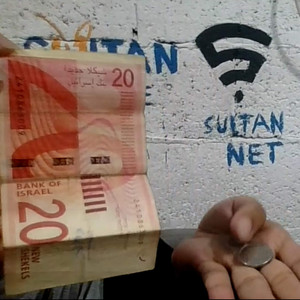
Whatever paper cash was in Gaza before the war started, that's basically all that's been circulating for two years.
It's been overused so much the bills are now faded and fraying.
Money in Gaza is falling apart.
Today on the show how Mohammed and Al-Aldin are little by little getting money from outside of Gaza into Gaza in order to buy food milk, tents.
This involves multiple bank accounts all around the world, plus a cash broker in Gaza, sometimes a cash repair person in Gaza, just to get usable money in Mohammed's hands one time.
This message comes from NPR sponsor, U.S.
Bank.
With U.S.
Bank Business Essentials, you get more than just a bank.
You get a dedicated partner that provides you a powerful combo of checking and card payment processing with quick access to the money you've earned, proving that there is nothing as powerful as the power of us.
Visit usbank.com today to learn more.
Member FDIC.
Copyright 2025 U.S.
Bank.
This message comes from NPR sponsor Adobe.
Introducing the all-new Adobe Acrobat Studio, now with AI-powered PDF spaces.
Need to turn 100 pages of market research into five insights with a click?
Templates for a sales proposal that'll close that deal?
Or an AI specialist to tailor the tone of your market report?
You can do all that with the all-new Adobe Acrobat Studio.
Learn more at adobe.com slash do that with Acrobat.
In a way, Al-Aldin and Mohammed's whole project started because these two best friends ended up in two very different places.
Mohammed was stuck in Gaza and Al-Aldin was not.
Al-Aldin was able to pay to evacuate some of his family back when you could do that, but Mohammed couldn't get out in time.
And Al-Aldin couldn't get his mind off of Mohammed or out of Gaza.
So he started thinking, okay, what can I get into Gaza?
He can't send food or packages.
Israel controls the flow of anything into Gaza.
The Israeli military says it's not letting cash in because it wants to prevent Hamas from being able to buy weapons or pay fighters.
But this cash blockade is affecting all 2 million people in Gaza.
UN experts have called it a severe economic emergency and pushed for an end.
The Palestinian Authority in the West Bank also stopped cash shipments to Gaza because there were robberies.
So last year, Al-Aldin decided maybe he could get money in for the family he has left behind.
Friends, friends of friends.
Not to hand out his cash.
Actually, people there is not looking for money exactly, you know.
They need it for urgent needs.
Yeah, no one's handing out cash.
Al-Aldin and Mohamed's whole project which they call Impossible Light, by the way is to get money in in order for Mohamed to buy formula tents diapers, water to give away for free.
Mohamed, give the family the tent, give the family the food, like that.
This is Haya.
I'm from Gaza Strip.
Haya lives in a camp in Gaza, along with a bunch of families that Aladin and Mohamed have been trying to help out.
They put us in touch.
She's the oldest child in her family.
And talking to Haya really helped me understand what it's like to live in a place where there's a cash shortage.
What families like hers have right now, what they don't have.
How old are you, Haya?
I'm 28.
And where are you living currently?
Like, where are you sleeping?
The Almawasi tent camp is where many of the hundreds of thousands currently fleeing the Israeli assault on Gaza City are likely headed.
It's one of the few places left where people can stay in Gaza.
Haya says it's crowded beyond imagination already.
Do you have pictures of your home now, where you're living now?
Every time I ask Haya about her home now, she says, what?
No, I don't have a home.
I have a tent.
Inside the tent, there are just these eight mattress pads on the floor.
Whatever belongings they have are covered under this red cloth.
Haya doesn't really want to talk about her tent.
What Haya wants to show me is pictures of her real home and her old life.
This is the cat, Mimi.
Mimi is Haya's fluffy white cat that she hopes is still in her home somewhere, if her home is still there.
She's not allowed to go back to check.
That's your house, that big house?
Right, my house is big house.
Haya misses her room in that big house, her poetry books, having a door, quiet.
I'm a person who like be alone to read or to write.
She misses baking.
A cake, a cheesecake, a knafeh.
You know knafeh?
I love knafeh.
If I meet you, I will bring a knafeh.
Okay, sounds good.
Have you ever left Gaza?
Just once.
Right.
For decades, Israel and Egypt have both restricted travel in and out of Gaza.
But inside Gaza, until this war, people could still go to school every day, go to restaurants, go to the bank, go shopping, go work, make money.
Can anyone work right now?
Your mom, your dad, you, is anyone working and making money right now?
Right now, no.
There is no job in Gaza, in certain areas.
There are no jobs in Gaza anymore, says Haya.
Her dad used to be a farmer, but 98.5% of cropland in Gaza is either damaged, inaccessible, or both.
Her mom was a teacher, but there's no more school.
So there's no reliable way to make money except around aid work.
So Haya says often people just barter to get what they need.
Yes, right.
My cousin traded oil with her neighbor in exchange for flour.
Oil in exchange for flour?
Yes, for flour.
Sometimes Haya and her family will sell things, like when they have extra lentils at their tent, extra chickpeas.
And people will pay them through, like, mobile banking.
Just transfer money from your Palestinian bank account to my Palestinian bank account.
People in Gaza have been asking for money on crowdfunding sites.
They will even call random phone numbers in the West Bank asking strangers to please deposit money to them.
But electronic money in a bank account has become less and less valuable in the war.
Israel has cut off electricity to Gaza, except for one line that powers two water desalination plants.
There's some solar panels and backup generators, but there's limited internet access.
A bank transfer doesn't always go through when you need it to.
Also, not everyone had a bank account before the war.
So unless you can physically hold your money in your hand, you can't always use it.
That's why people want paper money, cash.
Do you and your family have cash right now?
Right now I have 200 cash.
200 shekels?
Yes, right.
And so that's $59 in the U.S.?
Right.
Whenever their family gets cash shekels in their hands like this, It is a valuable possession that they keep close by.
I put the money in my bag and if all family go outside from tent, we make one person inside the tent to protect the money.
This cash she has, the 59 U.S. dollars in shekels, she paid $118 for it.
Yeah, it's strange.
But in Gaza, actually, we buy money with money.
There's not enough cash in Gaza, right?
So if you have money in the bank, you have to find other people in Gaza who happen to have a lot of cash on them that they sell.
People are calling them cash brokers or money changers.
And the fee is high.
The exchange rate is 50%.
So you show up to the money exchanger with 100 shekels in your bank and you transfer it into his bank account, like that.
Yes, right.
And the money exchanger gives me 50 shekels.
But you have shekels and you just need to turn them into bills in your hand shekels, right?
Not like numbers on your bank and even that is a 50% fee.
Right.
Right.
Before the war, if I go to the bank, want to take 100 shekel cash, I take 100 shekels.
Yes.
It's your money, right?
Right.
Yes, that's right.
But now cash in Gaza is so scarce that you will pay a huge markup for it.
So we buy money with money.
Yeah, you do buy money with money.
Spending that money, though, that's another challenge.
Haya has $59 worth of shekels right now, right?
And yet she and her family do not eat often, like once a day.
There is one meal.
It's spaghetti.
Most of what we eat is just carbohydrates.
So it's without vegetable or fruit.
Fruits have completely disappeared.
Vegetables are almost gone.
And when they appear, the price was expensive.
Okay.
In some parts of Gaza, people can grow vegetables sometimes and sell them in makeshift markets.
But a lot of what is being sold in Gaza is food and medicine and supplies that are coming in as aid, as donations from other countries and charities.
And some of that food and aid gets stolen and then sold when it was always meant to be given out for free.
You are not supposed to sell humanitarian aid, which may be another reason people want to get paid in cash.
Al-Aldin says these people are contributing to the starvation of their own people.
But also, getting the aid has become extremely dangerous.
Though Israel has said that it has only fired warning shots near aid distribution sites, the U.N.
Human Rights Office says that about 1400 Palestinians have been killed while trying to get food since May, nearly all by Israeli fire.
So people collecting the aid are taking on a risk.
And Al-Eldin says people are charging to take on that risk.
Some people like even don't have someone to go to bring the aid.
You know, because now who want to bring the food?
He need to be like in really good shape and like ready to die.
So they make that as a job.
So Haya says shopping for food is about what has made it into Gaza, how much you're willing to risk to get it and how much you can pay.
The war and resulting cash shortages have inflated prices.
A kilo of tomatoes now costs about $32.
$32 for like six tomatoes.
One kilo.
If she wants to buy sugar?
If we want to buy sugar, buy a gram.
Sometimes they'll buy just a few grams for like $6.
$6. enough to our family only, to use once.
Over the spring, the price of cooking oil increased 1,200%.
The price of flour, 5,000%.
Larger items like a tent?
Right now, it's 30,000 shekels.
30,000 shekels for a tent?
Wait.
No, just minutes.
That's not right, she says.
3,000.
I'm sorry, I'm sorry, I'm sorry, I'm sorry.
I'm really sorry.
That's okay.
Yes, it's 3,000 shekels.
3,000 shekels.
900 U.S. dollars for a tent.
How much is, like, I mean, can you buy, I don't know, milk right now?
Buy what?
Milk.
No, I don't know what.
Milk.
Like, you drink it.
Milk, yeah.
Yeah, yeah.
I got it.
Yes, I'm sorry.
Milk.
Actually, my little sister Leyan said to me, Haya, if you find a milk, please buy for me.
So when the interview finished, I will research for milk.
Haya has a little sister, Leyan, who she talks about all the time.
She calls her my Leyan.
And Sarah, she's just 10 years old.
So Haya is going to try to find milk for her layan.
Maybe powder milk, she says.
And doing this or doing anything in Gaza is dangerous.
Haya says the Israeli military has killed so many people in her family.
Cousins, aunts, also her best friend, a poetry professor she really cared about.
And this is always in the back of Haya's mind.
Sure.
I always scared to ask.
I always cared to lose my family.
And every morning, I hug my mother, my father, and my sister.
I hug my little sister, my Leanne, Mohammed, Raghad, and say to them, I love you.
After Haya and I say goodbye, she goes off to try to find milk for her little sister.
Which is exactly the kind of thing that Al-Aldin and Mohamed try to find for other people in Haya's neighborhood.
Great.
Okay.
So we need to buy the milk.
Modi will buy the milk.
I wrote the process, as you see.
After the break, we follow the process.
How a single donation to their project makes it from the US or Europe or wherever, to Modi in Gaza, from the prince to the maestro.
This message comes from ServiceNow.
People should do the creative work they actually want to do, not boring, busy work.
Now, with AI agents built into the ServiceNow platform, you can automate millions of repetitive tasks in every corner of your business IT, HR and more.
So your people can focus on the work that they want to do.
That's putting AI agents to work for people.
It's your turn.
Get started at servicenow.com slash AI dash agents.
Al-Aldin has drawn this flowchart to try to show me how they even start the process of buying milk.
Like first just getting Israeli shekels into Gaza.
I don't know if it will be chaos, but like we will start from the bottom.
Like there is a milk formula.
Yeah, you can see it.
Uh-huh, milk.
Okay, so you did a little drawing.
It says there's a little milk, and it says buy milk.
There are all these arrows pointing up and branching out to show all of the different stops that a single donation makes before the money is in Mohammed's hands, ready to buy milk or buy diapers.
Can I slow it down a little bit and start a little bit further back first before we do this?
Yeah.
Okay, you can put the paper down if you want.
Okay, great.
Here's how Aladin and Mohammed's operation works.
Impossible Light has a website and a crowdfunding site.
And they'll have all these different campaigns where they raise money for milk for children in Gaza or diapers, or to put up bathrooms, bring in water pipes.
Mohamed, the maestro, is the one in Gaza who buys all of the supplies and hands them out.
Al-Eldin the prince is the one in Belgium who gets Mohamed the money, the money to pay for these things.
Al-Aldin and his wife, actually Tammy, a self-described white American from Alaska, go looking for anyone they know anywhere in the world who wants to donate money to their cause.
The tricky part is getting the donations to Mohammed.
And this is where all those bank accounts come in, because You cannot easily or regularly walk into a bank in Belgium or the US or Egypt and say here, I'd like to deposit all of these donations into the account of this person I know in Gaza.
No, no, you cannot.
You cannot.
You cannot.
For almost two decades, Gaza has been run by Hamas, which the US, Israel and most Western countries consider a terrorist group.
And there are a lot of rules against using banking systems to fund terrorism.
So even before the Israel-Hamas war, many banks shied away from just allowing people outside of Gaza to send remittances.
Even recipients of aid from big humanitarian groups are vetted before money is sent.
You can do it.
I spoke to a Gazan American in the US who says she has wired money to Gaza many times through Bank of America, but to relatives.
She says you can do it pretty easily if you have the same last name or if you have paperwork to prove you're related.
But there have been a few times, she says, when she's tried to send money to a cousin, an aunt with a different last name.
And she says that money has been frozen and then sent back.
And It's not the U.S. bank that blocks the money transfers, she says.
It's not Israel that blocks it.
It's the Bank of Palestine, she says, where her relatives bank.
When I asked for confirmation, a source at the Bank of Palestine said they try to facilitate as many transactions as they can, while still applying quote robust, strict measures on anti-money laundering and counterterrorism financing, in compliance with our regulators and international standards and international partners.
And the Palestinian banking sector is known for this.
They don't want to be accused of financing terrorism, so they're very strict about who gets to send money to who.
If you send for anyone inside Gaza, welcome to you here and the biggest headache in your life.
Al-Aldin says his bank in Belgium told him he could do a wire transfer to Gaza one time.
And if you do manage to wire money to Gaza...
There's a fee, right?
The regular international wire transfer fee.
But because there are already so many fees in Gaza and because, you know, six tomatoes cost 32 US dollars, Al-Eldin wants every penny left that he raises to go to helping people in Gaza.
So he does not pay to wire money.
Instead, Al-Aldin swaps money.
He does these deals with people all around the world who already have shekels in a Palestinian account but don't need them because they are no longer living in Gaza.
Like, we're always looking and anyone has any money on any Palestinian bank account.
You need to find people who have a Palestinian bank account already with shekels already in there.
Yes.
Like that's the trick.
The trick is to trade them for those shekels, like your shekels for my euros or pounds or yen or dollars, whatever currency they now use.
Al-Aldin will say, don't exchange your shekels for euros or whatever.
Give them to me.
I will give you the equivalent in euros from all those donations we've been getting.
Just transfer your shekels to my Palestinian bank account.
Because Al-Adin has a relative who evacuated Gaza, but still has their Palestinian account.
And that's the account they use for their project.
He pulls that account up to show me a real deal that just went through.
Like now I can show you 150 shekel came to my relative bank account from someone, Mustafa.
Mustafa sent to us 150 shekels.
Mustafa is in Egypt, but he had 150 Israeli shekels in a Palestinian account.
But Mustafa can't use it in Egypt as shekels.
He needs an Egyptian bound.
I tell him, OK, I give you Egyptian bound and give me the 150 shekels.
And there's no exchange rate?
Is that the deal?
Like you don't charge him an exchange rate?
If he doesn't charge me, I don't charge him like this.
No fees.
150 shekel, by the way, is like 45 U.S. dollars.
So even a small little amount, 100 shekels, 150, we gather it, you know.
There are lots of people like Mustafa, people who used to live or work in Gaza or the West Bank, who got paid in shekels and still have their Palestinian accounts.
I take this shekel from our bank account and send it to Mohammed, my best friend inside Gaza.
Palestinian bank account.
You see the point?
Al-Aldin's Palestinian bank account is the key to his operation.
Because when you transfer money from the Palestinian bank account of Mustafa in Egypt to the Palestinian bank account of Ala's relative, who is in Turkey, to the Palestinian bank account of Mohammed, who is in Gaza, it's instant.
And there are no transfer fees.
It's all Palestinian bank accounts.
Now, Al-Adin assumes all of this is being watched and tracked, and he's fine with it.
He says he is only sending money to Mohammed a known, trusted source and Mohammed only uses it to buy things.
You give people money.
Like I think many people will wonder OK, but how we know that you don't give this money for terrorist people?
You can expect this question, right?
I'm giving food.
I'm giving diapers.
Like, we have diapers.
I don't know how you can use the diapers.
So...
Once Al-Aldin in Belgium has transferred money to the bank account of his best friend Mohamed, who is in Gaza.
Mohamed now has to get the money out of the account as cash, when there are no functioning ATMs, and go looking for flour and bread and tents.
Mohamed is currently staying in a relative's house that is standing, but a lot of the exterior walls are gone.
You can see into the neighbors.
So it's always loud where he is.
The last years I was living in a tent.
But 20 days ago, the army came to our camp and destroyed everything, destroyed our tents.
There is a heaviness in Mohamed's voice that you will hear.
It's kind of always there.
Except when you hear him with his kids, Ahmed and Mariam.
Mariam.
Mariam.
Come here.
He calls Mariam, my heart.
Come talk to me.
Hi, Miriam.
She's four.
And when I ask her if she speaks any English, she says, no, number two.
And that's Ahmed.
He's two.
I give you a kiss.
Right now, Mohammed and Al-Aldin are asking people to donate money for diapers in Gaza.
Before the war, when Mohammed and his wife Wala were buying diapers for Mariam.
Actually he says they were paying like 6 for a pack of diapers.
Now it's $75 for a pack.
The inflation is partly driven by the shortage of supplies and partly driven by the cost of getting cash in order to buy things.
Even if you can find someone who will accept a bank transfer for diapers, not cash, there is often a fee.
Right now NPR's producer in Gaza says the fee is 40 percent because whoever accepts a bank transfer will have to at some point pay a fee themselves to turn it into cash.
And then there's the problem with the cash itself, the cash that's left in Gaza.
The money becomes hurt and destroyed.
So when you offer it to a seller, they don't accept it.
It becomes nothing.
It becomes worthless.
There are now cash repair people who try to repair the worthless tattered, falling apart bills, also for a fee.
So Mohammed doesn't just need to find cash.
He needs to find cash that is in good enough shape that people will accept it.
He goes looking for the cash brokers that Haya told me about, sometimes at makeshift markets.
One time he remembers trying to buy winter clothes for people and he couldn't find someone to sell him cash for a while.
I stay maybe five days looking for someone to give me cash.
Maybe, yes, maybe you need to make calls to search on Facebook.
Now, this market for cash behaves like any other market.
The price for cash changes all the time depending on what's going on in Gaza.
Like when there's a ceasefire or when Israel lets in more food and aid, the fee for cash goes down.
It can be below 20%.
Because when food and aid is widely available and free, people don't need cash to buy it.
When Israel does not let enough food in and food is scarce and therefore expensive.
That's when people need more and more cash.
And that's when the fees for cash skyrocket.
It's very hard to accept this way to bring cash.
But what else you can do?
What else can you do?
But Alaa told me that Mohamed is actually really good at negotiating better fees for shekels than whatever the going rate is at any given time.
When we were all on a call together, Alaa was like tell her, tell Sarah, about some of the deals we've made.
Tell her about the last deal for shekel, actually.
Yeah.
Yeah.
What was the last deal you made?
Yeah.
Last time we buy it for, I think, 20% Alaa or what?
So yeah, that was like a crazy good deal.
Yeah, for sure.
But even when Mohamed gets a good deal on cash, sometimes there's nothing to buy.
For the last four or five days, there's no cash.
Divers in the markets.
There's no divers.
So sometimes you have the money, but it's difficult to buy whatever you want.
Mohamed and Al-Aldin say you can be the richest person in Gaza.
It doesn't mean anything when there's nothing to buy.
And this market for cash, this market for stolen aid, it wouldn't exist if Israel let in enough food or money, right.
It exists because there are shortages.
The UN has called the famine man-made, which, again, Israel rejects.
The Israeli government has also rejected a new report commissioned by the UN Human Rights Office that says Israel's policies meet the definition of genocide.
The report says Israel is deliberately inflicting on the Gazan population conditions of life calculated to bring about its physical destruction.
Israel says the report is distorted, anti-Semitic, and that it relies on Hamas falsehoods.
Al-Eldin and Mohammed say they're continuing to do the little they can to help keep people alive.
And for people in Gaza like Mohammed.
They're in this weird place where they are cut off from the world, but they can still see online life going on as usual everywhere else.
Like Mohamed's daughter, Mariam.
She watches YouTube videos of cooking shows sometimes, and she'll run up to her dad.
Yelling at me, I want this, I want this, I want this.
It's delicious, I want this.
Most of her ask about chocolate.
And I promise her and try to promise her to bring it.
But at the markets near Mohammed right now, he says there's not even fruit.
No vegetables, no meat, no cleaning supplies.
And remember Haya?
Haya who went looking for milk for her sister?
She didn't find any milk that day.
It's hard to get on the phone with Haya because her service is bad.
When we talked, she had to go to a place with good internet.
And once...
We even turned on our cameras for a bit so we could see each other's faces.
Nice to see you, actually.
Yeah.
Sorry, I'm in my closet, so sorry for the clothes all around me.
Oh, it's nice.
It's a nice room.
Again, this window into the rest of the world.
To talk, Haya had to pay three shekels to charge her laptop on someone's solar panel and 15 shekels to use the internet at this place that's two hours away from her camp.
How did you get there?
I walk.
Haya.
No, no, it's fine.
I'm honored to share my story and open a window into a real life here in Gaza.
How much of this?
Haya has been sending videos of herself looking for food in Gaza, buying it.
Thank you. telling me how much she paid that day.
Before the war, Haya was majoring in English literature and minoring in translation at the Islamic University of Gaza.
And she's still enrolled, just doing classes online now.
She was actually studying for a midterm she had coming up.
In fact, Sarah, I hold in to hope.
Hope is the only thing Israel can take from me.
So there's a hope always.
Hope for a good future.
Hope for this war to stop in one day.
Hope for graduation.
Like that.
Rebuilding Gaza also.
Three weeks after Haya first went looking for milk, She messaged me to say she found some.
Today's show was edited by Marianne McKeown and fact-checked by Sierra Juarez.
It was produced by Sam Yellow Horse Kessler and engineered by Sina Lofredo, James Willits and Robert Rodriguez.
Alex Goldmark is our executive producer.
Special thanks to Jawad Rizkalla for interpreting and translating some of my interviews.
Thanks also to Gada El-Najjar, Raja Khalidi, Hadi Amr, and to NPR's Daniel Estrin in Israel and Anas Baba in Gaza.
And thanks to their editor, James Heider.
I'm Sierra Gonzalez.
This is NPR.
Thanks for listening.