You're listening to Life Kit from NPR.
Hey, what's up everyone?
Andrew Limbong here in for Mario Saguera.
The other day I had to run an errand.
It wasn't crazy far from where I live in Baltimore.
It was just in a part of town.
I don't go to all that often.
So I hopped into the car and performed that ritual I imagine a lot of us do before the
seat belts before checking the mirrors.
Or even turning the car on.
I plugged the address into my phone.
One, two, one.
The Laney Valley.
Put it on the little holder thingy on the dash.
And then, and only then, off I went.
It's a little ridiculous if you think about it.
I was headed to a local college campus.
It's not out of the way on some hidden back street.
It's on a main strip.
And there are a bunch of signs around it being like, the college campus is this way.
And yet, though I would have loved to have spent this beautiful spring drive with the
windows down bumping vampire weekend uninterrupted in the whip, because I don't have a great sense
of direction.
I was at the mercy of Google Maps.
We need one more college street for half a mile.
Because without it, not only would I be lost, I'd also feel lost.
And I know I'm not the only one.
One of the things we measure in our lab is whether people feel anxious if they suddenly
find themselves lost or realize they lost track of where they are.
That's Mary Hagerdy, a cognitive psychologist at the University of California, Santa Barbara.
She leads the spatial thinking lab there where they study how we see and interpret ourselves
and other objects in space.
And one of the things they study there is this thing called spatial anxiety.
We just ask you about scenarios.
You know, imagine you have to navigate to a part of town you've never been before.
Do you feel anxious about that?
Or maybe you suddenly find, you know, you don't, you're not where you thought you were.
You know, does that make you feel anxious?
You know, so absolutely.
And again, you know, good news is there are steps we can take to help alleviate spatial
anxiety and get a better sense of the world around us.
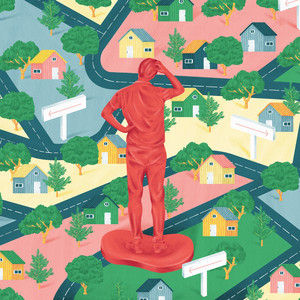
Today on LifeKit, boosting your sense of direction.
You know, if I ever find my way back home.
Where am I going?
Turn left toward Doucher Road.
Then make a U-turn.
Once ahead.
There are two questions I want to head off before we get started.
The first is why bother.
For those of us not navigationaly blessed, does Google Maps get me to where I need to go?
Yes.
Do I usually have my phone on me at all times?
Sure.
Usually.
I threw this question at Ben Giro.
He's an outdoors recreation specialist with Cleveland Metro Parks where he helps kids
from the city get used to the outdoors, which includes teaching them how to navigate.
So obviously he gets this question a lot.
Well, I mean, I just quite deadpan, just say like, well, has your phone ever died, especially
when you're outside?
And if so, like, how do you get going?
Do you just kind of guess and do you just sit down and cry?
I don't know.
Gigo Spears is a professor of cognitive neuroscience at University College, London, and his expertise
is in spatial navigation.
And he says that having a good sense of direction gives you more than the ability to just go
from here to there.
My advice would be, yeah, don't stress yourself out, you know, trying to push yourself to
navigate, but it's kind of trying to find the fun in it of the power you have over
the environment.
Gigo's research includes looking at the brains of the people who drive the black taxis
in London.
Those are the people who have to take that pretty rigorous test covering about 25,000
street names in London.
The thing I discovered, London taxi drivers, once they've mastered these street names,
they have some sort of real sense of ownership of the city.
So I think there's a lot of value in how we connect to the environment.
It goes beyond just tapping into digital maps.
Okay.
So that answers the first question of why.
Now, what about who?
Mary Hagerty from the spatial thinking lab says there is some separation between people
who are good at navigation and those of us who are bad at it.
I would say it comes from two things.
I think probably a certain amount of it is inherited, but I think it's largely comes from
the types of navigation experiences you've had in your life.
You know, how much you have actually been challenged in navigation and how much you've
challenged yourself.
And there is that old conard about how men have a better sense of direction than women,
which there may be some differences in how men and women navigate.
But the underlying reasoning is cultural, so here you go, because in countries with higher
gender equality, there is little gender difference in navigational skill.
So there are countries like much of the Scandinavian countries where there's no real difference
between men and women.
It's very small.
And in school, they learn how to navigate, whereas in various countries around the world,
whether a big gender discrepancies between what women and men can access for education,
healthcare, travel, you see big differences in navigation skill.
And yes, there is still a lot we don't know about why some people are better at it than
others.
Like Mary said before, there are some people who just got it like that.
But if that's not you, there are some things you can practice that'll teach you about
your own neighborhood or that you can even apply if you're visiting somewhere.
Here's Mary again.
I think of navigation as sort of a use it or lose it skill.
You know, if you use it, you get better at it.
So that's where I would start.
Okay, so let's start.
Take away one get lost on purpose.
Here's outdoor specialist Ben Giro.
I would recommend that if you're not in a time crunch, try, just try taking a different
turn and seeing where it ends up.
And yeah, while Ben's expertise is out there in the woods, he says in the context of a
more urban area, to get a better sense of direction, it can be helpful to act like you're
on a leisurely hike.
Next time you decide to go on a walk or go for a stroll, go down a road, you may be not
walked to and see where it ends up.
Maybe walk the scenic way to your favorite bodega or your bar or wear out coffee shop or
whatever.
This is not the most efficient way to get from point A to point B, but that's sort of
the point.
I think we've all gotten used to the idea of that like, we've got to go, go, go get to
our spot.
We don't want to waste time.
That like old adage of time is money, you know.
When in some circumstances, I can understand the need or the compulsion to try to get
there as efficiently as possible, but I'm not an Uber Eats driver, so no one's waiting
on my getting to a destination before their ice cream melts or their tacos get cold.
The philosophy still stands even if you're driving from the highway to the burbs and
back.
What's the harm in taking five minutes to ten minutes longer to get back to the highway
when you're going home from your friends or families place?
Nothing.
Instead of putting on a GPS to get back to the highway, a little bit of adventure, a
little bit of exploration, and just try to get from the burbs back to the highway.
Let me ask you the opposite is what is the benefit of taking the time to do that?
Well, you're never just going to magically acquire a skill.
In order to learn a skill, you have to work at it.
You have to practice it.
You have to think about the senses of directions and turning right and left and keeping a sense
of a direction in your head as you travel.
When you have a GPS on, you're probably not thinking about any of that.
Just a quick note, we're not trying to make anti-GPS propaganda here.
They can be a great tool.
Mary says the most common use of GPS that people self-report isn't for turned by turn directions.
It's to get accurate up-to-date traffic information.
She says an overreliance on GPS can lead to literally a more narrow view of the world.
If you're just looking at your GPS, you're not paying attention to the broader environment.
It maybe gives you cues of, okay, this is on my right.
It means I'm here and when this is on my left, it means I'm here.
That is one of the big pieces of advice I would give to people is try navigating without
it, especially for routes that you take pretty frequently and pay attention to the cues
in the environment that help you stay oriented on those routes.
Which brings us to take away two.
Pick out a few big landmarks that you can use to orient yourself.
These landmarks can come in different genres.
Sure, you can use the fourth wave coffee shop down the block with a gas station with the
good snacks as street-level landmarks, but the most helpful are the massive far-away
ones.
The most useful landmarks are distal landmarks, landmarks that are far away, right?
Because, like I said, say something like the bank on the corner.
That might be a landmark that helps you turn right.
You have to turn right on the bank to go to a certain place.
But you're coming up to the bank, it's on your right, and then after you've turned,
it's behind you.
So it's relation to you changes as you navigate.
But something that's in the distance, like for us, the mountains, it's something that's
always far away, so it's a better cue to orientations.
And Ben says this is something humans have been doing for centuries, picking a thing and
having that be the so-called true direction for you.
I know the more flat it is, the harder it is, but growing up in Cleveland area, we have
Lake Erie is always north.
So I like to say just try and find one thing to be your true direction.
It can be a tall building or a big sign, but can also be a major highway.
There's a lot of highways going north south, sometimes they're diagonals, but maybe knowing
it's at 395, I think, goes from Baltimore down to D.C.
2.95, yeah.
2.95.
So that's a big north south, so if you're south of Baltimore, and you can see that major
highway or know that you're near it and remember the last time you turned, those kind of things
help.
If you do end up lost, these landmarks can help guide you.
If not where you need to be, somewhere more familiar to you.
It helps if the landmarks are distinct, that also helps if you've got a personal relationship
to them.
Here's you go.
There are certain chemicals running through a natural endogenous chemicals in your brain.
They're kind of lock in memories, so things like dopamine is this well-known molecule
we get and we get rewarded by something.
So if you were in an experience like that where, wow, lots of great things around you,
things have happened, you've got this really positive memory.
When your brain has got more flexibility to hold on to some of those memories, is the
way that the research suggests.
And this is something we can take advantage of.
Take away three, turn your environment into a narrative that you can understand.
That is indeed what a lot of expert navigators do is use narratives to help lock things in,
because like I said earlier, it's great if you can memorize street names, but street
names are often like completely abstract.
So the tricks people use are to turn these street names into stories and use whatever
tricks, you know, personal stories you can make up.
It's one thing to say, oh, that's 12th street.
It's another thing to say, oh, that's 12th street, where my buddy and I walked up to get
those churros that one day.
Key to good memories often like how deep you're able to get that information in.
So are you just like glancing at a street or are you looking at it thinking, that doesn't
make sense.
Why is that here?
And what's going on?
Oh, there's something happening.
You can see the details and things and think about it more deeply, the more like you
had a former memory of it that lost.
To go back to an earlier example, when Ben mentioned 295, the route that connects Baltimore
into Washington, DC, those numbers 295, they don't mean anything to me.
I just know it as the highway I take when I have to drive into the main and pure offices
in DC.
This process of connecting these ideas is called building a cognitive map.
So not literally being able to see a map, but just having an idea of where things are
and how they're all connected.
And that's used when you're sort of navigating somewhere you've recently been, you've just
learning around, or maybe you've been there for some time, but you're having to really
think about how different places are connected.
And you could help get more experience building this map by being the decision makers as
Mary.
If you're the decision maker, making the decisions to turn right and turn left, so actively exploring
your environment is better than just saying being the passenger where you are experiencing
the same route as the driver, but you're not making the decisions.
Hugo says pay extra attention to the intersections.
What you need to do is pay a little more attention to the way the junctions are laid out and think,
okay, I've go into that junction.
It's not actually straight ahead.
It's slightly to the right.
Also the streets themselves can lay out a story for you.
Here's Ben.
Most inner city grids have some zevlets of streets and avenues where they're numbered
going one direction.
And then this is where every city typically does it a little different.
I lived in a city in Ogden, Utah, and they did presidents.
So it was like instead of first, it was like Washington, which even if you don't know
your president's down pat, you have a general idea of where you are.
So you'll hit some president and be like, oh, well, Kennedy, that's way later.
So I'm in the wrong part of town.
That's kind of like knowing your city, knowing which ones are the north south, which ones
are the east west, and you can follow those.
The next takeaway, takeaway four is probably one of the simplest, which is as you travel
in your day to day life, just look back.
Literally, look behind you.
As you're navigating somewhere, just turn around and look at where you came from every
day so often so that you know how to get back.
I mean, that's something I use a lot while hiking.
I'm taking a particular path, sort of looking around and saying, okay, this is what it looks
like when I know I have to take the left path or something like that.
This works if you're going to a new place or if it's some restaurant you go to all the
time.
If you just sort of walk to the restaurant without looking behind you or taking in the
environment, you'll just have a very light.
This is the views I saw.
When I went there, not some sort of more holistic understanding of what the space looks like.
So it just helps to be a bit more curious about the space around you and how it looks
like from different viewpoints.
Be more curious about the space around you is probably the big overall takeaway from all
of this because we're not trying to be London cabbies, I assume.
It's a matter of simply being more confident in the space around you, which helps you stay
calm if you do ever get lost.
At which point, just ask somebody.
Okay, recap time, takeaway one, get lost on purpose when you've got the time, turn off
your GPS and figure out your way back home or just walk around and explore a little.
And while you do that, takeaway two, pick out big landmarks to orient yourself.
It helps if they're far away, also if they're distinct.
Outside my office window, I have a cylinder type tower.
It's used like, I cannot tell looking at it, which way I'm facing because it looks the
same from every direction.
So that's an example of one that's not so useful.
It also helps if you've got a connection to those landmarks, which brings us to takeaway
three, use narratives to help make connections between landmarks and roads and places you
frequent.
All of this will help bolster these places in your memory.
And takeaway four, look back, turn around, see places from a different perspective and
you'll have a better sense of both where they and you are.
For more life kit, check out our other episodes we have one on how to pack for a trip, another
on how to be a great roommate.
You can find that at npr.org slash life kit.
And if you love life kit and want more subscribe to our newsletter at npr.org slash life kit
newsletter.
Also, we'd love to hear from you.
If you have episode ideas or feedback you want to share, email us at life kit at npr.org.
This episode of life kit was produced by Claremory Snyder.
Our visuals editor is back, Harlan, our digital editor is Malco Garib.
Megan Kane is the supervising editor.
Beth Donovan is the executive producer.
Our production team also includes Andy Tegel, Margaret Serino, Sylvie Douglas, engineering
support comes from Becky Brown.
Special thanks to Pablo Fernandez Velasco, Nora Newcom, Margaret Terampi and Daniel Montella.
I'm Andrew Limbaugh.
Thanks for listening.