Well, that one is really cool.
Hi, my name is Savannah.
I'm a friend of Jesse's from work.
I'm visiting the fort, and Sam has been showing me some great photos of the moon.
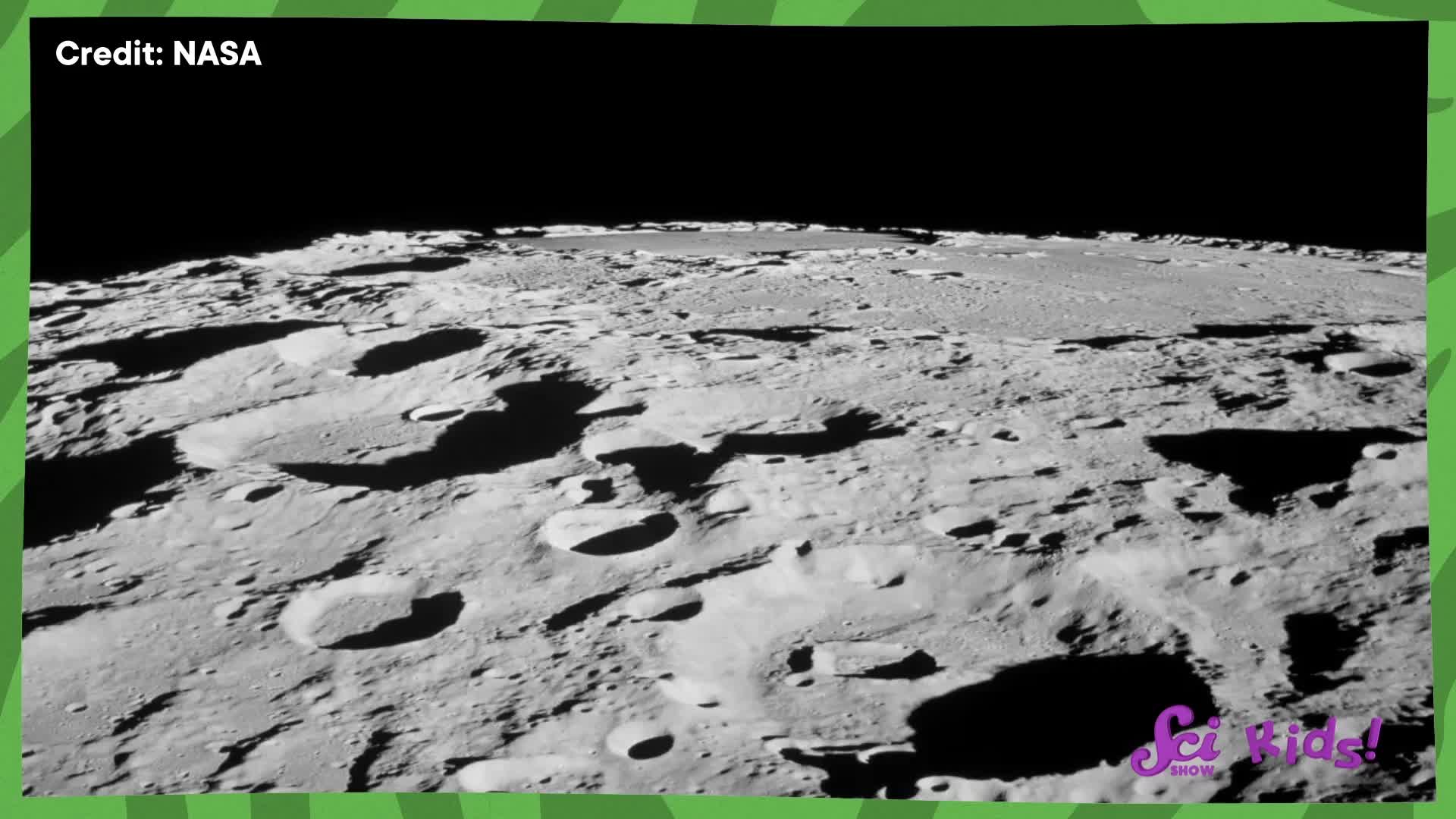
Yeah, I wanted to get a better look at all those dark spots covering the surface.
I was doing some reading about them and it turns out those spots are actually special rocks called basalt.
A long time ago, lots of places on the moon got flooded with lava from volcanoes, and the lava somehow turned into rocks.
That is so cool.
I didn't know that spots on the moon were made from igneous rocks.
Igna what now, rocks?
Oh, igneous rocks are a special type of stone.
They form when a bunch of super hot liquid rocks cool down and harden into brand new solid chunks of rock.
You said that parts of the moon's surface got flooded by lava, right?
Mm-hmm.
Well, volcano lava, which is called magma when it's still underground, is really just a bunch of rocks that got so hot.
They melted into a liquid.
Like when an ice cube gets warm enough to melt into water.
Exactly.
And when the fiery hot lava or magma cools back down, they go from being liquid rock to solid, igneous rocks.
The word igneous even comes from the Latin word ignis, which means fire.
That's how I remember that igneous rocks are made from fiery heat, then cooling back down.
So igneous rocks are just rocks that have changed from being liquid to solid?
Yep.
But if those igneous rocks melt again, they won't go back to being the same exact rock they were before they melted the first time.
Because the ingredients in the lava might be slightly off or the amount of heat or pressure in the environment around the liquid might be a little different.
You might even wind up creating another type of igneous rock completely.
I'd say that's cool, but I wouldn't want you to groan.
I kind of want to groan anyway.
You can find basalt on both the moon and the earth, and in both places it's made from lava that cools after it erupts from a volcano.
But there are lots of other igneous rocks that do that too.
Together, they're called extrusive or volcanic igneous rocks.
And there are also igneous rocks that form without getting shot out of a volcano.
Instead, they're made when magma cools and hardens underground.
Those are called intrusive or plutonic igneous rocks.
So basalt is an extrusive igneous rock because it cooled and hardened above the ground.
This is a really interesting way to sort rocks, but what if I don't know where a rock came from or how it was formed?
How can I tell if it was an igneous rock or if it's extrusive or intrusive?
That is a really good question.
We usually aren't able to watch rocks form, so we have to look at what we can see and observe certain properties about the rock to make our guess.
The properties of an object can include how it looks, feels, or even tastes.
But when we're dealing with rocks, we don't really need to think about taste.
Yeah, I don't really think I want to lick a rock.
Extrusive igneous rocks tend to form a lot more quickly than intrusive igneous rocks.
And that means the two often look very different.
Because they cooled and solidified super fast.
Extrusive igneous rocks might look grainy or glassy because the crystals are too small to see with your eyes.
Or they might have bubbles of air that got trapped inside them.
Check out this pumice stone.
Whoa.
I can see the air bubbles.
And it's really light for a rock.
That must be because of all the air caught inside those bubbles.
So pumice must be an extrusive igneous rock.
You got it.
Now let's compare that pumice to this piece of granite.
Oh, wow.
The bits and pieces in this rock are much bigger.
I can see all the little crystals that make up the rock.
Yeah.
Can you think of why they might be so big?
Hmm.
Is it because they had more time to grow?
The liquid rock took a lot of time to cool down and harden?
I think you're on the right track.
Keep going, Sam.
What else do you observe?
I don't see any air bubbles, so this rock must have been formed underground where the air couldn't get caught inside.
So granite is an intrusive igneous rock?
Yes.
Granite is super useful, too.
What other properties can you notice about granite when you hold it?
Well, it's not a very big piece, but it's pretty heavy, and it feels pretty hard.
Exactly.
And because of all of that, some humans use granite to make really strong surfaces that get used a bunch like countertops.
Plus, because of the way it formed, granite doesn't react that much to heat.
So it's especially good for kitchen countertops, where you'll find people using a lot of hot pots and pans over the years.
I don't think an extrusive igneous rock like pumice would be very good for that.
It doesn't seem as strong.
True, but all of the air bubbles in pumice give it a very interesting texture.
Yeah, it's super rough.
Is texture another type of property?
It is.
Pumice might not be as strong as an extrusive, igneous rock like granite, but its rough texture makes it great to put in scrubbers that clean or polish things.
And some people even use pumice to scrub old skin cells off their body.
And because pumice is so light, it can be added to things like concrete to make it strong, but not as heavy.
Wow, it sounds like igneous rocks have lots of cool uses.
It's amazing that liquid magma and lava can become rocks that we use every day.
And the more we learn about rocks, the more interesting ways we find to sort them and use them.
Say, we might not be able to visit the igneous rocks on the moon, but there are amazing places all over the world where we can see different kinds of igneous rocks.
We could visit the Giant's Causeway in Northern Ireland which, just like those dark spots on the moon, is made up of basalt rocks.
Or we could go to Bear Lodge, also known as Devil's Tower National Monument in Wyoming.
There's a huge natural landmark over there made of a rare igneous rock called phonolite porphyry.
Sounds like we have some traveling to plan.
I'll get my notebook and we can start writing out details for some trips we'd like to go on.
You can learn about igneous rocks around the world or in your neighborhood.
Do you have any igneous rocks around you?
Do you think that they're intrusive or extrusive?
And remember, if you want to keep exploring different rocks and lots of other fun science things, we have lots of other SciShow Kids videos to help you learn more.
We'll see you next time here at the Fort.
Bye.