
[The Spark of Change: A Journey into the Electrical Trades]-[I Make $43K A Year Training To Be A Licensed Electrician – And I Couldn't Be Happier]
📋 Summary
The Spark of Change: A Journey into the Electrical Trades
In an era where automation and artificial intelligence dominate career discussions, Zen Stewart, a 34-year-old electrician based in Raleigh, North Carolina, offers a refreshing perspective on the enduring value of the trades. Her journey from being laid off to establishing a fulfilling career in electrical work highlights the resilience, creativity, and strategic advantages of manual labor in the modern economy.
Finding Purpose in the Trades
Stewart’s path to becoming an electrician was not a childhood dream; it was a pragmatic response to job instability. After facing layoffs in other sectors, she began “researching what careers aren't going to be replaced by AI anytime soon.” Her decision was driven by three core factors: the ability to earn a “really good living,” the necessity of “benefits,” and the desire for creative, hands-on work. She emphasizes that the electrical trade is not just about labor; it is about the satisfaction of watching a project evolve from “completely dirt” to a fully functional building, where one can “flick on the lights and seeing everything come to life.”
The Reality of Day-to-Day Operations
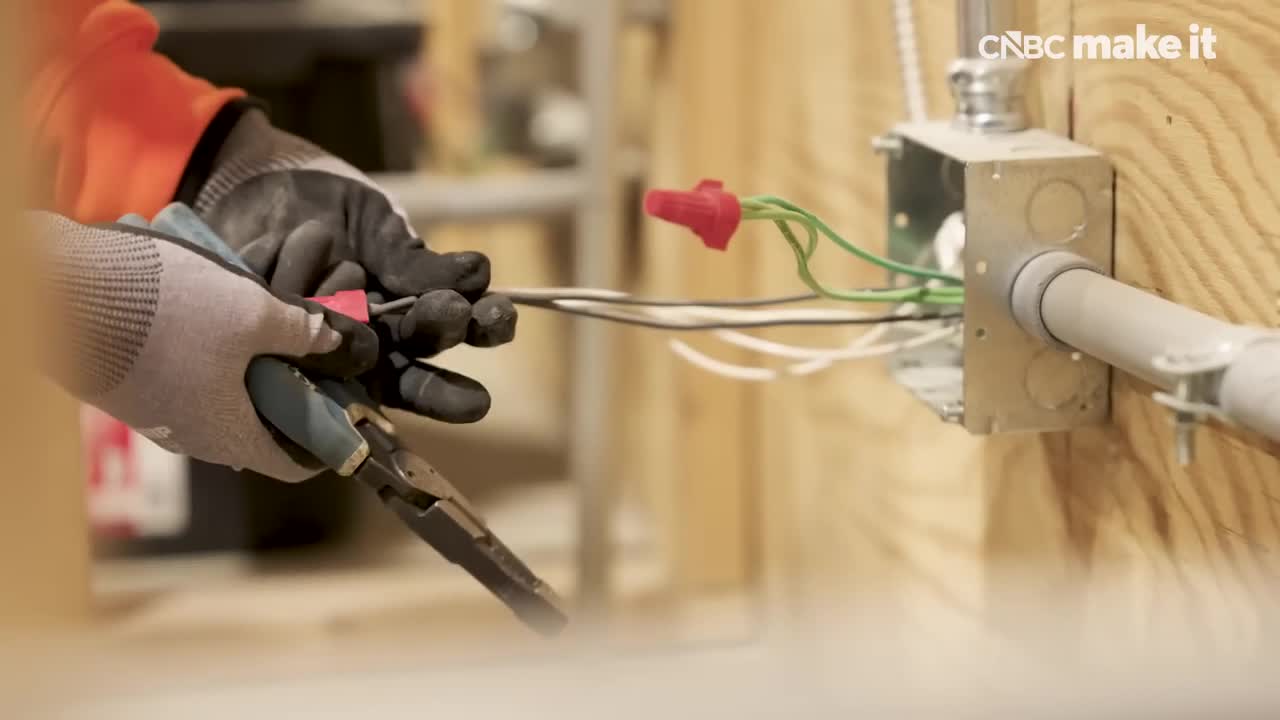
Describing her routine, Stewart demystifies the life of a commercial electrician. A typical day starts early—between 4:30 and 5:00 AM—and involves tasks such as “running conduit,” “setting up electrical fixtures,” and “splicing wires.” She explains the technical precision required, noting that “you always do the ground first and then the neutral and then the hot.” This hands-on experience, which she began on her first day when she was “literally just thrown out into the field,” proves that the trade is a profession where one is effectively “getting paid to learn.”
Navigating a Male-Dominated Industry
One of the most significant hurdles Stewart addresses is the social dynamic of the construction site. As a woman in a “male-dominated field,” she acknowledges that she often feels the need to “prove myself more.” Despite the physical demands of the job, such as lifting and “bending the conduit,” she maintains that these challenges are surmountable. Her advice to other women considering the trade is to “power through it” and not let the lack of initial experience or the intimidating environment serve as a “block that keeps you from entering the trades.”
The Strategic Value of the Union
Joining the union is a cornerstone of Stewart’s career strategy. She describes the union as providing essential “support and protection” that is often lacking in non-union roles. Beyond health benefits, the union offers what she calls a “golden ticket”—a qualification that allows electricians to “work anywhere in the U.S.” by “signing the books.” This mobility is a major financial advantage, as it enables workers to travel to different regions to take advantage of higher wages and per diem payments, proving that “you can make as much as you want to make as an electrician” depending on one's “drive” and focus.
Advice for Aspiring Tradespeople
Stewart encourages those looking to enter the field to start by conducting thorough research. She suggests utilizing platforms like YouTube and social media to explore the “different sectors of electrical field,” as each area varies significantly. She emphasizes that the first step is the most critical: "Don't let lack of experience be a block." By taking that initial leap, individuals can move from uncertainty to mastery, eventually finding that the once-daunting tasks become “second nature.” For Stewart, the electrical trade is more than just a job; it is a pathway to independence, financial security, and the profound satisfaction of building the world around us.

Deep Learning with ListenLeap


