My name's Hugh.
I'm a co-host on The Imperfects.
I'm the son of Sri Lankan and English immigrants, and I call Australia home.
We at The Imperfects acknowledge the Wurundjeri people of the Kulin Nation as the traditional owners of the land on which this podcast is recorded, and we extend our respects to the Elders past and present.
I've spent much of the last decade travelling around this country sharing stories.
In doing so, I acknowledge and pay homage to the Aboriginal and Torres Strait Islander peoples' rich history of storytelling.
I also acknowledge that whenever I talk about or practice resilience, there is no greater example than the one set by the world's oldest living culture.
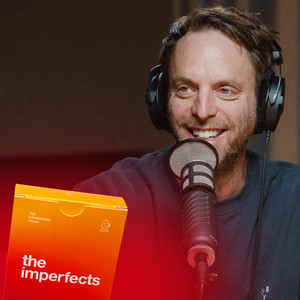
We have a brand new set of Vulnerability House cards.
The Vulnerability House Volume 2.
New design, new box, all new questions.
When was a time you genuinely needed help?
Were you able to ask for it?
The answer is right now in my life.
I am officially completely burnt out at the moment.
I just don't know how people can help right now.
I think now, but I don't know how people can help.
Do you think you're maybe not the best judge of how you could be helped?
The Imperfects invites you into a very safe place.
A place where we share without judgement and drink heaps of vulnerability.
Grab yourself a cup.
This is the Vulnerability House.
It's day two, or episode two of three, of this celebration of our brand new set of Vulnerability House cards.
The Vulnerability House 2.0.
New design, new box.
Volume two.
All new questions.
I'm just leaving time for the echo to reverberate through the room that we'll obviously put in post.
Post, post, post.
So if you're just tuning in for the first time, I'm Ryan.
And we have this set of cards, the Vulnerability House cards, which have been available for years now on our website and at live shows.
And on all those cards are different questions that we give to guests and guests answer them and tell vulnerable stories and things about their life.
And we've finally released a second set with all new questions.
And so the three of us, over these three episodes this week, we're each going to pick a card each episode and see what comes up.
Yeah.
And actually while we're talking about the brand new volume, where can you buy these?
Yeah, at theimperfectscomau you can buy these and they will be sent to the address that you nominate.
It's e-commerce.
Yeah.
Okay.
I believe it's my turn.
I believe it is.
I believe it is.
Yeah.
So as is customary here, you pick three cards and read them out.
And if one of those cards sparks some sort of memory or a story about your life and you feel comfortable sharing it, then do.
If none of them do, you can just keep picking cards until you like one.
Okay.
So what do you got?
The first three cards I've got here are...
Uh, the first one is when was a time you genuinely needed help?
Were you able to ask for it?
That's the first one.
The second one is when you were a child, were there any emotions that were not acceptable to display?
Hmm.
And the third one doesn't have the Imperfects branding, unless it has teacher's consent.
A few of the cards are collaborations with teacher's consent.
Yeah, which is great.
Growing up, where did you encounter violence?
Was it condoned or unacceptable?
That question we also, the three of us all answered in like an episode, which was another imperfect chat about men.
There's actually we did eight, I think eight digital cards, eight digital vulnerability house, teachers consent collaboration cards.
And some of those are in this, are in this new deck as well.
Yeah.
Okay.
So I think.
I think, the one that I'm going to go with the first question because again, like you said Ryan, with yours, that as soon as you saw it you felt really nervous.
So I'm going to go with when was the time you genuinely needed help?
Were you able to ask for it?
And I guess, before I say anything, I just want to acknowledge that there are far worse things happening around the world right now.
And I'm vastly aware of that.
I just I guess I'm just sharing what's happening in my life because I realized there might be some other people out there who are going through something quite similar.
And it also will, I think, provide a little more context to your – when you spoke about in your card was you're worried that you weren't there for me this year or during this year?
And so, yeah, the question, when was the time you generally need help?
So I think the answer to the question is I don't really –
I don't really know if I need help, but I need to tell you guys this.
And maybe help will come from – I don't really know.
But like the answer is right now in my life –
Like I am officially completely burnt out at the moment.
I've been burnt out twice before, but never like this before.
And it always happens at the end of the year.
But at the Resilience Project, we have monthly staff meetings.
At the end of the staff meeting we get three staff to sit up the front, a bit inspired by Ben Shuri's what he does at Attica, where he gets his staff to share stories from their life.
We were inspired by that.
We did a similar thing.
It's been an incredible way to connect with our staff.
And one of our amazing team members got up and said that a long time ago, like 10 years ago, she would drive to work and she would sort of fantasize about being in a car crash.
She didn't want to die, but she would fantasize about being in a car crash so that she could go to hospital for a couple of months and just lie down and be in hospital.
And when she said that, I just thought, fuck my God, that'd be so good.
And I was up there facilitating this conversation, but I got very distracted by thinking how good it would be to be in hospital for a couple months.
Now I have not once thought to myself, I want to be an accident.
I don't want to hurt myself.
I've had no thoughts like that, but I did hear that and think, if something happened to me, I'd go to hospital and I could just stop.
And I really.
And there'd be a valid reason.
Yeah, I could lie down in bed by myself for a month or two and I just, it sounded really good.
Like that sounds really good to me.
And I do need to say here I'm aware that there are people listening to this who have a loved one who's in hospital.
Maybe they're in hospital themselves and it's the last place in the world they want to be.
I've been to hospital before.
I've spent time in hospital before.
I understand it's terrible.
I really am just referring to the fact that I would just love so much to be lying down with no commitments for a month or two.
Yeah.
And I went home that night and I was trying to understand that I've never, I've never felt like that, ever before.
Like I felt burned out before and thought, God, I can't wait for the holidays.
But lying in bed that night, I was thinking that would be really good to go to hospital.
Um, and trying to understand it, I, It might really emphasize how burnt out I am.
And to give context for people.
A lot of people are going through a lot of stuff right now, so I'm certainly not saying this is not a woe is me.
It's just my reality at the moment.
I feel like I have so many full-time jobs.
And then, I mean, the big one that everyone will know is just parenting a child on the spectrum is –
It's like a full-time job in itself as a carer, essentially.
And anyone with a neurodivergent child will know sleep is one of the things that they struggle with.
Our child has developed a new thing, where there is about a night a week where they actually don't sleep.
Well sorry, they'll go to sleep at 730, but they'll wake up at 10 or 11 and will literally not go back to sleep.
Or the other day we had didn't go to sleep, like actually didn't go to sleep at any point, and so there's a whole night a week where Penny and I are not getting sleep.
So there's that we crammed a lot into the first half this year for the podcast because we have a live show coming up, and So we went really hard up until the end of May before we went on a production break.
The Resilience Project has got 40 staff now.
It's a huge, huge commitment for me.
We are now in a position where we've just moved house, which everyone says is one of the most stressful things you ever do.
We've got to do it three times before Christmas.
We're moving three times.
That's a long story, but which I won't go into now.
And on top of those four things, I went through something in June which I've never experienced stress like it.
So I remember just lying there in bed and I looked up the symptoms of.
I know I've talked about it before on the podcast, but I just I looked up Because things are feeling really off.
Like things are feeling really off for me more than I ever have before.
And I looked up the symptoms and there were seven symptoms that came up in the first search that I did.
Not to say that it's an exhaustive list, but I just ticked them so comprehensively and so quickly that yeah, I've realized that what I'm experiencing is just an extreme level of burnout.
I...
Thank you for sharing that.
I have to say I'm not surprised at all.
Hearing you say the thing about the car crash is confronting, but I know you well enough to know.
But I haven't been fantasizing that.
No, no.
I know you well enough to know that what you're fantasizing is lying in a bed and doing nothing.
And that just seems like a valid way that you get there where there's no guilt associated with that.
Yeah.
I know that it's not like anything to say the words.
I know – well, actually, I should ask you, but it's not anything suicidal or anything like that.
No, no, no.
But watching you go through what you've had to go through and had a few conversations about stuff here and there, but then also seeing – the person you are at the moment, what you're saying is not a surprise to me at all.
I feel like I don't know anyone who's trying to hold so many balls in the air, and I don't know if this is fair, but it seems like trying to do them perfectly as well, like trying to be the perfect of everything.
But also like, and not wanting to let anyone down.
Yes.
Yeah, yeah.
And it's really hard to watch because it's, I don't know what the answer is because they're all – maybe we haven't spoken enough about workshopping what can be done to ease the burden and ease the stress a little bit, but I don't know where the easing can happen either.
Yeah.
Hearing you say that, like Josh said about the hospital, it feels it feels really dramatic, but I know what you're saying.
It's like removing the choice.
It's like, you don't, you know, it's like, it's out of your hands kind of thing.
Yeah.
But I also think it will be really helpful to go through these symptoms because, even though we've spoken about burnout before and it's a word that a lot of people use I can imagine people hearing the term burnout and going like, oh yeah well, you're working too hard or yeah, we all get a bit busy and it feeling a little bit more trivial than it actually the reality is.
Yeah, like I might just go through them and just give you examples just to give context to them.
So I've got the notes on here.
Okay, so the first one, which sounds like an obvious thing, but just constant exhaustion.
But when I say constant, it's like there is no point when I don't feel – there's nothing I can do to make me not feel completely exhausted, both physically and emotionally.
So when I get home at the end of the day, I sit down.
I just can't get up.
There is so much to do in a house of three kids.
I just, it is so hard to get up once I've sat down.
And like in the morning.
So for most of this year I've been getting up an hour before everyone else does in the house and doing things that I know really help me and my brain to function for the day.
I can't get out of bed anymore.
I just cannot get out of bed.
And I'm sharing because we've moved into a smaller place at the moment.
I'm in a bed with Elsie, so we're sleeping in bed together.
And I just can't get up.
Everyone gets up and starts the day and I just cannot.
I find it so hard getting out of bed.
There are some times where you know, and there are times when Jam, my partner Jam, when she's like really down or anxiety or depression has like taken hold and And all of the – like it gets to a point sometimes where it's like all the self-help-y things, all the tools, they just don't work.
Yeah.
It's just like there are some points where it's like you can go like okay, do this technique or this meditation or – and they do – they can be really great.
But sometimes when it's really extreme, it's like –
It's a big jump to get to because at the start of the year I was like I'd wake up and go.
Oh yes, I get to do breath work and I get to cycle, and then I get to do the podcast and I do some exercise at seven at work and everything was exciting.
And now I just lie there going, what's the point of getting out of bed?
Nothing is going to make me feel good today.
I don't understand why I would need to get out of bed.
So constant exhaustion is the first one.
Withdrawal.
So like this happened this morning.
I was at the gym this morning and And I was getting changed and my phone was sitting on the bench next to me and a guy walked past and he mistook my phone and he took my phone and I knew it was my phone.
And I honestly felt like, oh my God, that's great that I don't want to be contacted.
If he takes my phone and leaves and doesn't realize he's got home, no one can contact me.
No one's going to know where I am.
I didn't tell him.
I didn't say that's my phone.
I was so relieved to see him take my phone.
My phone rings and I just don't answer.
It's too much.
And there's so much important stuff that needs me in my life.
It needs me to pick up the phone, but I look at a number and just go, no, I can't.
I'm so withdrawn.
I love saying hello to strangers usually.
I love smiling at people when I walk past them.
I just had my head down.
I was walking my head down everywhere I go.
I lost the motivation to the next one.
I get to so still willing myself to the asterisk and to the gym for my running.
I sit in the car for like 30 minutes.
I cannot get out of the car to sit there just like with no motivation for it.
Running fast always makes me feel good.
I just like to get to that point.
I was like, I just have no motivation for it.
I sit in the car and it makes me feel worse and worse.
Next one's irritability and negativity.
And when I have a lot of driving, I was listening to music.
I don't like music at the moment.
There's no music I can find that I like.
Everything and every music, every bit of music annoys me.
Like it's just, it's such a strange thing.
And I know when I'm the opposite.
When I feel really good and rested and happy, I give everything to bear in front of that music wise.
No matter what comes on, I'm like, yeah, I can get my people like this.
Yeah.
Some people like that.
I don't, but good on them.
And well done for the person who wrote this.
Oh, Jojo Siwa.
Yeah, I'll listen to that again.
I don't know who that is.
Yeah, but it's for people who do.
It'll work.
Okay, well.
Struggling to focus is the next one.
I had to send a message yesterday.
I had a really, really important meeting yesterday.
Really important with someone who'd done a lot of work to prepare us for this meeting.
And then I had to send a text message to two people in the meeting yesterday to apologize for my lack of.
I didn't bring anything to the meeting.
In fact it was probably obvious that I was just.
Both of them wrote back saying yeah, I was wondering what was going on.
I thought you weren't happy with something we'd said, or I just couldn't.
I couldn't actually focus on what was happening.
Then there's like the other thing.
The next thing I have to struggle to focus is physical warning signs.
I've been fighting off this sickness for the last five weeks.
I'm just never healthy at the moment.
I know it happens to a lot of people in winter, but I just can't.
I just feel like I'm always a little bit sick at the moment.
So my body's not coping properly.
And the last one is reduce sense of accomplishment.
We had that amazing research come out of the Resilience Project which I've talked about way too much.
But I've almost rather than being like celebrating going.
That's amazing.
I'm so proud.
I felt angry about it.
Like, as in like, why is everyone so fucking surprised?
Like, why is everyone going, oh my God, that's amazing.
No, it's not.
I've been doing this for 15 years.
Like, am I getting angry about it?
Yeah.
Rather than just going...
Yeah, this is such a great thing.
And so I read those seven things and thought, yeah, like I'm just so burnt out.
But like I was funny, when Bridget came back from her trip, like um, I just absolutely blurted all that out to her.
So this is not new to Bridget at all.
She's heard all this.
And amazingly, Bridget was like, well, we can – let's work something out.
There's got to be stuff you don't have to do.
Let's go through your calendar and work out what – and I said, yeah, leave it with me.
I'll go home.
I'll look through my calendar and I'll work out what we can take out.
And there was nothing.
I looked at it and there's nothing.
I can not – I have to do everything that's scheduled for the year.
I can't not do this.
And I'm actually not –
And it's nice what you said before, but actually I've given up on perfect a long time ago.
I'm not trying to be perfect.
I'm just trying to get through it all.
I mean, it does feel great to share this with you guys now, because I guess you guys have awareness of it and it makes me realize I need to tell Penny this and I need to communicate with the leaders at Resilience Project.
Penny is always so good when I come to her with this stuff.
And the Resilience Project.
I mean, I'm very proud of the way that we look after our staff and there's so much – I know they care about me so much and I know that they'll be incredible, as always.
But I – there's some really, really important stuff here and I just – I don't understand what I'm meant to not do.
I can't see what I can't do.
I can't see anything where I go.
Yeah that – i mean, if i do do that, we take workshop away.
I'm still in the relentless, relentless um activity of parenting a neurodivergent child like which is will never.
It will go through stages and they're doing really well at the moment, but it's still absolutely exhausting.
And so yeah um, when was the time you genuinely needed help?
I like I just don't know how people can help right now.
That's like I think now, but I don't know how people can help, and I'm also so conscious of the fact that I'm saying all this with some really horrific stuff going around the world which is far more awful than what I'm going through.
But yeah, were you able to ask for it?
I don't know what I'm asking for.
That's such a –
Interesting part of it is like yeah, how – if you can't see how someone can help, then you can, so understand why you just wouldn't bother asking for help.
And I also to add to that, I also think Penny is – I don't want to put words in her mouth, but she's also completely exhausted as well with everything that we've been through.
And so for me to have a rest –
Puts it on her.
Yeah, it makes her life harder and I don't want to do that.
So it's just this, it's just too much.
Everything's just too much.
Yeah.
Can I?
I don't know if this question will come out right, but do you think, having read that whole, read all the lists, and thinking about the place your brain is in at the moment and your body, do you think you're maybe not the best judge of how you could be helped?
Yes, probably.
I mean, no.
So, no, I'm probably not the best judge.
Yeah.
I don't know who is, but when I felt a lot of those things that you're talking about, I think I've probably never been as burnt out as you are now, but I've experienced different mental ill health that has forced me to see the world in many of those ways.
And I think it is very hard to look at your life objectively and find solutions when you're in that mindset, and I think I'm happy to try and help, to be the person.
But I'd just like to put the idea in there that maybe the help is working out how to help, if that makes sense with a bit more clarity and objectiveness, because I don't think you're in a state to do it.
Yeah, that's probably true.
I mean, Bridge is here, as she is every episode.
Bridge, do you remember what that conversation was?
I was going to say, do you remember that conversation?
Of course you would.
I've gone blank.
No, I can't remember anything about that.
He was whinging about something.
Do you remember how that conversation was and how Hugh was when you spoke to him?
Yeah, it was hard because I think we'd all come back from production break.
All of us have had really amazing, lovely holidays and are feeling really creative and inspired.
And then to find out your colleague, your business partner, podcast host, is not feeling like that and actually feeling really bad is really hard to hear.
And I think my immediate reaction was, okay, we need to make sure that you're doing less now.
Just hearing how much you've been going through and hearing the burnout in your voice, my immediate thought was you need to take some time out of the podcast and maybe we replace you for a few episodes until you've actually had a break.
And with the live shows upcoming, like maybe we look at postponing them or we get you out of the podcast so you're okay to do the live shows come sort of October, November.
Yeah.
And then we chatted again maybe a week, half a week later and we looked through the calendar and I think when you get really granular, it's really hard to think about what you can pull yourself out of.
And I'm really conscious that I know the podcast is one place that brings you so much joy and has often been like a bit of a reprieve from how difficult life can be in other areas, and So I'm conscious of making that call on your behalf, as your colleague and business partner, because I don't want to take away something that actually is maybe filling up your cup.
But when I hear you say all of this, like in that chat we had and now on the podcast, my immediate feeling is, like nothing here is so important that your health, you know, and your well-being matters, that that's the thing that matters most.
This like will go on and it'll be here when you're ready to come back, like no one's going to replace you.
But yeah, hearing what you're saying i i, my feeling is that like, something's got to give.
Yeah my, my assumption is she was like i'm not taking any time off the podcast.
Yes, that was well.
Yes um, My first thing is that the live show is like the light at the end of the tunnel to me at the moment.
That's the thing that we get there.
So if you bought tickets, the show will definitely be happening.
Unless it's like me, Josh and Mel Robbins on stage.
Let us.
Let us.
Don't let you.
Don't let you.
Yeah.
Yeah.
And just hearing that you can not do things is very helpful.
Like that even makes me feel a bit more relaxed about the world.
It is possible not to do stuff that you think it's impossible not to do.
I think it's almost impossible for you to make that call about taking yourself out of the podcast.
And that's amazing.
If the live show is the light at the end of the tunnel, let's work towards you being in a really well place to do that.
But between now and then maybe it's on me, Josh and Rye to go.
We have to bench you for a little bit.
Yeah.
I'm going to keep you in for now.
For the rest of this episode?
For the rest of this episode, yeah.
But then, mate, if you're not performing, I'm calling Mel.
Um, you are such an empathetic person and you do give people the benefit of the doubt, but do you think and not that I've noticed anything, but I can only imagine, because this happens in me whenever I'm feeling down or burnt out, my empathy levels do drop a bit and I have less patience to give people the benefit of the doubt.
Yeah, very sadly with my – the people who wear that is my kids, because the other thing that I forgot to say in the first point around burnout was the exhaustion.
I mentioned the physical one, but the emotional exhaustion is like one of my kids right now is really struggling with transition.
So that's like – or putting clothes on, or getting in the car, getting out of the car, like really struggling.
And I've been through this stage before.
I would just sit with them and be so patient to understand that they don't want to be going through this.
But I would sit with them and I would continually tell them how much I love them and put up with whatever they were saying to me in that transition.
So it was going to take an hour to maybe get out of the car or get in the car.
And now I have zero patience, like not even two seconds patience.
I'll just grab them and force them into the car, or I will just say you're not eating and that's fine, and storm off.
And that's my most important job.
Like it is my most important job as a dad.
And half the battle of being a really good parent, I think is patience and I don't have any.
And I don't have any to give to the people who need it the most right now.
And that's a really sad consequence of all this.
The place I find myself in right now is that if my kids were asked to describe me right now, they'd probably say I think they'd probably say he's really angry.
And I'm not an angry person.
I never have been.
But that might be how that described me.
But anyway, we will chat more about it off air, I guess.
Yeah, there's lots to talk about.
But I'm so glad you spoke about it because, even though it's not necessarily surprising to us, it's almost like talking about it, not even on the podcast.
Even if you said to us, hey, guys, can I have a chat to all of you?
I need to tell you this because most people don't have a podcast.
So it always feels very dramatic to call people in for a chat because everyone's like, oh shit, what's happening.
But it is worthy of a meeting, like a chat.
And it feels scary, like you said, like when you saw the card, it's like that's scary to talk about out loud.
But I'm just so glad you said it.
It's like you're making it official.
It's like you've called the press conference and you've said hey, I know there's been rumors flying around about my burnout.
I just am here to tell you all today that the rumors are true.
And that is not always necessary, but sometimes maybe it is.
Yeah.
And it might be true that all those big things can't be moved.
But us knowing and I think for anyone out there, the people in your life that love you knowing just means that maybe there are lots of little things that we can do throughout the day where we might have initially put more pressure on to get something done and go.
Actually, I don't need to put the pressure on there.
I can do it a different way, or I can just be a bit kinder to you in certain situations.
The accumulation of a lot of those little things will help, I think, and it's good for us to know.
And so I guess it's a plea out there for people who are feeling like you to tell the people in your life that love you because yeah, things might seem immovable but there are lots of tiny little things that will add up, that can be done.
Yeah, that's true.
That's a really good point.
Yeah.
Yeah.
Thank you, guys.
Well, Hugh, thank you.
It's such a big thing to talk about and it's the biggest thing in your life right now.
But we're all here for you and we love you.
Thank you.
Love you, guys.
Love you.
After recording this episode, we had a chat as a team and agreed that Hugh should take some time off the podcast to focus on his mental health.
So over the next few months there'll be just a couple of episodes you'll hear that won't have him in it.
The Imperfects is not a licensed mental health service and is not a substitute for professional mental health advice, treatment or assessment.
The advice given in this episode is general in nature, but if you're struggling, please see a healthcare professional or call Lifeline on 13 11, 14.