Support comes from our 2025 lead sponsor of Planet Money Amazon Business.
Free your team from time -consuming office tasks with smart business buying tools.
Enable buyers to find and purchase items fast. Learn more about the technology, insights, and support available at AmazonBusiness .com.
This is Planet Money, from NPR.
Wow. This has been a rollercoaster of a week.
Trade as we have known it for decades has been completely turned upside down.
We are in a legit trade war with many countries and underneath all of these tariffs is the international flow of actual things.
All these goods that people buy and sell to each other across borders and oceans.
So today I'm gonna tell you the story of one very small thing.
one good, from one place, whose very existence in the U .S. is intertwined with our history of free trade.
Oh, excuse me. Just gonna reach right past you here.
Winter is finally over, and the thing that has kept my spirits up over this long, cold, dreary winter was one particular fruit.
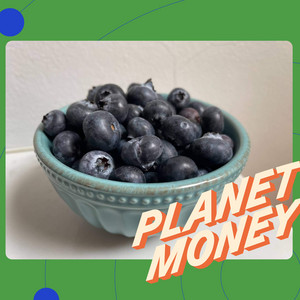
Blueberries, blueberries, blueberries.
Love me some blueberries.
They're delicious, which is why I am kind of squeezing in front of someone's shopping cart at my local grocery store, to fill my cart.
I'm gonna get like one, two, sorry, am I in your way?
They're just $3 .50 a pint.
three, four. I'm gonna buy four of these.
And, curious thing, every floppy plastic container I pick off the shelf says the same thing.
Origin? Peru, Peru in South America, more than 3 ,000 miles away from this grocery store.
When I was growing up, this was unheard of.
You could not get fresh, cheap blueberries in the winter.
you pretty much couldn't get any blueberries out of season.
And now, you can get a fresh blueberry in your local grocery store every single day of the year.
If you, like me, have ever wondered why that is, why it seems like blueberries from Peru are everywhere, in a way they just were not like 10 or 15 years ago, we can tell you, the reason why is cocaine.
Hello and welcome to Planet Money.
I'm Erika Barris. And I'm Keith Romer.
Today on the show, the surprising story of an American initiative in South America.
The goal? To curtail cocaine production.
The strategy? To deploy drug enforcement agents, seed scientists, USAID, and free trade as weapons in the war on drugs.
The result? After nearly half a century, our year -round consumption of literal tons of Peruvian blueberries.
Today, we're going on a journey to explain how we got all of those cheap Peruvian blueberries.
That story begins in the United States.
In the 70s and the 80s, cocaine, especially crack cocaine became a real problem.
It was ruining people's lives.
It was ruining communities.
It was so bad that there was a war to fight it.
The war on drugs. Drug use was punished in a much harsher way than it had been before.
A lot of people, disproportionately black people, were put in jail.
There were also all kinds of campaigns to get drug users to stop or not start at all.
You might remember to say no or this is your brain on drugs or crack is whack.
Those efforts were trying to hit the demand side for cocaine and they were mostly failing.
At the same time, there was this other effort to target the supply side.
Where were these drugs coming from?
I don't know the specifics except what I saw in the movies.
I've seen those movies, too.
That's Robert Rogowski.
And he knows more than he's letting on.
It was a Columbia thing.
It was the Colombian drug cartels.
Robert was the chief economist at the U .S. International Trade Commission.
And part of his job there was to serve as kind to the archivist for this whole cocaine to blueberry saga.
So the cocaine was coming from Colombian drug cartels, but the coca plants where cocaine comes from, they were growing all over the Andes, in Bolivia, Ecuador and most of all Peru.
This was the very start of the supply chain.
The US government wanted farmers to stop, to stop growing coca plants.
So began what the US called, its Andean strategy.
American law enforcement agents started outfitting the Peruvian military and local police with the weapons and equipment they needed to literally root out the problem.
Were they actually going and ripping the plants out?
Oh yeah. We gave them technology to identify where these crops were being grown.
They would send troops in and then they would just just go in and burn it up or destroy it, pull it out of the ground.
Yeah, it was going to the source.
Yeah, no, no. You seem to be just like, oh whatever.
That's just another day.
I'm not shocked at all.
I'd be shocked if they didn't.
If they saw this cocaine growing and they said, well, that's that, you know.
Tough luck for us. Of course they're going to tear it out.
These are warriors.
But trying to make change on the ground was really hard because the Americans were not exactly in control.
There were cartels, militants, corrupt leaders, and all of them were making money off the coca plant.
So you could rip it out all you want, but farmers would find their way back to growing it.
Because it was their livelihood.
We're asking you to get rid of your main foreign income operation and replace it with something else.
And it's the something else that became the important carrot in this mechanism." The carrot wasn't going to be a carrot — also not a blueberry — but the U .S. needed to give farmers some incentive to grow something other than coca.
Something they could export.
Something that American consumers would want to buy.
Otherwise, why would they switch?
A good war policy is destroy the enemy, but create something that incentivizes that enemy to do something else that makes them an ally.
The U .S. government enlisted help from some less warlike agencies like USAID, and also Congress.
The idea was to make Peruvian farmers our economic partners.
Programs like these are informally called aid for trade.
So instead of just sending a country aid you send them aid that will help them trade.
This side of fighting the war on drugs was more of a soft power approach. So all of this was happening in the early 1990s when free trade was opening up in all kinds of ways.
Congress voted to eliminate tariffs on almost everything grown in Colombia, Bolivia, Ecuador and Peru.
the four countries where most of the cocaine was coming from.
The idea was to encourage more legitimate trade.
And this is the program that Robert, as chief economist at the U .S. International Trade Commission, was filing detailed reports about every year.
And the U .S. government didn't just knock out the tariffs.
They were also sending lots of assistance for infrastructure, roads, ports, seed research to figure out the right crop for export to the U .S. Because at the time, Americans weren't feening for Peru's native crops like quinoa the way they are now.
This combination of military, law enforcement, development aid, and scientific research was a massive effort.
And that is fairly tricky diplomacy and expensive because you're investing heavily into getting them to be able to change how their economy operates.
When you say, fairly expensive, what kind of number are we talking about?
So, in those days, in those dollars, I'm thinking hundreds of millions of dollars.
Oh, okay. That's a lot of money.
And that brings us to the next part of our journey.
What to grow and where exactly to grow it.
First, they tried to convince the coca farmers in those mountains, hey, look how well this coffee can grow in your fields.
That land was fertile, lush peaks and valleys, every shade of green possible, warm, birds, Wild animals, all of it.
The problem was, the farmers could make 10 times more farming coca than other crops.
And changing crops could actually be dangerous.
Early on, there were even attacks on USAID facilities and workers in Peru.
I talked to a man named Gustavo Guerrero Pareto who lived to the north of that mountainous region.
Back then, he was managing a flower farm, but the farm couldn't keep its workers because there were militant groups that were sowing chaos, and a lot of the workers were leaving the area to go farm coca.
Coca was the dominant economy.
Gustavo says in Peru, at the time, there was a huge economic crisis.
And he told me, between the drug dealers, the militants, and the corruption, the violence was so bad, often when he'd leave the relatively calm, also heavily policed area where he lived, he'd see something terrible.
I just won a flag. What you're about to hear is very disturbing.
He says one Sunday he was with his wife and infant daughter.
They were taking a trip to the big city.
And along the road they came across four bodies hanging from a tree with a note that read.
This is for being a traitor.
Like a original? Horrible for Gustavo, for the country as a whole.
And the security situation was also a major impediment to the kind of economic change the U .S. was trying to encourage.
So in parallel, American aid workers and some farming pioneers were also trying to grow crops in an unexpected part of Peru, along the country's dry, sandy coast. Gustavo got interested, too.
He had a friend who was experimenting with a new irrigation system down there.
Gustavo told me he and his family left their beautiful home for the sand dunes.
And he says there was nothing more extreme than going from that lush Greenland full of vegetation, surrounded by snow -capped mountains, to the Peruvian desert.
There was not a single tree.
Everything was dry.
But regardless, Gustavo joined his friend, the two of them working to get a foothold on the sandy coast. And that's when they heard about these other coastal farmers who were working with Americans on seed projects South from where they were.
Yes, USAID was working with the Peruvian government to figure out what export could be Peru's big one.
Specifically, what should farmers grow on the sandy coast?
And what they came up with was … not blueberries.
They decided, well, asparagus could grow.
Erica, how do you feel about asparagus?
I love asparagus. Love it with lemon. Love it with butter.
I also love asparagus.
Lots of Americans love asparagus.
But back then, it was hard to get asparagus year round.
So there was a natural market for this Peruvian asparagus that grew on an opposite schedule.
Affluent Peruvians started buying up land on the coast to farm.
USAID offered them asparagus seeds, and those seeds started to sow a new era for Peru.
Now we should say it's not like everybody just got an American seed packet and then everything changed.
The successful planting of these American asparagus seeds coincided with some major shifts in the Peruvian economy.
New laws making it easier for businesses to operate, fewer restrictions on seasonal workers and on how much land companies could buy, and there were tax incentives to grow food.
A combination of those changes in Peru with American investment, it worked.
Words spread about this new industry where you could get a steady paycheck and not fear for your life.
Thousands of people began moving from the mountainous, green, coca -growing part of Peru to work in the asparagus fields on the coast. Suddenly, this deserted desert that Gustavo had moved to was his hot garden bed of activity.
And he says watching this was amazing.
People were pulled back into the economy.
People bought houses, opened bank accounts, built up credit, Things that seemed impossible just years earlier.
Ustavo says this changed a lot in the country and Gustavo was a part of it.
He became an asparagus farmer, too.
Asparagus became this massive industry.
And it wasn't just fresh asparagus, but also canned asparagus.
American companies like Del Monte closed asparagus operations here in the US and shifted them to Peru.
all these asparagus canning factories opened up on the Peruvian coast. And after ten years of fresh asparagus being available all year long, Americans were eating twice as much of it.
Which meant, the project worked.
This Aid for Trade initiative helped create a new Peruvian industry supported by American consumers.
At least for a while.
Because after a couple decades, there was a lot more competition.
Americans were now getting cheaper asparagus from Mexico and China.
The asparagus market became oversaturated.
This is the moment this whole project to start a healthy new economy in Peru was really put to the test. Now, these Peruvian farmers had to figure out how to adapt… but without American help.
Because USAID wasn't working along the coast anymore, where the asparagus industry had flourished for so long.
The aid workers were elsewhere, still trying to lure coca farmers into growing something legit.
So the big, asparagus companies on the coast, they had to find something new to export on their own.
After the break, the little blue orb that could — and the answer to the question, did all the new fruits and veggies ever replace cocaine?
All those years asparagus was booming, this Peruvian businessman named Jose Antonio Gomez Pasan was not there to see it.
He was away from the country, so his memory of the coast before the boom was just that, a coast. I remember my childhood going from Lima to Trujillo.
You were on your car, you know, a full two, three hours of just looking at nothing.
Nothing on the left, nothing on the right.
It was just sand dunes.
And then, when he came back to Peru...
It was a green ocean.
Green asparagus, green fields.
I couldn't believe it.
I was like, where is the desert?
Where the desert went?
It was like day or night, different, totally different.
Jose Antonio had been absent for this entire transformation.
In the 1990s, he left Peru because the country was in turmoil.
So he went abroad to work in fruit.
Banana farms in Costa Rica, the fresh cut fruit industry in Belgium, the Los Angeles produce terminal.
He learned just about every aspect of the business.
So when he came back in 2011, he had all this expertise.
He was able to put all his new skills into this new economy that had cropped up.
He landed a job at one of the biggest producers and agricultural export companies in Peru, Camposol.
His assignment was to figure out what else besides asparagus his company should grow.
Something that would grow in sandy soil, stay fresh on a container ship, and hit American markets in the winter.
And there was one fruit that José Antonio really loved.
One from the Northern hemisphere, that was not existent in Peru when he was growing up.
Do you remember the first blueberry you ever had?
That was here in the US.
That was like 25 years ago in my breakfast. Here we are, we have these old meals with these black things on top.
So I said, why not?
Let's try it. Did you ask anybody what it was, or did you just eat it?
I can say that I look like a fruit, you know, like a grape, but different.
And I taste them and I was like, Oh, these taste even better.
But now Jose Antonio and his Peruvian colleagues wanted to see if they could come up with a blueberry that would grow in their country.
Essentially they were doing what USAID scientists had done with asparagus, but with blueberries.
—And the variety that really excelled in productivity and in capability to peruvian weather was Biloxi.
—Isn't Biloxi a city?
—It's Biloxi, Mississippi.
—Yeah. — Yeah, it's a variety that came from the U .S. —You have probably had a Biloxi blueberry.
It is kind of big, it's water balloon round, it's crunchy, firm, tart.
That was the one that adopted the best of the Peruvian climate and Biloxi was literally the leader that conquered the Peruvian desert right after the sparrows.
Jose Antonio and his team had found a blueberry that would thrive on Peru's coast, but they still had to figure out how to create a pipeline, how to sell and market those berries in the U .S. So, Jose Antonio started cold calling blueberry brands like Driscoll's.
Hi, I'm from Peru. We have had farms with blueberries.
Trust me, we may be very small right now.
But he told them, mark my words, our country is going to be the largest blueberry producer and exporter in the world.
Some of them they were like, maybe knock on my door when you get there.
Yeah, the pitch did not work well.
Some companies wanted an exclusive deal.
Other companies insisted that they only grow certain varieties, not the Biloxi.
And basically I said, OK, I'm I'm going to move back to the U .S. Jose Antonio left Peru again with this goal to own the entire supply chain.
While a team in Peru started converting asparagus canning factories to fresh blueberry packing facilities, he moved on to the next step.
We need to connect the pipeline to a major supermarket in order to move, you know, hundreds of containers of blueberries per week.
You're talking shipping containers right?
Shipping, ocean shipping containers.
We're not talking clamshells, okay.
No, no, no. Ocean shipping containers with 4 ,000 cases of blueberries.
Before he was calling blueberry brands.
Now he was going straight to the supermarkets themselves.
Did you have a grocery store in mind?
Well, the first one that came to my mind was Costco.
Those guys were the king of moving volume and good quality products.
Costco's Berry Buyer, yes, that is a real job.
He was very hesitant about this Biloxi Blueberry.
He said, I'm not going to buy Biloxi, no matter what.
Because some people do not think Biloxi Blueberries taste all that good.
We set him up on a blind test, and guess what.
He picked Biloxi as his favorite.
You're kidding. Yeah, he said, I don't believe it.
We need to repeat it.
So we repeat the blind test with different varieties.
And here again, pink Biloxi.
He told Jose Antonio that it wasn't just the taste.
This blueberry actually had a few other things going for it, too.
He said, you know what, Jose Antonio?
Biloxi may not be the best variety, but it's the most consistent variety.
I like consistency on my shelf.
And I will keep a, you know, a solid base of your fruit on my supermarket because it's really consistent.
A consumer may forgive you of a little bit of flavor, you know, that is not the best, but a consumer will never forget a soft, mushy blueberry.
Ever. It's true. Jose Antonio says he didn't realize he had that consistency advantage.
and he discovered he had another advantage as we go to break three healthy foods that you're gonna add to your grocery list blueberries should be one of them Oh Brock she had been talking about blueberries on her show blueberries yeah but which we call brain berries one of my favorites I mix them with yogurt in the morning is them for snacks I really that all my refrigerators know the rest of the blueberries.
As per the blueberries.
As per blueberries.
Without realizing it, Jose Antonio had picked an amazing time to enter the American blueberry market.
He had tapped into the American fruit zeitgeist. The Oprah effect—hard to measure, but easy to feel.
Suddenly the supermarkets had to figure out how to keep blueberries on the shelf all year long.
The Costco contract turned into contracts with Walmart, and Publix.
Other companies on the coast also grew more blueberries.
And today, Peru is the world's biggest exporter of blueberries, and all this happened in the last 10 years.
In the U .S., during about the same period, there's been a 91 % increase in per capita consumption of blueberries.
From what I can tell, Erika, about 4 % of that is in your house alone.
That's about right, and who knows?
That may change, now that there's going to be at least a 10 % tariff on almost every country in the world, including Peru, which is why looking back at this particular history of free trade is so interesting.
So the impact of this aid for trade program on Peru has been pretty striking.
Americans are obviously not responsible for all of the transformations that took place.
But that giant upfront investment, plus a series of free trade agreements, those were definitely fruitful.
Peruvians now grow and export not just asparagus and blueberries, but also a lot of mangoes and avocados and cocoa and coffee… Like my entire grocery cart?
Yes. Back in 1990, when all of this started, Peru exported about $60 million worth of fruit and vegetable products worldwide.
Lately, that number is closer to $7 billion.
Now, that huge change in Peru introduced some tough competition for American farmers.
especially asparagus farmers.
They took a huge hit.
And the whole program also cost American taxpayers hundreds of millions of dollars over decades.
Robert Rogowsky, who chronicled this effort across the Andean region, says one way to look at the payoff is that it brought Peru closer to us.
Our two countries are politically aligned.
What about the war on drugs?
What about that part of the program?
Was that successful?
— In many—I don't mean to be coy, but the answer to that is always yes and no. — He says if you look at the big picture in the Andes region at Peru, Colombia, Ecuador, and Bolivia, the drug trade there no longer dominates the economy the way it did.
So it was successful in taking a geographic area that had been taken over by drug cartels and converting it into an area that is now a much more productive supplier of things we should be eating instead of things we should not be consuming.
So that was successful.
And right up until the beginning of this year, when President Trump cut almost all of USAID's budget, the U .S. was still sending millions of dollars to Peru annually, for aid programs like crop substitution.
And there has been some success getting farmers up in the Peruvian mountains to switch from coca to crops like coffee and cocoa.
But drug markets have a way of winding their way into eternal existence.
Those coca farmers in the mountains of Peru, they didn't all move over to coffee and there's been some coca farming in new parts of the country like the rainforest. So now Peru is successfully exporting a whole lot of blueberries and still a whole lot of coca.
Because now it can grow both products and generate wealth this way.
So in terms of just pure wealth generation it's a plus for Peru and an unintended consequence of so much legit shipping out of the country?
Well, sometimes hidden in those big old steel containers, there might be some cocaine riding shotgun.
For more on trade and tariffs, check out Planet Money's homepage.
We've got articles looking at how much the new tariffs will raise prices, and shows on everything from diamonds to potatoes, to why you bought your couch. We've linked to it in the show notes.
Also, if you have any trade or tariff questions, let us know.
We're at planetmoney -at -npr .org.
And the best way to support Planet Money and the work that we do is to become a member of Planet Money Plus or NPR Plus.
You get sponsor -free listening and bonus episodes, and it really means a lot to us.
It is super helpful.
You can learn more or sign up at plus .npr .org and thank you to everyone who has already signed up.
This episode of Planet Money was produced by Sylvie Douglas with help from Willow Rubin.
It was edited by Mary Anne McCune and engineered by Jimmy Keeley.
It was fact -checked by Sierra Juarez.
Alex Goldmark is our executive producer.
Thank you to Robert Koopman, Paul Gutenberg, Lawrence Ruby, Javier Morales, Everett Isenstadt, and Todd Egan.
I'm Keith Romer, and I'm Erica Barris.
This is NPR. Thanks for listening.