Last year, over 20,000 people joined the Body Electric Study to change their sedentary
screen-filled lives.
And guess what?
We saw amazing effects!
Now you can try NBR's Body Electric Challenge yourself.
Listen to updated and new episodes wherever you get your podcasts.
Quick note.
We mentioned Amazon in the show.
Amazon is a sponsor of NPR and they pay to distribute some of our content.
This is Planet Money from NPR.
Last week, unions got a big win.
Workers at a Volkswagen factory in Chattanooga, Tennessee voted to unionize by a lot.
2,628 votes for 985 against.
And this is a result that even less than a year ago kind of felt like a long shot, which
I feel comfortable saying because we did a whole episode on the plant in Chattanooga.
Today, we are revisiting that episode.
It ran originally in October 2023.
And it's about why it has been so hard to unionize in places like Tennessee, why it wasn't
happening.
And then at the end, we will have an update about what changed last week and how this win
is potentially just the first domino to fall.
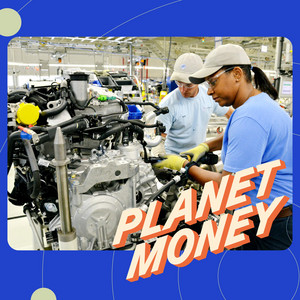
It all starts with a story of a party back in May 2011.
Hundreds of people dressed business casual, show up, have some more derves and witness
the grand opening of a brand new 2 million square foot auto manufacturing point.
This is the good stuff.
It's like a fun party, some of the guests.
Our cars.
The crowd is invited to an enormous room with rows and rows of chairs facing a stage.
The opening ceremony is about to begin.
The overhead lights dim and the video screens flash the Volkswagen logo.
That's auto is finally back in the States.
The future for Volkswagen begins here in Chattanooga.
I gotta say, it's such a weird announcement.
Yeah, it kind of gets weirder as part of the opening ceremony.
There is an interpretive dance by people in white bodysuits.
It kind of appears like they're assembling a Volkswagen.
Afterwards there is a more straight ahead press conference.
Right.
Tennessee Senator Bob Corker is there and he's emotional.
The greatest moment in my public career was receiving the call from the Volkswagen group
that they were coming to Chattanooga.
And I want to thank all of you for making that decision.
The opening of this Volkswagen manufacturing plant in Chattanooga, Tennessee was the
culmination of years of negotiation.
The company had shut down its only American plant back in the 1980s and this was their
comeback.
And the competition to win Volkswagen's new plant was fierce.
Around that time Southern states were desperate to lure in big companies.
South Carolina gave BMW more than $130 million in incentives and Alabama gave Mercedes more
than 250 million worth of incentives to build a plant there.
And Tennessee, they wanted in.
They wanted a car plant too.
Steven Sylvia, professor of international relations at American University, he says the
state did everything they could to woo Volkswagen.
Well, Bob Corker works very closely with the state establishment and they get a range
of subsidies and other benefits they offer Volkswagen.
They offer tax abatements, they offer them land, they offer them educational facilities.
When you add it all up, it comes to more than $570 million in aid, tax breaks and incentives.
Right.
And at the time, a typical auto plant cost about a billion dollars.
So that is how Das Auto came back to the states and set up in Tennessee.
Now just to remind you of what this moment was like, the plant opens as the country is still
recovering from the financial crisis.
For locals, this is like this one shiny star in a long dark night.
And the Volkswagen plant starts hiring 85,000 people apply for just 2,000 jobs.
2,000 new jobs making cars.
And of course, this is interesting, not just to locals, but also to unions, specifically
the United Auto Workers.
You know, the union that traditionally represents people working car manufacturing and currently
has members on strike, they want these to be union jobs.
Right.
As the way that you A.W. sees it, Chattanooga is one place where they maybe can regain
some ground.
The U.A.W.
used to represent a majority of auto workers in the U.S. back in 1979.
They had more than one and a half million members.
By the time this plant opened, that number had fallen to below 400,000.
And Steven says that decline is in part because of right to work laws that make it hard to
form and fund a union.
But it's also because a bunch of foreign owned car companies came into the U.S. and
set up non-union factories.
The U.A.W. has had a frustrating time for almost 20 years trying to organize foreign owned
car plants and failing.
But the arrival of Volkswagen in the south for the U.A.W. this seems different, potentially
good.
The U.A.W. leadership saw Volkswagen as their best opportunity.
Their best opportunity for good reason because Volkswagen has plants all over the world and
they all have some kind of worker representation.
Plus the company had actually come out and said that they wanted that in Chattanooga at their
new plant.
So management was open to a union.
The U.A.W. definitely wanted a union.
And now it's just a matter of convincing the workers.
Yeah, you'll want a union too.
But could go wrong.
Hello, welcome to Planet Money.
I'm Amanda Aronchick.
And I'm Nick Fountain.
Union membership in the U.S. has been declining for decades.
In part, because of how difficult this one phase in the life cycle of any union has become,
be setting up that union.
And if you want a case study in just how many ways things can go wrong, well, look
further than Chattanooga.
Today on the show, we look at three attempts over 10 years to establish a union at this
one-carplant intensity.
And what these attempts tell us about why union campaigns live or die.
This message comes from NPR sponsor LinkedIn Marketing Solutions.
As a business-to-business marketer, your needs are unique.
Be to be buying cycles or long, and your customers face incredibly complex decisions.
It denads empowers marketers by allowing you to build the right relationships, drive
results, and reach your customers in a respectful environment.
Make be-to-be marketing everything it can be and get a $100 credit on your next campaign.
Go to LinkedIn.com slash money to claim your credit, terms and conditions apply.
Support for this podcast and the following message come from Wise.
The app that makes managing your money in different currencies easy.
With Wise, you can send and spend money internationally at the mid-market exchange rate.
No guesswork and no hidden fees.
Learn more about how Wise could work for you at Wise.com.
One of the 2000 workers hired by Volkswagen at their new plant in Chattanooga is Steve Cochran.
Steve Cochran, Steve Jobs, Steve Jobs, Steve Jobs, Steve Jobs, Steve Jobs, Steve Jobs
Steve Jobs, Steve Jobs, Steve Jobs, Steve Jobs, Steve Jobs, Steve Jobs, Steve Jobs
Steve Jobs, Steve Jobs, Steve Jobs, Steve Jobs, Steve Jobs, Steve Jobs, Steve Jobs,
Steve Jobs, Steve Jobs, Steve Jobs, Steve Jobs, Steve Jobs, Steve Jobs, Steve Jobs,
Steve Jobs, Steve Jobs, Steve Jobs, Steve Jobs, Steve Jobs, Steve Jobs, Steve Jobs,
Steve Jobs, Steve Jobs, Steve Jobs, Steve Jobs, Steve Jobs, Steve Jobs, Steve Jobs,
Steve Jobs, Steve Jobs, Steve Jobs, Steve Jobs, Steve Jobs, Steve Jobs, Steve Jobs,
Steve Jobs, Steve Jobs, Steve Jobs, Steve Jobs, Steve Jobs, Steve Jobs, Steve Jobs,
Steve Jobs, Steve Jobs, Steve Jobs, Steve Jobs, Steve Jobs, Steve Jobs, Steve Jobs,
Steve Jobs, Steve Jobs, Steve Jobs, Steve Jobs, Steve Jobs, Steve Jobs, Steve Jobs,
Steve Jobs, Steve Jobs, Steve Jobs, Steve Jobs, Steve Jobs, Steve Jobs, Steve Jobs,
Steve Jobs, Steve Jobs, Steve Jobs, Steve Jobs, Steve Jobs, Steve Jobs, Steve Jobs,
Steve Jobs, Steve Jobs, Steve Jobs, Steve Jobs, Steve Jobs, Steve Jobs,
Steve Jobs, Steve Jobs, Steve Jobs, Steve Jobs, Steve Jobs, Steve Jobs,
Steve Jobs, Steve Jobs, Steve Jobs, Steve Jobs, Steve Jobs,
Steve Jobs, Steve Jobs, Steve Jobs, Steve Jobs, Steve Jobs, Steve Jobs,
Steve Jobs, Steve Jobs, Steve Jobs, Steve Jobs, Steve Jobs, Steve Jobs,
Steve Jobs, Steve Jobs, Steve Jobs, Steve Jobs, Steve Jobs, Steve Jobs,
Steve Jobs, Steve Jobs, Steve Jobs, Steve Jobs, Steve Jobs, Steve Jobs,
Steve Jobs, Steve Jobs, Steve Jobs, Steve Jobs, Steve Jobs, Steve Jobs,
Steve Jobs, Steve Jobs, Steve Jobs, Steve Jobs, Steve Jobs,
Steve Jobs, Steve Jobs, Steve Jobs, Steve Jobs, Steve Jobs,
Steve Jobs, Steve Jobs, Steve Jobs, Steve Jobs, Steve Jobs,
Steve Jobs, Steve Jobs, Steve Jobs, Steve Jobs, Steve Jobs,
Steve Jobs, Steve Jobs, Steve Jobs, Steve Jobs, Steve Jobs,
Steve Jobs, Steve Jobs, Steve Jobs, Steve Jobs, Steve Jobs,
Steve Jobs, Steve Jobs, Steve Jobs, Steve Jobs, Steve Jobs,
Steve Jobs, Steve Jobs, Steve Jobs, Steve Jobs, Steve Jobs,
Steve Jobs, Steve Jobs, Steve Jobs, Steve Jobs, Steve Jobs, Steve Jobs,
Steve Jobs, Steve Jobs, Steve Jobs, Steve Jobs, Steve Jobs,
Steve Jobs, Steve Jobs, Steve Jobs, Steve Jobs, Steve Jobs,
Steve Jobs, Steve Jobs, Steve Jobs, Steve Jobs, Steve Jobs,
Steve Jobs, Steve Jobs, Steve Jobs, Steve Jobs, Steve Jobs,
Steve Jobs, Steve Jobs, Steve Jobs, Steve Jobs, Steve Jobs,
Steve Jobs, Steve Jobs, Steve Jobs, Steve Jobs, Steve Jobs,
Steve Jobs, Steve Jobs, Steve Jobs, Steve Jobs, Steve Jobs, Steve Jobs,
Steve Jobs, Steve Jobs, Steve Jobs, Steve Jobs, Steve Jobs,
Steve Jobs, Steve Jobs, Steve Jobs, Steve Jobs, Steve Jobs,
Steve Jobs, Steve Jobs, Steve Jobs, Steve Jobs, Steve Jobs,
Steve Jobs, Steve Jobs, Steve Jobs, Steve Jobs, Steve Jobs,
Steve Jobs, Steve Jobs, Steve Jobs, Steve Jobs, Steve Jobs,
Steve Jobs, Steve Jobs, Steve Jobs, Steve Jobs, Steve Jobs,
Steve Jobs, Steve Jobs, Steve Jobs, Steve Jobs, Steve Jobs,
Steve Jobs, Steve Jobs, Steve Jobs, Steve Jobs, Steve Jobs,
Steve Jobs, Steve Jobs, Steve Jobs, Steve Jobs, Steve Jobs,
Steve Jobs, Steve Jobs, Steve Jobs, Steve Jobs,
Steve Jobs, Steve Jobs, Steve Jobs, Steve Jobs, Steve Jobs,
Steve Jobs, Steve Jobs, Steve Jobs, Steve Jobs, Steve Jobs,
Steve Jobs, Steve Jobs, Steve Jobs, Steve Jobs, Steve Jobs,
Steve Jobs, Steve Jobs, Steve Jobs, Steve Jobs, Steve Jobs,
Steve Jobs, Steve Jobs, Steve Jobs, Steve Jobs, Steve Jobs,
Steve Jobs, Steve Jobs, Steve Jobs, Steve Jobs, Steve Jobs,
Steve Jobs, Steve Jobs, Steve Jobs, Steve Jobs,
Steve Jobs, Steve Jobs, Steve Jobs, Steve Jobs,
Steve Jobs, Steve Jobs, Steve Jobs, Steve Jobs,
Steve Jobs, Steve Jobs, Steve Jobs, Steve Jobs,
Steve Jobs, Steve Jobs, Steve Jobs, Steve Jobs, Steve Jobs,
Steve Jobs, Steve Jobs, Steve Jobs, Steve Jobs, Steve Jobs,
Steve Jobs, Steve Jobs, Steve Jobs, Steve Jobs, Steve Jobs,
Steve Jobs, Steve Jobs, Steve Jobs, Steve Jobs,
Steve Jobs, Steve Jobs, Steve Jobs, Steve Jobs,
Steve Jobs, Steve Jobs, Steve Jobs, Steve Jobs,
Steve Jobs, Steve Jobs, Steve Jobs, Steve Jobs, Steve Jobs,
Steve Jobs, Steve Jobs, Steve Jobs, Steve Jobs, Steve Jobs,
Steve Jobs, Steve Jobs, Steve Jobs, Steve Jobs, Steve Jobs,
revenue goes up to the top and control goes down.
I spoke with Mori, and according to him, he was brought into this campaign
by some Volkswagen workers who did not want a union at the plant.
If you want to think of Southern momentum, think of it as,
it's basically a loud speaker for these employees who are concerned about the UAW
who, beyond Southern momentum, didn't have a voice.
Southern momentum was partly funded by donations from members,
but Mori also acknowledges that money came from people who didn't work at the plant.
Local businesses and people who really didn't want the UAW to come to Chattanooga.
Another person who really didn't want the UAW to come to Chattanooga,
Senator Bob Corker, one of the politicians who offered Volkswagen that $570 million
plus sit incentives and said that the plant opening was the greatest moment in his public career.
Well, right before the big vote, he shows up in a new segment pointing out how dangerous
and radical the union leaders are.
The officers a month ago talking about fighting, combat, and all of those kind of things.
If that's the environment you want, UAW certainly is the people for you to choose.
Or the people to choose.
Then on the first day of voting, he delivers a shocker.
He says he has it on good authority that if workers reject the union,
Volkswagen would commit to expanding its operation,
and build its new SUV right there in Chattanooga.
After three days of voting, it's finally time to tally up the votes and see who's won.
For the union, 626 votes against it, 712.
It's decided there will be no union at the plant in Chattanooga.
And to worry from Southern momentum, Bob Corker and a bunch of local politicians
weighing in like this on the union election, that totally made sense.
These were Tennessee politicians, these were Chattanooga politicians, these were citizens
saying this is not the best thing for our state.
And that's exactly what those people should be doing.
But for maintenance workers, Steve Cochran, the senator had gone too far.
That's a, he was probably one of the biggest deciding factors.
That in the media ran with it.
You know, they pushed it everywhere on the news, radio, everything in the world.
To Steve, the senator had intimidated the workers.
And he thinks some of them might have changed their votes.
Some people did out of a fear thing, hang on, said they believed him, but they said, you know, what if?
What if Bob Corker is right?
What if Volkswagen sets up a new plant elsewhere?
What if they cut our jobs?
What if? What if?
So that was union campaign number one.
DOOMED, Steve would say, by a politician putting his finger on the scales.
And maybe that is the takeaway from this first campaign.
Sometimes big, powerful people interfere with union drives and change the outcome.
The past bunch of years, leaders at Amazon and Boeing have gotten in trouble for this.
Threatening dire consequences if their workers unionize.
For workers, sometimes those threats can overshadow the potential upsides of joining a union.
Like how much more vacation they might get or more pay.
Which brings us to chapter two, the micro unit.
After the failure of the 2014 campaign in Chattanooga, the UAW decides that they should try again and quickly.
We got to do something different.
So Steve and some of his fellow workers come up with a new plan.
They decide instead of trying to organize the whole plant, what if they start a micro unit?
You know, a small group that would get to bargain directly with management.
In this case, it would be just for the skilled workers, so not like workers on the line,
but electricians and machinists, those kind of jobs.
When there's 150 of you, you know, you're like, you know, but all of them.
So you kind of talk to each other stuff and know how things are going to shake out.
Steve thinks a bunch of these skilled workers are going to vote for a micro unit.
Many of them have been in unions before and they supported the UAW in the first campaign.
And the plan is, if they win, then they can scale up and unionize the whole plant.
The process plays out kind of like it did the last time.
The other organizers try to get people to sign authorization cards, Volkswagen again rejects those cards.
Again, there's some campaigning then an election.
And this time, the UAW wins.
We won by 68 percent.
You actually did better than that, Steve.
71 percent of workers voted for the micro unit.
This is a big deal.
All of these foreign owned car companies, BMW, Mercedes, Nissan,
they've been setting up plants in the south and none of them had unions.
Now, at this point, Volkswagen's management is like, wait a second.
We're not really into this whole micro unit thing.
Because we do want some kind of worker representation, but it needs to represent all the workers, not a fraction of them.
We can't negotiate with just some of you.
That's verboten.
Oh, no.
This is when Steve and the professor says that Volkswagen's attitude towards the union hardens.
And so what happens is they go to fight it so they hire Lermendelson,
which is a very well known union-busting law firm.
And then they learn about the union avoidance playbook.
This is where it's injected into the Volkswagen bloodstream.
Once it's there, it just takes and they just run with it.
We should mention that we reached out to Volkswagen for the story and they declined to comment.
So now, instead of the fight happening with ads and billboards and flyers,
it's going to happen with lawyers, lots of lawyers.
Volkswagen and the UAW asked the National Labor Relations Board to weigh in on the dispute.
They're the federal agency that oversees union elections.
For a peek into how that agency works, we called up Wilma Lieben,
she's a former chair of the labor board, and also a former planet money guest.
By the way, I came here about a couple months ago to do an interview for a different planet money episode.
Wilma knows a lot about labor unions. That's why we call her.
She's also worked for the UAW as a consultant and as one of their ethics officers.
Wilma says that the UAW went to the board to try to get Volkswagen to recognize the microunit.
And Volkswagen, they refused.
And here's where it gets interesting and an albeit kind of wonky way.
A lot of times when this kind of thing happens, Wilma says,
companies will actually weaponize the whole labor board process.
Use it to gum things up.
I think some employers slow walk it.
So they make it look like they're engaging in good faith bargaining.
But if they really are determined to avoid unionization and having to bargain with the union,
there are different ways that the whole process can be slowed down.
Wilma says that's what happened here. Generally the labor board has permitted these microunits.
But Volkswagen argued that grouping those skilled workers together that did not qualify.
Maintenance workers like Steve work with everyone in the plant.
They weren't really what's known as a community of interest. They weren't a self-contained group.
The UAW of course argues that this microunit that they're trying to set up is a community of interest.
Volkswagen's like, nope. So back and forth hearing this, appealing that.
Volkswagen drags this whole thing out as long as they can.
Which Wilma says is perfectly legal.
There's no real penalty for employers using all these kinds of delaying strategies.
There's no fines. There's no damages to speak of.
It doesn't have much in the way of teeth.
Despite all of that, around the end of 2016,
it's finally starting to look like Volkswagen is running out of things to appeal.
And the UAW might get their microunit.
But then big plot twist.
A new president is elected, Donald Trump. You may remember him.
And the political orientation of the labor board completely changes.
So this agency is famous for what's typically called flip flopping.
Every time the White House changes, a more formal expression is policy oscillation.
I too have been accused of policy oscillation by my family.
It happens to the best of us.
So here is what happens.
A new chair is appointed by the president.
And now the board is like, you know what?
We need to look at how we define community of interest again.
Tighten up those rules for forming a microunit.
Of sudden, the UAW is back at square one.
Wilma says the labor board can be annoyingly inconsistent over time.
That the rules are always changing.
I think the reasons for that are pretty obvious.
It's, you know, the labor and capital have deep divides.
And labor law and the role of unions in the U.S.
have always been subject to very deeply held and divided views.
The UAW and Volkswagen continue to fight over the microunit thing in the background for years.
Kind of gets stuck and is stalemate.
So the takeaway from the second failed union drive in Chattanooga,
timing really matters.
Under some administrations, the NLRB seems to take the side of management,
like what happened to the UAW in Chattanooga.
And under others, the NLRB is just way more union friendly,
like how they had a bunch of rulings in favor of the new union at Starbucks.
And for some grad students who have organized around the country.
It just kind of depends on who's in charge.
Meanwhile, Steve and his buddies, they still want a union.
Coming up after the break, they take their fight to the factory floor.
Try a little spontaneous protest.
Support for this podcast and the following message come from Wise.
The app that makes managing your money in different currencies easy.
With Wise, you can send and spend money internationally
at the mid-market exchange rate.
No guesswork and no hidden risk.
Learn more about how Wise could work for you at Wise.com.
What does it mean to be Black in America?
An NPR's Black Stories Black Truths,
a collection of stories that's varied, nuanced, and dynamic
as Black experiences, you'll hear.
It means everything.
Search NPR Black Stories Black Truths wherever you get your podcast.
What does it mean to be Black in America?
An NPR's Black Stories Black Truths,
a collection of stories as varied, nuanced, and dynamic as the Black experience.
You'll hear.
It means everything.
Search NPR Black Stories Black Truths wherever you get your podcasts.
This is my voice.
I can tell you a lot about me,
and I'm not changing it for anyone.
An NPR's Black Stories Black Truths,
you'll find a collection of NPR episodes centered on Black experiences.
Search NPR Black Stories Black Truths wherever you get your podcasts.
By 2018, the plant has been open for seven years.
Steve and the other union supporters have been trying to get a union setup
pretty much the whole time,
but this conflict has sort of been a slow burn.
Yeah, they never really had a big dramatic type moment
that you see in a union movie.
But then a week and a half before Christmas 2018, that moment happens.
And it basically launches the union's third campaign.
It happens when the company changes this one policy.
So we have a shutdown ever, ever Christmas and ever summer, you know,
for put new equipment in or whatever it is,
it's called winter shutdown, and they they pay us for that week.
The shutdown was so that they could change up the assembly lines
so they could start making their new SUV.
This time it was going to take even longer than the week they usually needed
three extra days.
Normally how this would work is that workers would have the option
to just not get paid for those days.
But this time management makes an announcement and says,
hey, everybody, for those three extra days,
you're going to have to use your paid time off.
We were just like, you know, really?
People were like, I don't want to do that.
They didn't like it, so.
At that moment, there are a bunch of people working on the floor of the plant.
And they're all looking at each other over these half assembled cars,
muttering to each other about management taking away
three of their already limited paid days off.
For a lot of the workers, that's three out of just 10 days that they get each year.
If y'all make us use all of it up, then what are we going to have to take time off
to be our families, be sick, take your kids to the doctor?
You know, so it's kind of, you know, what that doesn't work for me.
And meanwhile, the workers know that the people who made this new policy
are sitting just upstairs up in their glass walled offices.
So this one guy said, man, what can we do?
You know, because I'm going to walk a bird in our break time.
I thought I'd go bird with you.
By break time, the number of angry people has grown.
About 50 of us marched upstairs, and now we're not going to do this.
At first, management kind of digs in.
But the workers, they dig in too.
Yeah, because when break time ends, they don't go back to the floor.
Production just stops.
They could start the line back up because some people miss it from the line.
Steve says he could see on the manager's faces that their little protest,
it was working.
So the workers and the managers are in this standoff.
The cars on the plant floor are not being assembled.
Finally, the managers say, okay, they'll think about it.
By the end of the day, they're like, fine, you don't have to use your paid days off.
When that happened, that actually changed the way they handled this stuff for a little while.
But it didn't stick.
Steve says that not too long after, they actually changed the policy back.
And Steve, he used this moment.
He told his colleagues, if they had a union, this flip flopping by management around policies,
it would not be happening.
Tracks playing people, if we had had a contract and that stuff was written in a contract,
then we would have to do it anymore.
All that stuff is just not left up to somebody's, this is how I feel about today.
In the months after this mini protest, Steve and the other union supporters
are actively trying to drum up support for another election.
But you know what was also happening around this time?
The FBI has raided the home of United Auto Workers Union President Gary Jones.
This is part of a probe regarding alleged corruption within the US auto industry.
Yeah, the whole time they're campaigning, this corruption scandal, the UAW, is all over the news.
Again, in addition to the pro union side, there's a campaign against the union
and they are making a very big deal of this scandal.
So, you know, a lot of the discussion in the campaign
flowed down to, is this really who you want representing you?
Southern Momentum's Mori nicely again.
He says he doubled down on this message, made the whole campaign very personal.
Is this who you want, you know, look guys, is this who you want to marry?
Is this who you want to step up and say I do too?
When the campaign for the third election wrapped up, the vote tally came in.
For the union, 776, against it, 833.
The union loses again.
Now, some of this obviously had to do with the UAW's legal problems.
The corruption scandal was like a gift.
Oh yeah, oh yeah, absolutely.
I mean, I'm just trying to take no revelry in that.
But that obviously colored and influenced that election.
Mori says he knew workers who were open to the idea of joining a union.
They just didn't want to join the UAW.
So, the takeaway from union drive number three, it's kind of a self-evident one.
Maybe don't have a giant scandal in the middle of your union election.
Right.
But Mori said there was more going on here than just the scandal.
The real reason he says that this third union drive failed really by they all failed
was because of where they were taking place.
We are a very right-leaning state, and particularly in terms of politics.
And union equals Democrat, right?
And an anti-union equals Republican.
And so, you know, when you come into Tennessee, you're probably already dealing with that.
On this point, union organizer Steve Cochran actually agrees.
He says people decide whether they're pro or anti-union based partly on their political identities.
But he says that didn't happen by accident.
It was the result of a deliberate campaign by anti-union forces.
They've politicized it.
That's the biggest one that I've seen where they're saying, well, if you vote in favor of union,
you're a Democrat.
And I'm like, nice, not true.
That has nothing to do with anything inside of my workplace.
It just doesn't.
I mean, sorry, but Democrat or Republican either one, you know, it doesn't matter.
But they did a real good job of doing that, you know, playing them kind of politics of people.
So Steve has been at this for more than 10 years.
He's tried three times to get his plan organized.
But he says he's still not done.
Do you think there's, is there a plan to try to unionize the whole plant again?
Always.
Oh, yeah, absolutely.
Yeah, always.
Always.
It's kind of a thing either give up or die, you know, you know, you keep pushing or you die.
You just want it up, you know, don't give up.
Steve has been watching the big UAW strikes happening right now across the country.
If those go well for the union, maybe next time more workers at his plant in Chattanooga will vote yes.
That is where we left it back in October 2023.
Now, as we know, things did in the end go well for the union.
So what changed?
What changed to flip so many votes at the Chattanooga plant?
To answer that, we called up Professor Steven Sylvia again.
If you want to start at what made things different, it was the election of Sean Fein.
Sean Fein became president of the United Auto Workers in March of 2023.
And late last year, he led the UAW on strike nationally.
And one huge victories against the big three automakers.
That's General Motors, Ford, and Stellantis, which used to be Chrysler.
Many people looking at it were in some way skeptical at first.
But the thing that was amazing is the way the UAW was very clever in selecting tactics.
Traditionally, the UAW would target just one of the big three car companies at a time.
But Sean Fein threw out that old playbook and the UAW decided to hold strikes at all big three companies at the same time.
But not at every single plant.
They picked strategic plants.
So when they shut one of these down, it meant that another plant downstream wouldn't be getting what they needed to do their jobs.
So the whole thing was very disruptive to production.
And it also let a lot more workers stay on the job collecting paychecks.
By having a strike that would have a relatively small number of employees involved, you could shut down a significant amount of production.
And they were very successful.
And as the workers in the Chattanooga plant watched all of this, another thing Stephen says that made Sean Fein and the UAW seem more attractive.
With transparency, workers got to watch the UAW negotiate in real time, often with live streaming updates on the negotiations.
Like there's this one video where Sean Fein gives his response to a Solanches offer.
Everything they're looking for in this document is about concessions.
So I tell you what I'm going to do with their proposal.
I'm going to file it in its proper place because that's where it belongs, the trash, because that's what it is.
Sean is different because he is so transparent and honest with everyone.
That's the thing that we like best about him.
This is Steve Cochran again.
Does maintenance for the Volkswagen factory in Tennessee is a union organizer.
When I called him up, he was in his car driving home from work.
Steve says that Sean's transparency tactics were able to change some people's perceptions of unions in the South.
Having all that done in the public eye was very, very, very eye opening, very educational for a lot of people.
Ever worked.
When we last left Steve, the union had just lost their third election.
He and the other union organizers were getting ready to recruit.
Since then, there's been one other big change this time from the Volkswagen side.
The company decided to stay neutral this time.
They didn't put out a big anti-unit campaign. They didn't put out fear tactics to us.
Basically, hey, it's going to be your decision.
The other decision is what it is and will stay as neutral as possible.
And they did.
Because this is because the brass at Volkswagen headquarters in Germany told the management at the Chattanooga factory that you will not run an anti-union campaign.
Because of that, the stalling tactics that the company had used last time did not come into play.
So Steve Cochran said it was much easier to make his case this time, even in conservative Tennessee, which is a right to work state where unions are very politicized.
They're considered aligned with the Democratic Party and are generally pretty unpopular.
Do you have to understand that there's a lot of Republican voting people in Chattanooga, a lot of them.
We're never going to tell anybody how they should or shouldn't vote that'll never happen.
But everybody put that aside and put all that aside so that we got to do it ourselves.
And then after all of those campaigns for in the past dozen or so years, last week workers at Steve Cochran's factory voted overwhelmingly to form a union.
We had a watch party at the union office and up to where there and stuff. There's a good firework going off and some people drink a little bath, all stuff. Nothing got out of hand.
Steve, how did it feel to walk into work on the first day after the vote?
It is a lot better feeling than walking in after a loss. I know that. I was very proud and that outcome and very smiling stuff, but I didn't go.
Steve said there were a couple of people who might have cheered a little, maybe a few handshakes, some high fives.
But mostly people just got back to work side by side with their colleagues, regardless of how they voted.
We've been at this thing for 12 long years and it's just a, it's a great feeling now, you know.
But honestly, people can disagree about something we're still going to do our job though and build the best quality car to can. That shows you the truth, grip.
And Steve's hoping that maybe this is the start of a new era of unionizing in the South.
You know, we're one of the first dominoes. You know, so I think if our dominoes, knocks their dominoes in the next dominoes, this may be a huge, huge push throughout all the automotive industry in the South.
The next dominoes, Steve hopes will fall are the Mercedes factory in Vance, Alabama, a Toyota engine plant in Missouri, a Hyundai plant in Alabama, and a plant that Volkswagen is currently building in South Carolina.
Our original episode was produced by Willa Rubin, engineered by Josephine Neonai, fact checked by Sierra Wattes, and edited by Keith Roemer.
Ida Poroside helped with research, Alex Goldmark is our executive producer.
Today's update was produced by James Sneed, engineered by Valentina Rodriguez Sanchez, and fact checked by Sam Yellowworth's Kessler.
If you want to read more about union organizing at car manufacturing plants, Steven Sylvia's got a new book out titled The UAW's Southern Gamble.
Special thanks this week to Blake Farmer, Michael Gilliland, and Bob Kiln. I'm Amanda Orancik.
And I'm Nick Fountain, this is NPR, thank you for listening.
In this country, some truths aren't self-evident. In NPR's Black Stories Black Truths, a collection of stories as wide-ranging and real as the people who tell them, we celebrate the Black experience for all its soul and richness.
Search NPR, Black Stories, Black Truths, wherever you get podcasts. All that sitting and swiping, your body is adapting to your technology. Learn how and what you can do about it.
I really felt like the cloud in my brain kind of dissipated. Once I started realizing what a difference these little breaks were making, there's no turning back from me.
Take NPR's Body Electric Challenge, listen to the series wherever you get your podcasts.
This election season you can expect to hear a lot of news. Some of it meaningful, much of it not. Give the up first podcast 15 minutes, sometimes little less, and we'll help you sort it out. What's going on around the world and at home?
There's three stories, 15 minutes up first every day. Listen every morning wherever you get your podcasts.