This is the indicator from Planet Money, I'm Darren Woods.
Two big campaign promises from President -elect Trump were tax cuts and tariffs, and specifically the idea that the money generated from the tariffs will pay for the tax cuts.
Joining me to discuss all this is Kyla Scanlon, economic commentator and author of In This Economy.
Kyla, welcome to the show.
Thank you, Darren. So today you're joining us to talk about tariffs and tax cuts.
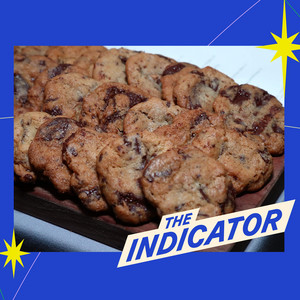
And cookies. That would explain these cookies, which I was told to bring into the studio.
So I thought you were just being really generous.
No, those cookies are meant to explain trade policy because those cookies have ingredients from all over the world.
They might have cocoa beans, spices like cinnamon or vanilla.
And right now, all those ingredients come in tax free.
But under these new proposals from President -elect Trump, nearly everything coming into America would face big import fees.
Now, Trump says that other countries will pay these fees and not Americans, and that we can make enough money from tariffs to cover all the tax cuts he's promising.
So how is the American consumer responding to all this?
Well, we surveyed some folks at a park in downtown Denver.
Yeah, I think that's a really bad idea.
I think maybe people haven't read enough about tariffs and who actually pays for those tariffs in the long run.
And I'm thinking if we want to make any major purchases, we should do that now before January 20th.
I mean, I see pluses for it and I see negatives for it, both.
So no resounding endorsement from this Vox Populi in downtown Denver.
For what it's worth, those comments clock in from what I've heard from a lot of people over the last few weeks.
Either they're not sure how this would work or they see it as a bad idea or even inflationary.
So today on the show, we pulled apart these cookies and we see if they'll get more expensive under the potential new tariffs or if like Trump claims, these cookies might actually benefit the American consumer.
This is Eric Glass.
On This American Life, we specialize in compelling stories from everyday life.
I was like, wow, you literally just died and came back.
And the first thing you ask is, do you need any money?
Your life stories, really good ones in your podcast feed, This American Life.
Hey there, it's Tamara Keith from the NPR Politics podcast.
And I will keep this quick.
Giving Tuesday is almost here, the perfect time to support the independent news source you rely on to stay informed.
Please give today at donate dot NPR dot org.
And thank you. Hey, fam.
Scott Simon here. I'm in my fundraising era.
Had a little help from Gen Z on the script.
NPR is always cooking, no cap.
So when I say Giving Tuesday is coming, I think you understand the assignment.
Please donate today.
Make your gift at donate dot NPR dot org.
Thanks, bestie. Let's start with what we've got right now.
Darien, I ordered these chocolate chip cookies from bakery in New York City and about half of the ingredients, vanilla extract, cocoa beans and spices like cinnamon are imported from outside the United States.
The other half, wheat, whole milk, butter, brown sugar, eggs and salt are all USA produced.
Those cookies in front of you, Darien, are global cookies.
I can see a world in these baked goods.
So under President -elect Trump's proposal, those imported ingredients will be taxed and that means some very nice cookies might be about to get a bit more expensive.
That's a general consensus among economists.
A tariff is just a tax on goods from overseas.
And the conventional economic wisdom is when you tax goods coming into the country, consumers end up paying more in the store.
And most of the things we use are like these cookies.
iPhones, our coffee makers, our shoes, our clothes.
They're made up of parts and materials from all over the world.
So there's a worry that Trump's tariffs could make all of those things more expensive and raise inflation.
Still, Trump claims the cookies will get cheaper because other countries will potentially eat the extra cost because they really want to be competitive in the U .S.
market. He also says some companies could move their operations to the U .S.
to avoid tariffs and potentially create cookie related jobs.
He didn't say that specifically around cookies, but you get the joke.
Right. It's worth mentioning these cookies, as you know, Darian already have some tariff exposure baked in.
In 2018, the Trump administration imposed tariffs on roughly 15 % worth of imported goods.
Yeah, we had Trump tariffs before on things like industrial machinery and steel, but those are targeted tariffs that Trump introduced during his first administration, not the broad sweeping ones he's proposing now.
It's also worth mentioning the Biden administration kept most of those targeted tariffs in place.
In fact, it even raised some of those tariffs.
But what Trump is proposing now is a whole different tier.
He's talked about taxing vanilla extract, cocoa beans, spices like cinnamon and more at a rate of 10 to 20 % and 60 % if they're from China.
And he's floated even higher numbers recently.
25 % on goods from Mexico and Canada and another 10 % on China.
Yeah. And we bring a lot of stuff into the U .S.
These tariffs would hit all $3 trillion worth of what we import.
Trump said we will raise so much money from these tariffs that we can cut all kinds of taxes.
Many parts of the Tax Cuts and Jobs Act is expiring soon.
And according to some estimates, extending it for another decade could cost as much as $5 trillion.
Trump says these new tariffs will pay for that.
And he wants to go even further than just extending those tax cuts.
He wants to end taxes on tips and taxes on overtime pay and taxes on Social Security benefits or even ending federal income tax entirely.
And to help pay for this, you guessed it it's those sweeping tariffs.
We would be putting tariffs on pretty much everything that comes into the United States.
But here's the thing.
Even with these massive tariffs, we still couldn't raise enough money to replace income taxes.
Yeah. So income taxes bring in $2 trillion a year and all those tariffs would bring in a miniscule amount by comparison.
Yeah, I spoke to Erica York.
She is a senior economist and research director at the Tax Foundation.
You just can't squeeze $3 trillion of imports hard enough to get more than $2 trillion of tax revenue out of them.
Like at most that you could raise, like the revenue maximizing level would be somewhere around $500 billion.
The upside of tariffs, even at the extreme, is going to be pretty limited.
But the downside could be pretty significant.
So back to the cookie again.
Remember, half of its ingredients are from the U .S.
And half are foreign made ingredients.
Yeah. The blended heritage cookie.
And this is where it gets complicated.
Erica says tariffs are going to increase production costs here in the U .S.
due to the parts and ingredients we import to produce things here for that cookie.
For example, we make the butter here in the United States.
But what about the feed that comes from Brazil for the U .S.
cows who produce that U .S.
butter? So like materials that U .S.
companies use in their own production processes or their capital goods and equipment, that directly increases the cost of doing business here in the U .S.
And those increased costs of doing business, they end up hitting American consumers and businesses in three ways.
Higher prices, lower wages, or reduced business operations because the bakery is trying to cut costs anywhere it can, sometimes all three.
Now, the other side of this is Trump claiming these tariffs will bring back U .S.
jobs. Here's what he said on his recent interview with Joe Rogan.
You tariff it so high that they will come and build their chip companies for nothing.
In other words, Joe, you put a big tariff on the chips coming in.
I say you don't have to pay the tariff.
All you have to do is build your plant in the United States.
We didn't have to give them the money to build a plant.
Erica doesn't think a domestic manufacturing boom will happen and says bottom line, these broad tariffs are a recipe for disaster for U .S.
businesses. It's when they see this tariff will be like how how do I deal with this increased cost of doing business?
Am I able to pass that on to my own consumers?
Can I raise my prices?
Do I have to eat that cost?
She says that will put U .S.
businesses at a competitive disadvantage on the global stage, not to mention other countries could do retaliatory tariffs, meaning they charge U .S.
companies a tax to import into their countries or they could just choose to not send their vanilla or cocoa into the U .S.
at all. Basically, the average family could end up paying thousands more per year in higher prices.
Some estimates place it as high as $4 ,000.
You'd have to cut taxes a lot to get back that $4 ,000.
But Trump and his team must have run these numbers too.
Yeah, that's what I thought.
A lot of people are just hoping this is campaign smack talk, right?
Like maybe it's a negotiation tactic.
Erica doesn't think so.
We look at the first Trump administration and all the tariffs that were imposed there and some of Trump's other advisers and they're very serious support of this universal baseline tariff idea.
I think that's where things are headed.
There are already reports of businesses and regular Americans stockpiling products from China and beyond.
They're trying to prepare for these potential tariffs, Darien.
Well, for now, we have cookies.
We do have cookies.
And that's a good thing.
This episode was produced by Julia Richie with engineering by Valentino Rodriguez Sanchez, who's back checked by Sarah Juarez.
Kakin Cannon edits the show and the indicator is a production of NPR.
Holiday travel is stressful, especially if you're dealing with family baggage on top of your actual baggage.
I'm going home. I'm going to revert back to old family roles that are stressful.
And so this traffic jam is the straw that's breaking the camel's back.
But don't worry, we're here to bring you some relief.
Listen to The Life Kit podcast.
We'll help you out this holiday season.
Here and Now Anytime is a podcast with fresh takes on the biggest stories of the day, and also a little something you weren't expecting from a news show.
One thing we're wondering lately is Black Friday, a ripoff, peel back the marketing blitz and what do you have left?
That's coming up on Here and Now Anytime, wherever you listen to podcasts.
The marketing for the movie Wicked has been inescapable.
There's all the green and pink merch and Ariana Grande and Cynthia Rivo have been everywhere, but does the movie live up to the hype?
We know you've been waiting for this one.
We've seen Wicked and we have thoughts and we'll get to them all, including some weirdly heated opinions on defined gravity.
Listen to the Pop Culture Happy Hour podcast from NPR.