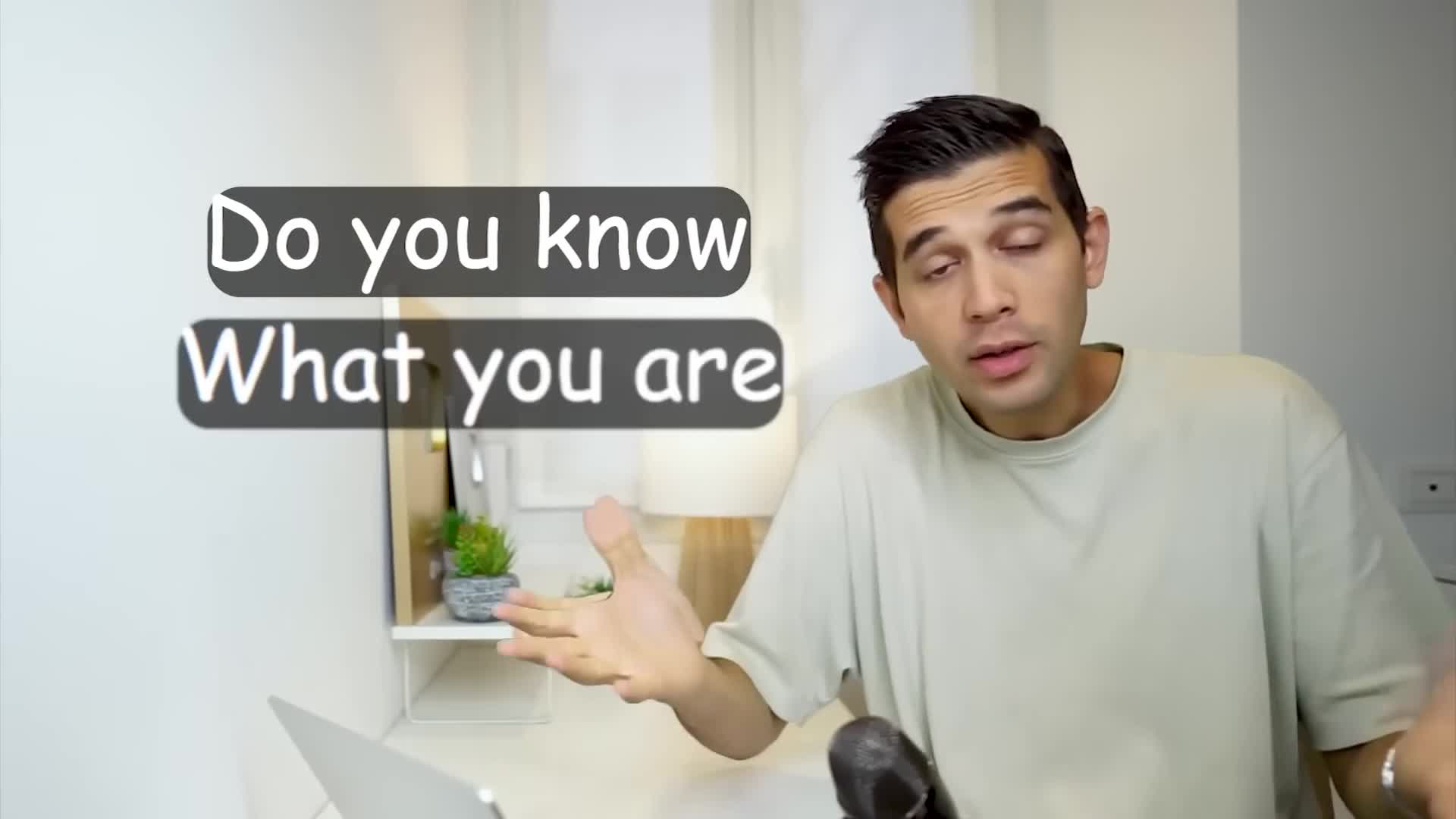
There is one simple question.
Do you know what you're talking about or not?
If what you are talking about is known to you and to the other person, use the.
It's as simple as that.
The is an article, and in English we have two types of articles.
Definite article, the, is used when we know what we're talking about.
If we don't know what we're talking about, we use the indefinite articles, e or an.
So that is the end of this lesson.
I hope you've enjoyed it.
Bye.
No, wait.
I wish it was as simple as that.
The fact is, the correct use of articles is one of the most difficult points in English grammar.
In this video, we're going to focus on where not to use the.
I think it's a better way to learn the correct uses of the.
First, let's focus on where not to use it.
Look at these two sentences.
I love the cats in general, or she loves the music in general.
Are these two sentences correct?
When I say I love the cats in general, am I talking about a particular group of cats?
No, I'm talking about all cats, I love them.
Or in the other one.
When she says she loves the music, is she talking about a particular kind of music?
Or does she generally mean she loves music?
So that's the thing.
When we are talking in general about something, we do not use the.
I like cats, or she loves music.
So lesson one if you are talking about something in general, do not use the now look at these two sentences the mary is my friend or i live in the italy.
What's wrong with these two sentences?
Look at the first one the mary mary is my friend.
When i say mary, i know who i'm talking about.
She's my friend, Right?
So with names, we do not use the.
The Jack, the Michael, the Cristiano.
No, the, no.
Similarly, we cannot say the Italy.
With countries, we do not use the.
Mary is my friend and I live in Italy.
But wait, English is beautiful and we have a lot of exceptions.
So yes, with countries in general, we don't use the.
But if the country has the words republic or kingdom or states, or the country is a group of lands or islands, you use the.
What do i mean?
The us, united states, the uk, united kingdom, the czech republic, the word republic, or the prc, the people republic of china republic, Or the Philippines?
It's a group of island.
Or the Netherlands.
It's a group of lands.
So, generally speaking, we do not use the before countries unless they have the word republic kingdom state, or they are a group of lands or islands.
Beautiful English, right?
Now look at these two sentences.
I am learning the English.
She studies the history.
What's wrong?
Mm-hmm.
With languages and subjects, we do not use the.
I'm learning English.
She studies history.
Hey, this is the my book.
Where is the your phone?
What's wrong with these two?
They sound weird, right?
It's because with the possessives, my, your, his, her, our, we do not use the.
The my book?
My book.
This is my book.
The your phone?
Your phone.
Where's your phone?
I like the this car.
And she loves those shoes.
Again, listen.
They sound weird.
The this car, the those shoes.
With this, that, these, and those, we do not use the.
The this, the that, the these, the those, no.
I like this car.
She loves those shoes.
No that.
Look at these.
The all students pass the exam.
And the both books are mine.
What's wrong?
Uh-huh.
The all students?
All the students.
The both books?
Both books.
With all and with both, we do not use the.
Both books are mine.
All the students pass the exam.
So far, we've covered some mistakes using the article the.
Now we're going to talk about some nouns that never take the, unless in specific cases my kid goes to school or my kid goes to the school.
Which one is correct?
My kid goes to school, i go to college, she goes to university university, college and school.
These three words never take that if you are generally talking about these places school, university and college.
However, if I say the school, the university or the college, I'm talking about one building in particular.
I go to school every day.
See, this is a general sentence.
The school on my street is very noisy.
I'm talking about one specific building.
Another word is bed.
I go to bed at 11.
I know I go to my bed, right?
I know the bed, but I don't say the.
I go to bed at 11.
I don't go to the bed at 11, no.
But if I'm talking about the bed, the physical bed itself, not the act of going to bed, I use that.
The bed I saw yesterday in the store was gorgeous.
I want to buy it.
I'm talking about one specific bed.
Same with church or mosque.
We don't use the if we're generally talking about that kind of holy place.
She goes to church every sunday, so in general we don't say that.
But if we're talking about one particular building the church right around the corner is very old.
In this case we use the for prison and jail.
We don't say the he's in prison or she might go to jail.
We don't say he's in the prison or she might go to The jail.
Unless we're talking about a particular building.
Hospital is another one.
She's in hospital.
Well, she is sick and she's in hospital.
We're not talking about one particular building.
We're talking about the place, hospital.
She's in hospital.
She's not available.
She's not coming to work tomorrow because she's in hospital.
We don't say she's in the hospital.
But if I'm talking about one particular case, I can say the hospital around the corner is pretty old, or is a very good place, or is not very good.
The hospital, one building, hospital in general.
Another one is work.
I go to work.
I don't go to the work, but I go to work every morning or he's at work.
He's not at the work.
He's at work.
And similarly, home.
I want to go home.
I don't want to go to the home.
I want to go home.
Or I'm going home right now.
I'm not going the home or to the home.
I'm going home.
Great job, guys.
So far, we've talked about mistakes and we've talked about when not to use the.
But here's the question.
When do we use the?
Remember the simple rule?
If we know what we are talking about, we Don't know that particular thing?
We don't use the.
For example, if I say close the door, you and I both know which door I'm talking about.
That door, the door to this room.
Close the door.
Where is the phone?
You and I both know that I'm talking about the phone of this office.
Where is the phone?
We use the when we're talking about something that is unique and only one of it exists.
Like the sun.
How many suns do we have?
One.
There is only one sun.
So we say the sun.
What about moon?
There is only one moon.
So the moon.
How about president?
When I say how many presidents do we have in one country?
Only one.
The president or government is the same thing.
There's only one government in every country.
So the government.
A very common use of the is when we have already mentioned something unknown and now we're mentioning it for a second time.
What do I mean?
I saw a dog, a random dog.
You don't know the dog.
Have you seen it?
No.
So you don't know it.
A dog.
I saw a dog.
The dog was friendly.
Why did I say the dog?
Because you know which dog.
Which dog?
The dog I saw.
So if it is the second time you're talking about something, you can use the because it's already known.
Next, with superlatives, we use the.
I'm the best teacher on youtube, aren't i?
Puce, english is the best channel.
You are the best students in the world with superlatives.
We use the.
Also, with the word only, we use the.
He's the only daughter in the village.
This is the only page you need to improve your english, the only.
So you see, it's not that difficult once you get to know the common mistakes and once you learn how to properly use the.
But you need practice and you need to review this lesson over and over and over again.
How?
I've prepared a PDF for you that you can get for free by clicking on the link above this video.
On my website, you can download this PDF for free and you can use it to review this lesson.
So go ahead, download it.
You can also find the download link in the description of this video down below.
Now, I hope you've enjoyed this lesson.
If you're new to my channel and you don't want to miss my next videos, don't forget to click subscribe.
And if you enjoyed this lesson, give it a thumbs up and let me know in the comments what you want to learn next.
Bye.