You're listening to Life Kit from NPR.
Hey everybody, it's Marielle.
I was working from home the other day and I had a little time before an interview, so I decided to peel some potatoes for a recipe.
Well, I cut my finger pretty badly.
It hurt.
A lot.
And took a while to stop bleeding.
I had to jump on an interview minutes later.
And it turns out the incident was a good starting point for our guest, Ethan Cross.
He's a psychology professor at the University of Michigan.
And he pointed out, we as humans rely on pain to protect us.
If you didn't experience physical pain a few minutes ago, you might have just continued peeling and gone through your finger and it might have been a lot, lot worse.
So physical pain serves a function, right?
You probably retracted your hand.
Did you scream?
I didn't scream.
I definitely cursed.
He says we can apply this same concept to emotions.
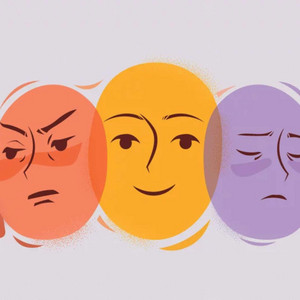
All emotions, even the quote unquote bad ones. provide us with information that can be useful.
They become less useful when they're experienced too intensely or not intensely enough, or for too long, not long enough.
Ethan is the author of a book called Shift.
Manage your emotions so they don't manage you.
On this episode of Life Kit.
He gives us research-backed ways to process our emotions without getting stuck in them forever, and also to shift or move between them as needed.
This message comes from NPR sponsor, Verizon Business.
Rekindle your business's spark at Verizon Small Business Days, February 9th to 22nd.
With a tech check, expert advice, and a free phone.
Book at Verizon.com slash small business.
Select 5G phones only.
New line, device payment agreement, and MyBiz plan with $5 per month add-on spending required.
Credit applied over up to 36 months.
Terms apply.
Ends February 22nd, 2026.
This message comes from ServiceNow.
People should do the creative work they actually want to do, not boring busy work.
Now, with AI agents built into the ServiceNow platform, you can automate millions of repetitive tasks in every corner of your business IT, HR and more.
So your people can focus on the work that they want to do.
That's putting AI agents to work for people.
It's your turn.
Get started at servicenow.com slash AI dash agents.
Do that with Acrobat.
Need to level up your presentation design?
Do that with Acrobat.
Have 30 plus documents that need to be simplified into a proposal?
Do that with Acrobat.
Learn more at adobe.com slash do that with Acrobat.
The book is called Shift.
What does it mean to shift emotions?
So shift refers to turning the intensity up or down on an emotional response.
It refers to sometimes we want to prolong or shorten the amount of time we spend in that response.
And sometimes it involves... going from one emotion to another one altogether.
The common wisdom I've heard when you're feeling something unpleasant or negative, is that you have to confront that emotion and really feel it before you can let it go.
Is that true?
So no, that's a myth.
I call that a myth in the book, this myth of universal approach that when we're experiencing some big emotion, we've got to address it right then and there and just dive in.
I was raised to believe that.
And there are many situations in life that lend themselves very well to adopting that approach.
So there is value in doing that at times.
But what we've learned is that there can also be value in strategically avoiding things for a certain period of time.
So avoidance is not always bad.
Okay, takeaway one, avoiding or distracting yourself from your emotions isn't always a bad thing.
Sometimes we need that distance to better understand what's really going on for us and come back with a clearer head.
What a lot of people fail to recognize, because of the way we tend to simplify things, is that you can either approach things or you can avoid things.
And so I'll give you a couple of examples.
Sometimes, when I am provoked maybe it's an email that comes in, maybe it's a really difficult conversation I have found that Taking some time away, a few hours or even a few days, immersing myself in work, something that really consumes my attention and is engaging to me.
And then when I come back to the problem, one of two things happen.
Number one, there is no problem.
I've realized that as time has passed, the problem, in the grand scheme of things, was totally insignificant.
Yes, I was triggered in the moment, but it took the sting out of that problem.
It's no longer a big deal.
Other times I come back to the problem after taking some time away and I realize number one, it's not as intense.
So it's a lot easier to deal with.
And number two.
I have a bit of a broader perspective here that taking some time away has afforded me.
This is a particularly useful strategy for me when it comes to interpersonal relationships, dynamics and relationships.
Because sometimes I may find myself with people who are not like me and don't want to very quickly work through the problem.
They need to take some time to settle down before they want to re-engage with me.
And so by giving them that space, that also makes for smoother interpersonal dynamics.
And so the whole point here is you don't have to choose between only confronting immediately or avoiding chronically.
You can go back and forth and that can be useful for you much of the time or some of the time.
You have a framework in the book for how to know if you should approach a particular emotion right now or if you should pull away, avoid it in this moment.
Can you talk about that?
So if you approach a situation to work through it and you find that you're able to access the emotions accompanying this problem and then work through it effectively, you can reframe it and find some resolution to the experience and reach a sense of closure that allows you to move on great.
Keep doing that.
If you find that when you try to work through the problem, you're not making much progress.
You just start turning it over and over again in ways that lead it to grow and not make you feel the way you want to feel.
Then that can be a cue for you to take some time away from the problem and then come back later on and see if you're better adept at working through it in that context.
Let me give you one example of when avoidance may not be working.
If you find yourself trying to get some space from the problem, but you just keep thinking about it over and over again and you're not really able to get away from it, so you're not truly avoiding it.
You're not distracting effectively.
That's a cue that avoidance may not be working and that maybe you need to approach it in that instance or use a different form of intervention.
Ethan says there are, of course, unhealthy forms of avoidance.
And he says it's never a great idea to take substances or engage in risky behaviors in order to avoid your feelings.
That tends to be linked with significant negative outcomes.
If you want to approach an emotion, one tool that a lot of us will use is calling up a friend.
But I wonder when that's helpful and when it's not.
This is a great question.
And I think it's a very common response that we often want to talk to our network people in our network about problems we're experiencing.
And a lot of people think that just intuitively, that the way to be supportive of someone else is just to allow them to vent and express their emotions.
And there's been a lot of research on the emotional consequences of that.
And what we've learned is that It's not that simple that venting helps you.
In fact, sometimes it can make things worse.
So if you're just harping on something that is bugging you, you get those relational benefits from the conversation, but you haven't actually talked about anything to help you work through that experience, reframe it.
So it ceases to be an ongoing source of distress.
In fact, sometimes what happens after you just endlessly share information, what you're feeling and what you've gone through?
You leave the conversation feeling great about the person you just spoke to, but you're just as upset if not more upset than when you began, because you've just harped on all the negative things.
Takeaway two venting to an understanding friend may strengthen your relationship and make you feel closer to them, but it might not actually help you feel better or work through whatever emotion is coming up.
Ethan says a more effective version of these conversations would go like this.
First, you share what you're going through.
It is important to get it out for that other person, to learn about your experience and empathize with you.
But then at a certain point in the conversation that other person you're talking to, they help you reframe what you're going through.
And so that's the two-step formula, if you will, for both getting good support and, on the flip side, if I'm in the advisory role, someone's coming to me for support, I'm doing those things right.
I'm listening first, and then I'm trying to help them reframe things.
So if I were talking to a friend and I was trying to give them another perspective on their situation or help them shift their emotions by giving them a new perspective, I guess what would be an example of that.
And how do you do it without coming off like...
Oh, just be positive.
Yeah.
Well, you don't want to do that.
You don't want to do the just be positive and that can blow up in your face.
I might ask them what they would say to me if I was going through that experience.
I might share with them how I've dealt with similar kinds of experiences.
I might ask them whether they've dealt with anything similar like this in the past, and how did that work out?
Those are three prompts.
Those are my go-to.
Usually, that's all I need to do, one of those three.
We often do have access to solutions to the problems we're struggling with.
We just have trouble accessing those solutions when we're really caught up in a big negative emotional response.
Yeah.
Another tool you have in the book is about changing your environment and how that can also shift your emotions.
Can you talk to me about the research behind that?
So one way that you can leverage your environment involves thinking about the spaces in your life that are restorative and sources of resilience.
We often talk about attaching to other people.
Well, we can also get attached to places, and when we find ourselves securely and positively attached to places, We find that when we visit those environments, that can likewise help emotionally restore us.
And the opportunity here is to think about what are they?
And then, when you find yourself trying to manage your emotions, know that that is a resource that you can visit to help you feel better.
So for me, it's the local tea house where I wrote my first book.
It is the local arboretum and one of my offices on campus.
Another example, I think, is if you're in your apartment, for instance, and you're finding that you just went through something pretty distressing.
Maybe you went through a breakup and you have all these memories of the person, like all around the apartment.
I've read that you can move things around.
Move your bed across the room, for instance, paint.
Do something like that to change the space so that it can feel like a fresh new start and it's not triggering as many of the negative emotions.
Yes.
If you have pictures that are triggering a negative response, get rid of them, right?
Like get rid of the pictures of the person who just rejected you.
Because what happens when you see that picture is it activates all the thoughts and feelings and memories associated with that person.
And that's not a pleasant space to be in.
But the inverse to that we have found is also true.
So in other research that we've done we found that when people think about negative experiences that they've endured, looking at the picture of a loved one, of an attachment figure a partner, a kid, a friend actually speeds up the pace at which people recover from thinking about those negative experiences.
Yeah, so take down the pictures of your ex, put up the pictures of your grandma.
Add some plants.
Plants are really good.
Those are restorative.
That helps too.
We'll have more Life Kit after the break.
Takeaway three, if you want to shift your emotions, change your environment.
Seek out a space that will foster the feelings you want to have.
And consider switching things up in your apartment or your house if the current layout is bringing up feelings you don't want to stew in right now.
There's another suggestion you have in the book for how to shift your emotions.
You talk about using the human tendency to compare ourselves with others to our advantage.
I think we often hear that you shouldn't compare yourself to other people.
And the motivation there is that often these comparisons bring us the opposite of joy.
What I like to remind people number one is that it's not possible to not compare yourselves to other people.
It's part of the way that we are wired.
Our ability to compare ourselves with others often provides us with really useful information.
And the good news here is that you can reframe those comparisons in ways that actually help you, rather than undermine your emotional goals for your life.
So when I stumble on a person who is outperforming me in a context, I care a great deal about.
My initial response, like most human beings, is I feel bad.
I feel envious.
The cold compresses are coming out for me a lot. living up to my potential and blah, blah, blah.
Then what I do is I reframe it.
I view this person as, oh, they were able to achieve this.
So that's something that I can strive for right now.
So what I'm doing now is I'm taking this comparison as a really kind of a threat that's making me feel bad about myself, and I'm turning it around and now I'm thinking about this is motivating and inspiring because they were able to actually do that.
And you know what?
Why can't I do that too, right?
So that neutralizes the negative qualities of that comparison and it actually makes it into a positive thing.
Takeaway four, we're hardwired to compare ourselves to other people.
And that habit can make us feel envious, stuck, or even hopeless.
But we can shift out of those emotions into more pleasant ones by using comparison to our advantage.
Again, this is a chance to reframe how we think about a situation.
One of my favorite tools in the book is called WHOOP.
And it stands for Wish, Outcome, Obstacle, Plan.
What this technique does systematically is help overcome the obstacles that get in the way from us achieving our goals.
So we often have these goals to think better and lead healthier lifestyles or be more emotionally fit but we don't follow through with those goals so often, and and lots of researchers have tried to figure out.
Why does that happen?
What gets in the way of goal pursuit and what can we do to to make people better able to achieve their goals?
And this specifically in this context, you're talking about goals around your emotions.
Correct.
It can be applied to goals around emotional regulation.
Yeah, not getting like so angry that you blow up, not really going down the rabbit hole of rumination and despair, you know, in response to a blip that comes up on your radar.
All right, so give me an example.
Walk me through a whoop.
So W, the W is the wish.
Let's articulate what the specific goal is.
I don't want to get overly upset when one of my kids doesn't listen to me or my wife and is disrespectful.
That's my wish.
Okay, let's get to the first O, which is going to be the outcome.
What's the outcome that will occur if this wish is fulfilled?
I'm going to have a better relationship with my kid because I'm not going to have this oversized reaction.
And that's something that thinking about that outcome, that's energizing.
Then let's get to the second O, which is the obstacle.
So what in particular is the personal obstacle that might get in the way of From me achieving this goal I have?
Maybe I will just fixate on the disrespectful thing that was said, which will just fuel the distress response in a way that might lead me to act out.
And then comes the P, which is the plan.
But it's not just any plan.
It's a very specific plan.
It's an if-then plan.
If this happens, then I'm going to do this.
So if I find myself fixating on the disrespectful thing that was said, then I will distract myself.
I'll take a timeout for 10 minutes and come back to the situation.
Or then I will remind myself that –
She's just a kid.
She's learning.
I did the same thing as well.
And you can plug in whatever tool you want into that then part of the if-then.
But the whole idea behind this plan, and what makes it so really magical in some ways, is that it takes the thinking out of the regulating.
It makes this automatic.
So you come up with this if-then plan and then the moment you encounter the if-then, Uh-oh.
I'm fixating on what she said.
You know exactly what to do because you've rehearsed this.
You actually have a plan.
And this is how you make emotion regulation automatic.
Takeaway five, do you want to get better at regulating your emotions?
Try the whoop tool.
Determine your wish, and this is a wish that has to do with emotional regulation.
Like, I want to get less upset when this person says they're going to call and they never do.
Then outcome, obstacle, and plan.
And the plan should be in the format of if-then.
If X happens, then I will do Y.
You know, I wonder are these tools always about shifting from an unpleasant feeling to a more pleasant one?
So from anger to joy, for instance, or are there situations where you might want to shift into sadness or something like it?
Yeah, the tools can be used to shift in different directions.
Let's take anger, for example.
Anger often motivates collective action, right?
Sometimes there are things in life that we need to be motivated to speak up about because they're really important issues.
Yeah, experiencing a little bit of anger, or maybe more than a little bit, depending on the context, can be useful for motivating people in those ways.
Likewise, sadness can be important for turning inward, to doing that hard introspective work, to make new meaning out of difficult moments.
And so the reason I use the term shift to refer to, To talk about this book is because it's not about just upregulating how good you feel.
It's the ability to skillfully move in any direction you want depending on what your goals are.
Okay, time for a recap.
Takeaway one deep diving into a particular feeling can be helpful, but it's not always the best approach.
Sometimes it makes more sense to step back, distract yourself, get some distance and check in again later.
Takeaway two.
When you have a friend who lets you vent about your feelings, you might grow closer to them and feel super supported, but that venting might be making whatever feeling you have more intense.
Research shows that it's more helpful when a friend offers you a new perspective or a reframe after they listen for a little while.
So when you're deciding which friend to call, think about the ones that know how to do this.
And also try this approach when someone calls you for support.
Takeaway three.
If you want to shift your emotions, change your environment.
Let's say you want to feel at ease, you can seek out comforting spaces.
Maybe that's your bedroom or your favorite coffee shop.
Also consider switching out your photos and your home decor when you need an emotional reset.
Takeaway four comparison is a normal part of life and it can trigger some emotions that don't feel so great.
But we can also use it as a tool to shift our feelings to a more positive place.
And takeaway five.
If you want to get better at regulating your emotions, try the WHOOP tool coming up with a wish outcome, obstacle and plan.
One more thing before we go.
Do you follow Life Kit in your podcast app?
Why not do it right now?
Just tap follow so you never miss an episode.
This episode of Life Kit was produced by Claire Marie Schneider.
Our digital editor is Malika Garib.
Megan Cain is our senior supervising editor, and Beth Donovan is our executive producer.
Our production team also includes Andy Tagle, Margaret Serino, Sylvie Douglas, and Mika Ellison.
Engineering support comes from Tiffany Vera Castro.
I'm Mariel Cigarra.
Thanks for listening.