This is Round Table.
You're listening to Round Table with myself, Hea Young.
I'm joined by Steve Hatherly and Yuxun in the studio.
Coming up ever feel like you're running on empty struggling to find the energy for even the smallest tasks?
The rise of low energy living among young people has become a hot topic.
Click, join our discussion for some special, I mean fresh ideas possibly, on how to recharge your life.
Transforming from low energy to high voltage.
Ready to plug in! And creatine is a popular fitness supplement believed to boost muscle strength and speed up recovery.
But results vary. What if the only thing it's pumping up is the supplement's industry profits?
We raised some questions.
Our podcast listeners can find us at Roundtable China on Apple Podcast. Now let's move on to the next topic discussion today.
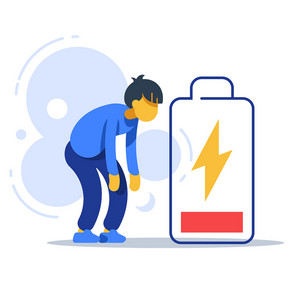
Ever feel like your energy bar is stuck at 3 % with no charger in sight?
You are not alone. A growing group of young people dubbed the Low Energy Tribe is talking openly about feeling sluggish, drained and exhausted, even after a nap, was behind this low -energy state of mind.
How come low -energy people?
This sort of hashtag is trending.
Hm, so according to Beijing Youth Daily recently this topic of, quote on quote, being officially diagnosed as a low energy individual, topped the trending charts on social media, attracting over 9 million users to join this discussion.
55 ,000 young people formed a group on Douban, which is a domestic social media platform, called the Low Energy Rehabilitation Project as more and more members of Gen Zers who were those born between maybe 1995 and 2009 began actively seeking higher energy and more intense live experiences.
And as this high energy topic continues to gain momentum, it seems that simply tagging a short video with high energy is enough to attract massive traffic.
Not only have high energy seniors gone viral, but there are also trending videos showcasing the high energy daily lives of 4 -month old human babies and even Hao Fubao, a Gen Alpha.
really young panda superstar born in the 1920s spends a high -energy day so people are looking at all of these quote -unquote high -energy videos and they were getting maybe high energy from it.
Yeah just one example talking about the high -energy elderly.
There is a vlog featuring an elderly woman from Fujian who completes 12 tasks a day.
She accomplishes 12 different things a day, and that received 2 .97 million likes and 10 ,000 comments plus on a short video platform.
And this is an example of the high -energy seniors.
This is what's catching the public eye.
And I guess it's because young people are feeling this well low energy individual they're getting that tag and then they're looking for inspiration yeah and that inspiration might come from an elderly woman in Fujian or a baby panda or a baby human but they're looking for inspiration somewhere.
Yeah so it's kind of interesting when low energy young people get inspiration from high energy other people.
What What characteristics do the so -called self -proclaimed low energy people share?
Yes, first of all, a report by this Beijing Youth Daily is showing that netizens have basically summarized the typical traits of low energy individuals as including getting out of bed is already a full -body workout and falling asleep anywhere, anytime, social battery drains instantly and exercise phobia and also at the core these traits are characterized by persistent fatigue and a lack of behavioral Drive and this kind of term also become particularly popular in the works space low -energy individuals and it refers to people who lack vitality and motivation on a people often appear unenthusiastic
and disengaged, giving off a general sense of just weariness.
Even a small task at the office can make them feel absolutely exhausted.
They get drowsy quite easily, sometimes even dizzy apparently as well.
A few flights of stairs, if those need to be climbed, then they're out of breath.
they take frequent breaks, just to kind of get through the day.
And it's just not a happy and it's not a healthy way to live.
Yeah, and sometimes it can even be struggling for them to concentrate and be interested in anything, no matter if it's for, you know, a lot of these challenging tasks at work or at school, and their minds often default to negative thoughts.
leading to fear of difficulties which then spirals into feelings of anxiety or even depression.
And it's not just China either.
There was a report from Newsweek in 2024, a poll done at that time revealed that Gen Z is the most fatigued generation.
This is from the United States.
The survey was done from Tucker Research. They asked a thousand U .S. adults, how often do you feel tired?
24 % of those born between 1997 and 2006.
So the group that we're talking about, they said that they always feel tired.
That was the highest percentage among the four generations surveyed.
So what has drained the low energy folks?
What brought them to this low energy state?
Yeah, by the sound of it, we may think, are you just trying to, or just being lazy, or are you just, didn't have a good sleep?
Maybe not. Sometimes we find ourselves low on motivation, feeling exhausted, and also procrastinating heavily, even putting off small tasks that should only take a few minutes.
And this may not necessarily be due to laziness or procrastination, but rather, a genuine lack of energy.
And it's widely believed that the development of low energy is caused by a variety of factors including, in your stress, your poor, lifestyle habits, physical illnesses, and psychological issues.
So especially when we are troubled by unresolved problems and constantly weighing options, some of these chronic stress can build up quietly in the background, and the brain diverts a large amount of resources to handle this stress, reducing the available energy for other tasks and causing a drop in overall vitality?
I mean, it makes sense, think about it.
Being stressed is exhausting.
It's absolutely exhausting.
This is from the American Psychological Association.
Young adults in America are reporting higher stress levels than older generations.
18 to 34 year olds are saying that their average stress level on a daily basis is six out of 10.
3 .4 is the answer for people aged 65 and older.
So basically nearly double the stress levels of older generations.
That's from the APA's 2023 Stress in America survey.
In that survey, about two -thirds of that age group, 18 to 34, said that stress makes it hard for them to focus, 67 % said that, and feel like no one understands how stressed they are.
66 % said that. So if we take those numbers into consideration, stress six out of 10 every day, 67 % said because of that stress, it makes it hard to focus.
And also, nobody understands how stressed I am.
This ties back, we've talked about it on the show before, the loneliness problem in the United States and around the world.
So if we know that people are feeling lonely, and also they're 6 out of 10 stressed on a daily basis, it makes it so easy to understand why people are feeling exhausted all the time.
Yeah, and I think it's similar to the whole situation of being low energy, some perspective suggests that low energy individuals aren't low energy because of bad habits, rather their lack of energy makes it difficult for them to form good habits in the first place.
So in some way this is kind of creating a kind of vicious cycle that you are Not having enough energy and then you cannot create good habits And then you will have bad habits, and then it will be bad for you There's no real number one answer as to why this is happening.
There's a lot of different things it could be stress It could be poor lifestyle habits.
It could be a lack of exercise It could be a bad diet or any or all of those things work related stress But I think too, a thing that gets overlooked and I think this is exhausting, information overload, right?
That too. People are constantly attached to their screens, short form videos.
We've talked about the popularity of those these days, doom scrolling.
And it's just it's just a constant barrage on your brain of sometimes useful information, sometimes useless information, but also sometimes depressing information.
Right? Our feeds these days are filled with world news and media outlets often report on negative things more than positive things.
So if your brain is constantly being barraged with infor - information, and a lot of that information is negative, and your own financial stresses, relationship stresses, work stresses, are piled on top of that.
how can we expect people, at any age group, but since we're talking about young people today, how can we expect them to be operating at high energy every day?
Do you think that 90 year old, or that grandma from Fujian province, do you think she's doom scrolling all day?
Definitely not. So, there's something to look at there, I think.
The amount of time we're spending on screens.
Yeah, that's why I saw a lot of suggestions on how you can restore your energy is that you need to strictly manage your social media and other energy drinks because some apps appear relaxing but actually drain your mental energy significantly.
So maybe limit time on, as we said, short videos and social platforms to under 40 minutes a day, if possible, and it's better to stare into space than to like mindlessly scroll.
even eye -link can be restful, looking out of the window may be helpful and also avoid negative energy when you saw them.
Stay away from the content that stirs up anger, frustration, sadness.
If you encounter it, use the flash technique.
Just don't react, don't engage, don't argue, and responding wastes energy and entangles you with negativity.
What do you think? I think these are all really valid points, but I try to go deeper to people's minds.
I think just being, being an adult.
Okay. Being a young person these days, I think is extra hard because society, this era is changing rapidly, um, for older generations, maybe you see industry change happen in like two decades.
or almost a lifetime.
But now, industry change happens in like five years.
And with all the other factors that you guys have very eloquently put, I think it certainly doesn't make the situation any better.
And also for young people around the world, maybe to a certain extent, collectively, they are experiencing some kind of disillusionment, just feeling disillusioned and your parents' experience don't mean much anymore and the world just looks increasingly uncertain.
Where is it going? What is AI going to do to everything and so many other questions to be asked.
And also, you know, owning a house, even if housing price slashes to a certain extent, it still seems unaffordable for a lot of people, I'm talking about all over the world.
And I think it's kind of unfair or erroneous to expect people to operate on high voltage anyway.
And this is something that I felt I suppose when I was in the US decades ago.
And then I felt there there's part of the culture or I don't know if it's Western culture, let's just say in California almost like a tyranny of positivity like I'm sure there's some really happy people out there and people are really friendly and and things like that I mean if it comes from the heart, I think that's fantastic but also there might even be that kind of Happiness mandate or I don't know what it's called Because that's not that visible in our culture in China, traditionally.
It's not like greeting people with a big smile, always being very complimentary and things like that.
I wonder if sometimes, and also with the hustle culture and this almost like a religion of productivity that our society, I think, did experience for some time, if not for the first maybe 20 years of the 21st century that, you know, I remember 10 years ago, it was almost like shameful.
If you said, oh, tonight there's no banquet?
You're not being asked to go to some special event, um, like, like productivity it, it drives this, uh, bright, uh, pipe.
be a product of the rat race.
And then, you know, all these things, they make you exhausted and you can't touch it.
But, you know, it's everywhere.
And now till today, maybe that atmosphere has changed a bit.
But I think all these very complicated things in the works have really made life very stressful and hard for people.
Yeah, and I don't disagree with anything that you said, but if you are feeling like you are in that what was the term again low -energy individual if you are feeling like that, then you have to take action if you feel like this is hurting you and the advice that You shouldn't gave before is the advice that you can find on 100 ,000 internet websites about reducing screen time and getting better quality sleep, blah, blah, blah.
It's that information is everywhere.
But the point is, you have to take action.
You as an individual have to do something about it.
If you, what's that expression?
The definition of insanity is not changing anything but expecting different results.
If you don't change anything, then nothing's going to change.
And there are things that are in our immediate control that we can change and then there are things beyond our immediate control.
Our work hours and our stressors, we can't immediately control those things.
But what you can do is control your diet a little bit more if you feel like that will help you or your screen time if you feel like that will help you or go to bed 30 minutes earlier if you feel like that would help you.
The point is you have to take the action.
Nobody's going to do it for you.
Yeah. I used to think a lot of these psychological issues can only be solved by maybe psychological methods because these are something that in your mind, and also it's similar to your, maybe stress or work pressure, but the thing that we're talking about right now is that maybe your psychological status can actually affect your physical condition because when you're having, yeah, when you're having stress, your body will actually react like you're having issues with it.
So maybe as Steve said, take actions, maybe even small baby steps.
And when you're seeing benefits of doing things, then it will create a kind of beneficial system that you can actually get and you will be interested in doing these kind of things.
Also, can I just raise one point that it's not like you're stuck there forever.
I suppose for most people, we've all been there or you are there now, but it doesn't mean that you got to live there forever.
So one positive thing actually that I got from this discussion is that previously people might feel a little embarrassed, if not ashamed, in admitting this.
But now you see that there are tons of people out there also they're self -proclaimed that they're having low energy.
So it almost wraps you all in a safety blanket in admitting it.
And I think that's great.
There's power in that.
So you don't need to fake your positivity.
Yeah. But that's almost like step number one.
Right. Yeah. Step number one is knowing that there are other people out there in your condition and you're not alone.
But then step two, this Step 2 is you have to start to take control of yourself.
And don't try to become a high energy person because if you just happen to be, maybe one of these low energy group kind of people, then find ways to just rest more, think about how to rest effectively rather than forcing yourself to match the schedules of these high energy individuals because everybody have their own lifestyle and you don't need to force yourself to be someone.
And otherwise in that way you may even stress out because of to be a high energy don't start with 12 tasks a day like the grandma and Fujian start with 10 tasks something like that.
Yeah if you're feeling low energy maybe today is a good day to give yourself permission to just be but don't forget the next step that Steve reminded us and when you're ready when you feel like you're ready tiny steps might help to refill your tank.
And I still hold hope to making change in our lives like that.
You're listening to Roundtable!
Coming up. Creatine has long been marketed as a gem essential, but are new studies revealing it's just another overpriced placebo in a flashy tub?
We will discuss right after this break.
Looking for passion?
How about fiery debate?
Want to hear about current events in China from different perspectives?
Then tune in to Roundtable, where East meets West and understanding is the goal.
You're listening to Roundtable with myself, He Yang.
I'm joined by Steve Hatherly and Yu Xun.
For years, Creitin, also known as zhi shuan, in Chinese, has been hyped as the magic shortcut to bigger muscles and better performance in the gym.
But if it's so powerful, why are scientists still questioning whether it actually works?
Before we get to the results of a new study, what exactly is creatine and what does it do?
Creatine is a natural source of energy and it helps your muscles flex or contract.
It helps to create a steady supply of energy in your muscles so that they can keep working, especially when you're exercising and that's why it's popularly used for people who work out all the time.
You get creatine from your body, you can also get it from the foods that you eat.
If you get it from the foods that you eat from your diet, you'll get about one to two grams a day.
That's about the size of maybe one to two jelly beans, to put that in context for you.
And and you get this from foods like red meat like pork or beef or seafood or animal milk.
That's where you can get it from foods.
Then your body produces the other half naturally in your liver and your kidneys and your pancreas and they deliver about 95 % of the creatine to your muscles to use during physical activity and then the rest goes to your heart and your brain and your other tissues.
So it actually produces within your body originally, but you can take more supplement of it?
Yes Yeah, and does it like help you to boost your workouts performance or just actually help you build muscles more effectively?
So the idea behind creatine is that it helps regenerate the primary energy source for your muscle contractions so this is especially useful they say during short bursts of intense exercise.
For example, high -intensity interval training, HIIT if you've heard that term before, and this allows your muscles to maintain power and force for a longer period of time.
And the reasons that fitness enthusiasts love it, this is from Harvard Health's website, they say creatine may enhance athletic performance, it may enhance power or speed requiring short periods of anaerobic activity.
Anaerobic activity is like weight lifting and sprinting where you use a lot of energy in a short amount of time.
There's also some evidence that creatine supplements can help with protein shakes if you take those together to help speed up muscle recovery after really strenuous exercise.
There's a lot in the research field that says that creatine may help support all of these things.
And that's why this is so popular among athletes and gym goers such as myself.
But may help means that it might not help, so.
Yeah, I keep on using may, right?
So the question of creatine's effectiveness for athletes or gym goers, it's always been really, really complex because there's a lot of research to suggest that it helps, but there's also a lot of research that suggests there's a lot of ambiguity.
The reason for that is because people respond differently to creatine supplementation, like muscle fiber or your initial creatine levels, things like that.
There's a lot of variables so therefore it's really hard for them to lock down whether creatine is really beneficial for people or not.
Yeah, I was also thinking the same.
Since everyone's daily types of food or all of these nutrition vary and the effectiveness of using supplements may also defer from person to person.
Yeah, so in the new study from Australia they put 54 healthy people between the ages of 18 and 50 through a 12 -week resistance training program and once they started they saw or once they finished they saw no additional benefit from creatine at the dosage they were taking which was five grams They said we've shown that taking five grams of creatine supplement per day does not make any difference to the amount of lean muscle mass People put on while resistance training that is not definitive evidence though that it doesn't work because this is simply a short -term study that they did and what the experts
the researchers said is This it would be really interesting to see if creatine has more of a long -term benefit when you start weight training you have those beginner gains in strength, but they start tapering off after about 12 weeks or so.
So it might become more useful in the later stages.
And the conclusion here is that perhaps we should temper our expectations for what creatine can do for you.
Yeah, and also maybe any supplement should be taken in moderation, especially those that might increase the burden on your kidneys.
I've seen some people like consuming too much protein bars, and then it could be very serious damage to their body.
And with that, we're signing off.
Thank you so much, Steve Hatherly, and Yu Xun, for joining today's discussion.
You can always find us on Apple Podcast at Round Table China.
And also, send us a question to roundtablepodcastatqq .com.
I'm Hea Young, we'll see you next time.