This is Fresh Air contributor Annemarie Baldonado.
I talked with actor Cole Escola about their hit Broadway play Oh, Mary.
Cole plays an unhinged alcoholic Mary Todd Lincoln, who's an aspiring cabaret performer.
If that makes no sense, that's part of the point.
You can find my interview on the Fresh Air podcast. You're listening to Life Kit from NPR.
Hey, it's Marielle.
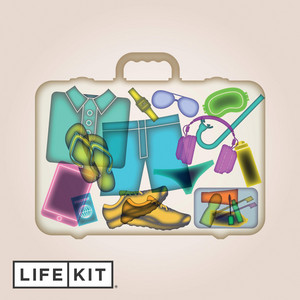
It is truly annoying to be on vacation and have to buy something you already have at home cause you forgot to bring it.
But what's worse, that or coming back from a trip with aching shoulders from lugging around that huge suitcase and realizing you didn't even touch half the clothes you bought.
Packing for a trip is hard to get right, and if you get it wrong, that can make an already unpleasant travel day go off the rails or send you into a tailspin in a foreign country.
Christine Sarkis at the travel website Family Vacationist says she has a rule of thumb.
You want to make sure that everything you're carrying is worth the stress of carrying it.
When you heed that advice and you bring what you'll actually use and nothing more, the whole trip tends to go more smoothly.
On this episode of Life Kit, Christine and other travel experts are gonna give us packing advice.
They'll teach us how to customize our packing lists depending on our group the weather, how we're getting to our destinations, and more.
By the way, there are tons of incredibly useful objects you may never have considered bringing on a trip.
I always pack an eye mask, no matter where I go.
Some kind of bug bite relief, the tampons you like, and then a hair conditioner.
I could literally go for five minutes, giving you a list of all the different things you could do with a scarf.
Support for NPR and the following message come from LinkedIn ads.
One of the hardest parts about B2B marketing is reaching the right audience.
When you want to reach the right professionals, use LinkedIn ads.
LinkedIn has grown to a network of over 1 billion professionals.
Target buyers by job title, industry, company, role, seniority, skills, company revenue — all the professionals you need to reach in one place.
Get a $100 credit on your next campaign — just go to linkedin .com This message comes from Thrive Market.
The food industry is a multi -billion dollar industry, but not everything on the shelf is made with your health in mind.
At Thrive Market, they go beyond the standards, curating the highest quality products for you and your family, while focusing on organic first and restricting more than one thousand harmful ingredients.
All shipped to your door.
Shop at a grocery store that actually cares for your health at thrive market .com slash podcast for 30 % off your first order plus a $60 free gift. This message comes from Charles Schwab with their original podcast, Choiceology.
Choiceology is a show about the psychology and economics behind people's decisions.
Download the latest episode and subscribe at schwab .com slash podcast. I'm Tanya Moseley co -host of Fresh Air.
At a time of sound bites and short attention spans, our show is all about the deep dive.
We do long -form interviews with people behind the best in film, books, TV, music, and journalism.
Here our guests open up about their process and their lives in ways you've never heard before.
Listen to the Fresh Air podcast from NPR and WHYY.
All right, let's dive right in here because if you pack the way I and a lot of us pack, I know you're probably doing it at the last minute, and that your flight leaves tomorrow.
Takeaway one, pack the stuff that would be hard to replace at your destination.
So I'm just gonna say here, if you get to your destination and you realize you forgot something, it's usually not the end of the world.
You can usually buy a tube of toothpaste or a water bottle at the local convenience store.
But the operative word here is usually.
It depends on where you're going and also there are some items that you either absolutely cannot forget or else you won't board the plane or you can forget but it's gonna be a hassle to replace.
First off your documents.
That could be your passport, a visa, a REAL ID driver's license, your boarding pass, immunization records, and credit cards or debit cards to get cash when you land.
Basically anything you need to pass through security and access your money.
Second, your medications.
Make sure you have enough for the entire trip and pack them in their original bottle with the label intact in your carry -on in case the airline loses your luggage.
The State Department also recommends that you carry a letter from your doctor describing any medical conditions you have, prescription drugs you take, and their generic names.
Also check with the foreign embassy of any country you're visiting or passing through on a layover, and make sure your medications are allowed. Find out if you'll need a a permit or an import license to bring them.
You might also need to talk with your doctor about alternative meds you can take during your trip.
Some other items you'll want to bring, electronics, like your phone and charger or your laptop and charger, and you might need a converter or adapter plug for the outlets wherever you're going.
Also, consider bringing a toothbrush, travel -size toothpaste, underwear, and socks in your carry -on bag.
Jada Ewan is a reporter for The Washington Post, and in 2018, she spent the year traveling the globe for The New York Times.
She reported on every destination in their annual 52 -places -to -go list during a single year.
So she knows how to pack, and she says wherever you go, there are five items that are often particularly hard to come by, especially if you have specific preferences.
among the things that are hard to find always.
Sunscreen, bug spray, some kind of bug bite relief, the tampons you like, and then hair conditioner.
I also like to pack chewable Pepto Bismol tablets when I travel internationally.
Those aren't always easy to find in other countries.
And the last thing I want to have on vacation is an upset tummy with no recourse.
Alright let's tailor your packing list to your specific trip.
Takeaway two, pack for your specific circumstances, the place the time of year the weather and how you'll be getting around.
One thing about bad weather — Rain will always get you.
Jada remembers this one time she was on a walking tour in La Paz Bolivia.
She was getting absolutely dumped on and I didn't have any of my rain gear and there were several people on that tour who were all they seem to be much more seasoned travelers than I was and they just all immediately whipped out their rain jackets, I was like oh oh okay so the thing that you always need to have on you is like a rain jacket an umbrella and a rain cover for your backpack.
Go to the weather app on your phone or go online and check the extended forecast for your destination.
If it is at all dicey bring your rain gear.
Honestly, maybe even bring it if the skies are looking clear.
You just never know.
Also, what's your sleeping situation going to be?
Are you camping or staying on a friend's couch?
You might want to bring a little inflatable camping pillow, or earplugs if you're staying in a hostel or in a loud neighborhood.
I cannot sleep if it is even a little bit light in the room, and so I always pack an eye mask no matter where I'm going.
That's Bec Harlan, Life Kit's Visuals Editor.
An eye mask is the one travel item she cannot live without.
It takes up almost no space and it gives you back a little bit of control that you sometimes lose when you're traveling in a new place.
Spend some time thinking through what to pack to make your sleep as restful as possible.
That'll help you squeeze more out of the few days of travel you have. Next, think about how you're getting to your destination.
If you're boarding a plane, maybe you'll want wired headphones to watch the in -flight movies.
Or you'll want to download movies TV shows and podcasts to your devices now because you don't want to risk it on the in -flight entertainment.
I've been thwarted by a broken seat back TV screen before.
If you're driving maybe you want to bring a GPS or a paper map in case you lose service or you can download the map of the area you're visiting to your phone ahead of time.
Also if you wear eyeglasses when you're driving, make sure you're bringing those.
And if you're going to be somewhere that you're walking around a lot, bring comfortable shoes, ones that you've already broken in and lots of comfy socks.
Now let's say you're traveling with kids.
With toddlers, you need to bring stuff to amuse them.
Bené Wilson is a lead reporter at Bankrate.
My child, well, this was back in the day before iPads and everything, but we had a little portable DVD player so she could sit there and watch her movies.
Also, snacks. Kids get hungry.
My child likes to eat so I always have food for her on the flight.
And make sure you bring an extra change of clothes because accidents happen.
Anything you need to do to make the children as comfortable as possible because one thing and you're dealing with a meltdown and nobody wants that.
Okay, time for takeaway three.
Consider some creative multi -use items and some other clever tips from our LifeKID experts.
I could literally go for five minutes giving you a list of all the different things you could do with a scarf.
Doug loves to pack simple objects that can serve multiple purposes.
I will give you protection from sunburn and dust and sand and wind in that which is what it was designed to do but it's also a headband and a hat and a napkin and a towel and a handkerchief and a dust mask and and I could literally go on for five minutes.
If it's big enough it could also double as a picnic blanket or a headscarf at religious sites.
Another example, dental Floss can be repair threat it can help you to lock your luggage you can slice cake and cheese and pastries and and things with it there you can use it as an emergency shoelace or yeah okay there are a lot of ways to use floss and the list keeps going.
We've got a drippy faucet in your hotel room at night you can tie a piece of dental floss around the end of the faucet and let the water dribble down the dental floss so it won't drip drip drip anymore so there's just no end to these little clever ideas.
There are other items you might already have in your medicine cabinet or kitchen cupboard that can be surprisingly useful on a trip.
One of the more unconventional things I do, just to save space in my liquids bag, I'll take lavender oil and put that all over cotton balls, put those in, like, a Ziploc bag.
That's Tracey Davis.
She's a project manager at NPR.
We asked our colleagues for their favorite travel items to pack, ones that are a little off the beaten path.
It's really great to repel mosquitoes.
They don't like the smell of lavender for some reason, but it's amazing.
In the evening, if you want to relax, take a couple of those by your nightstand in the hotel.
And if you just want to refresh your shoes after a long day of sightseeing, just pop a couple of those lavender balls in your shoes.
It's amazing. One thing I can't travel without is my journal.
That's life kit producer Margaret Serino. I just think it's a really compact, easy way to get a lot of entertainment value out something.
You know I don't want to look around a bunch of books and I can doodle in it and write and play games with my friends and the pages.
Yeah, I think it saves me on space and gives me a lot of entertainment on a long flight.
Now I've got a few must haves of my own.
An empty water bottle with a filter in it.
Some plastic sandwich baggies in case you need to store wet clothes or you need a place to put the dregs of an apple.
A packet of tissues for sneezes or for bathrooms that have no toilet paper left, and a dry snack like a sleeve of Saltines, nuts, or dried fruit for those in -between times when you're too tired to leave the room or you have the hungies at 2 am because you're jet lagged.
So you've pulled out all your travel essentials, plus all the fun outfits you're planning to wear, and now you're looking at a big ol' pile of stuff and wondering how it's gonna fit in your suitcase.
Takeaway 4. Condense.
You never need as much as you think you do.
You just don't need that much on the road.
This is Jada again.
She traveled around the world for the New York Times and she had to pack a suitcase that could work in all 52 places she was going, some urban, some rural, some hot, some cold, some rainy, some windy, if she could do it again.
I would have actually set out with almost none of my toiletries.
I would have just left them all at home and then slowly built up a toiletry kit when I was on the road because it turns out that like that most of the time, you don't miss the things you're carrying around.
Let's say you're going on a trip with a baby or a young kid.
It's easy to feel overwhelmed, and there are a lot of websites with special baby travel gear, and everyone's got a different recommendation on what you need, what you don't need.
My number one recommendation when packing for babies and kids is that kids live all around the world.
This is Preeti Harbuk.
She runs the blog Local Passport Family.
that means that most of what you really truly need you can probably access their diapers wipes formula and baby food you can often find them at local stores sometimes you can even rent strollers or travel cribs we have a whole other episode on traveling with kids but when it comes to packing air on the side of bringing less Christine Sarkis is the editor in chief of family vacationist her advice you want to make sure that you you don't want to go to bare bones, that you don't have the things you need to have a comfortable time, but at the same time making your sort of your list of things you're
going to pack and then going through and being like, do we need this, do we not need this?
You want to make sure that everything you're carrying is worth the stress of carrying it.
So really try to imagine yourself wearing those strappy heels.
If you can't picture it, or if you're only going to wear them one time, leave them at home.
Jada follows another cardinal packing rule.
You pack and then you remove a third of the things that you packed.
You pack and then you just, you have to think about it.
You're like, how many days am I going to be gone?
Can I wash any of the stuff in a sink?
Because schlepping things around is a great way to kill your butts on a vacation.
Plus, having a little extra space in your luggage, depending on the trip, is part of the fun.
It means you can fill that space up with your new treasures.
Now that you've got an iron -clad packing list, it'll be a lot easier to relax into your trip because you'll be prepared, at ease, and knowing that you have exactly what you need and nothing more.
That in itself can feel freeing.
For a rare moment, you're not weighed down by all the clutter in your house, all the unread emails in your inbox.
You don't need to think about the past or the distant future.
all that matters right now is where you can track down the best scoop of gelato and if it's gonna rain as you walk over.
Okay it's time for a recap.
Take away one, remember to pack the stuff that you need to board a flight or that would be hard to replace at your destination like some of your electronics or your medications.
Take away two, pack for your specific situation?
What's the weather gonna be like?
Where are you sleeping?
How are you getting around?
Are you traveling with kids?
Takeaway three, think outside the box.
There are some objects you might never have considered packing, but they can be super useful, like a scarf, dental floss, and plastic baggies.
And takeaway four, condense.
Hold every object up and try to picture yourself using it on your trip.
And the rule of thumb is to remove at least one third of the clothes and other items from your suitcase.
Remember a lot of stuff you can buy at your destination.
For more Life Kit, check out our other episodes.
We've got one on how to keep your cool while you're traveling and another on how to find fulfillment from your trip.
You can find those at npr .org slash life kit.
And if you love life kit and want even more, subscribe to our newsletter at npr .org slash life kit newsletter.
Also, we love hearing from you.
So if you of episode ideas or feedback you want to share, email us at lifekit at npr .org.
This episode of LifeKit was produced by Margret Serino. Our visuals editor is Bec Harlin, and our digital editor is Malika Ghareeb.
Megan Kane is our supervising editor.
And Beth Donovan is our executive producer.
Our production team also includes Andy Tagal, Claire -Marie Schneider, and Silvie Douglas.
Engineering support comes from Jimmy Keeley.
I'm Mariel Segarra.
Thanks for listening.
When Malcolm Gladwell presented NPR's Thru Line Podcast with a Peabody Award, he praised it for its historical and moral clarity.
On ThruLine, we take you back in time to the origins of what's in the news like presidential power, aging, and evangelicalism.
Time travel with us every week on the ThruLine Podcast from NPR.
Shortwave thinks of science as an invisible force, showing up in your everyday life.
Powering the food you eat, the medicine you use, the tech in your pocket.
It's science is approachable because it's already part of your life.
Come explore these connections on the Shortwave podcast from NPR.
Want to get in the way?
Know that fizzy feeling you get when you read something really good?
Watch the movie everyone's been talking about or catch the show that the internet can't get over?
At the Pop Culture Happy Hour podcast, we chase that feeling four times a week.
We'll serve you recommendations and commentary on the buzziest movies, TV, music, and more.
From lowbrow to highbrow to the stuff in between, catch the Pop Culture Happy Hour Podcast from NPR.