Ted Audio Collective You're listening to Ted Talks Daily, where we bring you new ideas to spark your curiosity every day.
I'm your host, Elise Hugh.
One of the most vexing problems in the world today is one of trust and information.
Entire swaths of populations believe in an alternate reality, even in the face of facts.
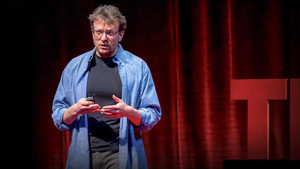
In his 2024 talk, journalist Peter Pomeranza sheds light on how to fuse forgotten research with technology to help break through echo chambers and propaganda in a way that has proven to work, coming up after a sponsor message.
And now our Ted Talk of the Day.
How can one engage audiences that seem to be living in an alternative reality?
How do we reach people who seem smitten, besotted with the propaganda of sadistic strongmen?
That's the sort of happy stuff that I work on, that I write books about, that I research at university, and that has become very, very personal for me in the last couple of years.
I was born in Ukraine, and since the full -scale invasion began, I've been going to Ukraine a lot to work with an NGO called The Reckoning Project to document war crimes and to tell the truth about them to an often skeptical world.
I'm afraid there's a lot of atrocities that we document.
I was in the town of Bucher when it was liberated from Russian forces, entered the village to see hundreds of bodies strewn around being placed in a mass grave.
And these people were killed, not because a missile landed on them by accident.
They were just shot for fun by Russian soldiers, just to prove they had the power over them.
There was no military sense to this atrocity.
And I remember talking to a Ukrainian general as we watched these dead bodies being piled in to a grave, and he was in shock.
He'd liberated the village, but he was also in shock because he'd actually spent a lot of time in Russia itself.
He'd actually studied to be a soldier there.
He had lots of former students that he'd studied with there, former colleagues, and ever since the war had begun, he'd been calling them saying, please do something to stop this horrific war.
And they just throw the phones down.
And so many Ukrainians were calling their Russian relatives, their now former friends, and saying, please do something to stop this war.
At least don't stop your sons from going to fight in this war.
And at the other end, they'd hear people who they'd known all their lives answering in the cliches of Russian propaganda saying, you're making it up.
You've made some sort of mistake.
Or saying, probably your side just bombed itself by accident.
Or saying, it's all fake.
You're making it all up.
And on Russian TV, at the time, you'd hear these increasingly absurd propaganda pieces about atrocities like Butchia.
I'll give you one example.
After the atrocities of Butchia were discovered to the world, mainstream Russian TV, 7 p .m., this is not some sort of kooky YouTube channel, mainstream Russian TV was claiming that the British secret services had engineered a fake atrocity in Butchia.
The whole thing was staged.
You know why and how they knew it was staged by the British?
Because the place was called Butchia, which in English sounds like Butchia.
And only the English, this very literary people, would concoct an atrocity in a place which sounded like the word Butchia.
And that was their proof.
And people would repeat this absurd propaganda.
And look, Russia is an extreme, horrific example of people not wanting to live in reality.
But I've been living in the U .S.
a couple of years and I see quite a lot of it here.
Tens of millions, maybe more, people who seem to genuinely believe that the last election was rigged, despite sort of court cases proving that it wasn't.
So what can we do about it?
I'm in a community of researchers, of academics, of journalists who've been trying many things for the last decade, really.
We've tried fact -checking.
But we've also found that when facts challenge people's identity, they kind of just bounce off.
We've found worthy, we've tried worthy journalism.
These great liberal newspapers lecturing people about how important it is to save democracy.
I've written many columns like that myself.
But I know that I'm preaching to the converted.
I know that I'm within my own liberal echo chamber, basically.
How do we get beyond that?
How can we reach the people who are somehow under the sway of this propaganda?
And in a kind of despair, I started to turn to history.
Might there be something in history that gives us a clue about what we can do today?
And that's how I discovered a very strange and somewhat forgotten story about a covert British operation to subvert Nazi propaganda, perhaps the most or one of the most reality -denying, sadistic, dehumanizing propagandas ever, Nazi propaganda.
And it was led by this man.
His name was Sefton Delmer.
A largely forgotten person, but very, very famous in his day.
Sefton Delmer kind of shared a lot of the frustrations that I have.
He felt that, you know, at the start of the Second World War, liberal media, in his case, the German service of the BBC or various kind of exiled pro -democracy groups who are still trying to communicate with the German people, trying to persuade them not to follow Hitler into his genocidal wars.
He felt that they were doing it all wrong.
They were lecturing people.
A bit like we do today about how democracy dies in darkness, how we must stop fascism.
He felt all of that, just like a lot of media today, is trapped in its own echo chamber preaching to the converted.
He wanted to do something different, and he knew what he was talking about.
He'd grown up in Germany.
He was British, but he grew up in Germany.
He'd then been a journalist in the 1920s inside Germany, and he got very close to the Nazi elites when they were still rising.
And he got to see their propaganda system from inside.
And essentially, he could see that it was based on two or three principles, which are really very common to strong man propaganda today.
The first of these was identification with the leader.
What do we mean by that?
We often wonder why do people follow leaders who are wildly narcissistic, sadistic, cruel, violent?
When people first saw Hitler appear, they thought he was some kind of freak, and yet this freak had a huge following.
And Delmer worked out that these leaders were popular because they allow you, they allow their followers to be the narcissistic, sadistic, cruel people that at some level, many of them and maybe many of us would sometimes like to be.
They were normalizing our most vile feelings.
Their very attractiveness was their nastiness.
Secondly, he could see how people could sort of sublimate their agency through these leaders.
These leaders could be their retribution.
Yes, you're giving up a little bit of free will, but you could feel powerful through the leader.
And thirdly, this propaganda and these leaders created a sense of community.
Germany in the 1920s, a little bit, a little bit like America today, was a place where the old economic order was being destroyed.
Where the old social norms were in chaos, where identities were in flux, even gender norms were being questioned.
And in this time of exciting for some people, for others, very disturbing change, the Nazis said, we know who you are, you're true Germans, you're better Germans than all these immigrants over here.
You're the true people.
And we're part of one community, the Nazi folk, the Nazi people.
We know who we are and we're together.
So Delmer realized that in order to subvert the connection between Nazi propaganda and its followers, you had to really climb into the dark operating of human desire, the place where fact checking can't really go.
And so, based at Woben Abbey, a rather fabulous British country house near London, he gathered around himself psychiatrists, spies, soldiers, academics, a lot of exiled cabaret artists from the German theater scene.
He gathered them together and created this kind of covert media empire, dozens of radio stations broadcasting into Nazi Germany and the rest of occupied Europe, newspapers, leaflets, this whole kind of factory of psychological subversion.
And now back to the episode.
Now, we don't have, sadly, the recordings of all these radio shows.
However, we do have the transcripts.
And when I realized these transcripts were available, I went delicious.
And I started going through them.
I just had a lot of covert going through them.
And they've been declassified from the British and the American archives.
And as I went through these hundreds and hundreds and hundreds of pages, I realized there was kind of a pattern to them.
They were experimenting like crazy.
But there is, because this is a TED Talk, three, because always three with TED Talks.
There's three basic principles that I think Delmer kind of landed on through experimentation.
Number one, break the monopoly authoritarian propaganda has on strong emotions.
Yeah, that's the root of their power.
So Delmer's media, his radio stations, which were many indifferent, but they are all a lot unlike the BBC or the New York Times or the Washington Post.
They were full of vitriol, anger, a lot of pornography.
They were tapping into all the resentments that Germans were starting to feel about their leadership.
They were full of these sort of like howls and laments about families that people were losing in the bombardment and then blaming the Nazis for not having provided the right air defense.
Yeah, they talk about how the SS, the Nazi sort of elite secret police, type units, how they were living, you know, this corrupt life while normal German soldiers were suffering.
Here's just a little sort of a little clip from one of the shows.
The SS wear the German uniform, but they drag the German name in the mud.
They should send them to the Eastern Front there.
Everything else but their penis would get stiff.
There they would get an idea how hard the German soldier has to fight for his good name while the SS Kieck does not give a shit about it.
It was full of expletives as well.
There were all these scenes.
This is actually the most sort of like, you know, unexcited bit of pornography I could find, which relates kind of like an orgy at an SS man's house.
Like SS man Tineman has a Polish lover at home who is personally in charge of the bamboo canes, twigs, thin and thick leather straps with which Tineman and his guests are strafing, have fat and large buttocks and I had to cut it there because it gets quite...
it goes on. So, you know, there's a reason to this, yeah?
He wants to disrupt the emotional bond that people have to the Nazis.
He wants to cover the Nazis in what he calls, a layer of filth and slime as thick as the Nazi had covered the Jews.
But his aim, once he's disrupted that, once he's sort of taken strong emotions back, it's to create a space where you can introduce facts to people.
He gave people advice about how to fake illness so that they could be sent home from the front.
So it wasn't just any facts.
It's facts that gave people back their agency, made them less dependent on their leaders.
And thirdly, he fostered alternative communities.
If the Nazis gave you a sense of identity, a common sense of being part of the people, the folk, Delmer's shows stressed the church, the army, family, as these alternative bonds that people had.
It's a very important thing in his shows.
Basically, most of the shows he created would claim to be German shows, yeah?
They would say we Germans, yeah?
They would be hosted by soldiers who just become POWs with the British.
But the audience was meant to understand perfectly well that these were the British dressed up as Germans.
Now, why did Delmer do that?
Firstly, he made it safe for people to listen to the shows.
If the Gestapo came along, you could say, well, I had no idea this was subversive.
I thought this was German.
It was psychologically safer.
It was more comfortable for people to hear the word our soldiers, our boys than you Germans, you enemy.
But even more so, he was saying something else.
He was saying, look, we're the English dressed up as Germans and we understand you, your gripes, your anger, what matters to you better than the Nazis.
And if we, your enemies, not in a culture war, but in a real war, can understand you better than your bosses, do you really need them?
Are they really looking out for you when they say they're going to be your retribution?
Or are they just thinking about themselves?
40 % of German soldiers that were surveyed by the British in these little sort of snap polls they did, said they listened to this, to this, to this content.
So how can we bring that all back to today?
Whether we're thinking about reaching Russians, whether we're thinking about reaching audiences caught up in what some academics call the far right echo chamber.
If we take Delmer's principles, they are much easier to activate today.
We know far more from things like, I don't know, online sentiment analysis.
We know far more about what makes people emotional.
What things they react to in a visceral way.
Delmer was just kind of shooting stuff, well literally shooting stuff into the ether.
We know that so much more from today's data.
When it comes to finding the facts that people care about, Delmer had to do it through partisans by opening up the letters of Nazi officials.
Today, even in a country like Russia, we have nonstop leaks about the corruption of mid -level officials.
We can use satellite imagery to understand essentially, has a road been fixed in a town and do a story about that.
We have so much more data than Delmer had, but do we know how to use it to give people the facts that actually matter to them?
When it comes to fostering communities, there are so many digital tools that we have today that can show how a media is responsive to its audience.
There's a great project called Harken, for example, which algorithmically collects what people care about in a town or a topic and then gets journalists to really focus on the things that they're worried about.
There's so many digital tools that we had.
So if we put these things together, the visceral emotion, the data that tells us the facts that people really care about, the online use of communities, we can do something much more powerful than what Delmer did.
So, look, I know it's easy to despair.
It's easy to despair when you hear people denying atrocities.
It's easy to despair when we hear vast swaths of the American population living in alternative reality.
But before we give up, before we surrender, I think we can at least take some of Delmer's lessons, fuse them with modern technology and really, really try to reach them.
Thank you. Woo! That was Peter Pomerancev at TEDx Mid -Atlantic in 2024.
If you're curious about TED's curation, find out more at TED .com slash curation guidelines.
And that's it for today.
TED Talks Daily is part of the TED Audio Collective.
This episode was produced and edited by our team.
Martha Estefanos, Oliver Friedman, Brian Green, Autumn Thompson, and Alejandra Salazar.
It was mixed by Christopher Faizi -Bogan.
Additional support from Emma Tobner and Daniela Valarezo.
I'm Elise Hugh. I'll be back tomorrow with a fresh idea for your feed.
Thanks for listening.
P -R -X.