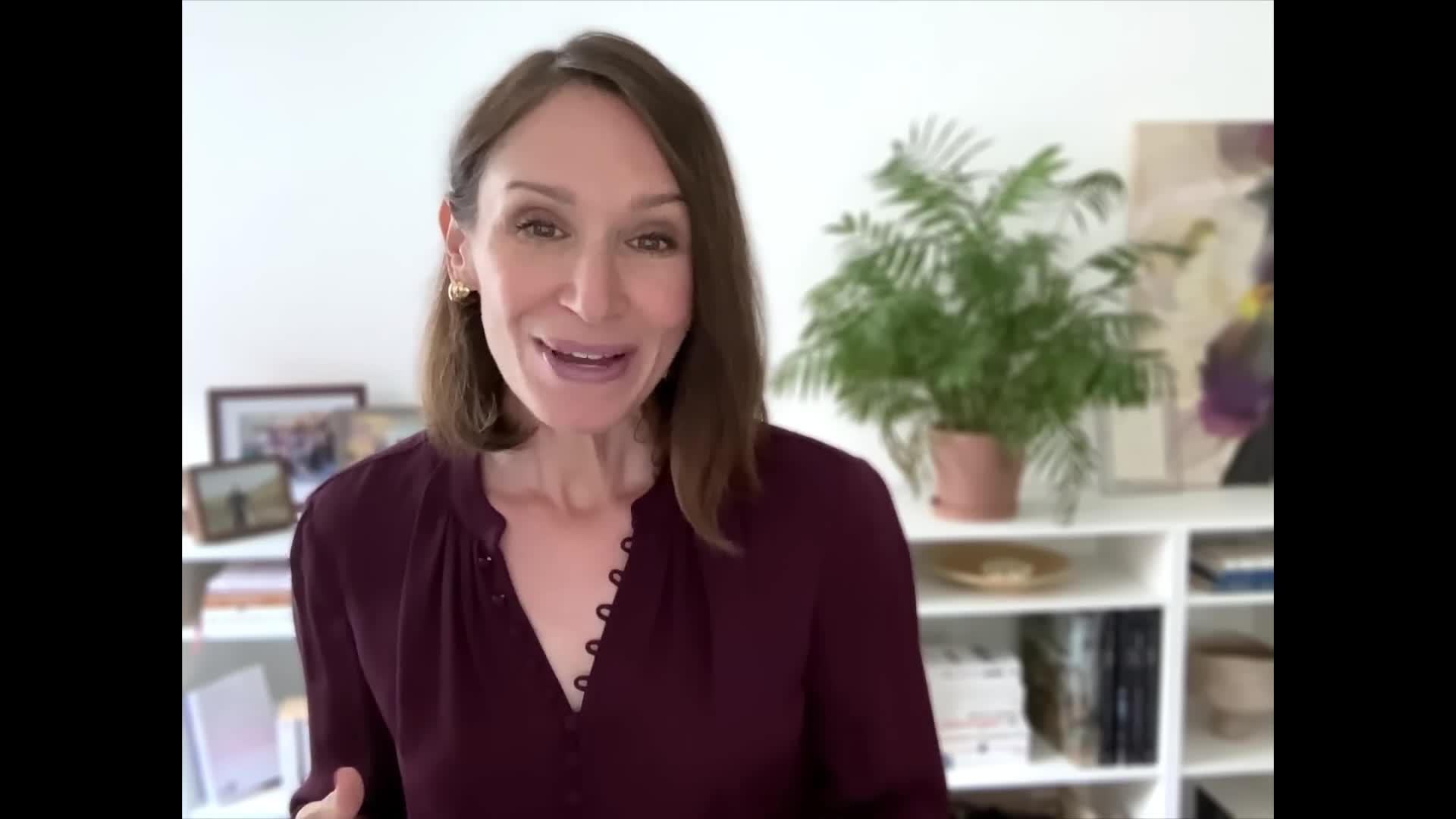
If you regularly watch my videos on YouTube, you'll notice that today's video looks just a little different.
And if you're listening on the podcast, I'm recording this at my desk today.
I'm gonna be sharing this with you on the last Wednesday of August.
And normally I don't share anything new on YouTube or the podcast when it's the last Wednesday of the month.
I save that just for my email list, where I share unique strategies and more personal videos like this one.
But something big happened this month.
In fact, there are two big things happening, and the more that I thought about them, the more I realized how connected they are to English Confidence and Fluency.
So here's what's been happening.
First, at the beginning of this month, the Speak Confident English YouTube channel hit a million subscribers.
And I have to be kind of honest with you, the first moment that I saw that number I didn't really feel much of anything.
It didn't feel any different from the number 999,999.
And it didn't mean that I was finished.
I'm gonna talk more about that in a moment.
But the second big thing that's happening right now is my team and I are preparing to celebrate 10 years of our Fluency School Program.
One of the values that we have at Speak Confident English is to celebrate every success, no matter how big or small that it feels.
And this is something that we talk about a lot with our students.
The truth is, milestones matter, not because they always mean that you're done or you've arrived, but they're an incredible opportunity to reflect on how you got there.
So that's what I've been doing a lot this month.
And here's what I know.
Back in June 2016, I had just started transitioning from teaching in traditional classes and running an academic program at a college to teaching online and sharing my videos on YouTube.
At that time I had 64 subscribers and I also launched my fluency school program that month with six students.
And now fast forward to today.
Here we are celebrating this milestone of a million subscribers on YouTube and 10 years of fluency school, with graduates for more than 90 countries.
So I've been thinking about this a lot over the last few weeks.
What are these milestones really mean?
And there are three lessons, I guess you could say, that have really stood out to me.
And what surprised me is that the patterns of these lessons connect 100 to what it takes to become truly confident and fluent in another language, whether it's my second language or yours.
So I'd love to share these lessons with you because maybe they'll encourage you.
If you're feeling frustrated, demotivated or just stuck right now, these lessons can help give you a clear path forward.
And if you're happily moving along, making progress in your English confidence and fluency.
I hope that these encourage you and reassure you that you're on the right path.
So here's the first lesson that I've learned throughout this entire journey.
The first one is consistency matters.
Perfection does not.
And when I talk about consistency I don't mean that super rigid, strict show up every single day, kind of consistency.
That is unrealistic.
In fact, let me show you a really ugly sketch that I just made on my whiteboard to illustrate this.
I don't know about you, but for a very long time I don't know if you can see that for a very long time I thought that this is what consistency looked like.
And there was so much pressure trying to show up every single day, spending the same amount of time practicing.
It created guilt and overwhelm, especially if I missed a day.
But what I've learned is that consistency looks like this.
Some days you show up and you have a lot of time and energy and you accomplish a lot.
Other days you show up and you don't have very much time, or maybe it's hard to focus, but you're still there.
And then there are days that you just miss because things happen.
And it doesn't mean that you failed or made a mistake.
It just means that you adapt and you show up the next day or whenever you can.
This kind of consistency is what has helped me build momentum over time and make progress in my work and in my second language.
And the same is true no matter what you're trying to accomplish, whether it's English confidence and fluency or some other skills, some other goal that you have in life.
And I think you probably already know this, but sometimes we need the reminder.
So let me put it simply.
Consistency for your English confidence and fluency does not mean committing three hours every single day and then feeling guilty if you miss a day, or feeling like it's a failure.
That's not consistency.
Consistency is making a commitment.
It might be practicing two or three days a week and making that commitment happen.
Sometimes it might happen early in the morning.
You wake up early to spend time practicing, or maybe it happens late at night, over your lunch hour or while you're walking the dog.
It doesn't have to be the same every single day. but it does have to be consistent.
Whatever that is for you, whatever you can manage right now.
It also means being okay when life happens.
You might get sick.
Your family members might get sick.
You might have a deadline at work that you have to finish, or you're stuck in traffic and it completely disrupts your planned schedule.
These things happen.
And it's okay.
It just means we adapt, pivot, and figure out how to move forward the next day or whenever we can.
I cannot tell you how many times I've had to adapt and pivot because things go wrong or life happens.
But what I know is that not giving up is what mattered.
And this brings me to the second lesson that I've learned throughout this entire process.
And this one is just a little bit uncomfortable, but the ultimate goal of this lesson is to feel free from pressure and guilt.
So lesson number two is to be completely honest with yourself about what you really want.
Many years ago, I learned the difference between the words, I can't and I won't.
I don't know about you, but have you ever said I really want.
I really want to be confident and fluent, or I really want to become a better painter, or I really want to run a marathon?
And then, when there's the opportunity to do that thing, sometimes what we say at least in my experiences I can't.
I just can't find the time.
This just isn't possible for me.
And the reality of that statement, the truth of it, is that I won't.
I won't commit time to it because it's not important enough.
The truth is how we spend our time shows us what we value the most.
It shows us what we will and what we will not prioritize.
Over the last couple of weeks, this particular lesson has really stuck with me.
And I think that's true for two reasons.
Number one, some of my priorities are shifting a little bit.
And I was reminded of all of this while I was reading this book.
Some of you know I'm reading this book thanks to the book club in the Confident Women community.
And the author talks a lot about identifying values.
What is most important to you?
For example, if I say that my health is super important to me, but I don't make sure that I'm getting the right sleep and I don't create time to eat well or exercise, then is it true that my health is really that important?
Now the goal of this kind of self honesty isn't guilt or feeling bad.
It's actually about gaining clarity.
When you know what is most important to you, change becomes possible and you start to make choices that help you focus on what is important.
So maybe English confidence and fluency is something you want and it's so important to you right now that you will find a way to make it happen.
You will create a schedule that is consistent for you.
Or maybe you want to become confident and fluent in English, but it's not that important to you right now.
It's not important enough to find a way to make it happen.
And if that's true, that's okay.
It's okay to be honest about it.
And when you're honest with yourself about this, it takes away the pressure and guilt.
It allows you to know what your priorities are and to make commitments to make them happen.
But even with consistency and knowing what is important to you.
There's one more thing that is necessary for progress.
And I cannot tell you how much I do not like this third lesson.
It annoys me.
Lesson three is that mistakes are part of the process.
Again, I do not like mistakes.
I am a perfectionist.
I will work nights and I will work weekends to check and double check just to prevent mistakes.
I will practice conversations in advance dozens of times in my second language to help me avoid mistakes in real life.
But they still happen.
And what I've realized is that mistakes are not the end.
They're just part of the process and they have to be.
Now, in terms of these two milestones happening this month, I cannot tell you how many mistakes I've made since June 2016.
I've sent you emails with typos.
I've recorded a whole day of lessons only to discover that the microphone was on mute.
I've misspoken, I've made mistakes with my team.
I've felt paralyzed when giving presentations and I've had more technical failures than I can even begin to count.
I've shared lessons that I feel embarrassed about or frustrated with now.
And when it comes to my second language, I have conversations with mistakes that I replay in my mind, And every time I do, I feel embarrassed.
In fact, my face still gets red thinking about them.
But all of those mistakes with Speak Confident English and with my second language, all of them add up to where I am today.
And it's because of those mistakes that I'm a better teacher today.
I'm a better writer.
I'm a better team leader and a better public speaker.
Your English confidence and fluency work exactly the same way.
You will make some mistakes and you will have some awkward conversations, but learning from them and refusing to give up is what builds your confidence and fluency.
It doesn't mean that you have to like them.
I definitely don't, but we have to know they are part of the process and that's okay.
Now, all three of these lessons, these lessons on consistency, knowing what is most important to you and accepting that mistakes happen.
None of them matter without the people around me.
In fact, whether I'm talking about Speak Confident English or my second language, going alone is so much harder and it takes so much longer than necessary.
So perhaps equally important to these three lessons is to not be afraid to invest in yourself, seek out experts and work with others.
It's going to make everything so much faster and easier.
This is something I did a lot in my second language when I was really working to develop my confidence and fluency.
And it's something I still do.
And it's no question that it has helped Speak Confident English reach these milestones.
I wouldn't be here without you.
I wouldn't be here without my students, who have trusted me and my team to help them gain confidence and fluency in English.
And I definitely would not be here without my incredible team.
And when I say that word incredible, I mean it.
I have the best of the best.
I know you see me in these videos on YouTube every week, or listen to them on the podcast and see me on social media.
But what you might not see is the amazing team that I get to work with to help make all of this happen.
And the experts that work with me behind the scenes, the success that me and my team see with our students.
This milestone of 10 years of fluency school and a million subscribers on YouTube.
I did not do this alone.
And the milestone is not mine alone.
It's ours.
So with everything in me, thank you.
Thank you for being part of making this happen.
I mentioned earlier that these milestones matter because they give us this opportunity to reflect, celebrate and then to keep going forward and to keep going forward.
I want to tell you what's coming next in September.
I have a three part series coming. called From Stuck to Confident in English.
And the first video is maybe a little bit controversial, so I'm really excited to hear what you have to say about it.
As always, my ultimate goal is to give you new opportunities to advance your English confidence and fluency so you can live the life you want in English.
So be sure to watch for part one of that series next week.
To finish, I want to say thank you again for being part of this milestone.
Thank you for listening today.
I hope that this gave you some new insight or an important reminder to keep you focused on what you want.
And with that, here's to the next milestone, both yours and mine.